



To capture the essence of the Gellert school complex in Basel, one must look beyond the functionalist rigor of 1950s modernism and into the realm of cinematic world-building. The intervention by MET Architects does more than renovate; it restores a sense of rhythmic playfulness to a site originally conceived by Julius Maurizio between 1953 and 1959.
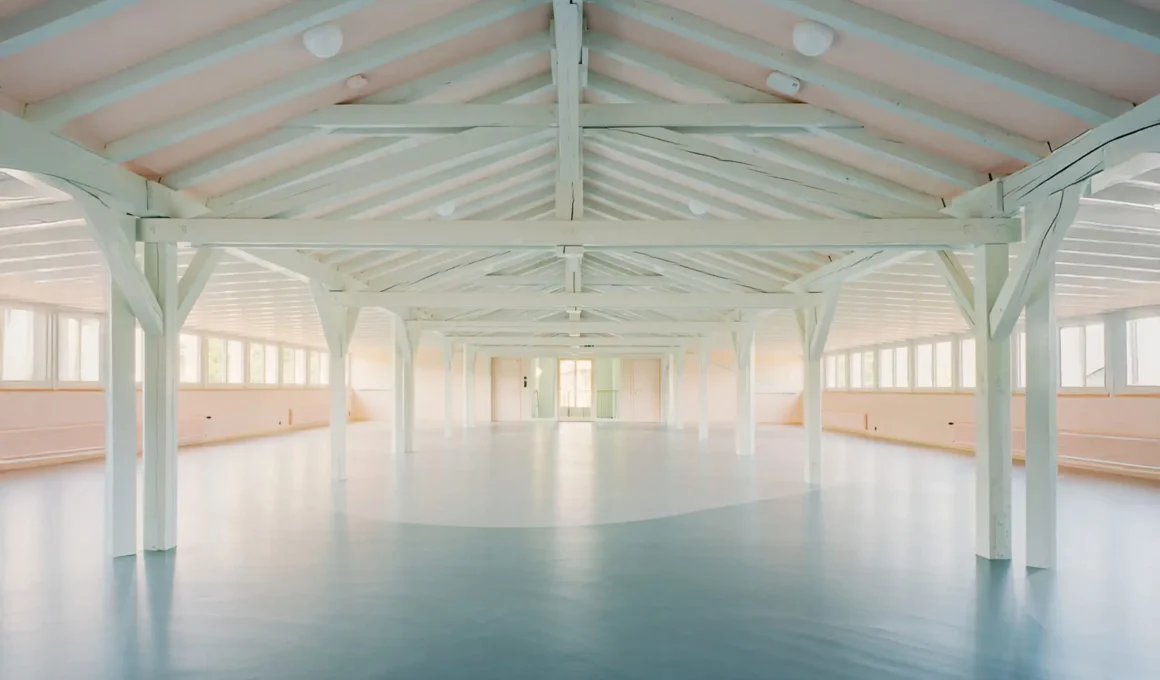
There is a distinct “Wes Anderson” quality to the result—a meticulously curated palette of pastel hues, symmetrical compositions, and bespoke details like the “Gellert” ceiling lamps that feel as though they were designed for a set where every object tells a story. This architectural language prioritizes a child-friendly scale, turning a public institution into a series of inviting, tactile pavilions that celebrate the ritual of learning.
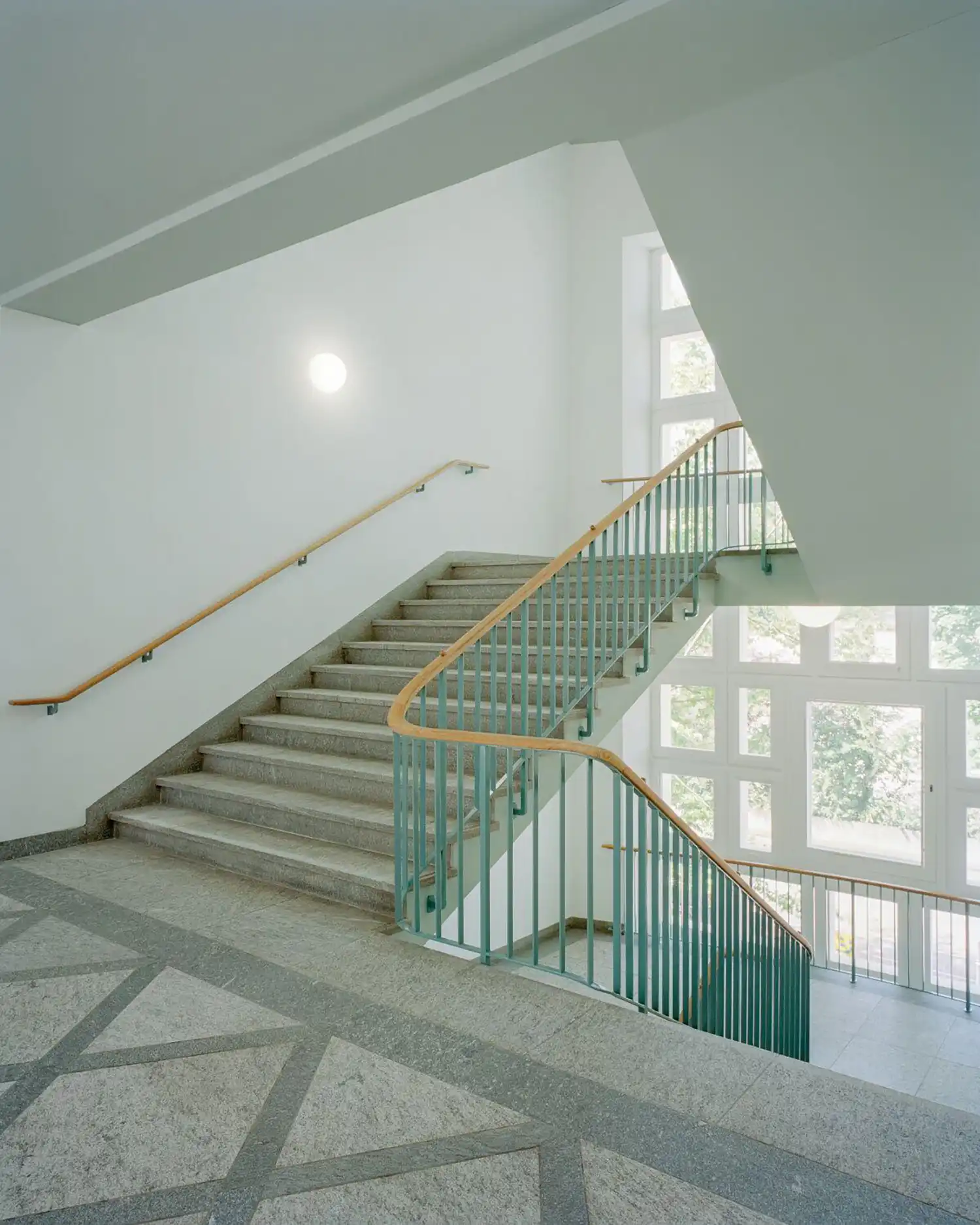
A dialogue between heritage and contemporary pedagogical needs defines the project’s conceptual core. The Gellert school complex, located in the heart of Switzerland, consists of a delicate ensemble of elongated tracts and pentagonal kindergarten spaces.
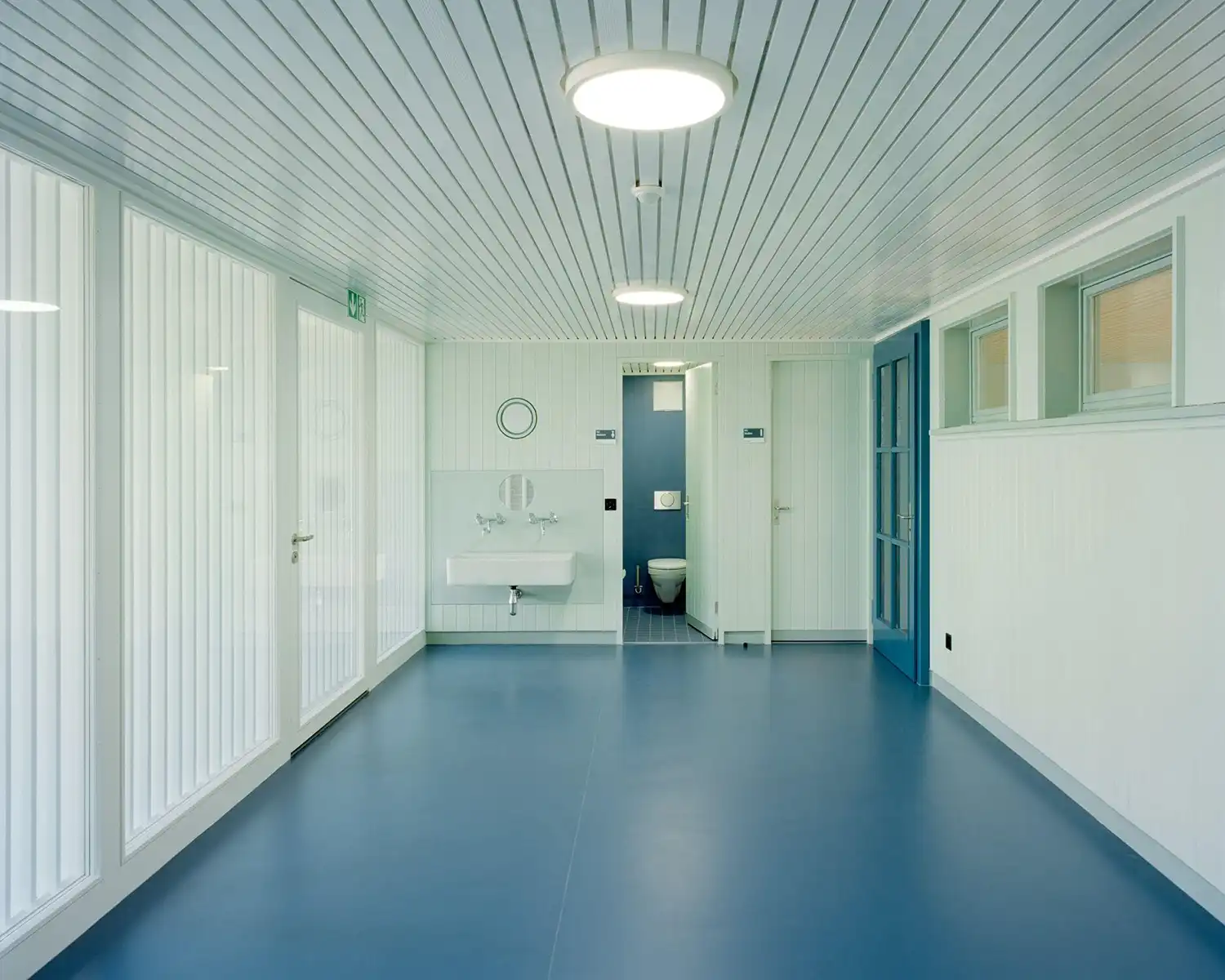
While the original “Heimatstil” (homestyle) interior approach was somewhat conservative and fragmented, MET Architects have unified the campus through a sophisticated use of color and materiality. This approach of breathing new life into mid-century educational structures mirrors the sensitive reimagining of teaching spaces through retrofitting, where the historical shell becomes a vessel for modern, flexible functionality.
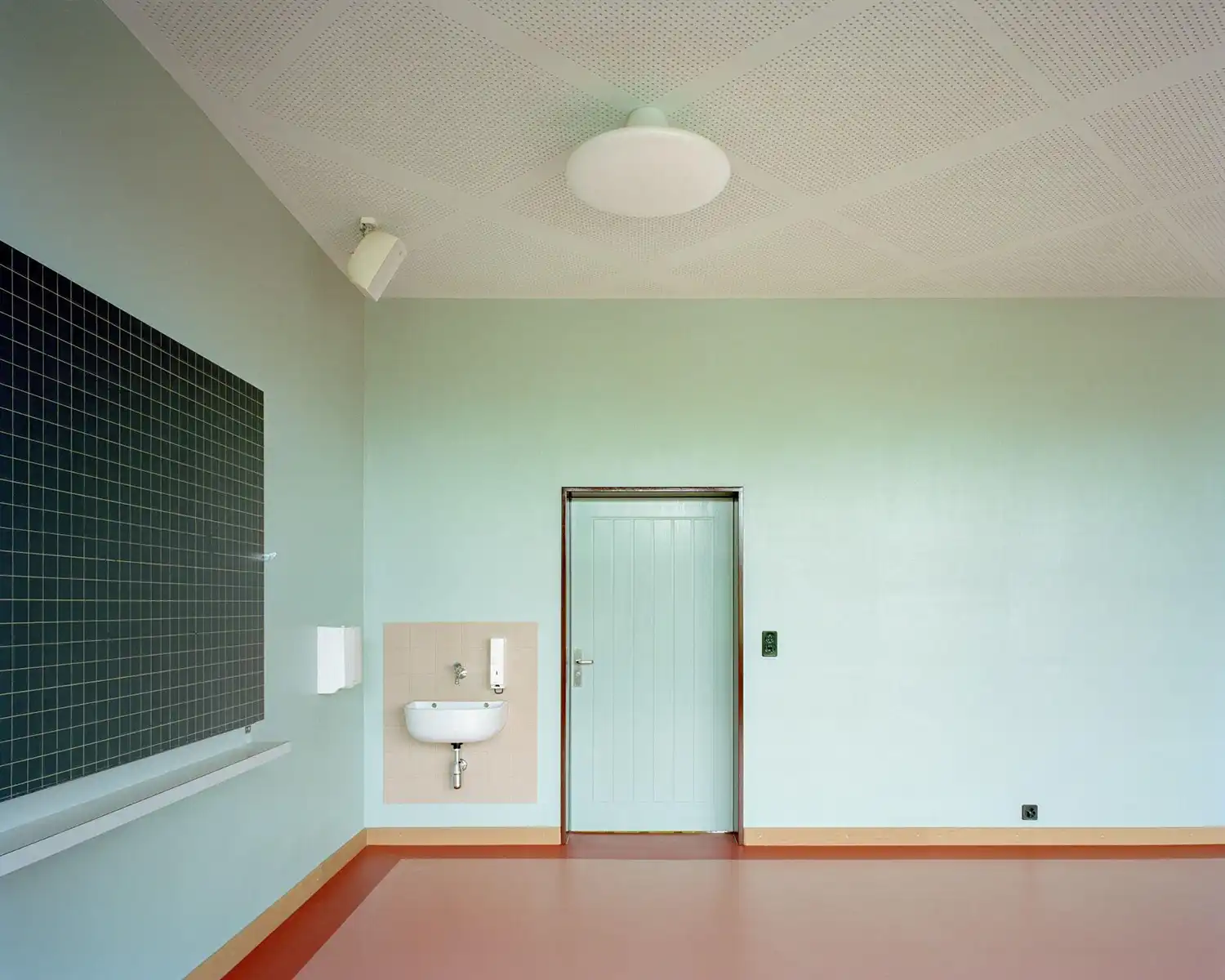
The architectural choreography of the Gellert 2 tract illustrates the firm’s ability to maximize space with surgical precision. By introducing shed dormers to the top floor, the architects transformed a formerly dormant roof space into a light-filled, supervised play area for the day care center.

A new lift and an external escape staircase seamlessly integrate modern safety and accessibility standards without disrupting the sculptural integrity of the Basel landmark’s facades. The sensory experience here is one of lightness; the new acoustic ceilings and textured cellulose wallpaper soften the transition between the rigid geometry of the 1950s and the high-energy requirements of today’s students.
Technical sustainability is treated with a “low-tech” philosophy that favors longevity over complex machinery. The complex is now connected to the Basel district heating grid, while solar panels across the roofs ensure the school is a net contributor to the energy cycle during summer months.

Most notably, the architects opted for manual and motorized window ventilation for night-time cooling in the classrooms, eschewing heavy mechanical systems in favor of natural airflow. This commitment to passive environmental control reflects a broader trend in European educational architecture, much like the passive house standards seen in modern school designs, where the building’s skin does the heavy lifting for climate regulation.
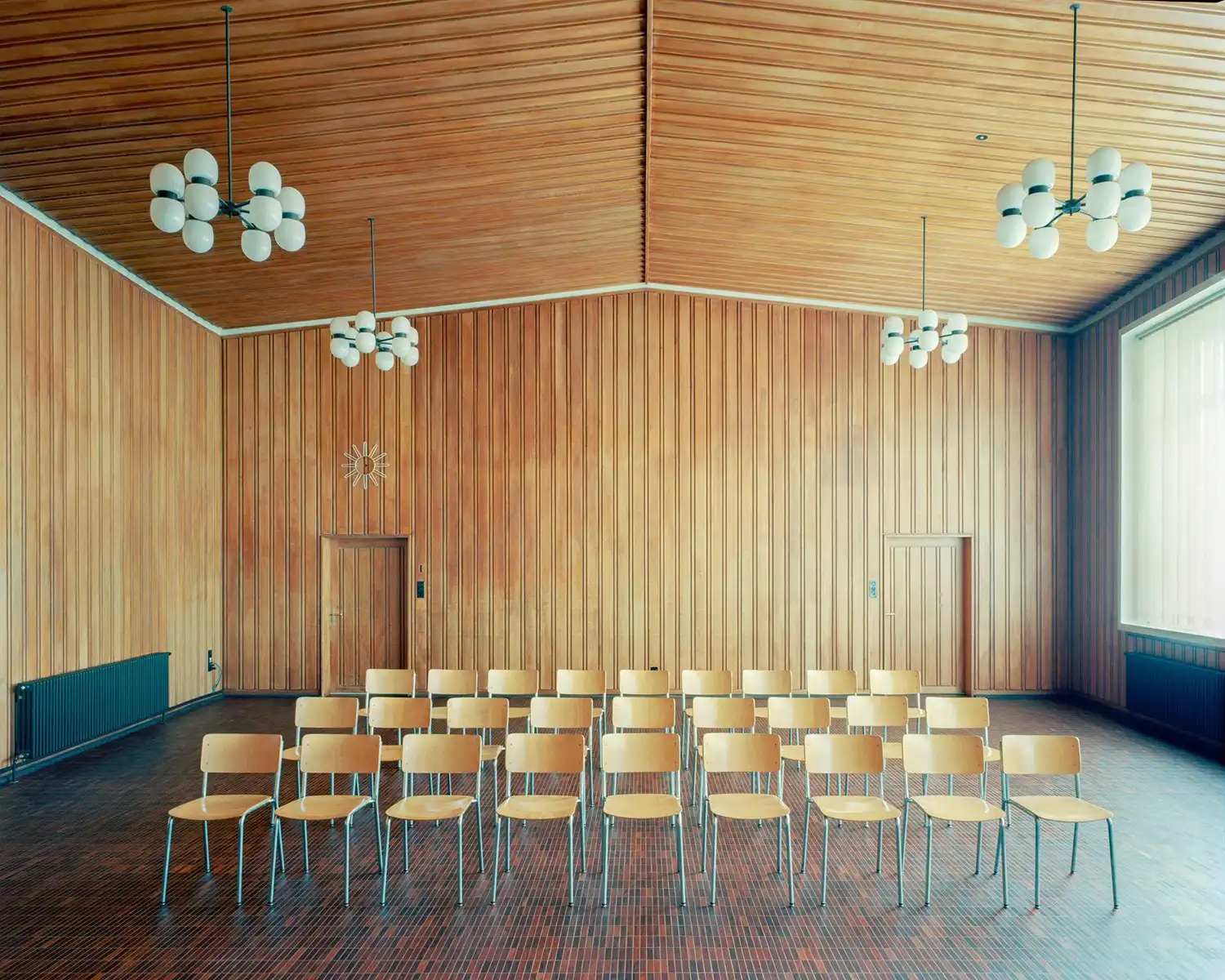
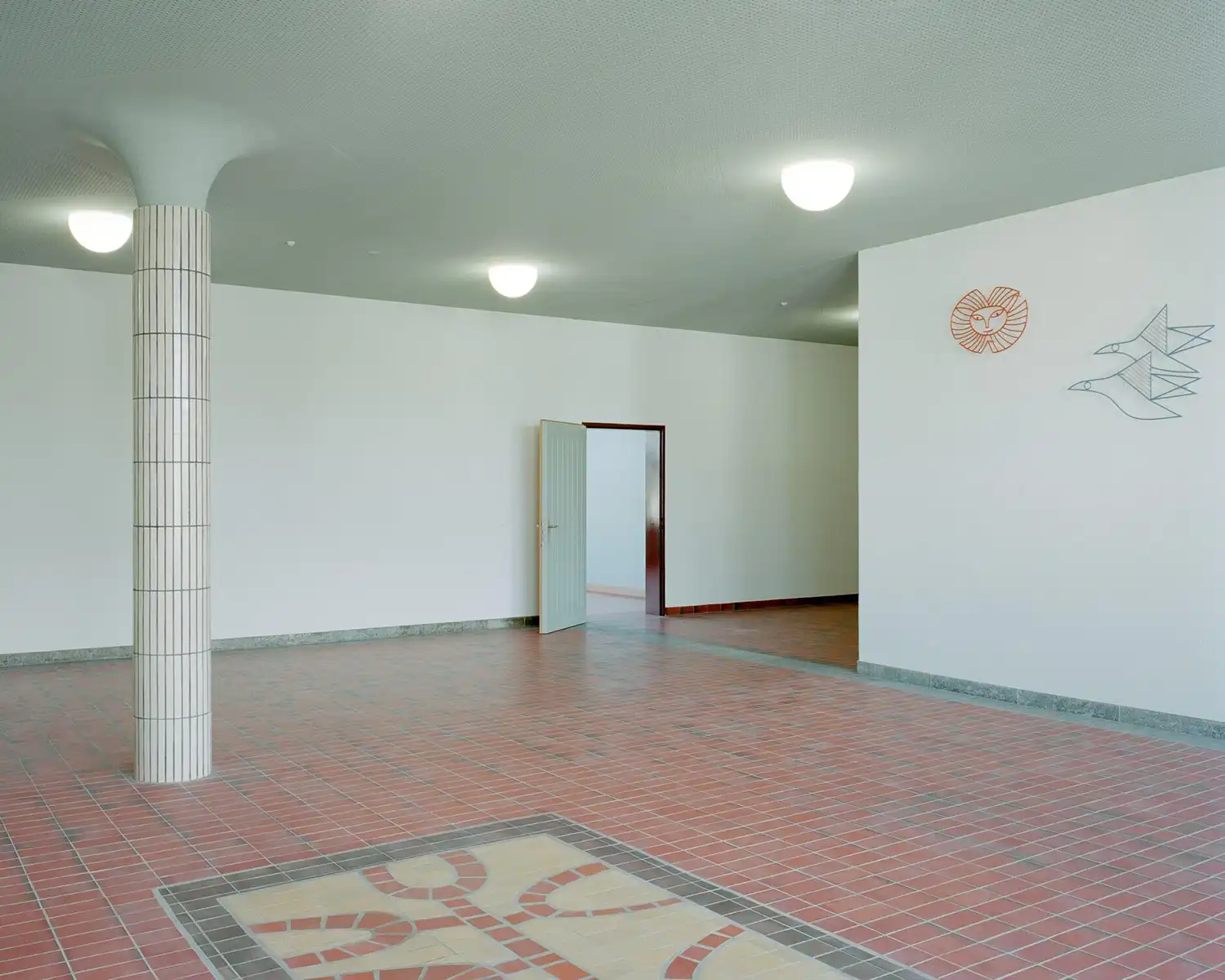
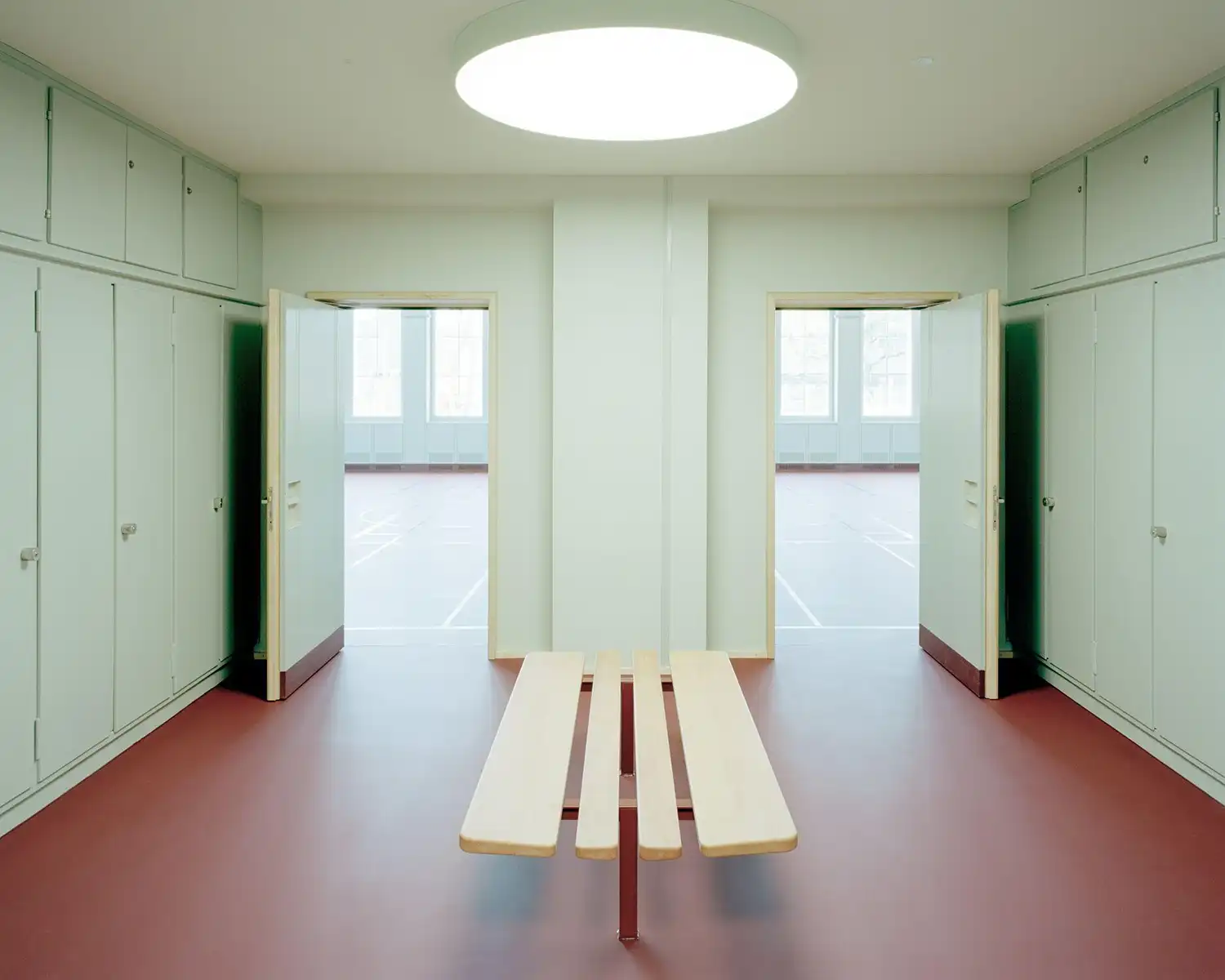
The interior atmosphere relies on a curated materiality that honors the past while discarding its functional drabness. High-quality original elements—clinker floors, wooden paneling, and artificial stone—were preserved and polished, acting as anchors for the new additions. The introduction of linoleum floors in finely coordinated tones and the custom-developed ‘Gellert’ lamps creates a sense of “soft modernism.”
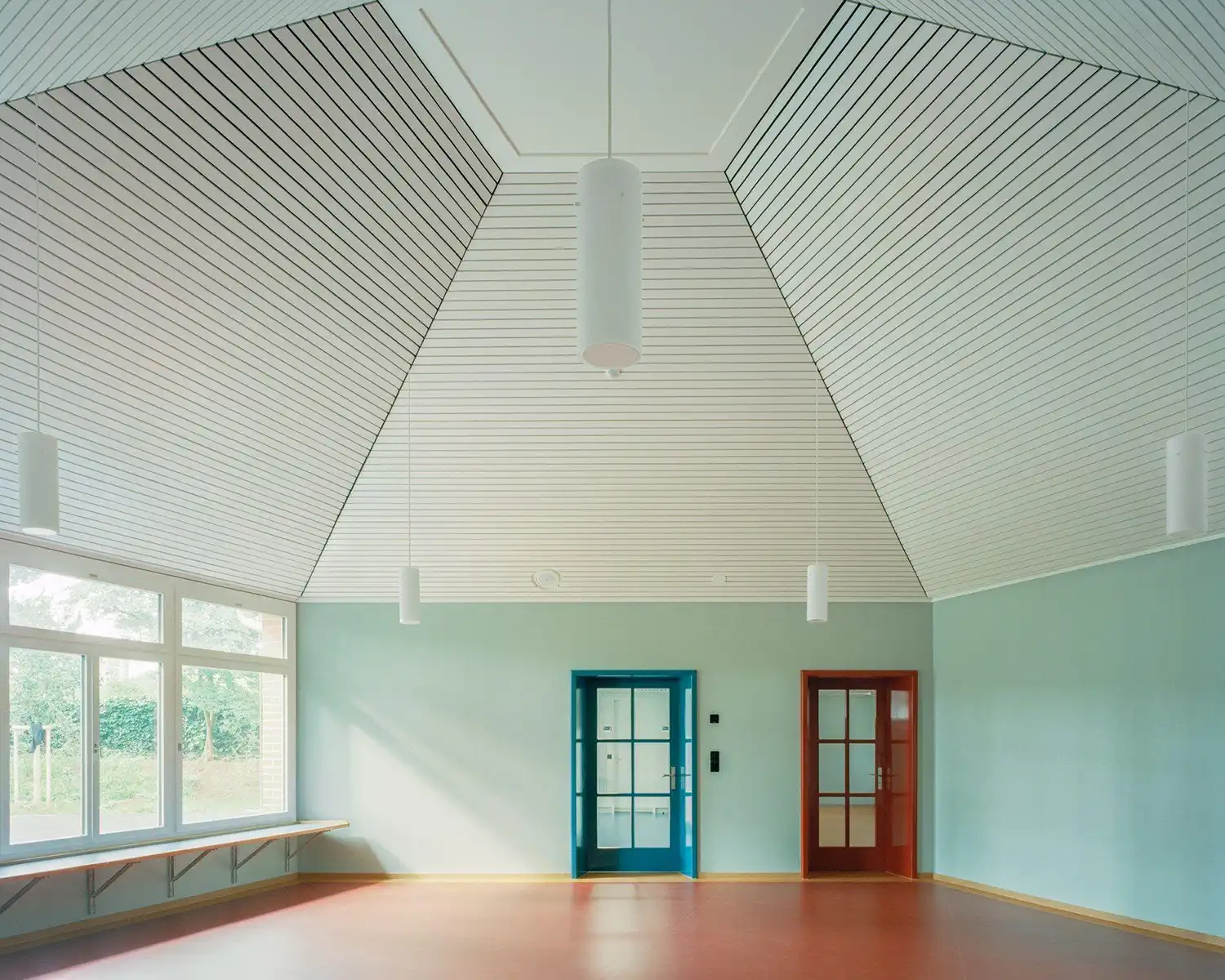
The corridors no longer feel like institutional arteries but like lived-in galleries, where the interplay of light and shadow on textured walls provides a calm, focused backdrop for the students. The successful revitalization of the Gellert school complex demonstrates that the future of educational architecture in Switzerland lies in the respectful layering of eras. By treating the existing fabric not as a constraint but as a cinematic canvas, MET Architects have ensured that the school remains a vital, soulful part of the Basel urban landscape.