


Modern homes are becoming more airtight, energy efficient, and environmentally responsive, which is changing how indoor air must be managed. As a result, ventilation is no longer just a background function handled by HVAC equipment, it is becoming a core part of how homes are designed and built. Architects and HVAC professionals increasingly work together to ensure that airflow, comfort, and indoor air quality are built into the structure of the home from the very beginning. Understanding how modern ventilation design for home environments works helps explain why it now plays such a critical role in modern residential architecture.
Why Modern Ventilation Design For Home Matters In Today’s Architecture
Modern homes are built to be far more airtight than older houses. This improves energy efficiency, but it also means that natural air leakage through walls, windows, and gaps is dramatically reduced. Without intentional building ventilation design, pollutants, humidity, and stale air can quickly accumulate indoors.
Modern ventilation design for home environments is becoming central to residential architecture because homes are no longer passive structures that “breathe” through cracks and gaps. Today’s high-performance homes are tightly sealed, meaning airflow must be intentionally designed rather than left to chance.
Because of this shift, ventilation is no longer just a mechanical add-on. Architects increasingly treat it as a structural element of the home’s design, much like lighting or thermal insulation. They consider how ceiling heights, window placement, stairwells, and room orientation influence air movement long before HVAC equipment is selected as part of the overall ventilation system design.
Ventilation design also affects how homes handle humidity, cooking pollutants, and indoor emissions from furniture and finishes. Well-designed systems help maintain healthy indoor air, control moisture that can lead to mold or structural damage, support energy-efficient heating and cooling, and improve overall comfort.
In many modern homes, airflow is treated almost like daylight, something that should move naturally through the space and influence how rooms connect with each other.
How Ventilation System Design Improves Indoor Air Quality And Comfort
A well-planned ventilation system design continuously replaces stale indoor air with fresh outdoor air while removing contaminants generated inside the home. Ventilation improves indoor air quality by constantly diluting and removing the pollutants that accumulate in everyday living.
Even in clean homes, activities like cooking, cleaning, showering, and simply breathing release moisture, particles, and chemical compounds into the air. Common indoor pollutants include cooking fumes and combustion gases, dust, allergens and pet dander, cleaning chemicals and VOCs from furniture and materials, and excess humidity from showers, laundry, and breathing.
A properly designed ventilation system design manages these pollutants through controlled air exchange. It removes contaminated air from high-pollution areas and delivers fresh air to spaces where people spend the most time, such as bedrooms and living rooms.
Beyond removing contaminants, ventilation also stabilizes indoor conditions by balancing humidity levels, distributing temperatures more evenly throughout the home, preventing stale air pockets, and reducing odors and airborne irritants. In practical terms, this means rooms feel fresher, less stuffy, and more consistently comfortable, even in tightly sealed modern homes that rely on modern ventilation design for home performance.
How Building Ventilation Design Shapes Airflow In Modern Homes
Building ventilation design determines where air enters, how it moves through rooms, and where it exits. Without intentional airflow planning, fresh air may never reach certain spaces while others become over-ventilated. Building ventilation design essentially creates a planned route for air to travel through the house rather than allowing air to drift randomly from room to room.
Architects and HVAC designers typically create this pathway using a concept called pressure balancing, establishing a directional pattern where fresh air enters the home, moves through occupied spaces, and exits through areas where contaminants accumulate.
In most homes, fresh air is introduced into clean spaces such as living rooms, bedrooms, and home offices. Air then moves through hallways and doorways before being exhausted from kitchens, bathrooms, and laundry rooms where pollutants or moisture tend to build up.
This directional airflow helps remove contaminants efficiently while preventing cooking odors and humidity from spreading throughout the home. Room connections, door undercuts, staircases, and even furniture placement can influence how well this circulation works. When ventilation is thoughtfully designed, the building itself helps guide air along this path, creating a continuous airflow circuit supported by thoughtful airflow design that keeps air moving through the entire structure rather than stagnating in isolated rooms.
What Passive Ventilation Design Is And Why It’s Gaining Popularity
Passive ventilation design uses natural forces, wind, temperature differences, and building geometry, to move air through a home without relying heavily on mechanical systems. Instead of fans or ducts doing all the work, the building itself helps drive airflow through carefully designed openings and spaces.
Architects use strategies such as cross-ventilated window placement, ventilation shafts or atriums, high and low openings that encourage air movement, and stack ventilation through stairwells or tall spaces. These approaches allow wind and temperature differences to drive airflow naturally, often by aligning windows to capture prevailing breezesor creating vertical spaces where warm air can rise and escape.
Passive ventilation design is becoming more popular because it supports energy-efficient and low-carbon building design. By allowing natural air movement to handle part of the ventilation load, homes can reduce reliance on mechanical ventilation, air conditioning, and even large-scale AC installation requirements.
This approach also reconnects buildings with their surrounding climate, allowing architecture to respond naturally to wind patterns, solar exposure, and seasonal changes. Passive strategies can also make buildings more resilient, since even when mechanical systems are turned off, the home can still maintain some level of natural airflow through a natural ventilation system integrated into the structure.
How A Natural Ventilation System Works In Modern Homes
A natural ventilation system relies on two primary forces that cause air to move: wind pressure and thermal buoyancy.
Wind-driven ventilation occurs when outdoor wind pushes air into openings on one side of a house and pulls air out through openings on the opposite side. When wind hits one side of a house, it creates higher pressure on that surface and lower pressure on the opposite side. If openings exist on both sides, air is pushed through the building, creating cross ventilation that can move large volumes of air through the space.
The second force is thermal buoyancy, often called the stack effect, which occurs because warm air naturally rises. As indoor air warms, it moves upward and escapes through higher openings such as clerestory windows, skylights, or roof vents, while cooler outdoor air enters through lower openings to replace it.
Together, these forces create continuous air exchange without mechanical fans. For a natural ventilation system to work effectively, the building must be designed with aligned openings, unobstructed airflow paths, and appropriate window placement so fresh air can travel through the entire home.
Airflow Design Principles For Better Home Ventilation
Effective airflow design follows several core principles used by architects and HVAC engineers. One of the most important principles is creating clear air pathways so air can move from supply points to exhaust points without being trapped in isolated rooms. Every room should have a route for air to enter and exit, preventing stagnant zones.
Balanced supply and exhaust is another key factor. Air supplied to living spaces and bedrooms should be balanced by exhaust in kitchens, bathrooms, and other pollutant sources, allowing stale air to be removed after fresh air moves through the home.
Designers also consider pressure relationships between rooms. Small pressure differences help guide airflow in the desired direction, preventing odors or humidity from spreading and reducing the risk of backdrafts.
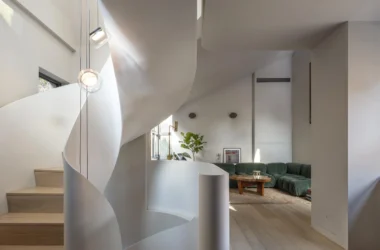
Cross ventilation opportunities can further improve circulation when windows or vents are placed on opposite sides of a room, allowing wind to move air naturally through the space. Vertical airflow support from high ceilings, stairwells, or ventilation shafts also helps warm air rise and escape.
Effective circulation also depends on avoiding physical barriers. Closed interior doors, blocked vents, or poorly positioned return air pathways can interrupt airflow and leave parts of the home under-ventilated. Together, these principles create predictable patterns through intentional airflow design that keep indoor air fresh and evenly distributed.
How Modern Ventilation Design For Home Supports Energy Efficiency And Sustainability
Ventilation is closely tied to energy performance because uncontrolled airflow can waste large amounts of heating and cooling energy. Older homes often relied on uncontrolled air leakage, which brought in fresh air but also allowed large amounts of heated or cooled air to escape.
Modern ventilation design for home environments replaces that randomness with controlled air exchange, ensuring fresh air enters the home while minimizing energy loss. Many homes now incorporate energy recovery ventilators (ERVs) or heat recovery ventilators (HRVs), which transfer heat between incoming and outgoing air streams and allow fresh air to enter while preserving most of the indoor heating or cooling energy, especially during major HVAC upgrades such as heating replacement.
Advanced systems like ERVs and HRVs can also transfer moisture between air streams, helping improve humidity control without excessive HVAC use and supporting better compatibility with high-performance building envelopes.
By combining airtight construction with controlled ventilation and well-planned ventilation system design, modern homes can remain both energy efficient and healthy, reducing heating and cooling energy use, lowering carbon emissions from home energy consumption, and maintaining consistent indoor air quality.
Common Mistakes In Ventilation System Design
Several design mistakes can undermine ventilation performance, even in otherwise well-built homes. One common mistake is assuming that installing a ventilation system automatically guarantees good airflow. In reality, the effectiveness of the system depends heavily on how the home itself is designed and how the building ventilation designsupports airflow pathways.
Treating ventilation as an afterthought can create problems when airflow paths conflict with the home’s layout. The most effective ventilation strategies are developed early in the architectural design phase, ensuring the building layoutsupports airflow rather than working against it.
Poor airflow distribution is another frequent issue. Fresh air may enter the home but fail to reach bedrooms or other occupied areas. Poorly planned airflow pathways can leave certain rooms under-ventilated while others receive too much airflow. This often happens when interior doors block circulation, when supply and exhaust points are poorly distributed, or when tightly sealed interior spaces lack return air pathways.
Overreliance on exhaust-only ventilation can also create pressure imbalances when air is removed without providing balanced fresh air intake. In addition, ventilation systems must address humidity control, particularly in humid climates where moisture management is just as important as pollutant removal.
Ventilation performance can also be weakened by blocked airflow pathways, such as furniture placement, sealed doors, or poorly positioned vents that interrupt the intended airflow design pattern.
How Building Ventilation Design Is Shaping Future Home Layouts
Ventilation is increasingly influencing how homes are organized internally. Instead of focusing only on aesthetics or square footage, architects are designing spaces that promote natural airflow and environmental performance. As homes become more energy efficient and airtight, airflow must be intentionally designed rather than left to chance.
Building ventilation design is beginning to influence how architects organize interior spaces. Rather than treating airflow as a hidden mechanical function, designers are incorporating it into the overall layout of the home. This can be seen in floor plans aligned for cross ventilation, central atriums or stairwells that enhance vertical airflow, and larger operable windows placed for airflow rather than just views.
In some cases, passive ventilation design strategies even influence window sizes, ceiling heights, and the placement of interior partitions, while zoned ventilation systems and hybrid designs combining mechanical systems with a natural ventilation system support different living areas. These architectural decisions help guide air movement naturally through the home.
As energy codes become stricter and indoor air quality receives more attention, ventilation is evolving from a hidden mechanical system into a structural design consideration that helps shape the form, layout, and environmental performance of residential buildings.
For those looking to explore how these systems are evolving within the industry, you can discover the latest HVAC innovations and architectural integration strategies at urdesignmag.