



The retail landscape in New York City has been given a significant cultural anchor with the overhaul of the MoMA Design Store Soho. The renovation, executed by Brooklyn-based architecture studio Peterson Rich Office (PRO), strips back decades of modifications to reveal the 19th-century craftsmanship of the landmark cast-iron architecture while introducing a rigorous system of contemporary design interventions tailored to the modern consumer. Spanning 6,600 square feet at 81 Spring Street, the project reframes the store as a direct, shoppable link to the museum’s curatorial vision for design enthusiasts.
Working with the Landmarks Commission, Peterson Rich Office began by meticulously restoring the building’s exterior. The historic facade, once a “muddy brown,” has been returned to its original, striking black hue, dramatically improving the presence of the building on the street. Crucially, the architects relocated the entrance and reopened windows facing Spring Street, restoring the 1880s circulation pattern and establishing a clearer visual connection between the retail space and the energetic SoHo neighborhood. This move immediately improves sightlines and activates the ground level—a signature element of thoughtful NYC design.
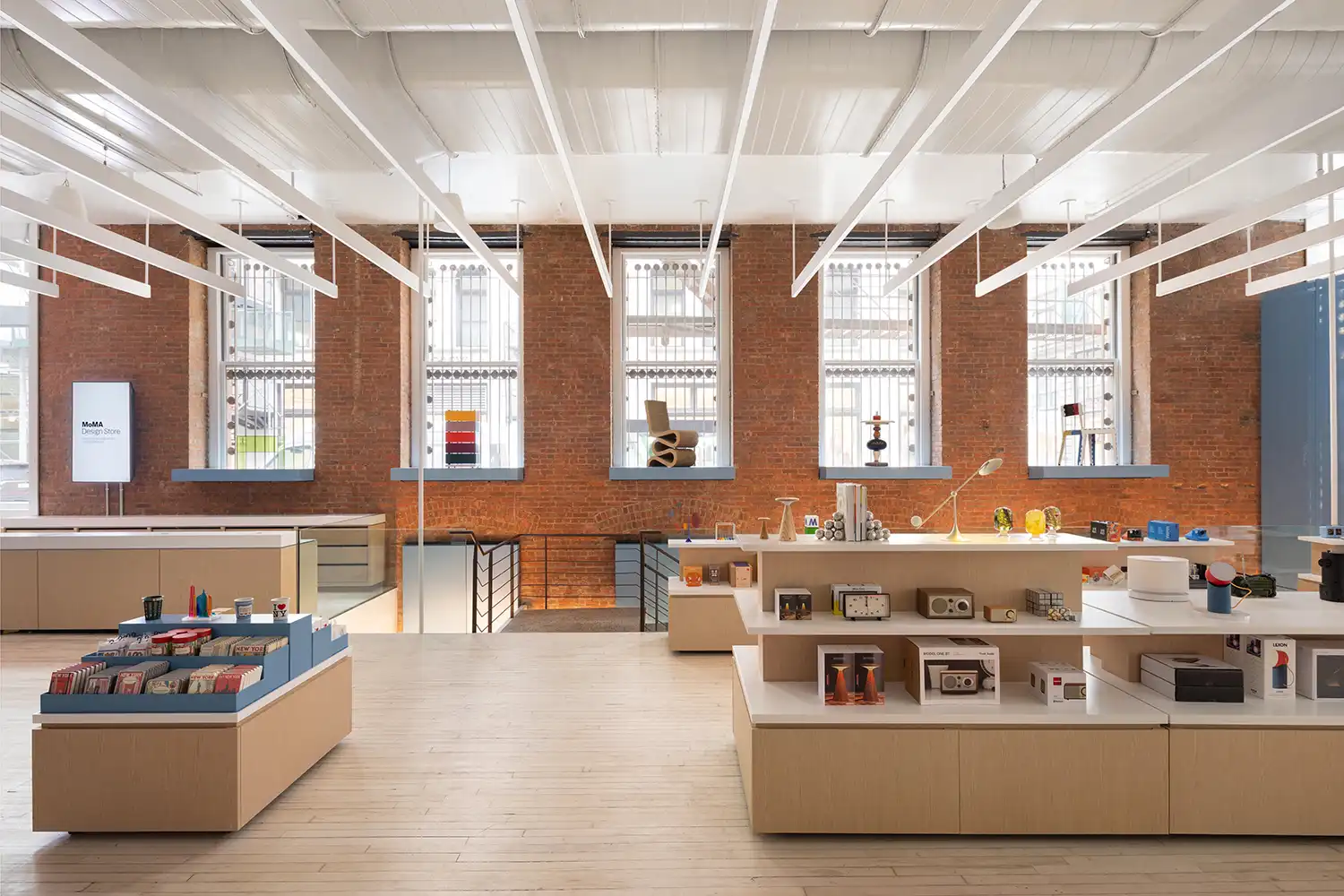
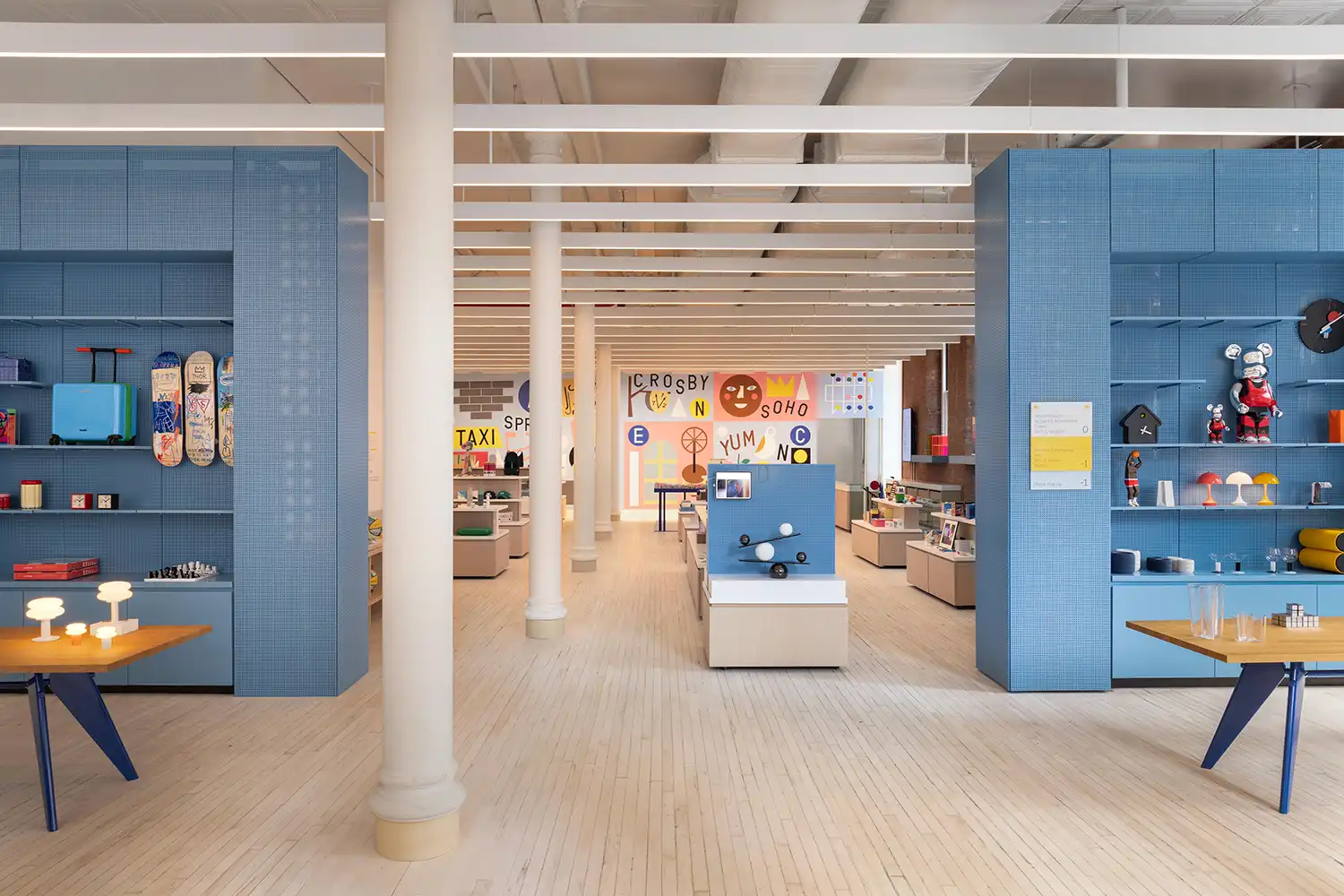
Inside, the architects pursued a philosophy of authentic revelation, contrasting the building’s rough, textured history with crisp, precise modern systems. Historic elements such as the cast-iron columns, masonry walls, and portions of the original tin ceiling were meticulously exposed and celebrated. The studio notes that this approach—coupling the authentic architecture of the Soho landmark with contemporary presentation systems—demonstrates how a dialogue between history and innovation defines great design.
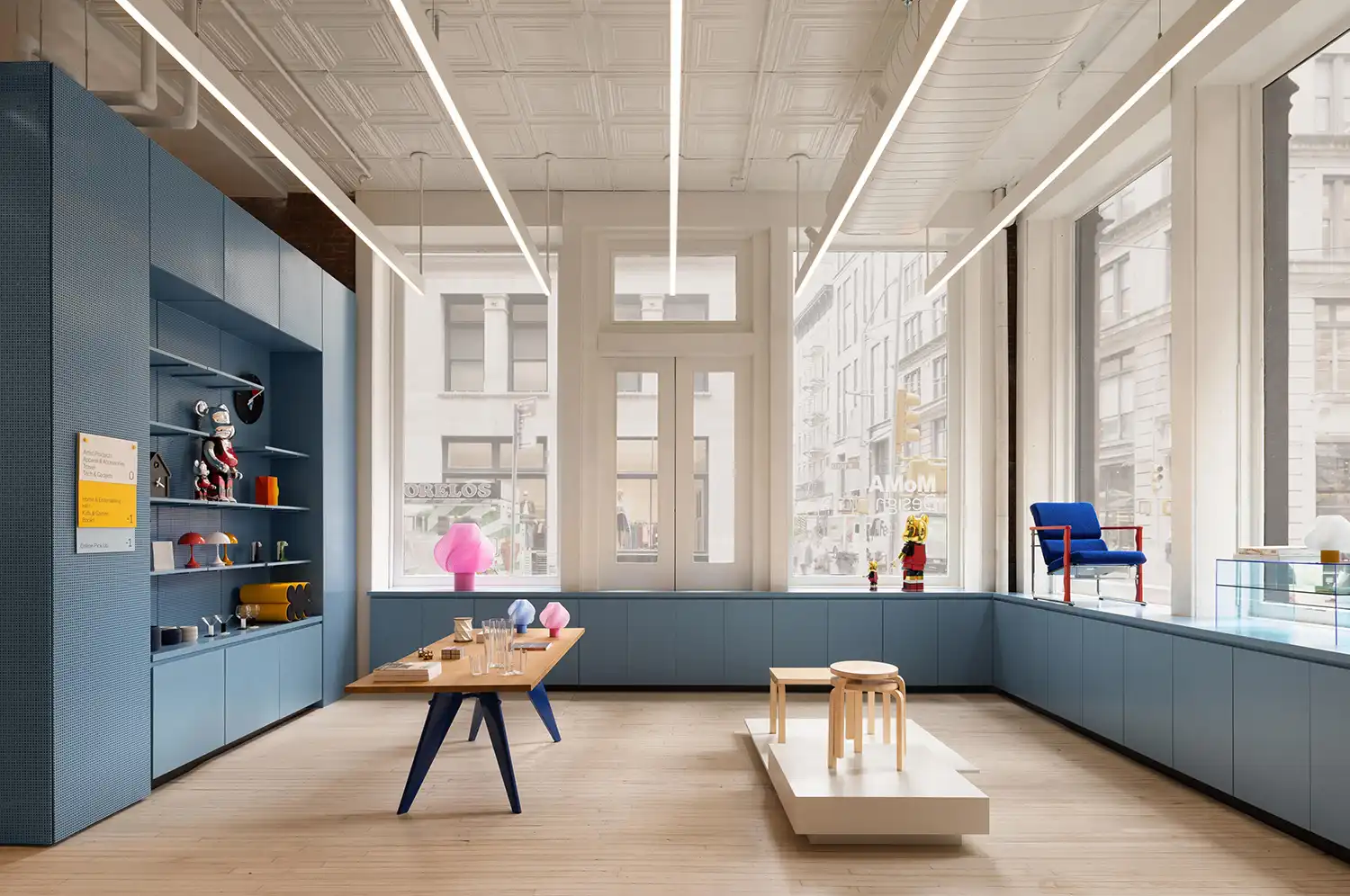
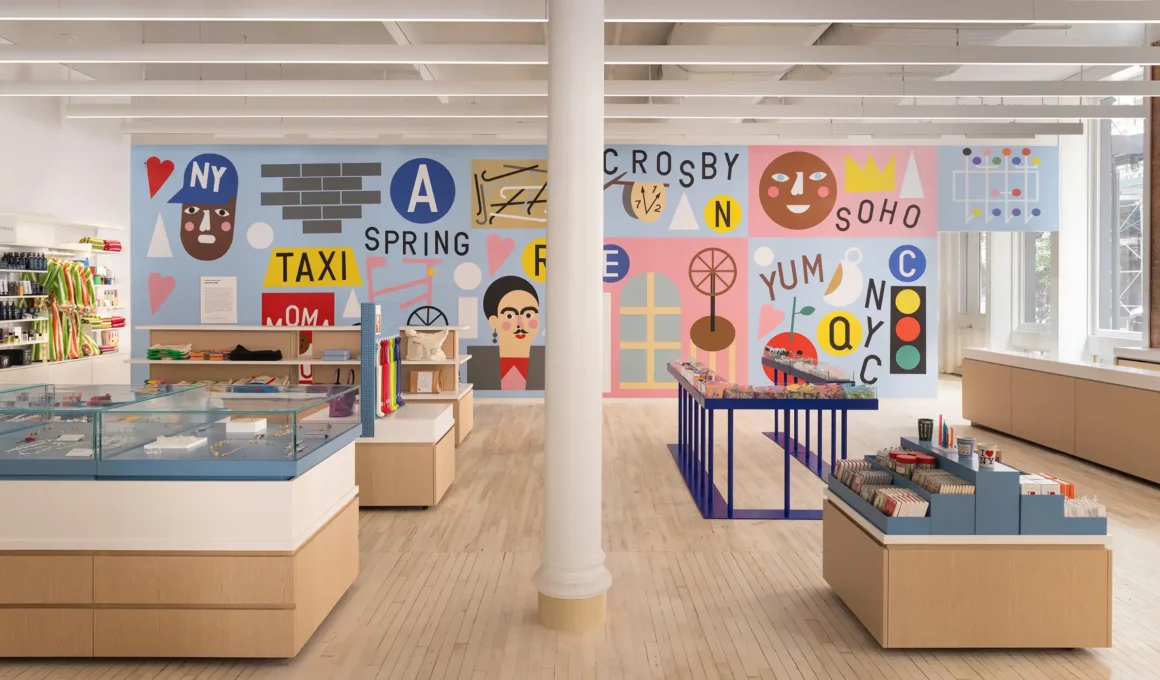
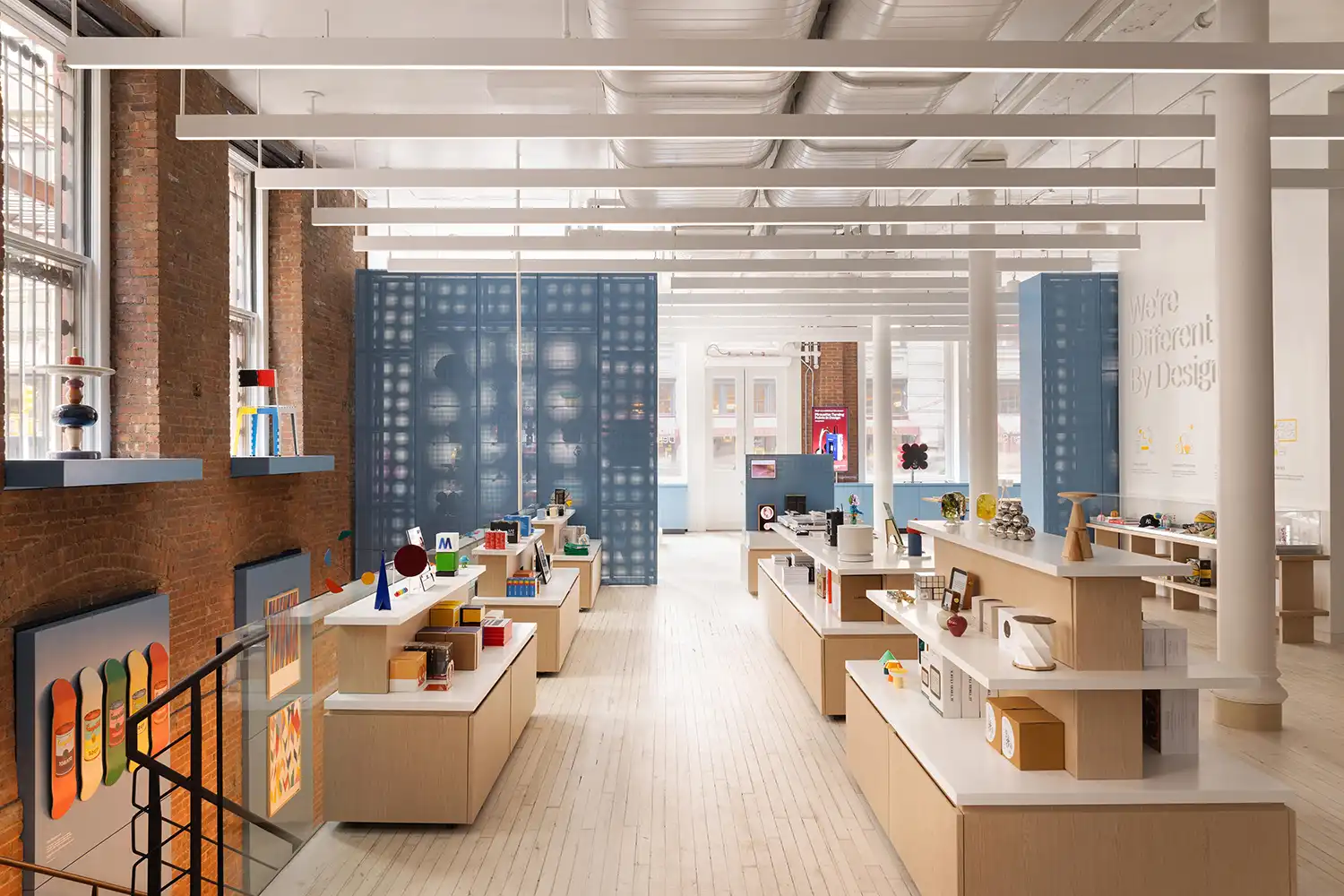
The new materials palette introduces functionality and flexible modularity. Blue perforated-metal panels form distinct display units that double as spatial dividers, guiding movement through the 6,600-square-foot space. These units, along with custom vitrine cases and island displays, offer a fluid, adaptable layout. Matching blue cabinets run beneath the windows, subtly raising featured products to engage passersby at street level. Smaller products are elevated on tiered plinths featuring pale-wood bases and clean white tops, maintaining a gallery-like focus on each item.
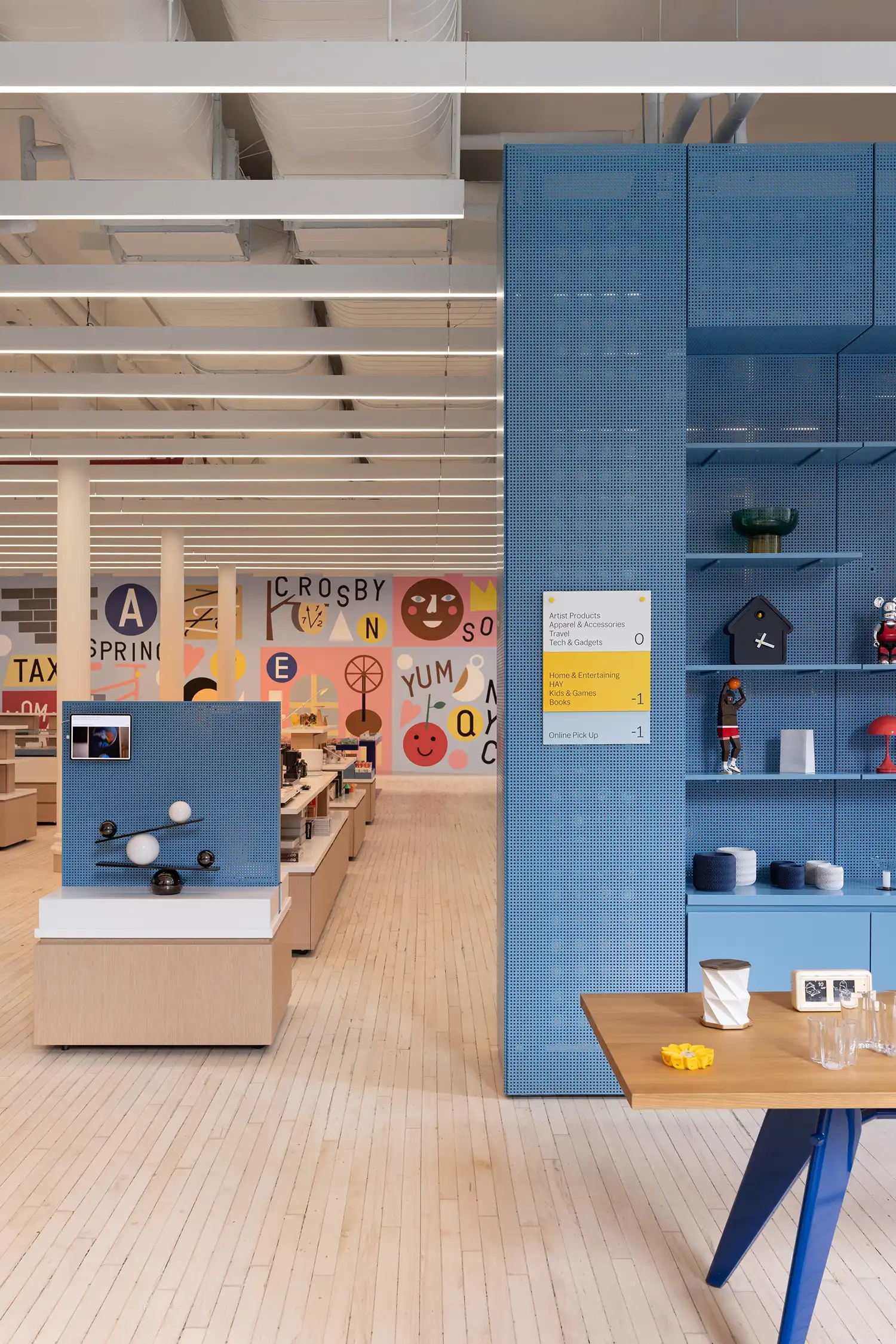
Art is not simply an afterthought but an integral component of the refreshed MoMA Design Store Soho experience. The store’s north wall now serves as a canvas for a rotating series of site-specific murals, anchoring the space and reinforcing the store’s connection to the museum’s programing. The inaugural mural, titled LOVE NYC by artist Nina Chanel Abney, layers symbols of New York street culture with playful references to iconic works from MoMA’s collection, creating a vibrant focal point visible from the street.
The curation and customer journey extends to the lower level, where books are organized and the space is designed for maximum versatility. Here, all casework sits on casters, allowing the basement to be easily reconfigured for hosting events, talks, and pop-ups. This renovation, according to MoMA’s chief retail officer, makes the experience more “inclusive, inspiring and dynamic,” securing the MoMA Design Store Soho’s role as a cultural and commercial cornerstone in NYC design.