

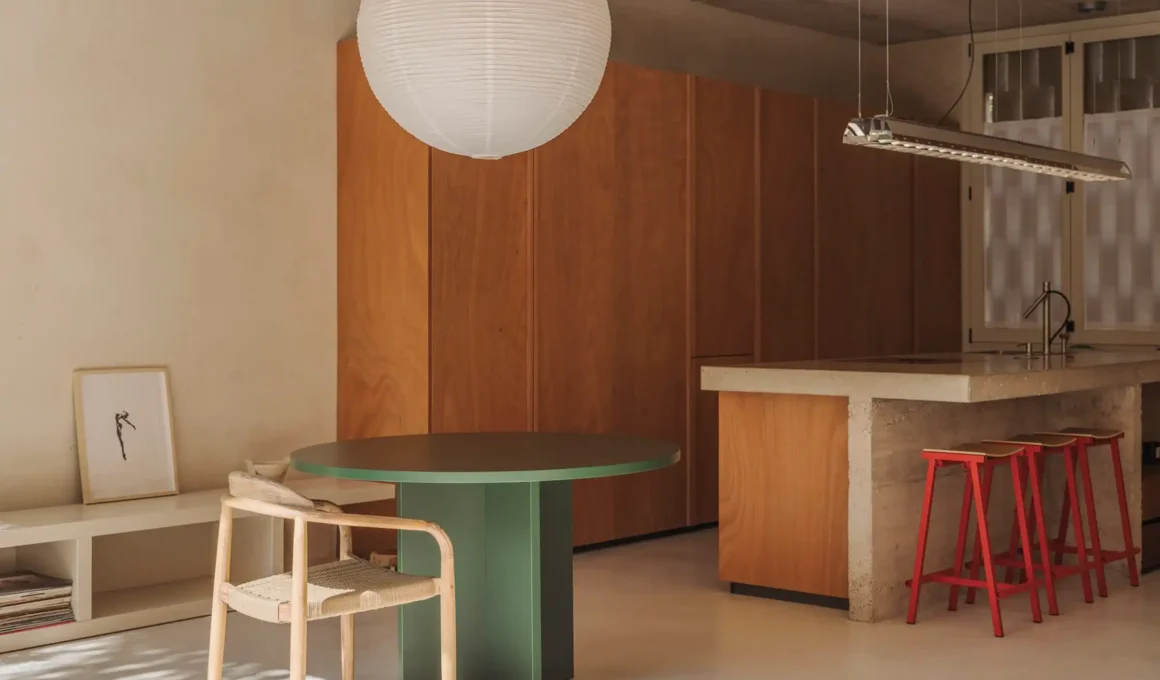
Tucked into the quiet rhythm of Son Espanyolet, a traditional neighborhood in Palma de Mallorca, the House in Palma by Munarq architects is a masterful interplay of restraint and innovation. The project embodies a contemporary architectural language while remaining deeply rooted in the local building traditions of the area. Its modest façade and rational volume align with the low-density fabric of the neighborhood, yet subtle design choices make it a quiet provocation—a home that speaks through materiality, light, and spatial tension.
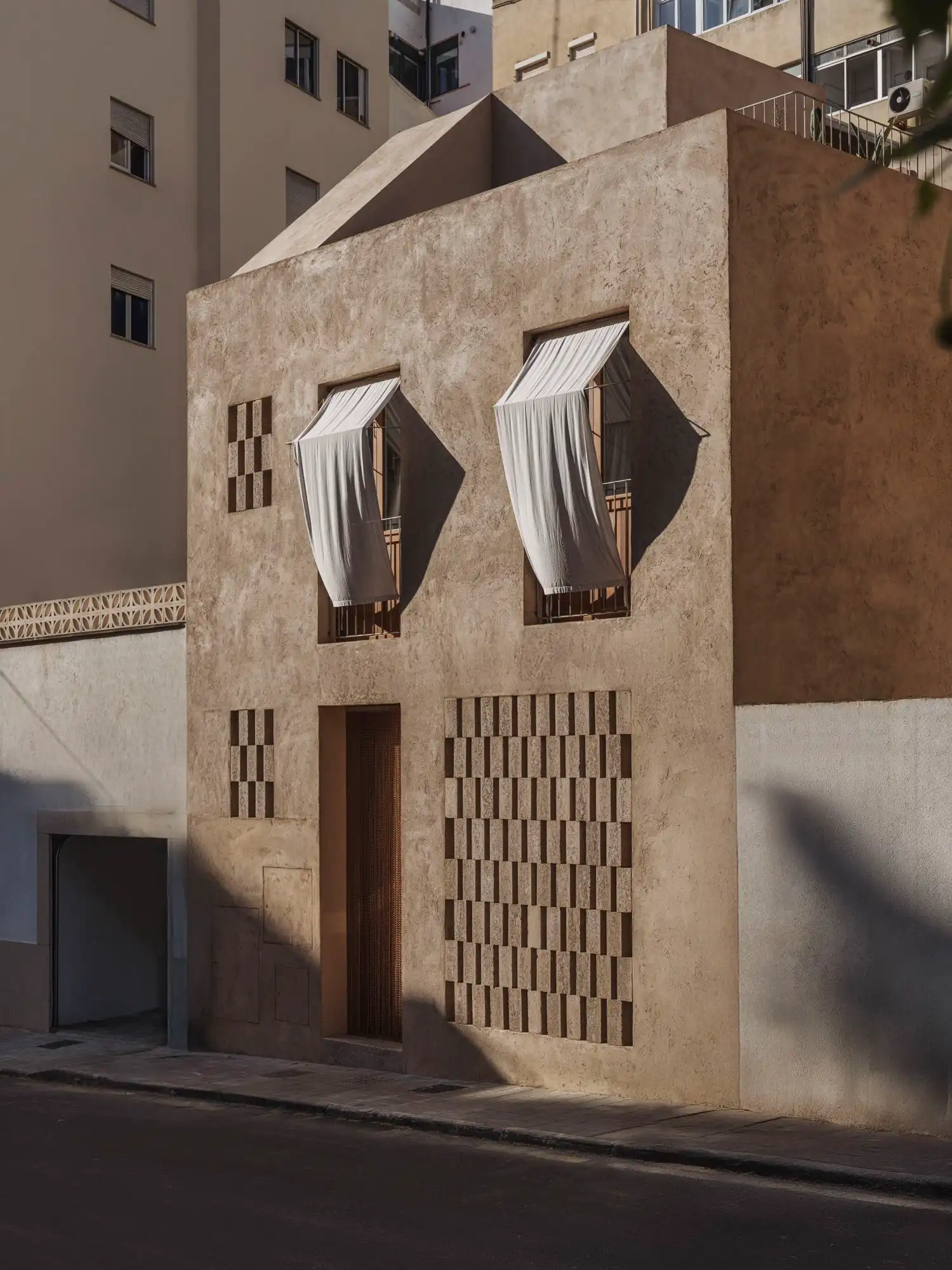
The architectural design emerges from a synthesis of pragmatism and aesthetic intent, where every detail serves a dual purpose. The exterior walls are finished in thick lime plaster, a nod to Mallorcan construction techniques that prioritise durability and climate responsiveness. The rough, textured surface is not merely decorative but a testament to honest materiality, grounding the house in its context while embracing a raw, tactile beauty.
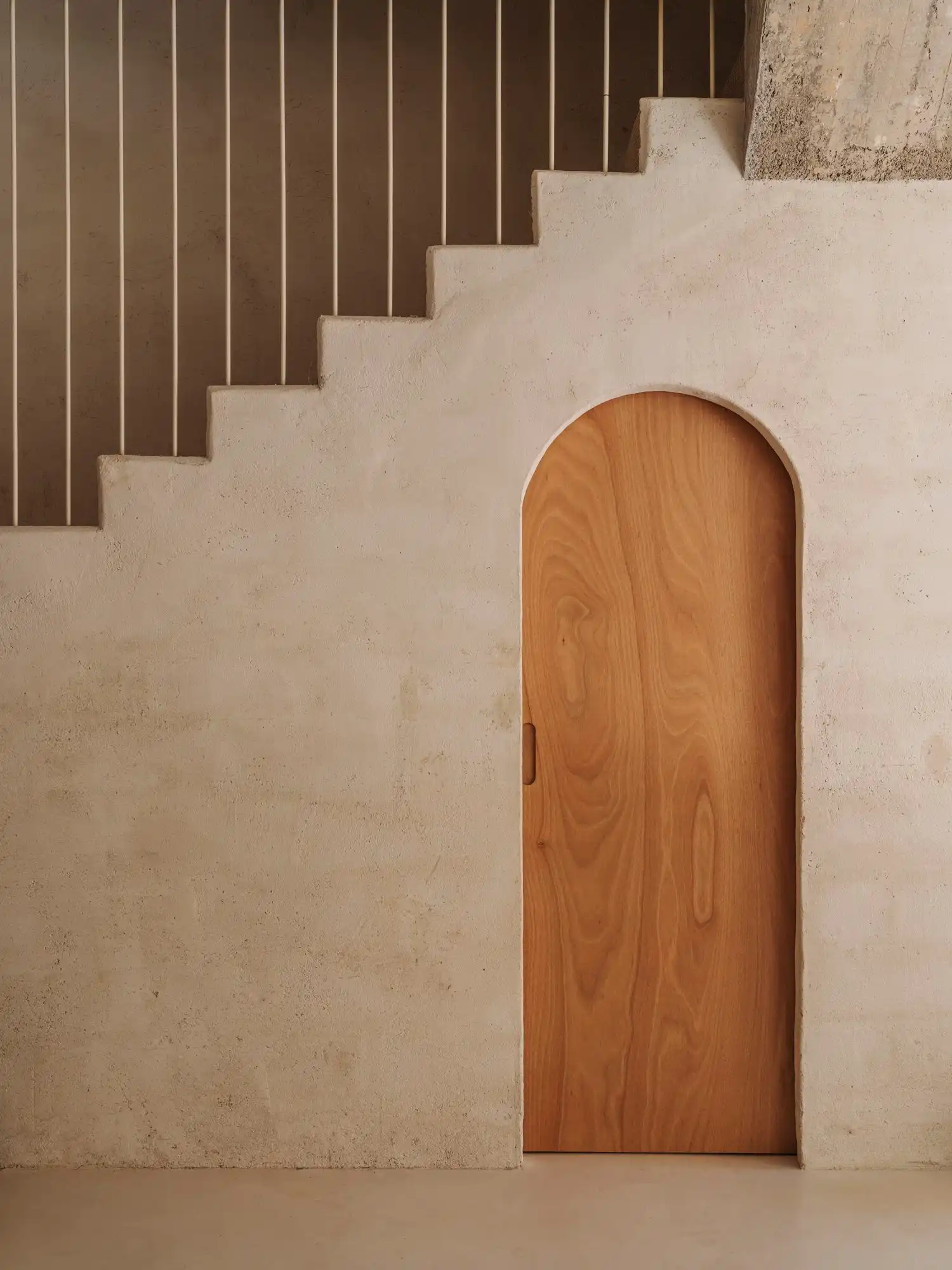
Inside, the exposed concrete ceilings reveal the imprint of their formwork, adding an industrial sensibility that contrasts with the warmth of the plaster walls. This juxtaposition creates a dynamic interplay between refinement and rawness, a recurring theme throughout the home. Steel frames and untreated wood further enrich the material palette, forming a composition that feels both restrained and deeply sensory.
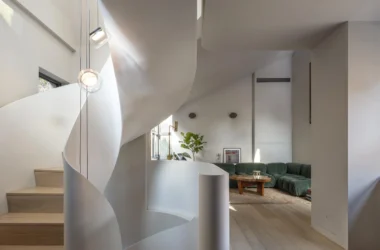
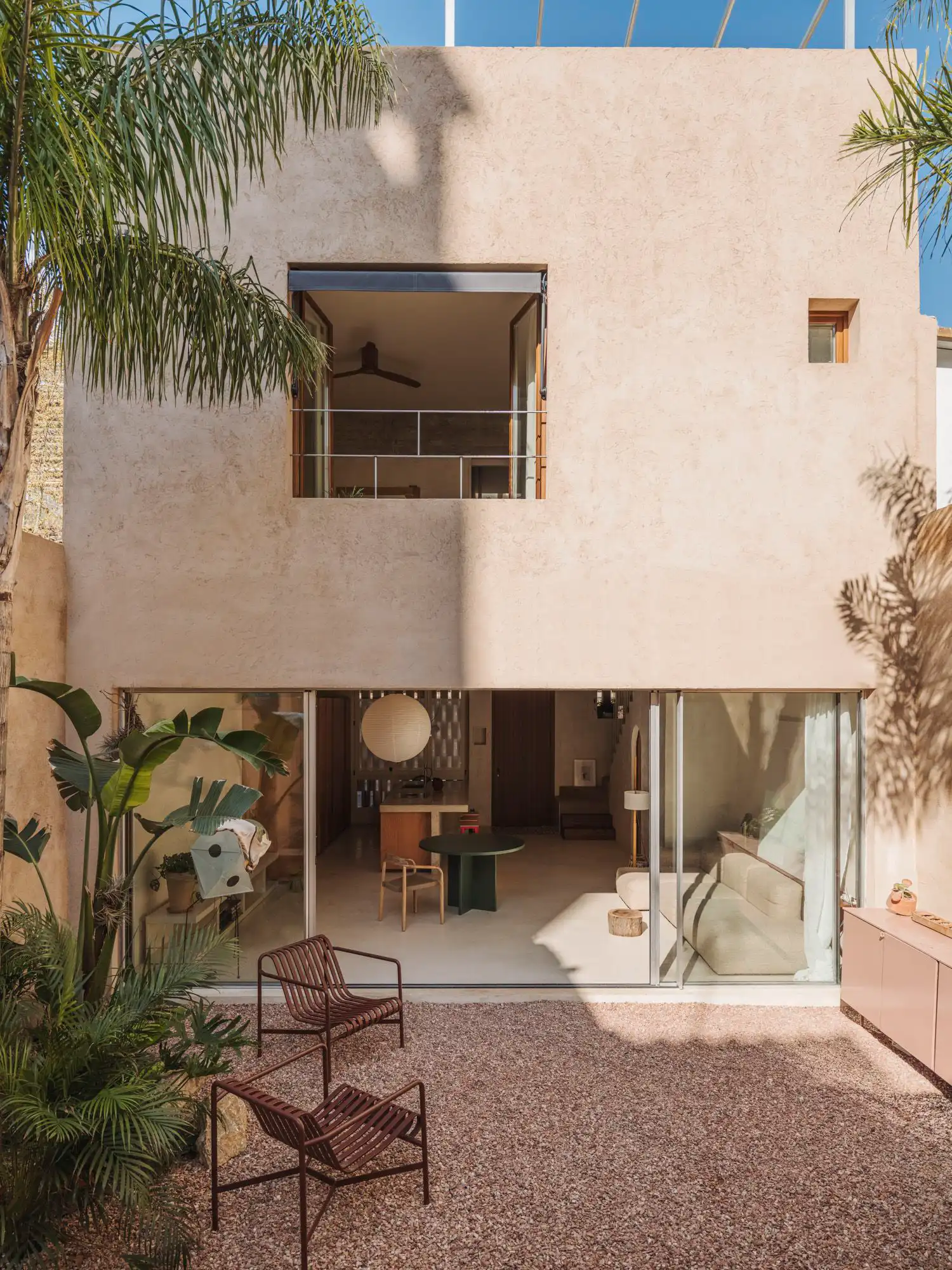
Light plays a pivotal role in shaping the experience of the House in Palma. Large openings and carefully positioned voids allow sunlight to carve out moments of drama and tranquillity, turning illumination into both a functional tool and an artistic subject. The interplay of shadow and brightness enhances the spatial flow, creating zones that oscillate between openness and intimacy.
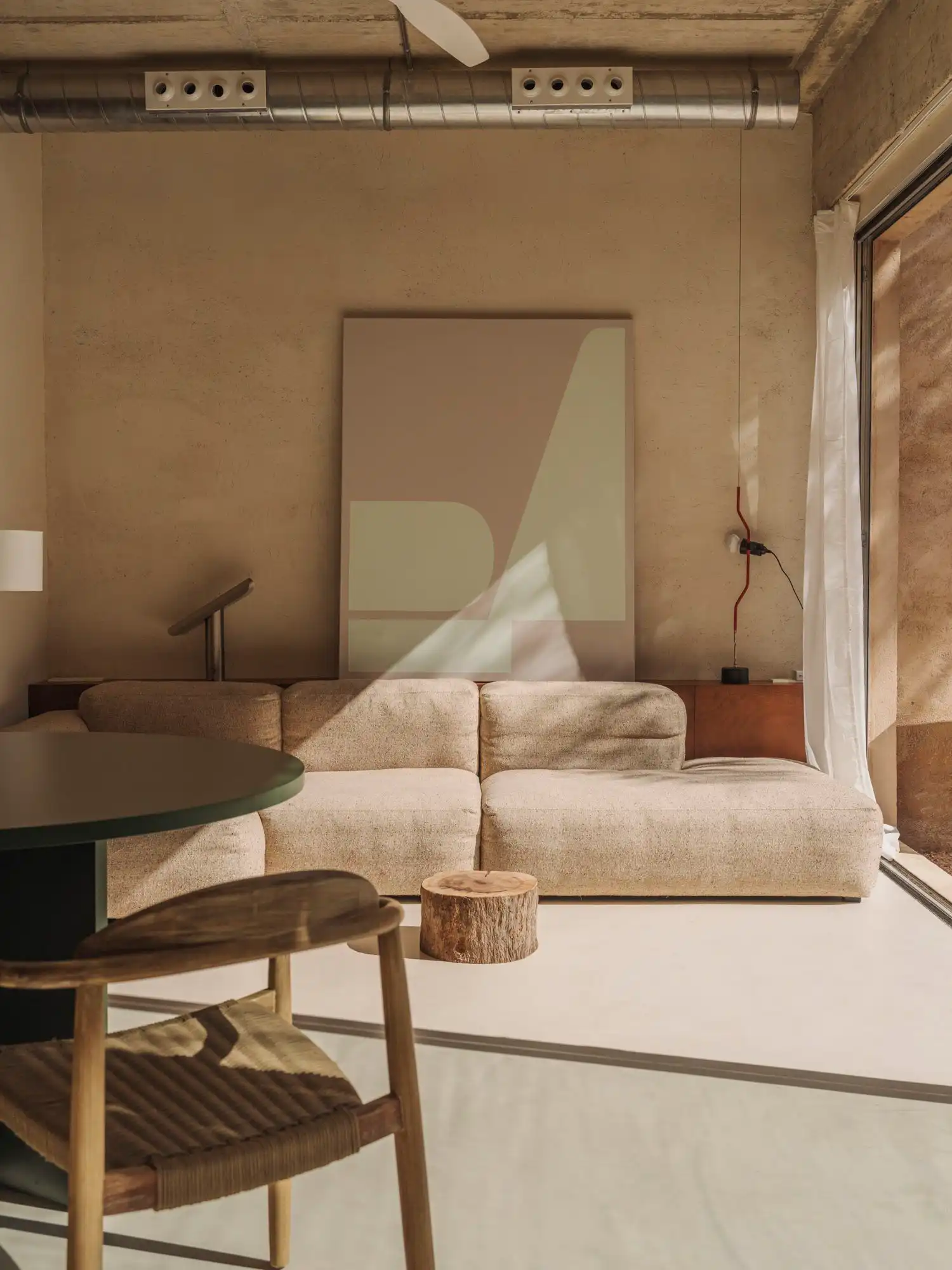
What makes this project remarkable is its ability to mediate between tradition and modernity without overtly declaring one over the other. It does not dominate the streetscape of Son Espanyolet but instead hums with a quiet confidence, proving that thoughtful architecture can honour its past while quietly redefining its future. For those seeking inspiration in minimalist design, adaptive reuse, or contextual architecture, the House in Palma stands as a compelling case study in balance and intentionality.
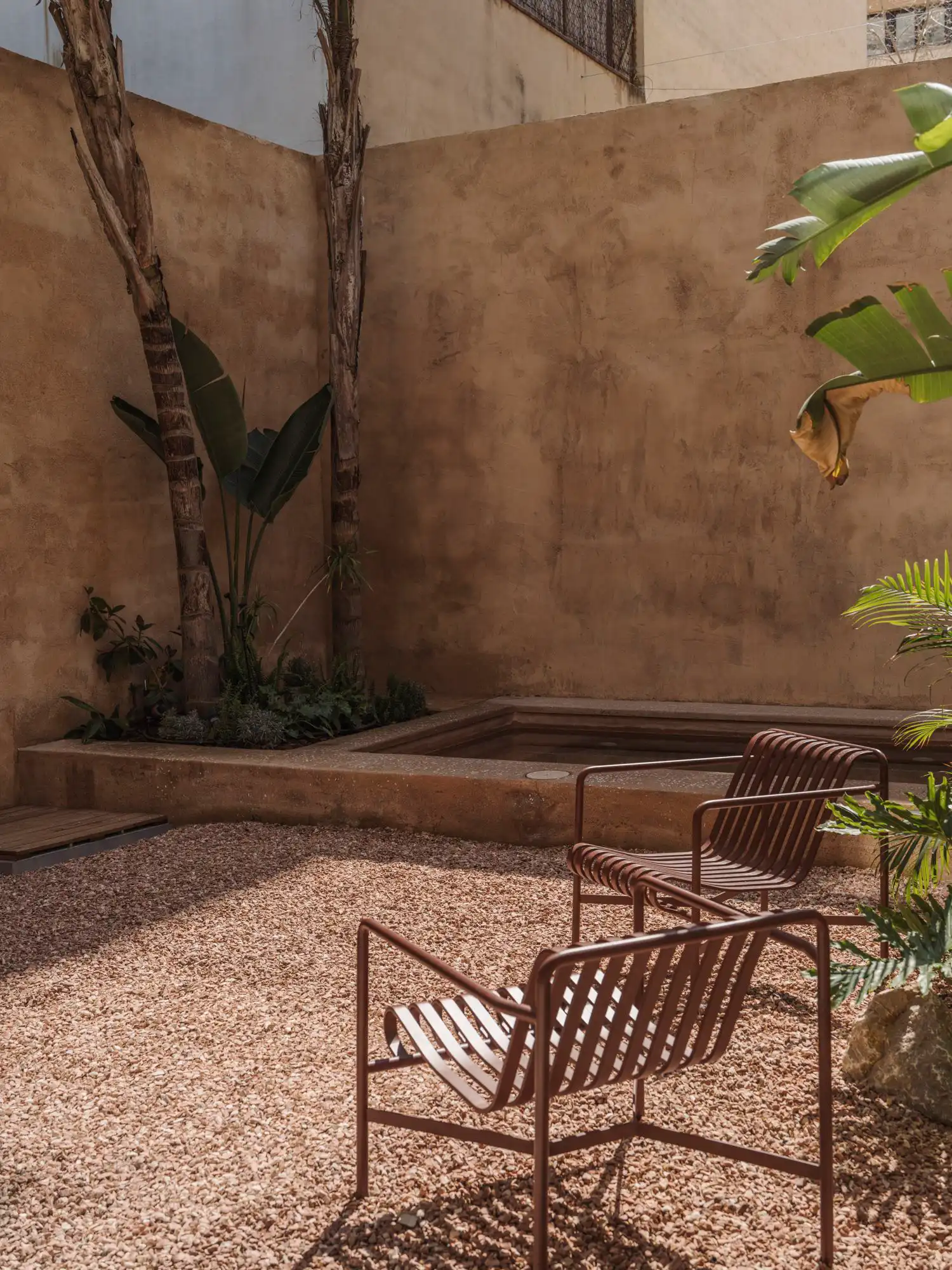
By embracing local craftsmanship while introducing contemporary elements, munarq architects have crafted a home that feels both timeless and of its moment—a poetic yet pragmatic response to the evolving language of residential design.