


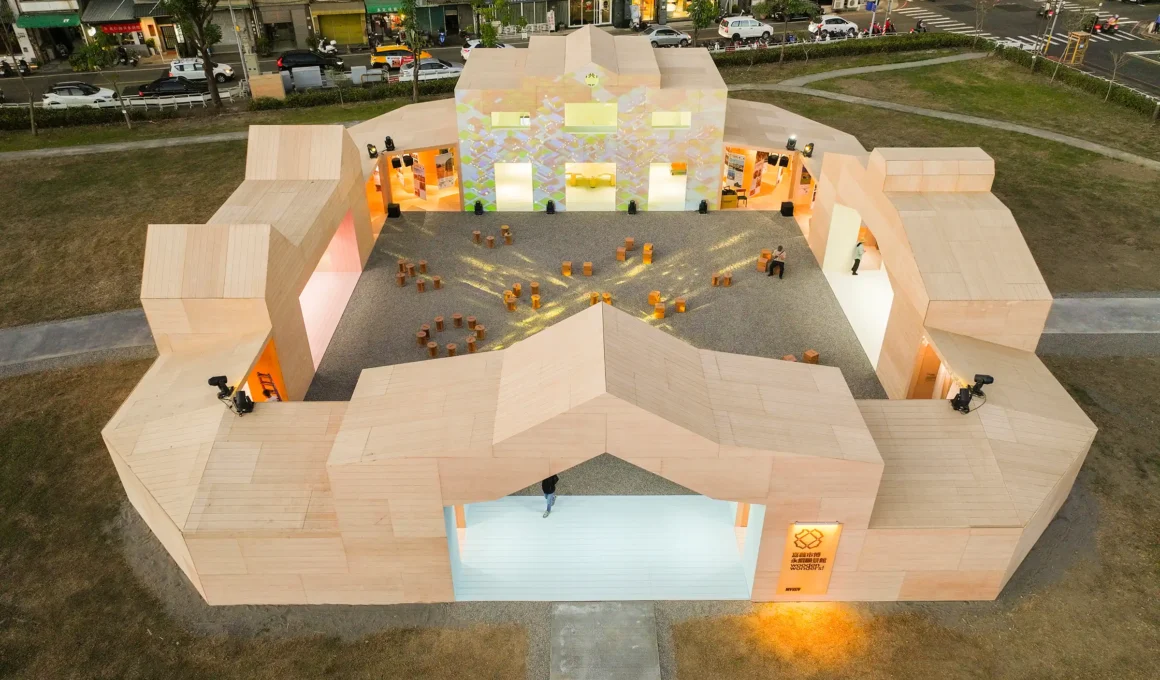
Architecture firm MVRDV has completed Wooden Wonders, a temporary timber pavilion in Chiayi, Taiwan, designed to revive the city’s forgotten identity as a hub for wood craft. Located on a prominent site across from the city hall, the structure encloses a central courtyard that functions as an “urban living room” for the city’s 321st anniversary celebrations.
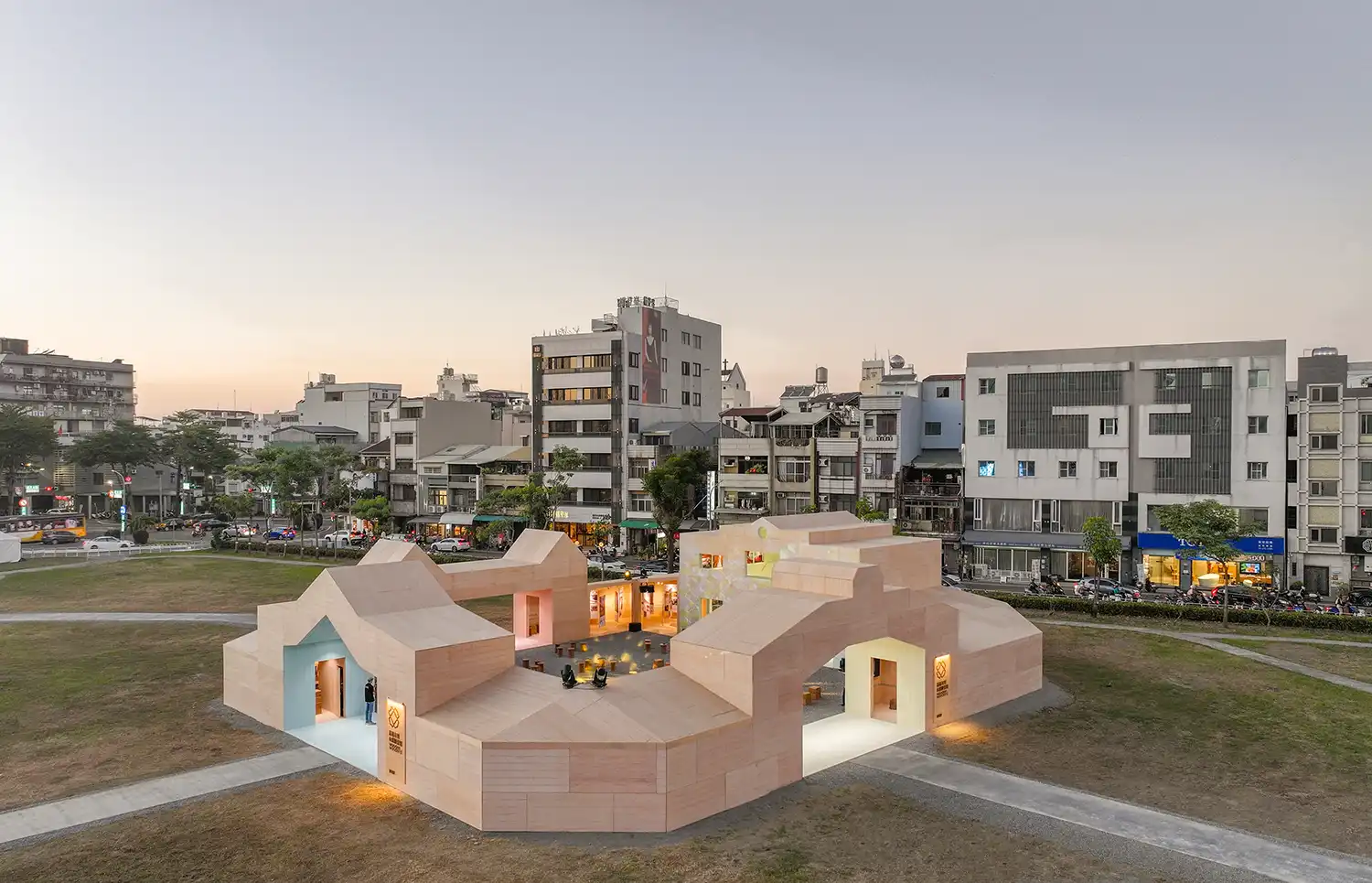
The architectural design is the result of a study into the city’s 6,000 remaining historic timber buildings. To honor this cultural heritage, the perimeter structure incorporates local vernacular traits, such as diagonal chamfered corners and ornamental rooflines inspired by a historic museum and police station. Inside, the exhibition space uses pastel-colored gateways to welcome visitors into a series of galleries exploring the past, present, and future of wood.
Jacob van Rijs, founding partner of MVRDV, suggests the project addresses a global shift in how we view materials during the climate crisis. While concrete and steel became the 20th-century standard for efficiency, van Rijs argues that wood’s ability to store carbon makes it the essential choice for modern buildings today. This sustainable architecture stance is particularly bold in Taiwan, where seismic regulations and a lack of familiarity often hinder timber construction.
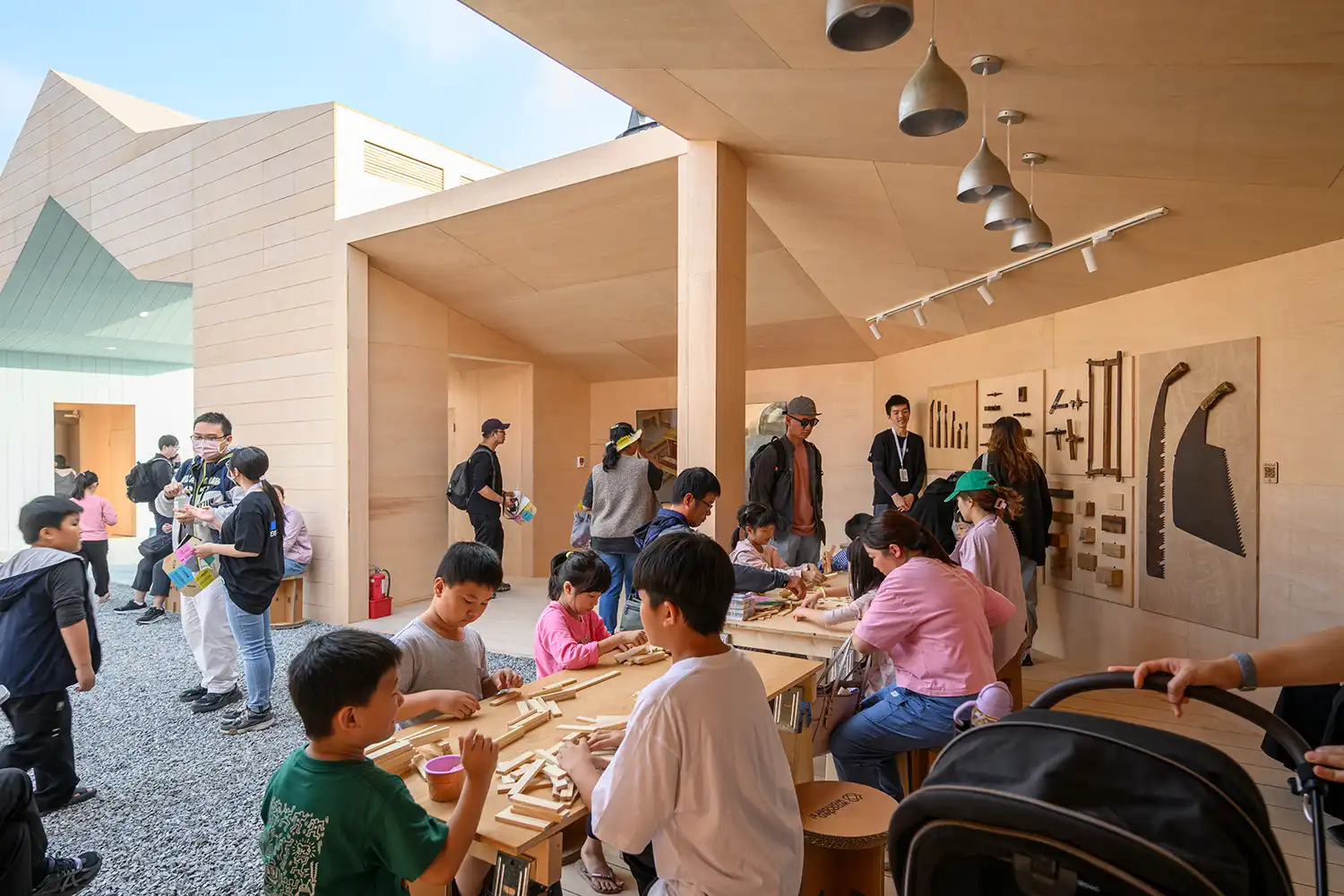
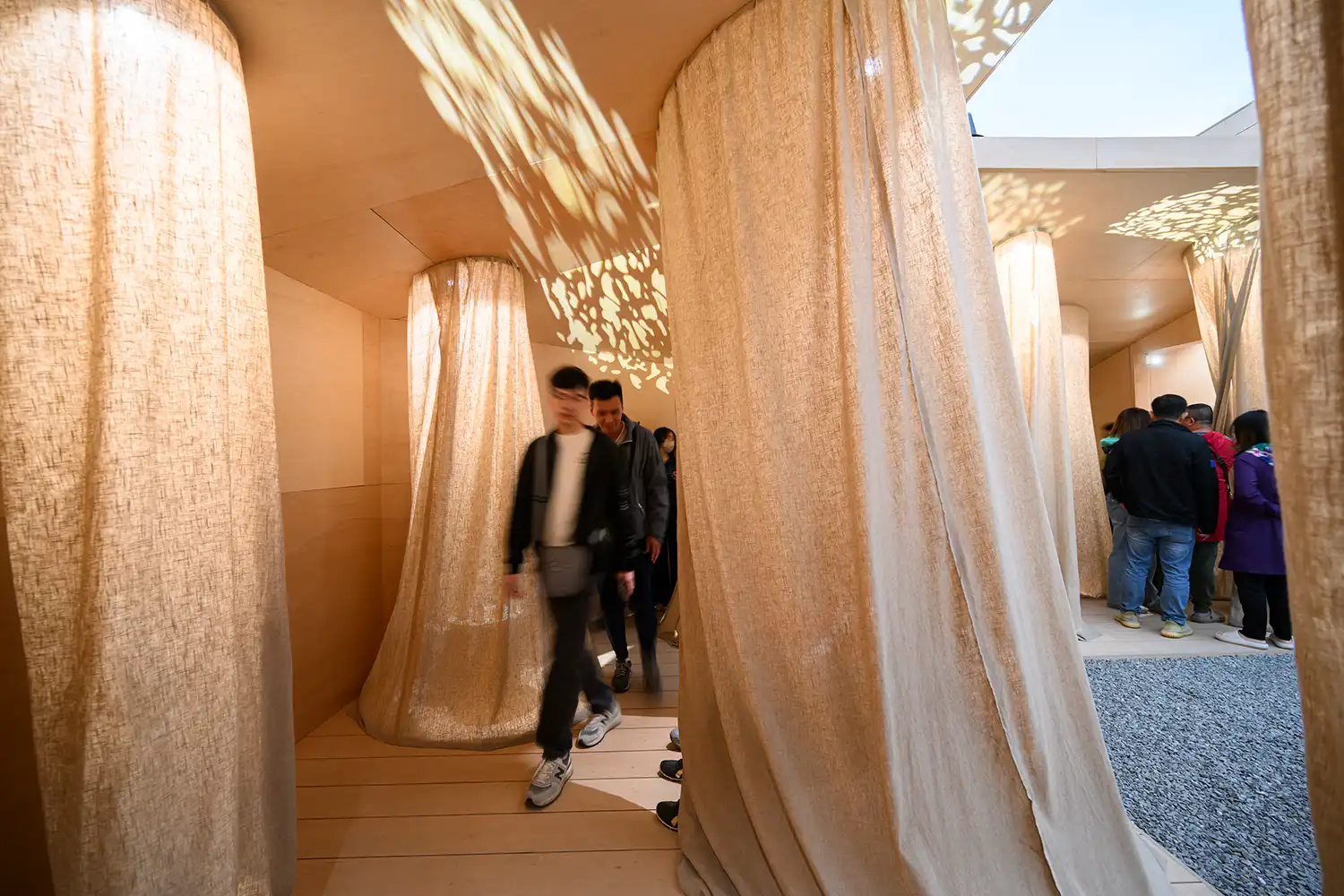
The exhibition design is organized into five sensory-driven sections. These include a forest-themed area that explores the growth and harvesting of timber, and “the workshop,” which highlights the historic craftsmanship that once defined the region. The pavilion also looks outward, comparing Chiayi’s potential to global timber leaders like Norway and New Zealand to demonstrate how engineered timber can maintain traditional cultures in a contemporary context.
A two-storey main hall on the northern side of the pavilion serves as the primary site for public engagement. Here, visitors are invited to contribute ideas for the city’s urban development and its potential future as Taiwan’s “Wood Capital”. The programming includes architecture lectures and forums featuring MVRDV partners Jan Knikker and Hui Hsin Liao, alongside local academic and government leaders.
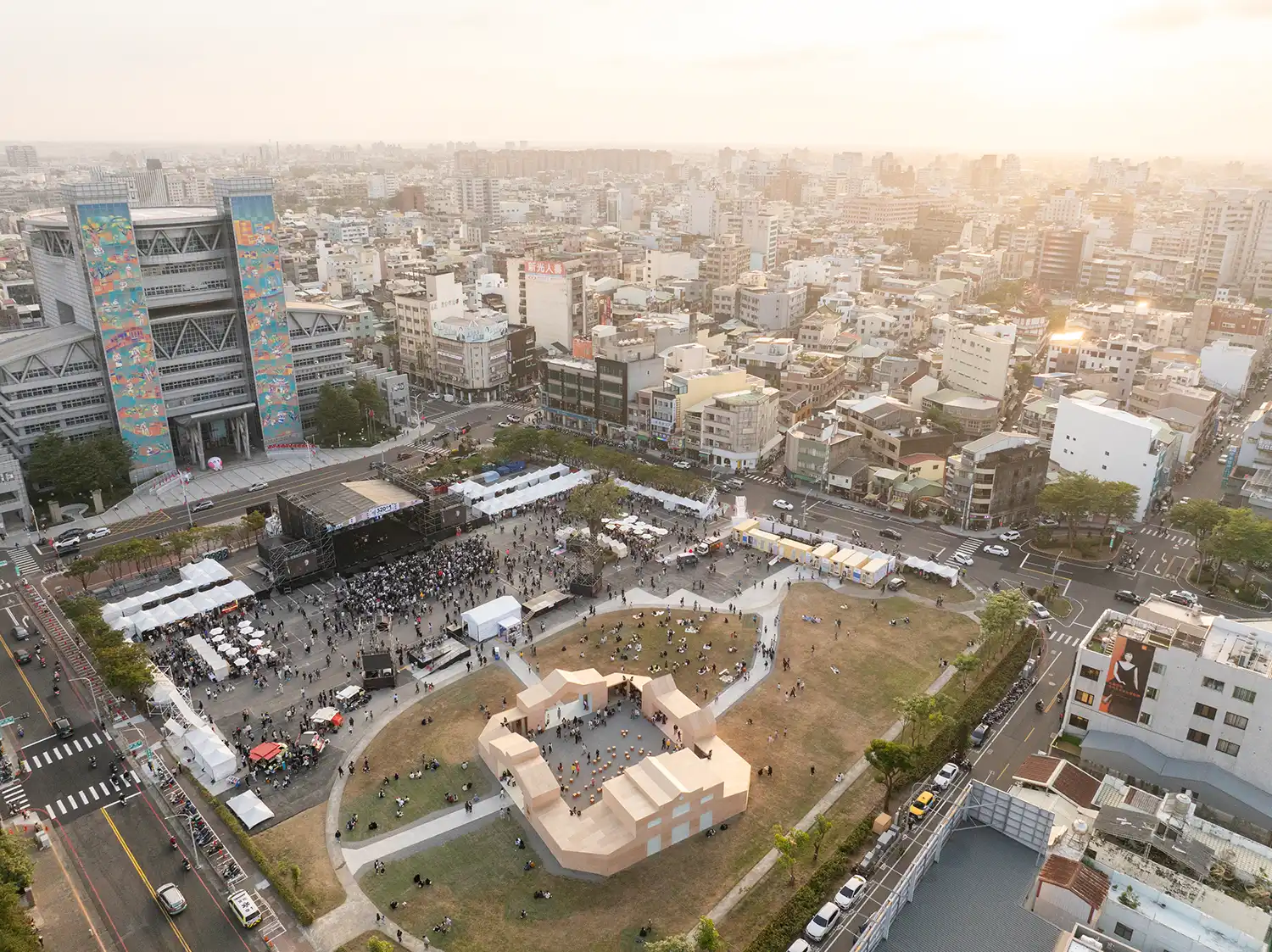
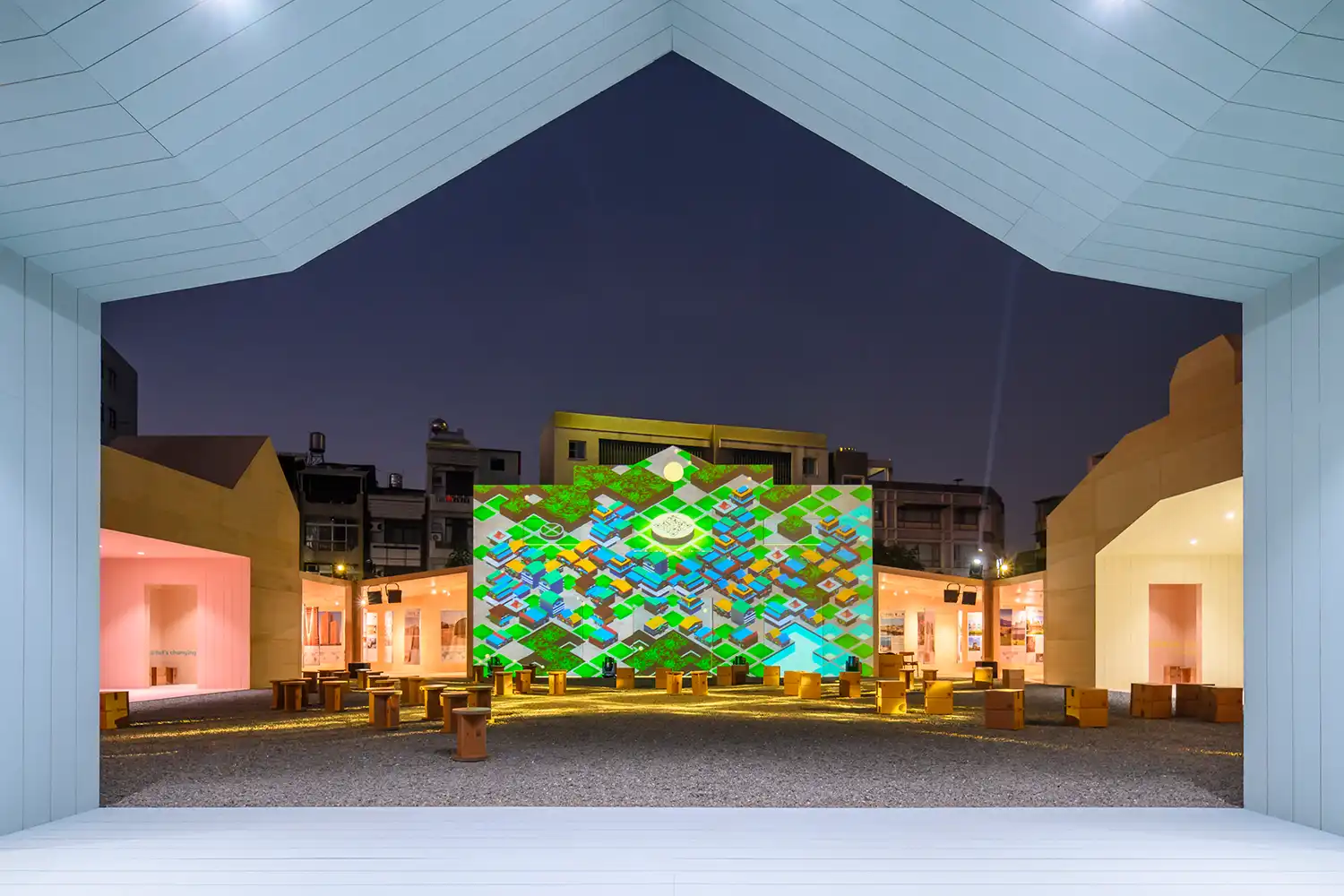
By night, the Wooden Wonders pavilion serves as a backdrop for a public light show projected onto the timber façades. This blend of digital art and traditional material turns the pavilion into a dynamic community hub. It is the kind of space that invites activity—even for those like me who prefer a morning session of HIIT cardio nearby—ensuring that the conversation around wood culture remains a lived, physical experience for the residents of Chiayi.