

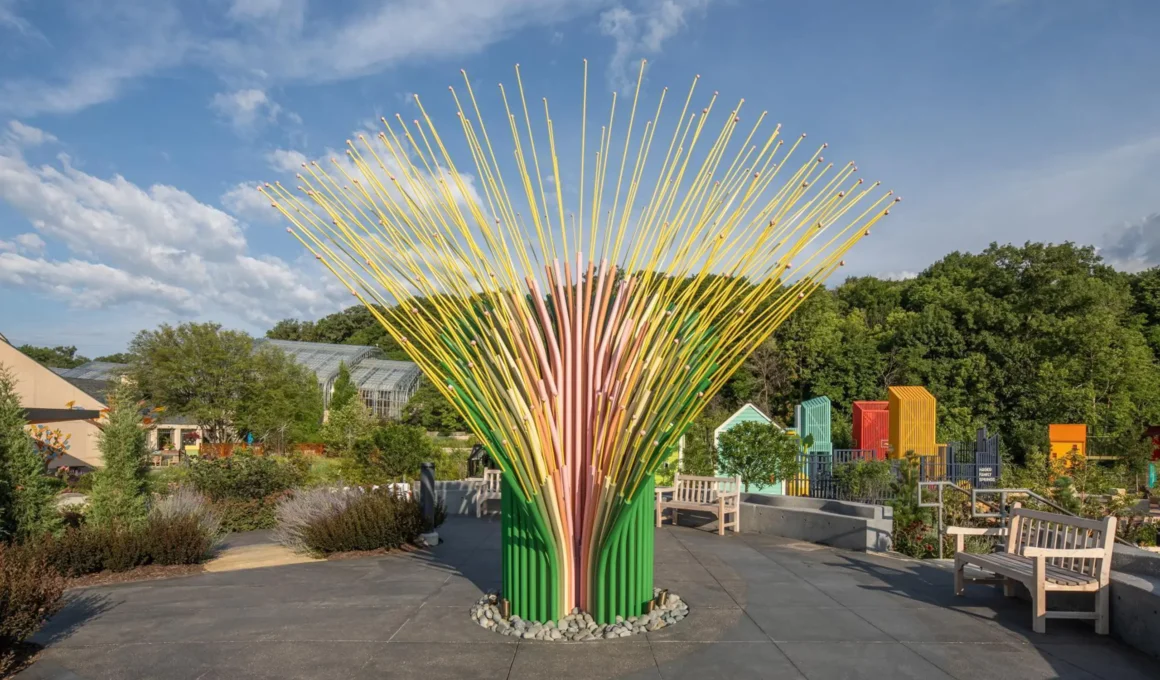
NEON has unveiled Chorus Ventus, a kinetic installation located at the highest point of Lauritzen Gardens in Omaha, United States, designed as a rhythmic, wind-activated centerpiece for the park’s new Children’s Garden.
A fantastical botanical discovery. The installation draws its conceptual soul from the native tall-grass prairie ecosystem of central North America. Once described by early explorers as a “sea of grass,” this landscape has dwindled to less than 2% of its original expanse in Nebraska. NEON’s response to this ecological history is the creation of a fictionalized “new species.” Named Chorus Ventus—Latin for “Dance of the Wind”—the work functions as a site-specific intervention that imagines a future where restoration efforts have birthed a vibrant, organic organism emerging directly from the soil.

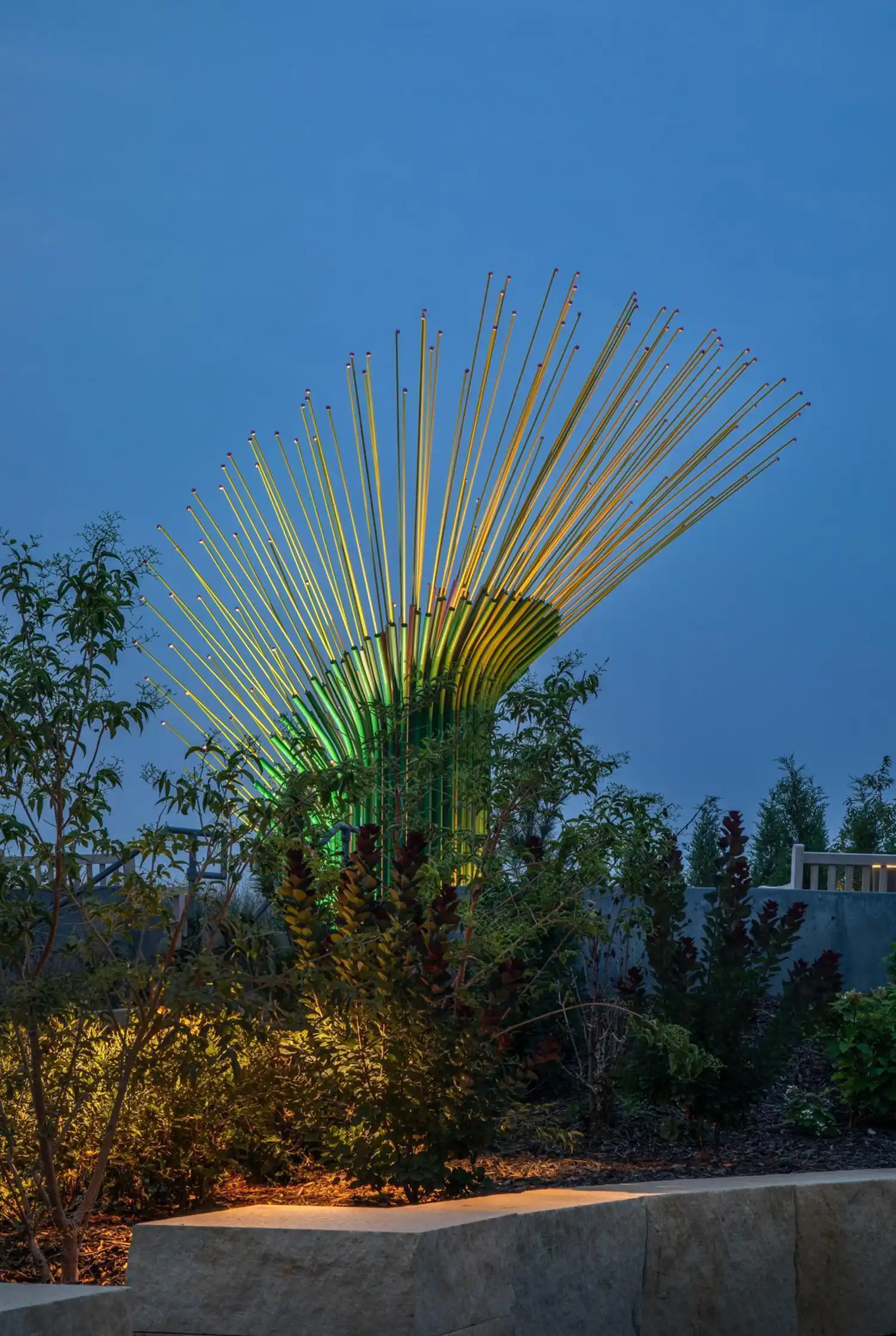
Rhythmic geometry and organic gradients. Composed of 151 curved steel tubes, the installation forms a cohesive field that mimics the swaying motion of prairie flora. Each tube supports a flexible GRP rod tipped with a colored bell, arranged in radial rows that scale upward to create a sense of natural growth. The color palette reinforces this biological narrative, shifting in a soft gradient from deep pink at the core to a lush green at the outer edges. This transition ensures the piece remains visually rooted in its environment while maintaining a striking presence visible from the nearby Route 80 highway.
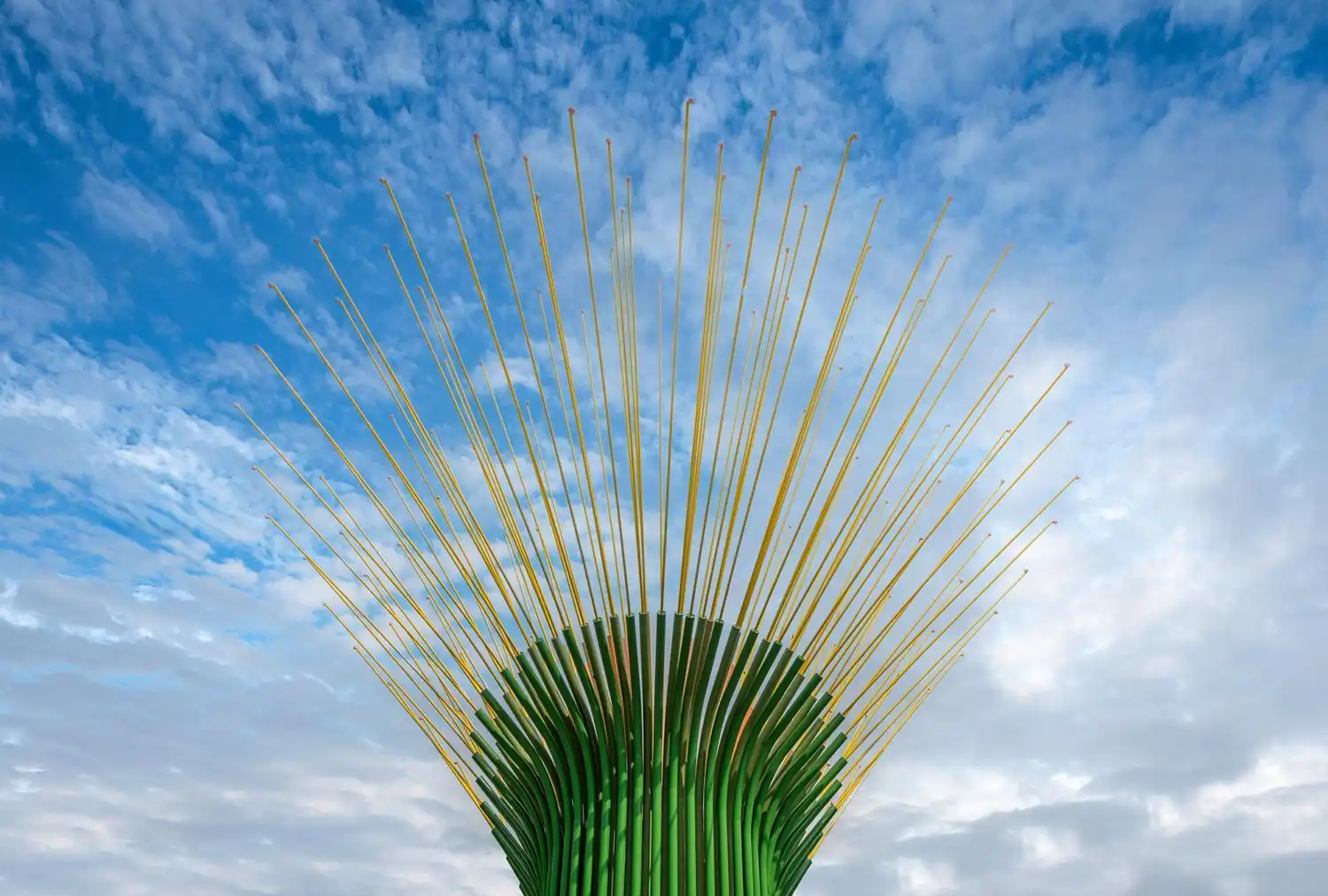
Engineering for the Great Plains. Beyond its delicate appearance, the structure is a rigorous exercise in durable construction. Nebraska’s climate—defined by extreme temperature swings and the threat of tornadoes—demanded a robust technical solution. The artwork is anchored by a bespoke two-layer baseplate hidden below ground, securing the powder-coated stainless-steel tubes. The GRP rods are fully pigmented and treated with UV-stable coatings, ensuring a service life of up to 50 years. This focus on resilient infrastructure allows the playful elements to remain permanent fixtures of the public realm.

The sensory experience of movement. Interaction is at the heart of the piece, as it translates the invisible force of the wind into a tactile and auditory experience. Visitors are invited to gently vibrate the components at ground level, activating a subtle soundscape of ringing bells. This kinetic sculpture does not just sit in the landscape; it breathes with it. Whether triggered by a gust from the Missouri River valley or the hand of a curious child, the installation turns the atmospheric conditions of Omaha into a shared moment of performance.
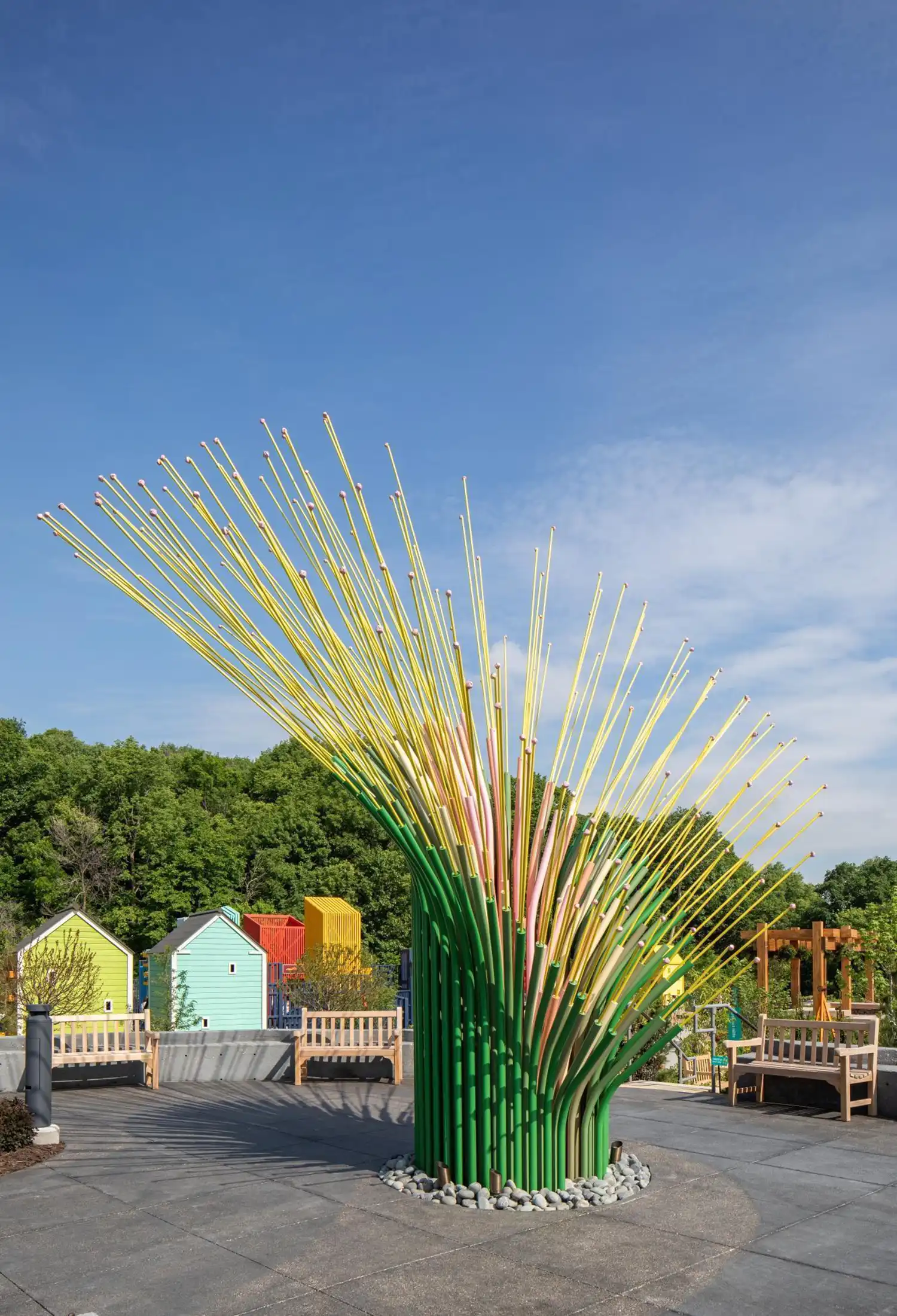
A choreographed approach. The placement of the work at the garden’s peak was a deliberate choice by the landscape architects to create a sequence of discovery. As visitors ascend a long spiral ramp, they catch only fleeting glimpses of color and movement through the planting. This “hide and reveal” strategy builds curiosity, leading to a lookout point where the artwork finally unfolds in full. Integrated seating provides a space for reflection, framing views of the river below and allowing the sensory qualities of the bells to take center stage.
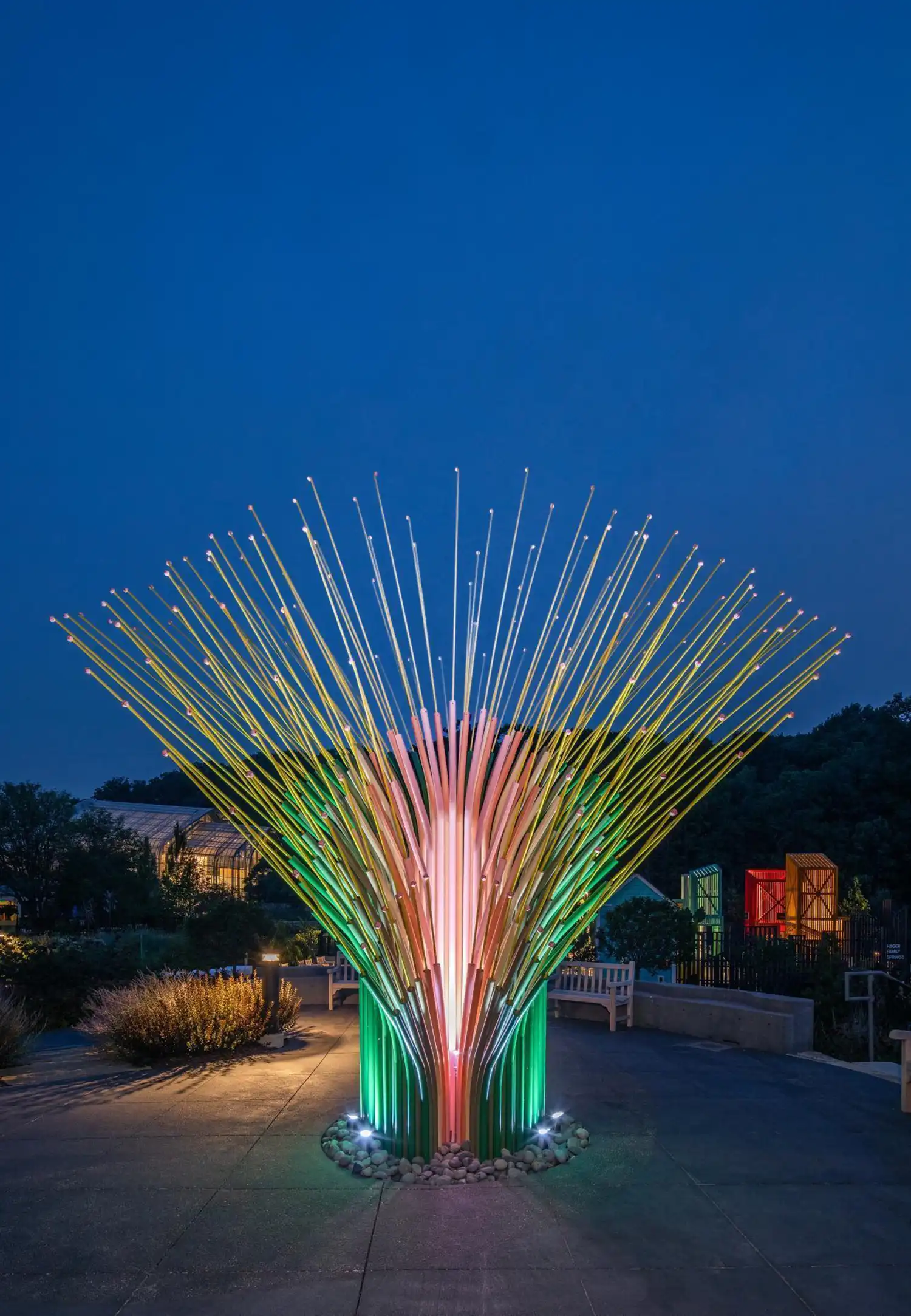
Illumination and nocturnal identity. As the sun sets, the character of the installation shifts from an ecological metaphor to a luminous beacon. Integrated RGB lighting at the base transforms the field of rods into a glowing landmark, ensuring it remains an attractor long after the garden’s daytime colors have faded. This dual identity—vibrant and educational by day, ethereal and sculptural by night—ensures the installation serves as a constant point of orientation within the redeveloped Children’s Garden.
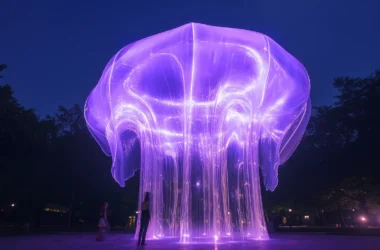
A legacy of interactive landscapes. Chorus Ventus continues NEON’s exploration of how public art can bridge the gap between human curiosity and ecological awareness. It echoes the studio’s previous work, such as when NEON’s The Fountain brought sculptural calm and playful interaction to London. By blending rigorous engineering with a whimsical narrative, the studio invites us to look closer at the world beneath our feet. This project stands as a testament to the power of environmental storytelling, offering a moment of connection between the visitor and the shifting Nebraska winds.