


“It is no coincidence that when Nico Vascellari first stepped into the Sala delle Cariatidi at Palazzo Reale, Pastorale was the title that came to mind,” eloquently write Roberto Lacarbonara and Sergio Risaliti in their essay accompanying Nico Vascellari‘s latest exhibition. This seemingly simple observation unfurls into a profound meditation on history, resilience, and the unexpected power of nature within a space scarred by the echoes of war.
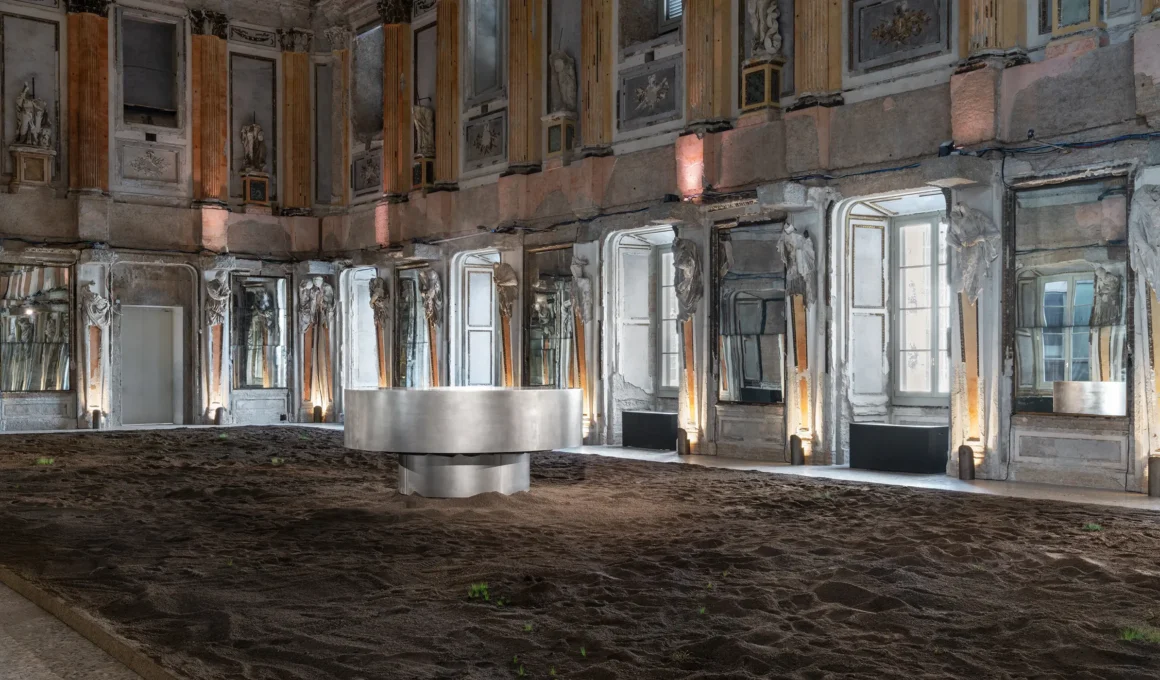
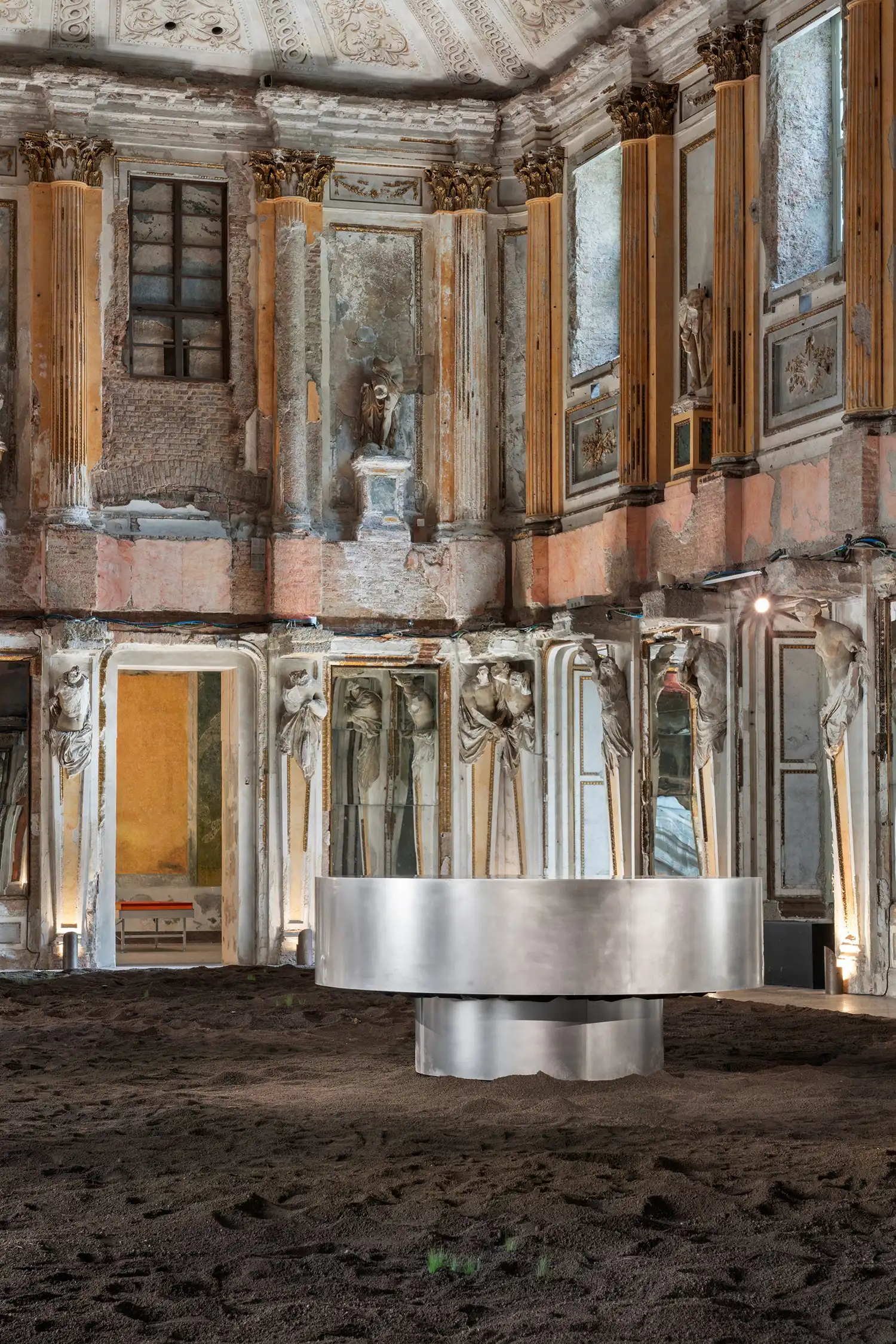
The Sala delle Cariatidi, its very walls bearing the brutal testament of the 1943 bombings, provides a potent backdrop for Vascellari’s intervention in Milan. As Lacarbonara and Risaliti note, the title Pastorale, evoking an Arcadian idyll, stands in stark contrast to this history of devastation. Yet, it is precisely within this tension that the exhibition finds its resonance. Vascellari invites us to consider the enduring human need for refuge, for visions of peace that can offer solace amidst the turmoil of existence.
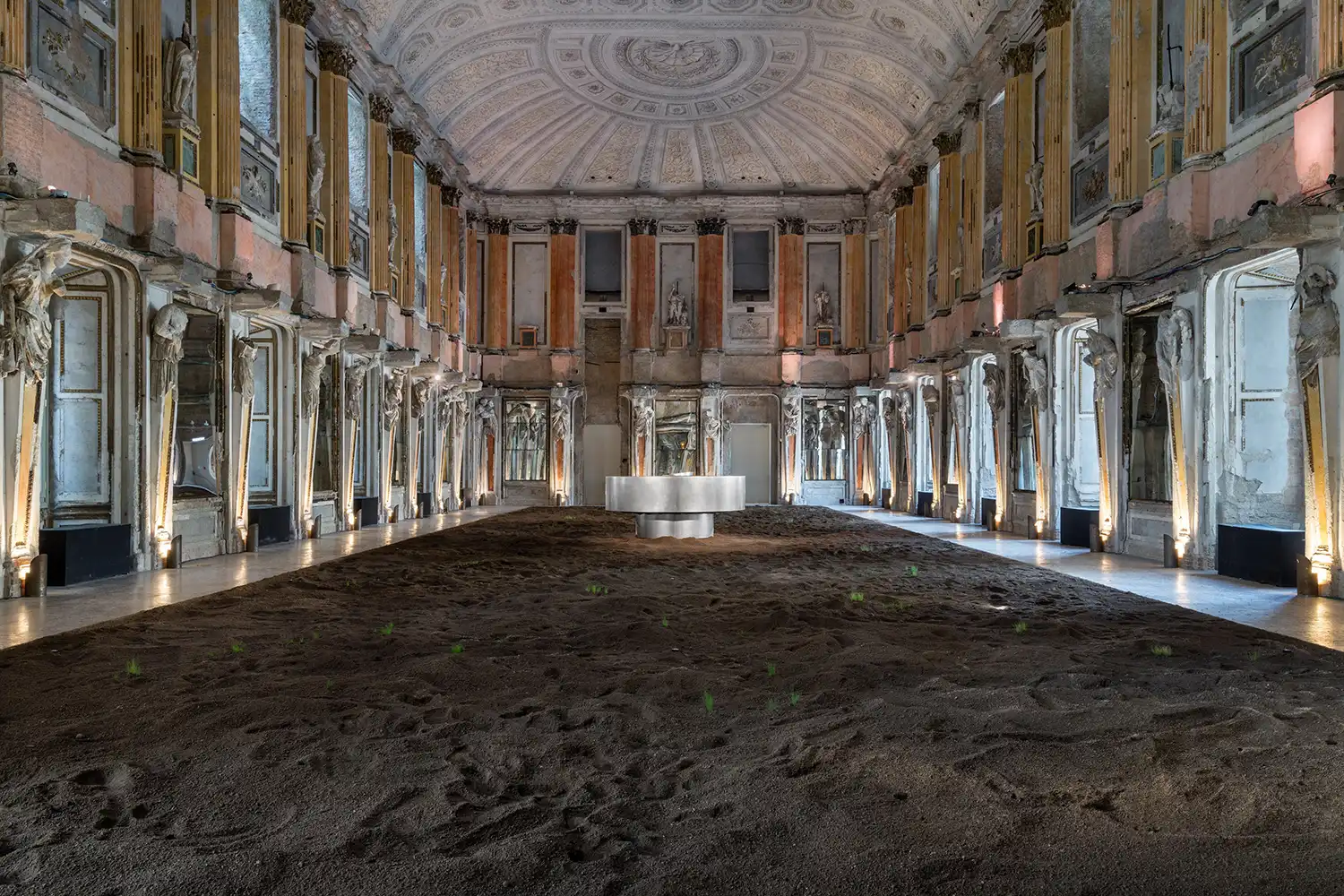
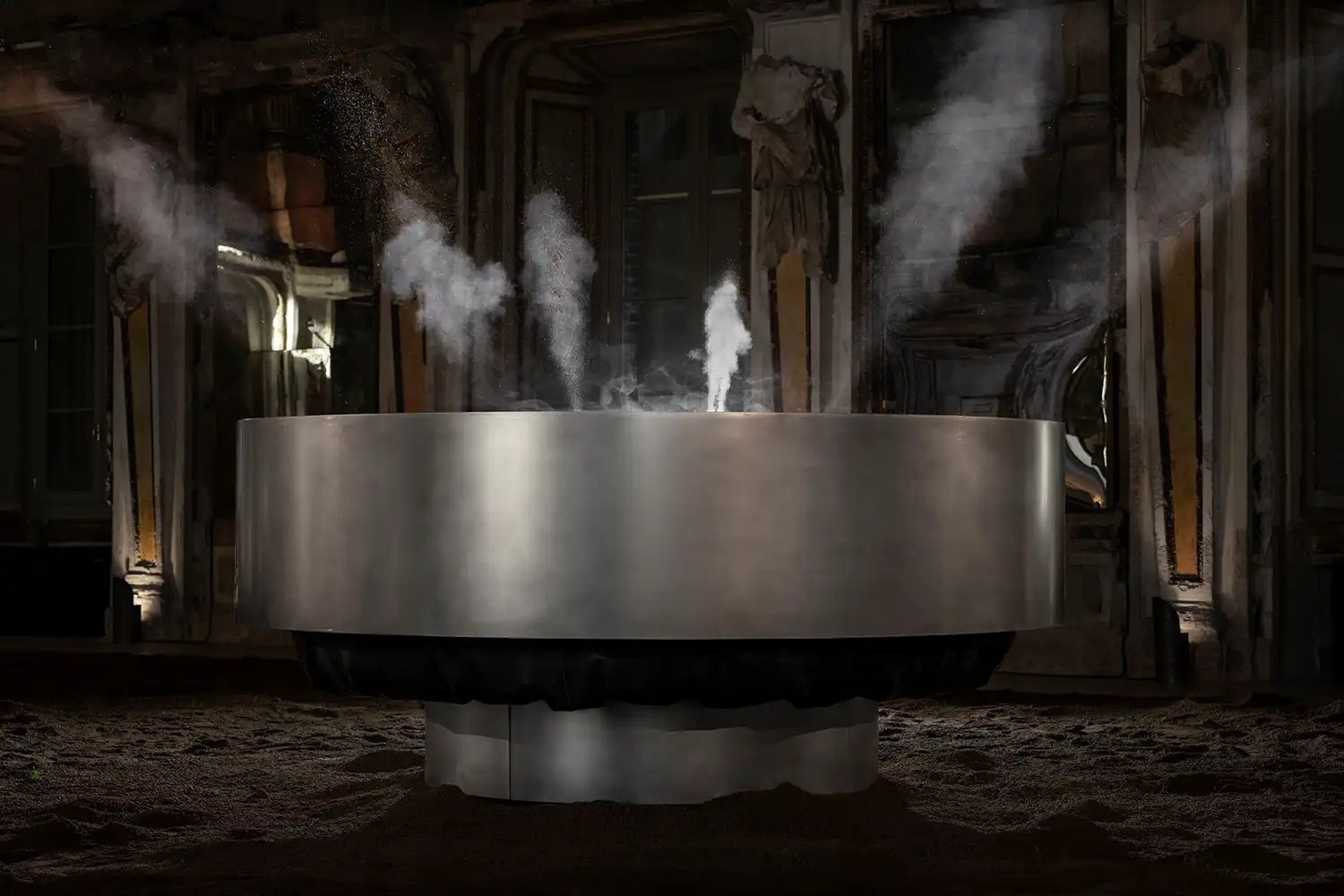
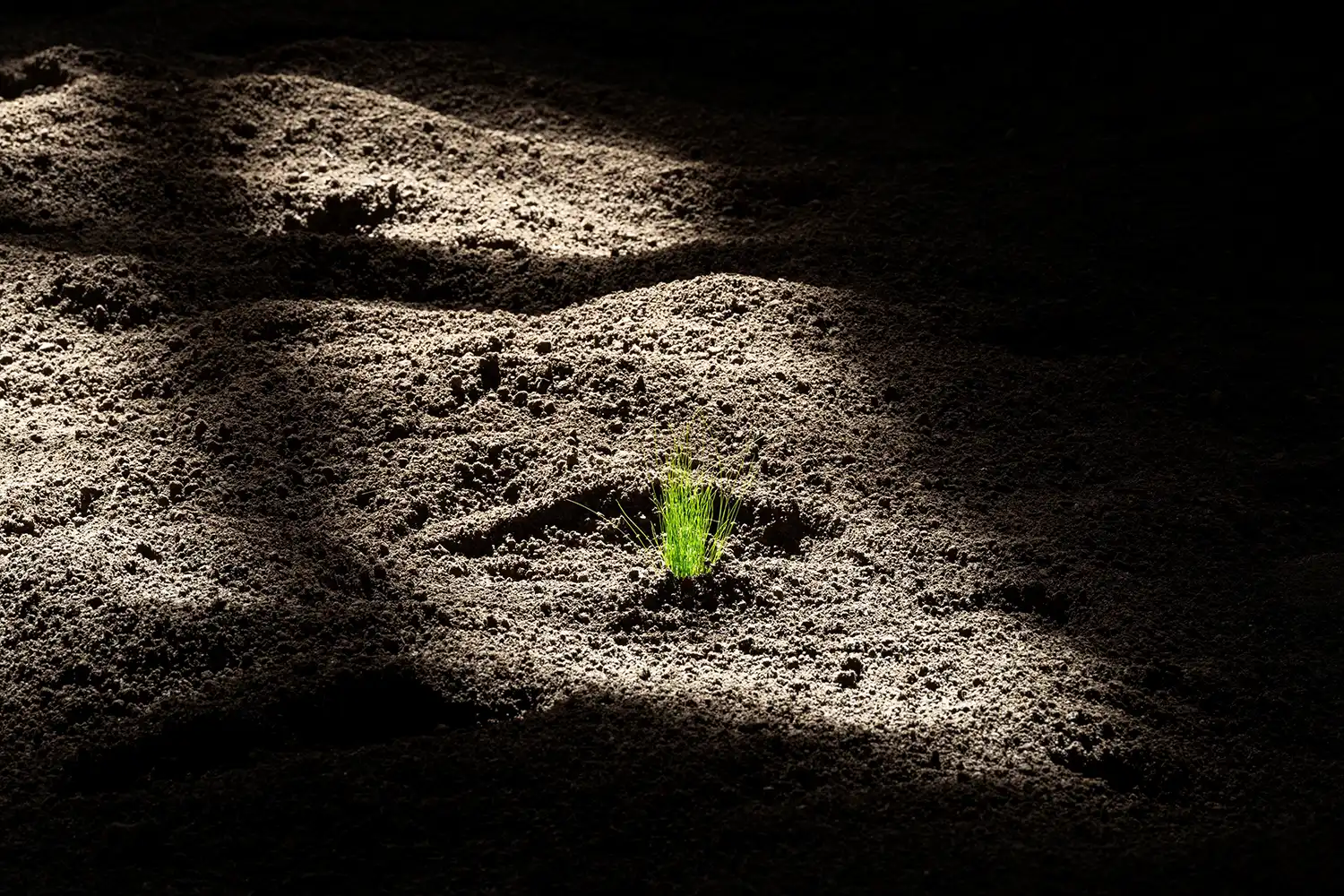
At the heart of this dialogue between destruction and serenity lies a compelling environmental sculpture. A circular mechanical body of steel rests upon a layer of earth that blankets the historic floor. This is no static object; at measured intervals, it unleashes a thunderous explosion, a stark reminder of the hall’s past, before gently releasing seeds of often-eradicated weeds. Day after day, these tenacious seeds take root, forming a living, self-sufficient ecosystem within the gallery. This burgeoning “weed” garden, destined to evolve and transform, becomes a powerful metaphor for resilience, an unexpected bloom emerging from a site marked by ruin.
The choice of the Sala delle Cariatidi is far from arbitrary. The essay reminds us that this very space hosted Picasso’s Guernica in 1953, solidifying its significance as a place where history, particularly its most violent chapters, is confronted. Vascellari’s Pastorale continues this tradition, speaking to our present moment, a time shadowed by new conflicts and a seemingly fractured connection with the natural world.
However, Vascellari’s vision extends beyond mere lament. His childhood memory of swallowing a cherry pit, initially a source of fear – the imagined tree erupting from within – now transforms into an “idyllic” ideal. This personal anecdote encapsulates the exhibition’s core: a belief in the inherent power of nature to renew and resist, even in the face of human violence. The artist’s deep connection to the mountains and forests of his native Vittorio Veneto informs this perspective, suggesting that while human conflict may clash with the forces of nature, it is within nature that the potential for regeneration lies.
This is not an escapist fantasy, but rather an active engagement with history. Vascellari urges us to acknowledge the weight of the past while simultaneously embracing the urgency of moral, political, and artistic action. Pastorale builds upon the artist’s recent large-scale projects, such as Melma at Forte Belvedere and Alessio at Palazzo Vecchio, continuing his exploration of the dynamic interplay between natural and historical forces, personal experience and collective memory, all within a framework of contrasting elements.
Adding an intriguing layer to the exhibition’s narrative is the introduction of the “boops,” fantastical creatures conceived by Vascellari to observe the Sala delle Cariatidi from an alien perspective. These whimsical beings, part of the exhibition’s visual identity designed by Giga Design Studio, have already populated a teaser communication campaign across Milan’s maxi-LED screens, offering their unique gaze upon the city. They will further inhabit a special series of editions for the Pastorale bookshop, developed in collaboration with NM3, and their presence heightens the sense of wonder and invites a fresh perspective on the historical space.
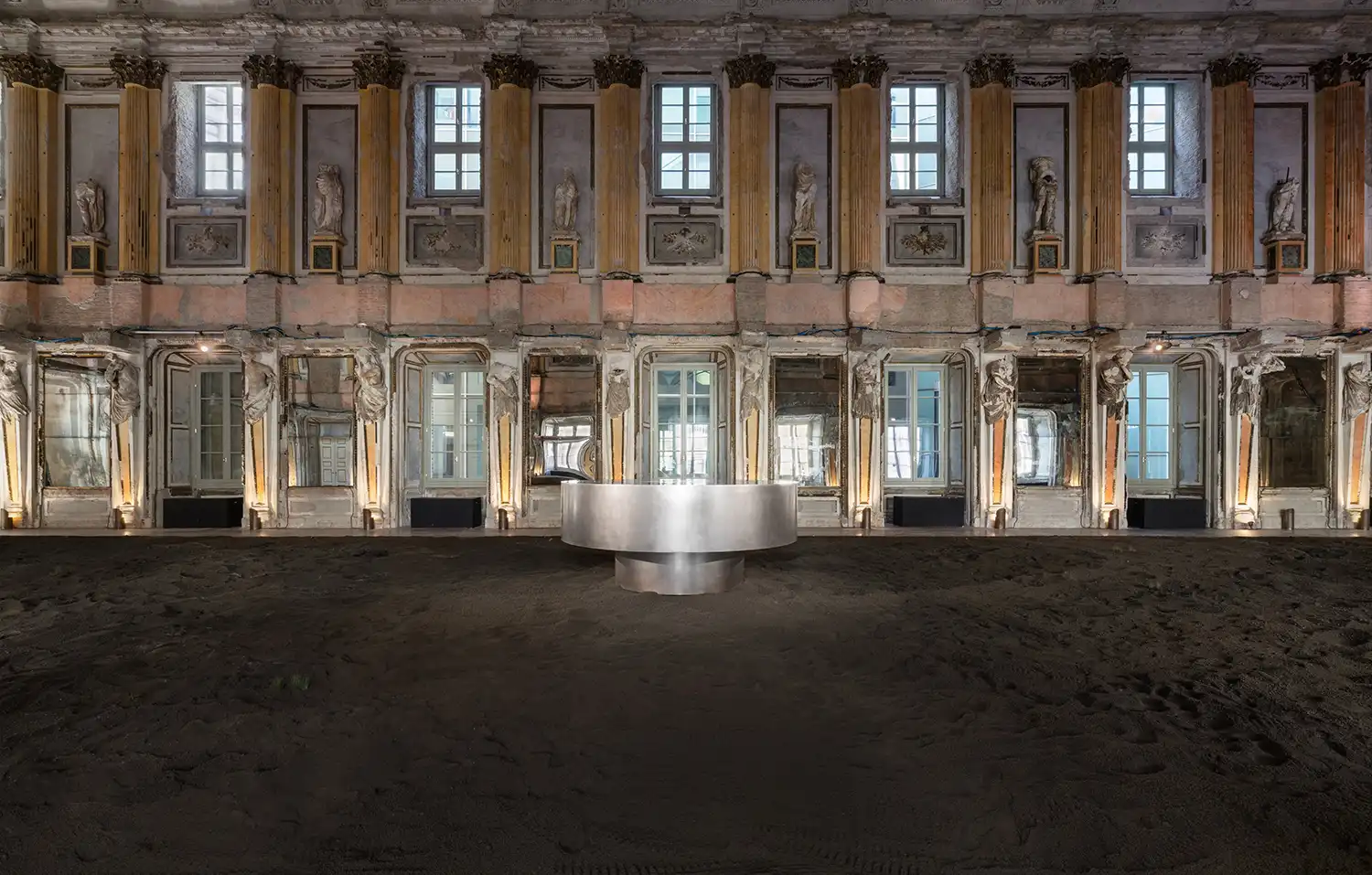
Demonstrating a commitment to sustainability, all materials used in the installation will be reused or repurposed after the exhibition concludes. The soil will be recovered, the irrigation system returned to its supplier, and the bookshop furnishings will find a new home. Most poignantly, the living ecosystem of weeds will be donated, ensuring that the resilient spirit of Pastorale continues to flourish beyond the confines of the Sala delle Cariatidi.
Nico Vascellari’s Pastorale is more than just an exhibition; it is a powerful and poetic meditation on the enduring relationship between humanity and nature, history and hope. By placing a vibrant, living ecosystem within the scarred walls of the Sala delle Cariatidi, Vascellari invites us to witness an unexpected form of resilience, a testament to the enduring power of life to take root and flourish even in the most unlikely of environments. It is a reminder that even amidst the ruins, the seeds of renewal can, and will, find a way to bloom.