


For every traveler who dreams of Tibet, the G318 Sichuan-Tibet Highway is a legendary pilgrimage. Known as “China’s Scenic Avenue,” its most dramatic and perilous section lies near the town of Baxoi: the infamous Nujiang River 72 Turns. This serpentine stretch of road, a dizzying sequence of hairpin bends, has long been the ultimate thrill and challenge for those journeying to Lhasa. Now, after six years of grueling high-altitude engineering, Archermit has unveiled a stunning architectural tribute to this landscape with the completion of the Nujiang River 72 Turns Canyon Scenic Area, a project that transforms the act of traversing this terrain into a profound physical and psychological experience.
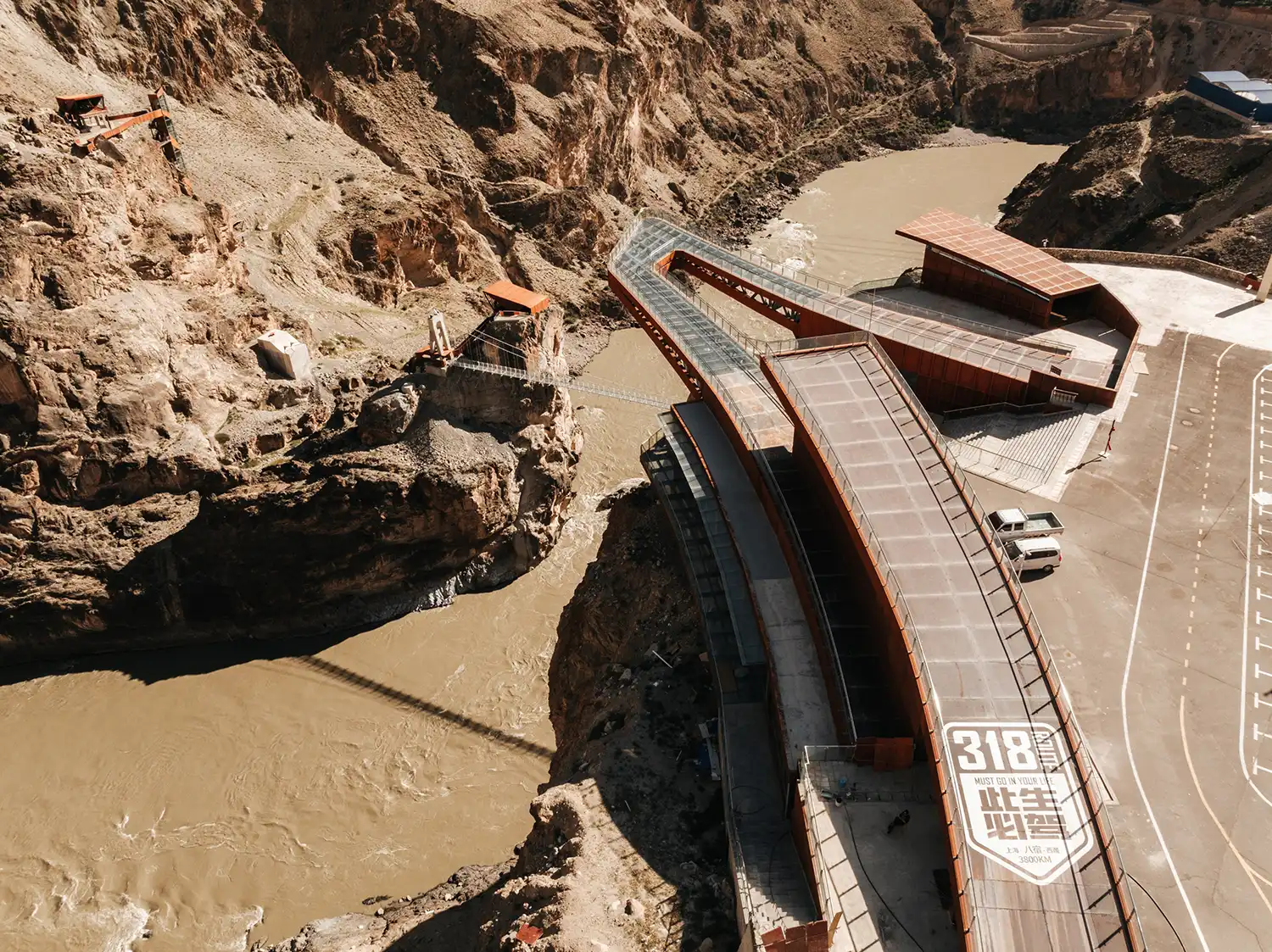
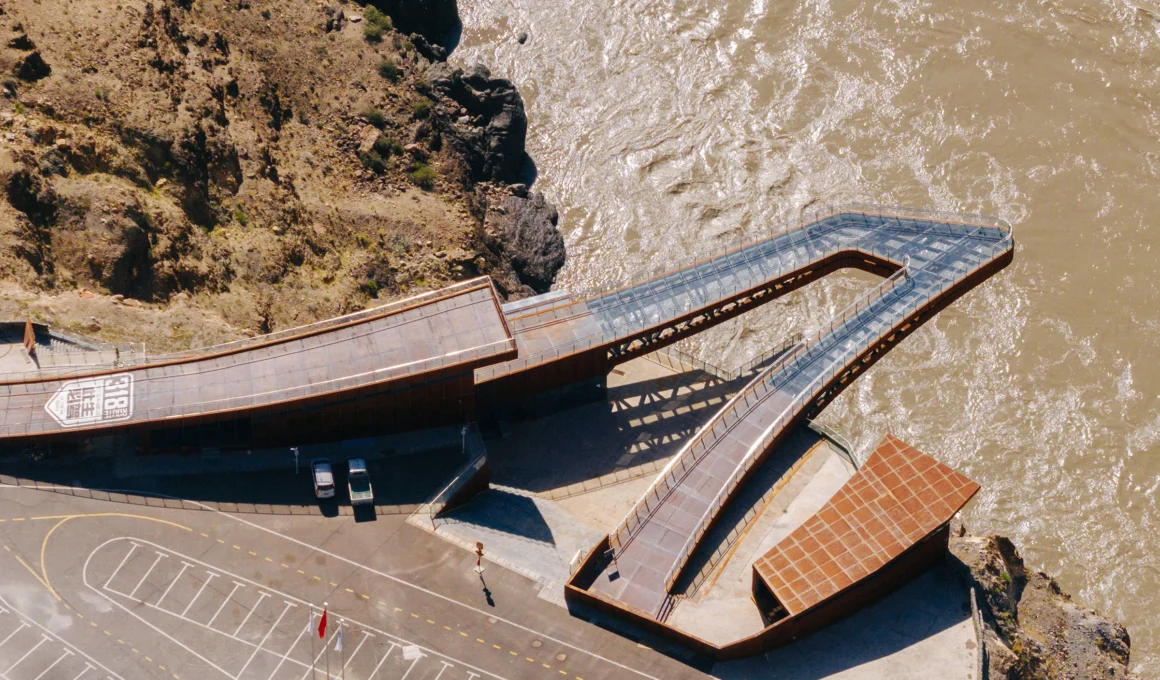
Perched on the cliffs of the Nujiang Grand Canyon, the scenic area’s pièce de résistance is a high-altitude glass viewing platform. Its design is directly inspired by the iconic hairpin turn layout of the road itself. The structure is a feat of engineering, with a steel truss cantilevering 37 meters over a 130-meter drop. The platform’s floor, made of high-transparency safety glass, creates a true “heavenly road” in the air, allowing visitors to literally walk over the abyss. Clad in Tibetan red weather-resistant steel, the structure dialogues with the region’s cultural colors while its rugged texture mirrors the untamed beauty of the surrounding canyon.
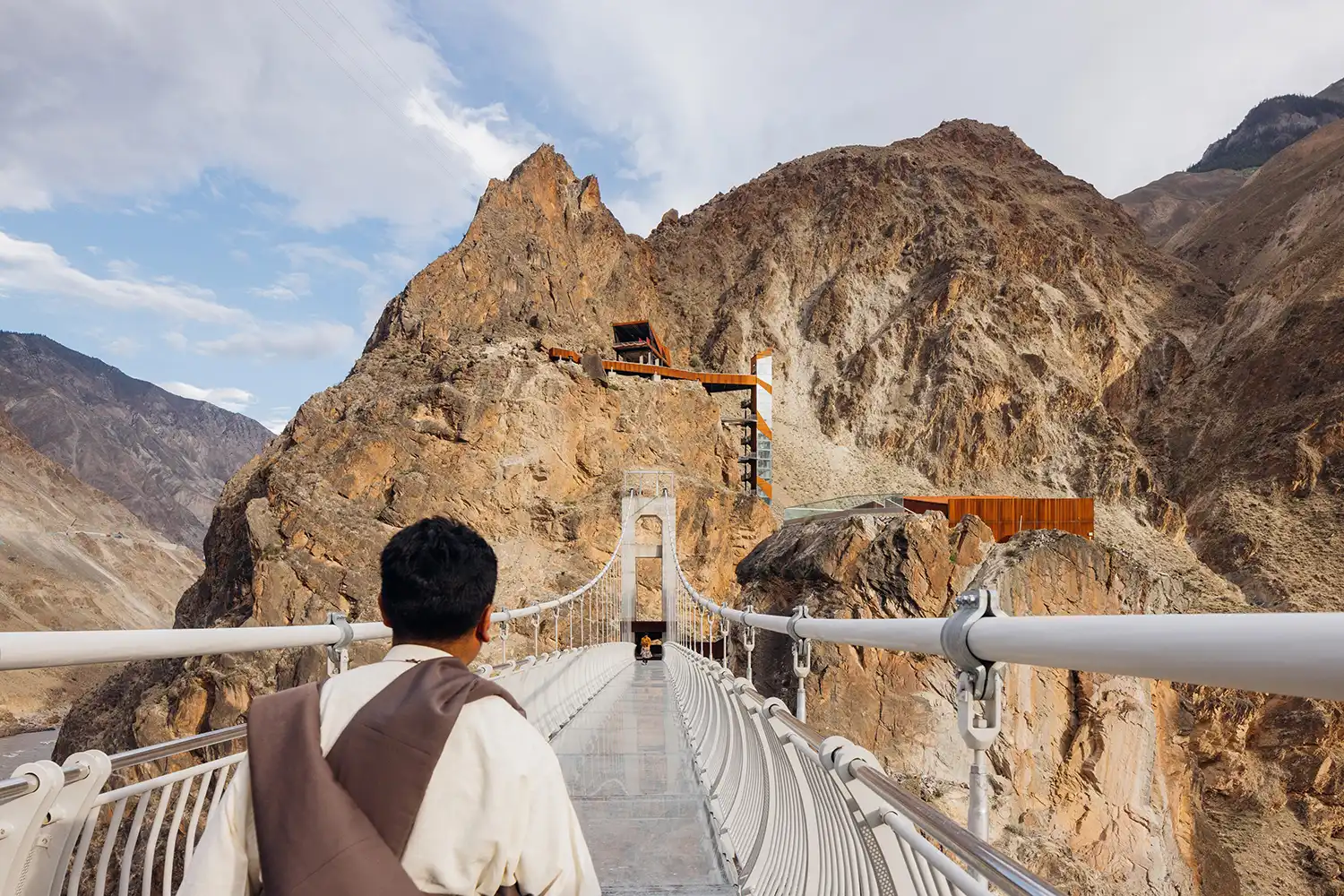
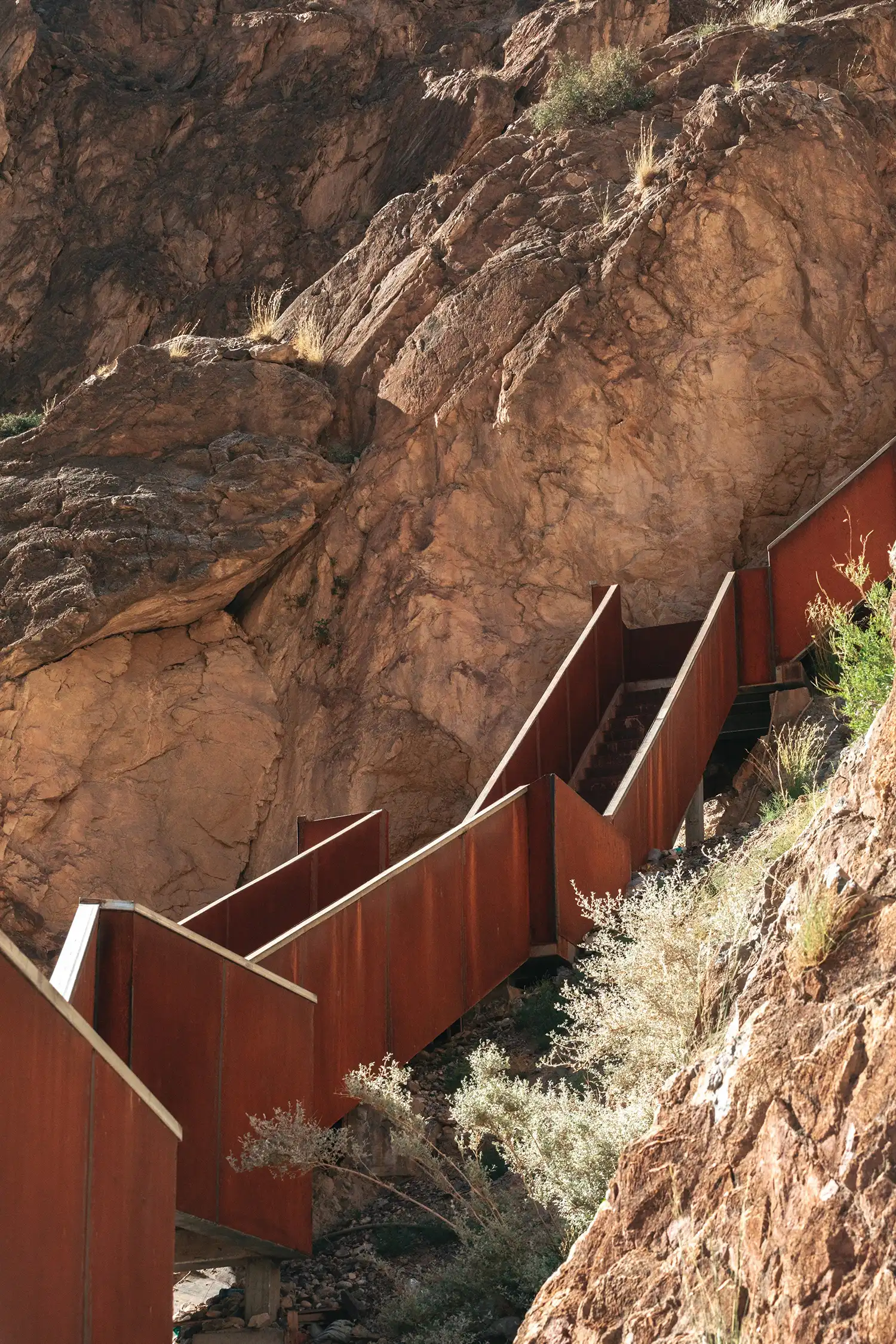
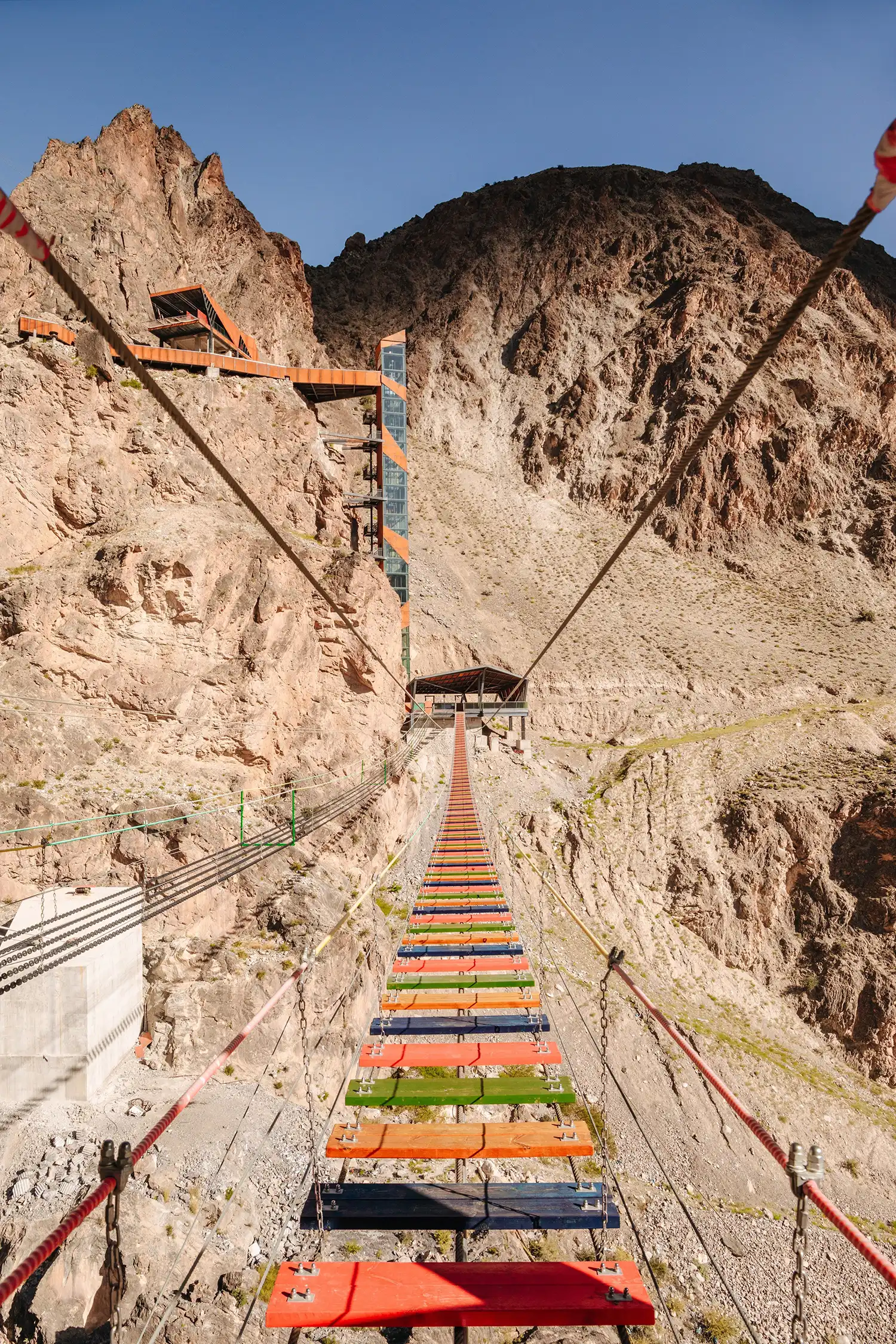
Further embracing the spirit of the location, a glass suspension bridge and a zip line span the roaring river below. The bridge’s design pays homage to the original, shaky steel Nujiang Bridge that once served as a nerve-wracking gateway for vehicles. This modern cable-suspended interpretation sways in the fierce valley winds, its transparent deck amplifying the adrenaline rush. Meanwhile, the “Sky Fury 666 Ladder” offers a deliberately arduous climb. By forgoing an elevator on the north bank, the designers created a final, breathless challenge, forcing visitors to physically comprehend the immense hardship endured by the builders of the Sichuan-Tibet Highway.
The construction process itself was a monumental challenge, representative of the extreme difficulties of building in Tibet. The site, located in a high-altitude valley wind corridor, was battered by relentless gales. Landslides and rockfalls were constant threats. Transporting materials along the treacherous G318 was a logistical nightmare; components longer than 13 meters were undeliverable, and large cranes were impossible to bring in. This necessitated the revival of traditional methods, including a temporary cableway system reminiscent of those used to build the original highway decades ago.
One of the most grueling endeavors was the creation of the 39 pile foundations for the viewing platform on the steep, roadless cliffs. With the rocky substrate defeating standard drill bits, custom tools had to be developed. Workers, secured by safety ropes, often had to be lowered into hand-dug sections of the deep shafts, drilling and extracting rock in painstaking 0.6-meter increments. This single task took six months and involved hundreds of workers. Similarly, concrete pouring required a specially built steel cable bridge with a delivery pipeline stretched across the river, a process plagued by blockages and logistical delays.
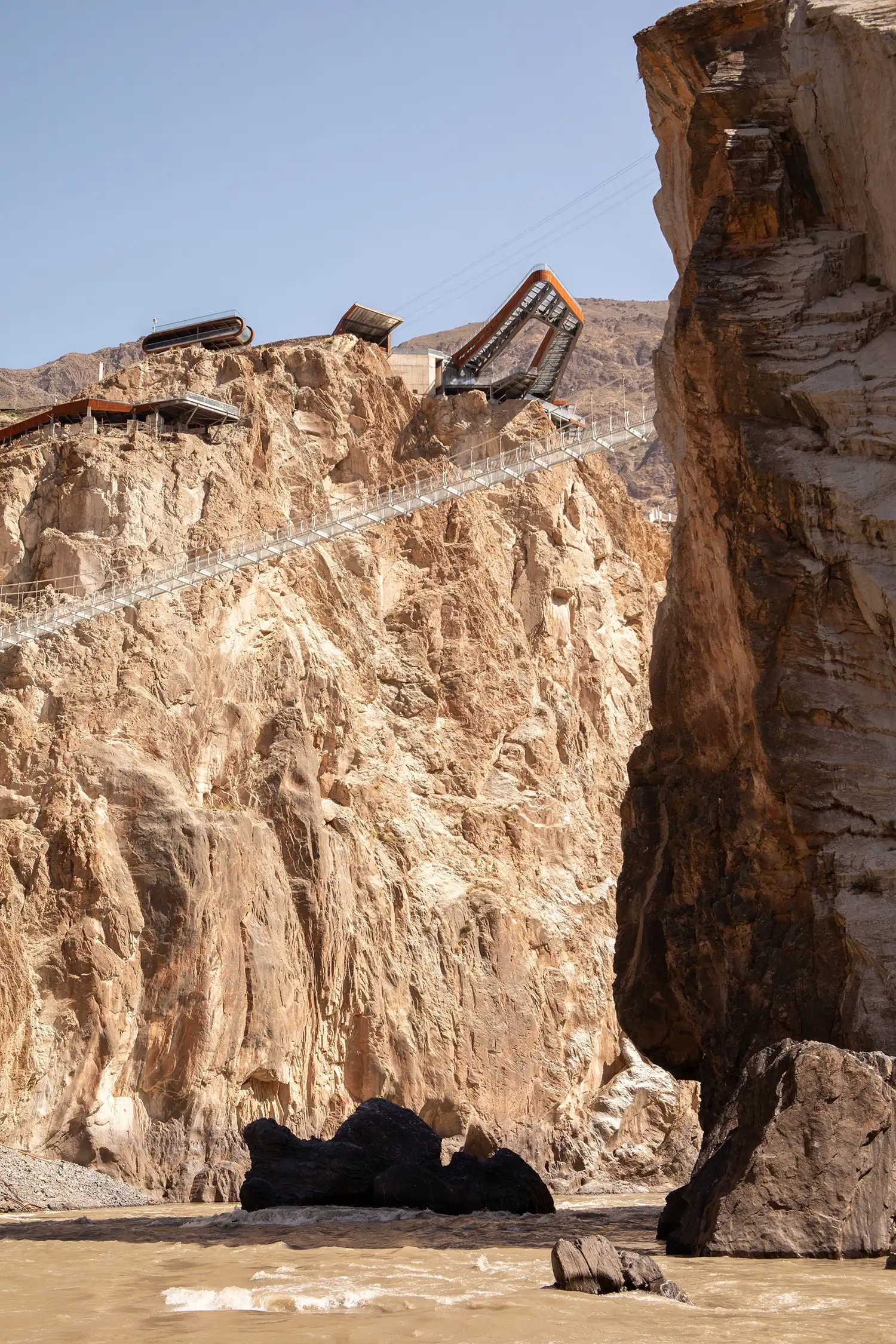
Ultimately, the Nujiang River 72 Turns Canyon Scenic Area is more than a collection of thrill-seeking amenities; it is a deeply contextual architectural intervention. It stands as a new geographical landmark for Tibet that empowers visitors to measure the legendary peril of the Nujiang with their own bodies. Beyond tourism, the project has fostered local economic development, creating jobs and cultivating nearly 500 acres of orchards. It is a testament to human courage and ingenuity, a destination that not only provides an unforgettable travel experience but also pays lasting tribute to the monumental achievement of the highway that made it all possible.