


French studio Olgga Architectes has completed the Redevelopment of the Sports Complex in Petit-Quevilly, transforming a former industrial site into a cohesive three-hectare public park. Located south of the Rouen metropolitan area, the project was designed to heal a territory historically fragmented by the Sud III expressway and a series of railway lines. By removing the physical barriers and fences that once defined the plot, the studio has restored urban continuity between the town’s historic center and its eastern neighborhoods as part of a wider urban renewal initiative.
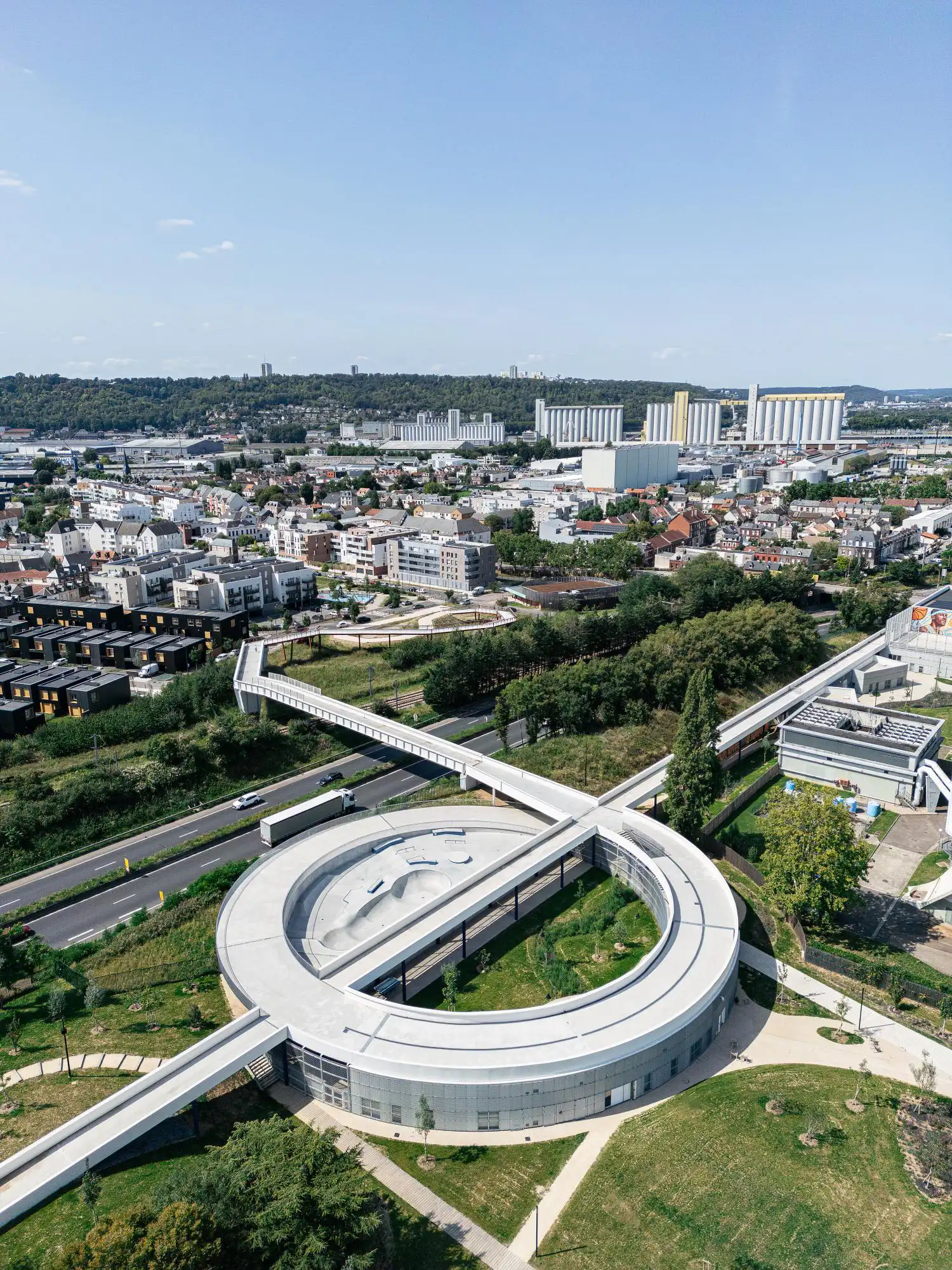
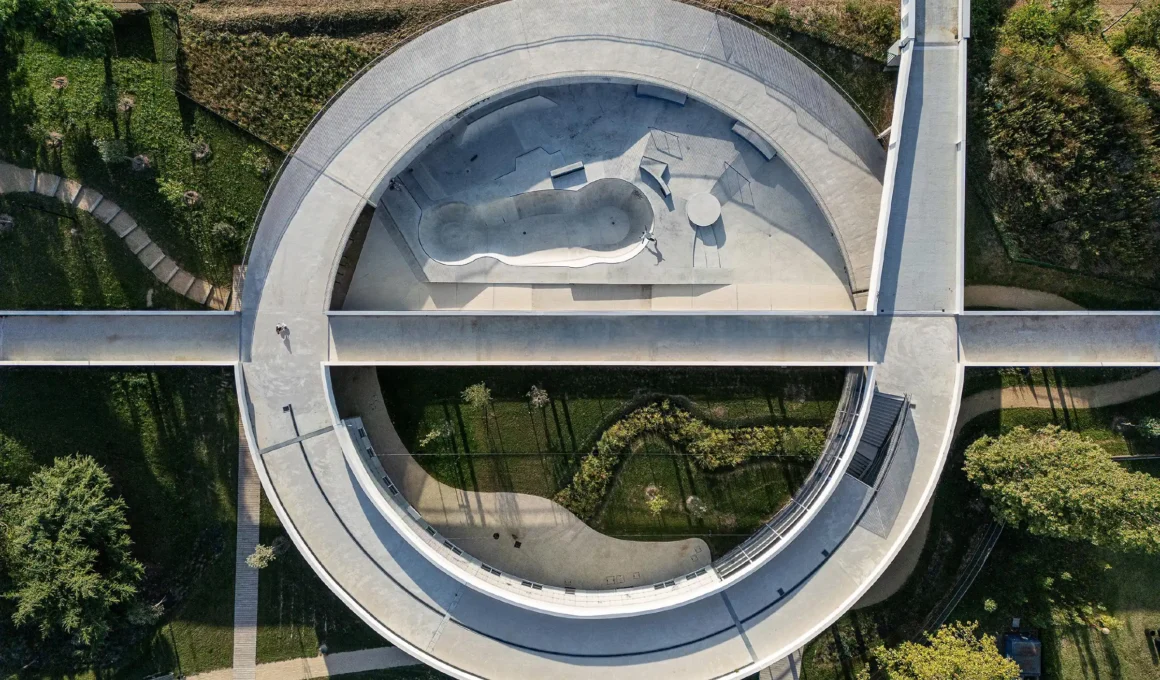
The centerpiece of the intervention is a 365-meter-long belvedere promenade that acts as a “linear spine” across the landscape. This urban walkway fluctuates in height, at times resting on the ground and at others rising to provide new perspectives over the city. It serves as a functional interface that organizes the site’s various programmatic elements, including a multisport gymnasium, a leisure center, and a skatepark. This elevated path turns the challenge of the site’s topography into a defining feature, allowing pedestrians to navigate the complex while overlooking active sporting zones.
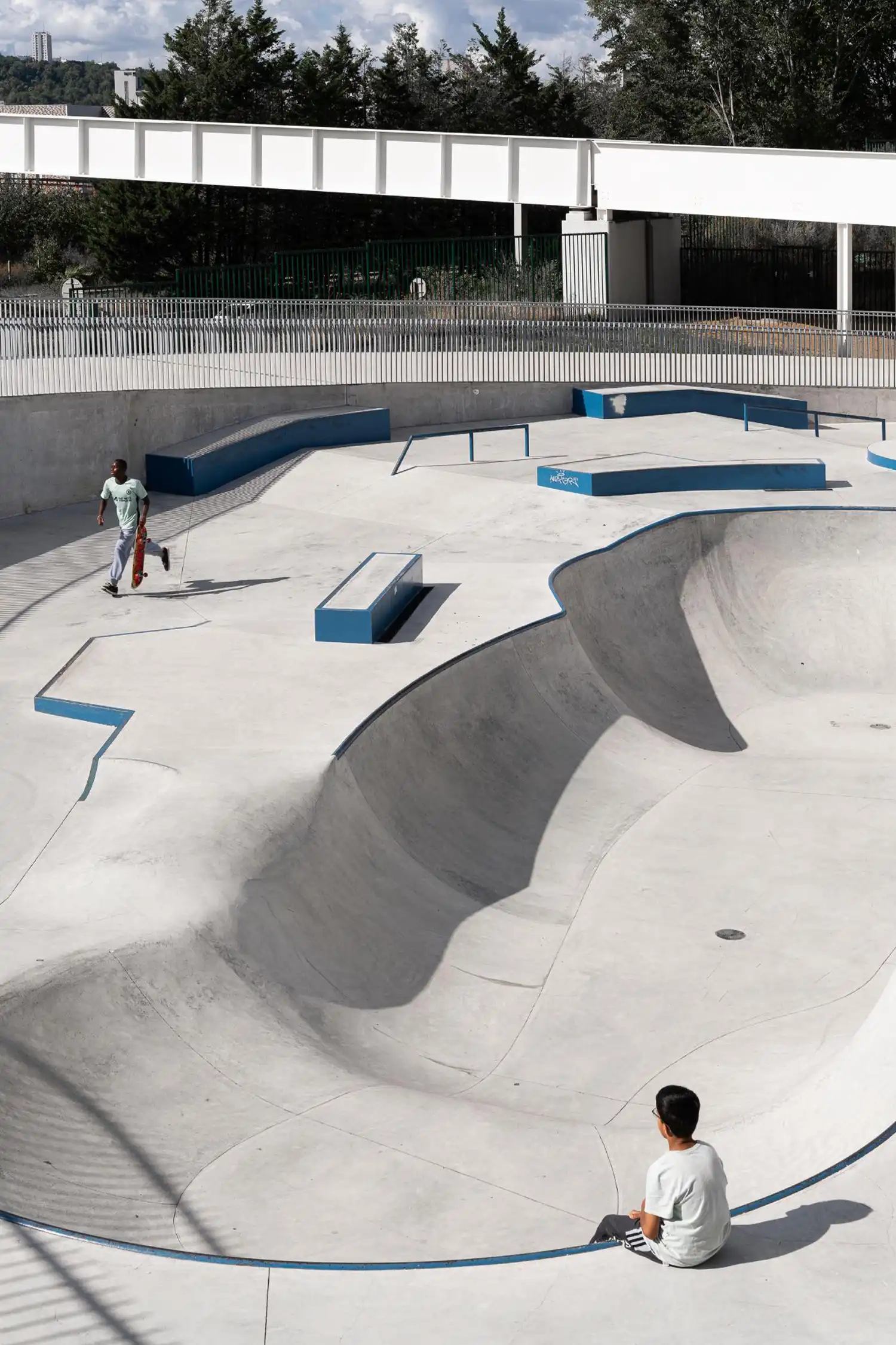
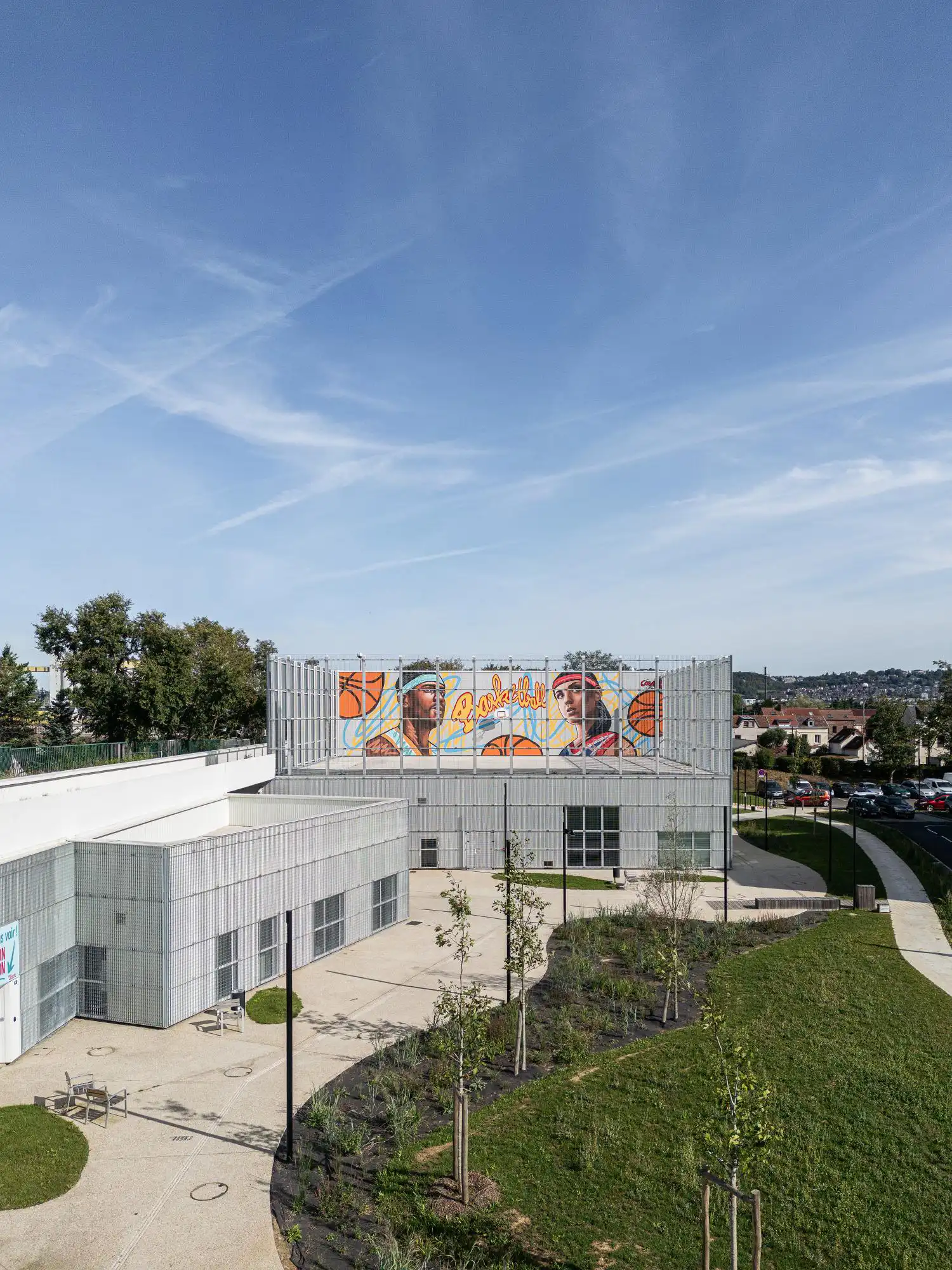
To address the site’s history as an enclosed and disconnected plot, the architects sculpted the earth to create a series of natural sequences, including meadows, groves, and landscaped swales for rainwater management. These slopes were used to integrate play elements directly into the terrain, such as slides and a uniformly concrete skatepark. Beyond the standard facilities, Olgga Architectes utilized the roof of the gymnasium to host a half basketball court, effectively layering the program to maximize the usable space within the Petit-Quevilly district.
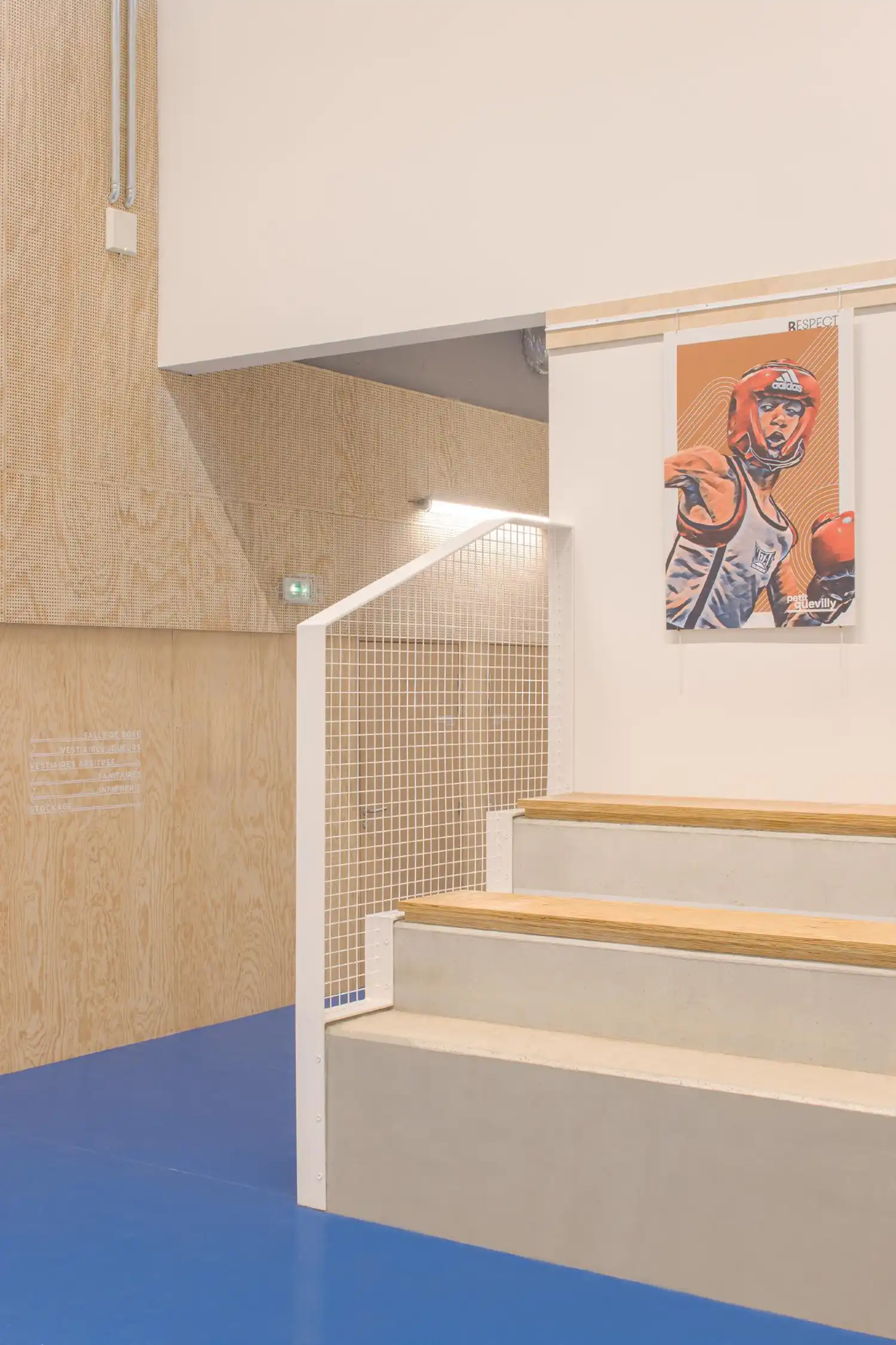
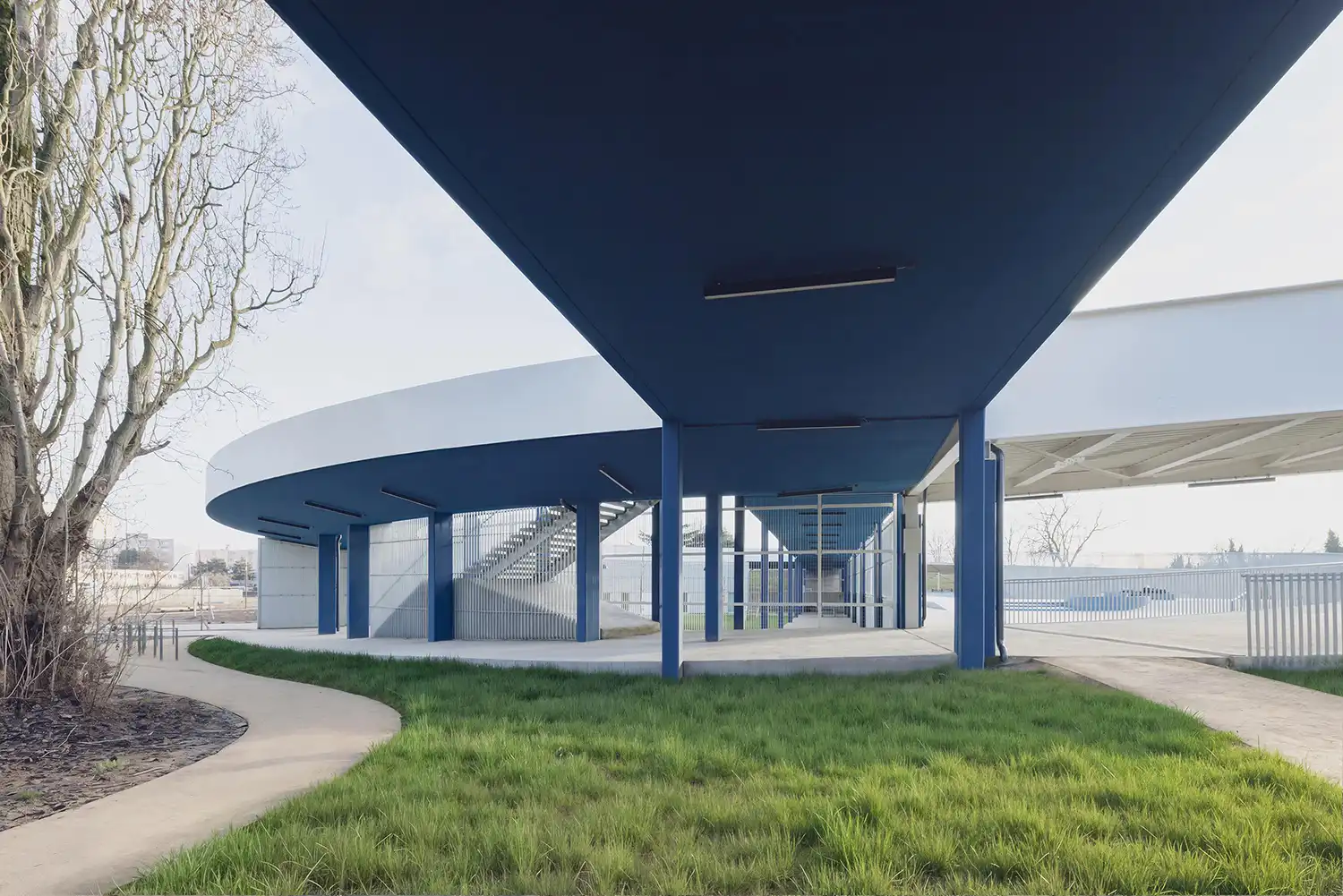
The structural identity of the complex is defined by a unitary concrete structure, chosen for its durability and its ability to provide a sense of architectural coherence. Anchored into the hillside, the multisport gymnasium and social facilities feature generous openings that establish a continuous dialogue with the surrounding public park. Beneath a sweeping circular ramp that sits at the heart of the scheme, a leisure center for adolescents finds its place, creating a protected inner courtyard that fosters social interaction within a shared environment.
A uniform skin of metal cladding wraps the buildings, providing a monolithic and almost abstract appearance. This primary envelope is covered by a secondary layer of metal grating, which serves to modulate natural light while protecting the glazed surfaces from damage. This choice of material lends the ensemble a shimmering, cohesive aesthetic that contrasts with the solid presence of the concrete. This single-material treatment allows the various volumes to read as a singular entity within the evolving landscape of the Sports Complex.
The project concludes with a metropolitan footbridge that extends directly from the central ramp, bridging the expressway to provide a direct connection to the Town Hall district. By merging civil engineering with landscape design, the Redevelopment of the Sports Complex functions as an urban clasp, stitching together previously isolated parts of the city. The result is a “landscape to inhabit” that offers the community in France a renewed sense of openness and a dedicated space for sport, nature, and social life to converge.