

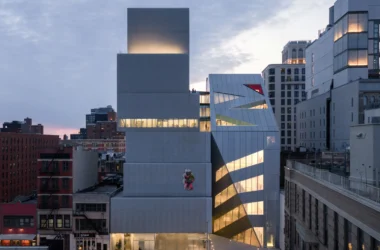

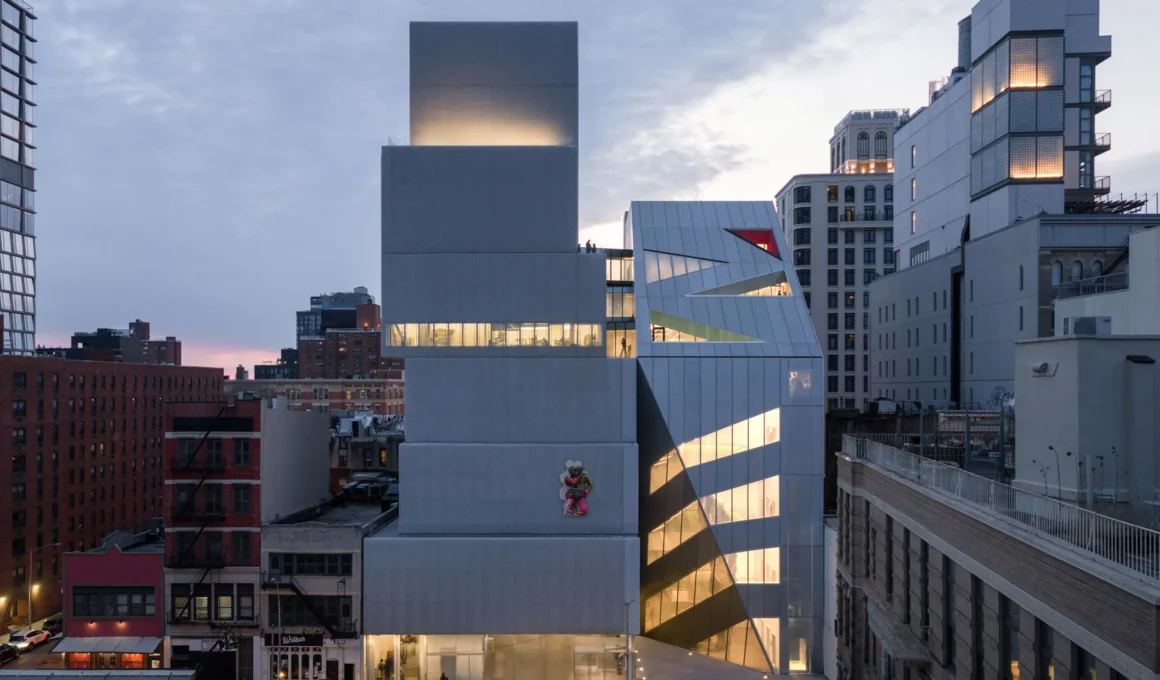
The New Museum’s expansion, designed by OMA’s New York office under the direction of Shohei Shigematsu, introduces a faceted, metallic-mesh addition to Manhattan’s Bowery that doubles the institution’s footprint while engaging in a sophisticated formal dialogue with the existing SANAA-designed structure.
A conceptual pas de deux. The project marks OMA’s first public building in New York City, a milestone that arrives nearly two decades after the firm’s initial forays into the city’s cultural landscape. Rather than attempting to overshadow the iconic stack of white boxes designed by SANAA in 2007, Shigematsu opted for a strategy of companionship. He describes the relationship as a “pair,” citing the raw, visceral intensity of Marina Abramovic and Ulay’s 1977 performance as a reference point. This is not a subordinate addition but a twin—highly connected to its predecessor yet possessing a distinct, individual character that enriches the institution’s presence on the Bowery.
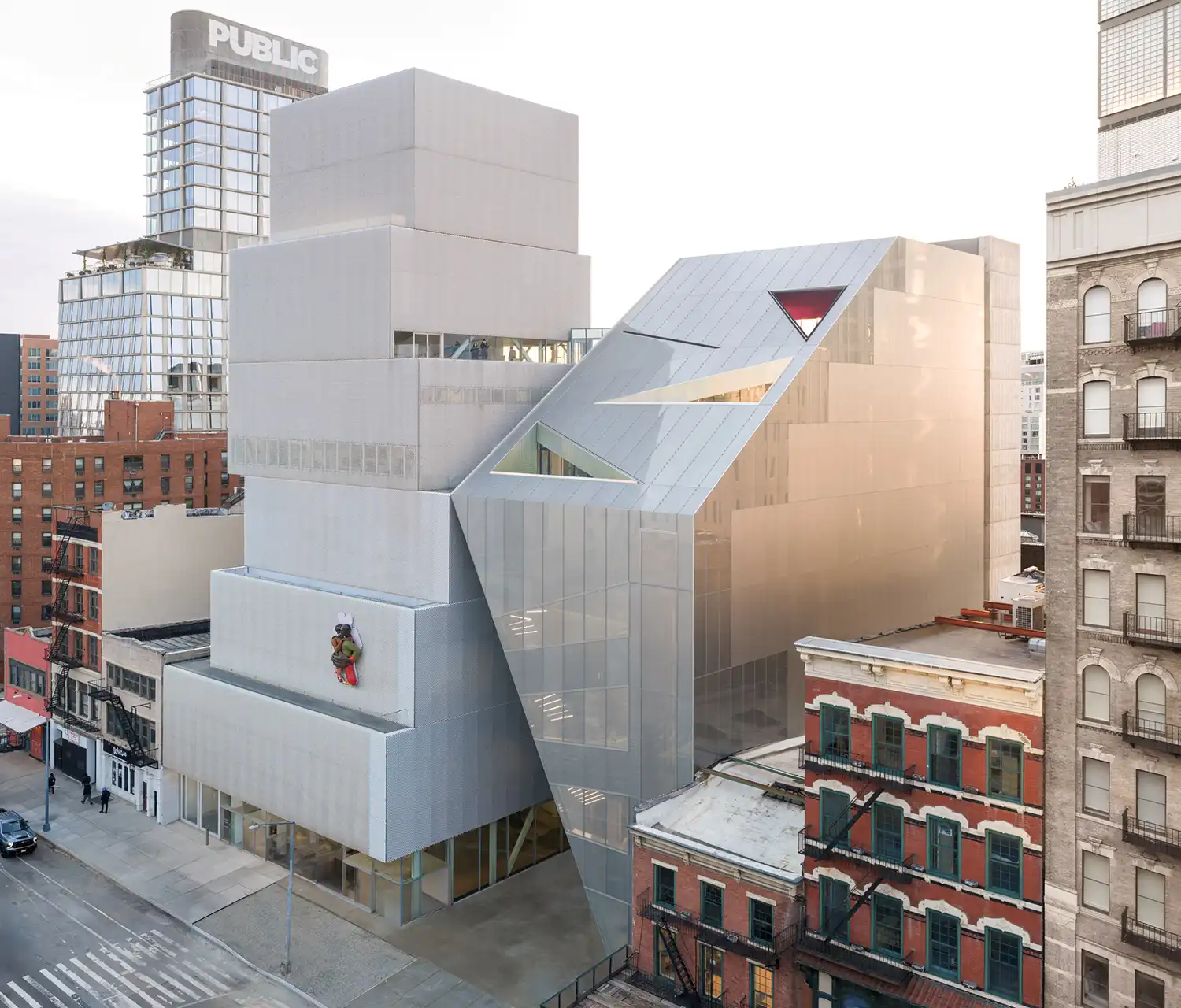
Geometric complexity and urban integration. In section, the new structure reveals a pentagonal geometry, a departure from the rectangular rigidity of the original building. The volume recedes at the ground level to create a public gesture and tapers toward a central point where the two structures “kiss.” While the SANAA building maintains a taller, more slender profile, the OMA extension reaches deeper into the block, providing 120,000 square feet of much-needed gallery space and social infrastructure. This expansion allows the museum to breathe, accommodating the surge in visitor numbers that has defined its growth over the last two decades.
The sensory language of the facade. The exterior treatment is a masterfully executed play on transparency and texture. Clad in laminated glass integrated with metal mesh, the facade honors the aluminum skin of the 2007 building while offering a more prismatic, translucent quality. Strategically placed gaps and balconies break the surface, offering sudden, framed views of the Lower East Side and inviting the city into the museum’s inner workings. These “stripes” of clear glass running down the side of the building act as vertical windows, exposing the movement of visitors and the “brain” of the institution—the incubator and office spaces located on the upper floors.
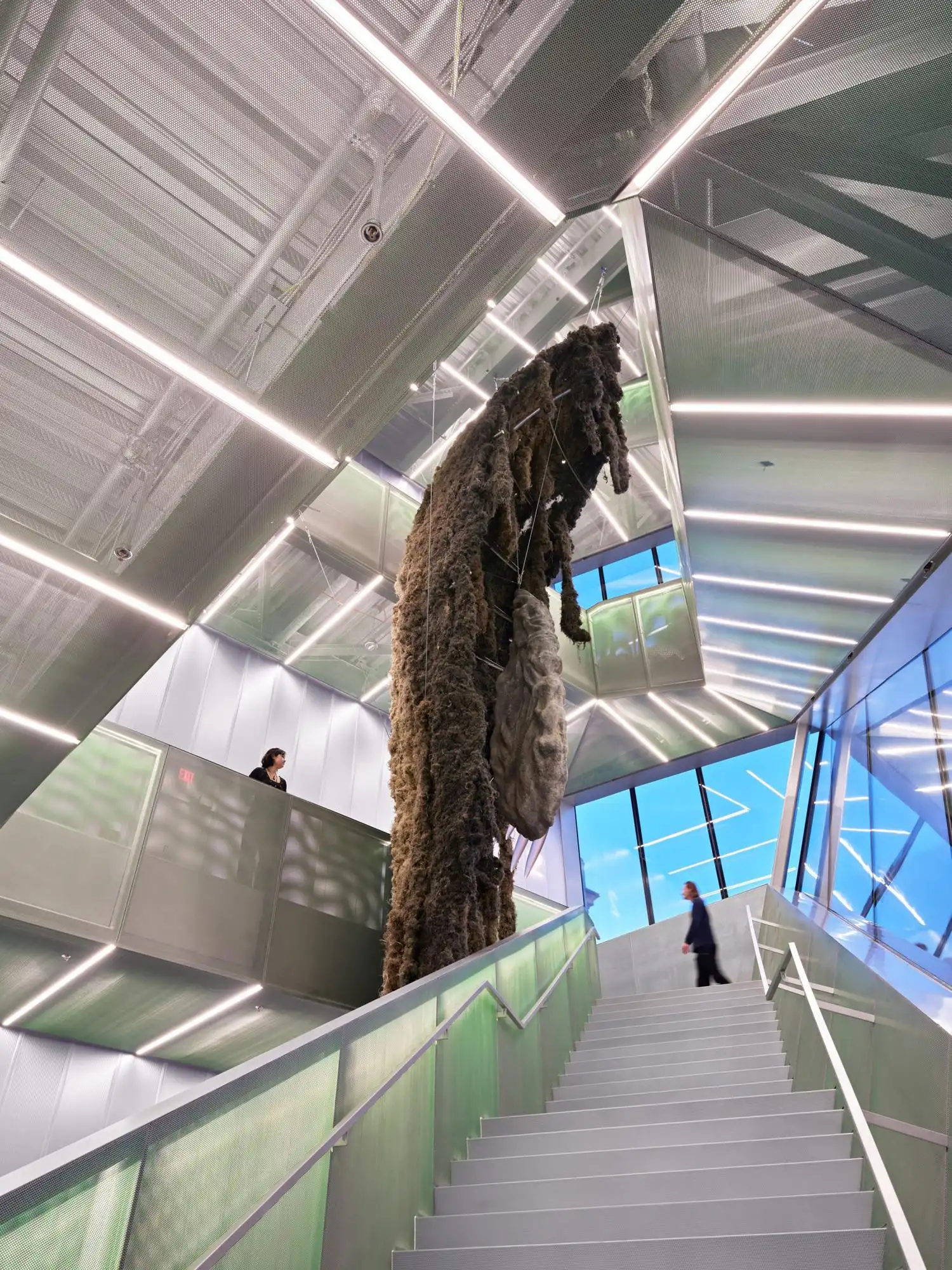
The social condenser. Inside, the experience is dominated by a dramatic atrium that serves as the building’s circulatory heart. A massive, winding staircase, finished in metal mesh painted green on the interior, creates a vibrant moire effect as visitors ascend. Shigematsu envisions this space as a “social and visible condenser,” a nod to the vernacular fire escapes that define New York’s streetscape. By pulling the circulation to the perimeter, the design frees up the interior for expansive, columnless galleries, allowing the art to remain the primary focus while the act of moving through the building becomes a public performance.
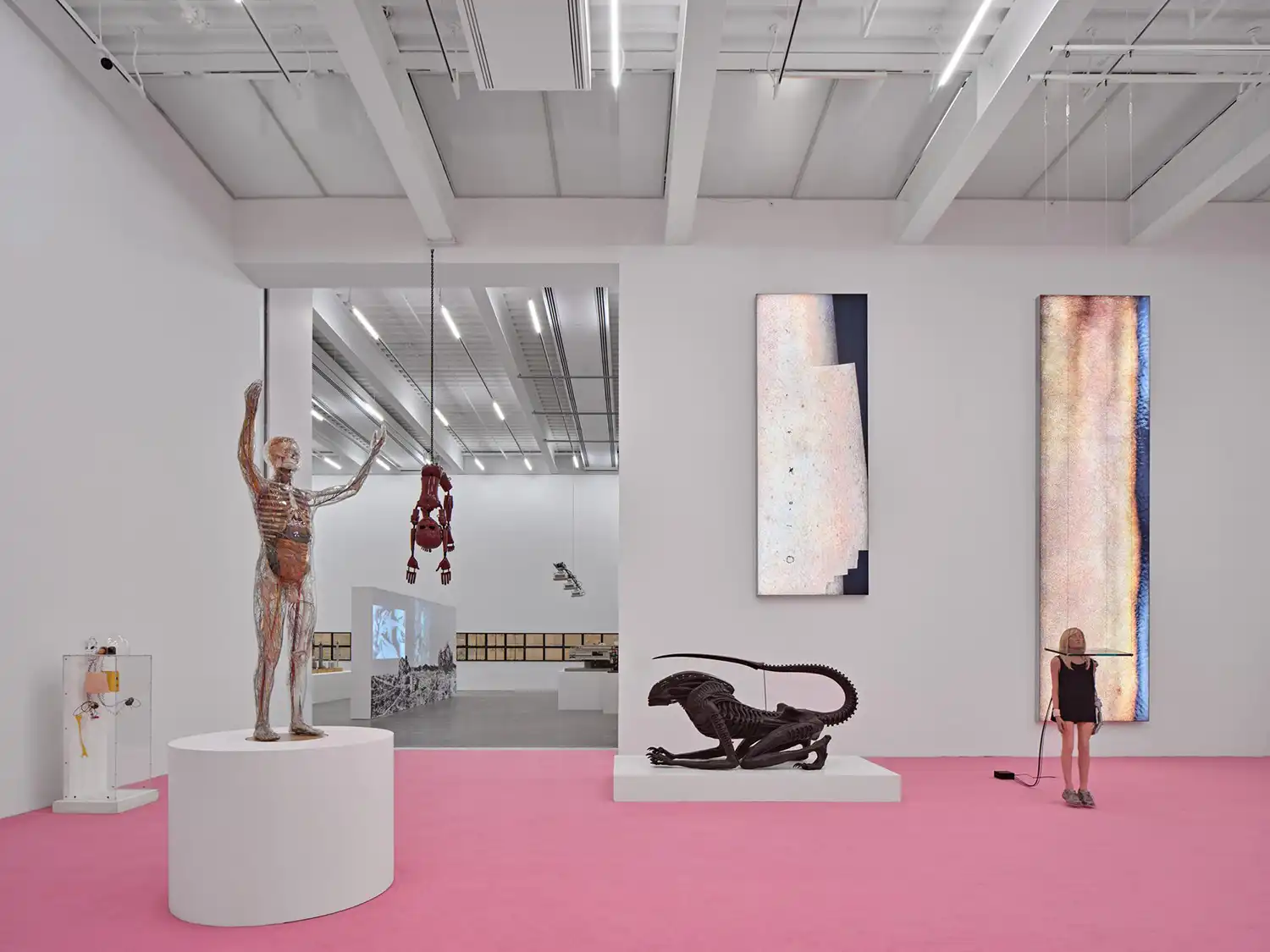
Materiality and the industrial collage. The ground floor serves as a seamless extension of the street, merging the lobbies of both the old and new structures into a single, unticketed public realm. Here, the material palette is a deliberate industrial collage of exposed I-beams, polished mesh floors, and polycarbonate-clad elevator cores. A standout feature is the concealed restaurant, wrapped in expanded cork painted with silver leaf. This textured, metallic surface allows the dining area to blend into the ceilings while providing an acoustic softness that contrasts with the hard-edged aesthetic of the surrounding lobby.
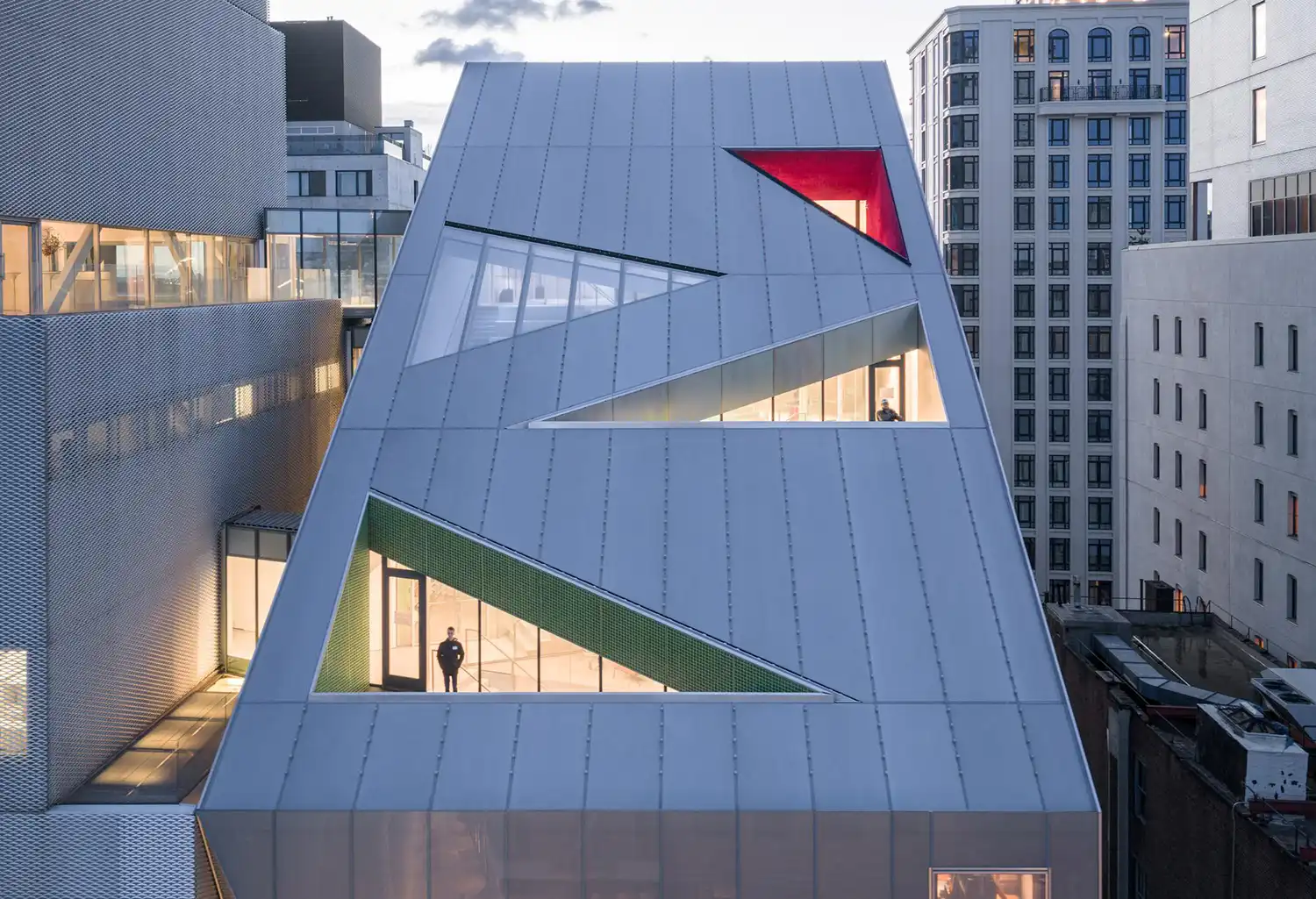
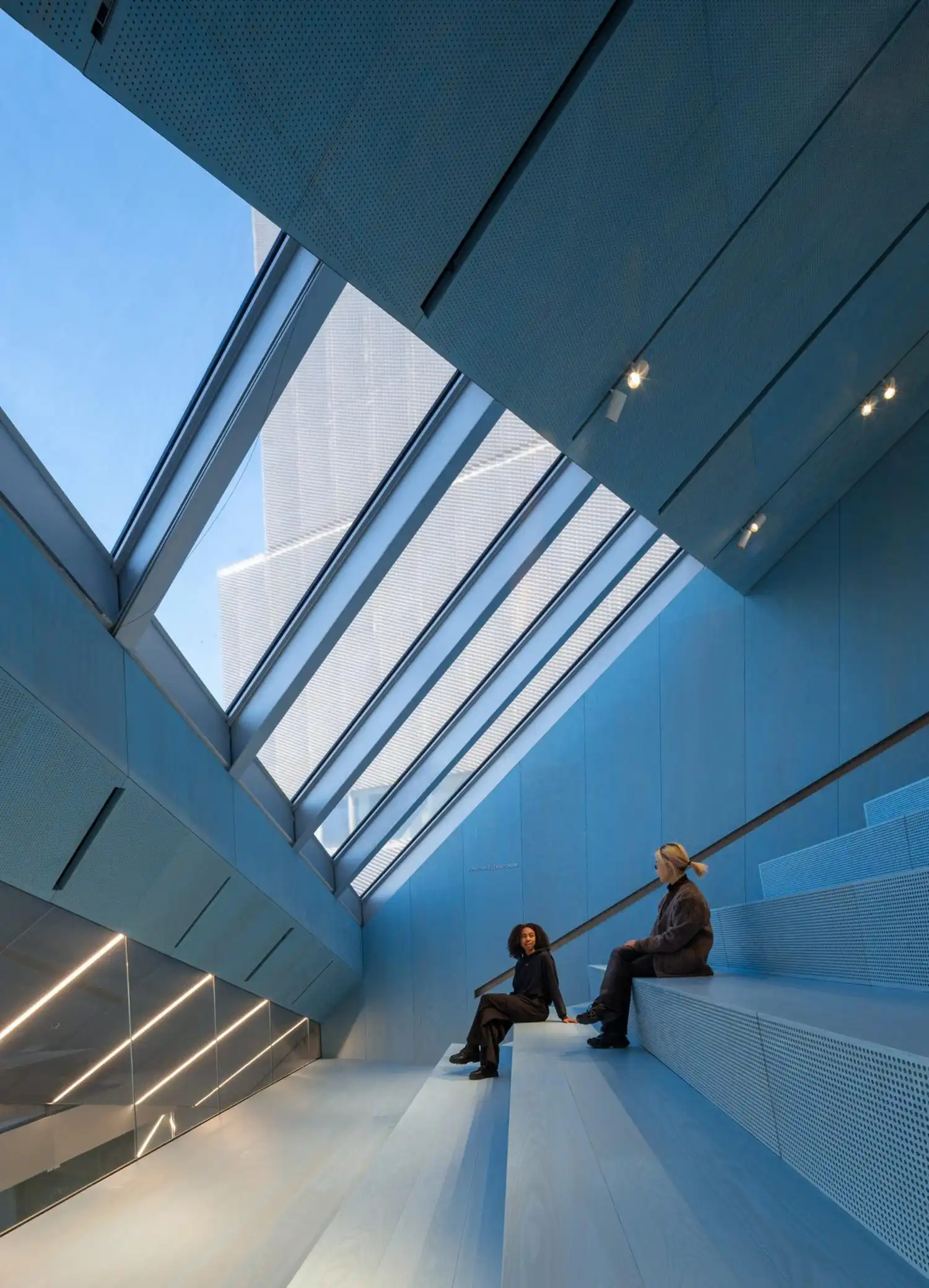
Refracting the artistic mission. The spatial layout moves from the public-facing ground floor to three storeys of soaring, white-walled galleries that echo the simplicity of the original spaces. On the fourth level, a columnless auditorium faces a glass void, creating a direct visual link between the museum’s programming and the urban life outside. Artistic director Massimo Gioni notes that the building’s prismatic quality reflects the museum’s mission: to refract and amplify diverse artistic messages from around the globe rather than simply housing a static collection.
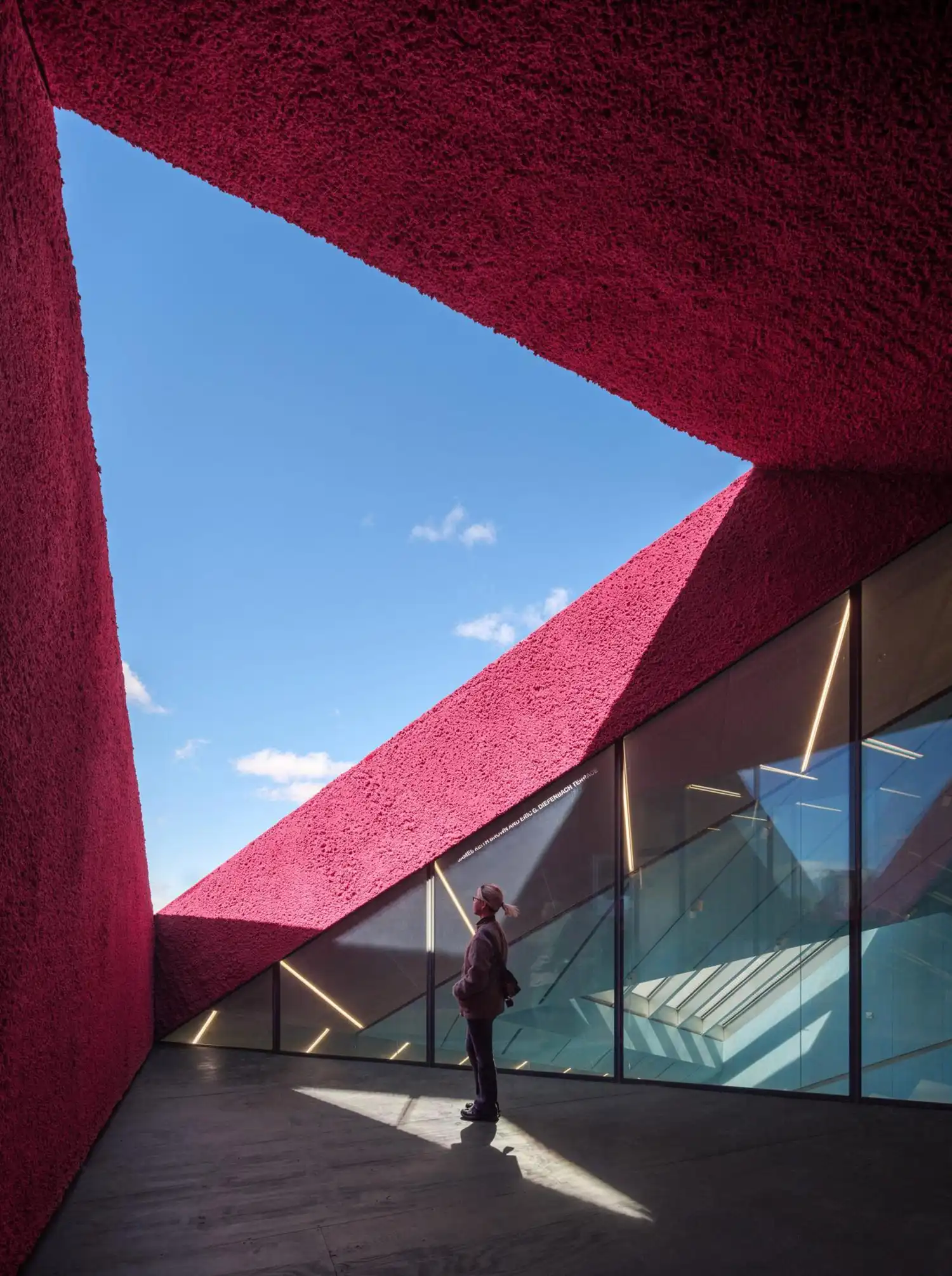
A legacy of urban theory. This project represents a full-circle moment for OMA, a firm whose identity has been intertwined with the mythos of Manhattan since Rem Koolhaas published Delirious New York in 1979. After the studio’s initial 2019 reveal of the plans, the completed build solidifies Shigematsu’s nuanced understanding of the city’s “art ecosystem.” It follows other successful cultural interventions by the firm, such as the revitalization of the Gallery of the Kings at the Museo Egizio, which similarly bridged historic contexts with contemporary vision.
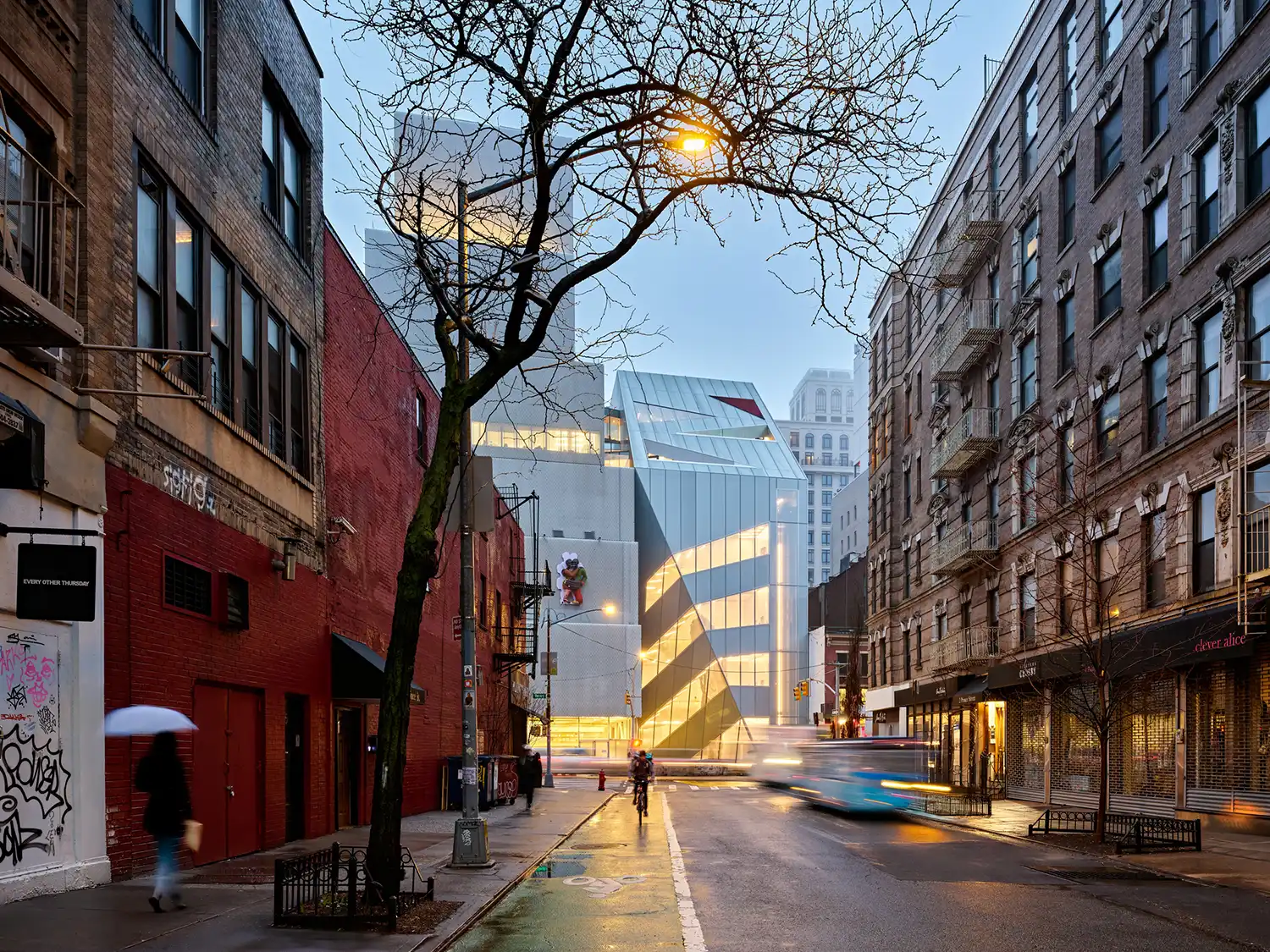
Contextual impact and future vision. By activating the terminus of Prince Street, the extension anchors the New Museum as a more communicative and open participant in the neighborhood. The inclusion of a triangular exterior courtyard and the integration of Freeman Alley at the rear ensure that the building is porous, inviting interaction even after gallery hours. It is a work of calculated precision—a building that manages to be both a respectful shadow to its neighbor and a bold, faceted statement on the future of contemporary art spaces.