

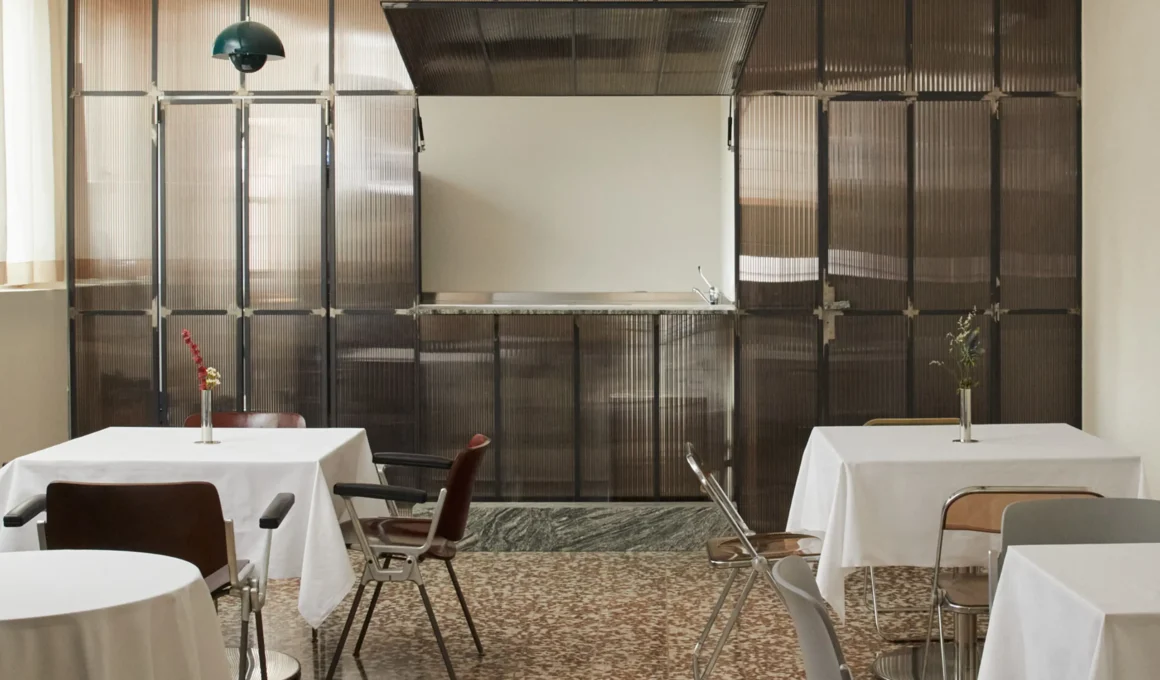
Milanese design studio Parasite 2.0 has unveiled Sandì, a family-run restaurant in Milan’s Porta Venezia neighborhood that challenges contemporary homogenization by synthesizing historical local aesthetics with radical material choices.
A new alphabet for hospitality is at the heart of this project, which occupies a former 1960s bakery. Designers Laura Santosuosso and Denny Mollica sought to escape the trap of fleeting trends by creating a narrative rooted in the visceral memory of 1990s Milanese bars. Instead of stripping the space of its identity, the intervention embraces a hybrid condition, bridging the gap between functional tradition and contemporary expression through a deliberate, personal language.
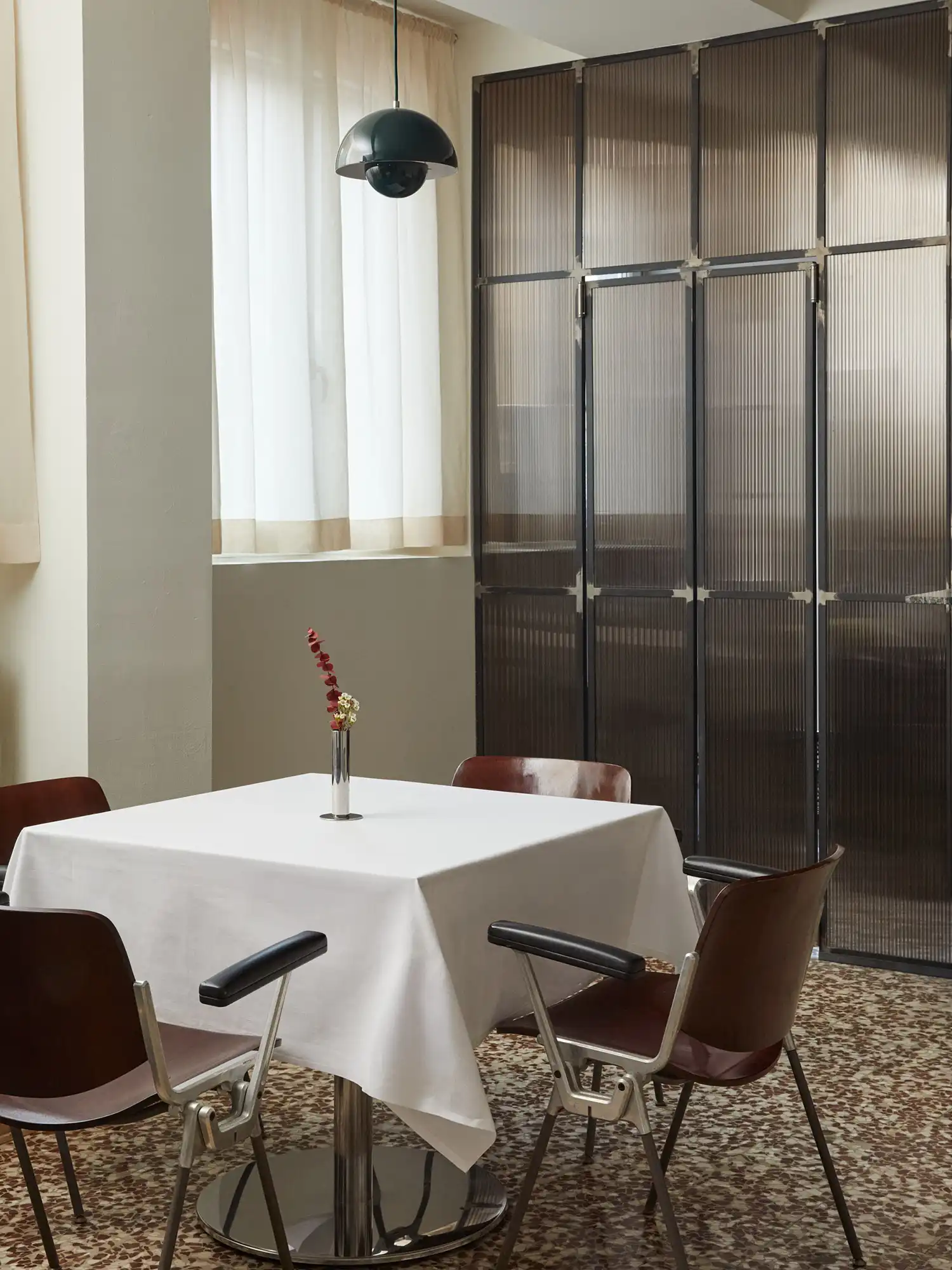
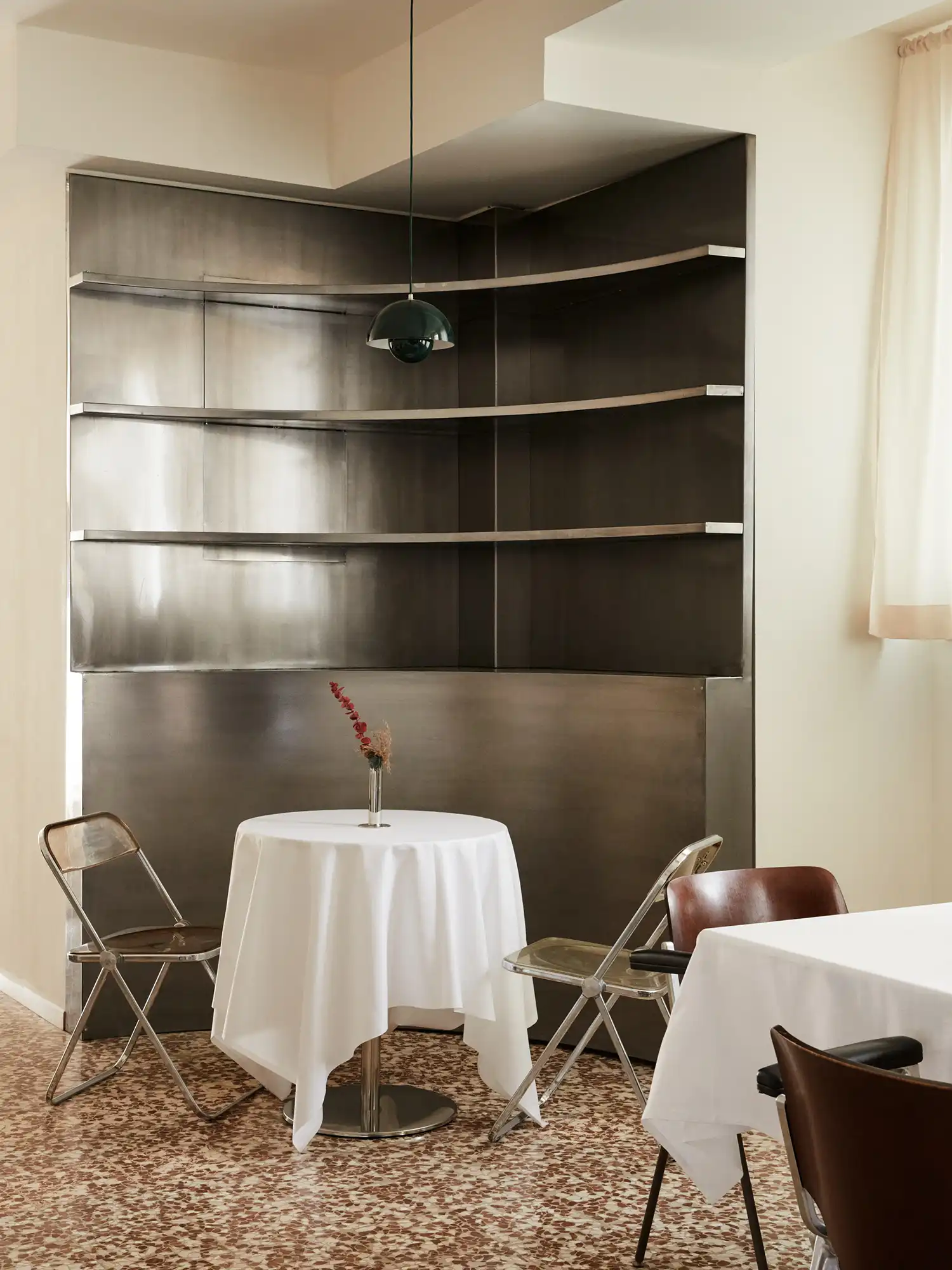
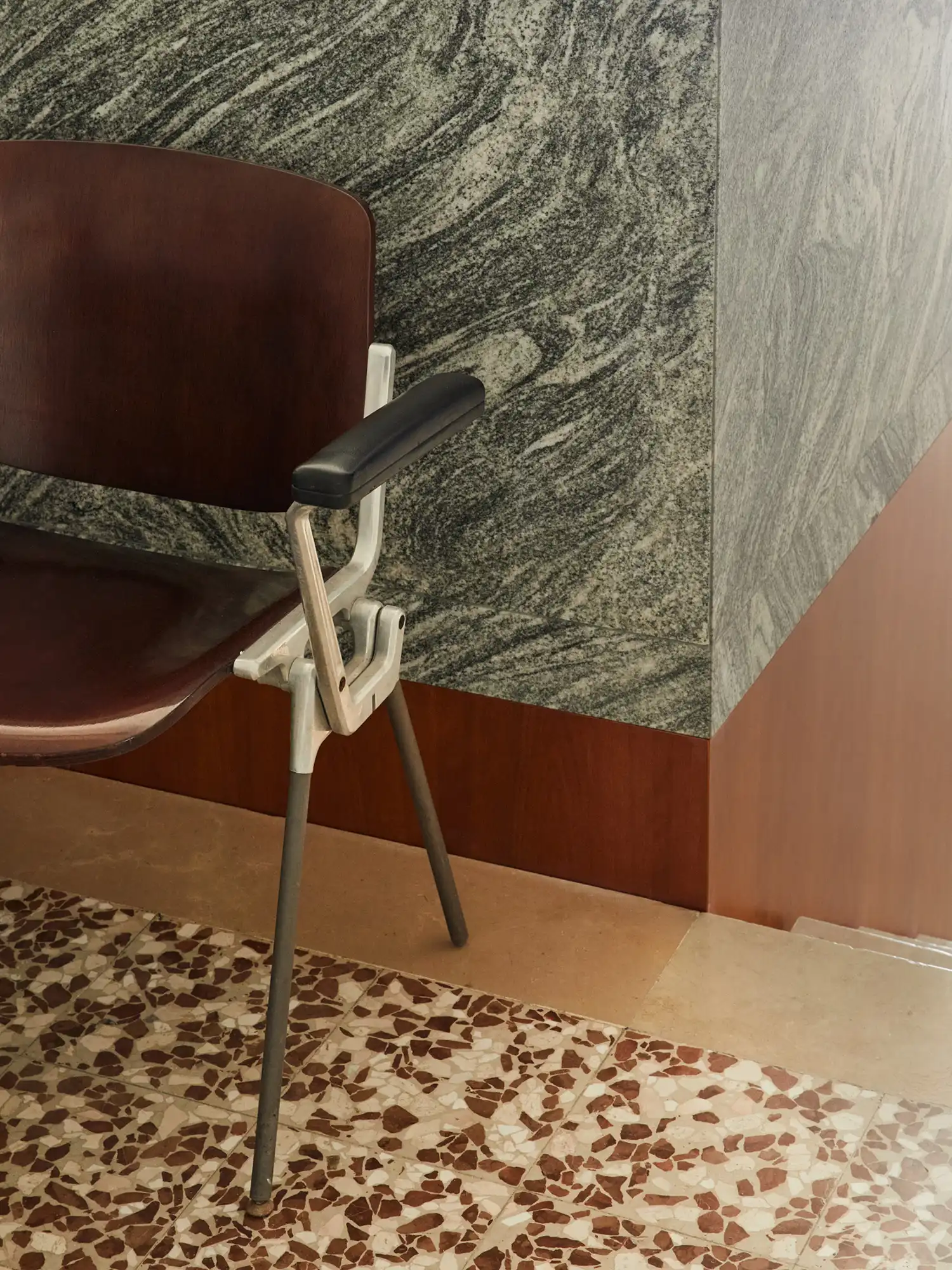
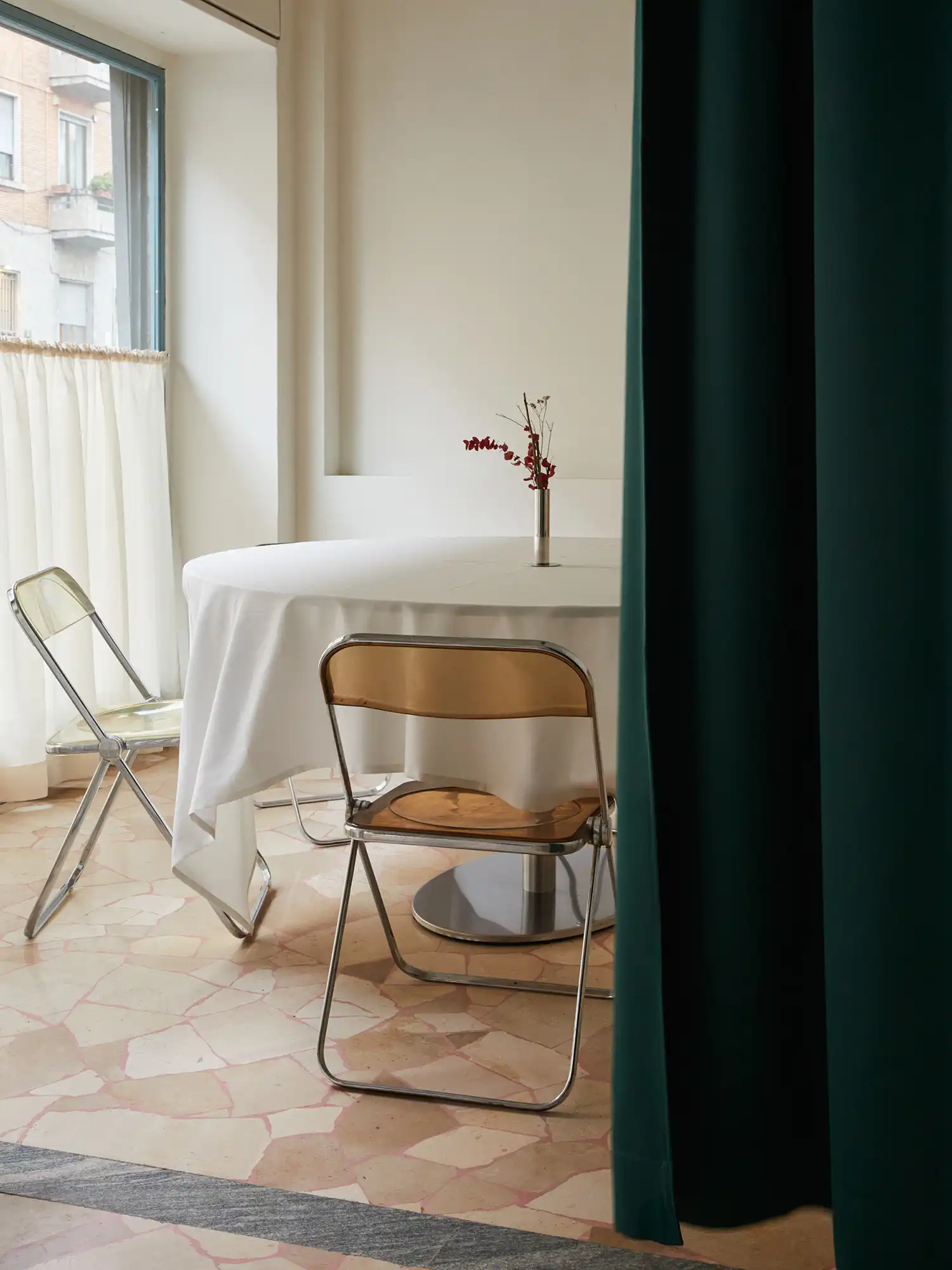
Sensory immersion through material contrast defines the interior experience. The designers employed a palette that feels both nostalgic and futuristic, grounding the space with solid green marine granite and dark woods—materials reminiscent of classic Italian eateries. These heavy, traditional elements are countered by the industrial lightness of brushed steel and translucent smoked polycarbonate, creating a sophisticated tension that dictates the rhythm of the dining experience.
Reconfiguring spatial boundaries was crucial to transforming the old bakery into a cohesive culinary venue. The project’s layout is punctuated by strategic interventions, most notably the partial demolition of internal walls. A solid barrier separating the kitchen from the main dining room was replaced with a transparent filter of steel and polycarbonate, allowing diners to witness the culinary process while maintaining a sense of intimacy.
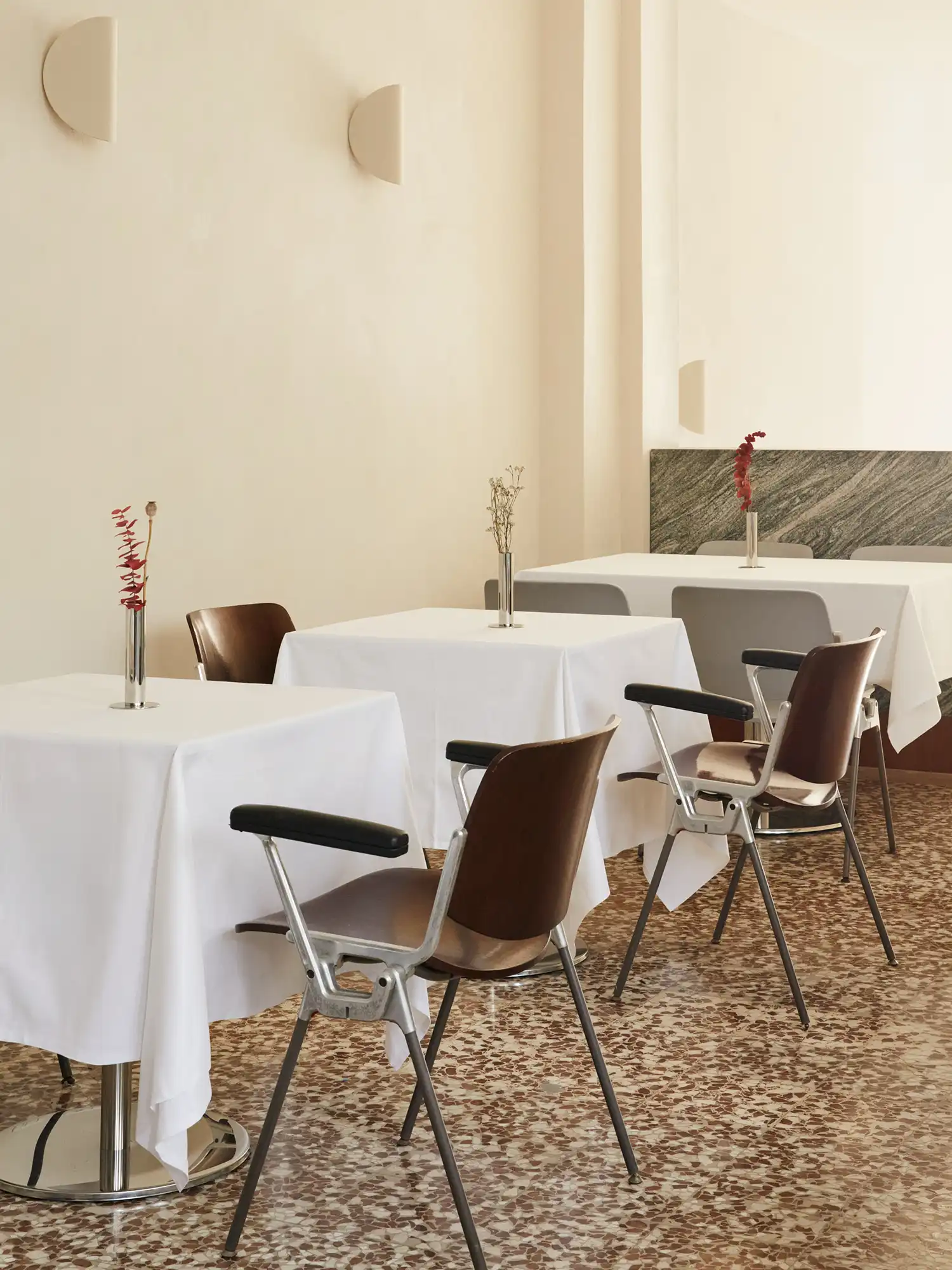
The central hinge of the experience is the monolithic counter, crafted from the same striking green marine granite that defines the flooring. This element acts as the structural and aesthetic anchor of the restaurant, seamlessly integrating functionality with form. The counter does more than serve food; it incorporates a functional staircase with a bespoke handrail, creating a visual harmony that connects the different levels and zones of the space.
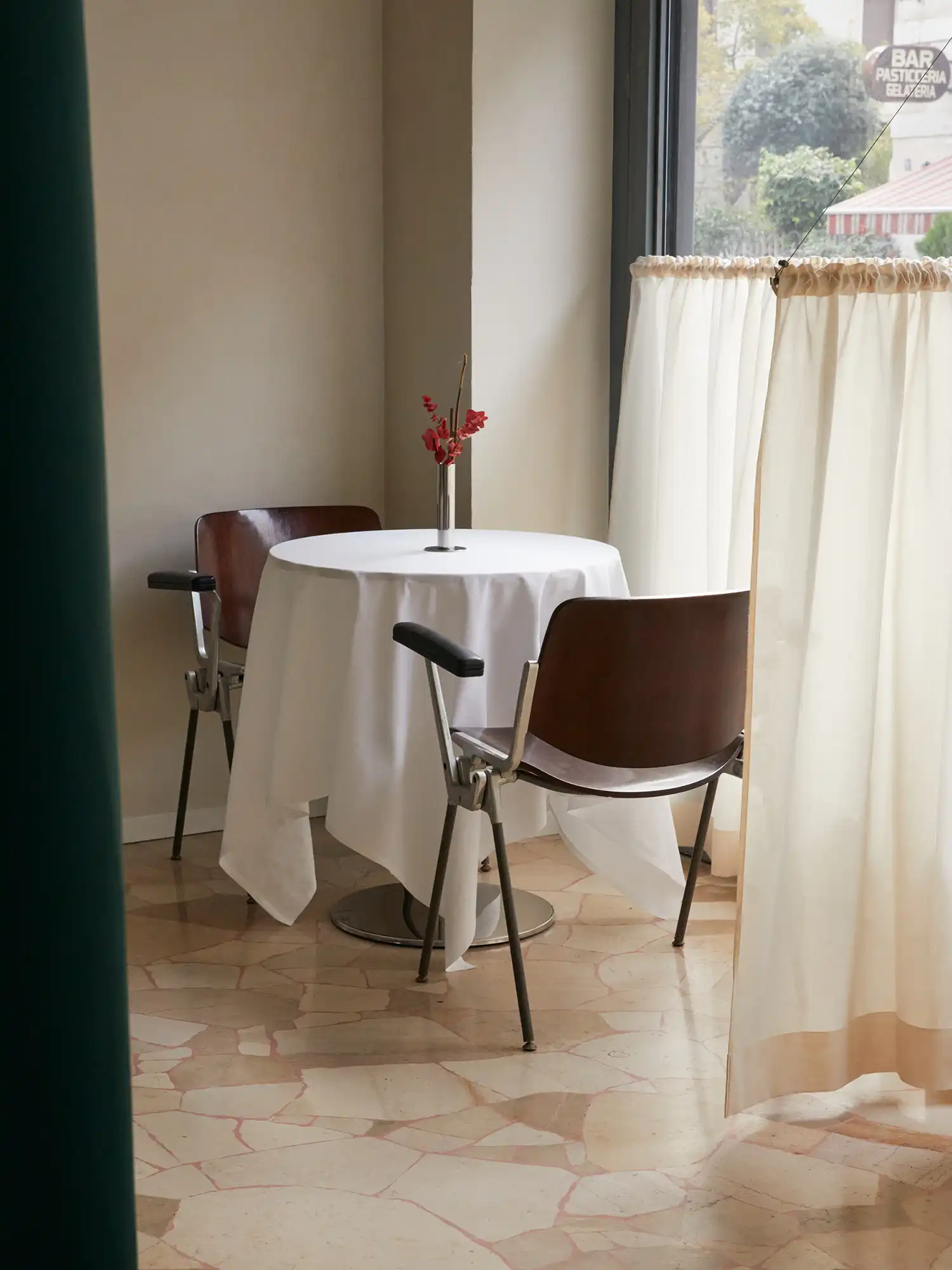
Contextual flexibility and local craftsmanship define the project’s longevity. Inspired by a “culinary recipe” approach, the design team prioritized local functional elements that can evolve over time, allowing for future modifications without losing the original identity. The furniture selection, flooring, and custom curtains were meticulously chosen to foster a solid, timeless foundation rather than a disposable aesthetic.
Redefining Milan’s dining scene requires a nuanced understanding of its rich architectural heritage. Sandì stands as a testament to the power of thoughtful intervention, where the preservation of historical context does not preclude innovative expression. It represents a shift toward a more introspective form of interior design, one that values cultural continuity over superficial modernization.
Exploring Milan’s evolving culinary landscape further reveals a trend toward spaces that tell a story. For those interested in how architects are reshaping the city’s gastronomic venues, we recommend exploring this thoughtful redesign of a Milanese trattoria. Additionally, the city features innovative spots like this vibrant bar designed by Velvet Studio, and the refined atmosphere of the Mogo Hi-Fi Bar, which similarly navigate the balance between tradition and modernity.