

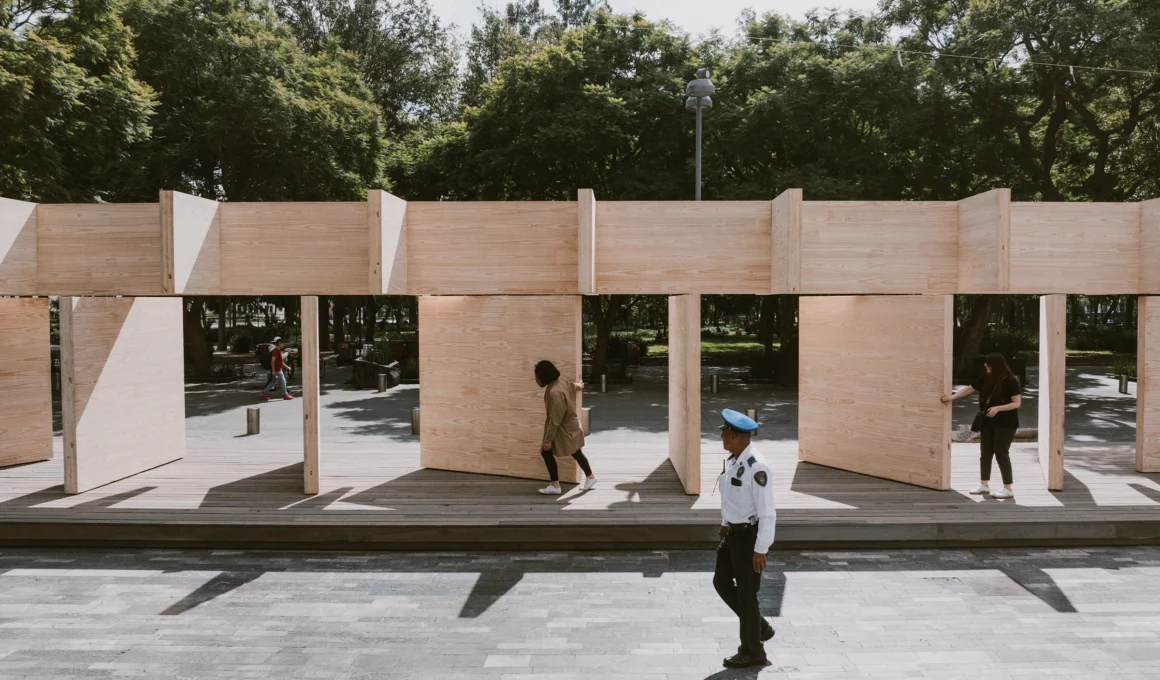
Mexican architecture firm PPAA (Pablo Pérez Palacios Arquitectos) has unveiled a stunning ephemeral installation for the Mextropoli 2025 architecture festival in Mexico City. Titled “Resonancia Suspendida” (Suspended Resonance), the pavilion is a masterful exploration of wood as a contemporary building material, championing its inherent structural lightness and potential for sensory transformation. Designed in collaboration with Reed Wood and Arboreal, the project stands as a poetic statement on the dialogue between mass and weightlessness.
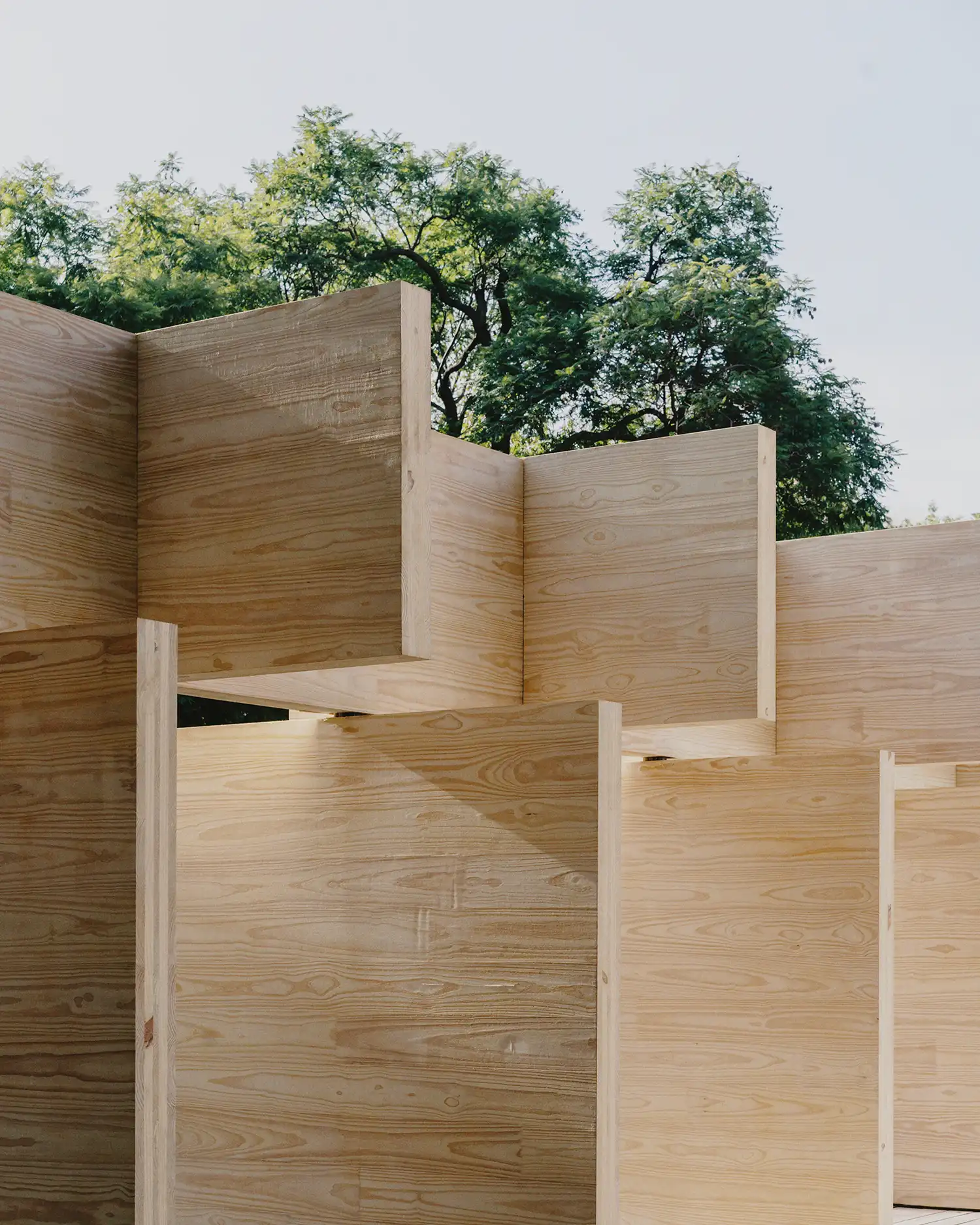
Conceived as a performative installation, the pavilion celebrates the intrinsic qualities of wood. Its design philosophy is one of radical economy, aiming to achieve a powerful architectural expression with a minimal number of elements. The result is a structure that feels both elemental and profound, showcasing how technical innovation and material honesty can coalesce into a compelling spatial experience that is both ephemeral and impactful.
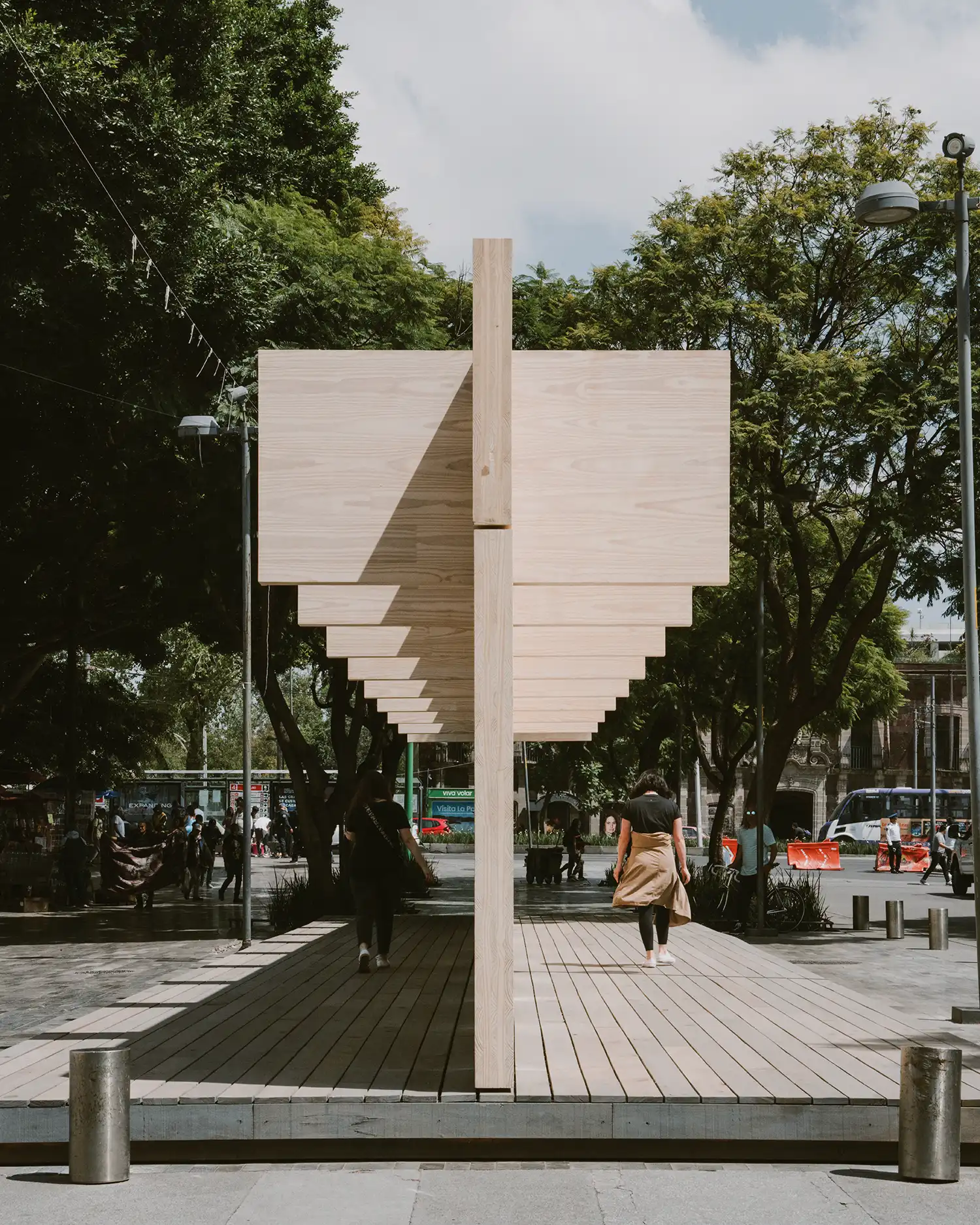
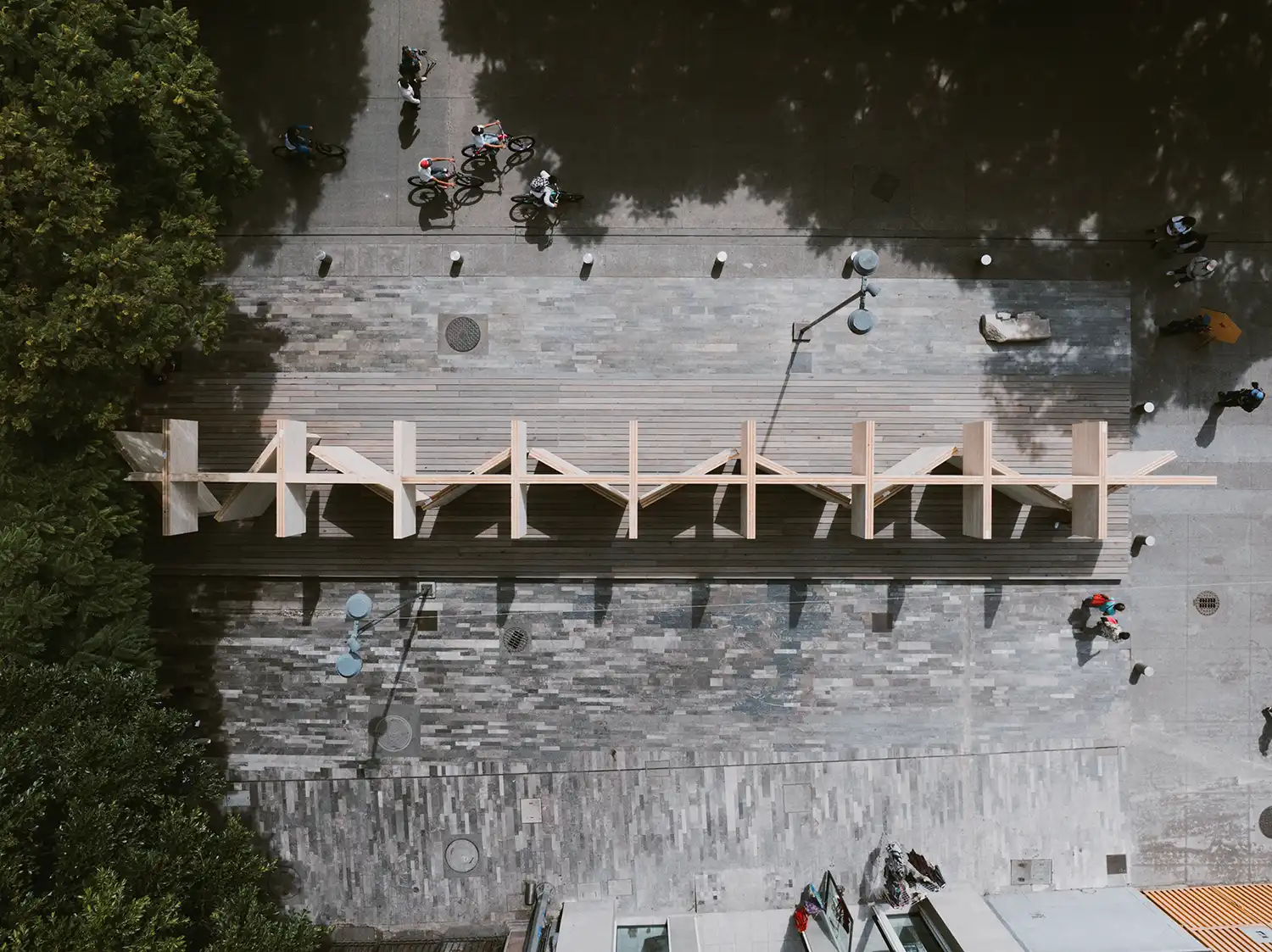
The project’s breathtaking central gesture is a monumental laminated wood beam, measuring 24 meters in length. This impressive element spans the space uninterrupted, appearing as a single, floating line suspended in mid-air. The beam’s dramatic effect is achieved through a clever and innovative support system that defies traditional architectural logic. Instead of resting on conventional columns, the vast structure is borne by a series of rotating vertical wood panels.
This ingenious system of rotating panels is the heart of the pavilion’s transformative nature. When aligned, the panels act as a direct and solid structural support. With a simple, minimal gesture, they can be pivoted, transforming their condition from one of load-bearing solidity to visual and physical transparency. This kinetic action dematerializes the pavilion’s supports, enhancing the illusion that the primary beam is magically levitating above the ground.
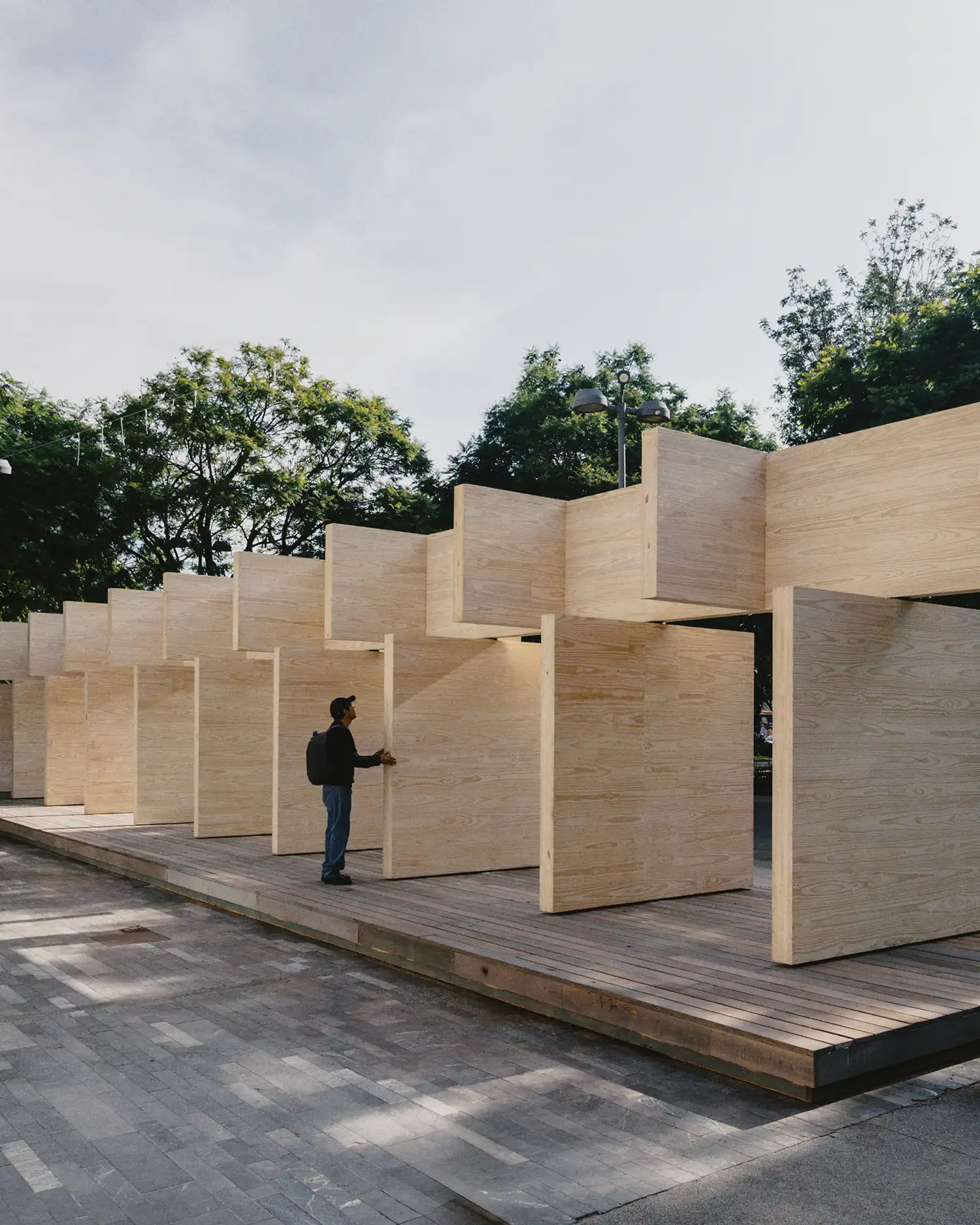
This dynamic interactivity makes “Resonancia Suspendida” a living architectural piece. It blurs the line between a static object and a dynamic event, creating a space where visitors directly engage with the architecture. The coexistence of the static beam and the movable panels creates a fascinating tension, making the pavilion an ever-changing environment that responds to human interaction and redefines the user’s perception of space and structure.
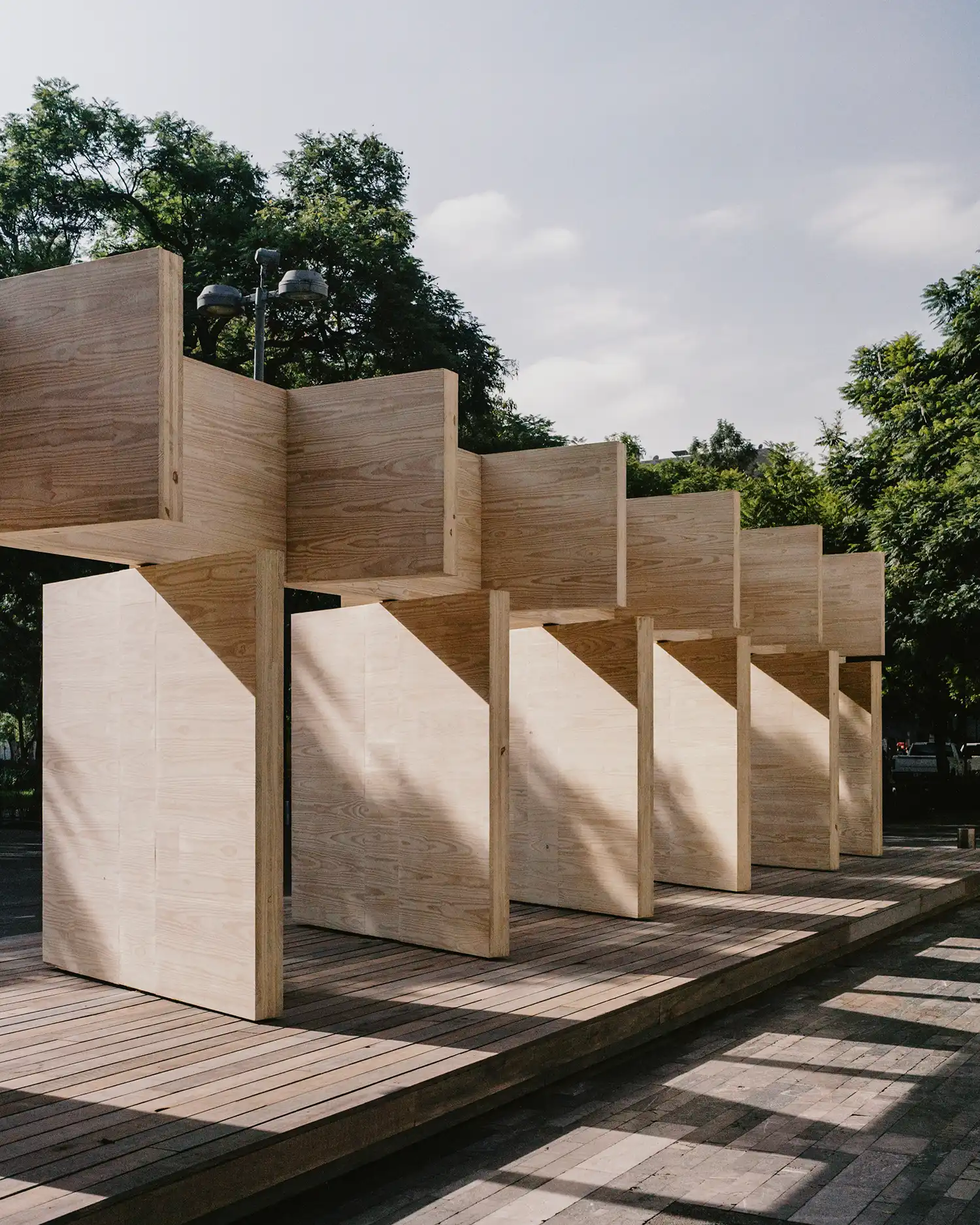
The final outcome is an open, permeable, and almost weightless space that powerfully evidences the nobility and expressive potential of wood in contemporary architecture. More than just a constructed object, the pavilion is a curated experience that poetically explores the fundamental forces of architecture: the push and pull between mass and lightness, and the enduring fascination with gravity and suspension. It is a testament to PPAA’s ability to fuse technical precision with deep spatial poetry.