



In the verdant embrace of Urban Forest Jakarta, a curious structure has taken root, not as a towering monument, but as a gentle undulation in the landscape. The Chicken Hero Pavilion, conceived and realized by RAD+ar, is more than just an architectural intervention; it’s a living, breathing experiment in decentralized sustainability, a potent microcosm of circular economy principles, and a provocative call to action for individual responsibility in addressing Indonesia’s food waste crisis.

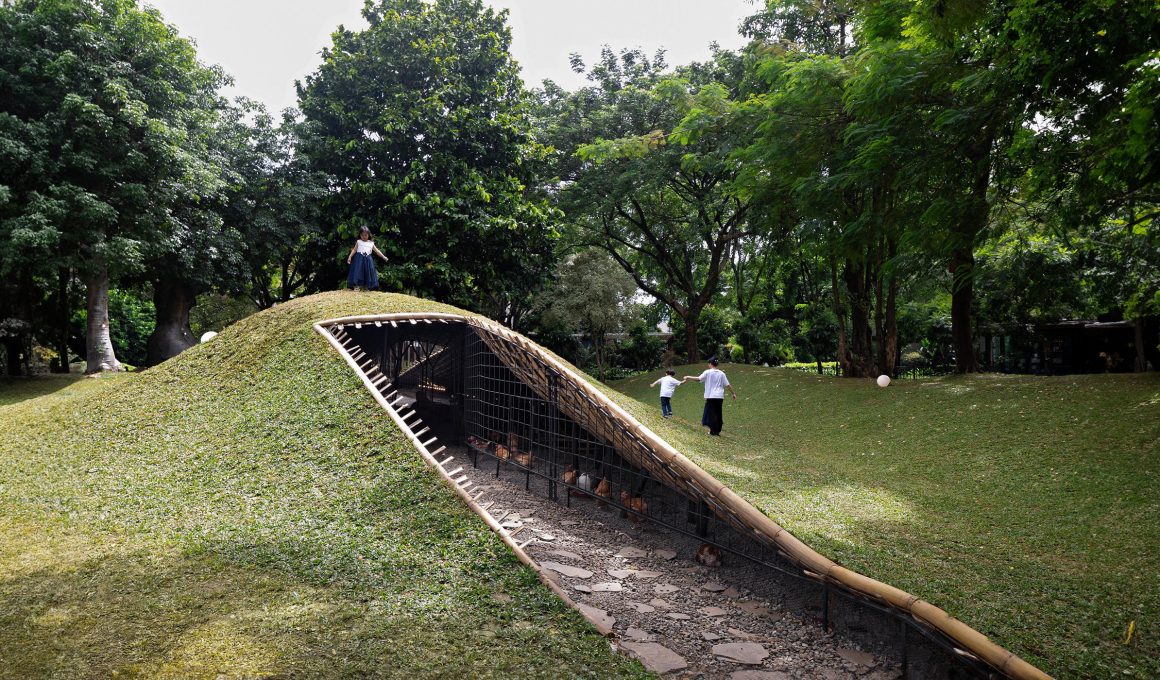
Resembling a natural hillock, the pavilion seamlessly integrates into its surroundings. A cave-like tunnel, dubbed the “Chickencoop,” invites visitors into a space of free education and entertainment, blurring the lines between learning and experience. This unassuming entrance belies the pavilion’s deeper purpose: to inspire independent backyard poultry farming as a viable solution to food waste reduction.

Indonesia faces a significant challenge as the runner-up in global food loss and waste, with staggering figures highlighting the scale of the problem. RAD+ar’s self-initiated project directly confronts this issue by showcasing practical, upcycled chicken coop designs that prioritize both environmental responsibility and animal welfare.

The pavilion itself is a testament to these principles. Constructed primarily with reclaimed bamboo, the horizontal-diagonal green roof structure allows for cross-ventilation and ample indirect daylight, creating a comfortable and efficient environment for the chickens. This carefully considered design optimizes space while effectively managing waste and preserving surrounding green areas, including rainwater catchment surfaces.

The temporary nature of the pavilion further underscores its commitment to circularity. During its four-week display, it functioned as a vital component of Urban Forest Jakarta’s waste management system. Dried leaves and organic tree waste from the park provided bedding for the chickens, reducing humidity and creating a valuable resource.

Food waste collected from six on-site restaurants was composted alongside this bedding, transforming discarded materials into nutrient-rich garden and commercial compost harvested every three days. This closed-loop system not only minimized waste but also generated tangible benefits: approximately 40 eggs were produced daily, distributed back to the restaurants, and offered to visitors as a unique “live harvesting” souvenir.

The pavilion’s architectural language is intentionally simple, prioritizing a harmonious relationship with nature and fostering an inclusive spatial quality for the public. The reciprocal relationship between visitors and chickens forms the core of the project’s narrative, challenging the stigma often associated with backyard poultry farming. By fostering direct interaction and demonstrating the practical benefits of this approach, RAD+ar aims to empower individuals to become agents of change within their own homes, neighborhoods, and wider communities.

The Chicken Hero Pavilion transcends the realm of conventional sustainable architecture. In a developing nation where reliance on large-scale sustainable infrastructure can be challenging, this project offers a compelling alternative: a decentralized, community-driven approach that aligns with the growing trend of “Glocalization” – the fusion of global awareness with local action – prevalent across the Indonesian archipelago. By asking how to effectively decentralize sustainability without relying solely on high-tech solutions, RAD+ar has created a potent prototype for both government bodies and developers. The pavilion embodies a utopian vision of a micro circular economy operating within local communities, demonstrating the potential for widespread, impactful change through simple, accessible practices. The Chicken Hero Pavilion is not just a structure; it’s a seed, planted in the fertile ground of Urban Forest Jakarta, with the potential to blossom into a nationwide movement.