

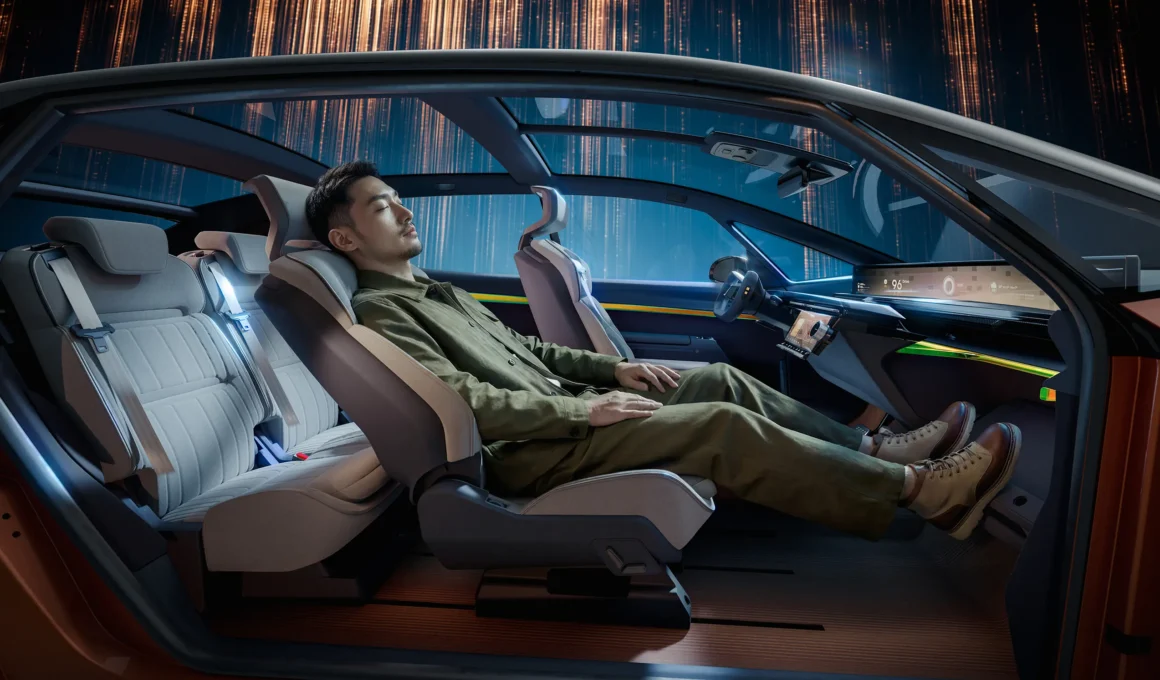
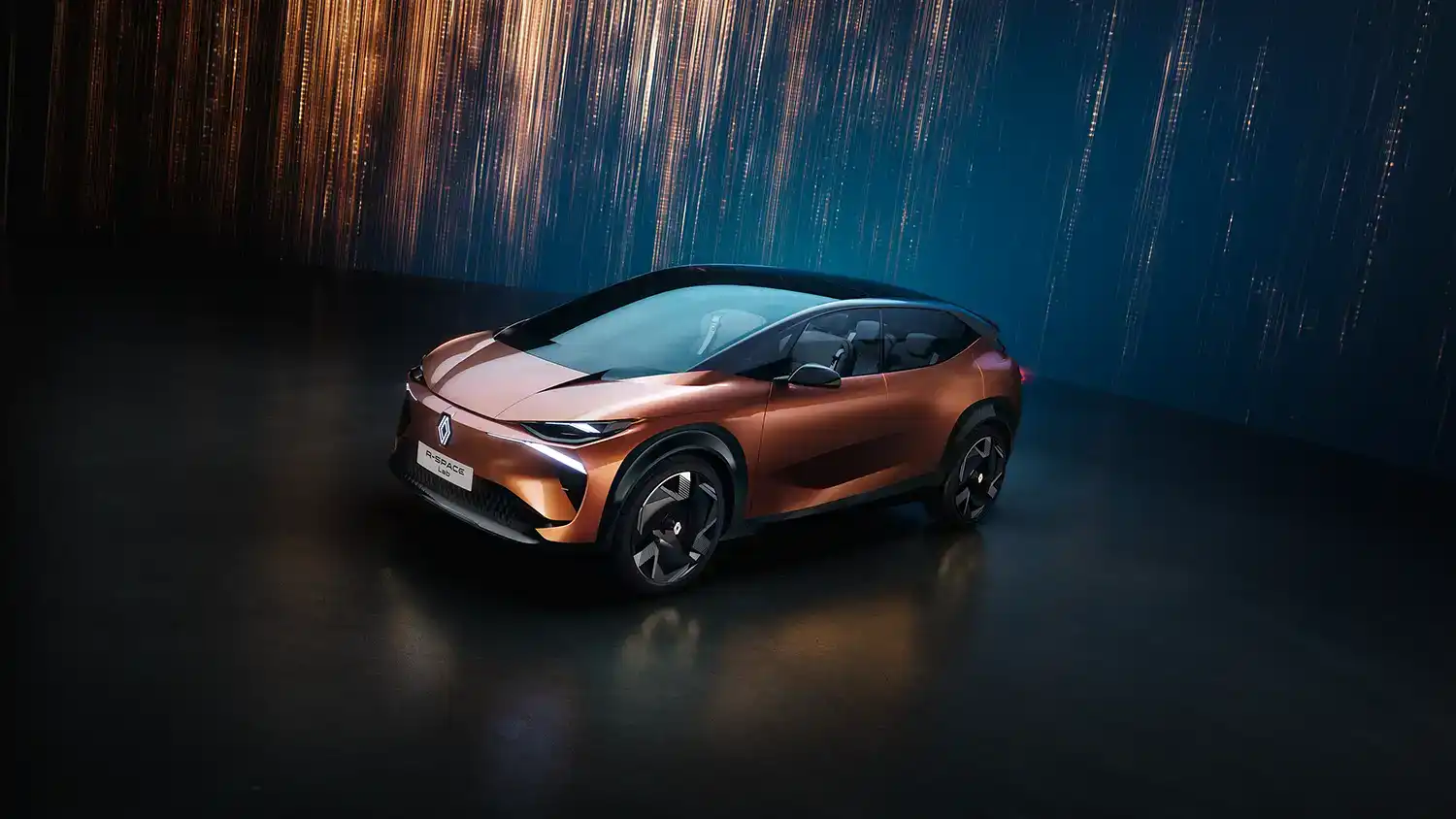
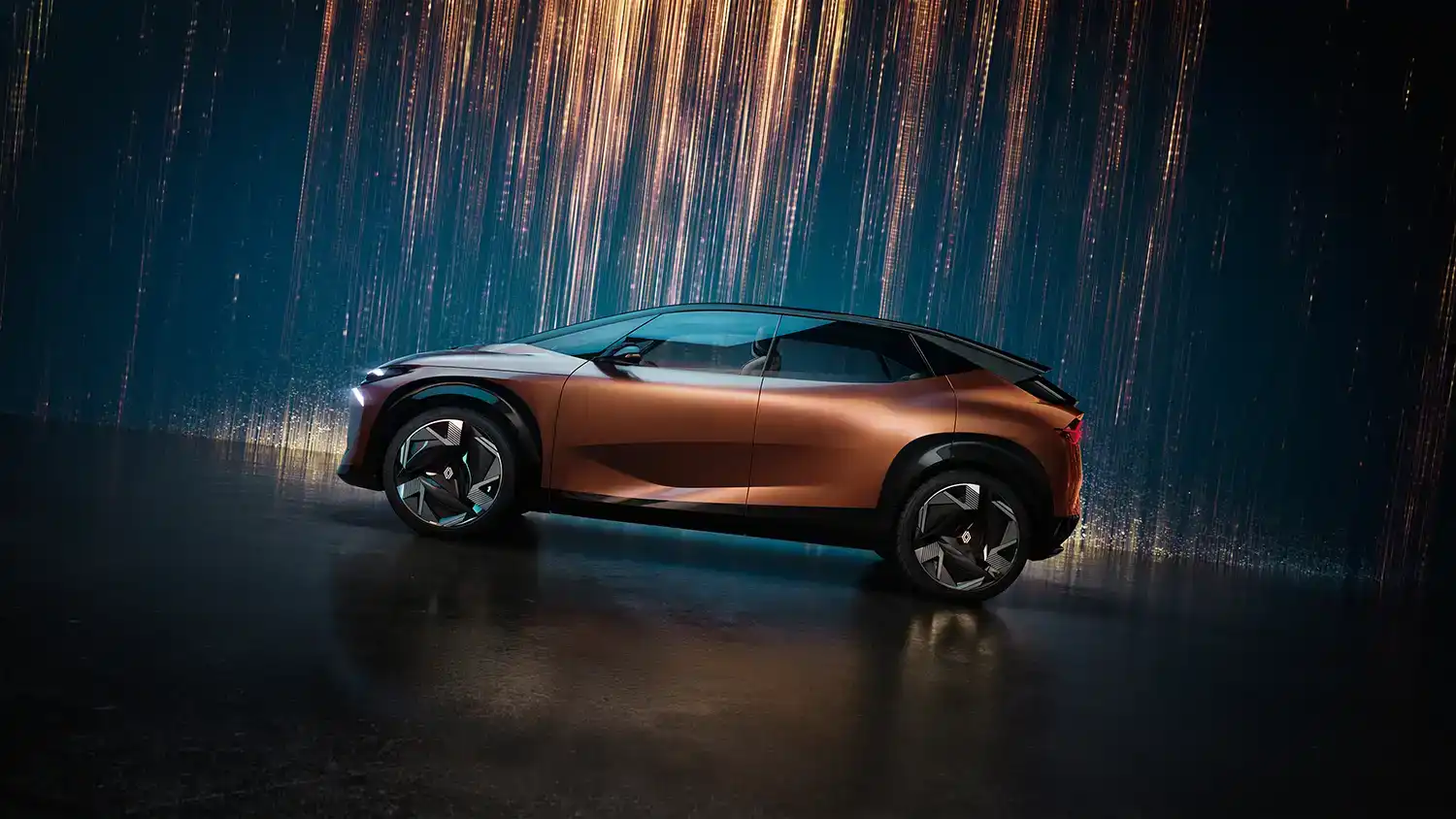
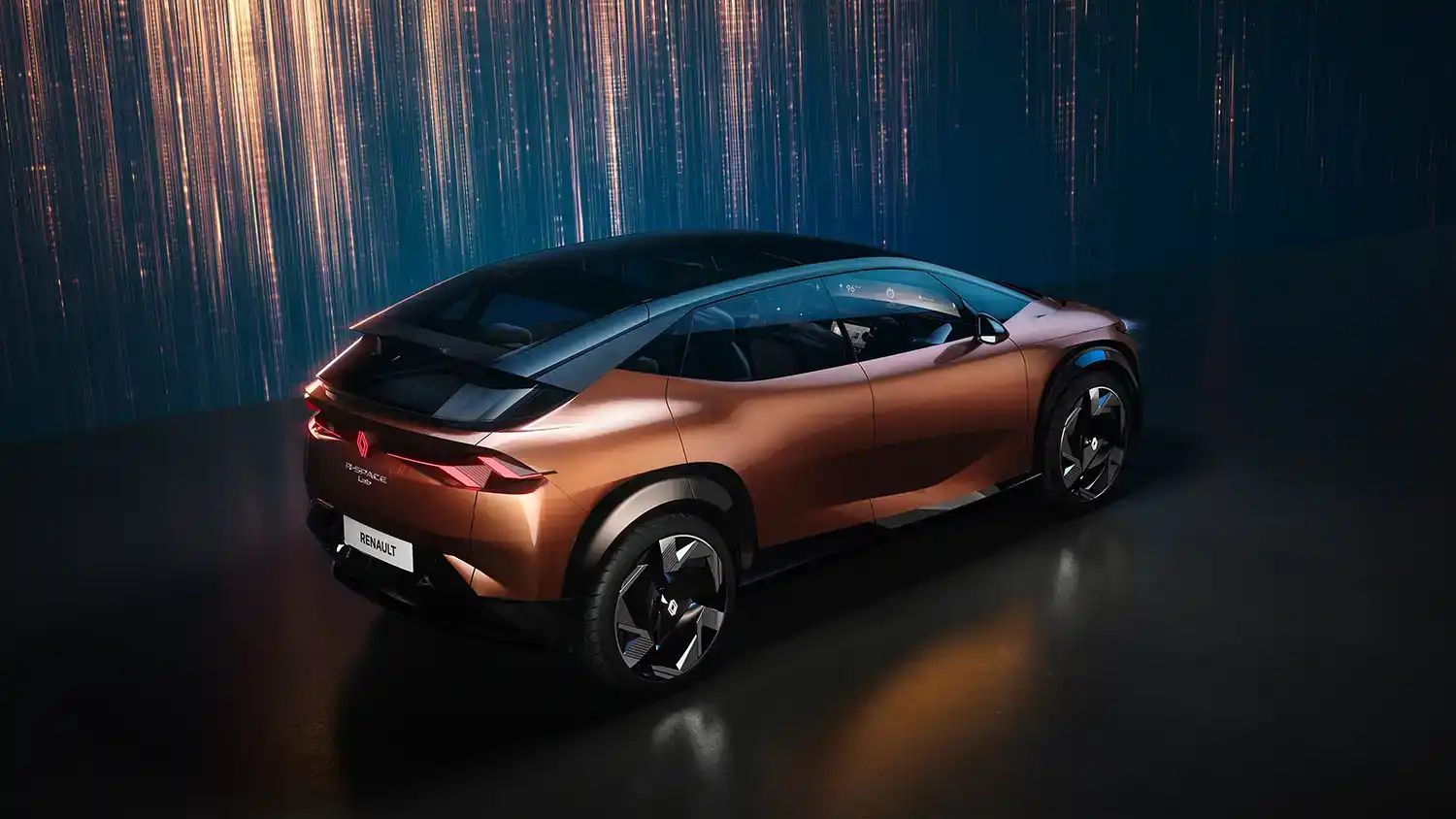
Renault’s R-Space Lab, developed by the Futurama innovation hub, emerges as a functional laboratory for the brand’s ‘voitures à vivre’ philosophy in a project that redefines the 2030 in-car experience. Located at the intersection of modularity and digital intuition, this 4.5-meter-long demonstrator utilizes a one-box silhouette to explore a bright, human-centric cabin where technology serves as a seamless bridge between transit and daily life.
The conceptual vision behind the R-Space Lab moves away from the car as a static object, treating the interior instead as a programmable environment. It is an exploration of fluidity, where the transition from a mobile office to a family social hub happens through physical reconfigurations rather than just digital overlays. The atmosphere is defined by a sense of weightlessness, achieved through a glass-dominant shell that strips away the visual bulk typical of traditional automotive cockpits.
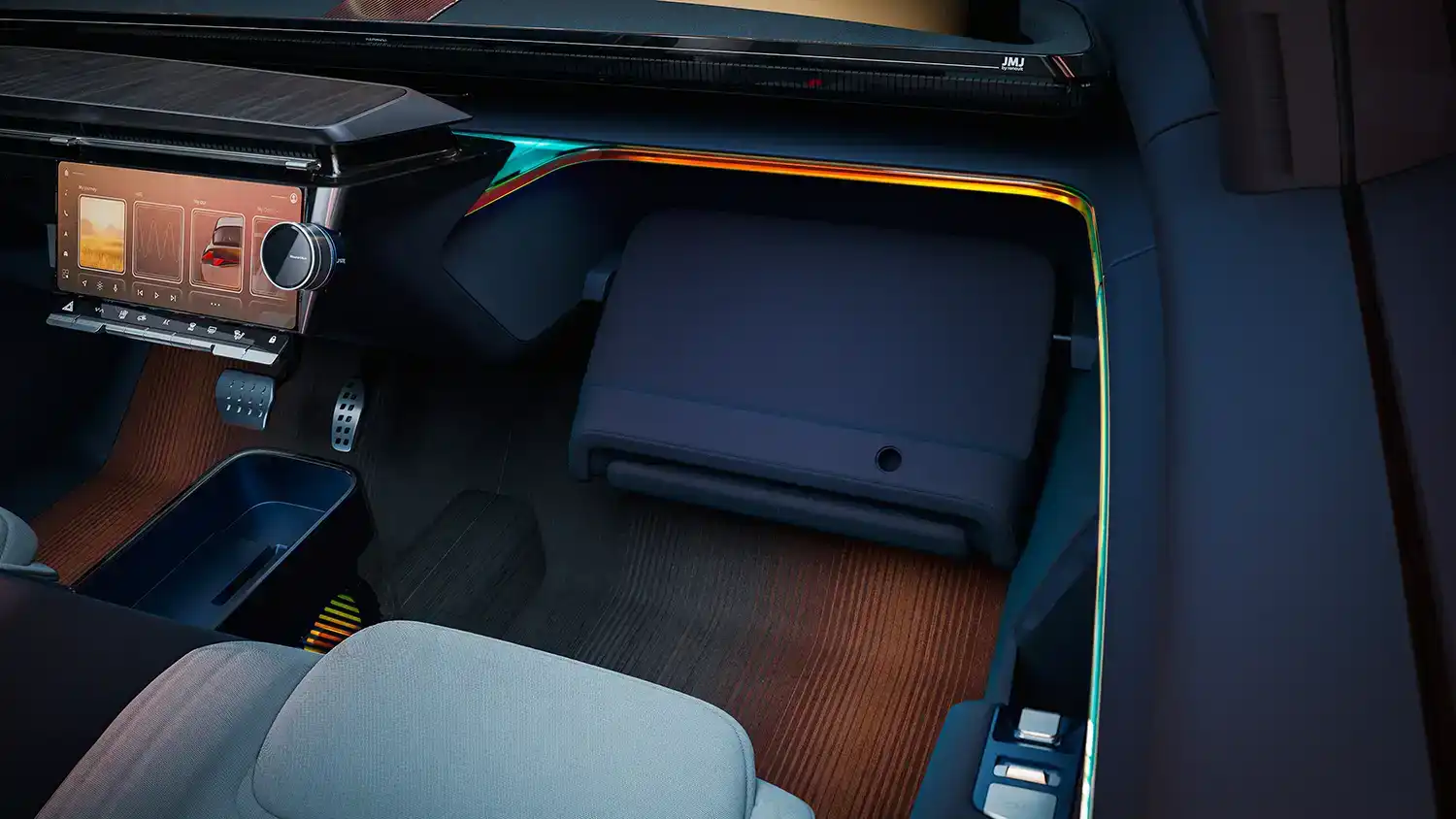
Intuitive digital landscapes define the technical precision of the cockpit, where a wide curved openR panorama screen spans the entire dashboard. This interface is not merely a display but a functional horizon, consolidating ADAS and multimedia data into a layout as legible and familiar as a high-end smartphone. By utilizing steer-by-wire technology and a compact steering wheel, the driver’s field of vision remains unobstructed, allowing the digital architecture to feel like a natural extension of the horizon rather than a barrier to it.
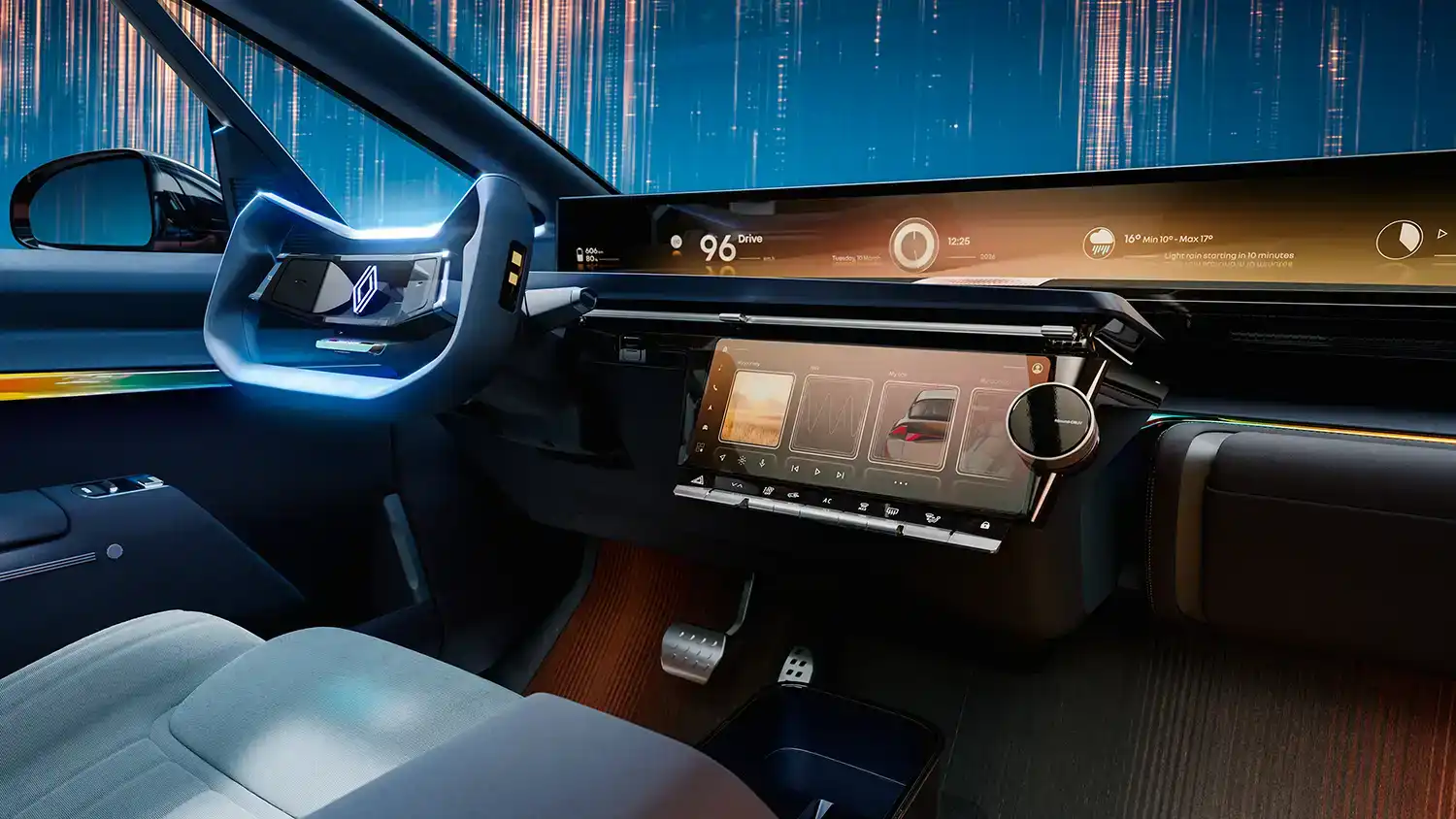
The sensory geometry of the cabin prioritizes a “Human First” approach to safety and interaction. On the passenger side, the removal of traditional dashboard-mounted airbags—now integrated into the seats—allows for a multifunction glovebox that transforms into a reclining footrest. The tactile quality of the materials and the soft, diffused light entering through the fully glazed roof create a voluminous interior that feels deeply connected to the external environment, stripping away the claustrophobia of the road.
Modular living and spatial logic represent the mechanical soul of the R-Space Lab, featuring a modular interior layout designed to adapt to the unpredictable rhythms of daily life. Three identical rear seats feature reclining backrests and flip-up cushions, allowing the flat floor plan to accommodate anything from a bicycle to a pet with ease. The passenger seat’s ability to slide into the second row fosters a rare intimacy between occupants, breaking the traditional hierarchy of “front” and “back” to create a unified social space.
Safety through intelligent assistance pushes the laboratory toward new frontiers in passenger protection through an integrated AI Safety Coach. This system provides contextual recommendations and assists with vehicle navigation, while a tactile alcohol detector serves as a proactive educational tool for younger drivers. These features illustrate a shift toward a more empathetic vehicle—one that understands the physical and cognitive state of its users to provide a safer, more supportive journey.
A panoramic view of future mobility reveals that the Renault R-Space Lab is part of a broader movement toward the car as a curated experience. This evolution is reflected in the integrated interfaces of the BMW iX3, which prioritize visual clarity and immersion. Similarly, the autonomous vision of the Lucid Lunar suggests a future where the cabin is entirely untethered from the mechanics of driving. By focusing on the user’s emotional and physical well-being, Renault aligns with the human-centric philosophy of the Volvo EX60, where every interaction is calibrated for comfort and user experience.