

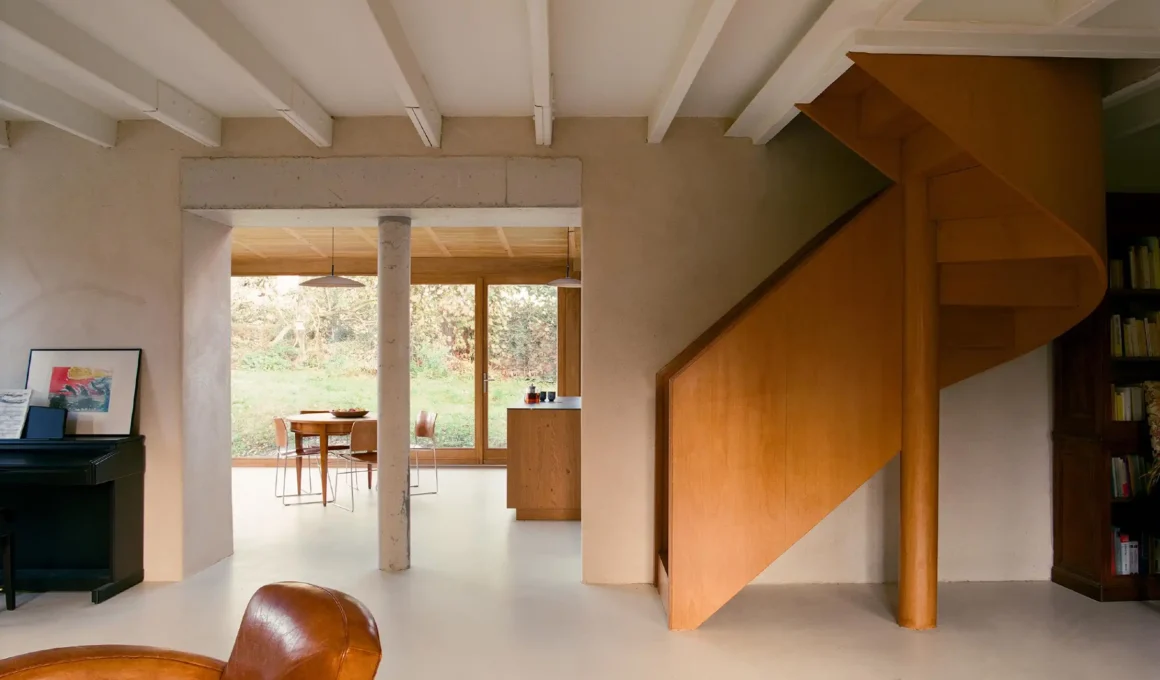
In the rugged landscape of Brittany, where the architecture has historically mirrored a culture of introverted resilience, a new residential intervention by a-platz is redefining the relationship between domesticity and the elements. The Plouër-sur-Rance House, situated on the verdant banks of the Rance River, represents a surgical approach to heritage. Rather than overwhelming the original fisherman’s cottage, the architects have utilized an extension as a poetic “pretext” to rediscover the soul of the existing structure, shifting its posture from a closed, defensive shell to a transparent vessel of light.
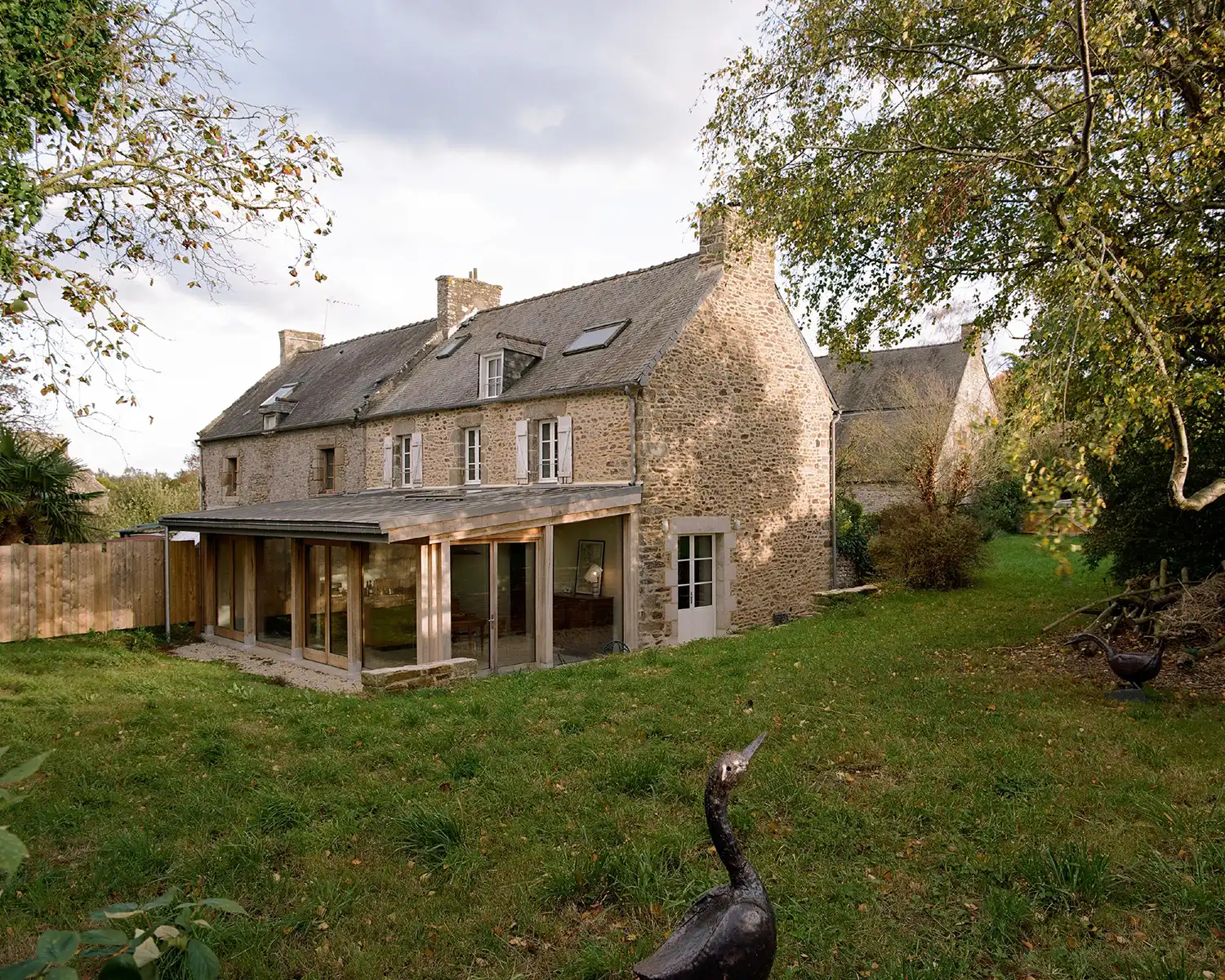
A dialogue between the vernacular and the contemporary begins with the preservation of the gable end—the quintessential emblem of Breton architecture. While the original stone masonry remains the anchor of the project, it is no longer a barrier. By stripping back the layers of the past, a-platz has exposed the raw honesty of the local stone, treating the building not as a static relic but as a living organism capable of evolution. This sensitivity to the “weight” of history is balanced by a lightness in the new additions, creating a tension that feels both timeless and distinctly modern.
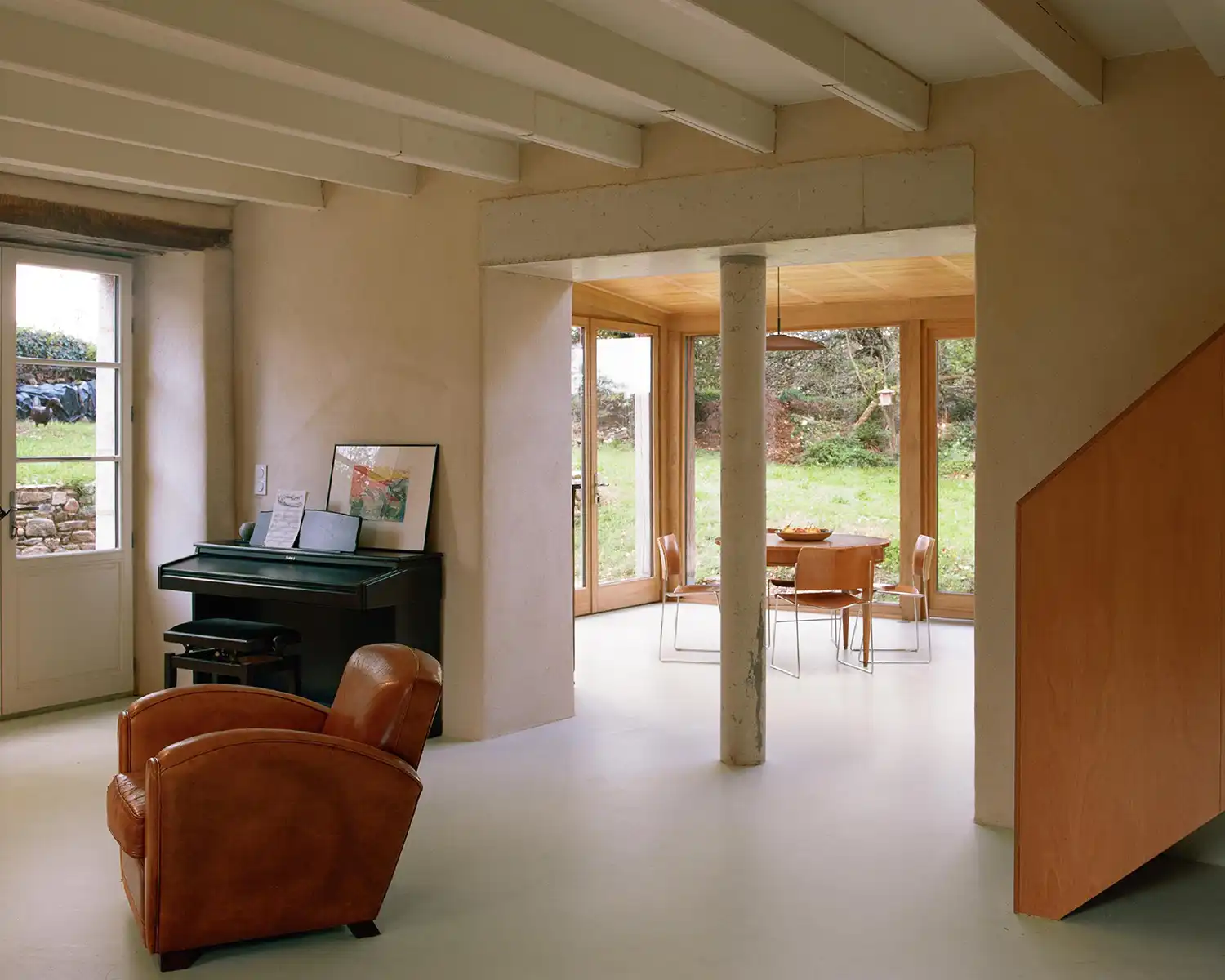
The spatial choreography of the interior is defined by a bold transition from the old world to the new. Moving from the cozy, earthbound living room and library, one encounters a threshold marked by a singular, circular concrete column. This sculptural element serves as a pivot point where the massive stone walls were pierced to allow the floor plan to unfold toward the north garden. The kitchen, now the primary social heart of the home, occupies the extension, offering a sensory experience that feels suspended between the grounded masonry and the expansive river landscape beyond.
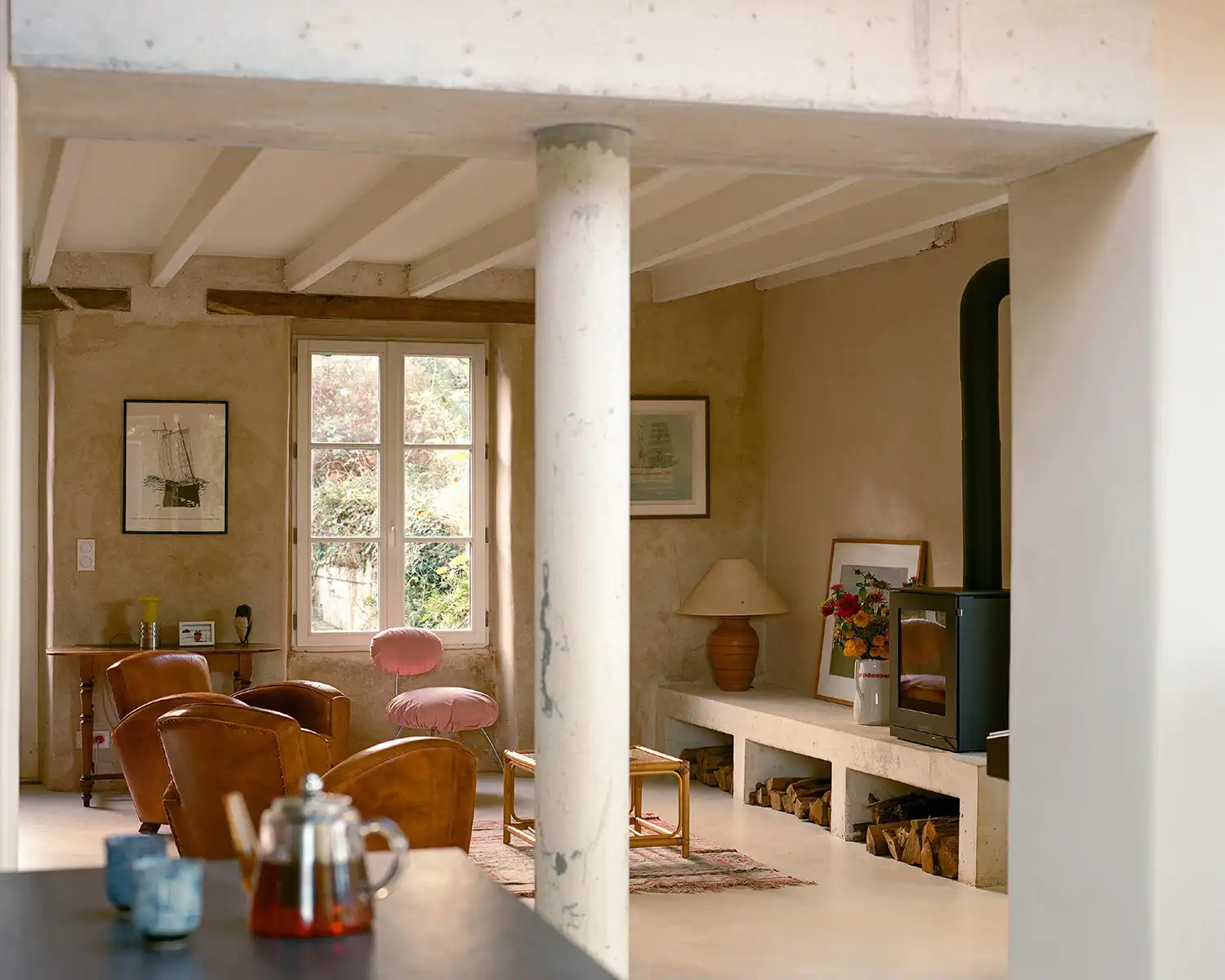
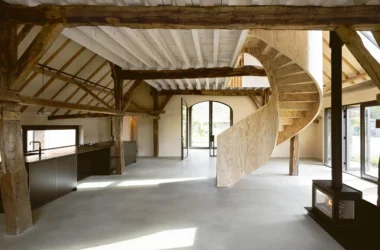
Materiality as a narrative of place plays a crucial role in the home’s atmospheric quality. In a thoughtful nod to the site’s maritime heritage, the architects preserved the original pitch pine joists—a timber synonymous with 19th-century shipbuilding. These dark, historical echoes are contrasted with a new, poured floor that flows seamlessly across both the old and new volumes, unifying the ground plane. The use of a lime-hemp render on the walls ensures the building “breathes,” providing a soft, tactile finish that enhances the thermal comfort of the inhabitants while respecting the house’s technical integrity.
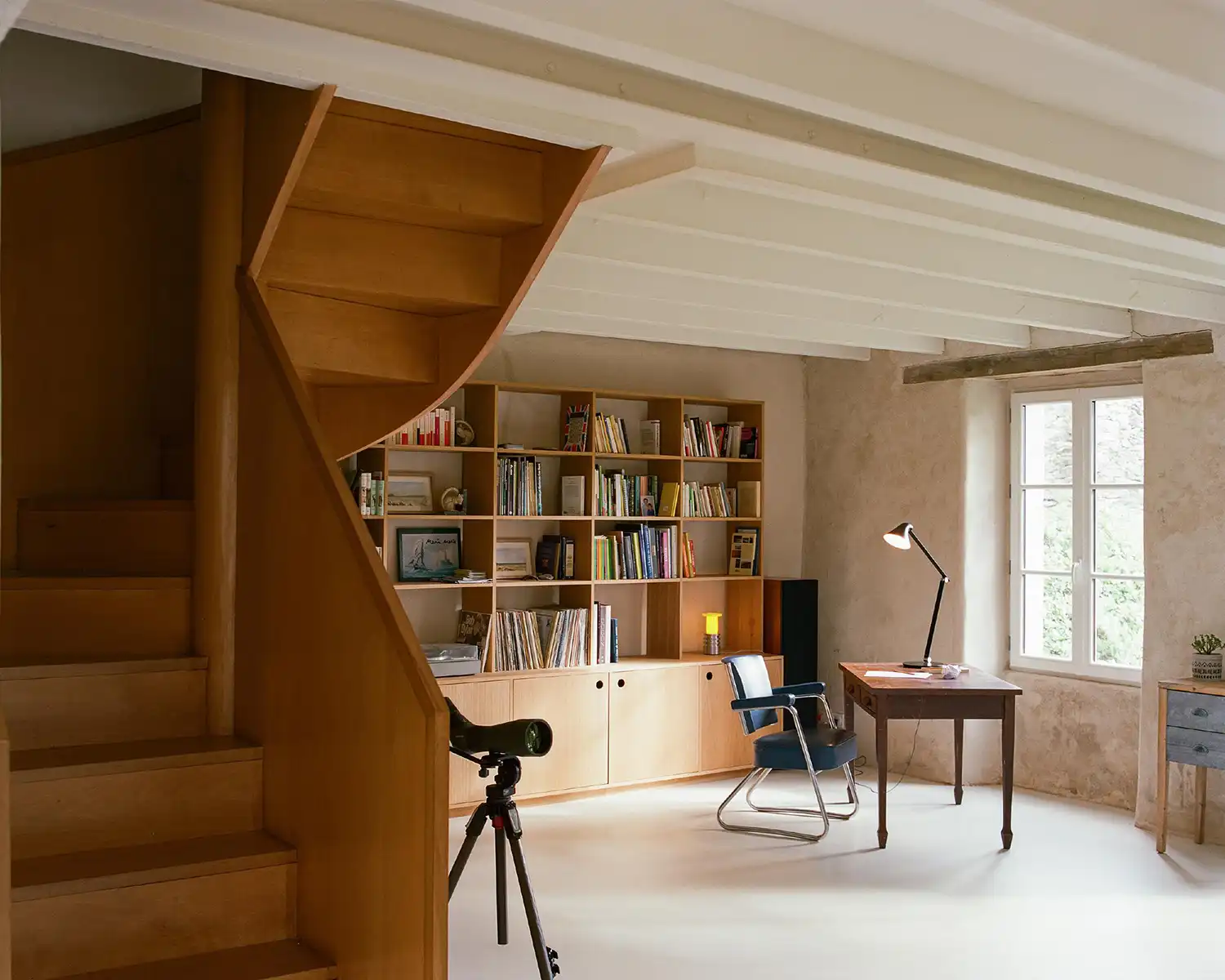
An aesthetic of raw refinement permeates the house, evoking a curated simplicity that is becoming a hallmark of high-end French renovations. The interior treatment, characterized by a sophisticated interplay of heavy tectonic elements and minimalist joinery, recalls the evocative fusion of historical layers and modern luxury seen in recent coastal French masterpieces. Much like the work of Dimorestudio in Saint-Tropez, the Plouër-sur-Rance House demonstrates that true luxury lies in the tension between the “rough” and the “smooth,” where a concrete plinth or a stripped-back stone wall becomes a canvas for contemporary living.
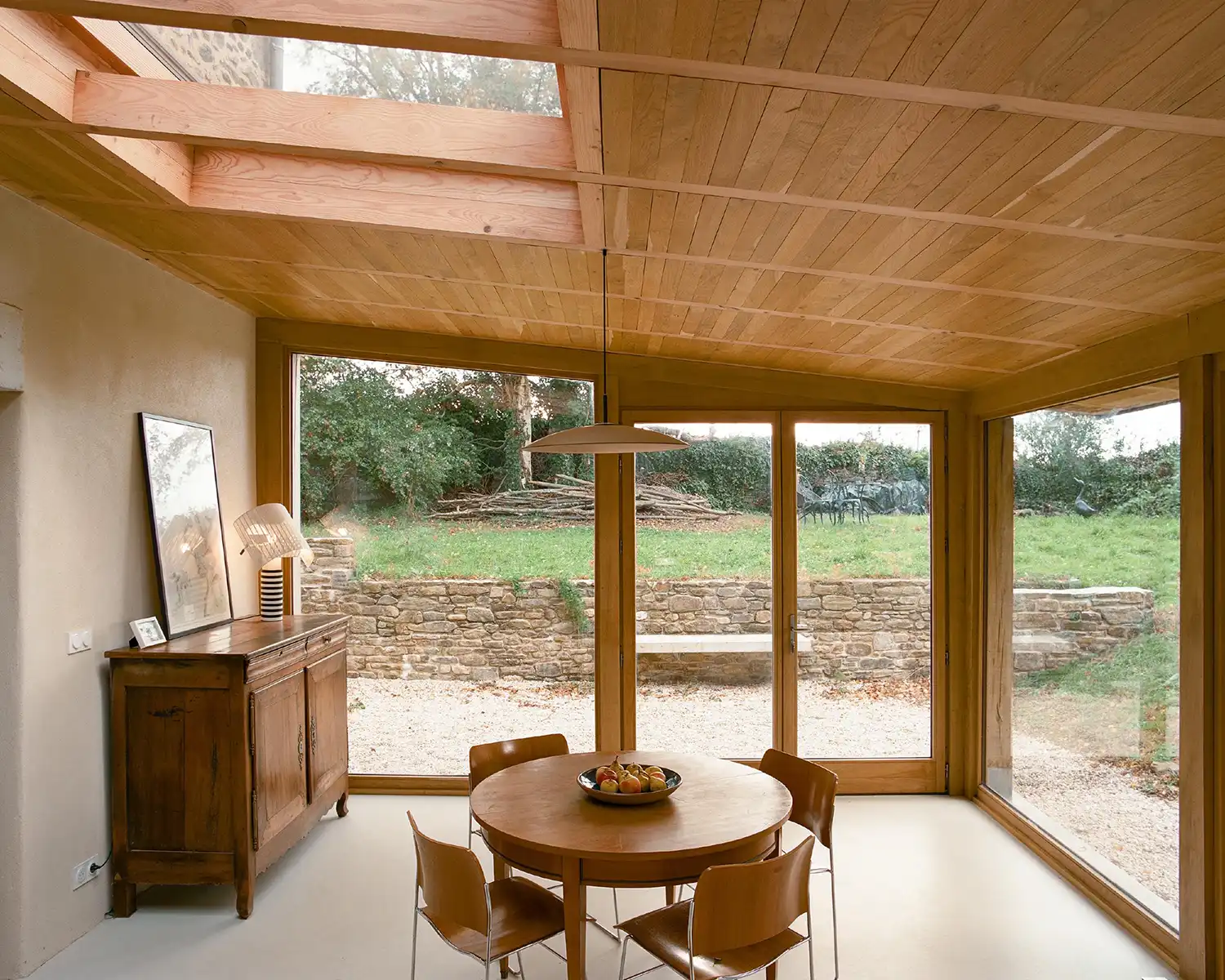
Reconnecting with the topography of the Rance, the project ultimately resolves the long-standing disconnect between the house and its environment. Where the previous structure “turned its back” on the garden, the new extension invites the outdoors in through strategic transparency and a rationalist use of raw materials. It is a house that no longer fears the Atlantic climate but instead celebrates it, offering its residents a front-row seat to the shifting light and tides of France’s northern coast—a testament to how thoughtful architecture can transform a reserved heritage into an open, expressive future.