

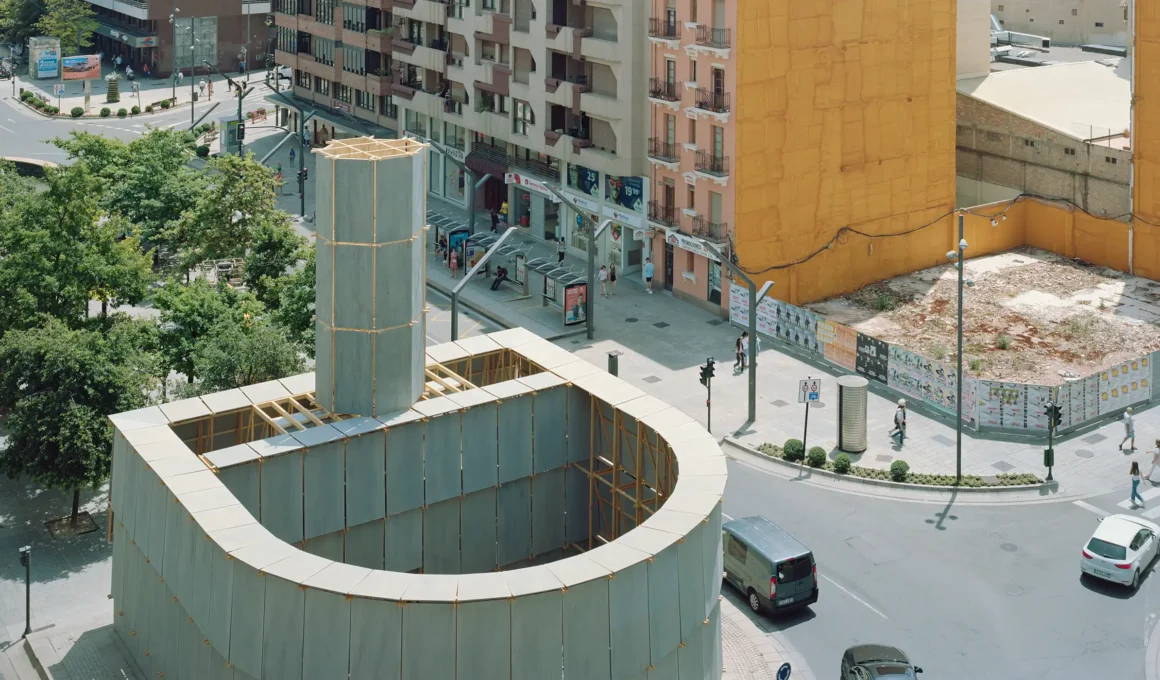
Imagine the relentless swirl of traffic, cars tracing endless circles around a forgotten fountain trapped at its core. An island of concrete and water, visible yet utterly inaccessible, a symbol of how car-dominated urban environments dictate our cities. Now, imagine that sterile centre transformed: steam rising, laughter echoing, the quiet splash of bodies in water.
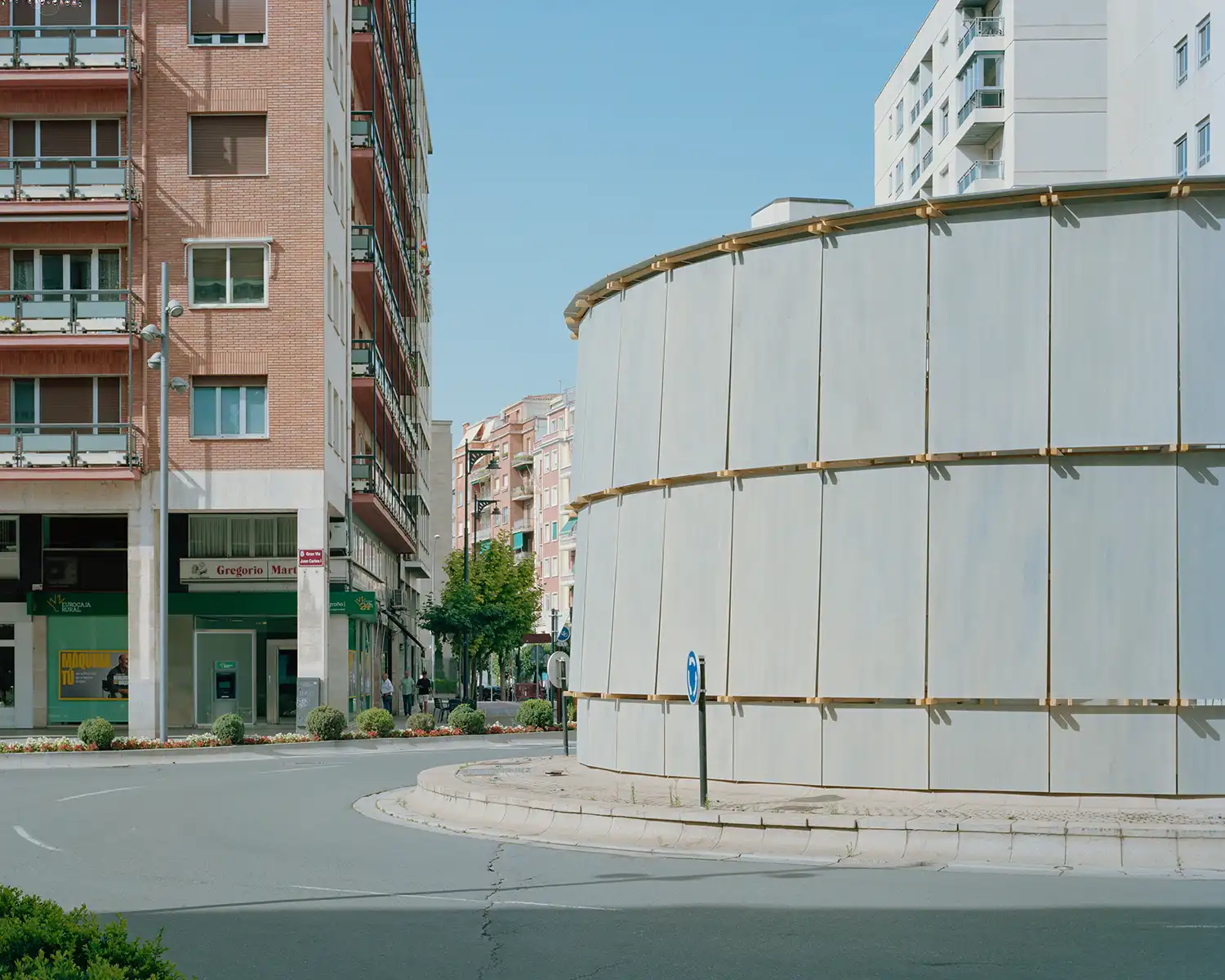
This is the radical proposition – and temporary reality – of the Round About Baths in Logroño, Spain, a provocative urban intervention by Leopold Banchini Architects. The project, a striking temporary public building, hacks the very fabric of the street. It dares to ask: what if we repurpose these impersonal, car-defined voids?
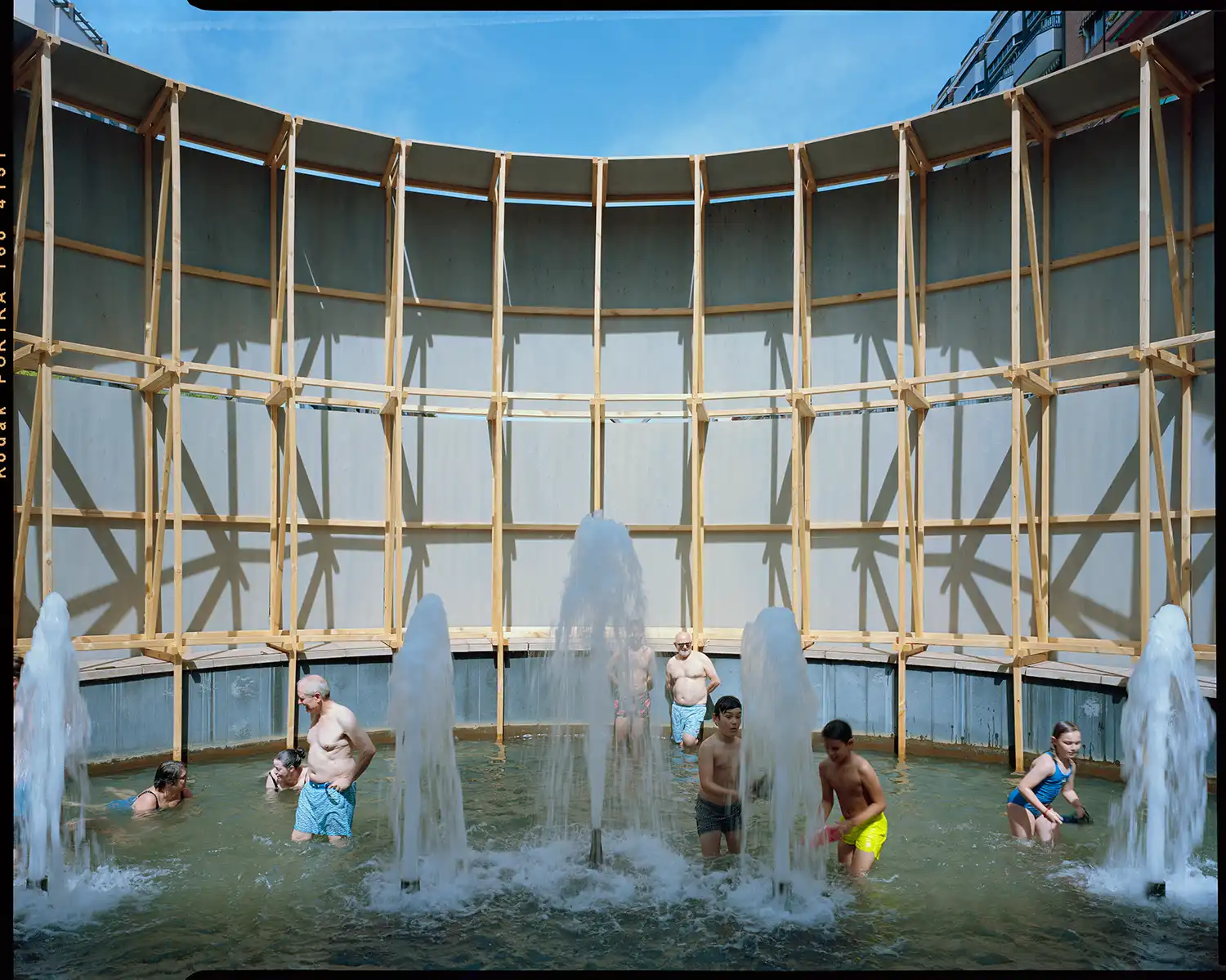
Banchini’s vision takes the central fountain of a bustling roundabout and envelops it, creating an intimate and communal bathing experience starkly contrasting with the surrounding asphalt river. High walls, constructed from a regular timber structure clad in uncut, raw wooden panels, rise to offer privacy within this most public of locations.
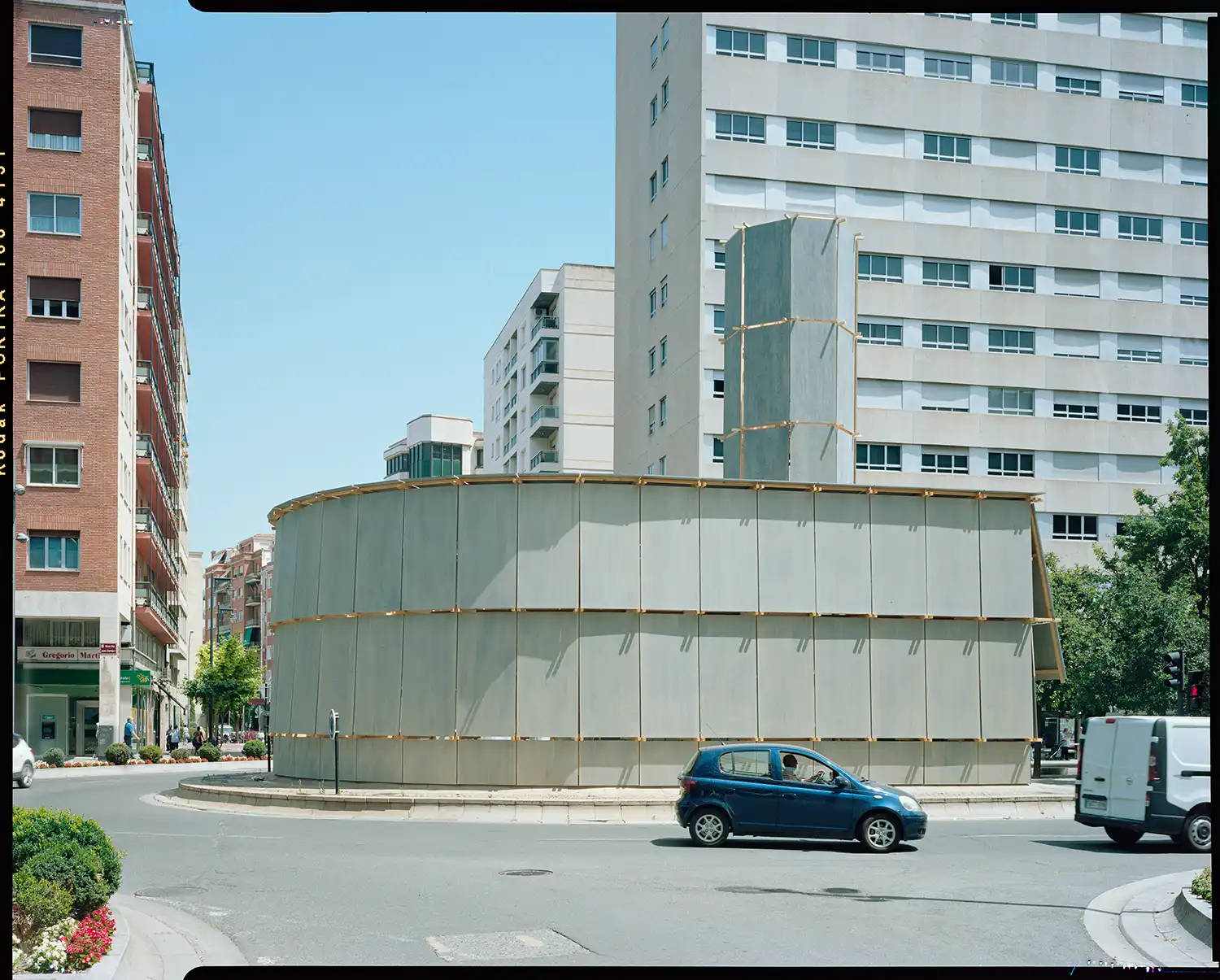
This sustainable timber construction, destined for reuse after the project’s lifespan, creates a sheltered oasis amidst the chaos.
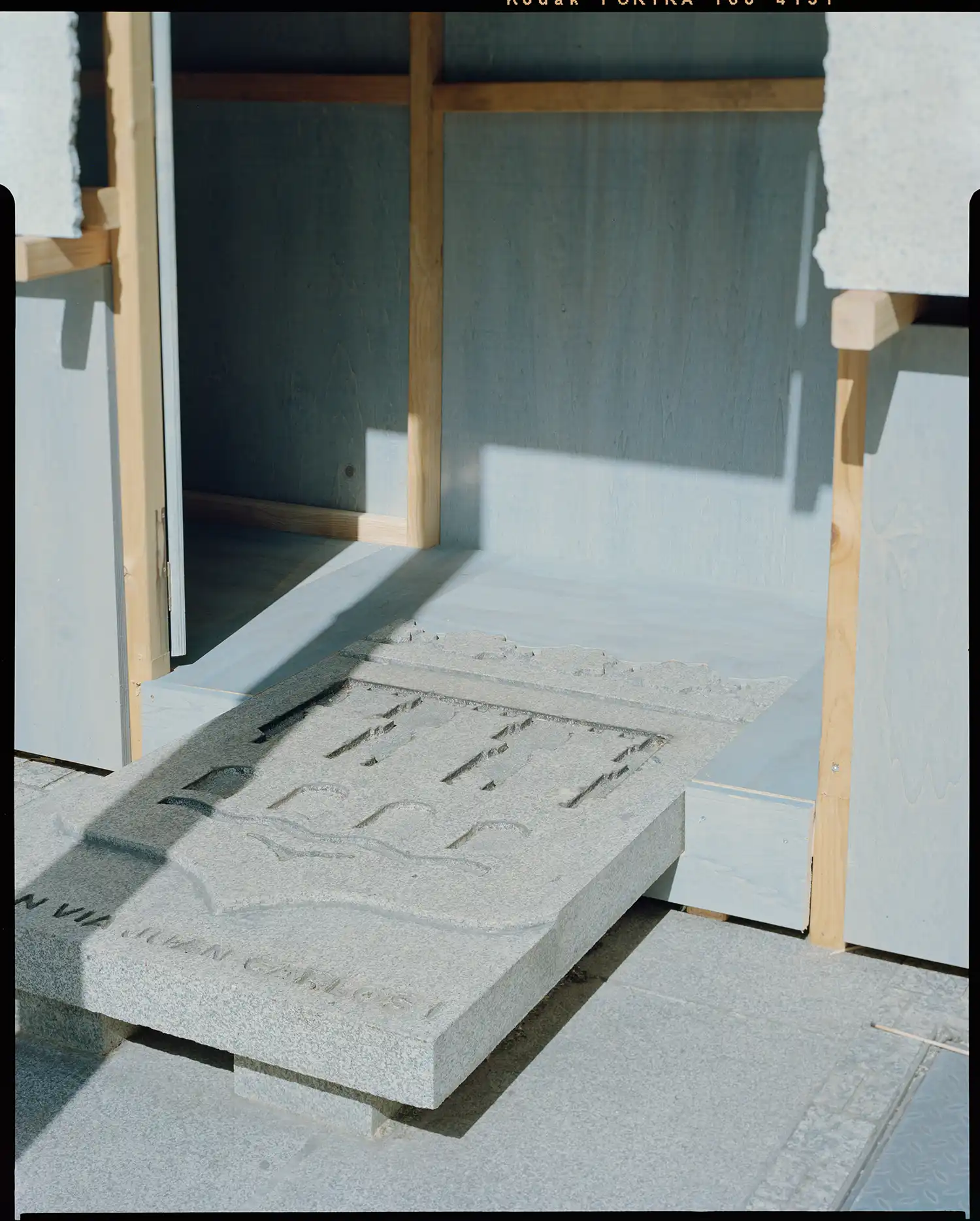
Round About Baths consciously revives the spirit of 19th-century public bathing facilities. These vital social infrastructures, once champions of hygiene and community for the working class, have largely vanished, replaced by exclusive, commercial wellness centres. Banchini’s design strips bathing back to its communal essence.
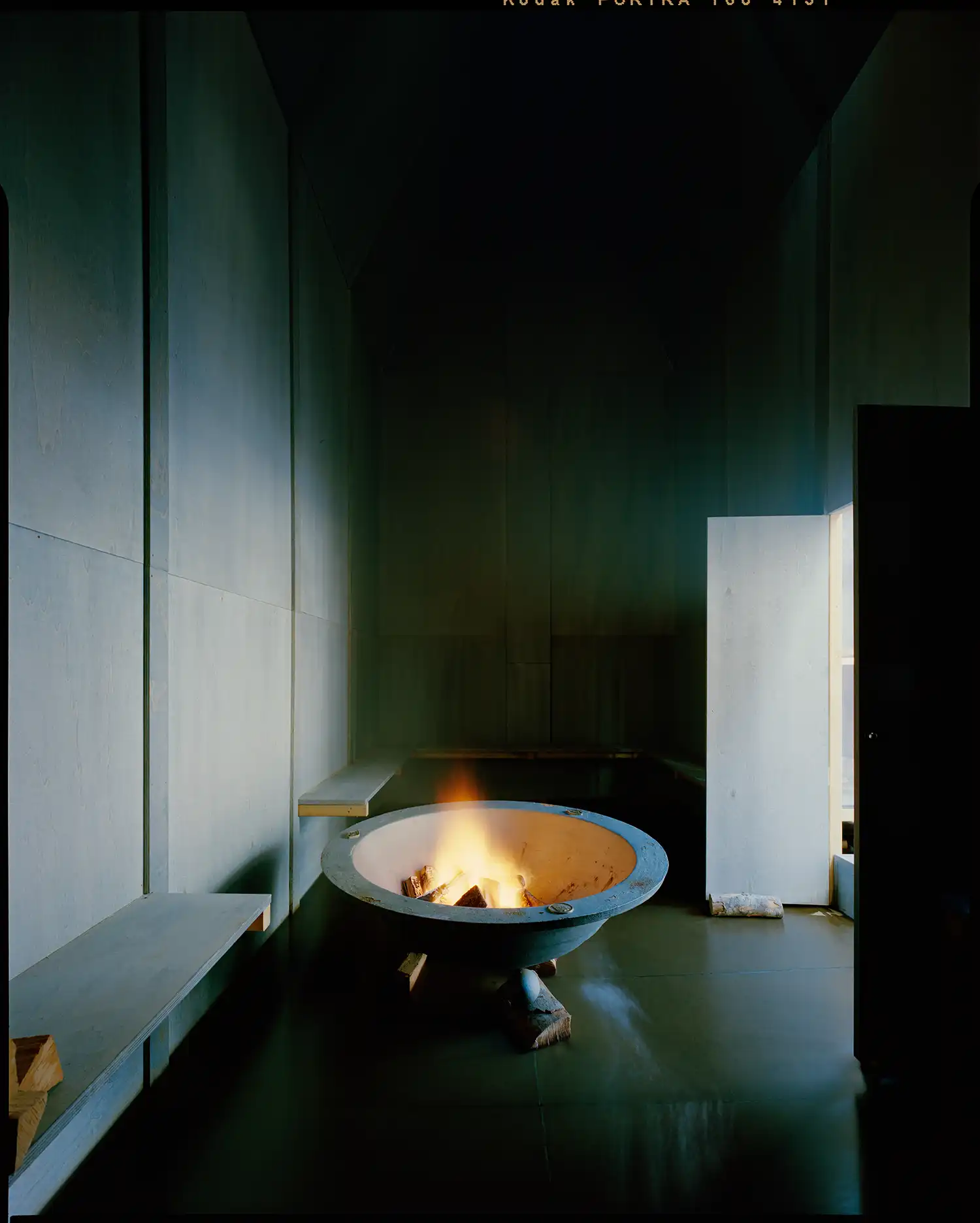
Simple changing rooms lead bathers towards the heart of the experience: the interplay of steam rooms and invigorating cold-water fountain basins, fed directly by the roundabout’s existing water source. It’s a place where undressed bodies meet in water, fostering a rare, unmediated sense of shared public space.
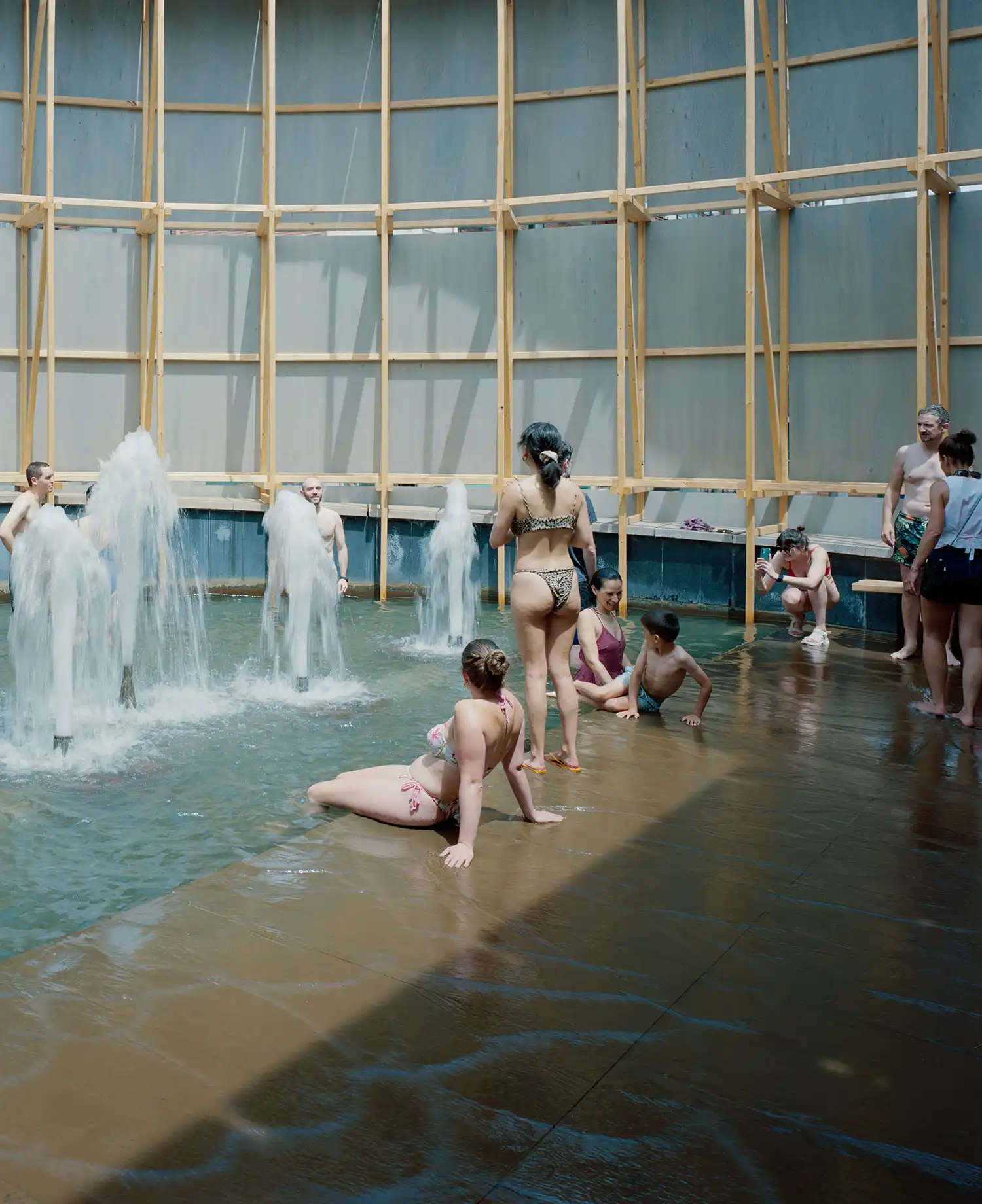
This is more than just a bathhouse; it’s a powerful temporary public program challenging urban norms. By occupying the precise point defined by absence – the “heart of the restless circle of motion” – Leopold Banchini Architects reveal the hidden potential in car-centric cities. They transform perception, forcing citizens and city planners alike to reconsider the value and possible uses of these ubiquitous, yet neglected, forgotten spaces.
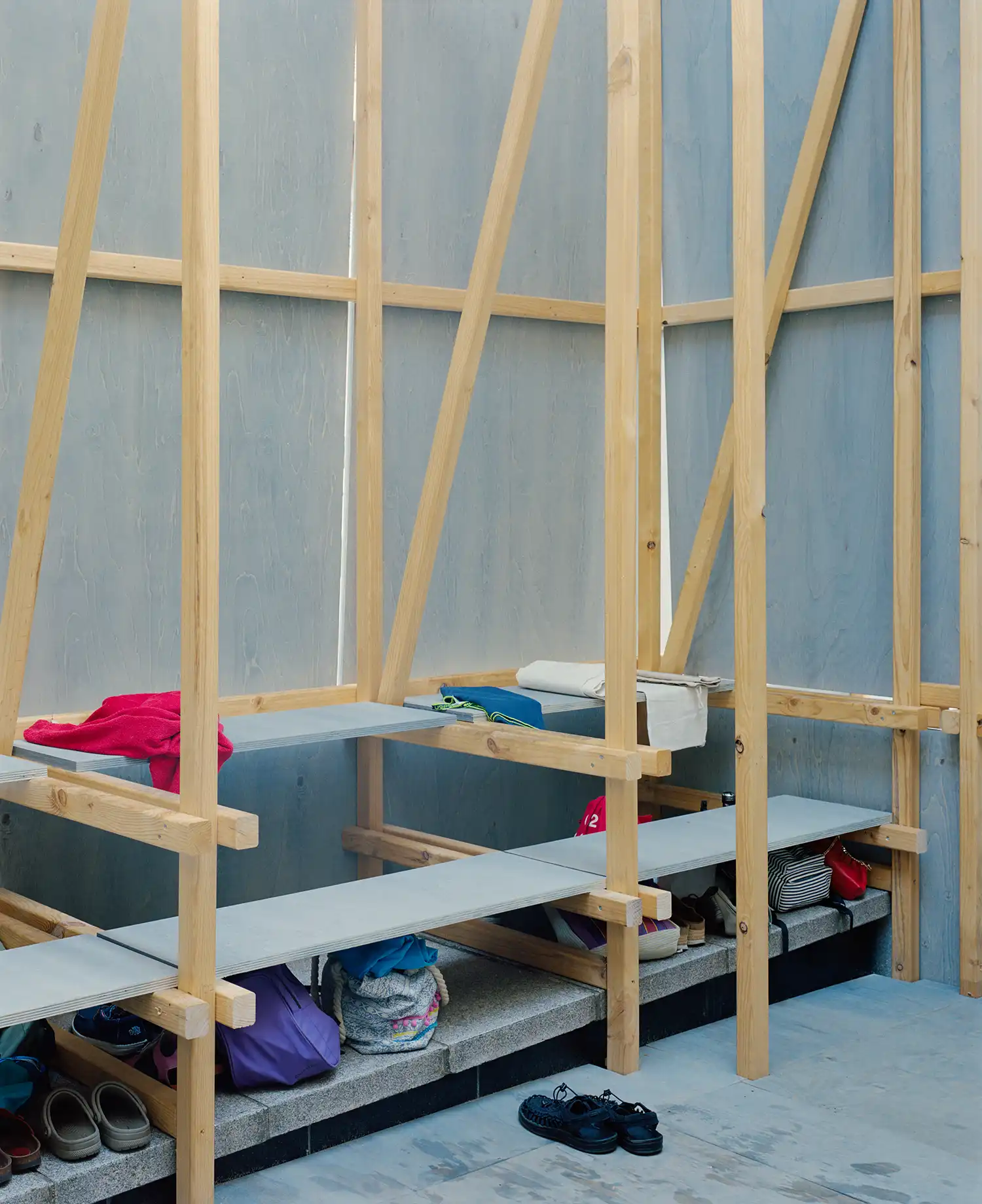
The project’s temporality is intrinsic to its commentary. After its festival run, the wooden panels will find a second life elsewhere. The fountain will revert to its ornamental isolation, “back to its uselessness.” Yet, Round About Baths leaves behind more than memories. It leaves a potent “new vision of what public space could be” – a vision where human connection and bodily joy reclaim territory ceded to the automobile, proving that even the most hostile urban environment holds potential for radical, communal reinvention. It’s a fleeting manifesto, written in steam, water, and reclaimed timber, echoing long after the last bather departs.