


Nestled dramatically between Old Montauk Highway and the wild Atlantic, a new beach house emerges with profound respect for its rugged coastal setting. Designed by the acclaimed South African firm SAOTA with interiors by New York-based Rafael de Cárdenas, this retreat is a masterclass in site-sensitive design, carefully embedded into a steep, windswept bluff. The result is a secluded summer sanctuary that prioritizes immersion in the elemental landscape over ostentatious presence.
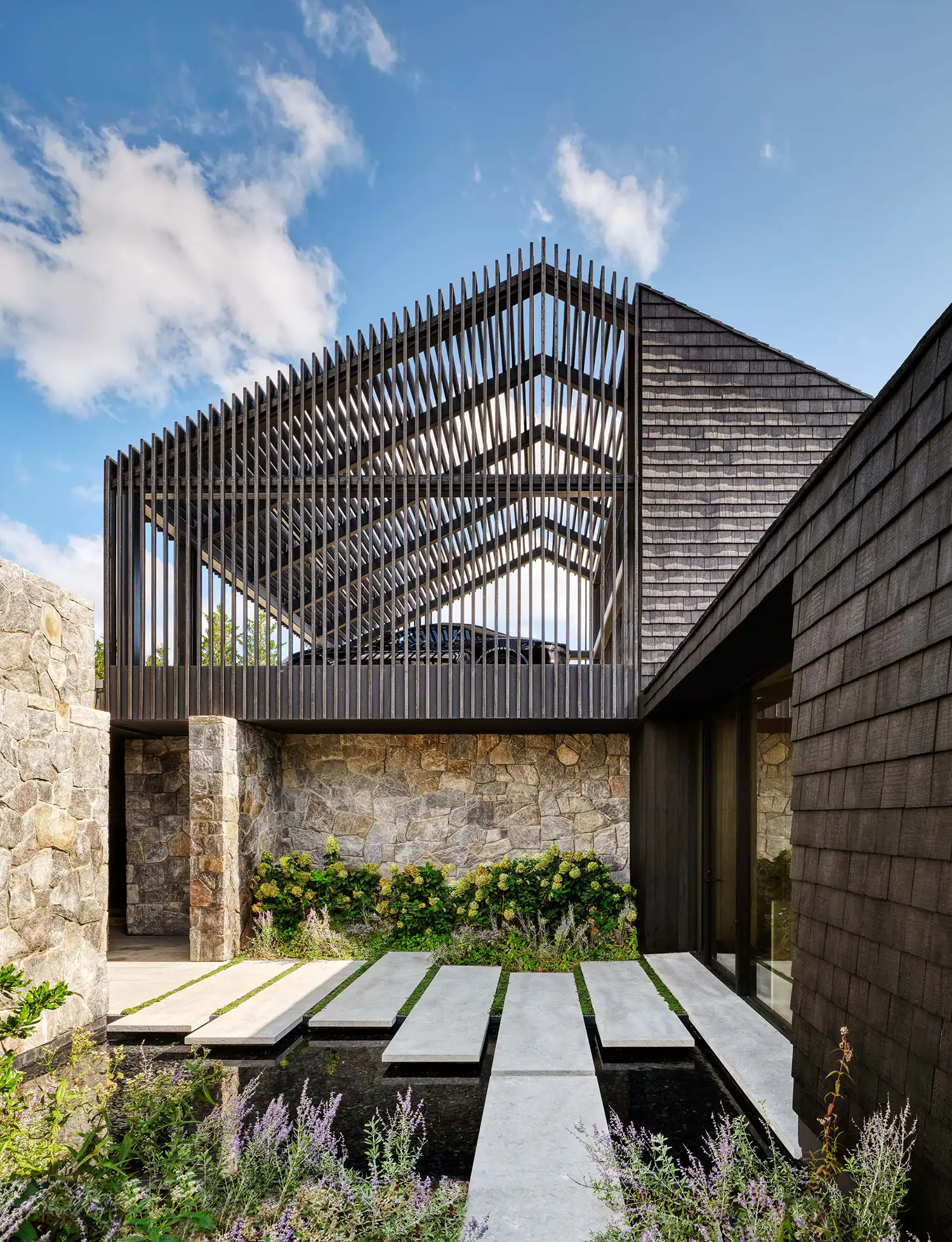
Approaching from the street, the structure reveals only a hint of its form. The upper volume, deliberately referencing Montauk’s local barn vernacular, appears as a sculptural, low-slung element. Clad in shou sugi ban – timber charred using the ancient Japanese technique for exceptional durability – this dark, textured exterior provides a resilient shield against the harsh coastal climate. The charred wood, robust and weathered, lends the house a grounded, almost primal quality, anchoring it firmly within Montauk’s architectural language and the coastal environment.
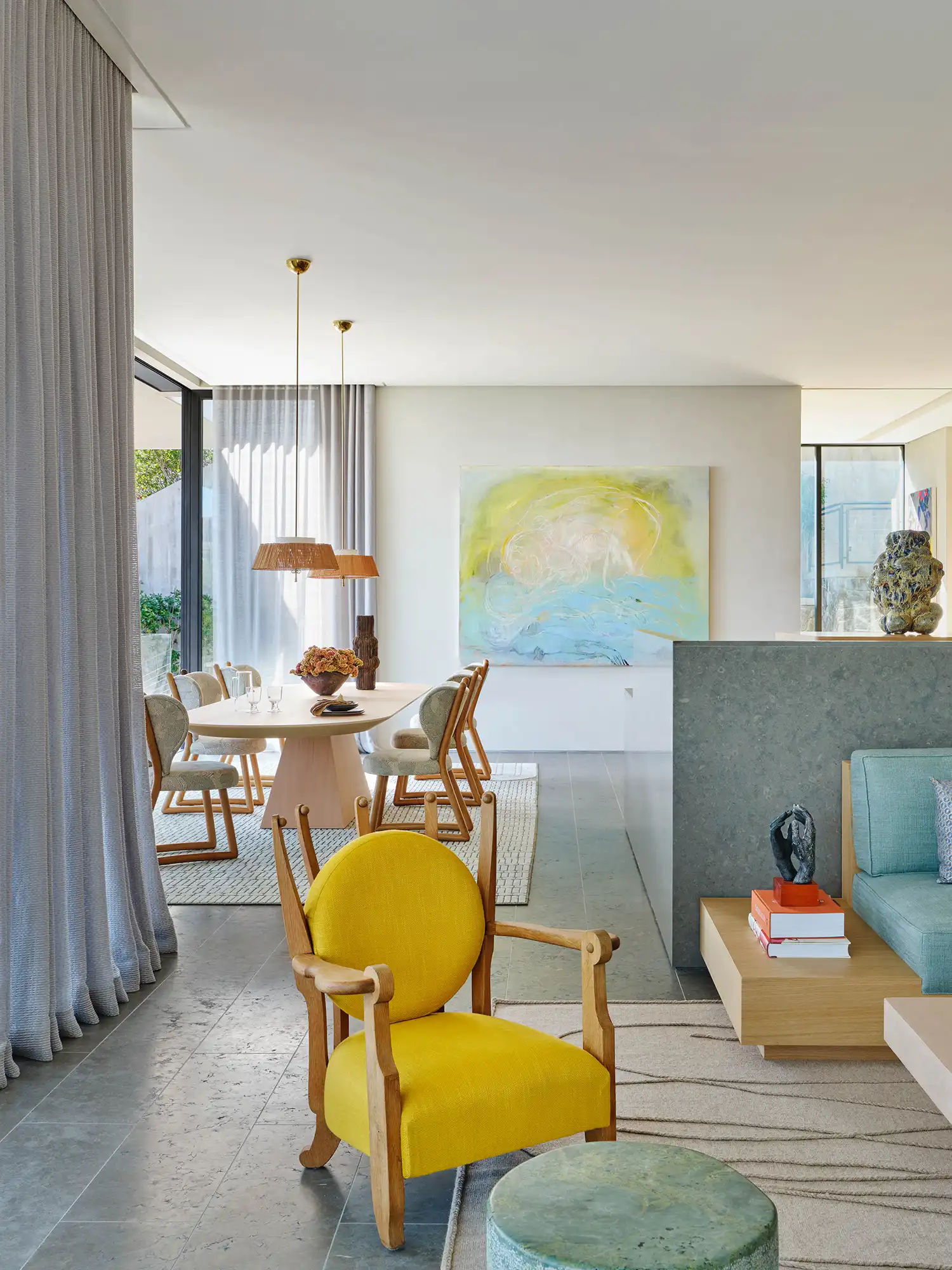
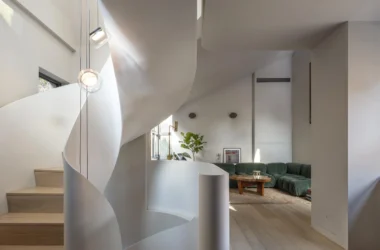
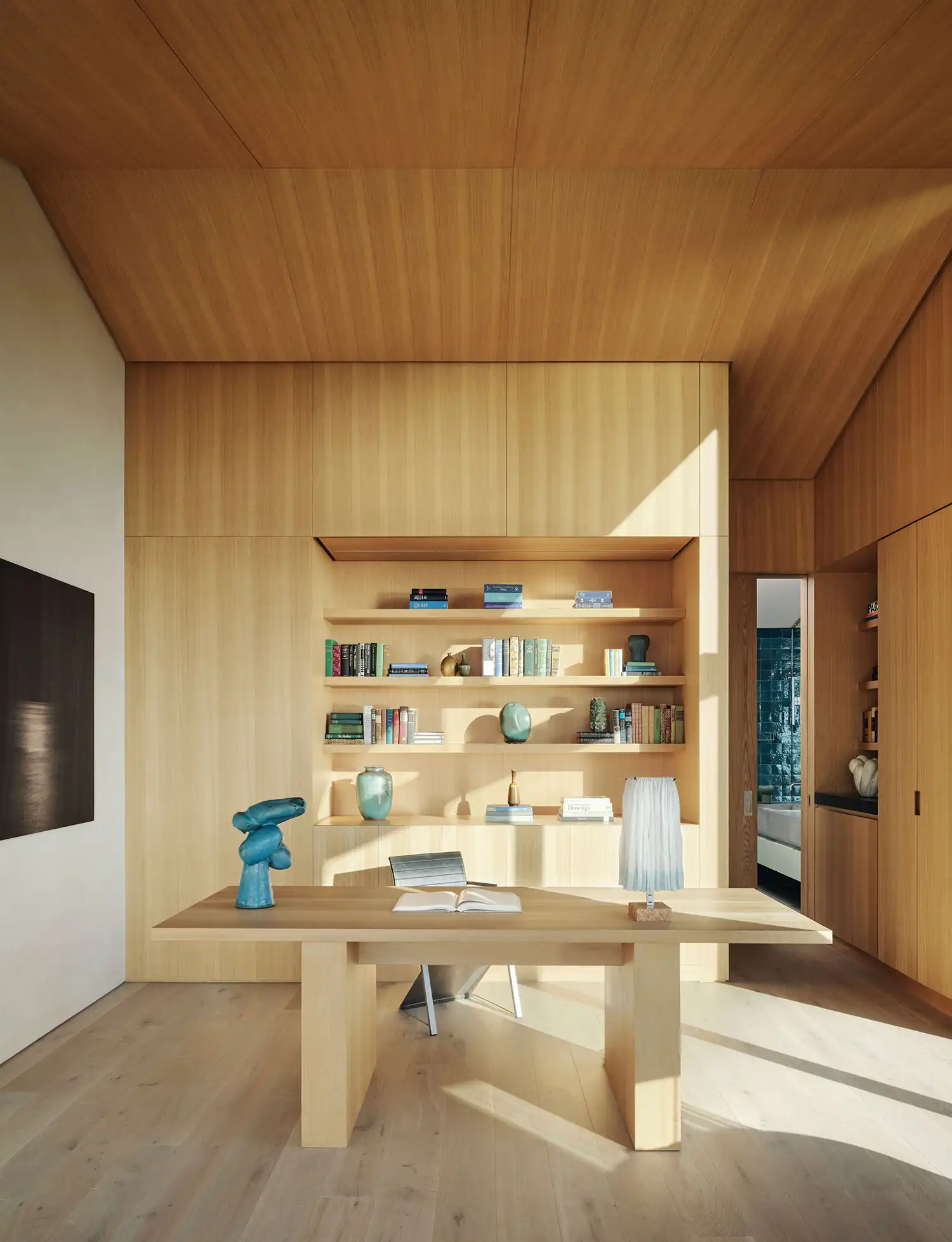
This sense of protective enclosure dissolves upon stepping inside, where Rafael de Cárdenas’s interior design establishes a striking counterpoint. The interiors unfold with an openness and lightness that feels expansive and serene. Pale timber finishes and soft, sandy tonal palettes reflect the nearby beach, creating a luminous atmosphere. This deliberate contrast fosters a compelling material and experiential dialogue: between the dark, protective shou sugi ban exterior and the airy, reflective interior; between shelter and exposure.
The journey through the house is choreographed by the land itself. Entry occurs discreetly at street level, followed by a deliberate descent. This downward movement is integral to the experience, with framed glimpses of the vast Atlantic Ocean gradually increasing, building anticipation and heightening awareness of the spectacular surrounding landscape. The main living spaces, positioned higher on the bluff, command uninterrupted views across the endless Atlantic horizon.
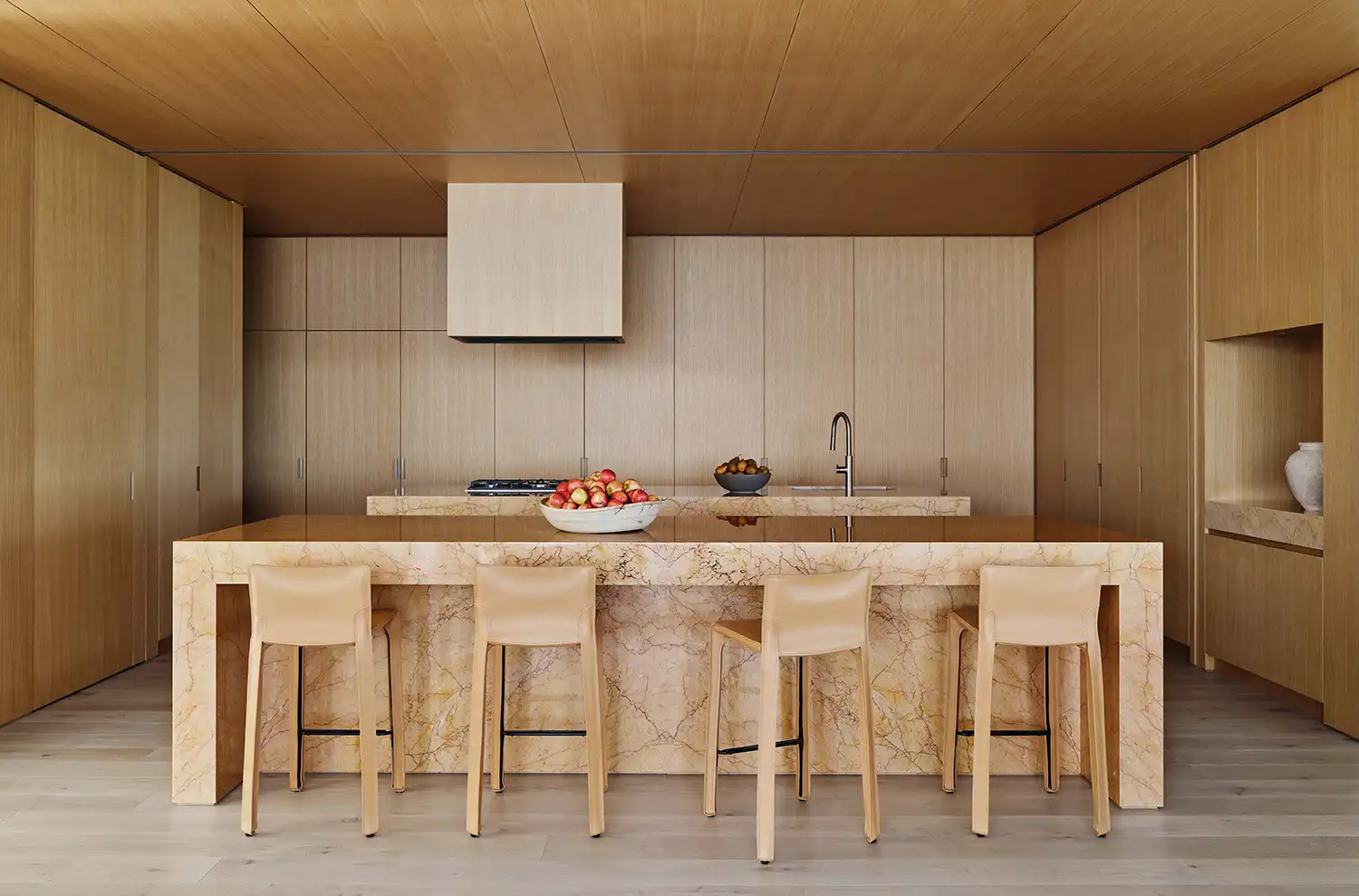
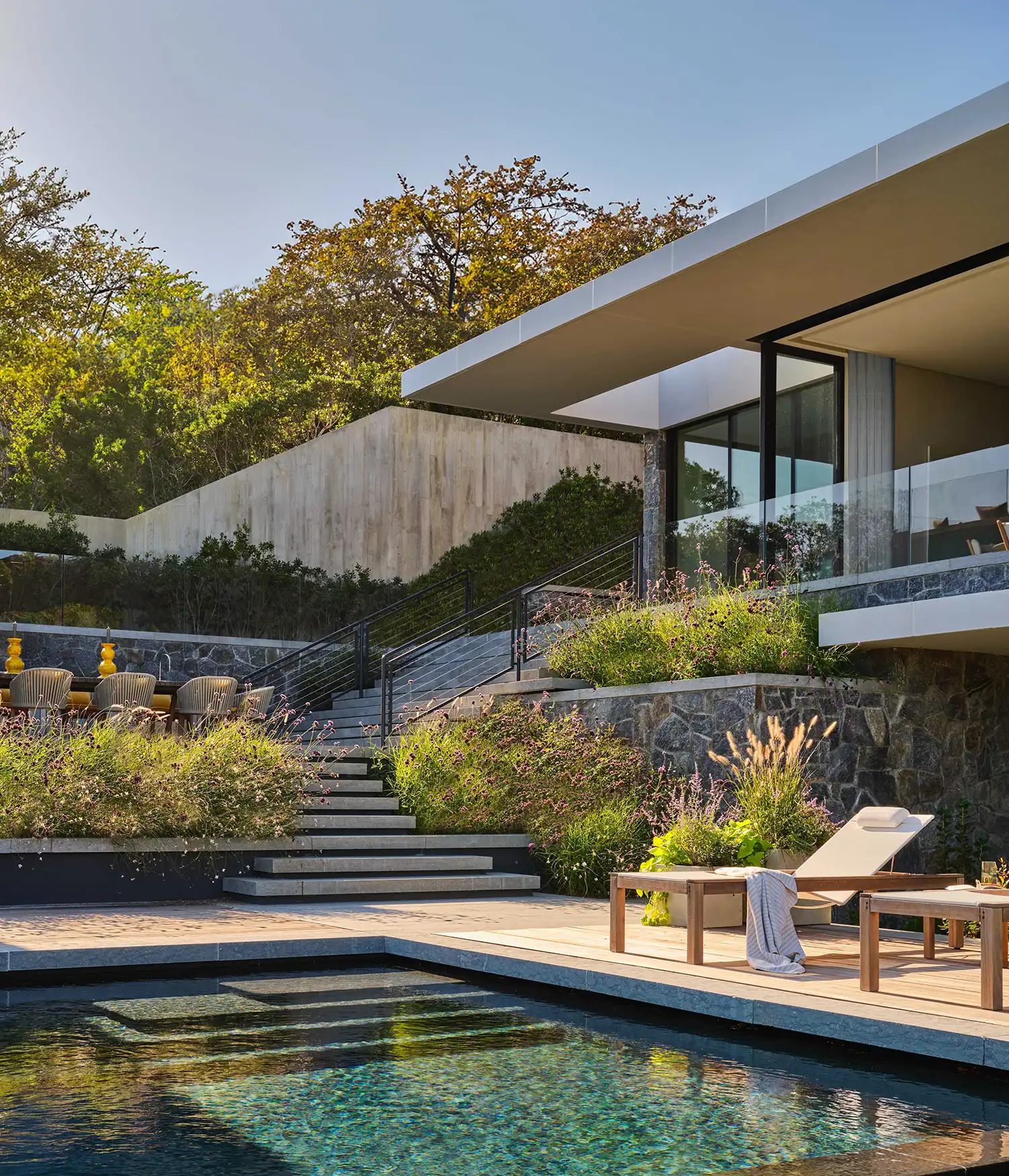
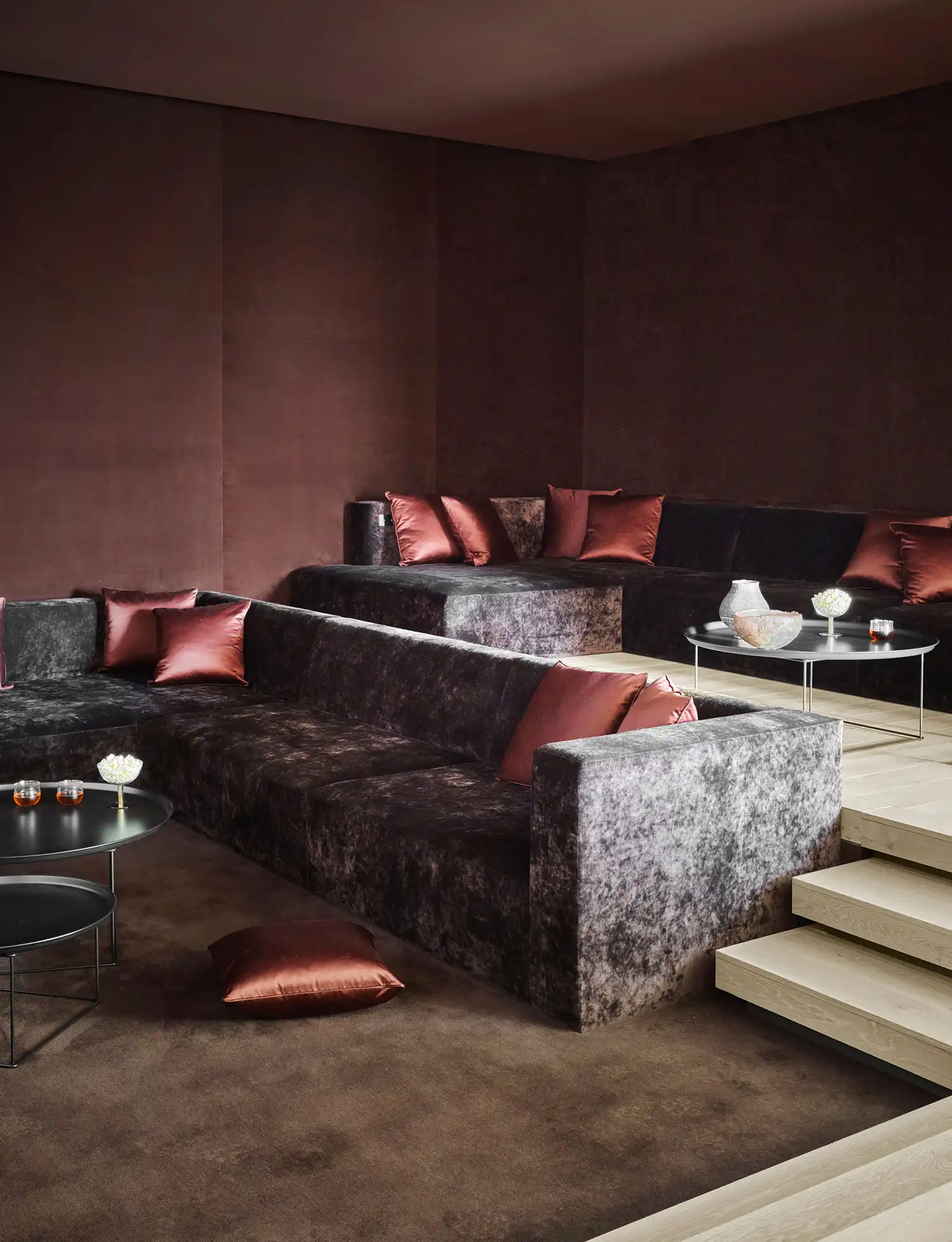
Architecturally, the house is elegantly composed of three distinct yet integrated elements.Anchored by the barn-like, timber-clad upper form housing the entrance, study, and main bedroom suite, the structure descends into the slope with a lower level robustly clad in rugged, locally sourced granite, containing guest bedrooms and entertainment areas. Linking these volumes is a glazed central element – the transparent heart of the home – which accommodates the kitchen, dining, and primary living space. This luminous core opens to light and vegetation, actively blurring boundaries and allowing the surrounding landscape to flow through the architecture, creating a profound sense of spatial continuity.
This downward rhythm extends beyond the walls. A series of terraced outdoor platforms steps naturally from the interiors through gardens towards the pool and pool house, echoing the site’s natural descent. This spatial sequencing reinforces a profound continuity between architecture and earth, making the landscape an active participant in daily life.
Durability and climate responsiveness were paramount. The use of locally sourced materials – the resilient shou sugi ban, the robust granite – was driven by their ability to withstand the coastal elements. Passive energy strategies are seamlessly integrated: optimal orientation captures light and warmth, natural ventilation channels sea breezes, and layered shading mitigates solar gain. These elements ensure the house operates with quiet, long-term efficiency, minimizing its environmental footprint.
More than just a residence, this Montauk beach house by SAOTA and Rafael de Cárdenas is a deeply restrained and grounded response to a powerful location. It’s a sanctuary shaped by the movement towards the sea, sculpted by light, and defined by an unwavering respect for the wild, beautiful land it inhabits – a true haven where architecture and landscape engage in a continuous, harmonious dialogue.