

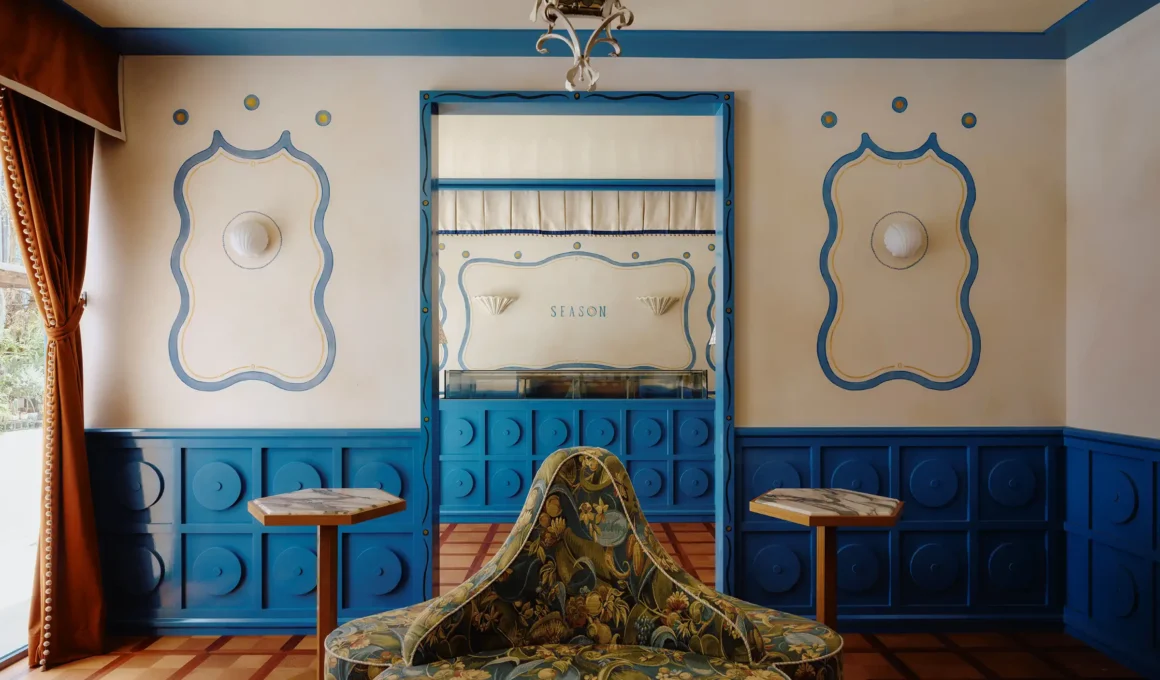
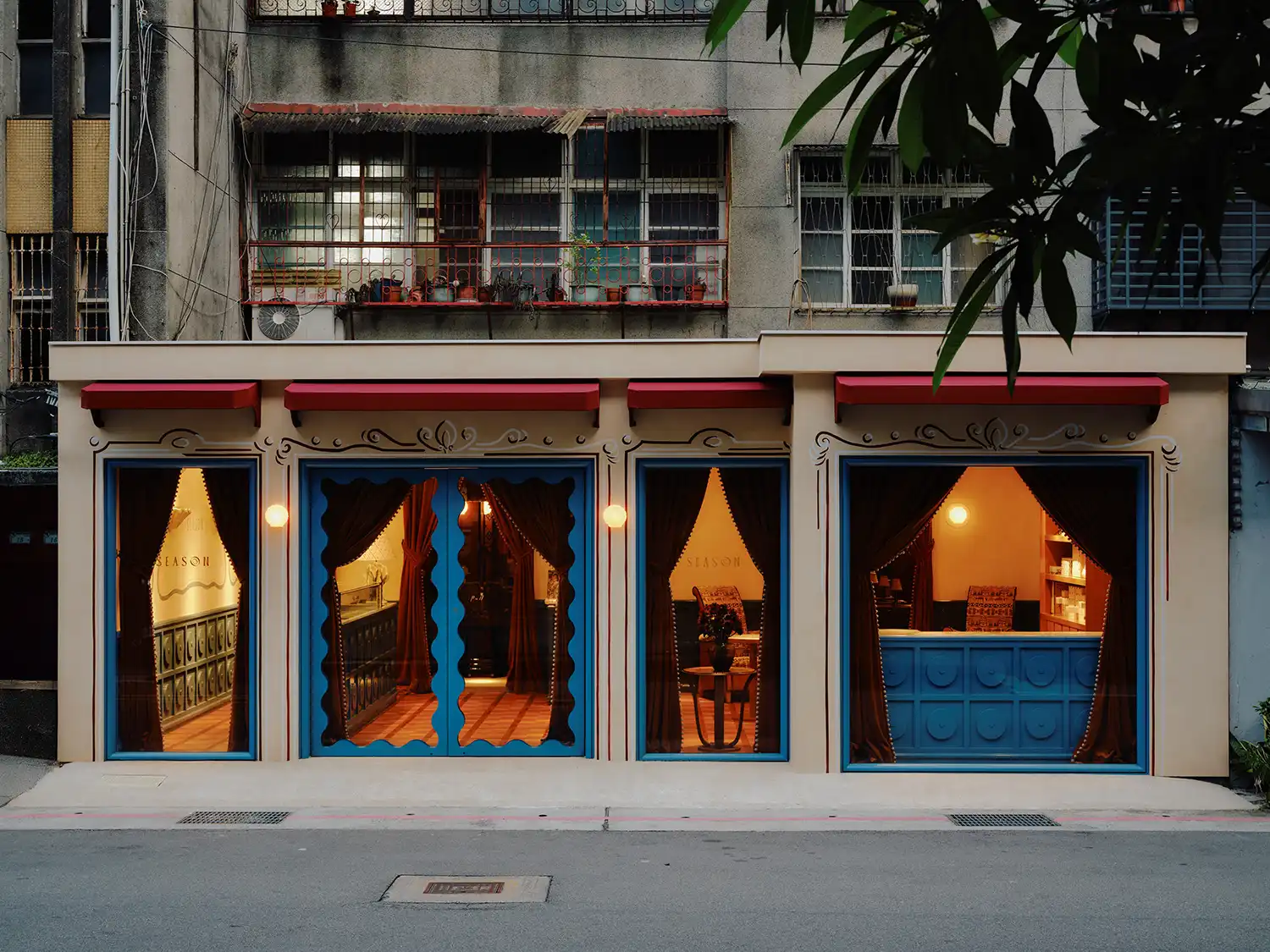
In a transformative overhaul of a nondescript 1970s apartment in Taipei’s Da’an District, local practice ECRU STUDIO has unveiled Season Patisserie, a project that eschews the typical minimalism of modern cafes for a rich, narrative-driven interior. Located in a neighborhood known for its creative dining and cultural sensibility, the 100-square-meter space serves as a “sensory theater” where European elegance and Asian iconography coexist in a state of carefully choreographed tension.
The design team, led by Jin Chen and Randy Tu, abandoned the original structure’s utilitarian shell to create four distinct functional zones. The journey begins in a boutique retail space characterized by varying shades of blue, a color selected by Chef Hung to mark a new chapter for the brand. This entrance, housing a fresh pastry showcase and a giftable sweets area, uses lime wash and lacquer paint to establish a tone of quiet luxury. The cool, airy palette provides a calm introduction to the more dramatic, immersive experiences located deeper within the plan.
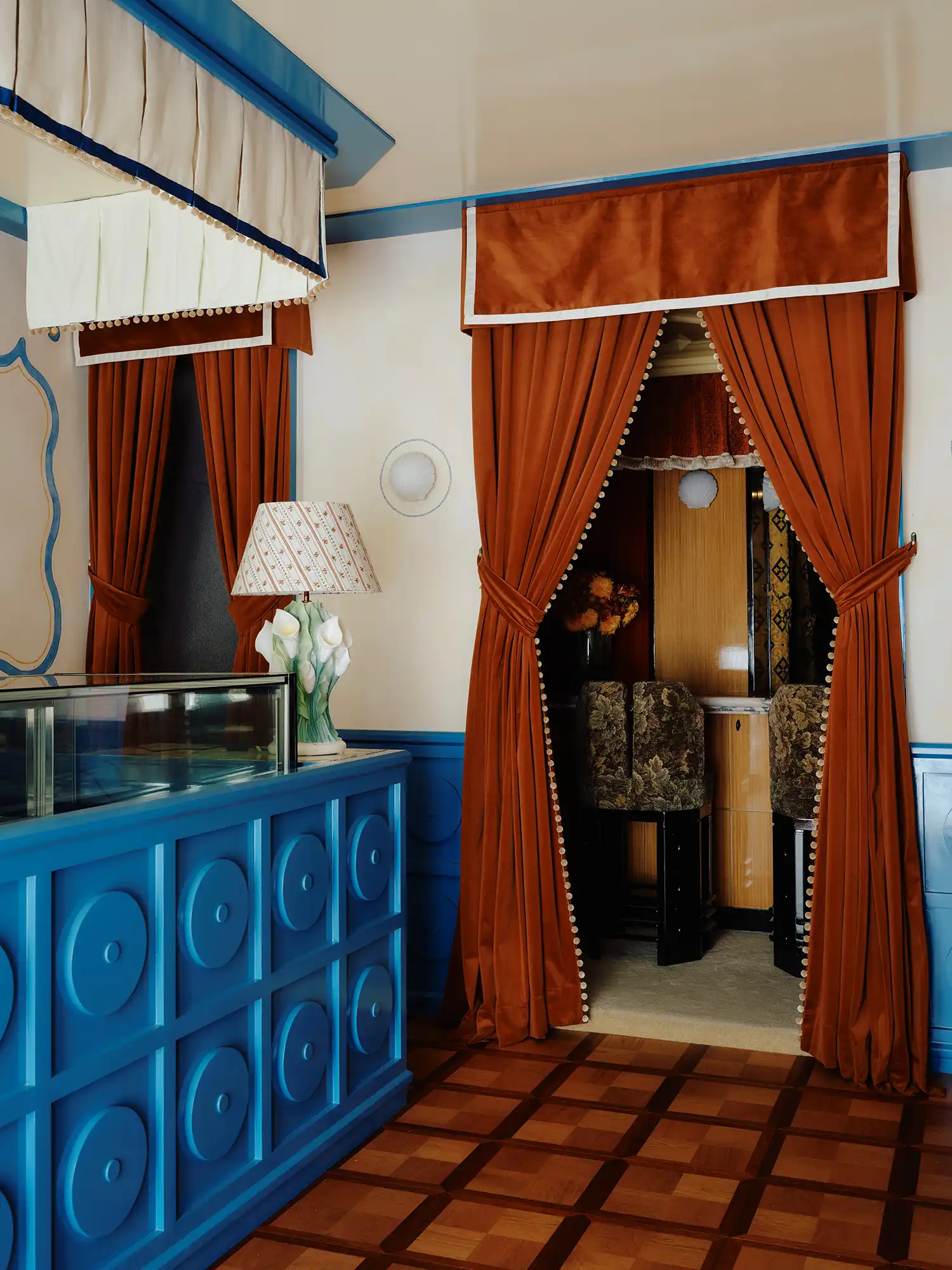
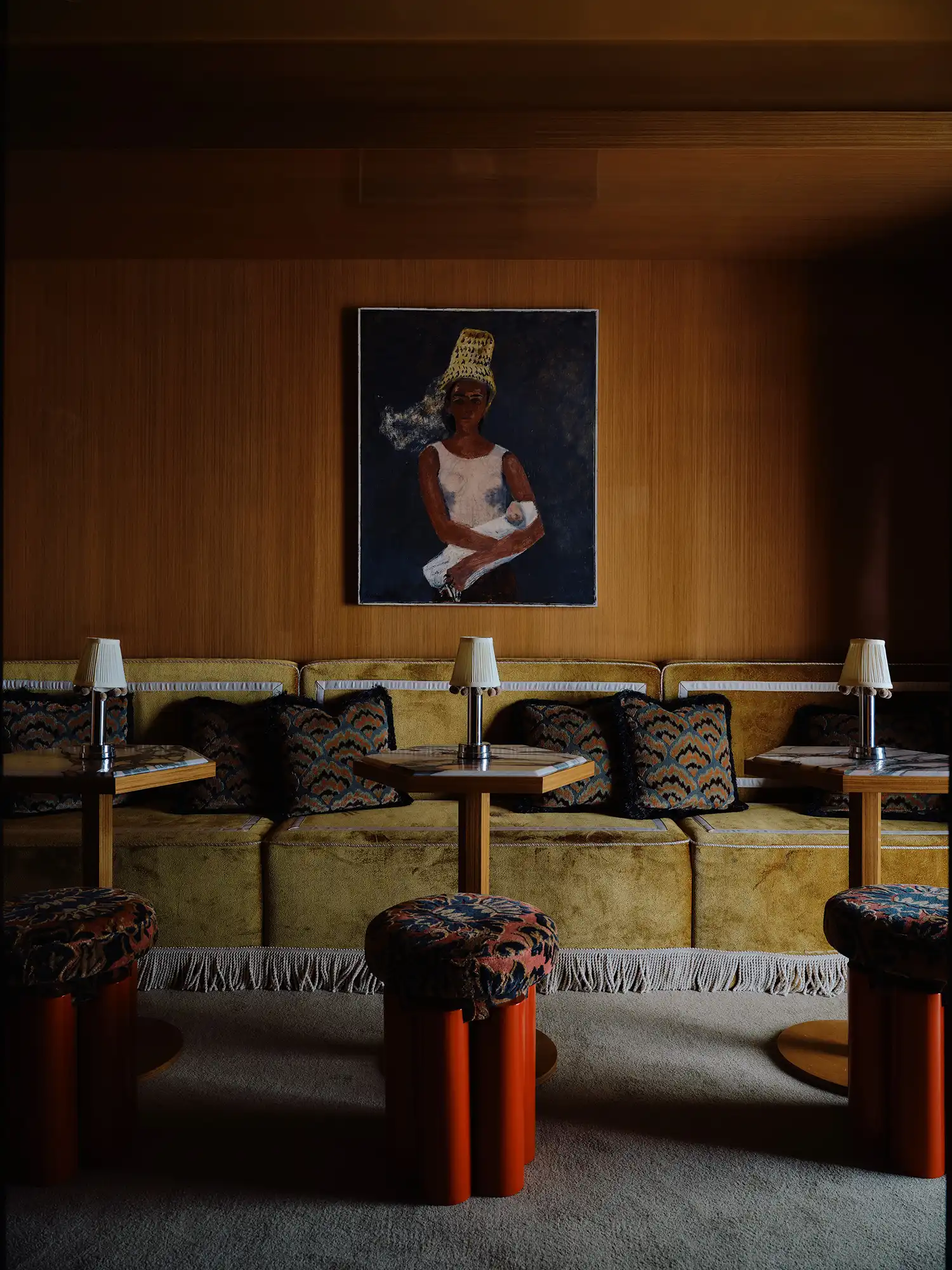
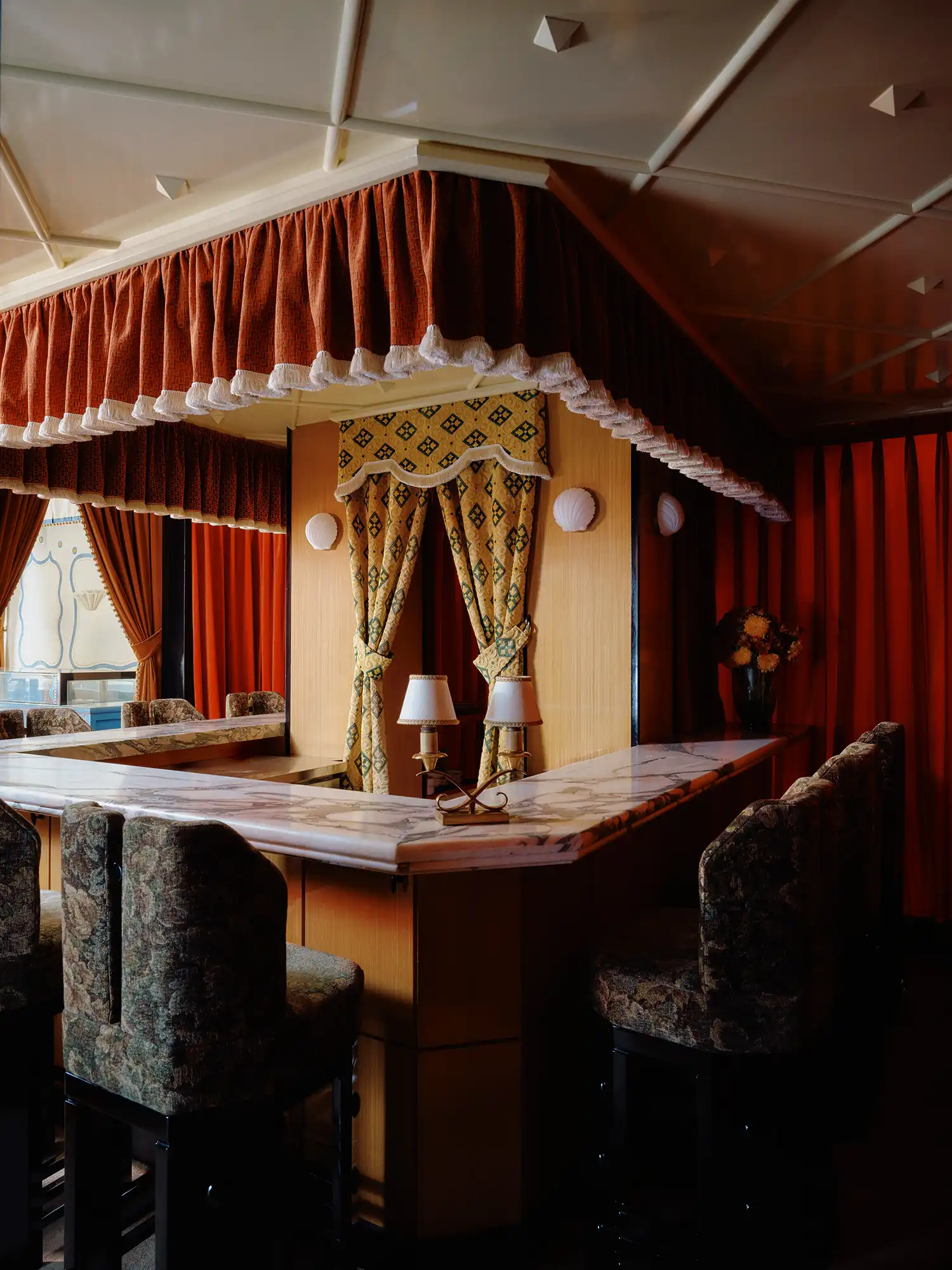
As visitors move toward the rear of the unit, the atmosphere shifts into a salon-style lounge and a nine-seat island bar dedicated to plated desserts. Here, the palette deepens into velvet red, golden yellow, and ochre, referencing the intimate mystique of an 18th-century Parisian salon. This theatrical shift is reinforced by a layering of materials including floral fabrics, ornamental trims, and fringes—elements rarely seen in contemporary commercial projects. The intention, according to the designers, was to create a space that unfolds gradually, much like a memory or a quiet performance.
The project is a study in historical eclecticism, blending the expressive rhythm of Art Nouveau and Art Deco with more unexpected references. The custom wood flooring, for instance, finds its inspiration in 1940s Milan, providing a sophisticated foundation for the room’s more decorative elements. Rather than sticking to a single stylistic era, ECRU STUDIO explored how diverse aesthetics could support a “slow, sensory rhythm,” ensuring the interior design feels both nostalgic and refreshingly unexpected.
Interwoven with these European influences are subtle, non-literal nods to Asian heritage. Rather than using traditional motifs in a decorative sense, the studio collaborated with local artist Genggeng to produce a hand-painted mural based on a Shang Dynasty motif. This is complemented by upholstery featuring abstract, symbol-based patterns found in regional textile traditions. By leaving one wall partially bare, the design team treated the mural as a “fragment of memory,” a decision rooted in a philosophy of restraint that permeated the entire creative process.
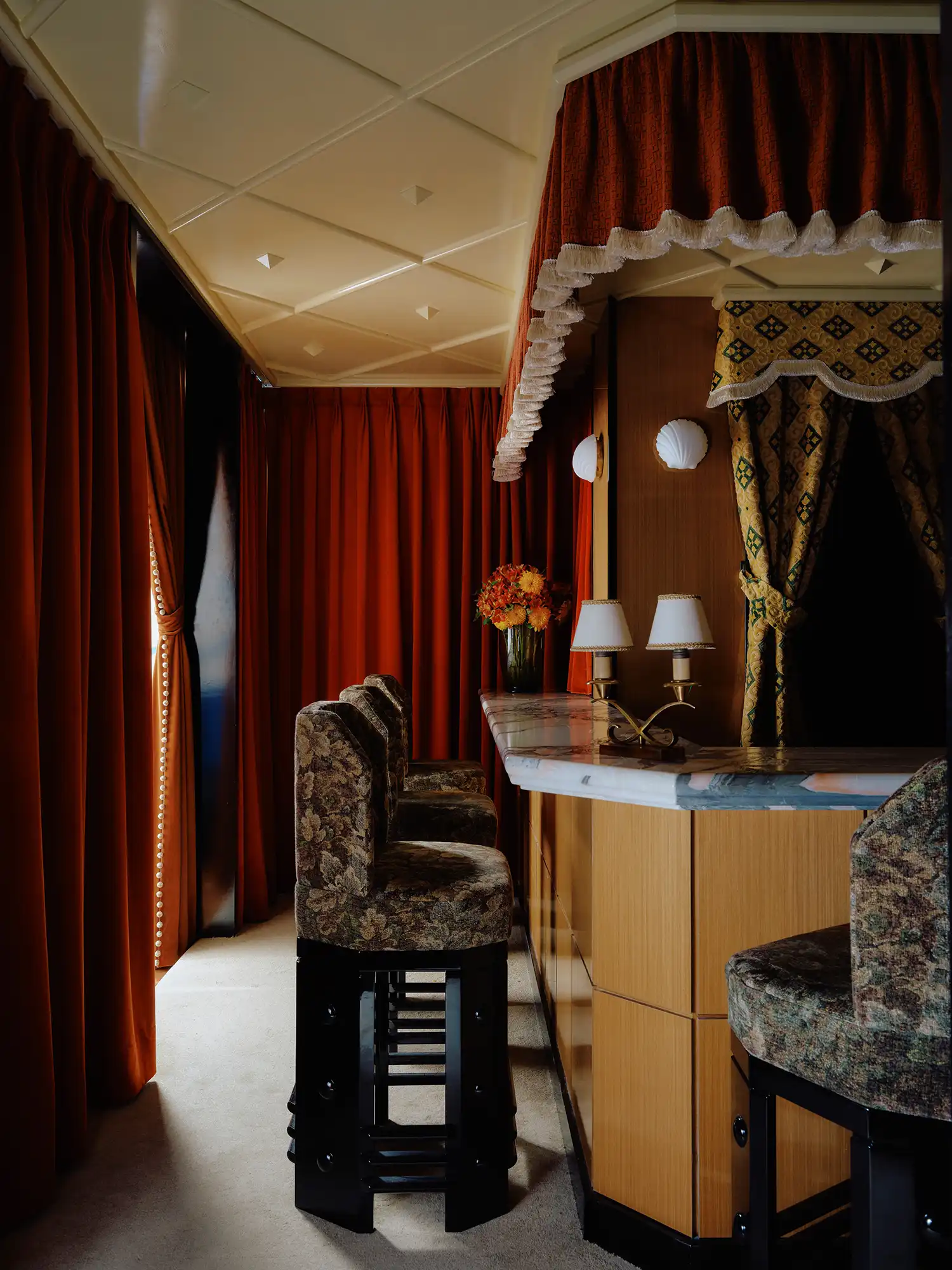
Functionality remains the backbone of the expressive interior, with every counter height and circulation path optimized for the high-traffic demands of the hospitality industry. The designers noted that the commercial nature of the project offered more creative freedom than residential work, allowing for bolder experimentation with scale and detail. Ultimately, Season Patisserie stands as a sophisticated convergence of East and West, where modern architecture serves as a vessel for complex storytelling and emotional resonance.