

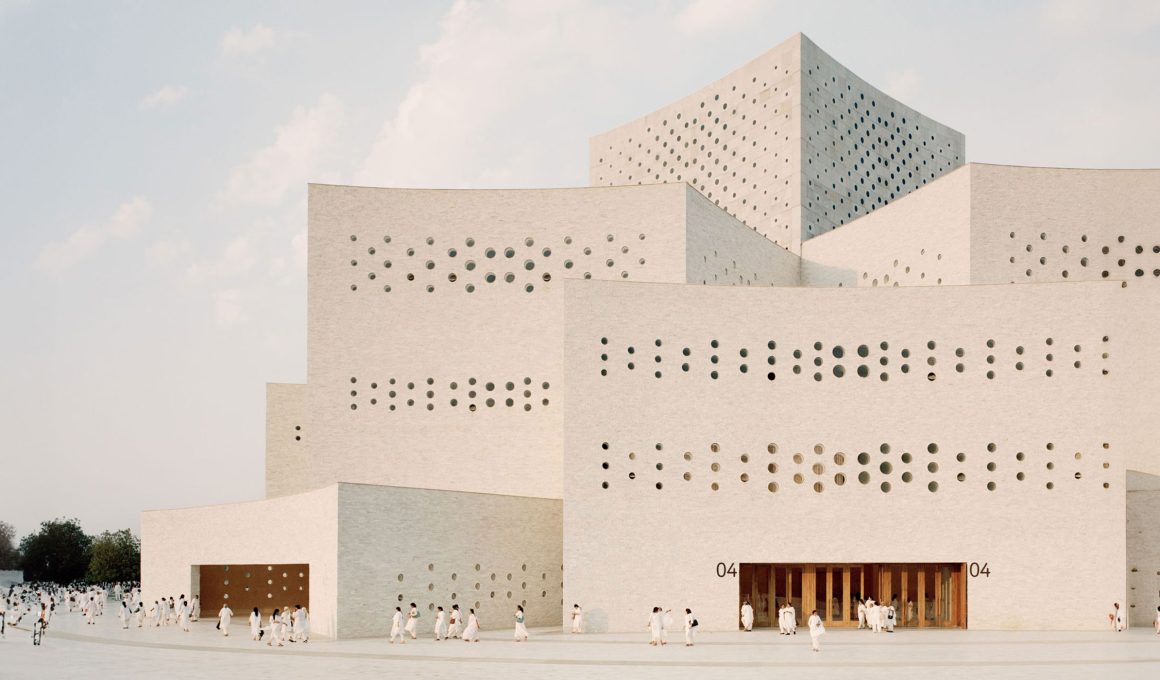
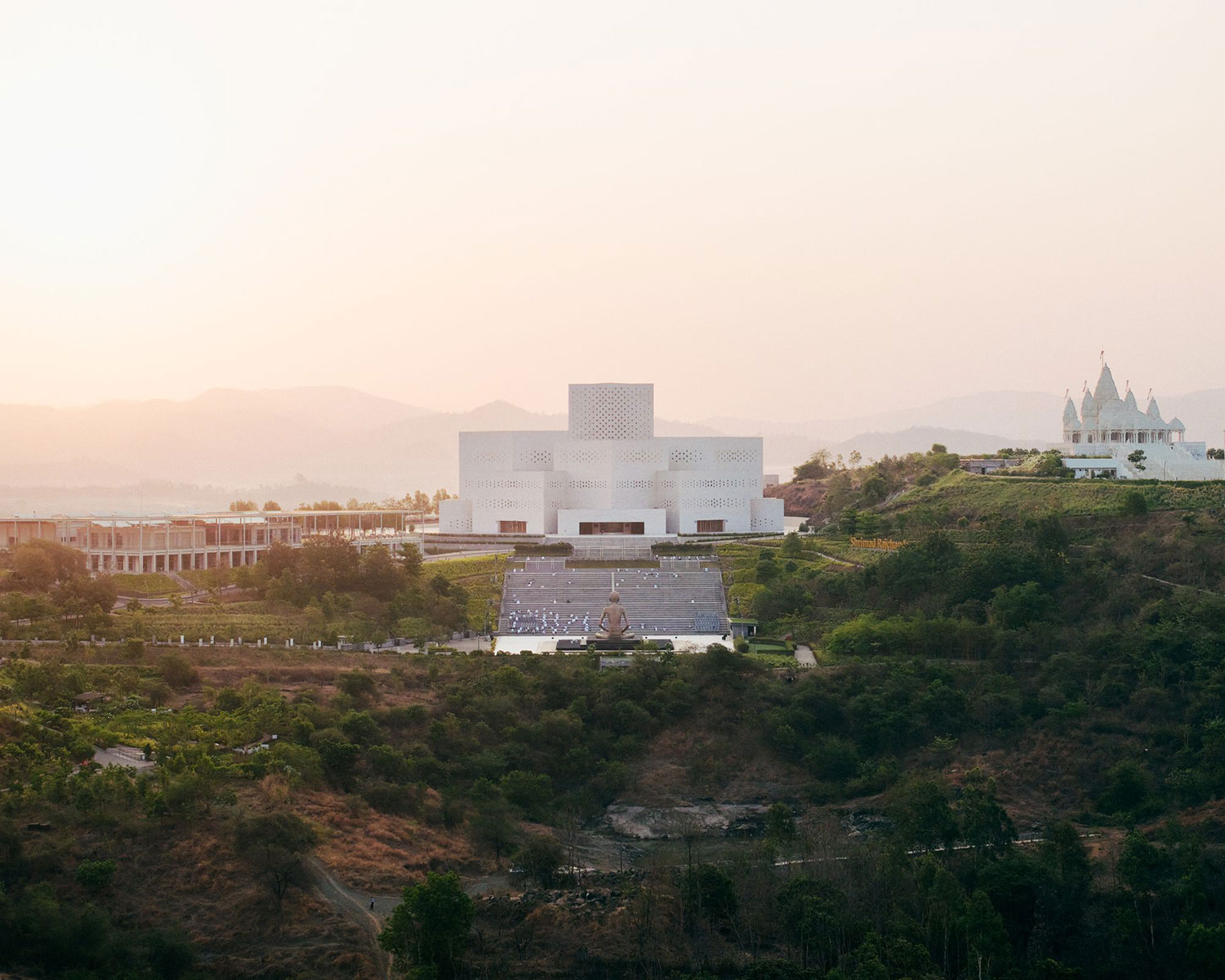
Serie Architects has recently completed the Raj Sabhagruh, a significant architectural addition to the Shrimad Rajchandra Ashram in Dharampur, Gujarat, India. As the centerpiece of a 100-hectare masterplan, this ambitious project houses a diverse program within a formally compelling structure, designed to facilitate both spiritual and intellectual engagement.
Rising from a crescent-shaped hillock, the 40-meter-tall Raj Sabhagruh is a complex of diverse functions, housing a 5,000-seat auditorium, classrooms, discourse rooms, a 1,000-square-meter museum, a gift shop, and a 300-seat meditation hall. Awarded to Serie Architects in 2012 following an international competition, the design draws inspiration from the Jain Samavasaran, a mythical temple envisioned as a tiered platform where humans, animals, and demi-gods gather in communion with an enlightened being. This concept of aggregated knowledge, symbolized by the ascending platforms, informs the building’s form and programmatic organization.
Serie’s design translates this concept into a contemporary architectural language. Thirteen stacked rooms, rotated 45 degrees as they ascend, create a dynamic interlocking structure defined by thin, gently curved, perforated concrete sheer walls. This innovative approach integrates structure, façade, and space definition, minimizing material use and creating a lean, elegant architecture. The programmatic journey within the building mirrors the ascent towards enlightenment: from the discourse hall at ground level, to experiential learning in the museum, followed by focused study in the classrooms, culminating in introspection within the meditation hall at the apex.
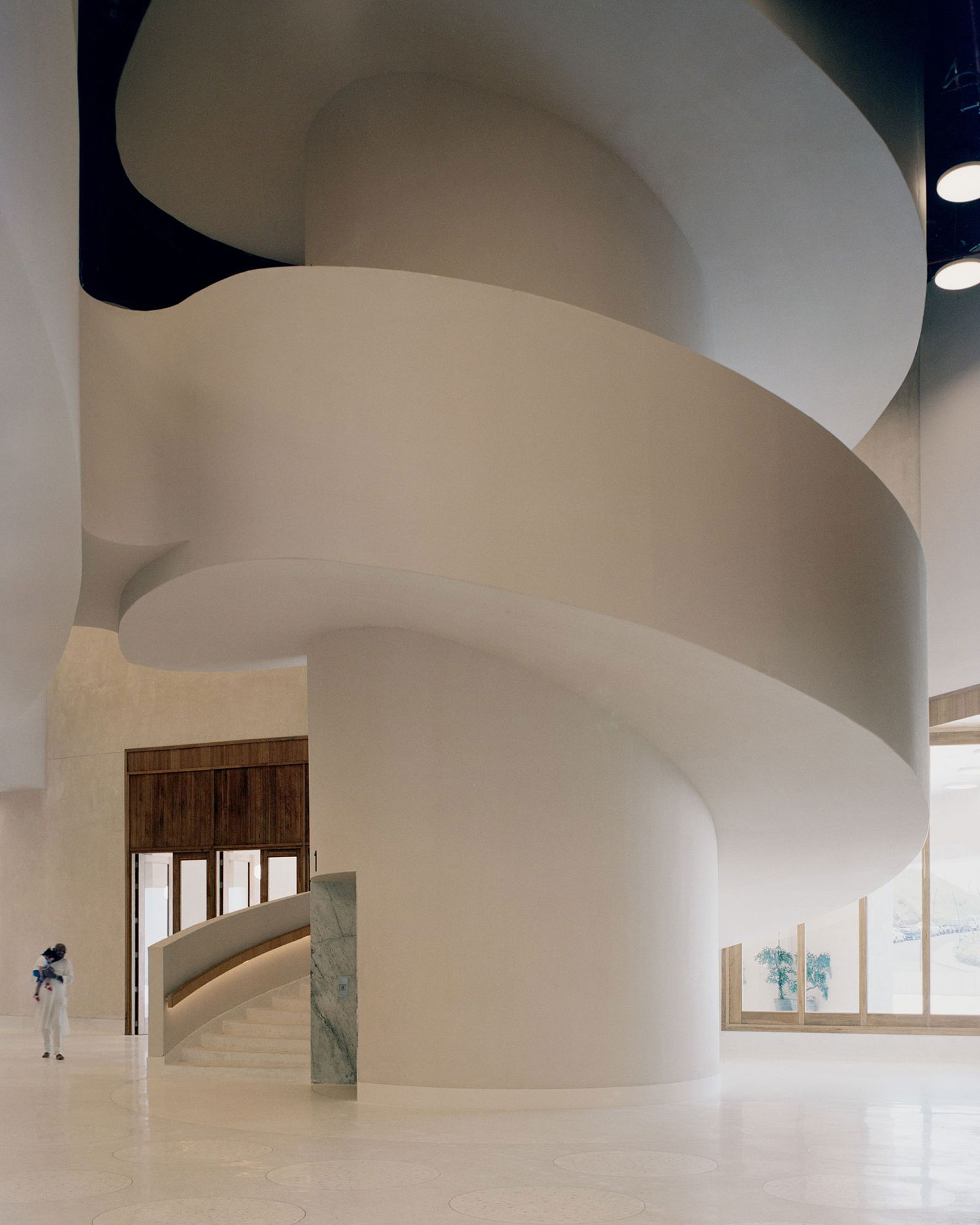
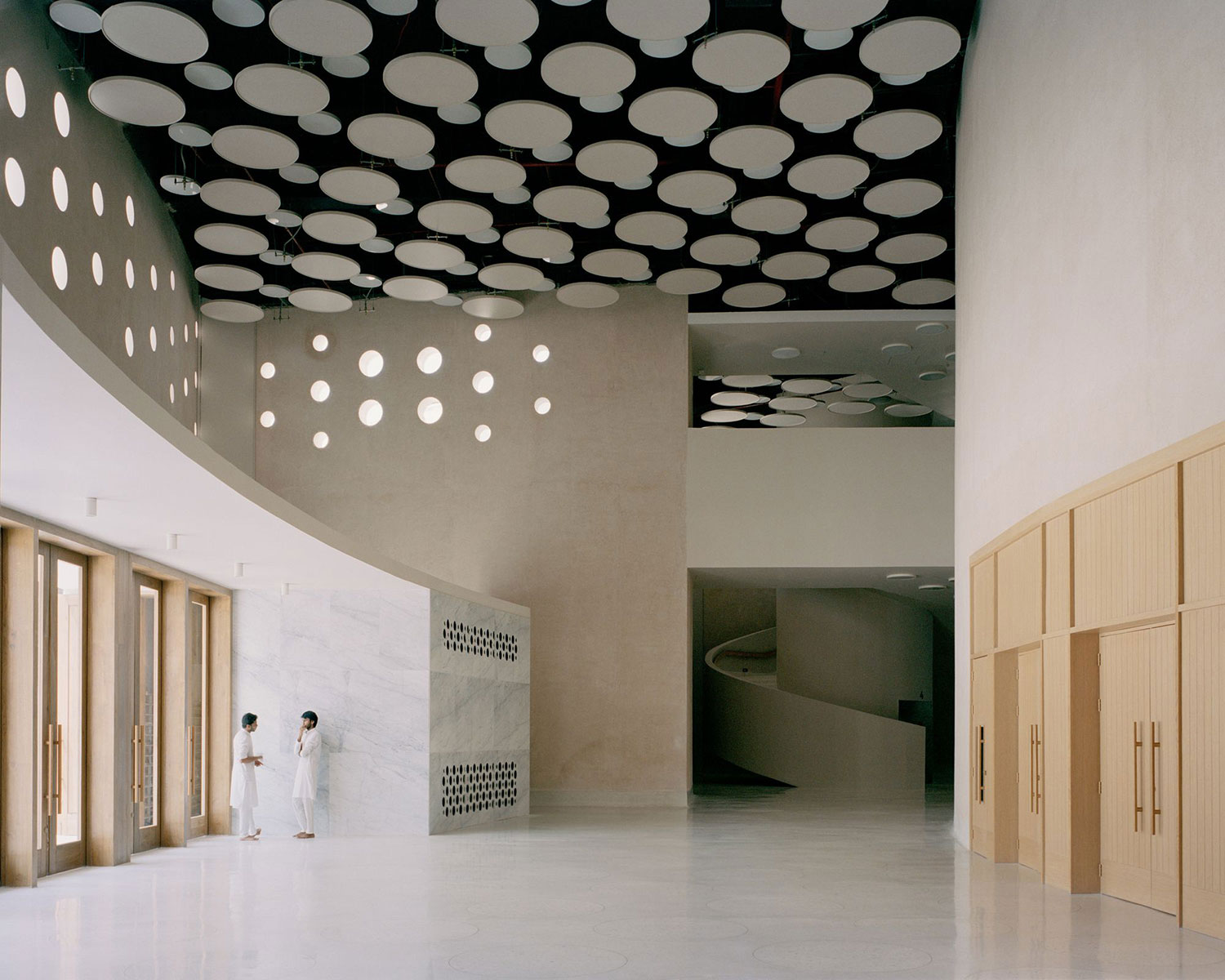
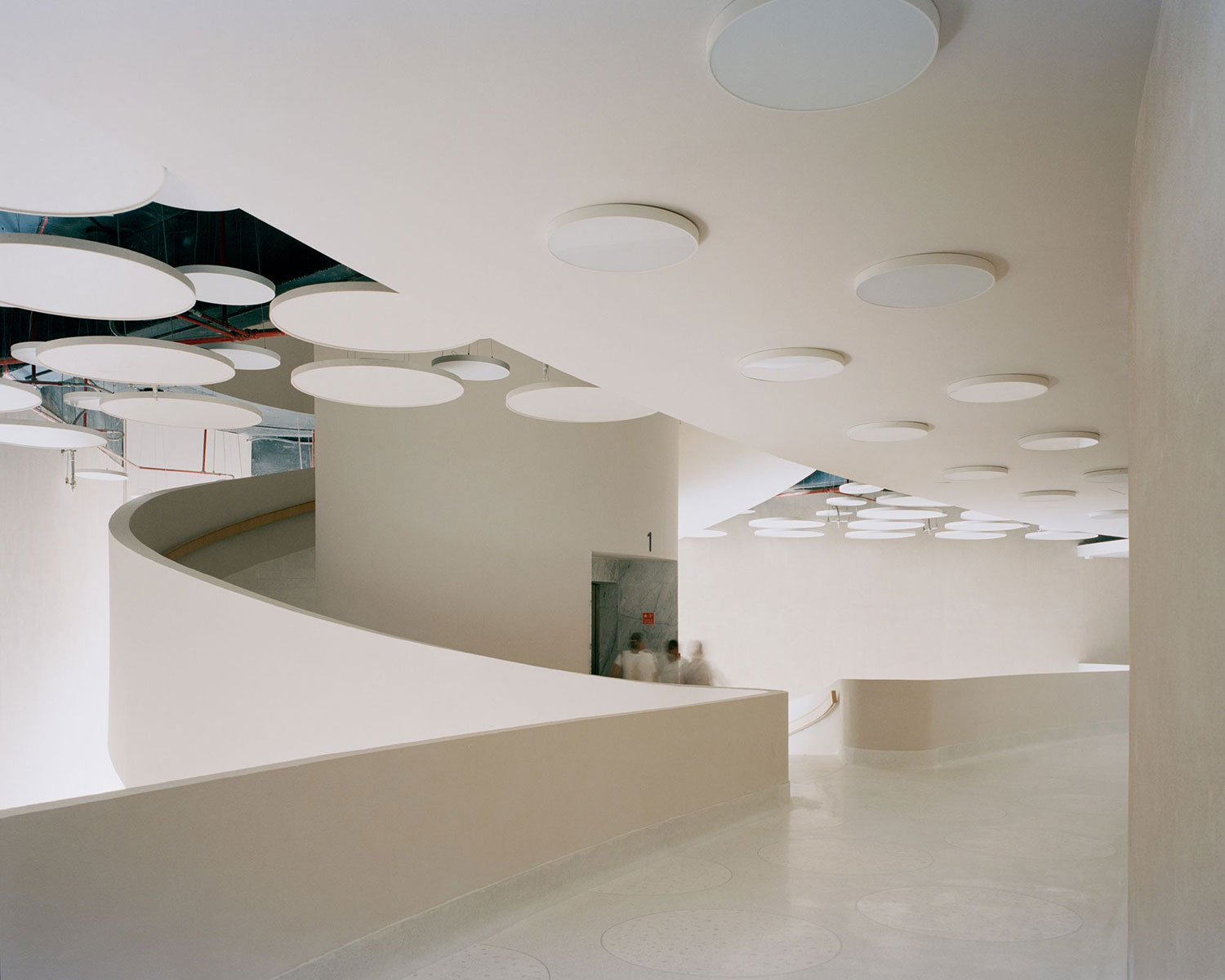
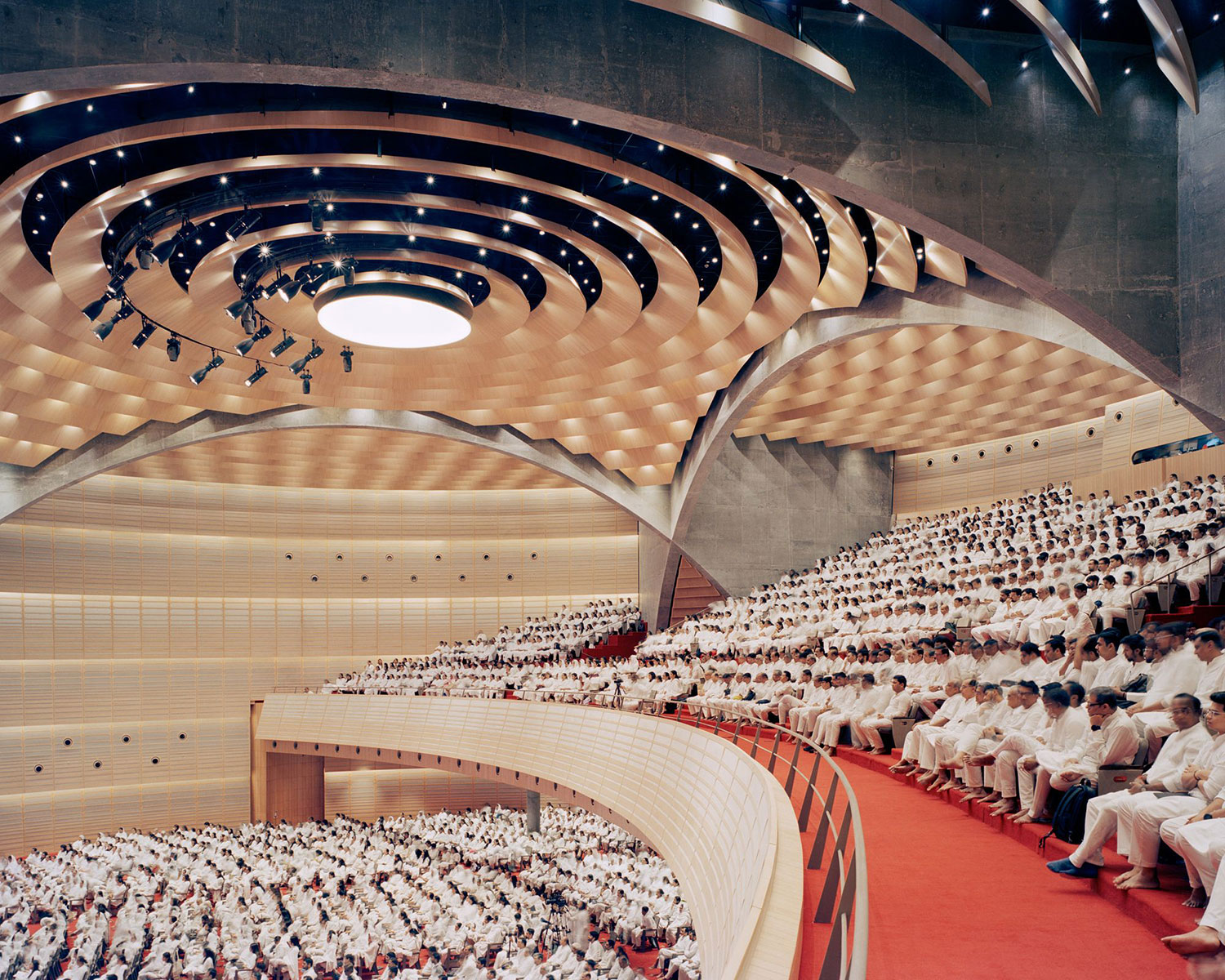
The ground floor is anchored by a circular, 5,000-seat auditorium, accessed through a grand circumambulating foyer with eight radially placed entrances. Four intersecting concrete arches span the 54-meter diameter and 20-meter height of the concrete drum, creating a column-free interior. The resulting square at the arch intersection forms the structural base for the meditation hall above. Inside the auditorium, concentric timber acoustic baffles radiate from the ceiling, echoing the intricate sky-domes of traditional Jain temples. The stage, positioned in the eastern quadrant, fosters a sense of intimate dialogue between the Guru and the audience. A suspended balcony and a flat floor provide both clear sightlines and flexible space for diverse events.
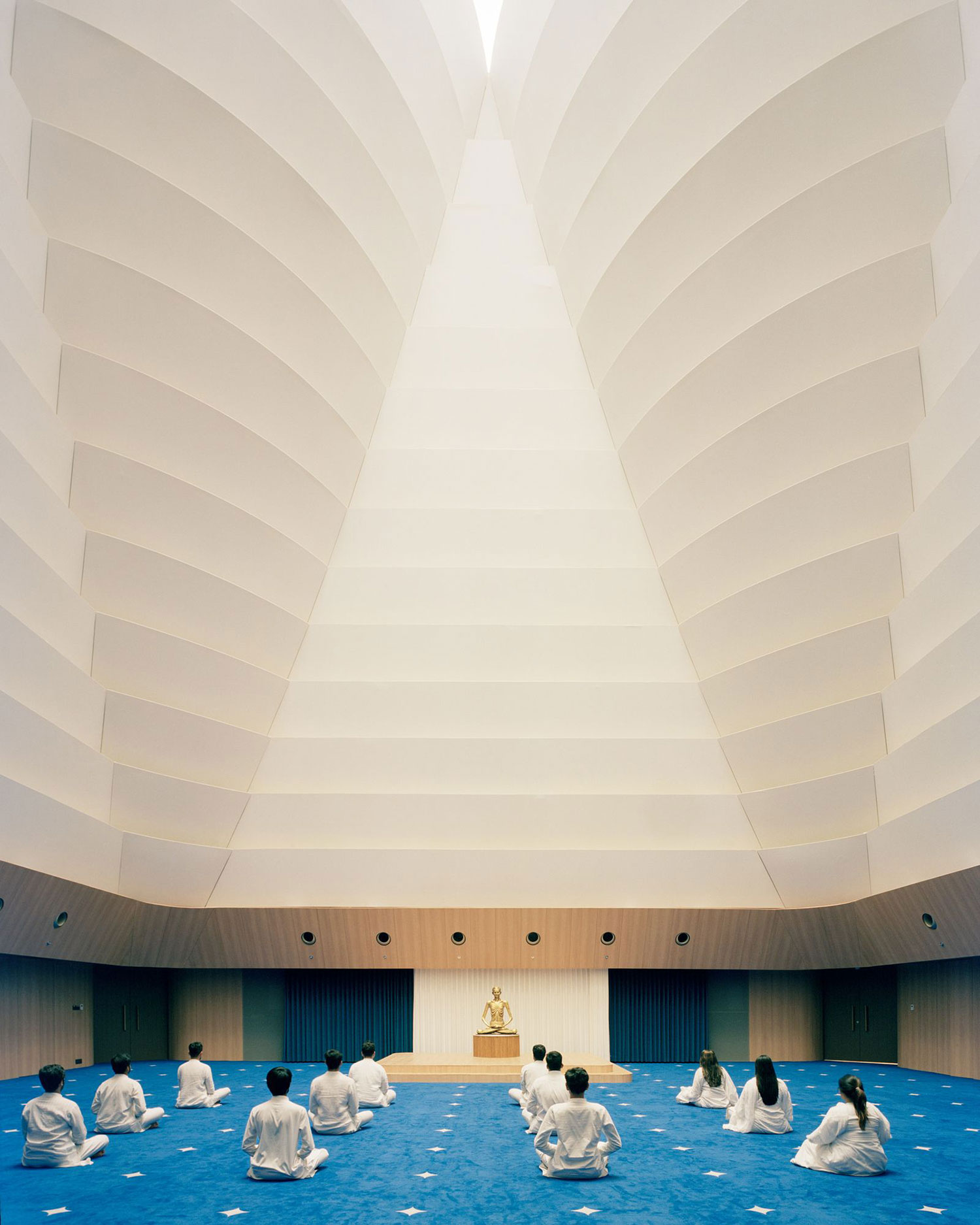
Crowning the building is the 300-seat meditation hall, a 20-meter-high “glowing lantern” visible from afar. Over 1,000 points of light are etched into its marbled surface. Designed for complete darkness, the hall features a double space frame structure supporting the exterior volume and interior space independently. Within, rotating white acoustic panels draw the eye and mind upwards, encouraging deep contemplation.
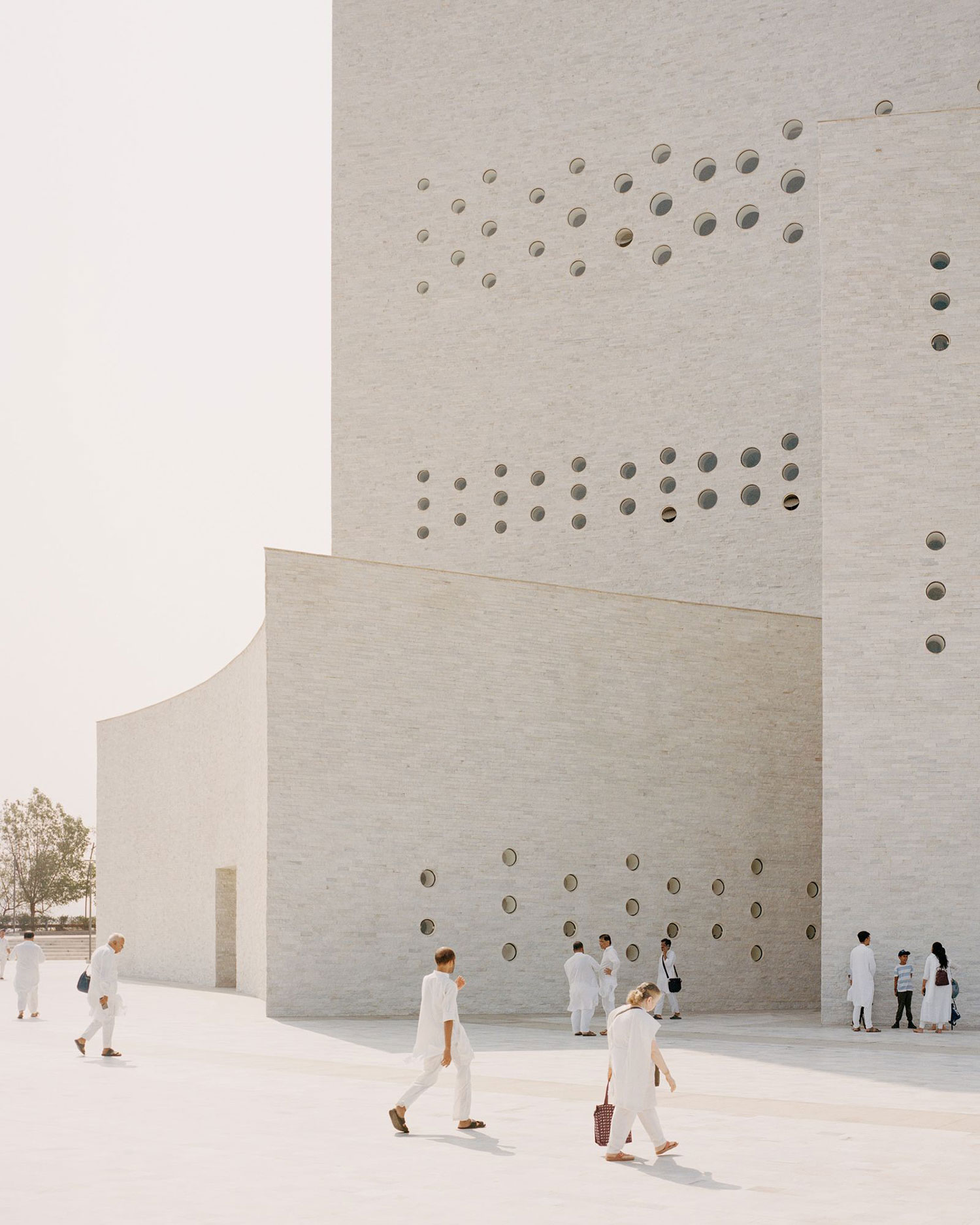
The exterior walls are clad in 50mm-thick, hand-chiseled Makrana white marble bricks, salvaged from discarded slabs. These smaller bricks accommodate the curvature of the sheer walls, adding a rich texture to the facade. This resourceful use of materials aligns with the project’s lean architectural approach and reduces construction costs. Over 800,000 bricks were meticulously hand-laid, echoing the materiality of a nearby Jain temple and creating a cohesive visual language. The rough-cut marble refracts light, creating a dynamic play of tones and hues across the building’s surfaces throughout the day. Deep-set circular windows further animate the monolithic form, bringing daylight deep into the interior.
As Christopher Lee and Kapil Gupta, Principals at Serie Architects, explain, the design process involved close collaboration with the Ashram and Pujya Gurudevshri Rakeshji, resulting in an architecture that is “contemporary, memorable, and timeless,” and serves as a significant symbol for the growing Ashram.
The Raj Sabhagruh sits on an expansive plinth, a white marble plaza radiating outwards and connecting it to surrounding buildings, including a dining hall, an open-air amphitheater, and the Jain temple. This plaza, dotted with ficus trees, facilitates the daily rhythms of the Ashram, as devotees move between buildings for discourse, study, meditation, and meals. To the west, gardens designed by Ficus Design feature a sacred grove of 108 ancient tree species, providing shaded pathways for residents.
The Raj Sabhagruh is more than just a building; it is a carefully crafted environment that fosters spiritual growth and intellectual engagement. Serie Architects has successfully translated abstract concepts of knowledge and enlightenment into a tangible, architectural form that resonates with both tradition and contemporary design sensibilities. This project stands as a powerful example of how architecture can serve as a catalyst for community and spiritual experience.