


When a building becomes a repository of collective memory, its significance transcends mere architecture. The Qichongtian Building on Nanjing Road, a 1922 edifice blending modernist and Art Deco influences, embodies this principle. Once a social hub for Shanghai‘s elite, it now hosts a new chapter in its storied history: the via·1719 Wu Liangcai New Vision Field, designed by Dayuan Design. This project, a collaboration with the 300-year-old eyewear brand Liangcai Wu, forges a new collective memory for the 2024 generation, firmly rooted in the vibrant context of Nanjing Road.
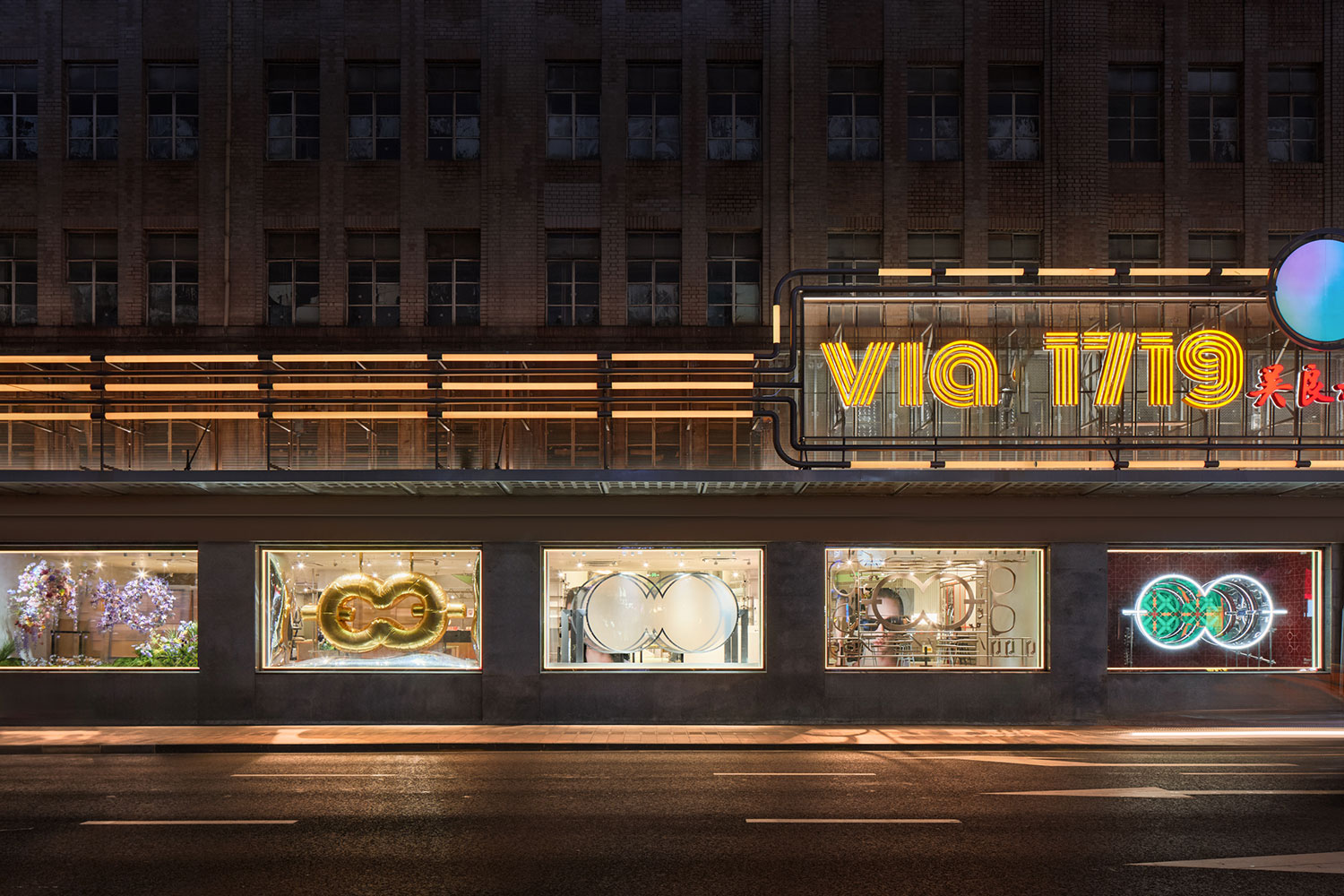
Dayuan’s approach is one of respectful reinvention. Drawing inspiration from traditional Chinese mechanical eyeglasses, they have infused the historic Qichongtian Building with a contemporary spirit, envisioning it as a playful observer of the bustling streetscape. This transformation marks not only the debut of Liangcai Wu’s innovative retail space but also a bold fusion of contemporary culture and historic architecture. The brand sheds its traditional image, reimagining itself as a dynamic “Liangcai Factory” within the historic shell, a tangible manifestation of new productive energy interwoven with the brand’s deep-rooted Chinese aesthetic.
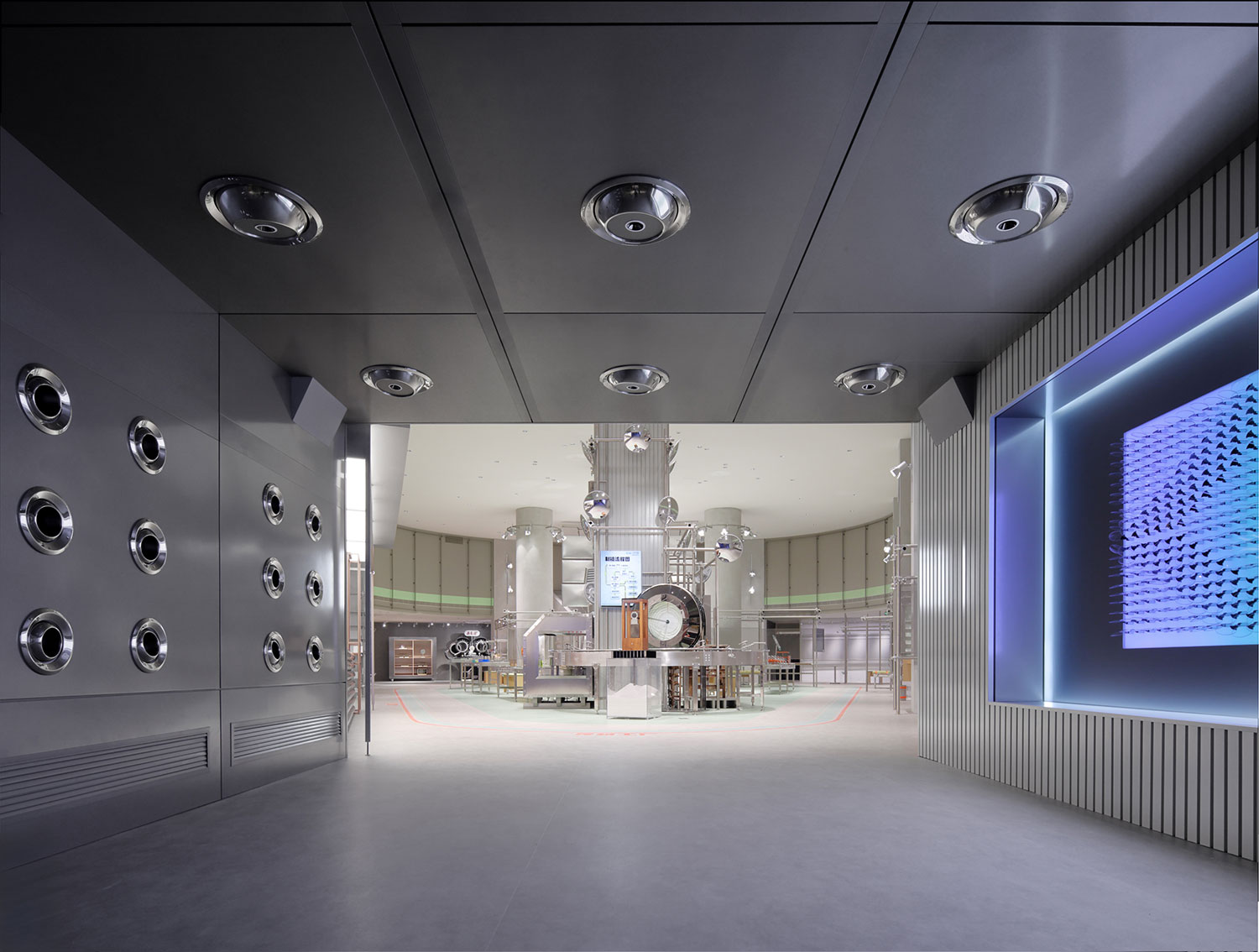
The retail space itself is conceived as a curated exhibition, offering a multi-layered experience. Upon entering, an “air shower” art installation creates a sense of entering a sterile factory environment, setting the stage for the “Factory Journey.” The “Thousand Mirrors” installation, crafted from optical lenses, uses dynamic light and shadow to guide visitors deeper into the space.
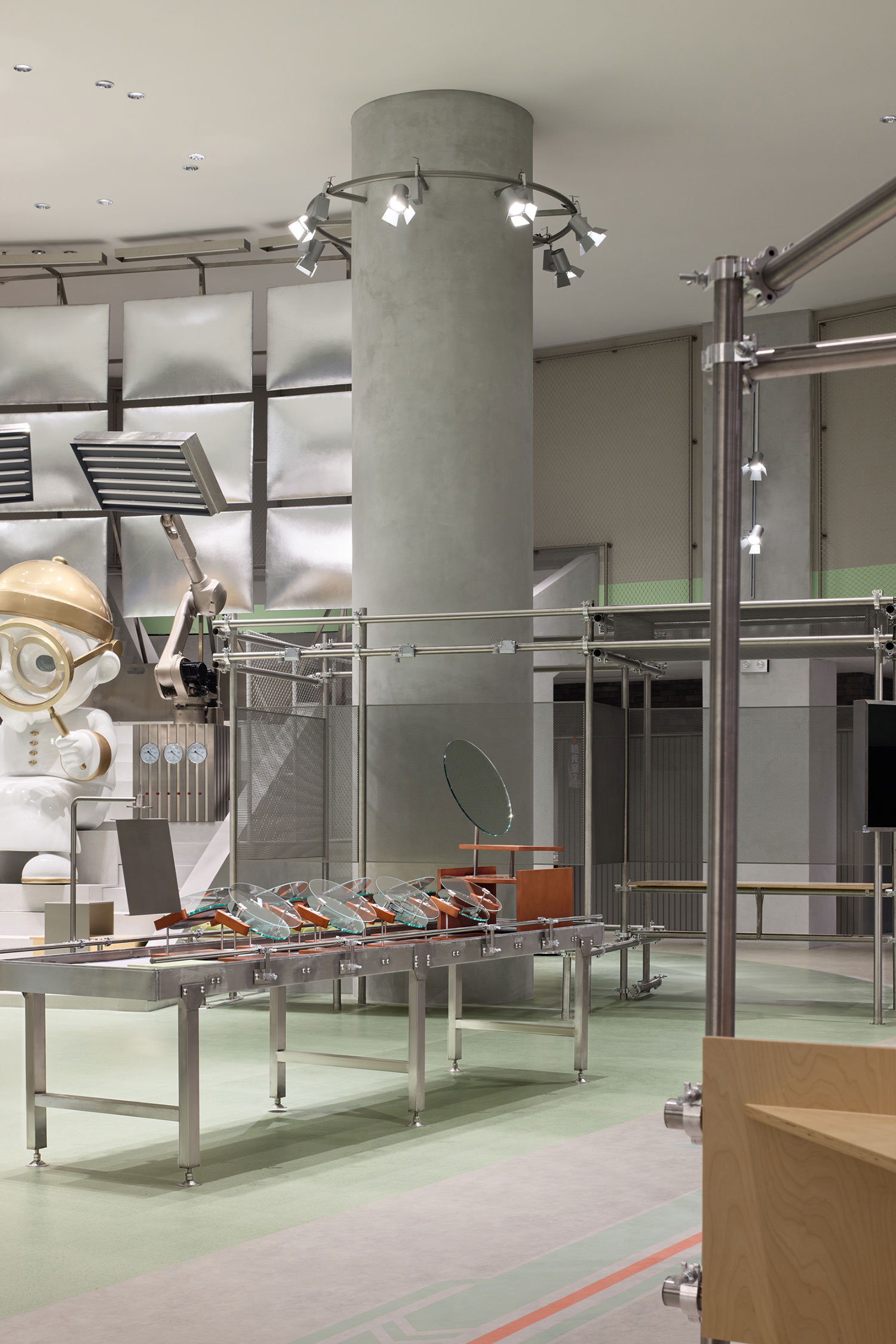
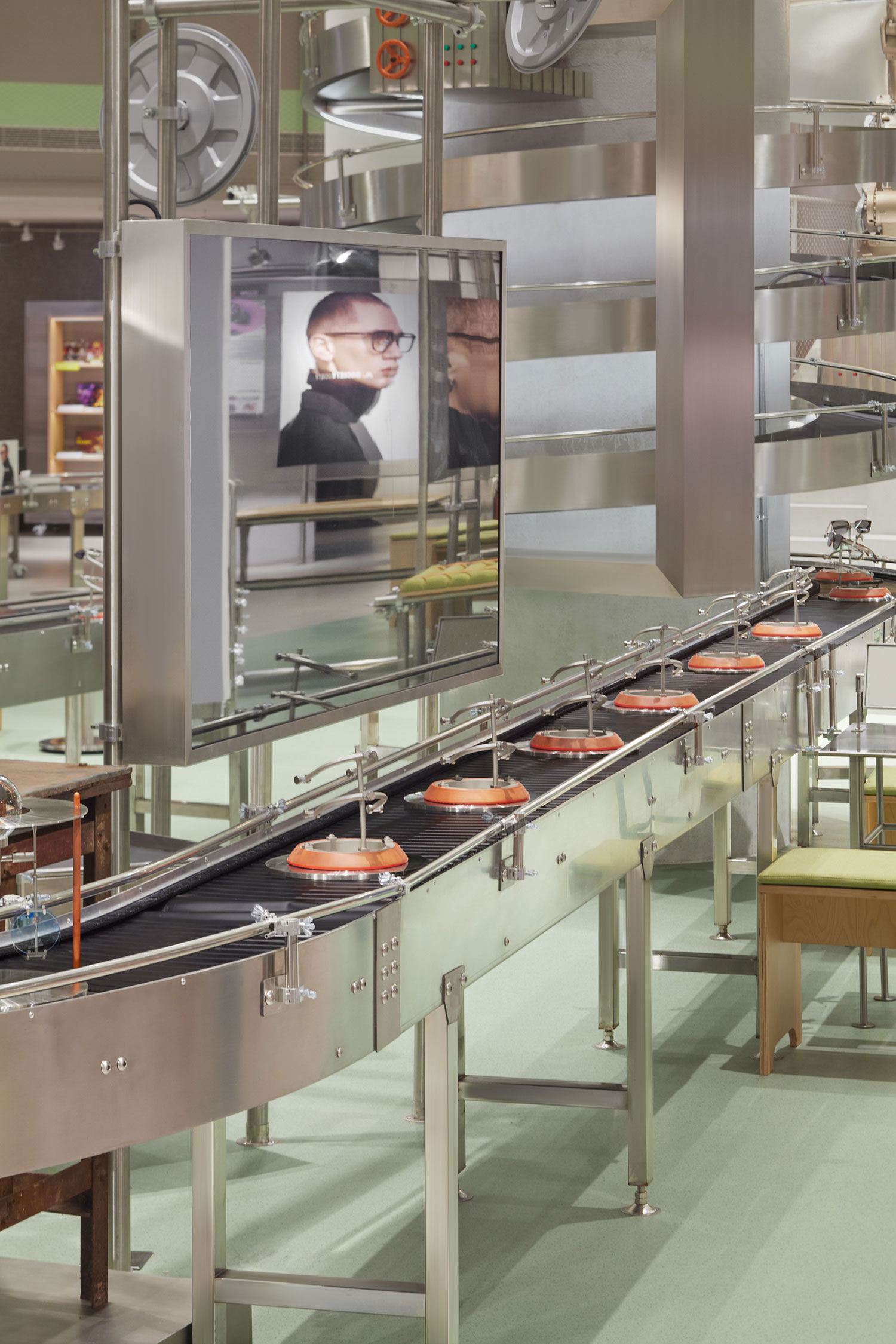
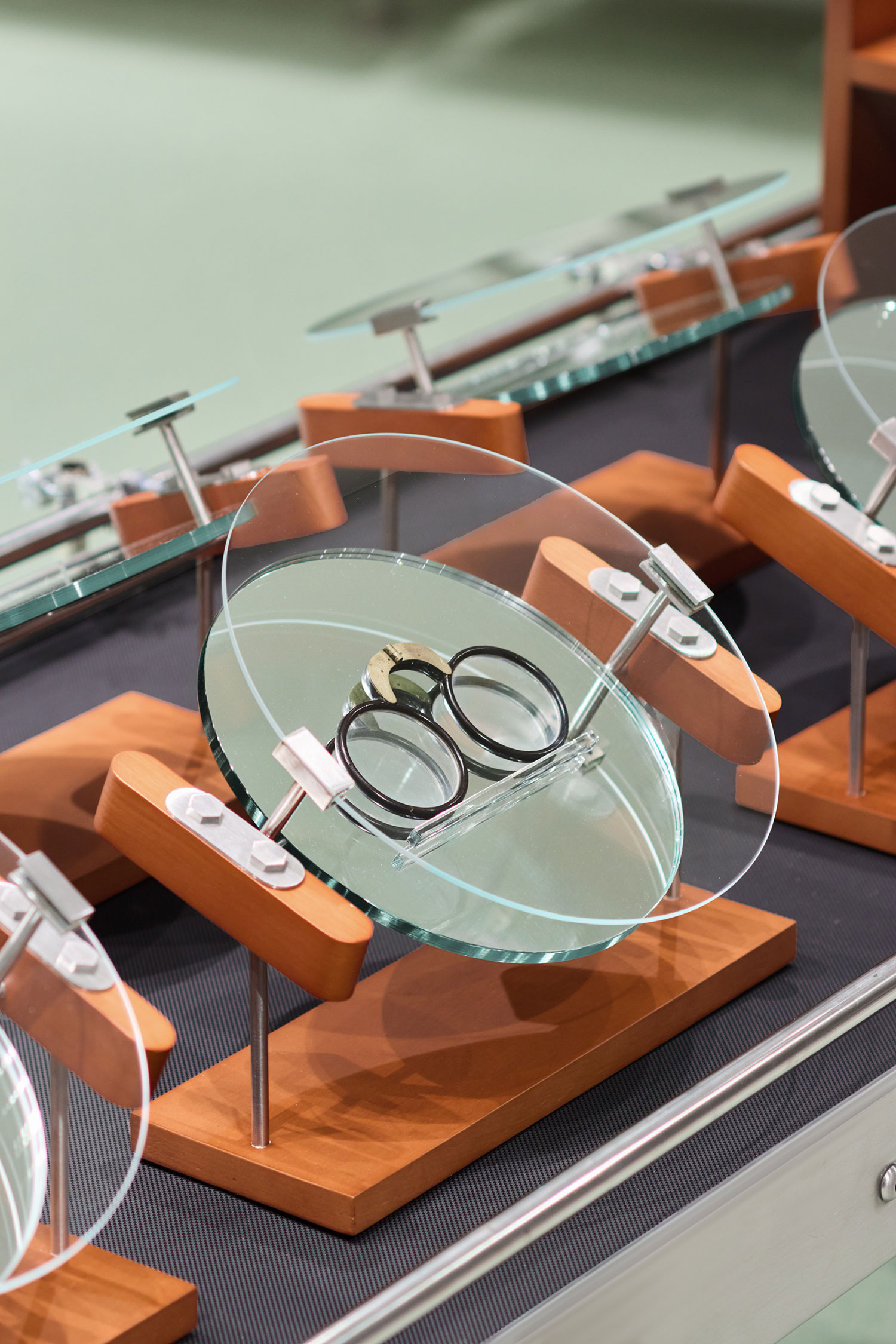
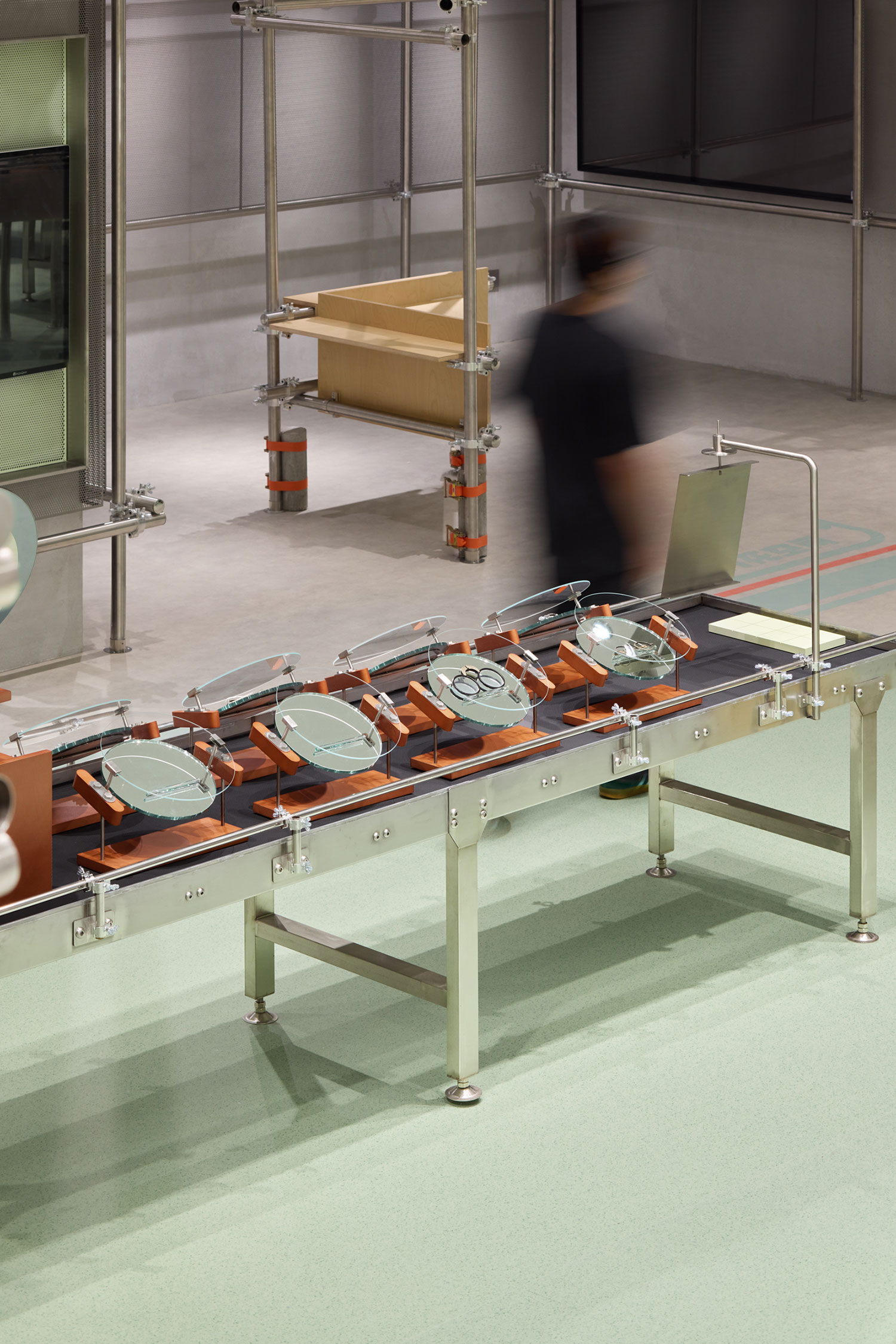
At the heart of the experience lies a carefully orchestrated narrative. A slow-moving conveyor belt in the atrium weaves together Liangcai Wu’s brand story and its historical context. Walking clockwise, visitors encounter the brand’s innovative products and contemporary initiatives, symbolizing progress and technological advancement. Counterclockwise, the journey delves into the brand’s heritage, showcasing antique eyewear and traditional grinding tools, highlighting the enduring legacy of craftsmanship.
The “Factory Journey” begins with the “Grinding Tool” installation, inspired by the jade workshops of the 5,000-year-old Yangshao culture. This installation pays homage to the brand’s founder, Wu Liangcai, connecting the ancient art of jade carving to the meticulous craft of eyewear production, a lineage spanning three centuries. The exhibition design seamlessly blends Chinese aesthetics with modern industrial elements, utilizing a diverse palette of materials – fabric, wood, perforated metal, and scaffolding – to create a layered and adaptable space.
Flexibility is a key theme throughout the design. The multifunctional area can be easily reconfigured for various purposes, from casual gatherings to brand events and lectures. The “Project 1719” installation in this area explores the experience of myopia. Fogged glass simulates blurred vision, with programmed transitions gradually revealing clarity, offering visitors a visceral understanding of visual correction.
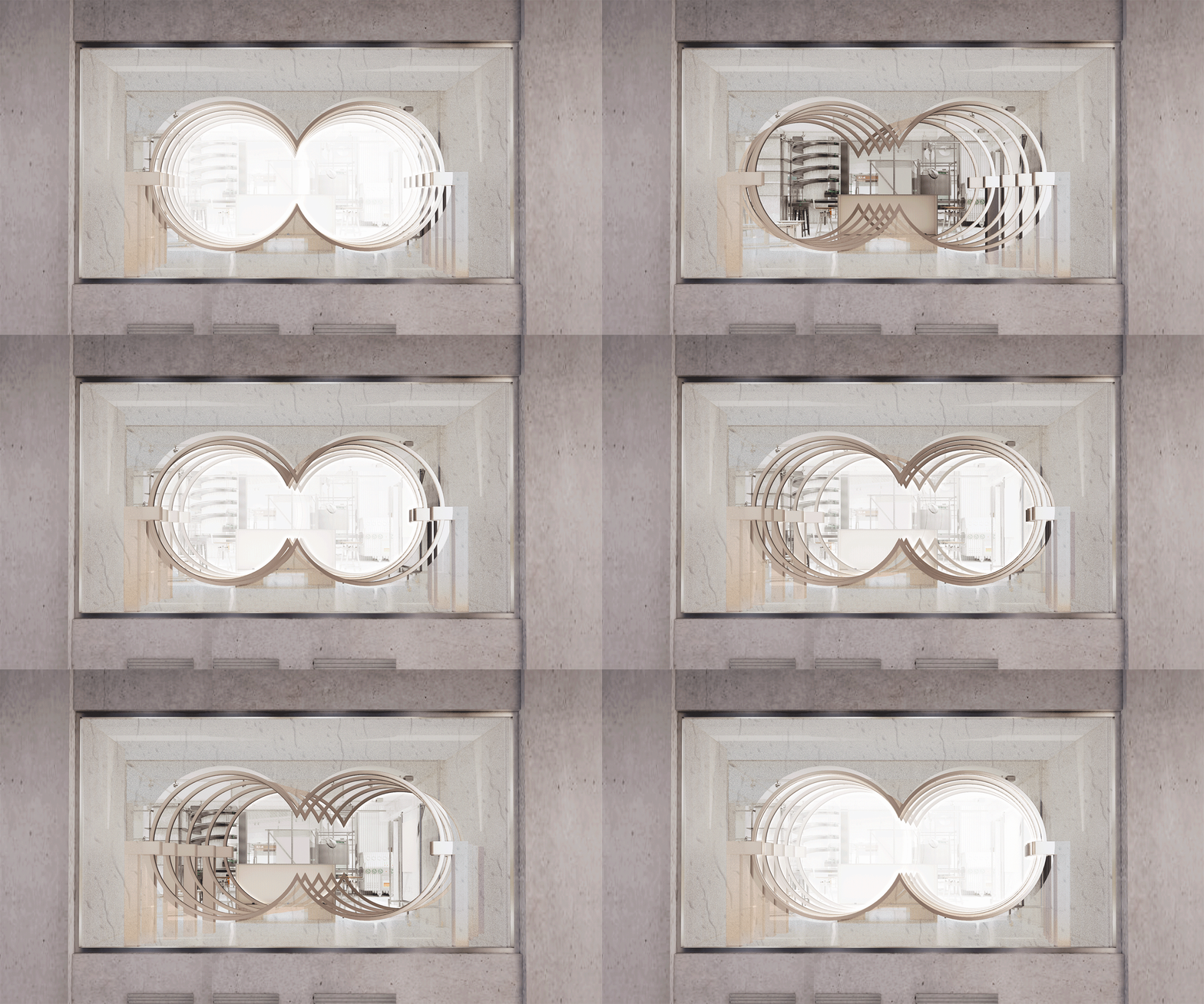
The building’s exterior also receives careful attention. Industrial pipes are repurposed as light fixtures, channeling light like flowing electric currents, drawing attention from the street. At night, six uniquely designed window displays, synchronized with music and lighting, create a captivating hourly light show, transforming the building into a dynamic beacon on Nanjing Road.
Dayuan Design’s via·1719 Wu Liangcai transcends the conventional retail experience. It transforms passive consumers into active participants, inviting them to explore the brand’s story through a multi-sensory journey. Liangcai Wu is presented not merely as a purveyor of products but as a carrier of history, craftsmanship, and innovation. The project serves as a powerful reminder of the importance of preserving cultural heritage while embracing the future, finding a harmonious balance between tradition and modernity. This new vision for Nanjing Road is not just a retail space; it’s a living testament to the power of architecture to shape collective memory.