

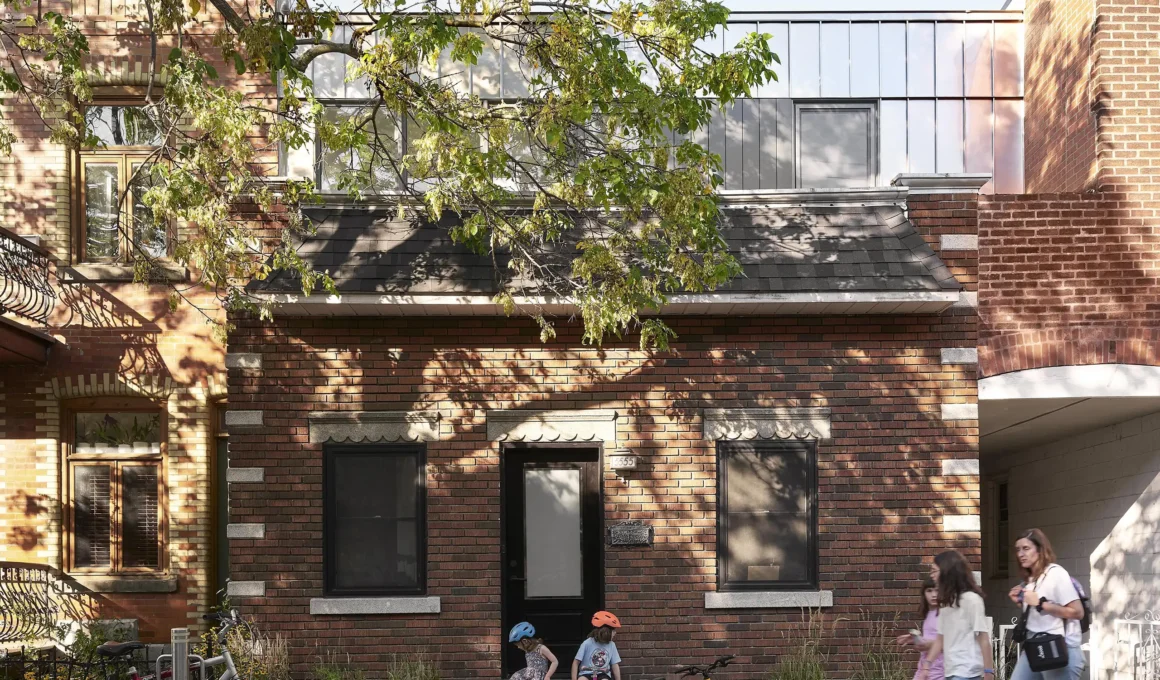
In the dense urban fabric of Montreal, the “shoebox” house remains a humble yet defiant symbol of the city’s working-class history. These single-story dwellings, built in the early 20th century, are often dwarfed by the vertical growth of contemporary developments. However, Alexandre Bernier Architecte has introduced a masterclass in domestic evolution with ShoeBox CHB. Located in the vibrant Petit Laurier neighborhood, the project eschews the typical trend of demolition in favor of a surgical, high-concept expansion. By respecting the original volume of the vernacular structure, the design team has managed to reconcile the nostalgia of the past with the spatial demands of modern family life.
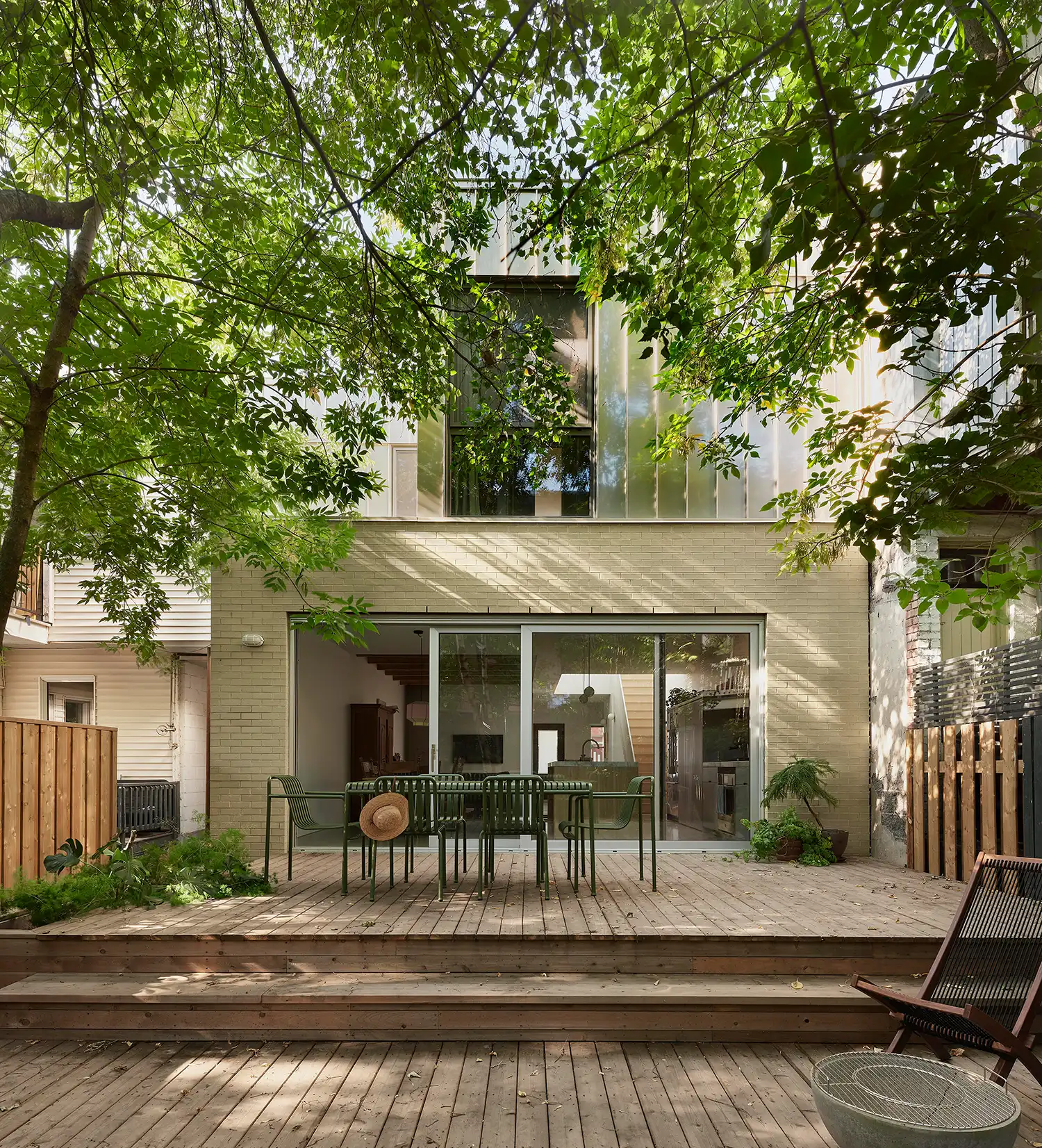
A dialogue between eras begins on the street-facing façade, where the original brickwork has been meticulously preserved. Rather than imposing a heavy second story that would disrupt the rhythmic skyline of the street, the architect opted for a recessed addition. This new upper level is clad in satin-finished stainless steel, a material chosen for its ethereal, almost ghost-like quality. As the light changes over Canada’s seasonal shifts, the steel reflects the colors of the sky and the surrounding foliage, allowing the addition to feel lighter than its physical mass suggests. This quiet intervention ensures that while the home has grown, its presence remains modest and contextual.
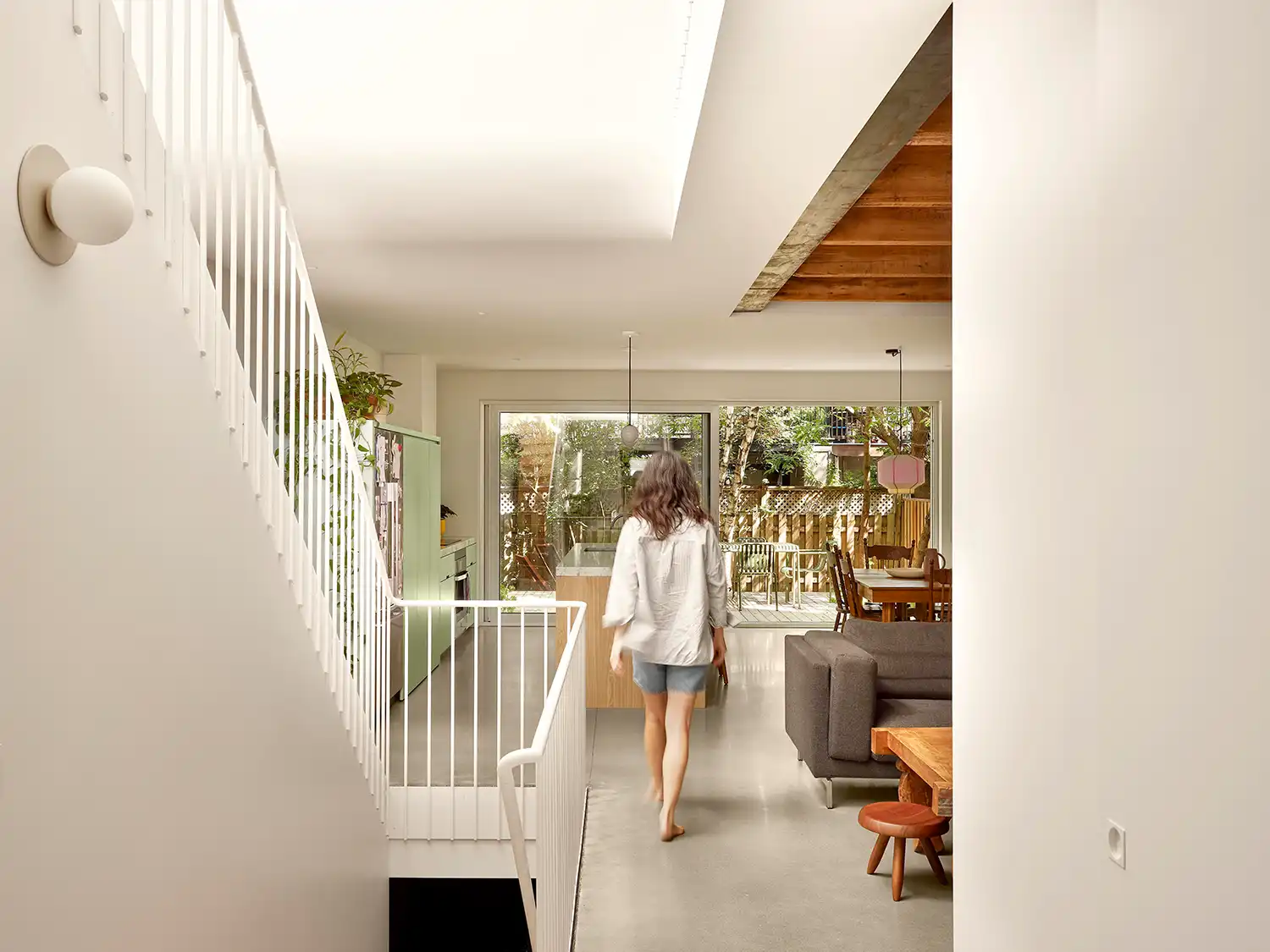
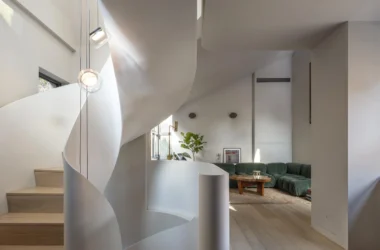
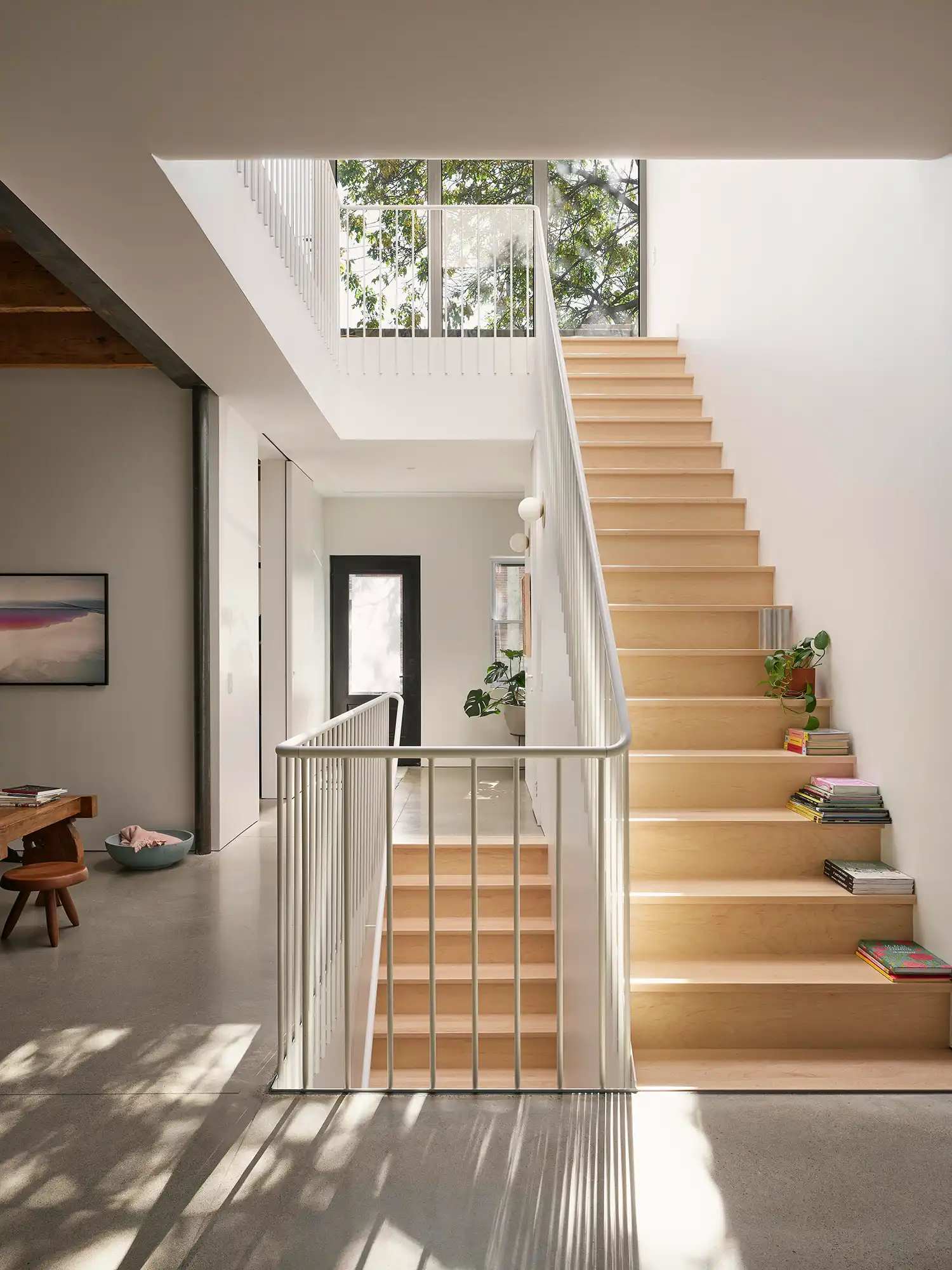
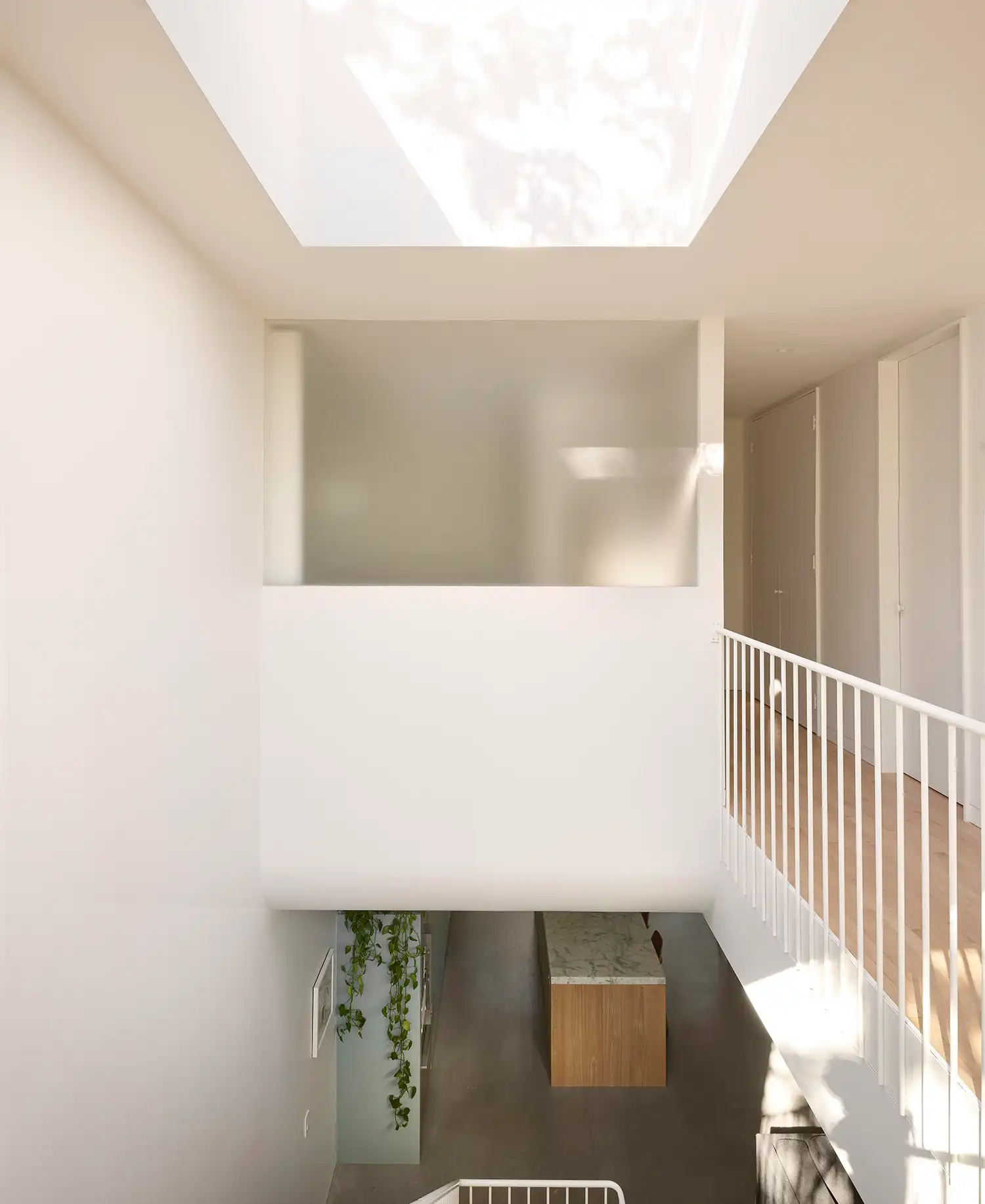
Spatial clarity and light serve as the primary organizing principles once you cross the threshold. In many historic Montreal renovations, deep floor plans often suffer from a lack of natural illumination—a challenge previously explored in projects like the Boîte à Lumière by Naturehumaine, which similarly utilized light as a structural tool. At ShoeBox CHB, a central staircase acts as a light well, topped by a generous skylight that funnels brightness into the very heart of the home. This vertical atrium does more than just illuminate; it creates a sense of fluid circulation, turning a traditionally static typology into a dynamic, breathable environment.
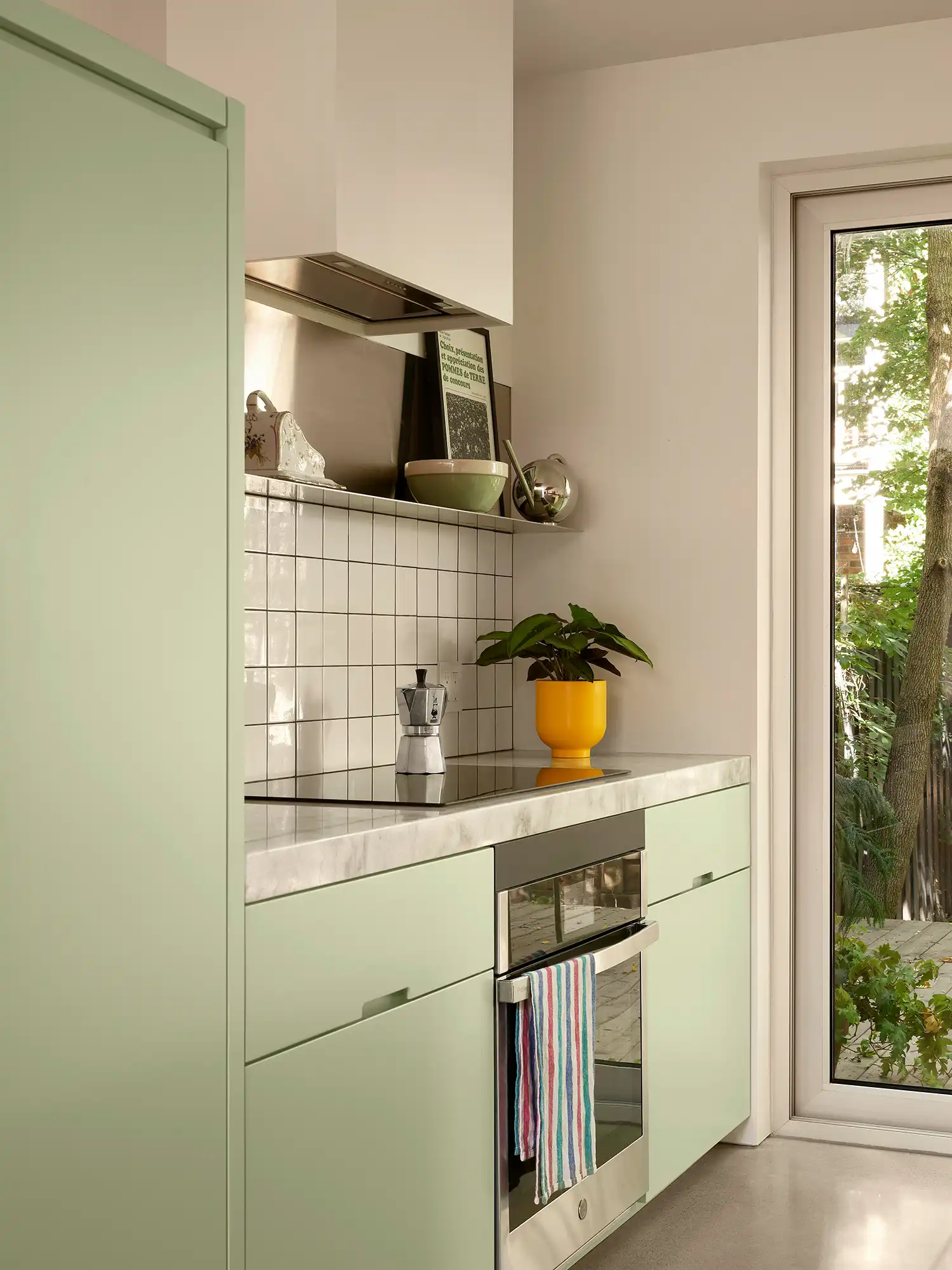
The sensory experience of the interior is defined by a rigorous restraint in the palette. Polished concrete floors provide a cool, solid foundation, contrasted by the warmth of light wood cabinetry and crisp white surfaces. There is a tactile honesty to the materials that invites the touch, emphasizing a “less is more” philosophy that mirrors the minimalist rigor found in Appareil Architecture’s Les Sillages. Large glazed openings at the rear of the house dissolve the boundary between the kitchen and the private garden, framing the outdoor greenery as if it were a living piece of art, further softening the architectural geometry.
Technical precision meets urban durability in the execution of the stainless steel envelope. Beyond its aesthetic appeal, the choice of steel speaks to a commitment to longevity and low maintenance in the harsh Quebec climate. The alignment of the addition with the neighboring context demonstrates a deep understanding of urban morphology. It is a reminder that density does not always require height or aggression; sometimes, the most effective architectural statements are those that whisper rather than shout. The project successfully navigates the technical constraints of a limited footprint while maximizing the perceived volume through strategic sightlines.
A blueprint for sustainable densification, ShoeBox CHB demonstrates how the preservation of “small” heritage can yield significant architectural rewards. By valuing the existing urban fabric of Montreal and injecting it with a contemporary soul, Alexandre Bernier has created a residence that feels both timeless and urgent. It serves as a compelling argument for the adaptive reuse of modest typologies, proving that with careful proportion and material intelligence, even the simplest shoebox can be transformed into a sophisticated sanctuary for the 21st century.