


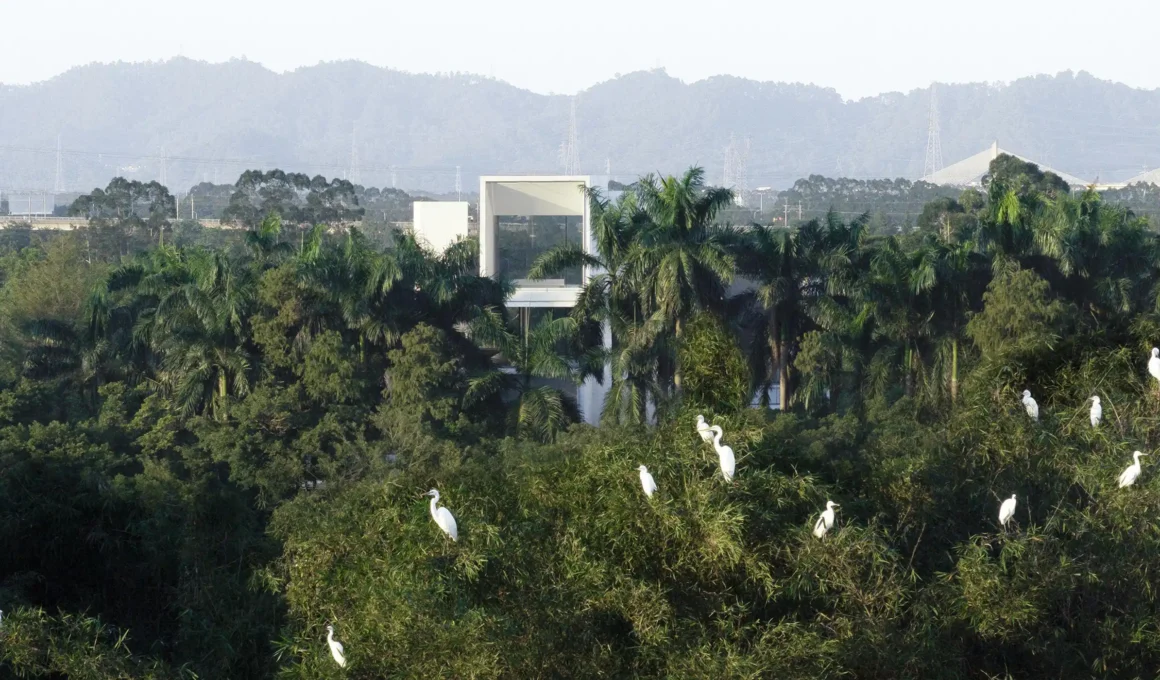
In the heart of Shunde, China, Studio Link-Arc has completed the Shunde Yunlu Wetland Museum, a structure composed of four stacked concrete volumes designed to “disappear” into a lush subtropical forest. Located within the Yunlu Wetland Park, the project serves as a combined bird-watching tower and ecological center, situated directly adjacent to a protected island inhabited by a colony of 25,000 egrets.
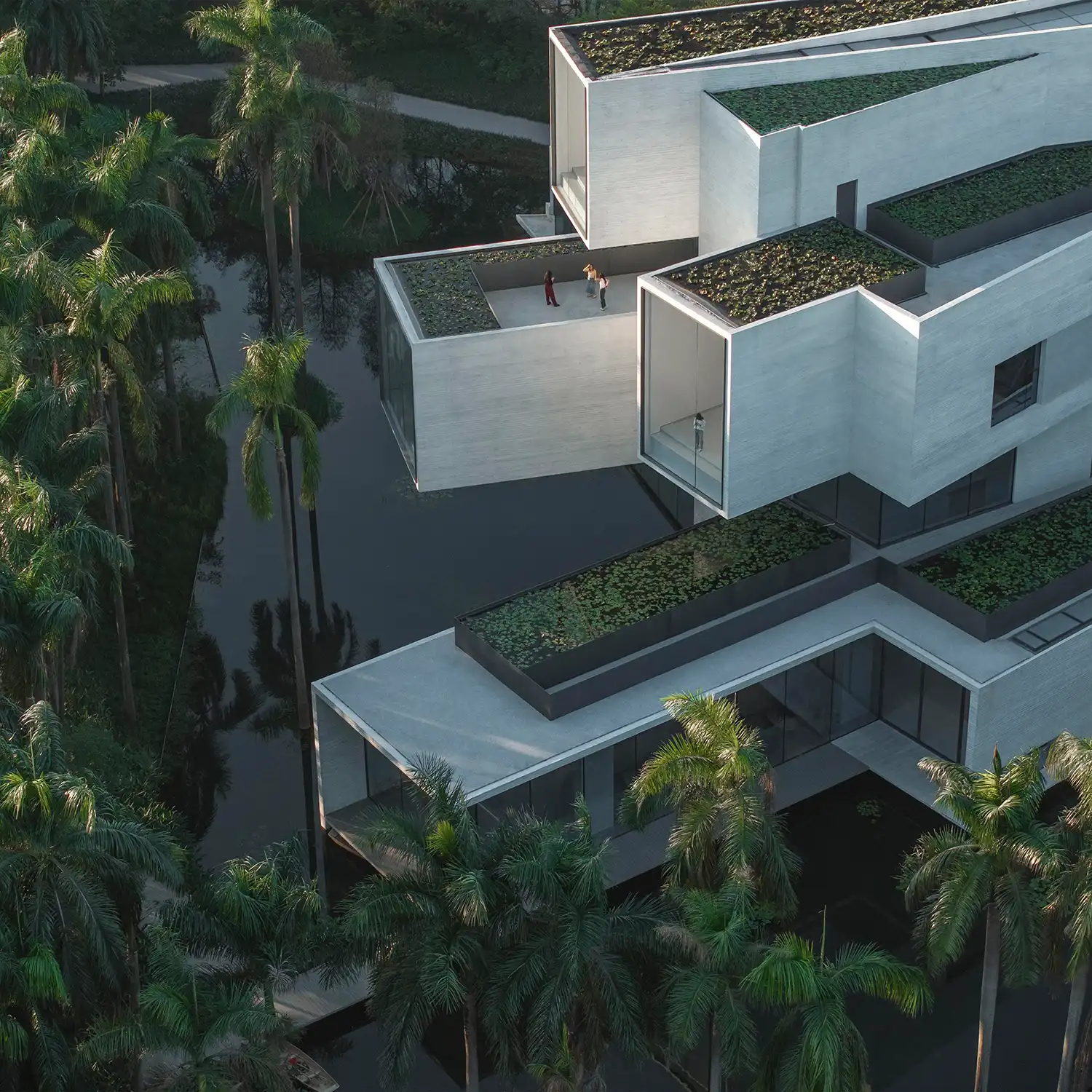
The project is the result of a decades-long conservation effort that began with a single bamboo forest planted by a local resident. Today, the government-led wetland restoration project has expanded this sanctuary thirteen-fold. To respect this delicate site, the architects chose to hide the museum behind a screen of existing cedar trees, adopting a nature-oriented design that prioritizes the habitat of the “indigenous creatures” over architectural grandiosity.
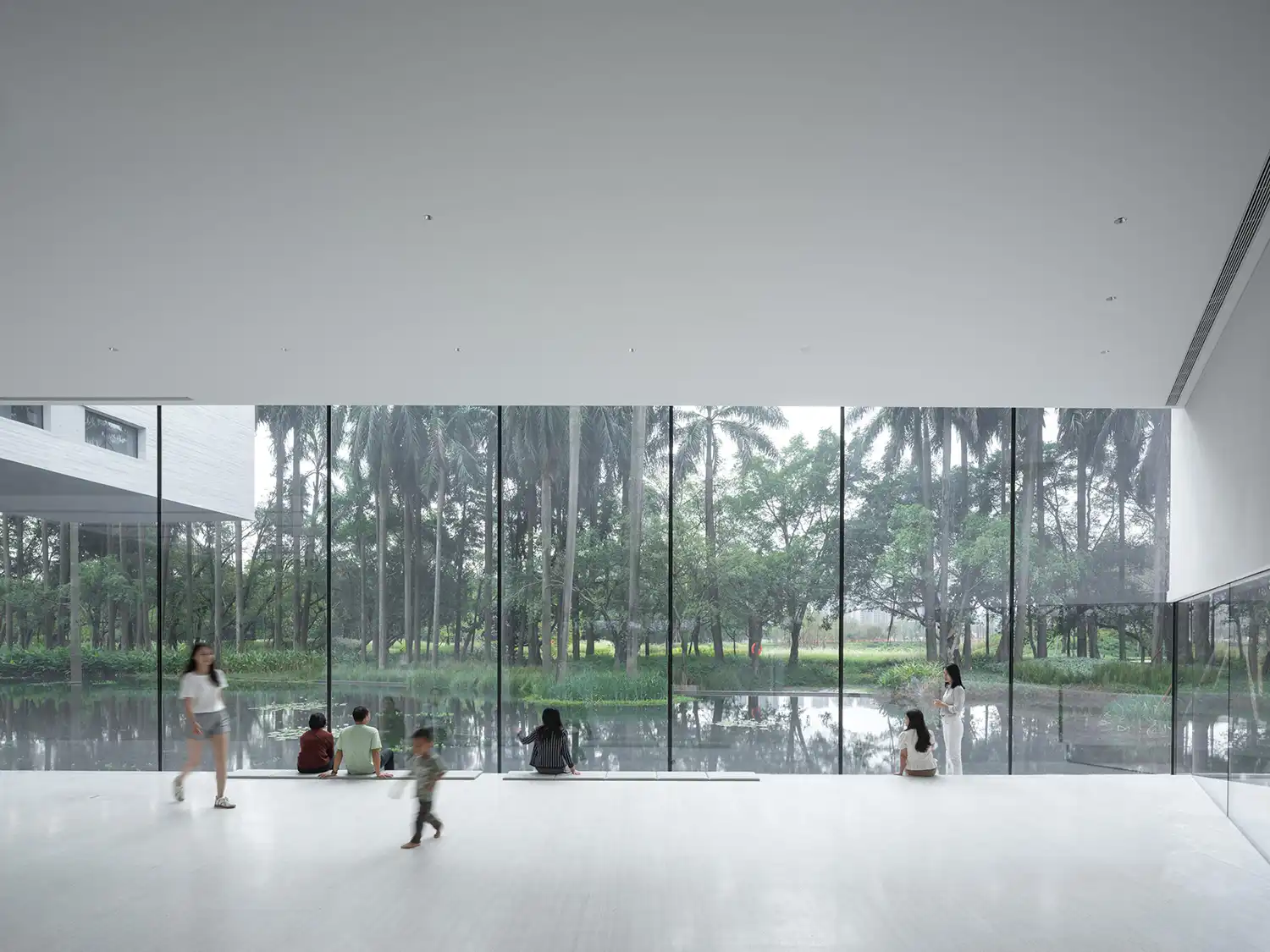
The building’s distinctive form consists of four concrete tubes that have been horizontally rotated to act as “lenses.” Each level is oriented toward a specific stratum of the surrounding forest, from the tree roots and trunks on the lower floors to the crowns and treetops at the summit. This arrangement deconstructs the traditional human perspective, instead offering a scattered view that frames the wetland ecology like a series of living landscape paintings.
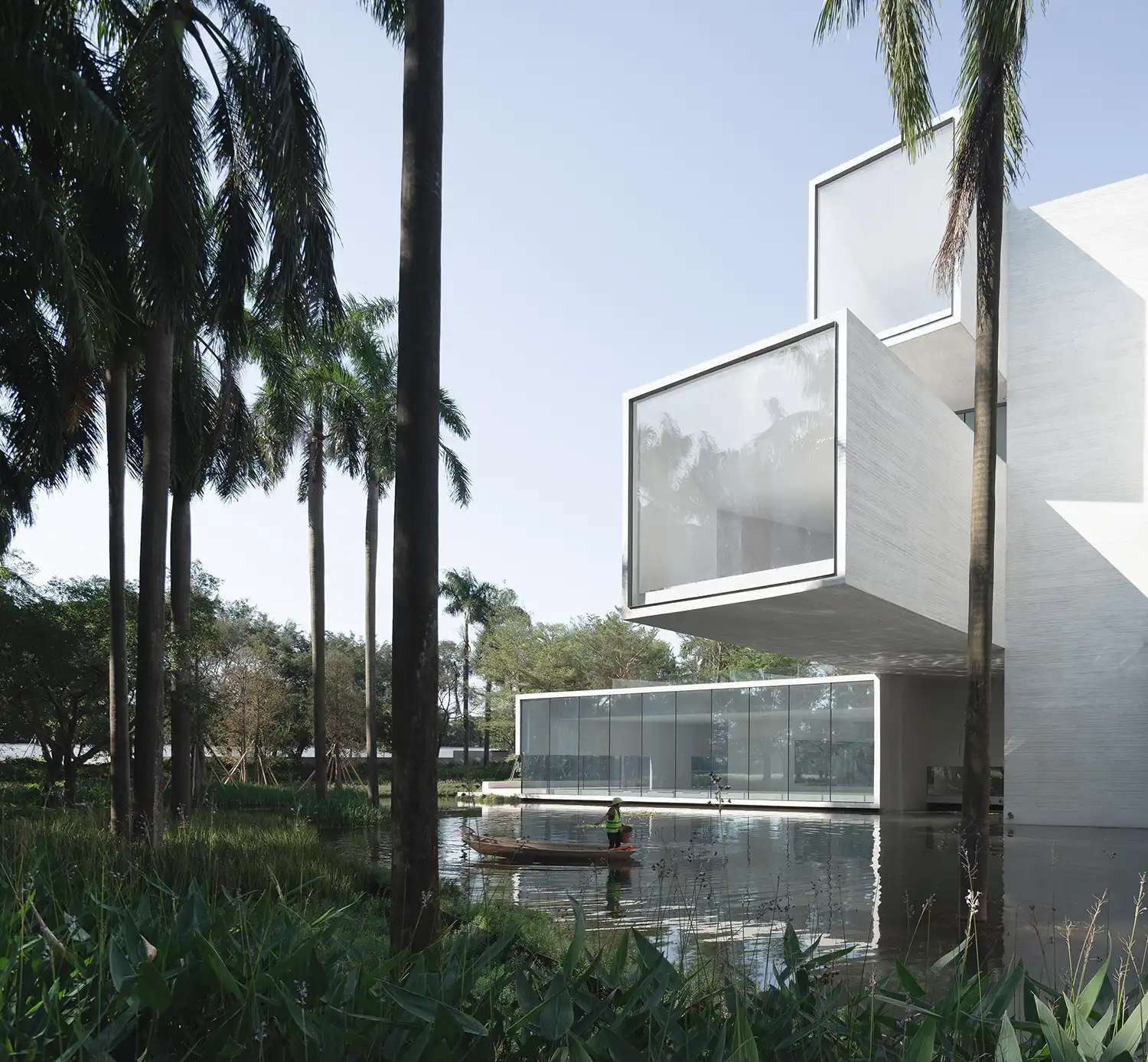
To minimize the impact on the site, Studio Link-Arc conducted an extensive survey of the 560 existing trees, carefully positioning the museum to avoid unnecessary logging. The resulting box-type concrete structure features a minimal footprint, with the side walls and plates of each tube providing the necessary load-bearing support. A vertical triangular atrium cuts through the center of the volumes, creating a sculptural void that connects all four floors.
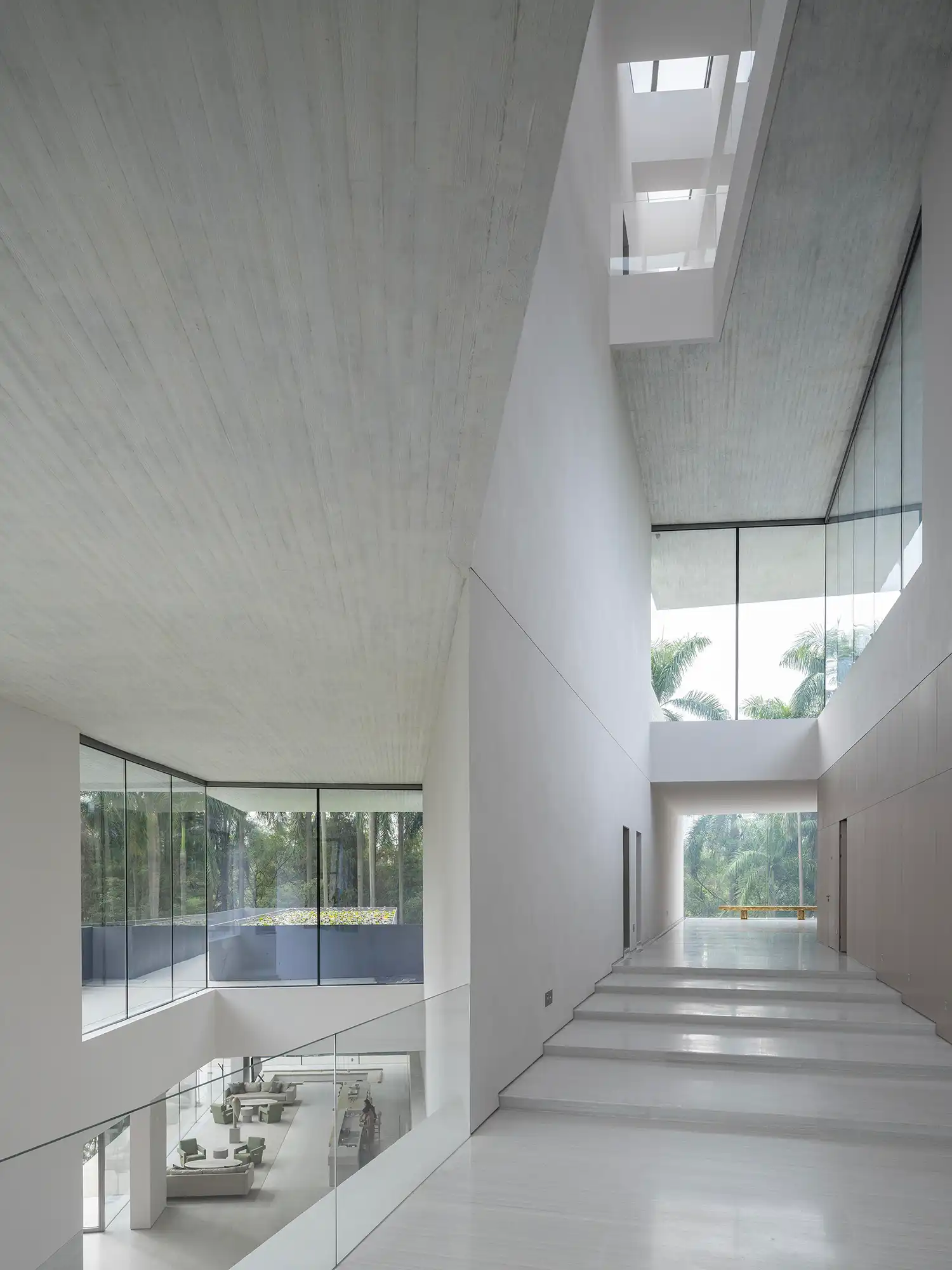
The material palette is defined by cast-in-place pine molded concrete, which gives the exterior facade a fine-grained, organic texture. This tactile finish allows the Shunde Yunlu Wetland Museum to harmonize with the verticality of the nearby woods. Inside, sunlight filters through deep beams and skylights, allowing visitors to perceive the shifting seasons and the movement of light across the raw concrete surfaces.
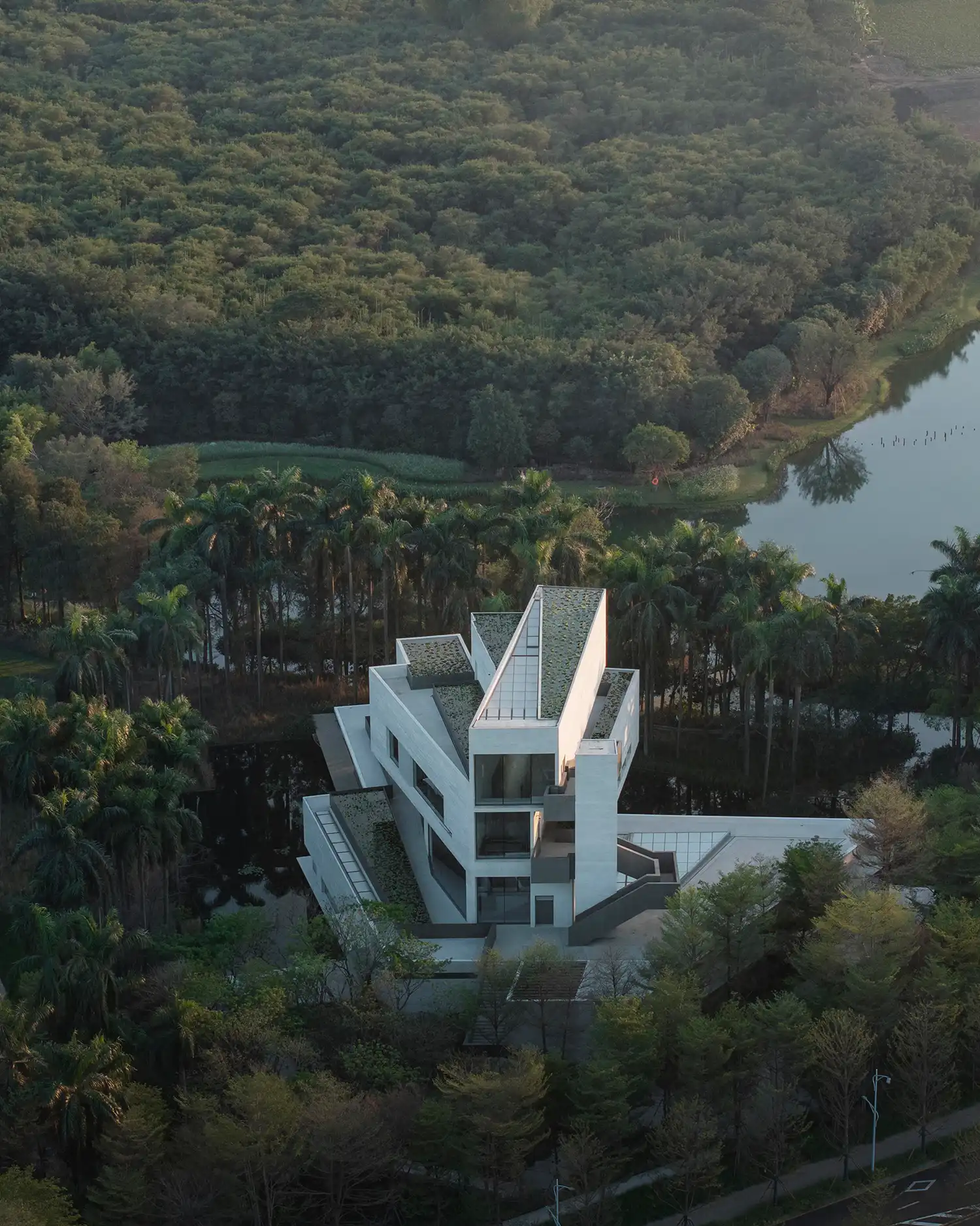
On the roof, the architects have implemented sustainable landscaping in the form of lotus ponds. These ecological water features serve to “weaken” the presence of the building when viewed from above, effectively blending the structure into the watery landscape of the park. By merging high-concept geometry with environmental sensitivity, the project offers a new typology for the bird-watching tower, where the act of observation becomes an immersive, meditative experience.