




In the heart of an established neighborhood in Austin, Texas, a 1930s Victorian bungalow has been reborn, not merely as a relic of the past, but as a sophisticated dialogue between heritage and contemporary living. When homeowners Holly Beth and Matt Potter acquired the residence, they were met with a structure that was as rich in character as it was compromised by time. Tasked with the delicate balance of preservation and expansion, local architecture firm Side Angle Side embarked on a journey that shifted from a standard historic restoration to a meticulous reconstruction. The project serves as a testament to the idea that honoring architectural history often requires rebuilding it from the ground up to ensure its future.
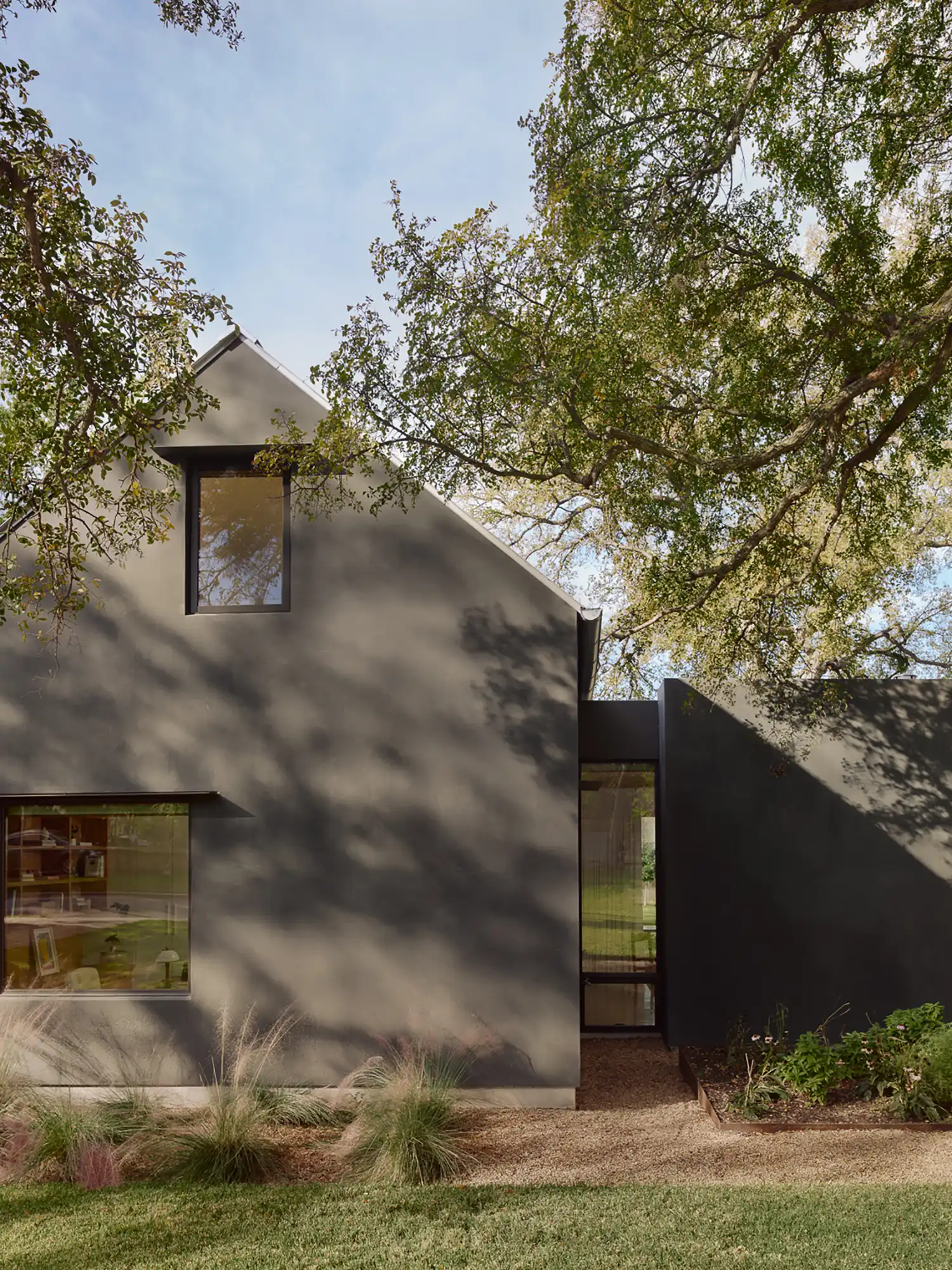
The conceptual vision for the residence was rooted in a deep respect for the spirit of the original 1935 structure. As the construction phase began, the team discovered significant structural decay, prompting architects Arthur Furman and Annie-Laurie Grabiel to utilize archival photos and existing drawings to recreate the home’s silhouette. This “reconstruction” allowed for a seamless integration of salvaged elements—including crown molding, baseboards, and original longleaf pine floors—with modern structural integrity. By matching the new exterior siding and windows to the original details, the architects maintained the streetscape’s historic allure while preparing the site for a significant, light-filled addition on its expansive double lot.
Moving into the interior, the sensory experience is defined by a curated warmth that bridges the gap between eras.Interior designer Holly Beth Potter, of HP Studio (now the design arm of Side Angle Side), treated the dining room as the home’s emotional core. Here, the original shiplap walls—painted a soft, neutral yellow—frame a massive Nickey Kehoe community table, while a delicate Noguchi pendant casts a diffused, amber glow over vintage Guillerme et Chambron seating. The presence of the original wood pocket doors provides a tactile connection to the 1930s, offering a sense of enclosure and intimacy that is often lost in purely modern open-plan layouts.

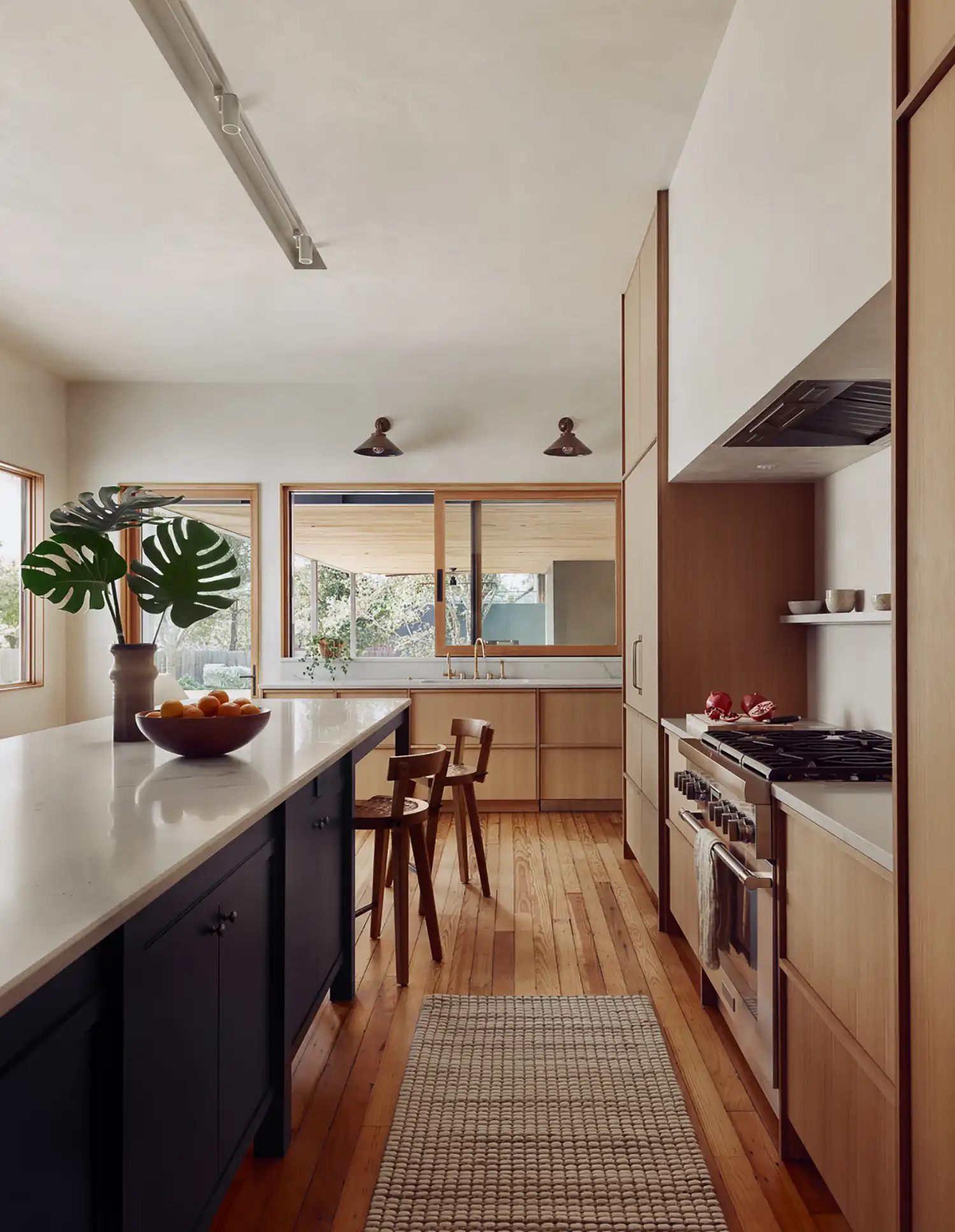
The technical transition from the historic core to the modern addition is handled with a masterful play of materials. In the kitchen, custom rift-sawn white oak cabinetry with integrated pulls meets the cool, veined surface of Calacatta Ibiza Quartzite. As the floor plan flows into the new living volume, the materiality shifts toward a more grounded, tactile palette: polished concrete floors contrast with a soaring hemlock wood ceiling and a plaster fireplace wall. This architectural honesty, where the structure’s bones are left to speak for themselves, echoes the exposed frame manifesto seen in recent Austin residential architecture, highlighting a growing trend in Texas design where the “honesty of assembly” becomes the primary aesthetic driver.

Functionality and romance coexist within the private quarters, where the material selection leans into the natural landscape of Austin. The primary bathroom is a study in texture, featuring leathered quartzite countertops and a tub deck that offer a dramatic, matte finish. Underfoot, locally sourced white limestone tiles provide a cooling, artisanal quality that grounds the space in its Central Texas context. By mixing these raw, earth-driven materials with vintage family heirlooms—like a brass floor lamp passed down from the owners’ grandparents—the design avoids the sterility of modernism, opting instead for a “warm minimalism” that feels lived-in and timeless.

The contextual impact of this 3,700-square-foot home lies in its refusal to choose between the past and the present.By allowing the original house to dictate the design language of the new intervention, Side Angle Side has created a residence that feels both inevitable and surprising. It is a project that understands that true sustainability in architecture is found in the preservation of a neighborhood’s soul. Through the careful reuse of salvaged timber and the introduction of contemporary volumes, the Potter residence stands as a refined benchmark for residential design in Austin, USA, proving that the most forward-thinking homes are often those that look back with the greatest clarity.