

In the heart of the Madrid Moderno district, a neighbourhood once comprising ninety-six late-19th century hygienist-inspired homes, stands Casa Castelar. Of the original development, only fourteen houses remain, having weathered decades of intense real-estate pressure. The Madrid-based architecture studio Solar, led by Pablo Canga and Ana Herreros, has completed a profound architectural intervention on one of these surviving structures, demonstrating how to build thoughtfully upon the built. The project is a masterful exercise in adaptive reuse, navigating the delicate balance between historical memory and contemporary necessity.
The philosophical underpinning of the project draws from a nuanced interpretation of conservation. As the architects note, referencing Eugène Viollet-le-Duc, restoration is not merely maintenance but a act of “reinstating a building in a state of completeness, which may in fact have never existed at any given time.” For Solar, this meant rejecting both the neglect of heritage and its museological fossilisation. Instead, Casa Castelar becomes an “ideological and aesthetic exercise on how to incorporate the memory and entropy of the already existing” into a vibrant, modern home, leveraging what they term the thermodynamic and informational capital embedded in the old structure.
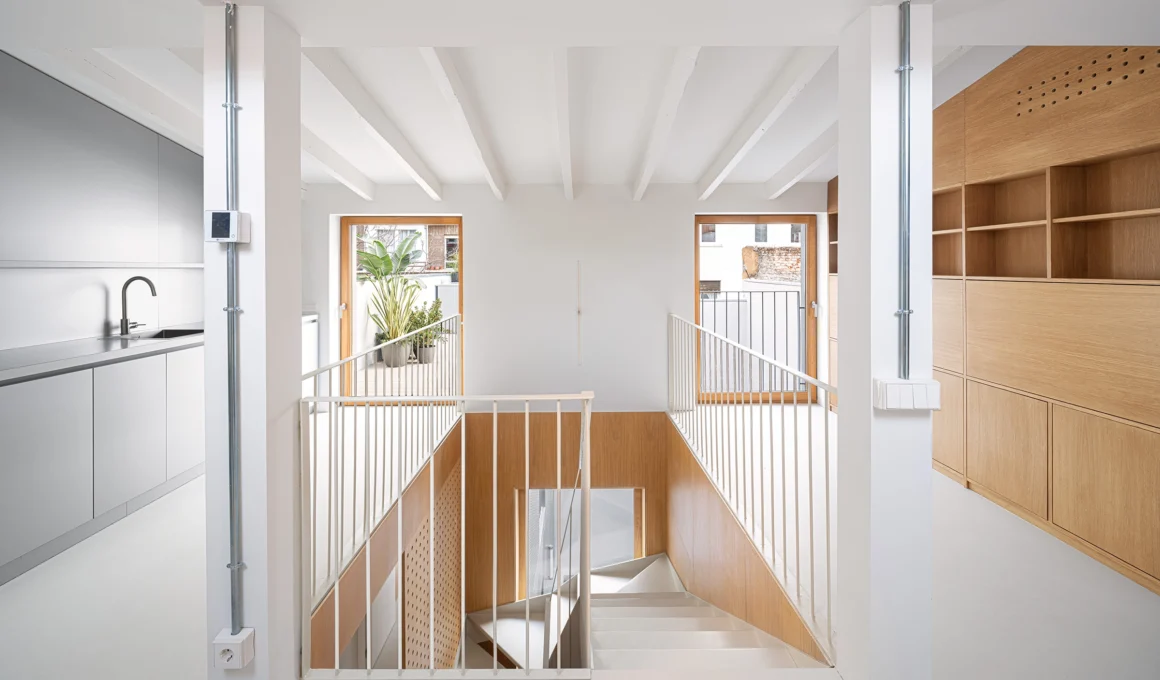
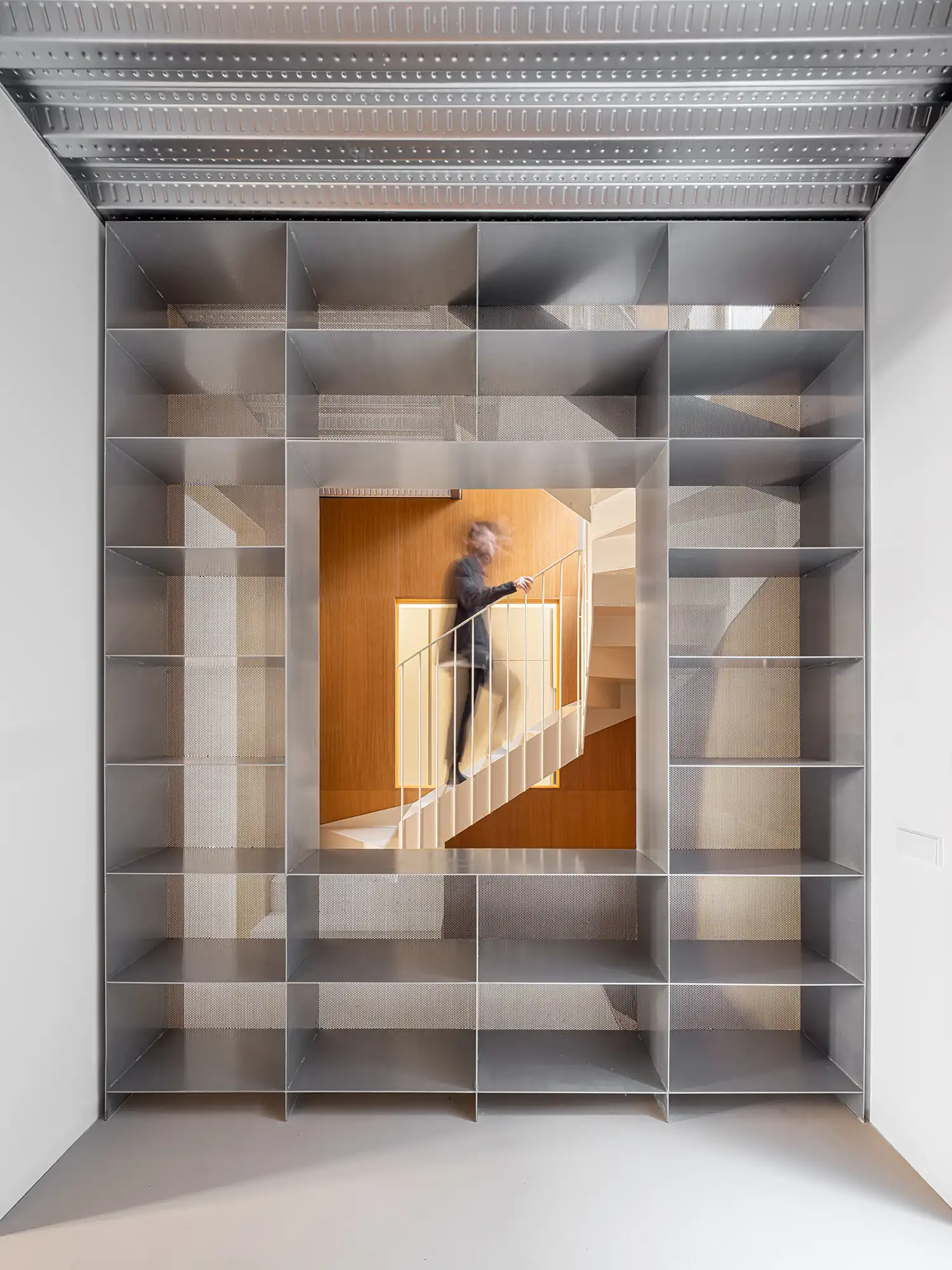
The approach began with a typological recovery. The architects identified that the true patrimonial value of the house extended beyond its ornamental details. They made the strategic decision to peel away subsequent additions that had crowded the plot, effectively recovering the building’s original 1890 ‘L’-shaped layout. This strategic demolition allowed for the creation of a spacious entrance courtyard that contains the new program. Spatially, the interior is organised as a sequence of regular rooms connected by large voids around the stairwell, creating a series of crossed views that guide movement through the house while maintaining a constant visual connection to the patio.
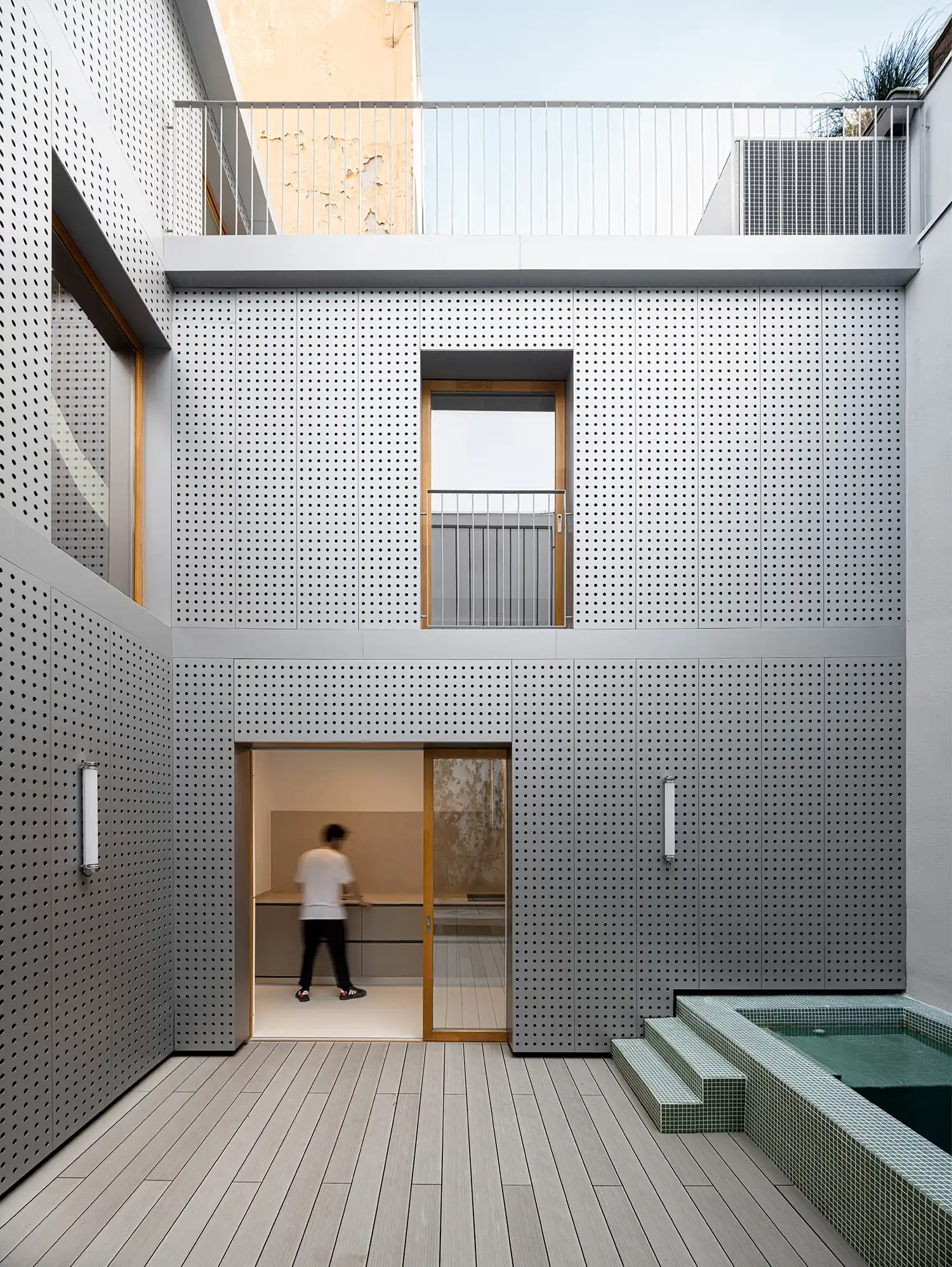
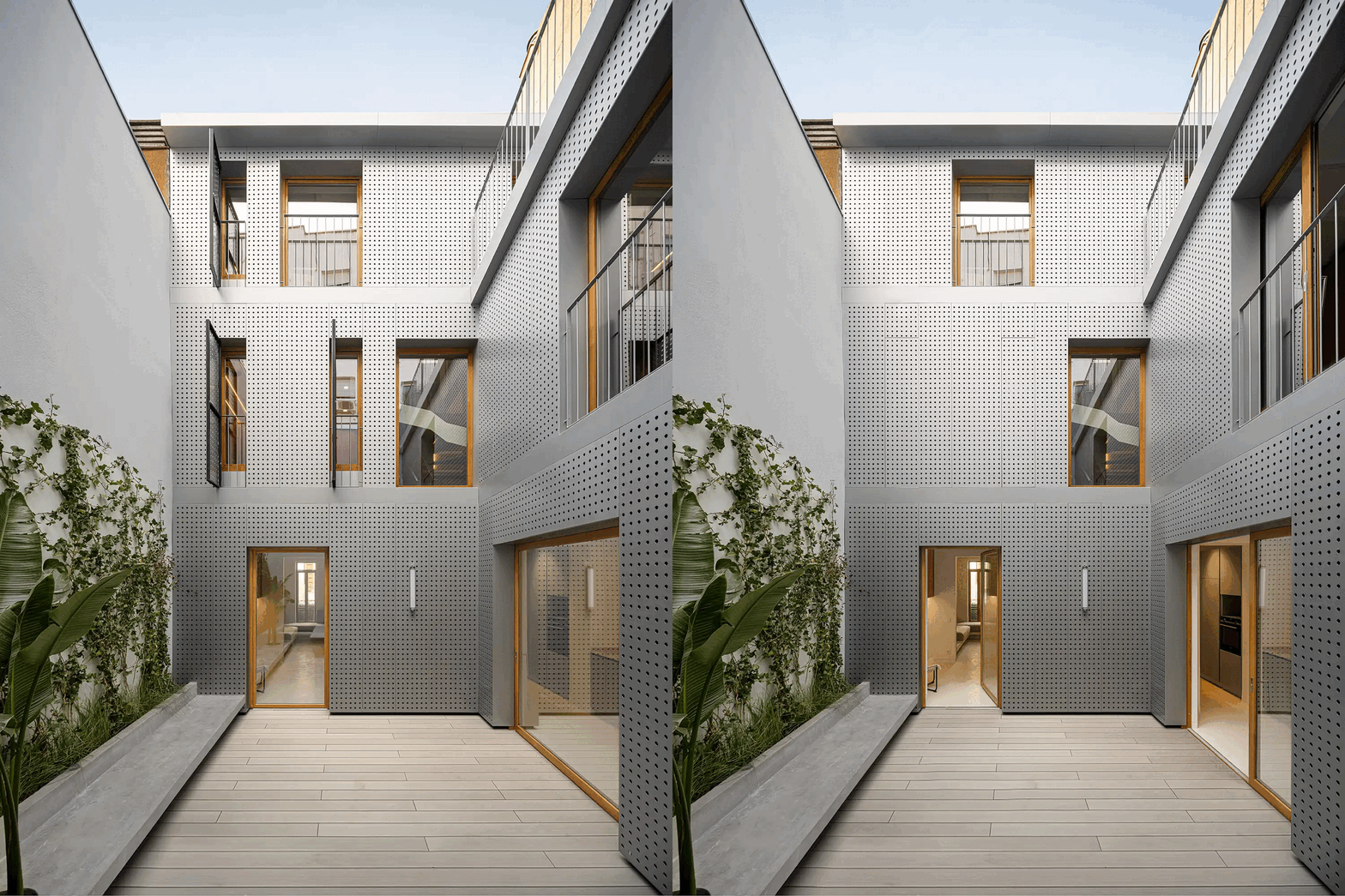
A striking feature of the project is the clear dialogue it establishes between old and new, most visibly expressed in its two contrasting facades. The street-facing elevation was treated with a classical restoration approach, involving meticulously drawn templates, manual woodwork, and the recovery of traditional crafts—a slow, deliberate process. In stark contrast, the rear facade was completely reimagined. Here, large openings were introduced and clad in a skin of recycled aluminium, which is perforated and cut to frame new windows. This lightweight, industrial system allows for easy installation and future adaptability, embodying a forward-looking technological innovation.
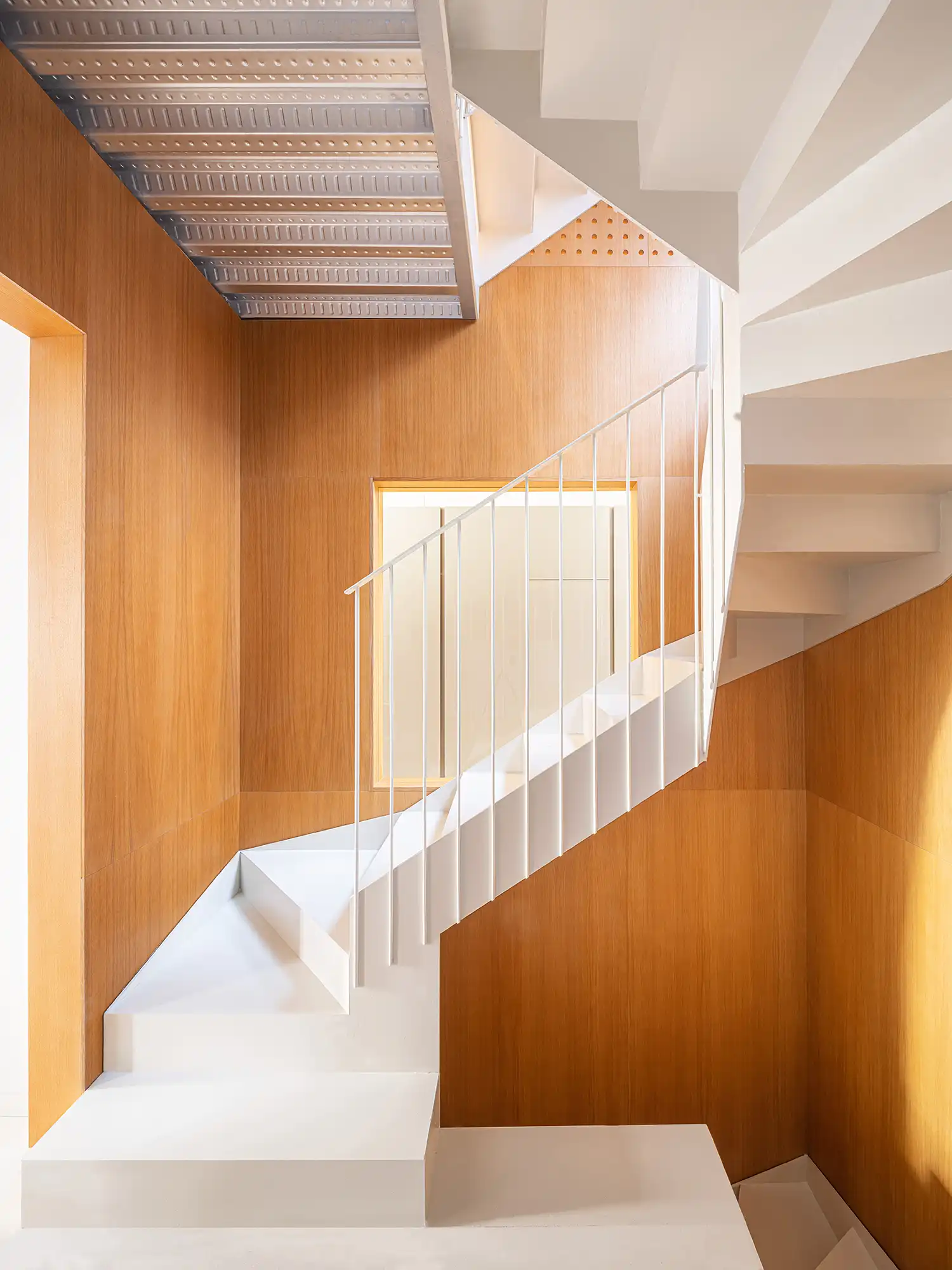
This juxtaposition creates a powerful architectural statement. The house presents “a face with the countenance of another time, concealing behind it a face of the future.” This duality is not just aesthetic but deeply conceptual, contrasting craftsmanship versus technology and tradition versus innovation. It positions Casa Castelar as a building with multiple lives, respectfully acknowledging its past while firmly embracing its present and future function.
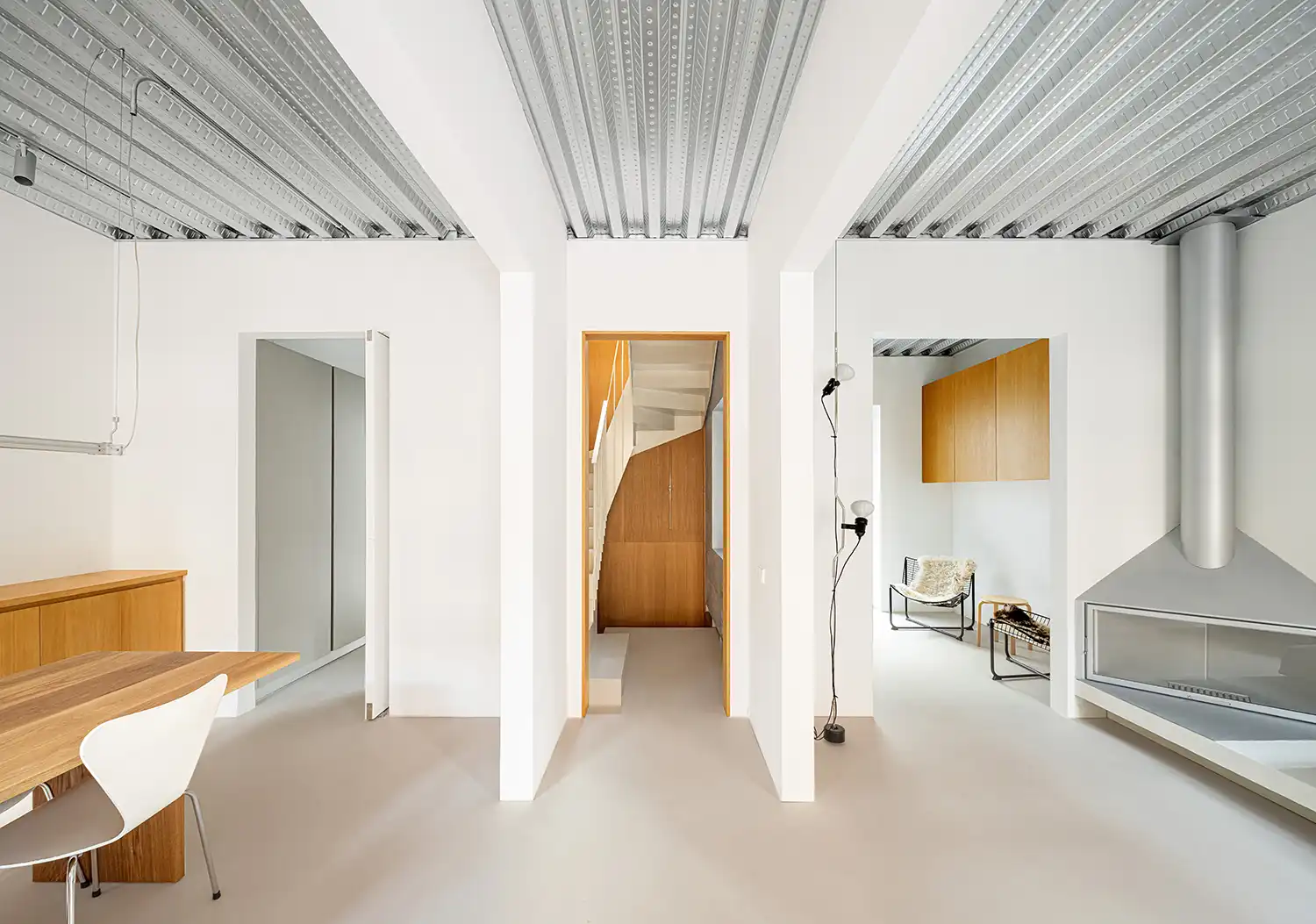
Underpinning the entire project is a strong ecological ethics. The architects posit that existing buildings are valuable repositories of materials, energy, and human effort; their transformation is therefore a responsible ecological act. Beyond the preservation of structural elements, Solar implemented a series of advanced bioclimatic strategies to drastically improve the building’s performance. These include enhanced thermal insulation, high-performance joinery, an aerothermal system for heating and cooling, and the optimization of cross ventilation. The result is a reduction in energy consumption of over 70%, a remarkable figure for a heritage building.
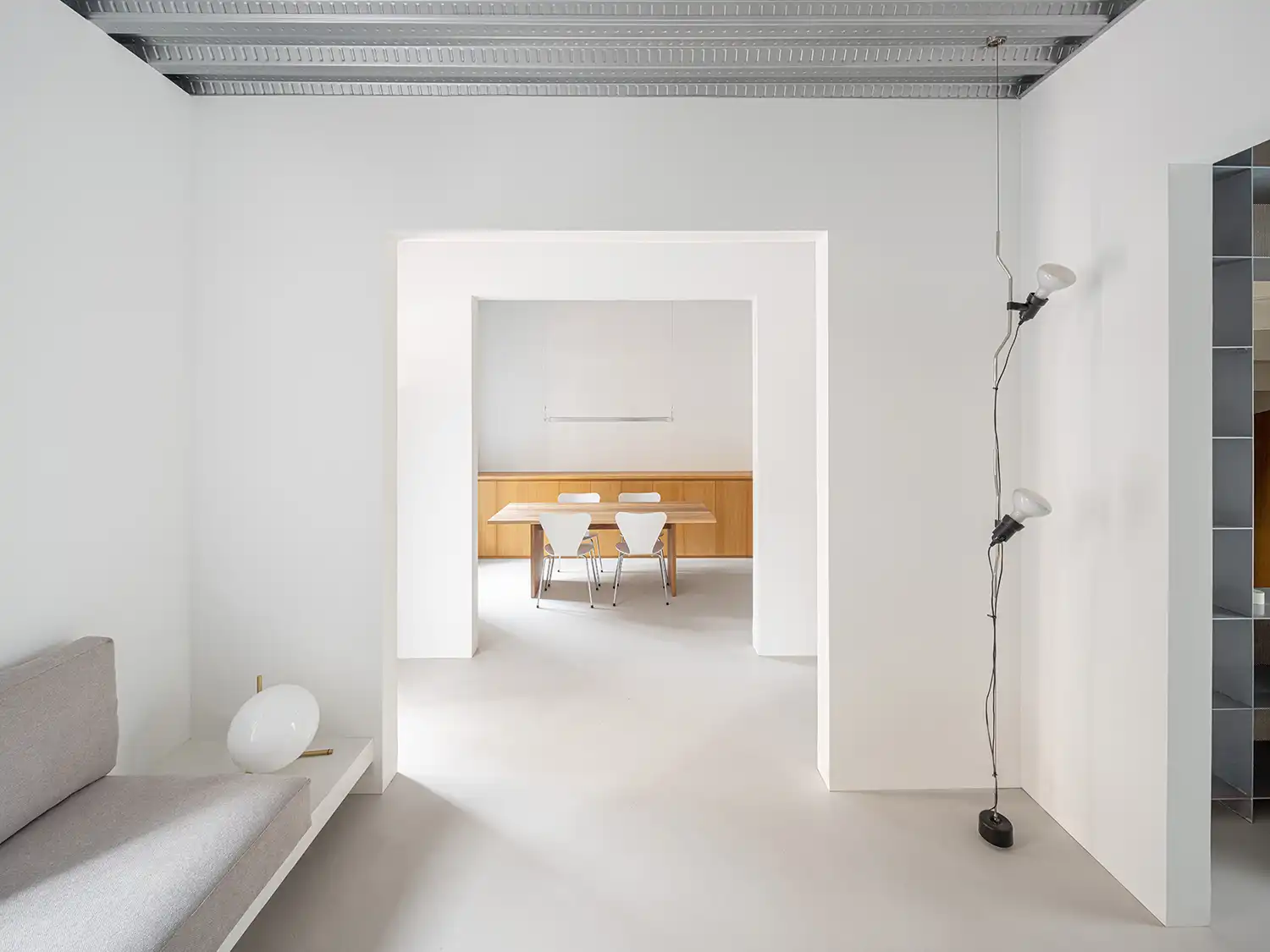
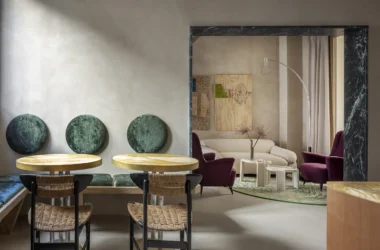
The interior design continues the narrative of fusion, with custom furniture pieces designed by Solar alongside selections from Kala. The lighting, curated by Paralacio, highlights the restored spatial volumes and the new material textures. The resulting atmosphere is one of layered history, where the patina of the original structure converses with crisp, contemporary inserts. The photographic work of Arye Goula expertly captures the play of light and shadow across these material surfaces, emphasising the tactile quality of the architectural transformation.
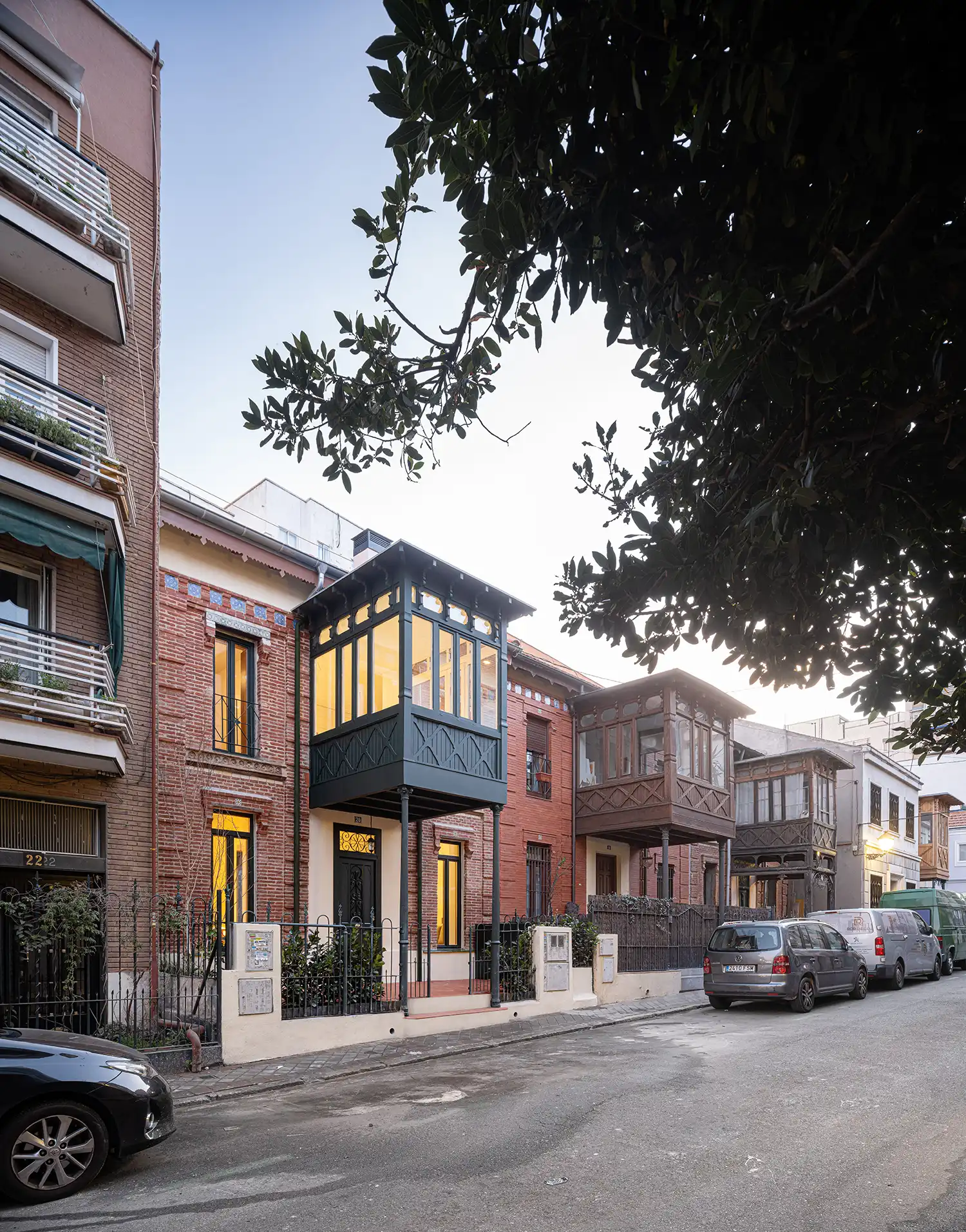
Ultimately, Casa Castelar stands as a compelling model for sustainable architecture in a historic urban context. It moves beyond dogmatic preservation to propose a more dynamic and ecologically conscious relationship with our built heritage. By skilfully blending memory and innovation, Solar has not just saved a house from ruin; they have recharged it with a new life, proving that the most sustainable building is often the one that already exists. The project sets a benchmark for how to enrich the urban fabric of cities like Madrid through intelligent, respectful, and forward-thinking design.