

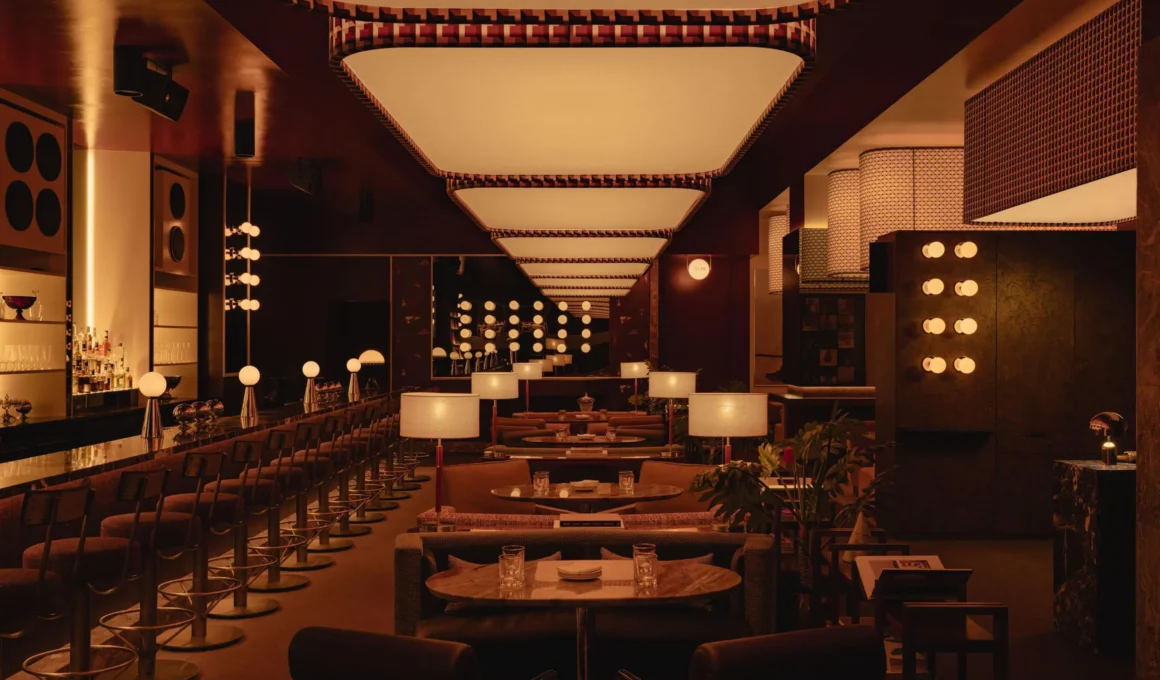
In the evolving urban landscape of Edmonton, Canada, the ground floor of a residential tower has been transformed into a rhythmic sequence of hospitality experiences that feel less like commercial venues and more like a cinematic triptych. Designed by the Vancouver-based practice Ste Marie, the project—commissioned by Chef Daniel Costa of Corso 32 Group—represents a sophisticated departure from the traditional lobby-adjacent restaurant. While the first chapter of this narrative focused on the daytime elegance and slow-tempo Mediterranean warmth of the Olia restaurant interior, its counterpart, Mimi, pushes the story into the nocturnal, offering a high-energy transition that anchors the building’s social life.
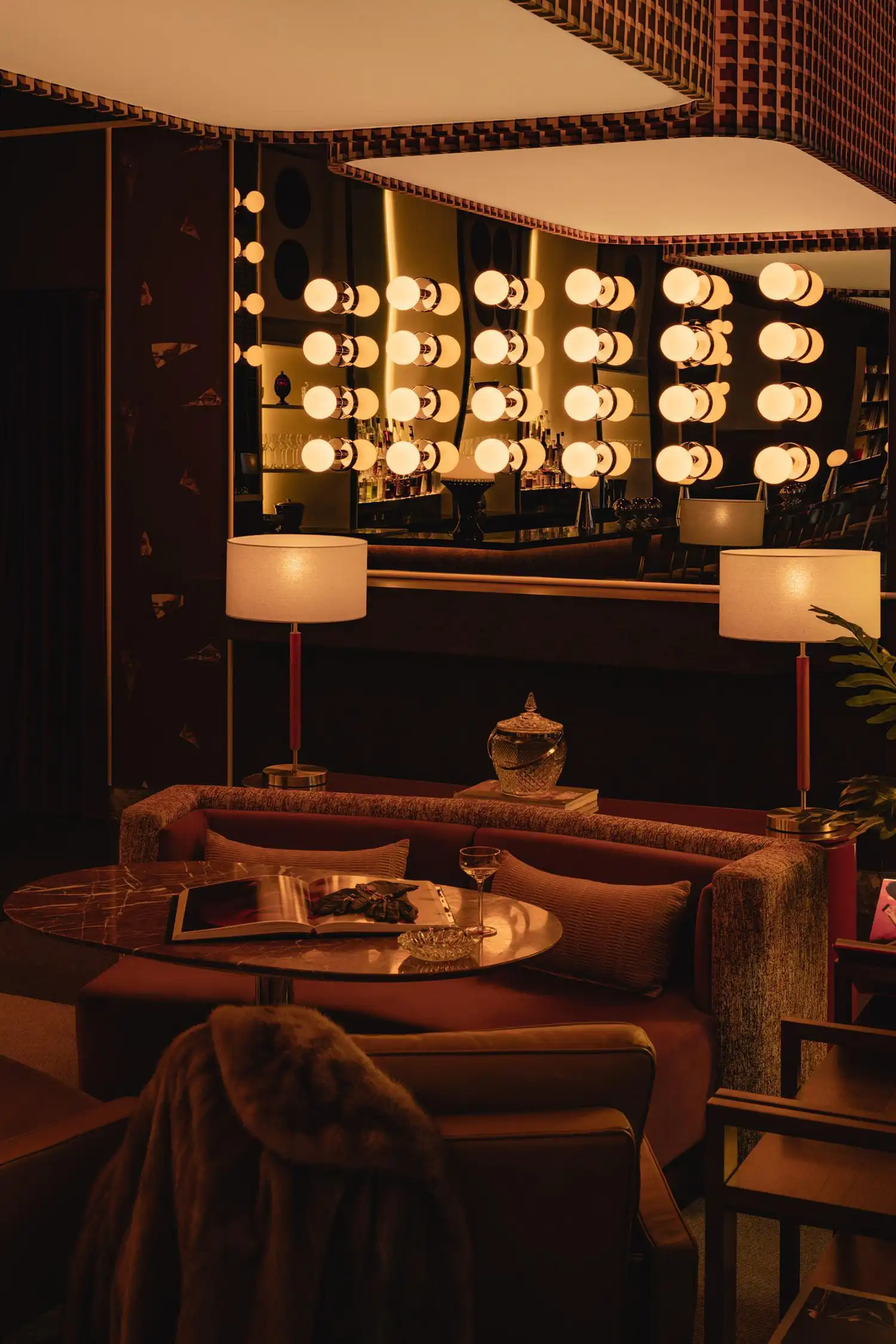
A narrative-driven approach to urban hospitality defines the project, where the studio has choreographed a transition of moods that mirror the passing of the day. Rather than creating a static environment, Ste Marie focused on the concept of “ritual,” allowing the spatial flow to dictate the tempo of human interaction. The layout cleverly manages two distinct lives: a private internal access point for building residents provides a sense of exclusive intimacy, while street-facing entrances invite the public into a shared urban living room. This dual nature turns the base of the tower into a vibrant anchor within Edmonton’s central core, bridging the gap between domestic privacy and civic vibrancy.
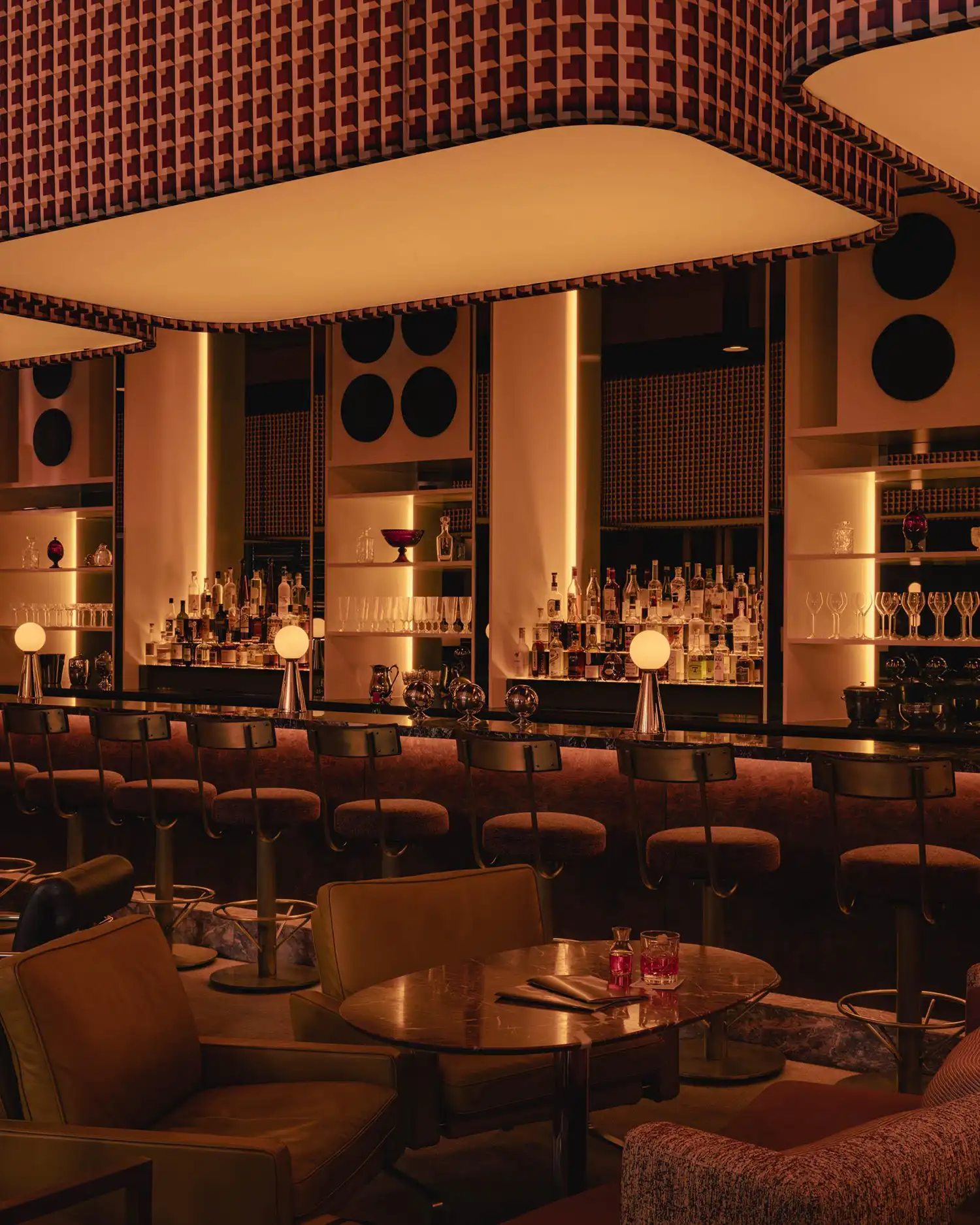
The cinematic allure of Mimi extends the sequence into the later hours with an environment structured around mid-century references and an up-tempo vibe. If Olia is the sun-drenched morning and afternoon, Mimi is the deep, saturated glow of an evening that refuses to end. The palette is a bold departure into richness, combining deep browns, glossy reds, and amber tones. The material selection is particularly striking; Rosso Rubino marble and chrome detailing provide a sharp, polished edge to the space, while monolithic burled walnut panels line the perimeter, grounding the room in a sense of 1960s-inspired glamour.
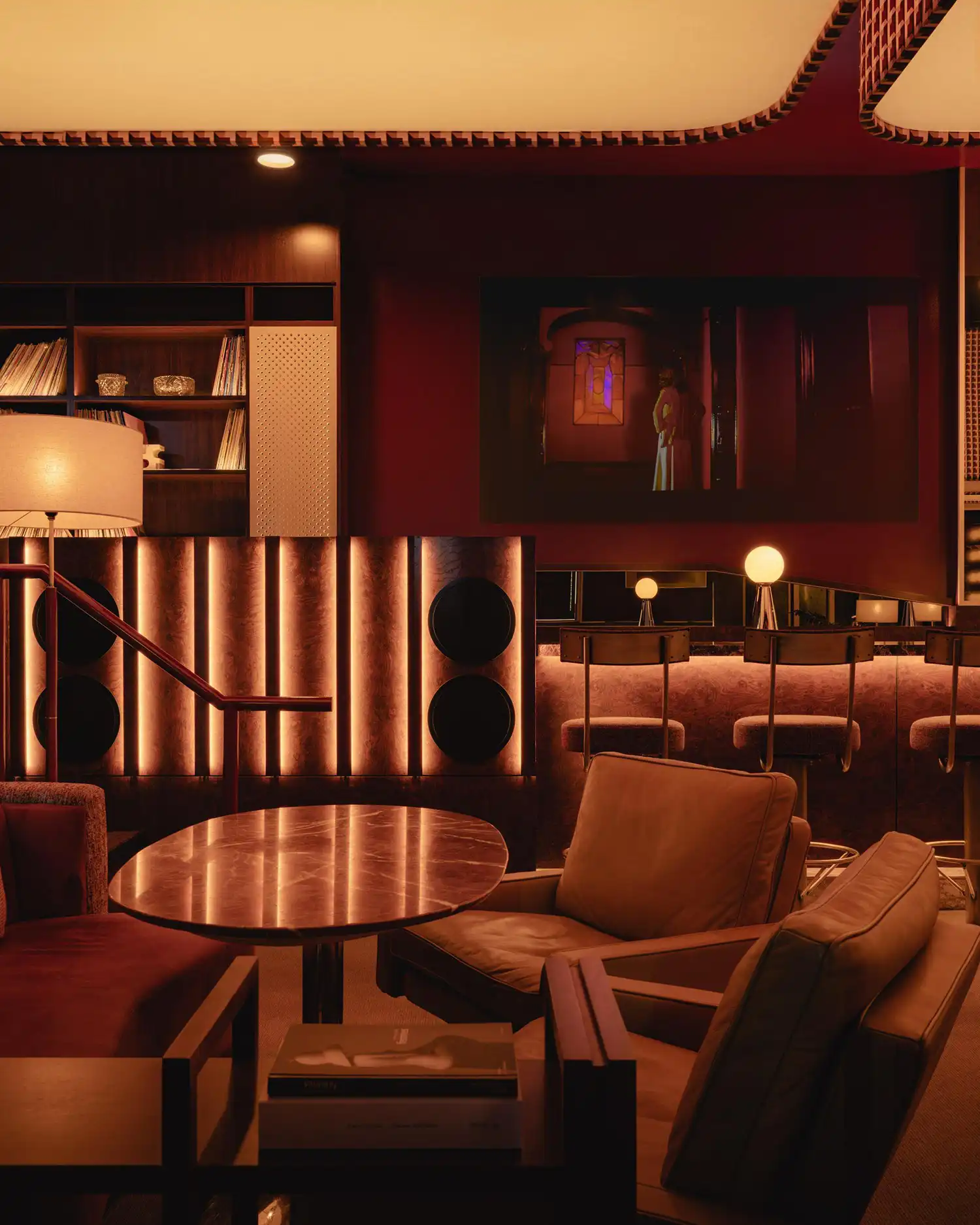
A sensory experience rooted in nostalgia is achieved through the integration of custom furniture that invites a lingering presence. Guests are drawn to custom burnt-orange velvet sofas, reminiscent of iconic sunken lounges, which encourage a relaxed, communal atmosphere. The lighting program, anchored by a repetition of large capsule pendants, produces a consistent, low-level glow that maintains a moody, atmospheric haze. This is a space designed for sound as much as sight; an L-Acoustics system fills the room with a curated soundtrack of vintage soul, jazz, and deep disco, occasionally featuring impromptu sets from Chef Daniel himself, further humanizing the professional hospitality environment.
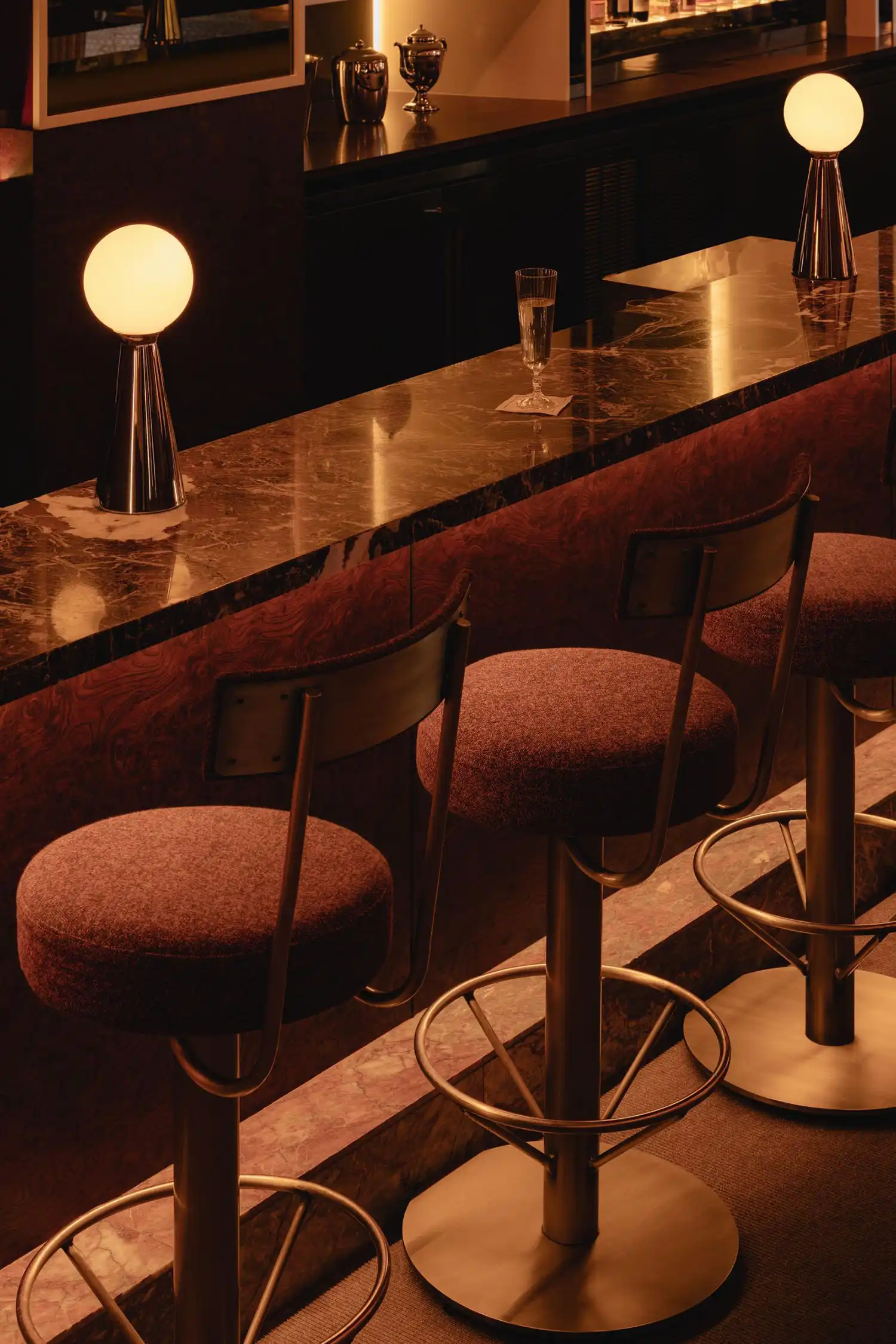
The seamless interrelation between spaces allows the project to operate as a fluid progression rather than a series of fixed destinations. While Mimi functions as a lounge, informal performance setting, and after-hours bar within a single footprint, it remains aesthetically and conceptually tethered to the broader project. The transition from the “slow tempo” of the dining areas to the “fast tempo” of the cocktail lounge is handled with surgical precision, ensuring that the residents and visitors can drift between moods without the jarring sensation of leaving one world for another. It is a dialogue between materials—where the walnut of the afternoon meets the velvet of the night.
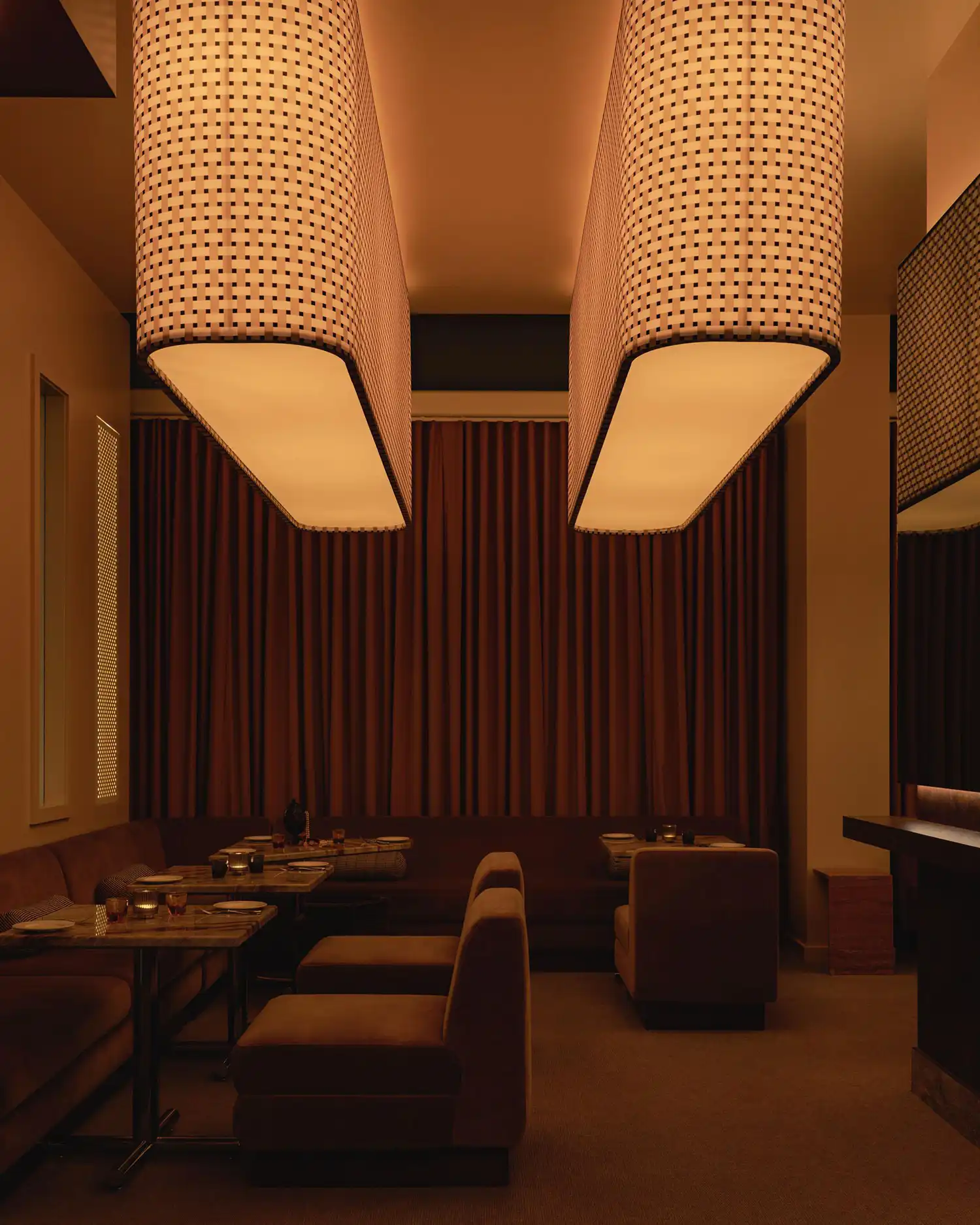
An enduring contribution to the streetscape, Mimi succeeds by treating hospitality as a living extension of the home. By prioritizing movement and mood over rigid programming, Ste Marie has crafted a venue that responds to the natural habits of the city’s inhabitants. From the first sip of a cocktail under the canopy of warm light to the final rhythm of the night, the project serves as a sophisticated template for how high-density residential architecture can foster a genuine sense of community. The result is a room that feels lived-in yet curated, folding the rituals of nightlife into the broader heartbeat of the city.