


In the sun-baked heart of Puglia’s countryside, near the coastal gem of Polignano a Mare, centuries-old olive trees stand sentinel around Masseria Torre. This rare, stratified example of Puglia rural architecture emerges from the terraced landscape overlooking a dramatic karst ravine. Once known as Masseria Cannone-Baldassarre, its recent respectful restoration by Flore & Venezia architects is a masterclass in listening to history while accommodating contemporary life.
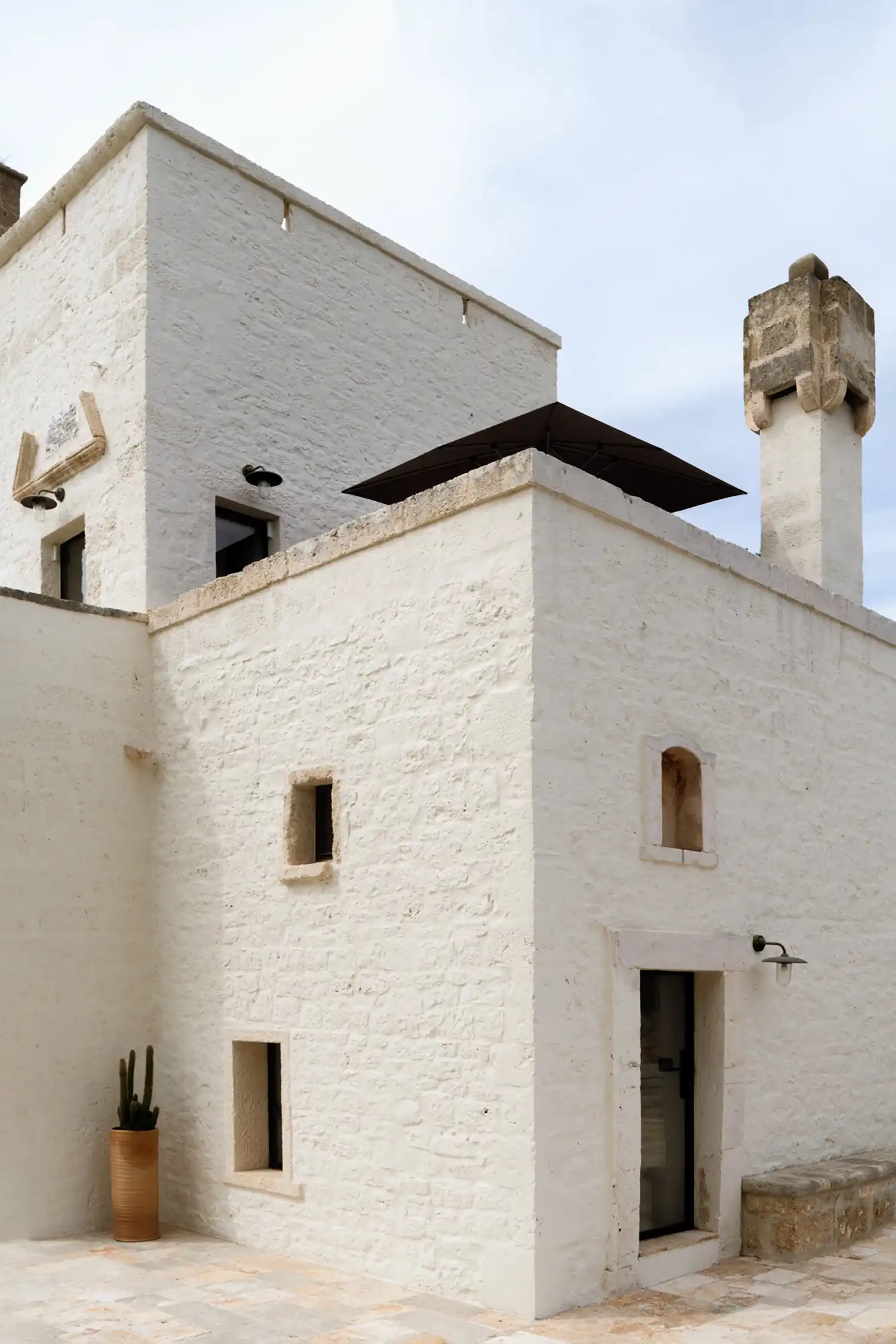
The masseria’s origins revolve around a defensive 17th-century tower. Its main structure, built entirely in local stone, unfolds over two levels, accessed through a grand arched portal leading to a central courtyard – a hallmark of the region’s defensive and productive heritage. Inside, vaulted interiors (both pavilion and barrel) speak of its age, contrasting with later additions featuring flat ceilings. The surrounding land, now lush with Mediterranean scrub, is dotted with silent monuments to its past life: a gabled bell tower, a substantial chimney, a small chapel, and remnants of ovens, cisterns, and threshing floors.
History is literally etched into the stone. The main façade bears a proud 1808 Latin inscription declaring Nicola Canisone’s establishment of the estate “with money earned by his own labor.” In stark, pragmatic contrast, the attached chapel warns in Italian: “No asylum is granted here.” These epigraphic fragments offer profound glimpses into a complex past where spirituality, toil, land ownership, and law intertwined.
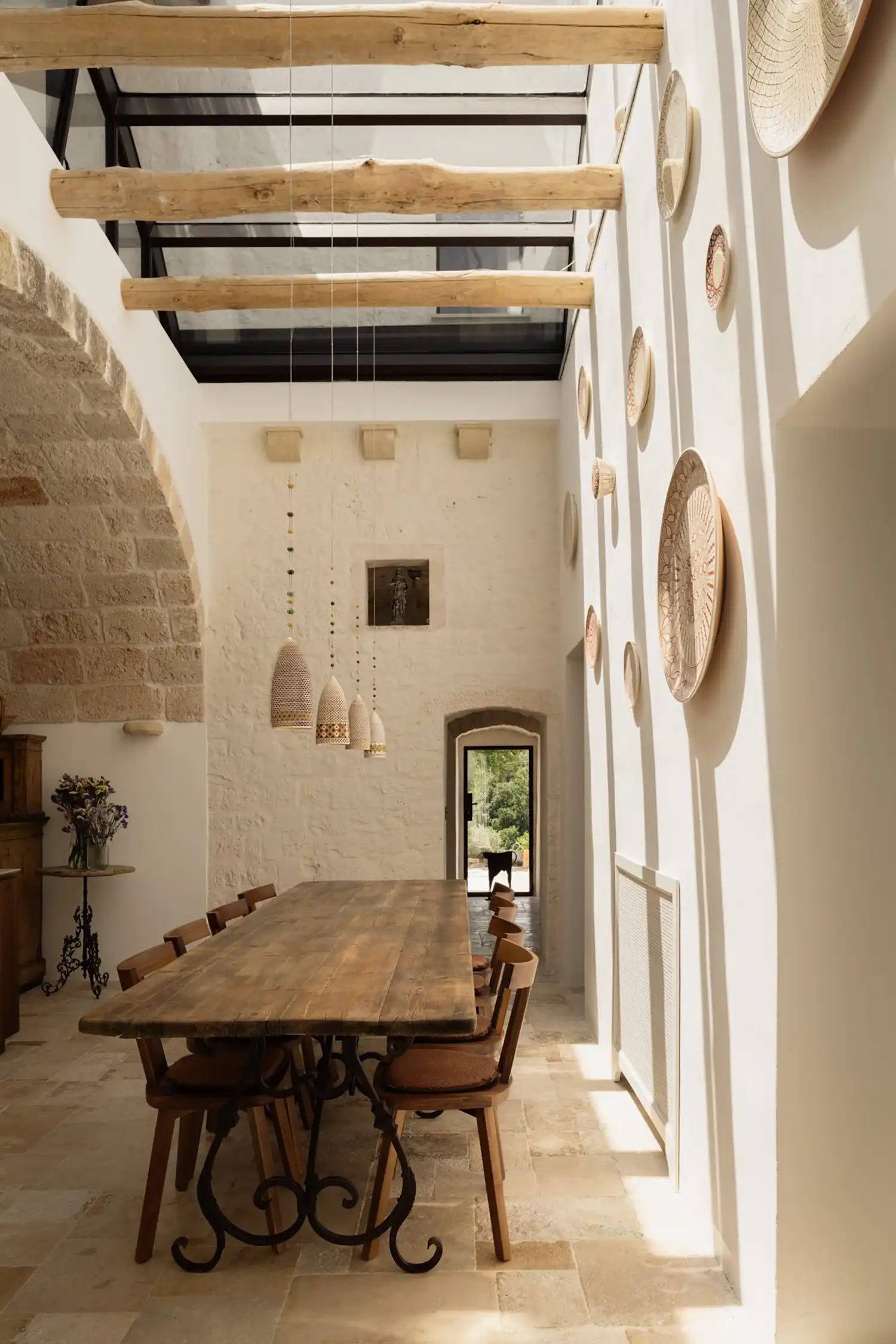
Flore & Venezia architects approached this historical preservation project with deep reverence. Their intervention sought not to overwrite, but to re-establish a dialogue. The core aim was preserving the material and typological identity of the masseria. Every material employed honours tradition: lime-based plasters, limewash paint, local stone, wood, and iron. The focus was on reconfiguring interior spaces to translate the building’s original residential purpose for modern needs, enhancing existing typologies without imposing a new hierarchy. The subtle interplay of material, light, and functionguides the experience.
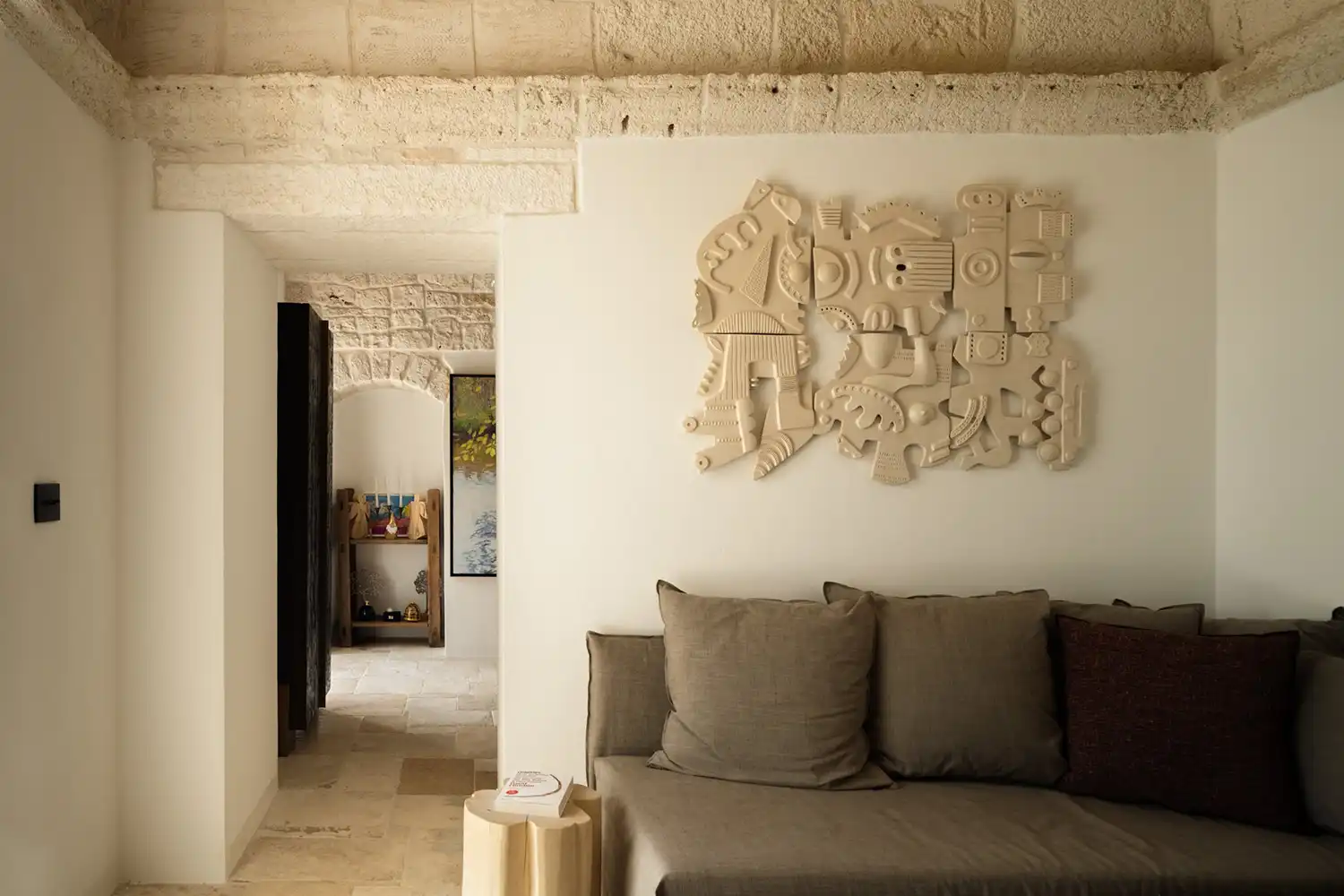
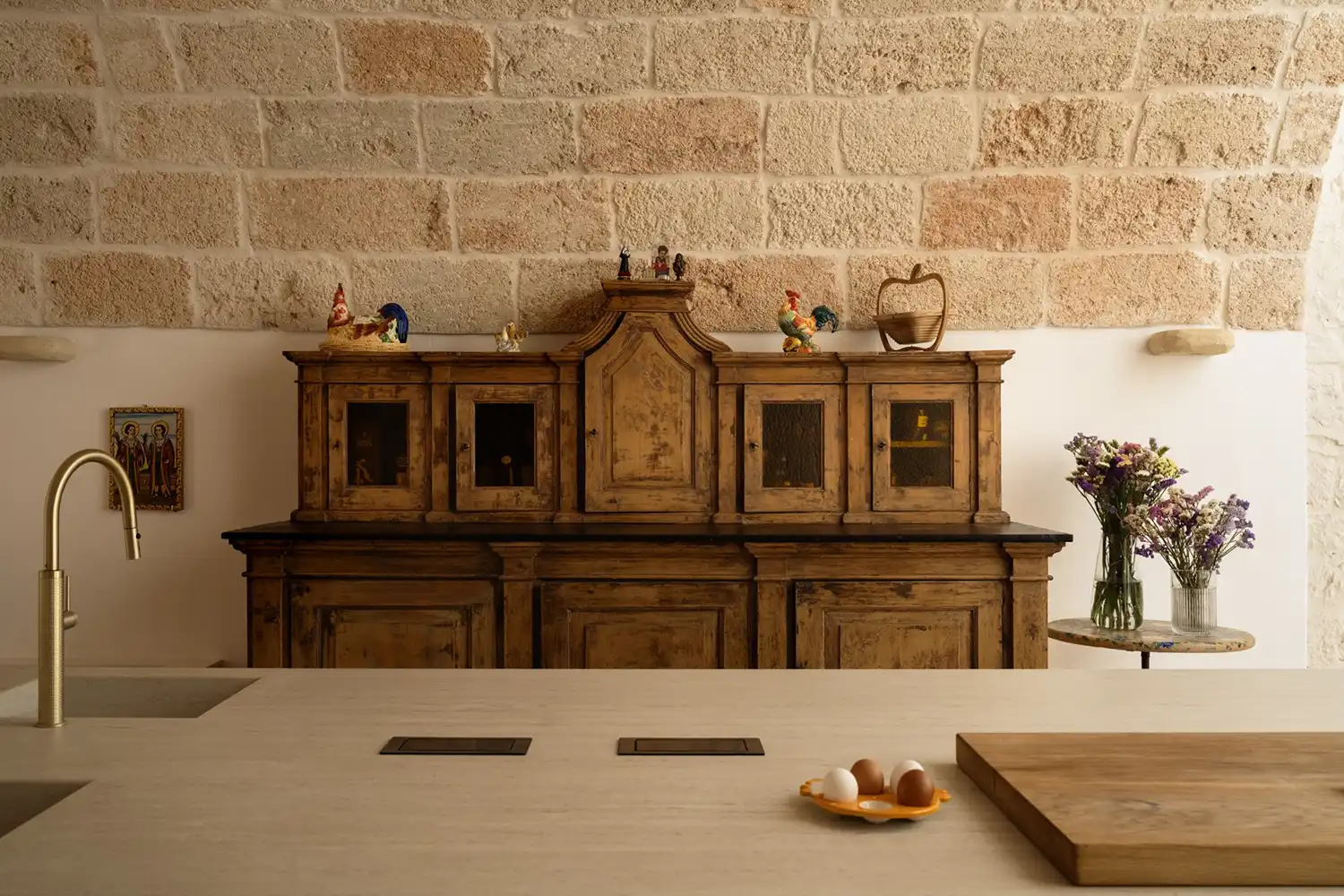
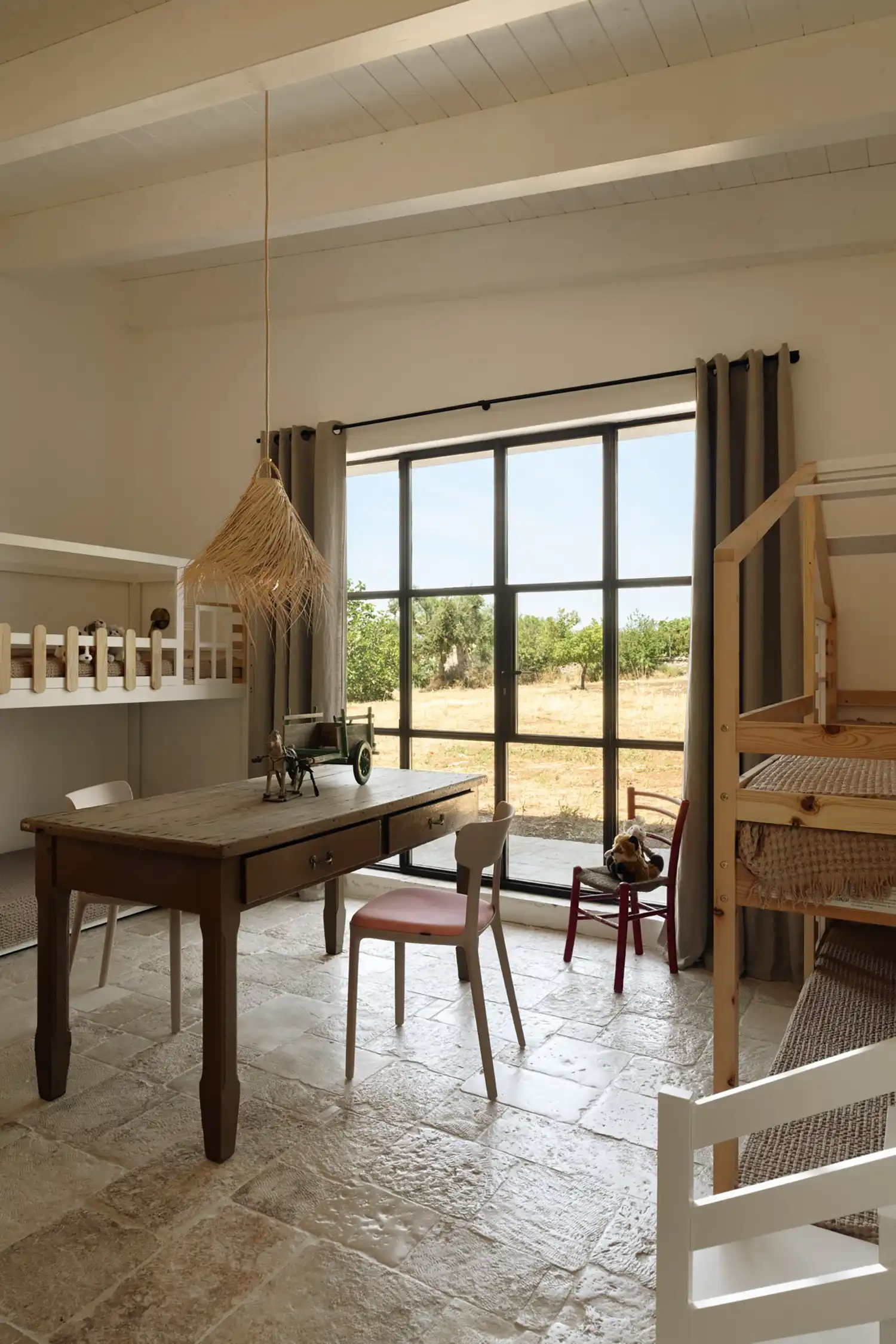
The ground floor adheres closely to the original organization around the central courtyard. It discreetly houses three bedrooms, a fireplace living room, a dining-living area beneath an arched vault, and an island kitchen. Material choices act as thoughtful continuations of memory: glossy black Etruscan terracotta in a guest bathroom, wood paneling with concealed doors along corridors.
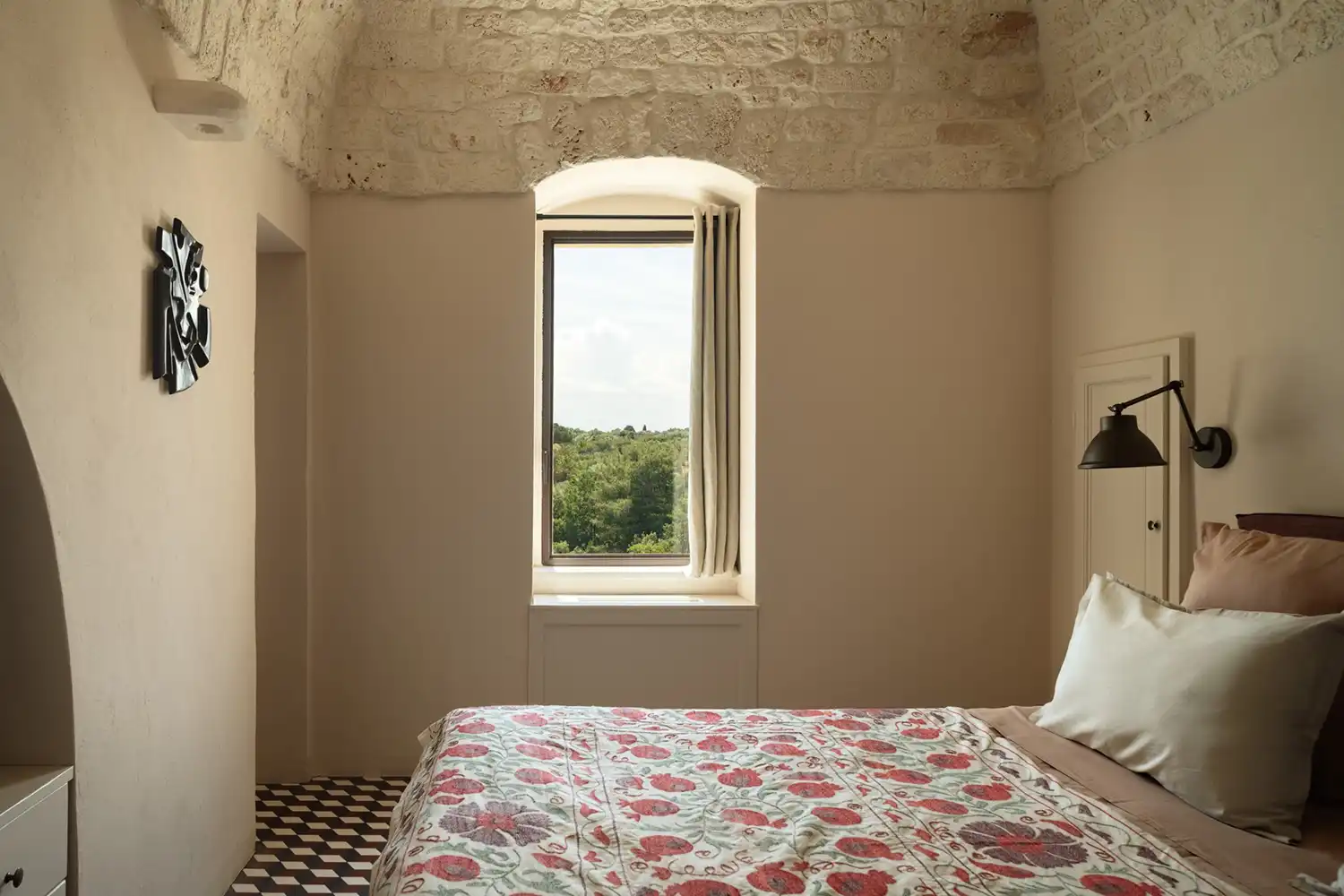
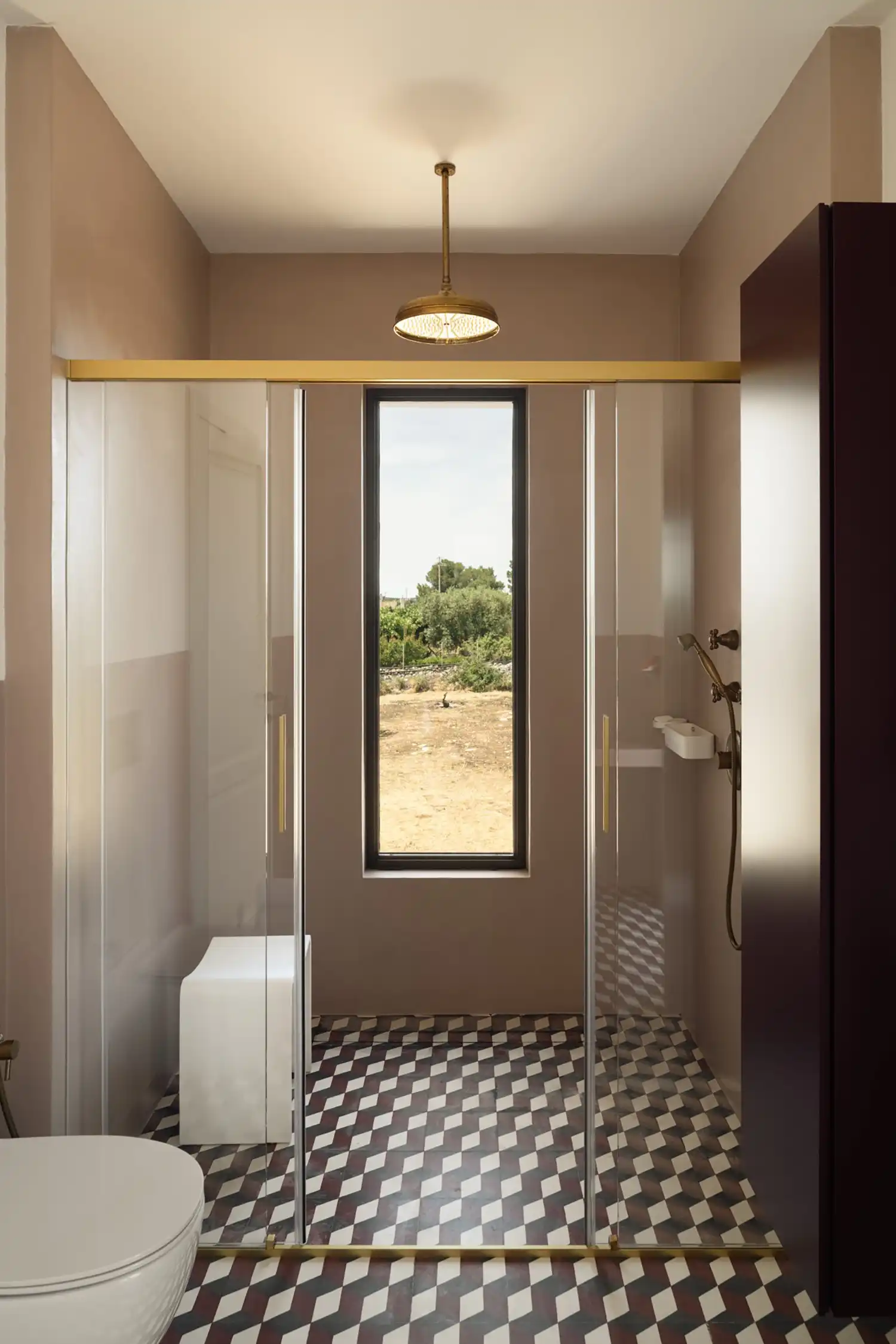
Upstairs, a space once used for storage or formal functions transforms into a serene master suite. A study, walk-in closet, and bedroom featuring geometrically patterned cement tile flooring create a private retreat respecting the room’s original spirit. The suite’s bathroom opens onto a small terrace, framing countryside views and creating a deliberate visual pause between architecture and landscape.
The small chapel restoration was equally precise: reconstructing floors, consolidating the roof, restoring interior surfaces, and crucially, reopening the original passage to the rear land. This act reestablished both the symbolic and physical connection between the chapel and the earth it once governed.
The result is profound. Masseria Torre is more than a meticulously restored dwelling; it’s a built meditation on time, a testament to the delicate balance between permanence and transformation. Flore & Venezia’s work imposes no brash contemporary vision. Instead, it allows the ancient local stoneto breathe, the material to speak. It is a silent, deeply thoughtful architectural gesture that returns to Puglia a vital piece of its layered history, rendered once again as a livable, poetic, and undeniably contemporary place.