





The intersection of horology and fine art has long been a fertile ground for experimentation, but the latest chapter of the Swatch Art Journey feels particularly resonant. By bridging the gap between the Solomon R. Guggenheim Museum in New York and the Peggy Guggenheim Collection in Venice, Swatch has curated a wearable retrospective that transcends mere commercial collaboration. This collection isn’t just about miniaturizing canvases; it is a structural reimagining of how 20th-century masterpieces can inhabit the intimate, kinetic space of the human wrist. The partnership, which dates back to the early 1990s, continues to democratize high culture, transforming the elitist “white cube” experience into a tactile, everyday encounter.
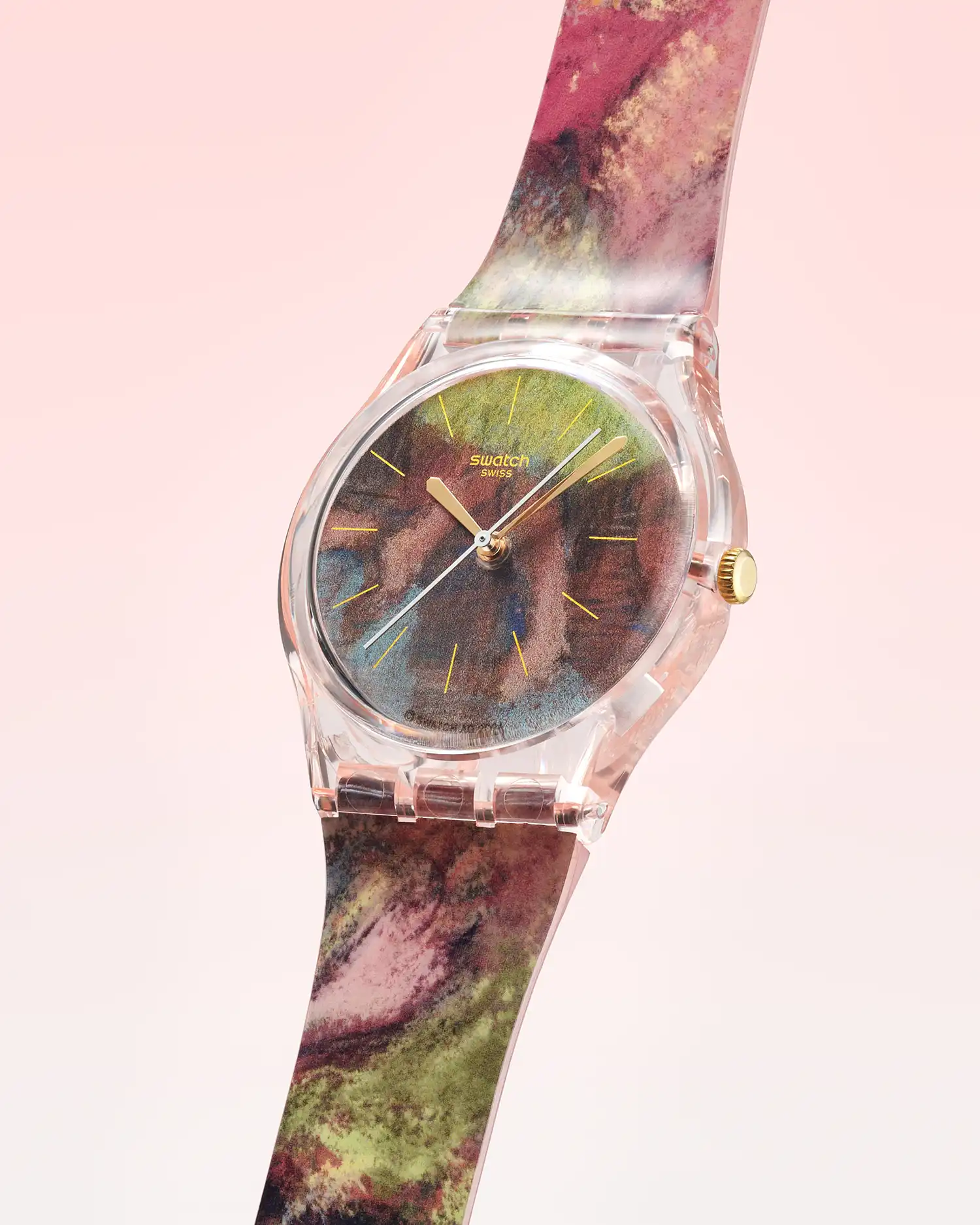
The sensory narrative begins with Edgar Degas, whose Dancers in Green and Yellow (1903) is deconstructed to emphasize the “grace and resilience” of the ballerina. Rather than a literal reproduction, the DEGAS’S DANCERStimepiece utilizes a dramatic, cinematic cropping—a hallmark of Degas’ own revolutionary composition. The dial focuses intensely on the ballerina’s feet, while the straps ripple with the texture of billowing tulle tutus. To wear it is to feel the phantom movement of the stage; the sun-washed yellows and vibrant greens evoke the hazy, gas-lit atmosphere of a Parisian theater. This model, entry-point to the collection, is available for CHF 90.00 (approx. $105 / €95).

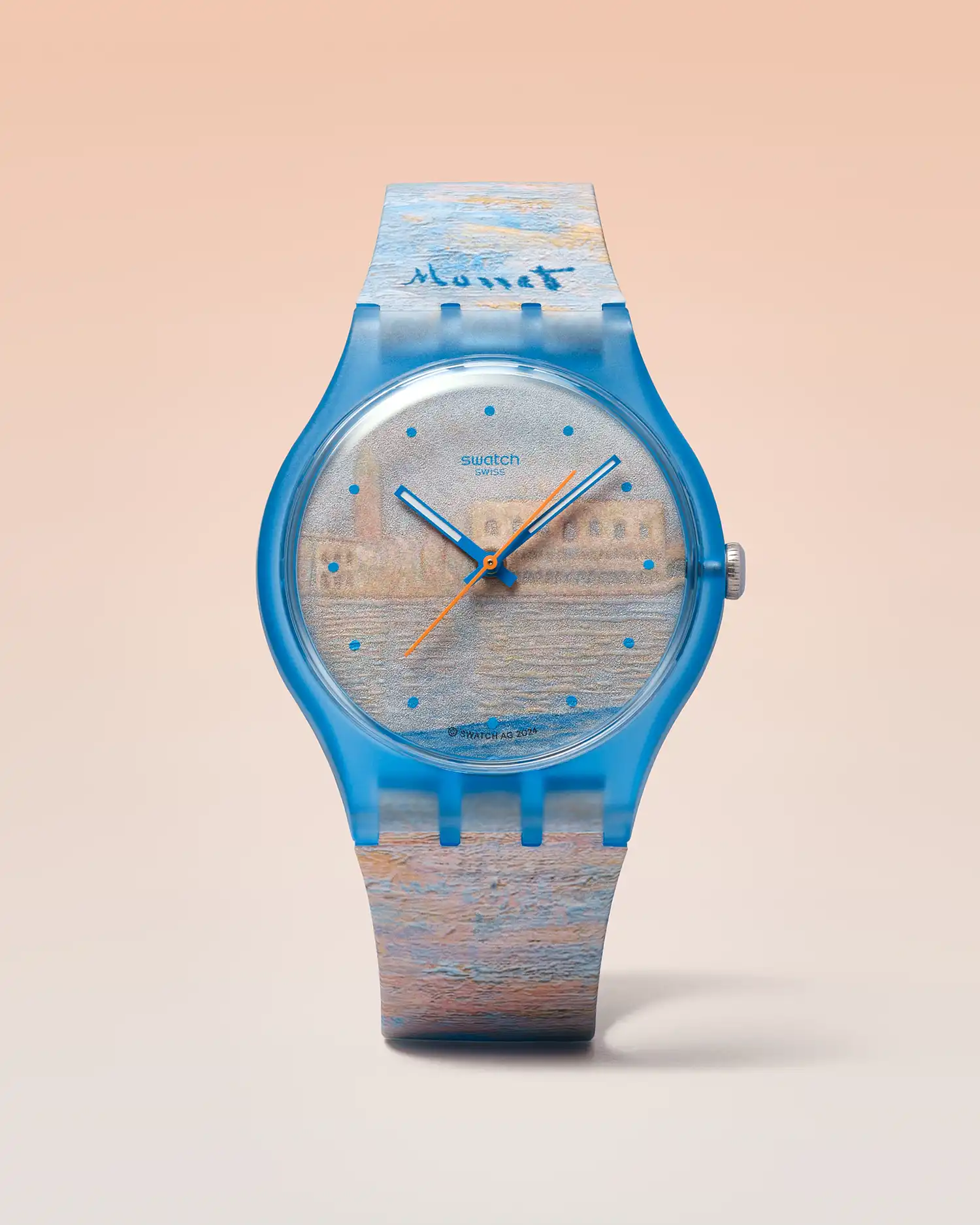
Transitioning from the stage to the Venetian lagoon, the collection moves toward the atmospheric brilliance of Impressionism. MONET’S PALAZZO DUCALE captures the Doge’s Palace as seen through Claude Monet’s 1908 lens, subtly linking the two Guggenheim geographical pillars. The technical execution here is particularly clever: the dial mirrors the light-filled brushstrokes of the master, while the straps replicate the ever-shifting reflections of the water. In a surprising nod to contemporary utility, the version equipped with SwatchPAY! technology is priced at CHF 110.00(approx. $125 / €115), while the standard reference retails for CHF 100.00 (approx. $115 / €105). Both feature a UV-reactive dial that glows a radiant orange, mimicking the warm, golden hour glow that often immortalized Venice as a “regal woman” in classical art.
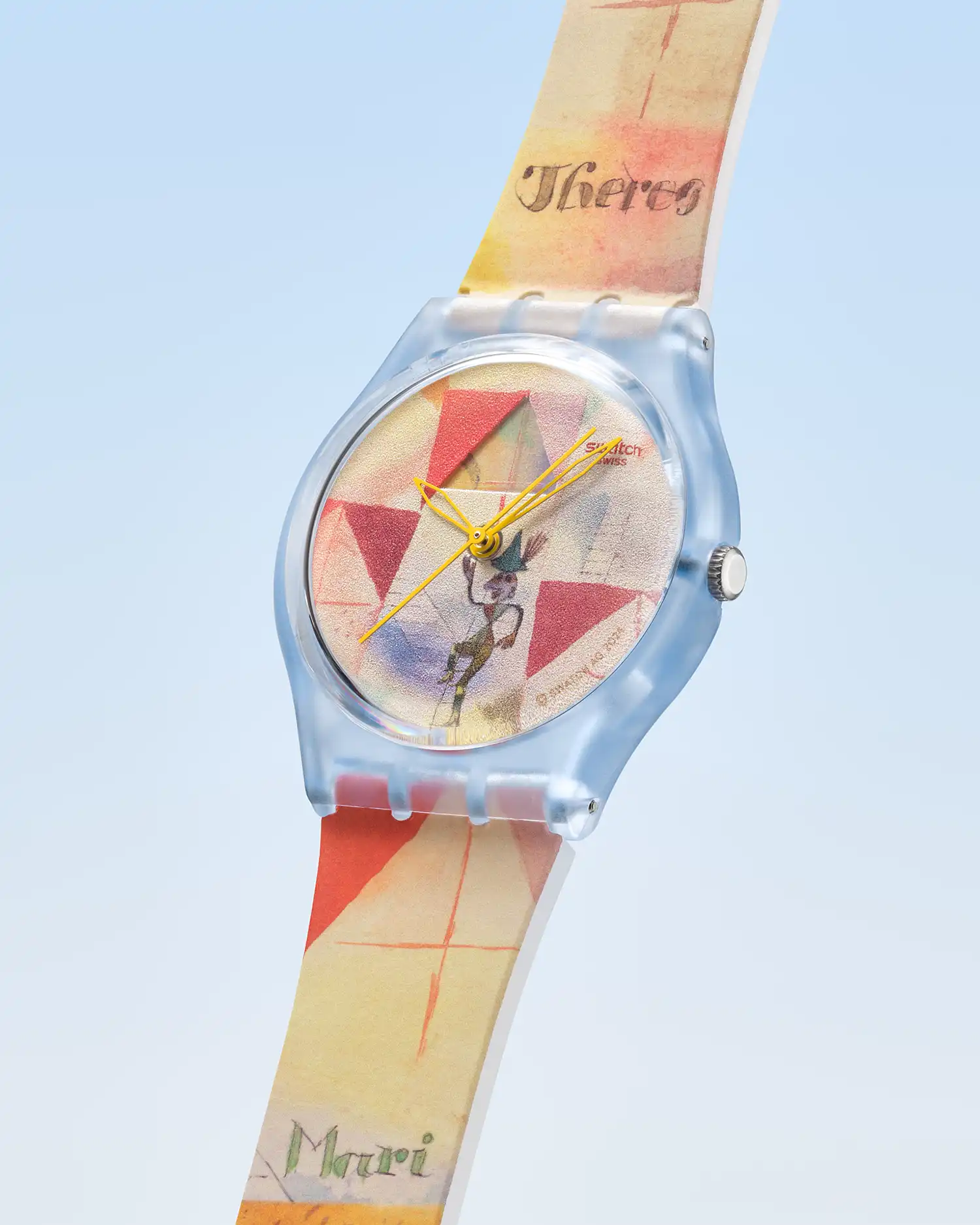
Geometry and symbolism take center stage in the tribute to Paul Klee. KLEE’S BAVARIAN DON GIOVANNI(1919) is a whimsical exploration of the artist’s own persona, featuring a figure ascending a ladder amidst a constellation of women’s names. Swatch translates this playful narrative through a special calendar wheel that shifts colors daily—a direct mechanical allusion to Klee’s self-professed “changing infatuations.” Priced at CHF 90.00 (approx. $105 / €95), this timepiece functions less like a clock and more like a revolving stage, where the bold lines and primary tones of the Bauhaus era provide a sharp, intellectual contrast to the more fluid Impressionist pieces in the series.
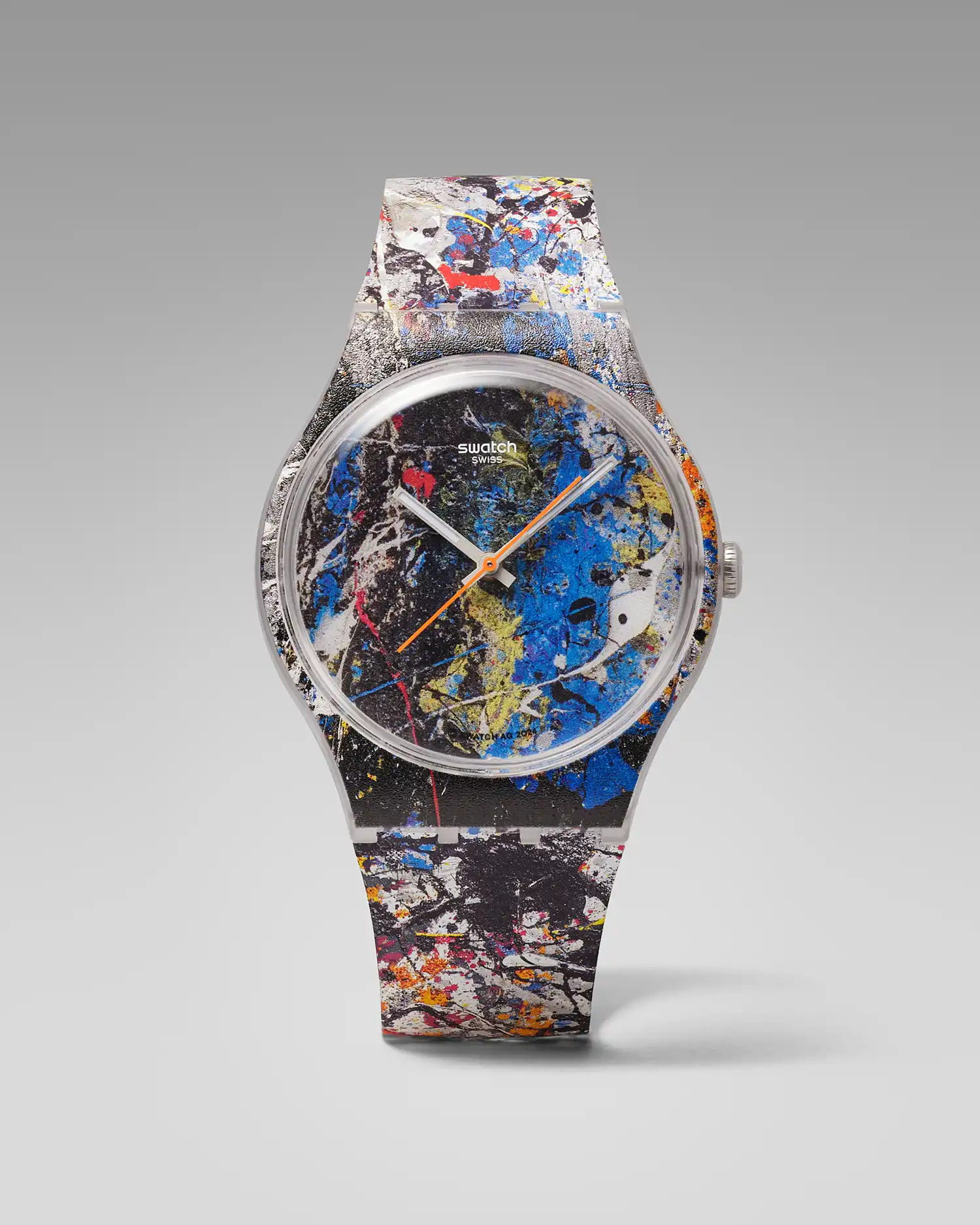
The raw energy of American Abstract Expressionism finds its pulse in Jackson Pollock’s Alchemy (1947). This watch is a triumph of texture; the “drip and splash” technique that defined Pollock’s career is rendered across the dial and strap with a chaotic precision that honors the original unstretched canvas housed in the Peggy Guggenheim Collection. It represents a significant shift in the collection’s aesthetic—from the figurative to the visceral. This spirit of disruptive innovation is a core tenet for the brand, reminiscent of how the MoonSwatch collection redefined the “bioceramic” category by merging luxury heritage with accessible Swiss engineering. Just as that previous milestone challenged the traditional boundaries of the luxury watch industry, POLLOCK’S ALCHEMY—available for CHF 100.00 (approx. $115 / €105)—challenges the wearer to find order within the beautiful friction of abstract forms.
Integrating these masterpieces into the daily rhythm of life is the goal of the Swatch x Guggenheim partnership. Beyond the aesthetic appeal, a portion of the proceeds supports the conservation of the Guggenheim Foundation’s permanent collection, ensuring these “priceless works” survive into the next century. Each watch features a unique double-length second hand, a playful design signature that visually ties the collection together across its transatlantic journey. By shifting these works from the silent halls of Manhattan and Dorsoduro to the active pulse of the city, Swatch ensures that art remains a living, breathing component of our shared modern landscape.