


The climate crisis is no longer a distant theoretical threat for Lower Manhattan; it is the definitive catalyst for a new era of civic architecture. As New York City grapples with the escalating reality of sea level rise, the South Battery Park City Resiliency Project emerges not merely as a defensive shield, but as a profound reimagining of how urban landscapes can pivot from vulnerability to vitality. At the heart of this transformation lies the redesign of Robert F. Wagner Jr. Park, where Thomas Phifer and Partners have choreographed a delicate balance between rigorous engineering and a deeply felt, sensory connection to the New York Harbor.
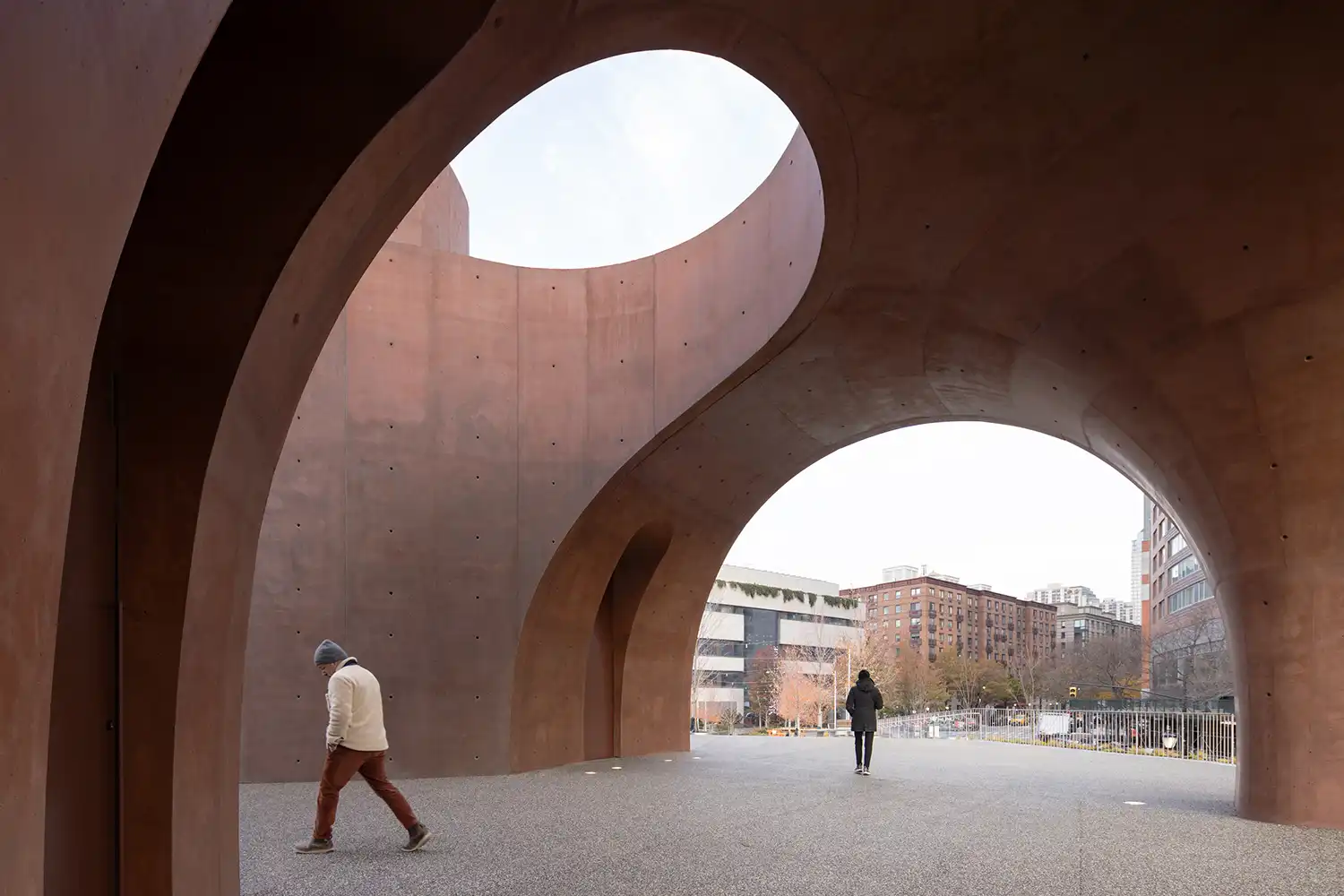
A visionary elevation of the public realm serves as the project’s primary thesis. To address the projected 100-year storm of 2050, the park has been physically lifted approximately 10 feet above its original grade. Yet, this necessary topographical shift is handled with a poetic lightness. By concealing a complex network of flood risk reduction infrastructure beneath the elevated lawns and gardens, the design preserves the site’s historic visual axis. The iconic sightlines toward the Statue of Liberty and Ellis Island are not only maintained but framed with a newfound intentionality, ensuring that the park’s primary “program”—the contemplation of the horizon—remains uninterrupted by the mechanics of protection.

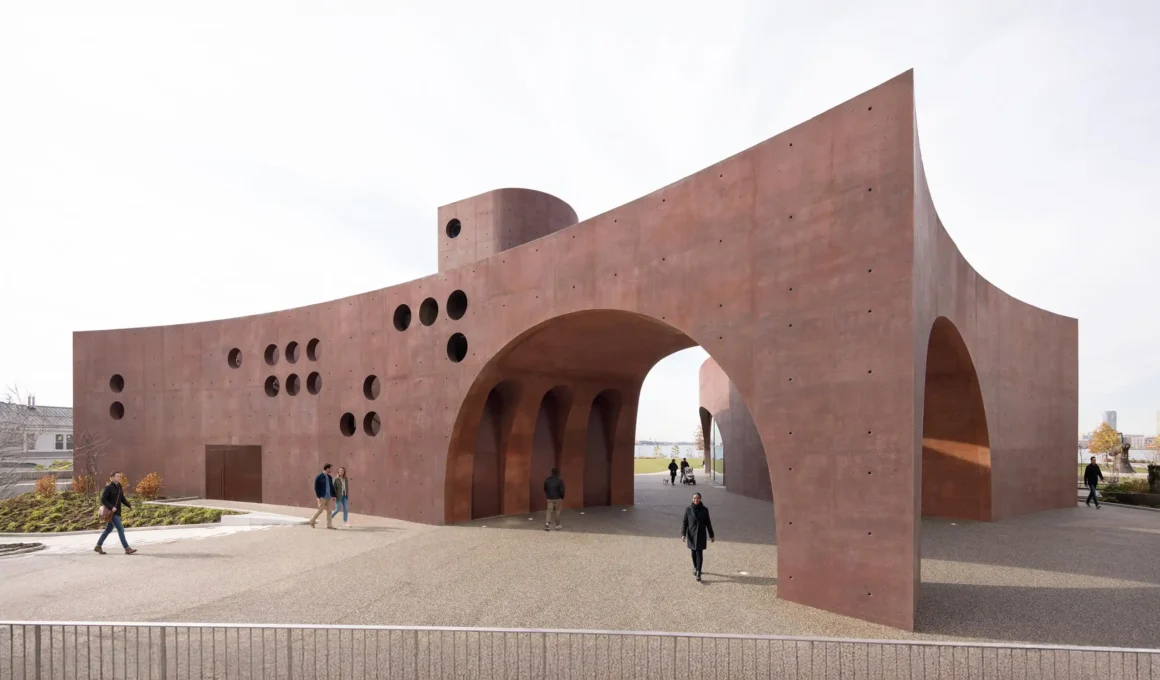
The architectural soul of the site is found within the new Wagner Pavilion, a structure that feels less like a building and more like an extension of the earth itself. Its geometry, defined by softly curving walls and deep, warm red concrete, establishes a dialogue with the historic masonry of Castle Clinton and Fort Wadsworth. Passing through the pavilion’s arched vaults is a visceral experience; the enclosure of the “gateway” gives way to the expansive scale of the water, a transition that celebrates the harbor’s presence. This sense of rhythmic, sculptural permanence echoes the monolithic public pavilions in Guiyang, where architecture acts as a static anchor within a shifting landscape.

Technical resilience meets ecological stewardship through a sophisticated dual-sided stormwater strategy. The park distinguishes between “wet” and “dry” zones, utilizing a subterranean infiltration gallery and a water reuse cistern to treat runoff for non-potable irrigation. This commitment to a circular resource loop is matched by the project’s carbon goals, as the pavilion pursues ILFI Zero Carbon Certification. Much like the resourceful use of oyster shells in Sydney to create a pavilion that breathes with its maritime context, Wagner Park utilizes high-albedo materials and salvaged stone to mitigate the urban heat island effect while grounding the design in its specific Atlantic ecology.
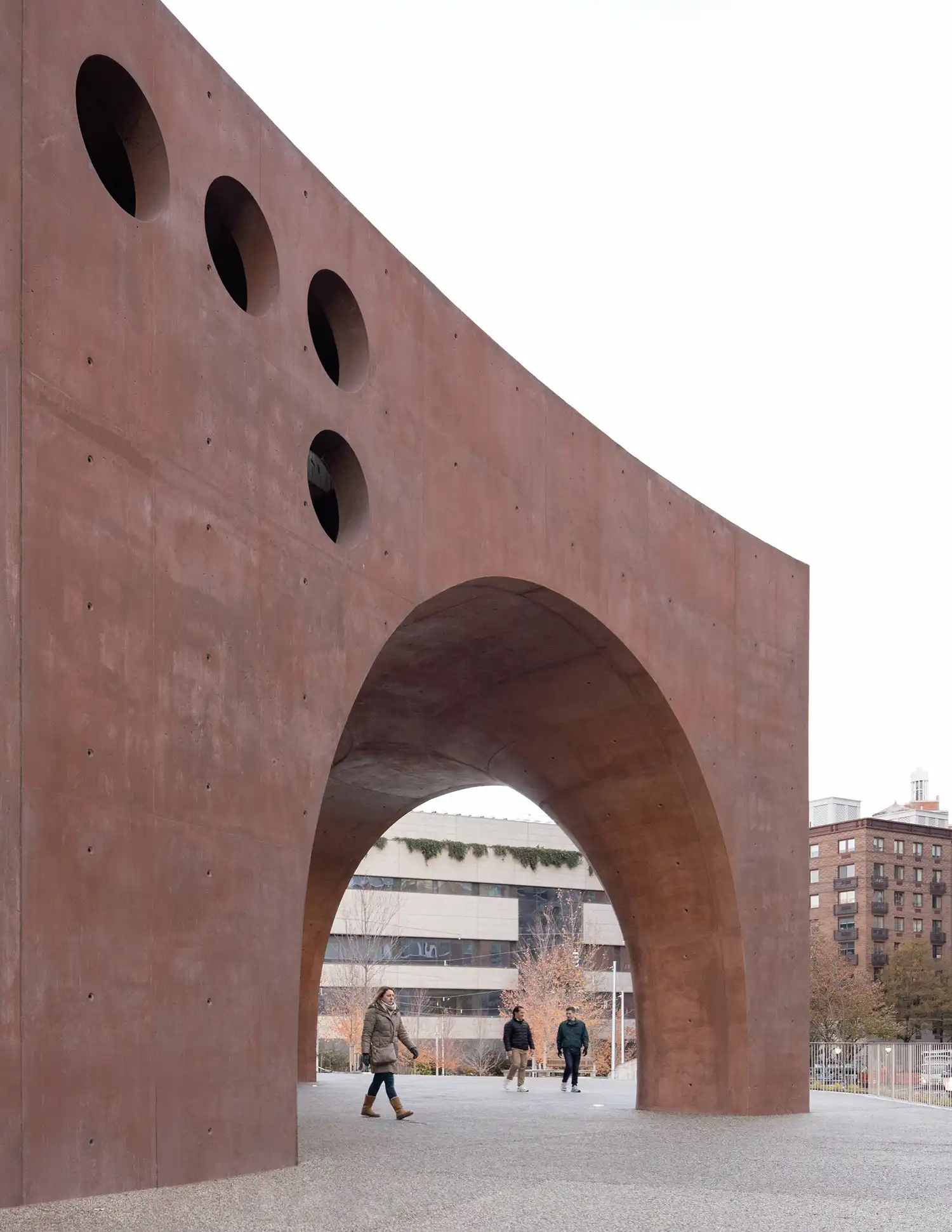
A living shoreline emerges where the hard edge of the city meets the estuary. By integrating tide pools, habitat shelves, and specialized concrete veneers, the design invites marine life to colonize the infrastructure. This “performative” landscape supports four distinct regional plant communities—ranging from maritime forest to tidal estuary—creating a dapple-light microclimate that feels immersive and lush. It is a rare instance where the intervention of human engineering actually increases biodiversity, transforming a defensive barrier into a thriving, educational habitat for both the city’s residents and its native species.
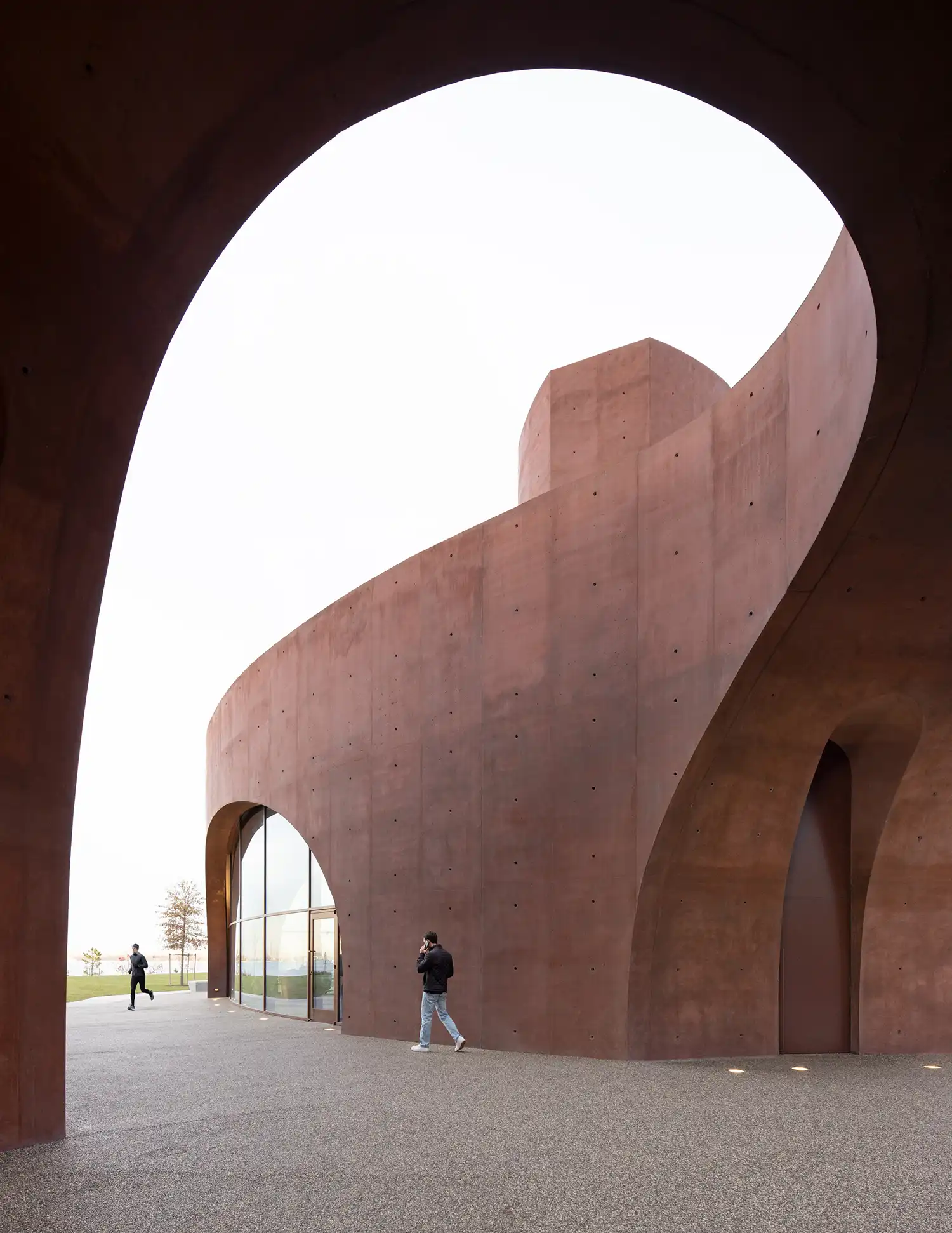
The contextual impact of the redesign extends far beyond the borders of Battery Park City. It serves as a global precedent for how “static” flood structures can be rendered invisible through thoughtful landscape integration. By prioritizing universal access through sloped gardens and 360-degree observation decks, Thomas Phifer and Partnershave ensured that the waterfront remains a democratic space. The project proves that resilience does not have to look like a fortress; instead, it can look like a garden that knows how to hold its breath, standing in quiet, carbon-neutral harmony with the rising tides of the future.