



Nestled within a tight urban plot in Lilyfield, Sydney, Retallack Thompson‘s ‘Tree House’ is a masterclass in sensitive expansion. It’s a project that doesn’t just add space; it cultivates a dialogue between existing heritage, natural context, and contemporary living. The design focuses on human experience and resourceful construction, resulting in a family dwelling suited to the lives of its inhabitants. The client, a hard-working family, sought more than just extra rooms; they needed a home that felt both grounded and expansive, a place where daily life could unfold with ease and connection.
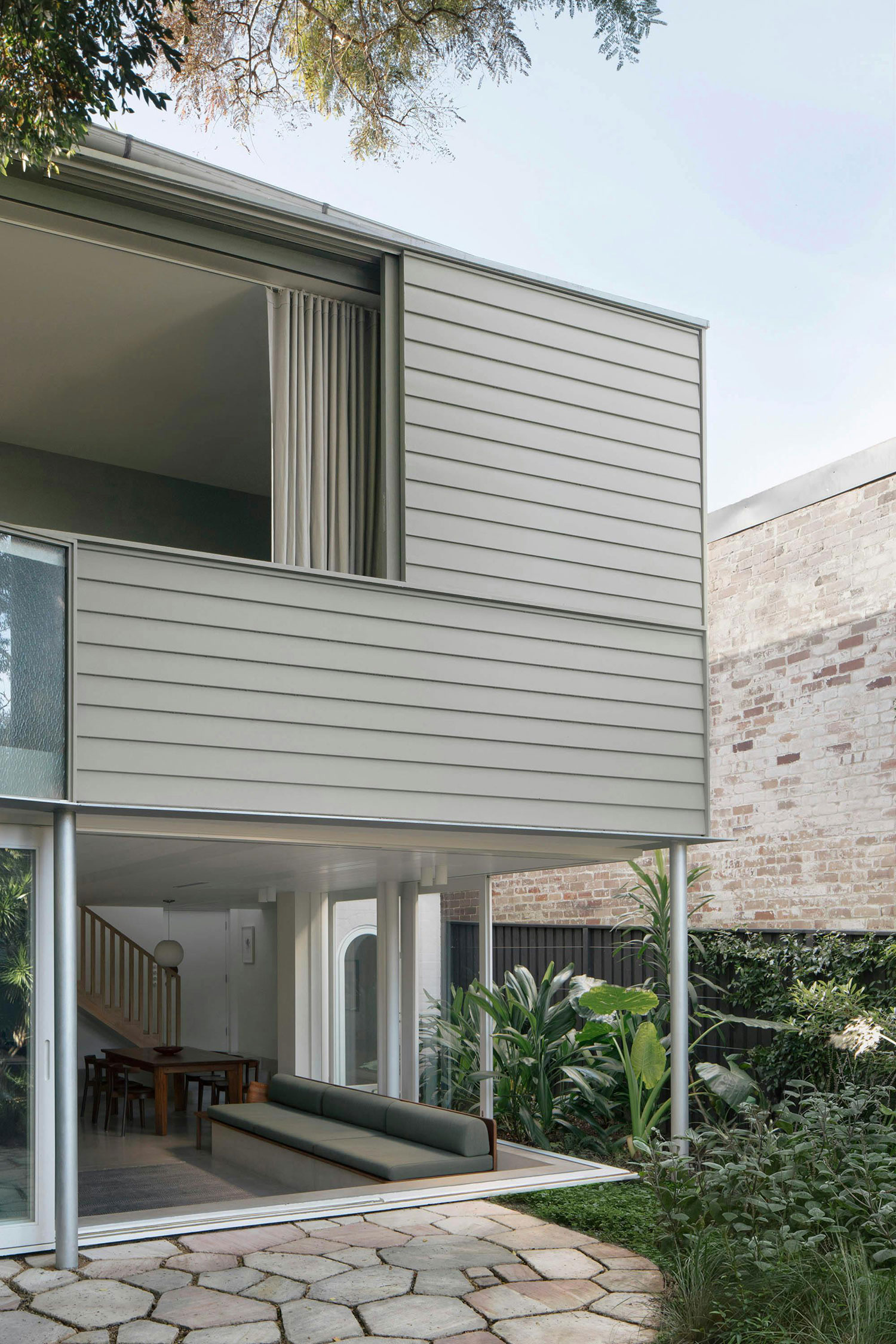
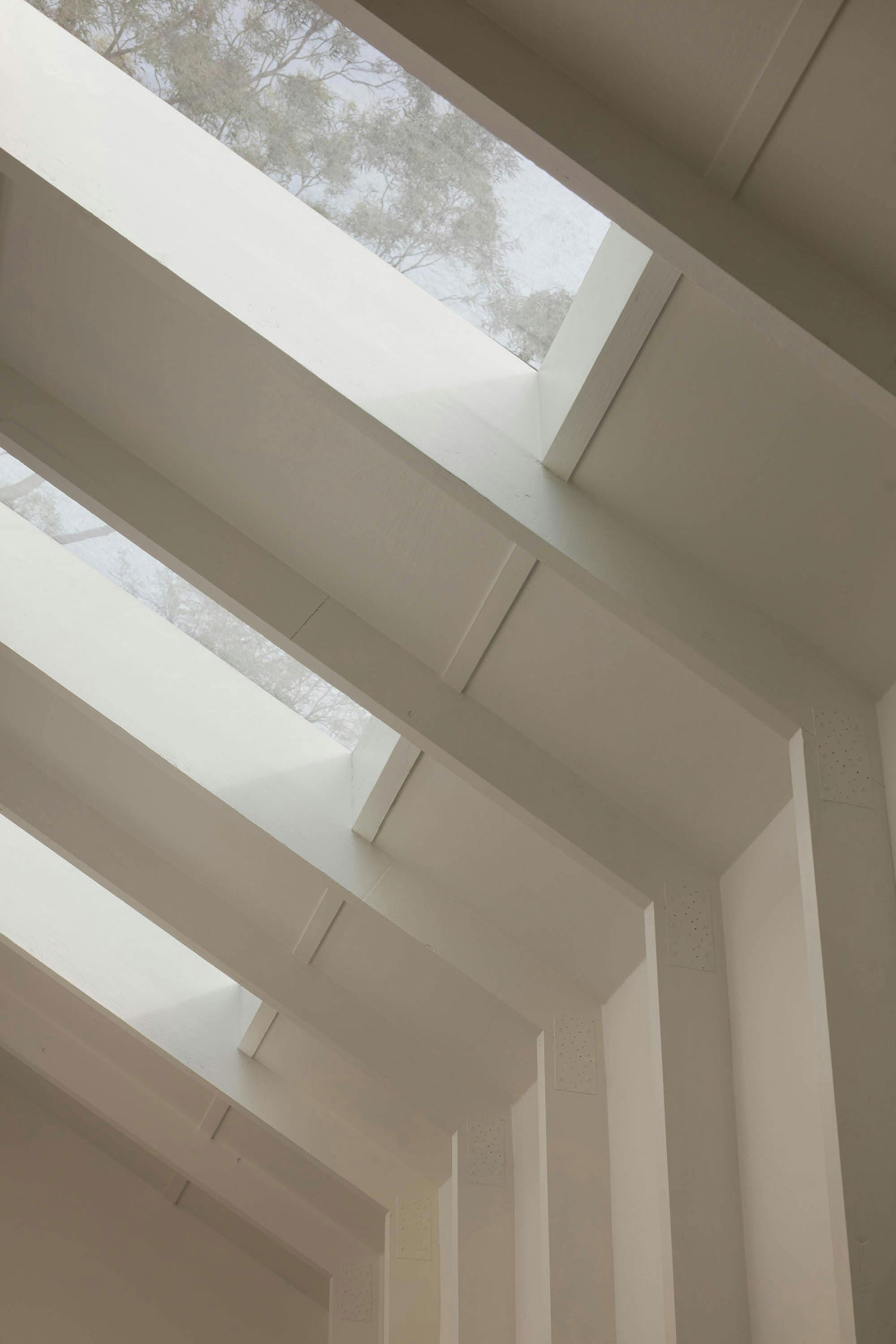
The challenge was significant: a dilapidated weatherboard worker’s cottage, a constrained site, and a magnificent, towering Lemon Scented Gum – a silent, leafy sentinel presiding over the property. Retallack Thompson’s response was one of intelligent subtraction and delicate insertion. Rather than imposing a monolithic addition, they opted for a layered approach, sinking the new living spaces into the lower ground. This ingenious move not only preserved the existing garden’s level, allowing occupants to feel immersed in the garden, but also ensured the Gum’s roots remained undisturbed, its majestic presence a constant, calming backdrop. Voids and skylights draw light into this lower level.
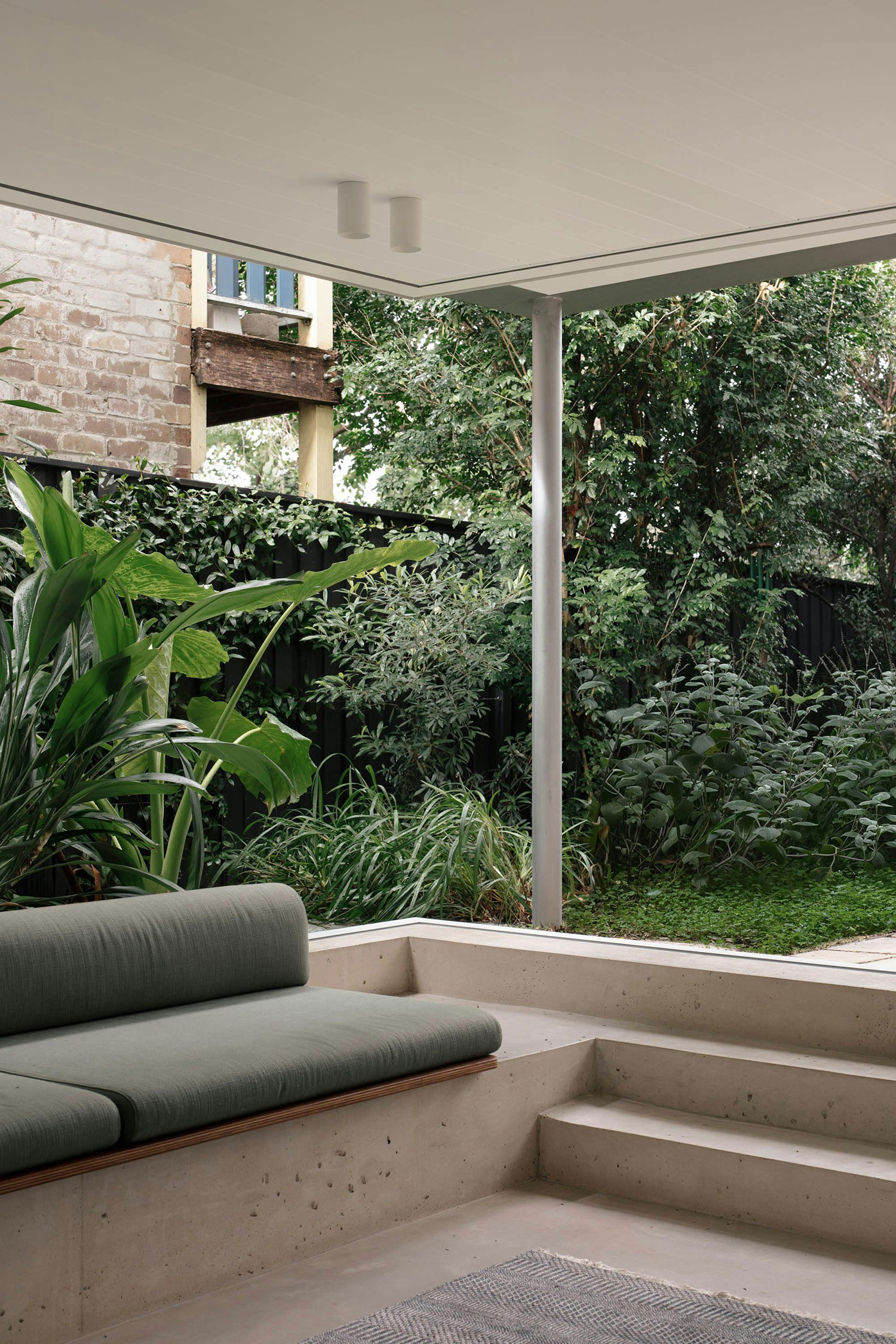
The house transforms from a single- to a triple-level space beyond the two front rooms. A stair leads down to the kitchen and living room below, while a home office is perched above. Spaces are distinct yet overlap, creating a “little village” within the home. The lowered floor and openness to the garden and to rooms above allow living spaces to feel both sheltered and expansive. A relationship to the outdoors is present throughout the house, with periscope-like light shafts bringing daylight into internal rooms.
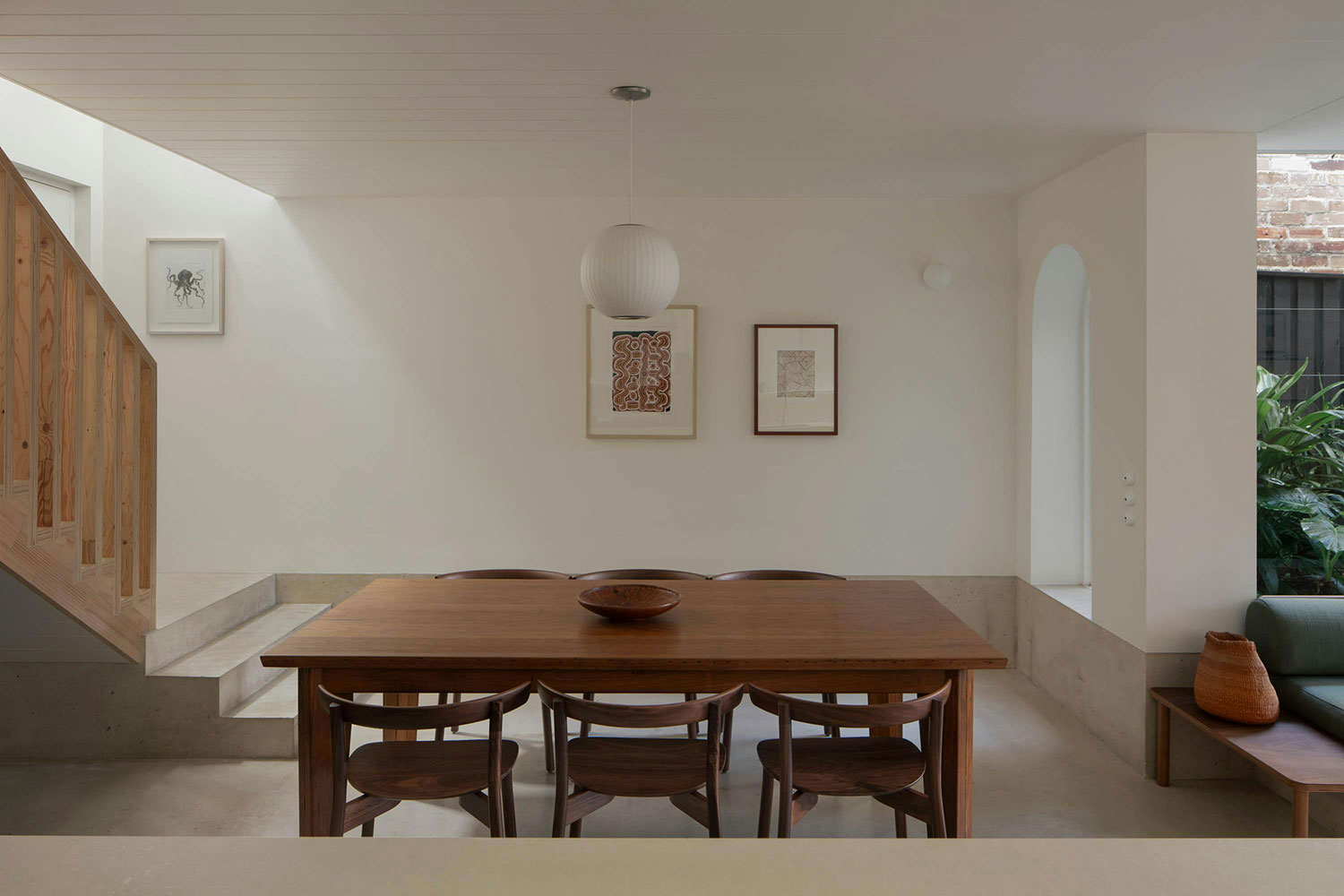
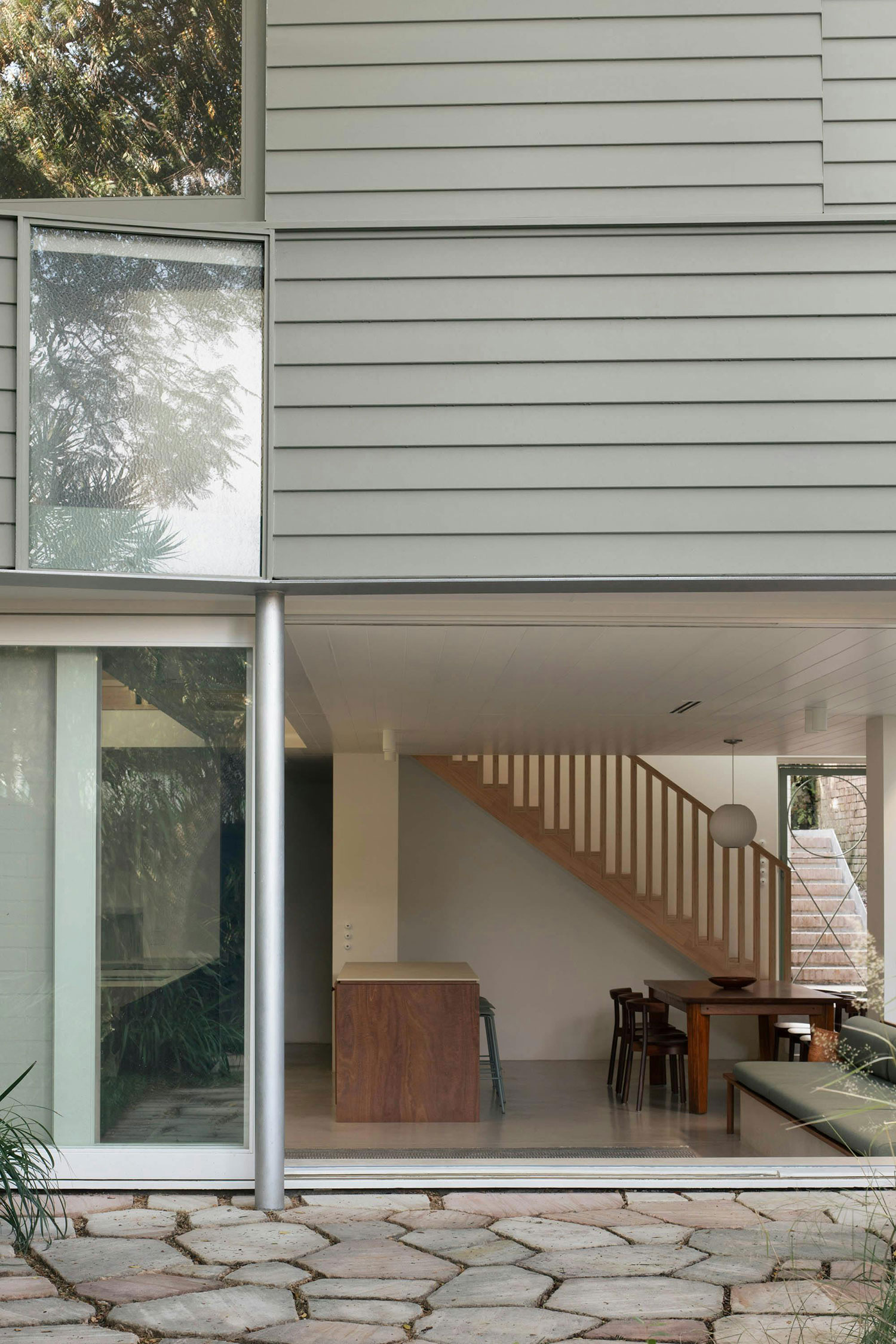
The original cottage’s front bedrooms were respectfully retained, honoring the site’s history. To the rear, however, a more dramatic intervention unfolds. Two new bedrooms and bathrooms appear to hover above the sunken living areas, creating a sense of lightness and providing a clear delineation between old and new. This “hovering” effect is achieved through a considered use of structural elements, expressed rather than concealed, adding a layer of visual complexity and honesty.
A key architectural gesture is the slated walkway that connects the new rooms to the retained cottage hallway. This isn’t merely a passageway; it’s a carefully crafted experience. Openings strategically placed along its length allow daylight to filter down into the kitchen below, creating a captivating interplay of light and shadow that enlivens the interior. The walkway itself, along with the balustrades, serves as a testament to the architects’ dedication to material honesty.
Crafted from readily accessible LVLs and pine, each element is clear sealed and painted, showcasing the construction process and adding a tactile quality to the space. The use of structural LVL, an engineered timber, has facilitated a more economical construction approach. Simple and unadorned construction details, exposed framing, and unpainted timbers contribute to a sense of robust honesty within the interiors.
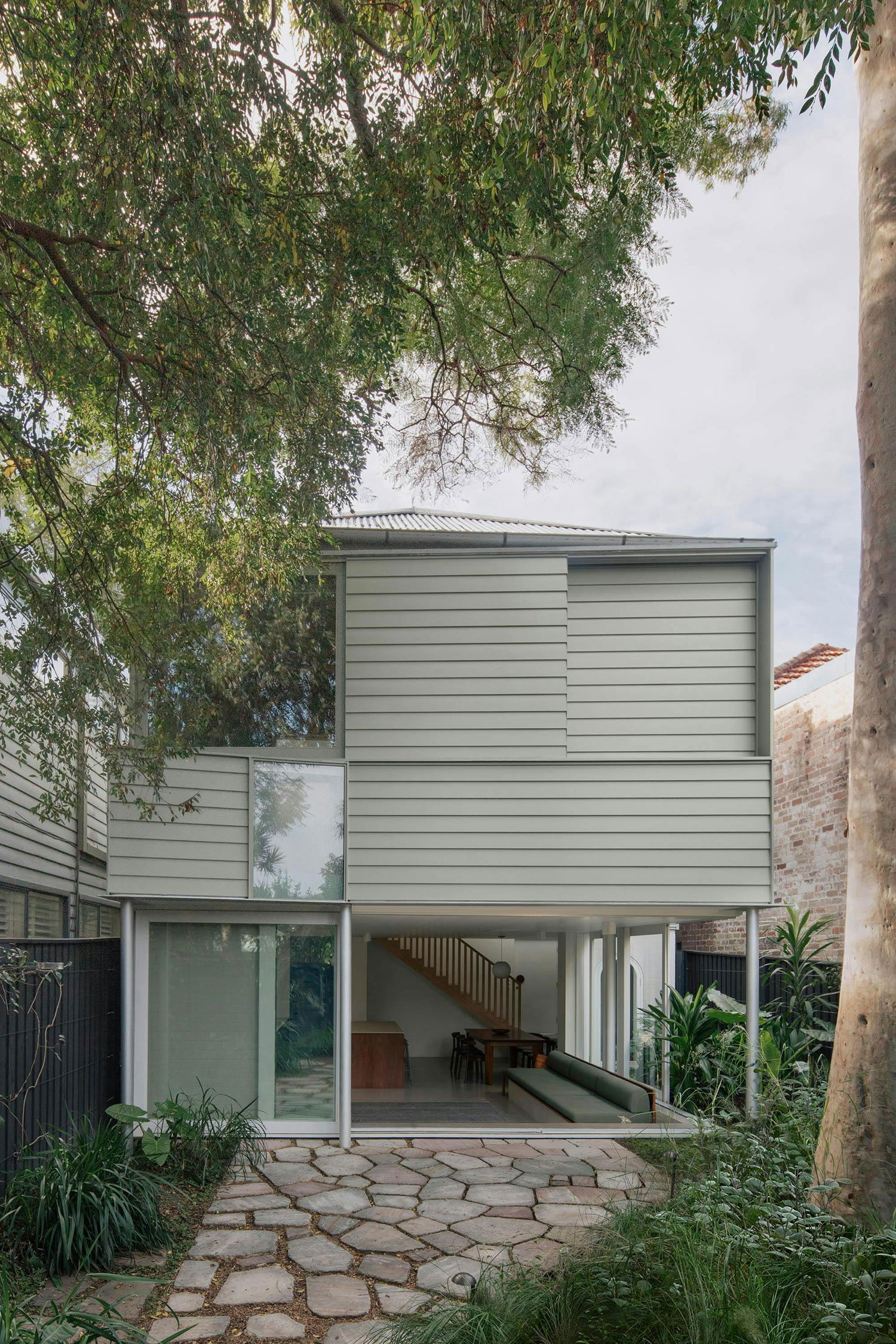
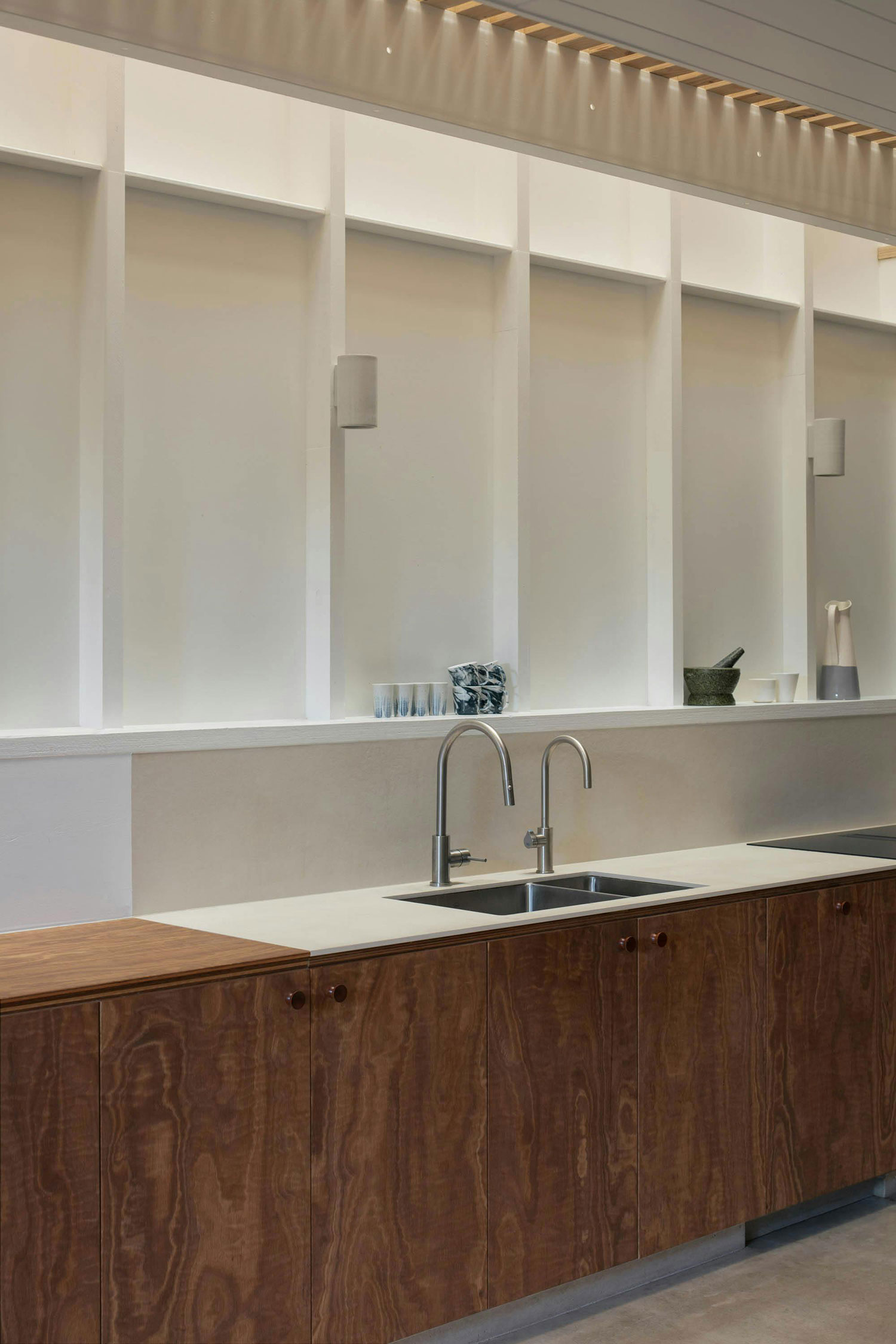
The warmth of Australian materiality is beautifully highlighted through the use of Spotted Gum joinery. This rich, textured timber brings a sense of natural comfort to the interior, creating a striking contrast with the lighter hues of pine and LVLs. The thoughtful selection of materials throughout the project enhances this connection to the environment.
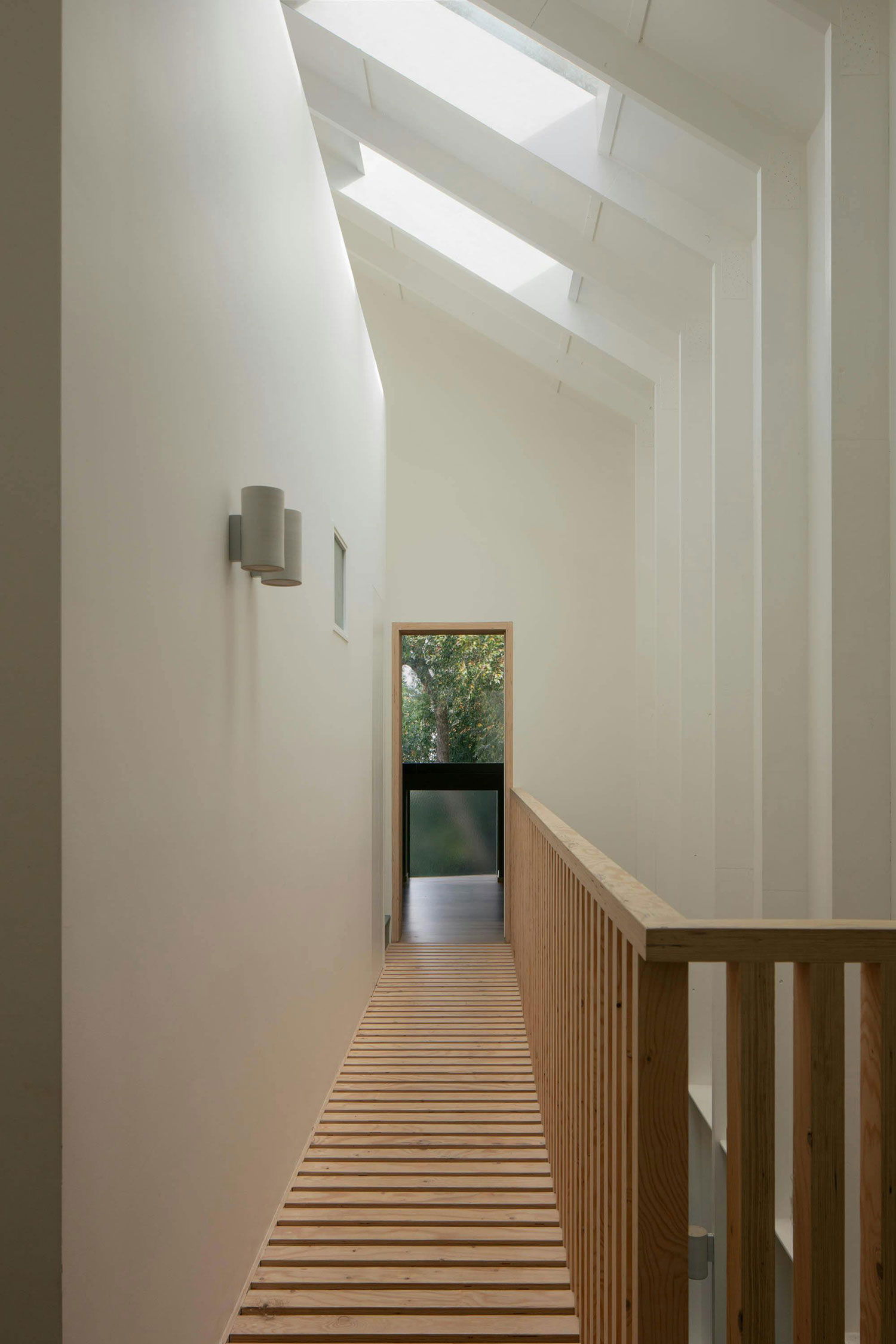
Specific elements include Custom Orb roofing from Lysaght in ‘Zincalume’, complemented by painted Linea weatherboards from James Hardie for the external walls. The flooring features Spotted Gum boards, off-white concrete with a hard trowel finish, and Smart LVL from Tilling Timber. Framing the windows and doors are Nicco Timber Windows and Doors, adding to the overall aesthetic.
Lighting is artfully provided by Earth Light from Anchor Ceramics, Artemide Dioscuri 14, and a Nelson Ball Bubble Pendant from Living Edge. The kitchen showcases Urban White porcelain panels from Artedomus, along with Armourply from Big River Group in ‘Spotted Gum’ and high-end Miele appliances. For climate control, hydronic in-slab heating is utilized, while external elements are adorned with sandstone crazy paving. The upholstery is sourced from Brand Furniture, with dining chairs from Mast, creating a subtle yet powerful reminder of the project’s harmonious relationship with its surroundings.
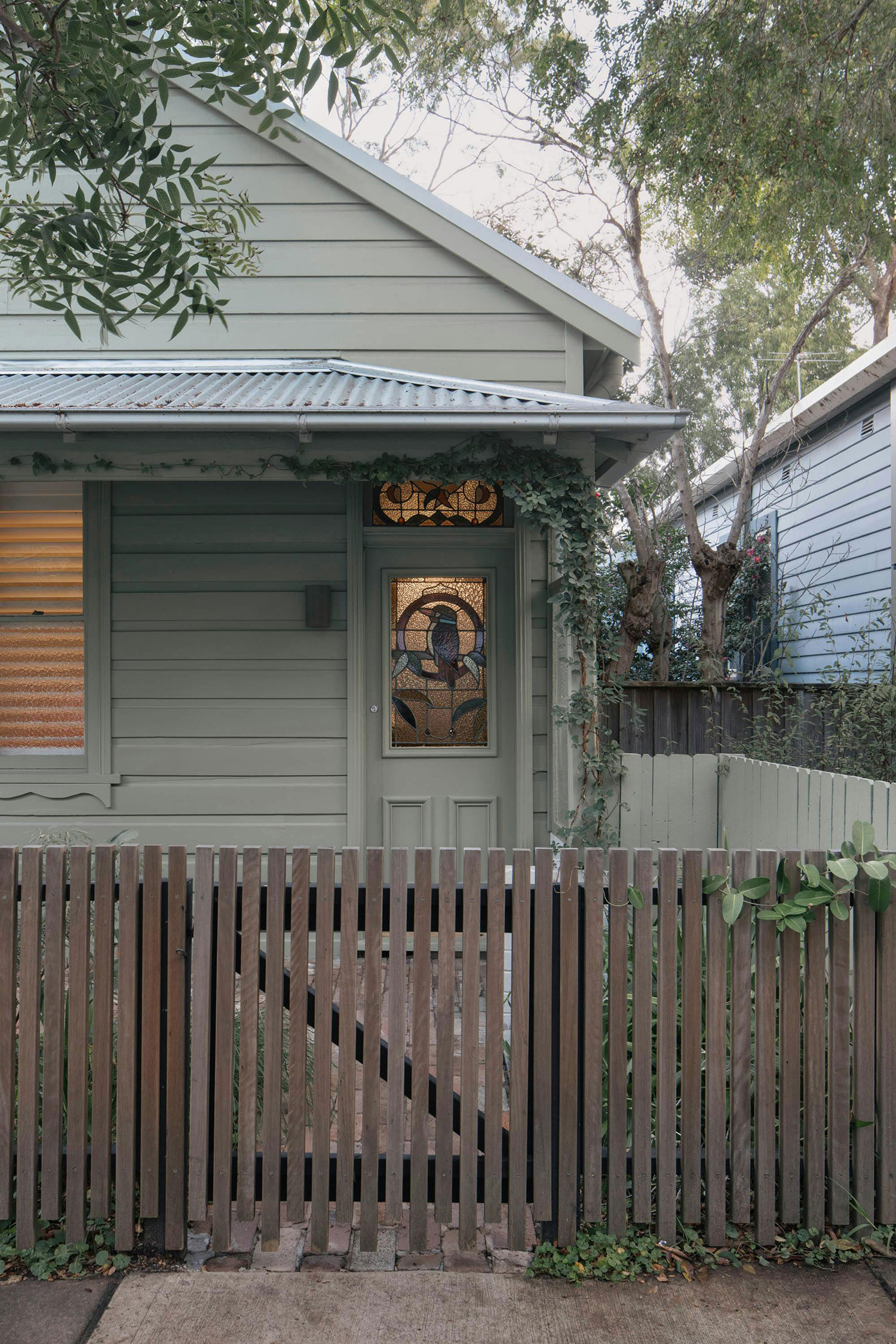
The Tree House is more than just an extension; it’s a carefully orchestrated composition of old and new, light and shadow, grounded and elevated. It’s a demonstration of Retallack Thompson’s ability to create spaces that are both functional and poetic, spaces that respond to the unique character of their site and the needs of their inhabitants. It’s a home that allows a family to grow and flourish, all while respecting the enduring presence of a guardian tree. This project proves that even within the constraints of a tight urban site, architectural ingenuity can create a place of remarkable beauty and tranquility.