


In a radical departure that paradoxically remains true to its core philosophy, URWERK unveils the UR-10 SpaceMeter, a timepiece that challenges conventional horology by measuring not just time, but space. Co-founded by master watchmaker Felix Baumgartner and artist and chief designer Martin Frei , the Swiss brand is renowned for pushing boundaries, and the UR-10 is a philosophical reflection on our place in the universe, an invitation to reconsider what URWERK represents. This chronometer is the very first to express Earth’s movements in kilometers.
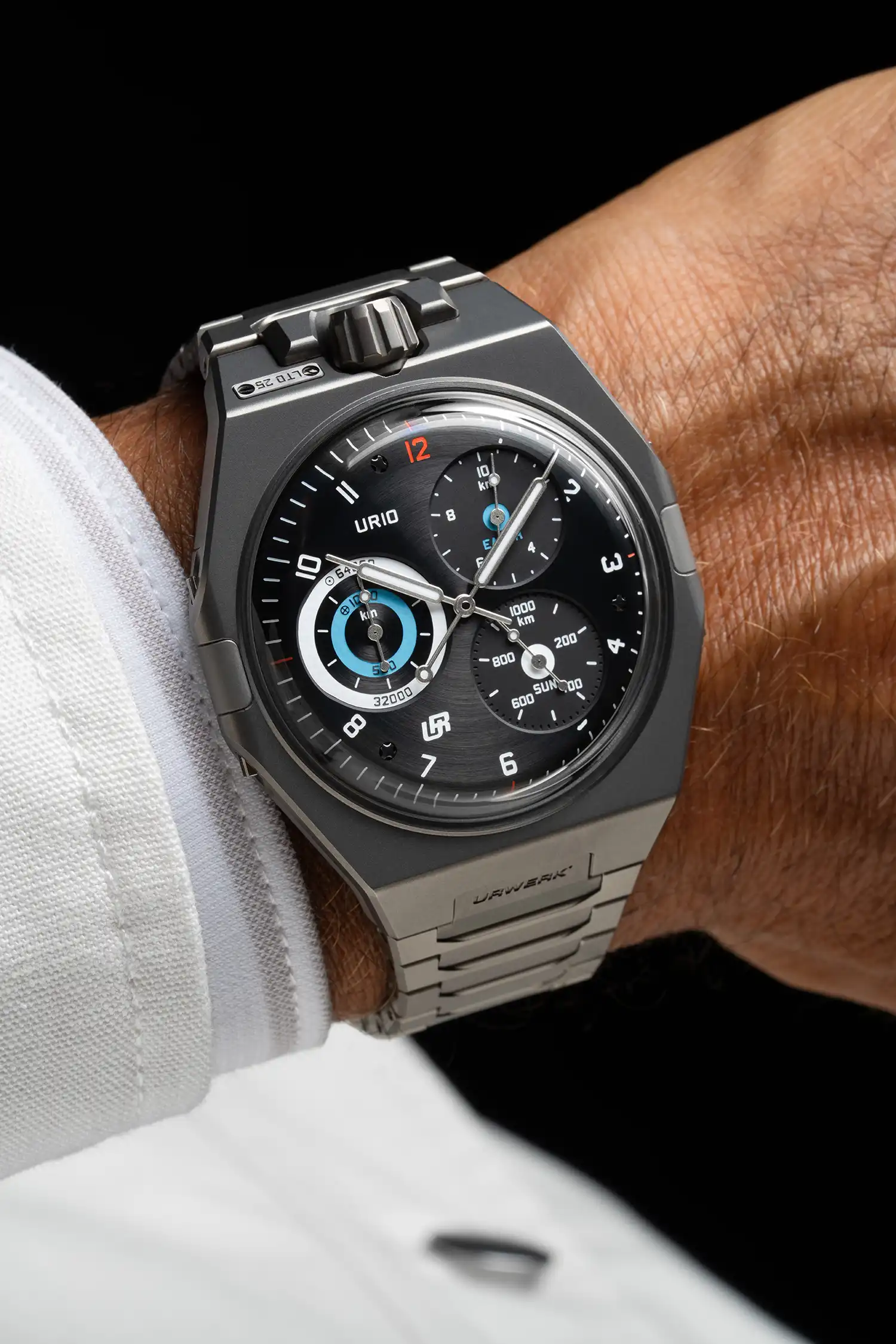
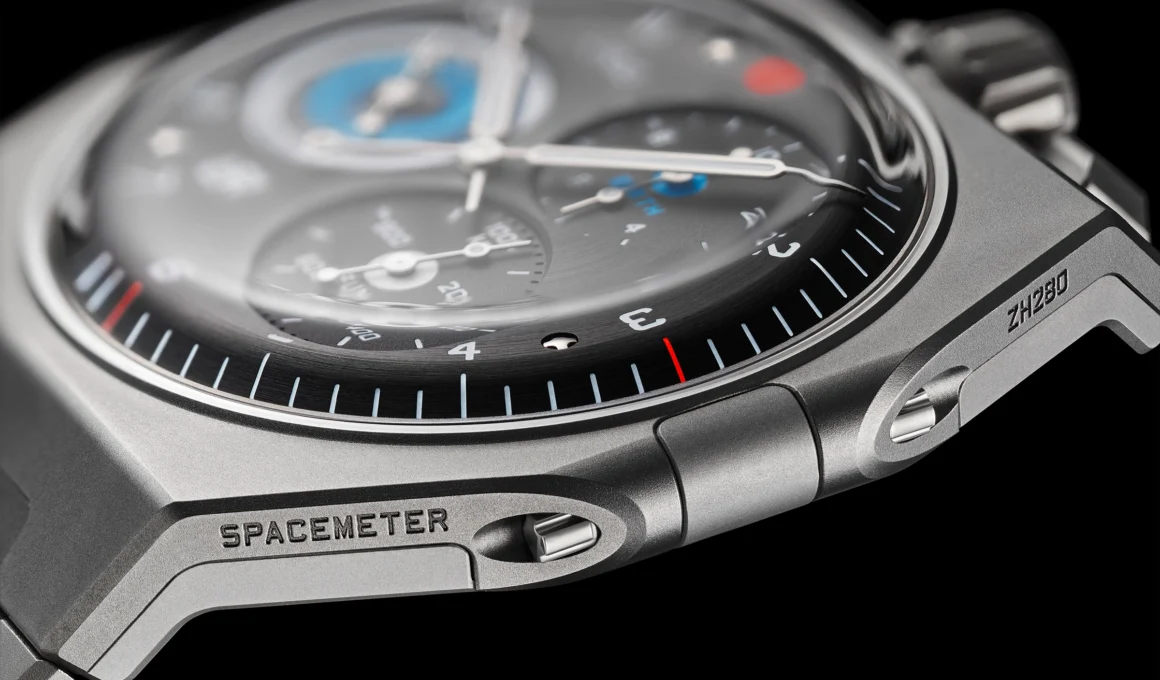
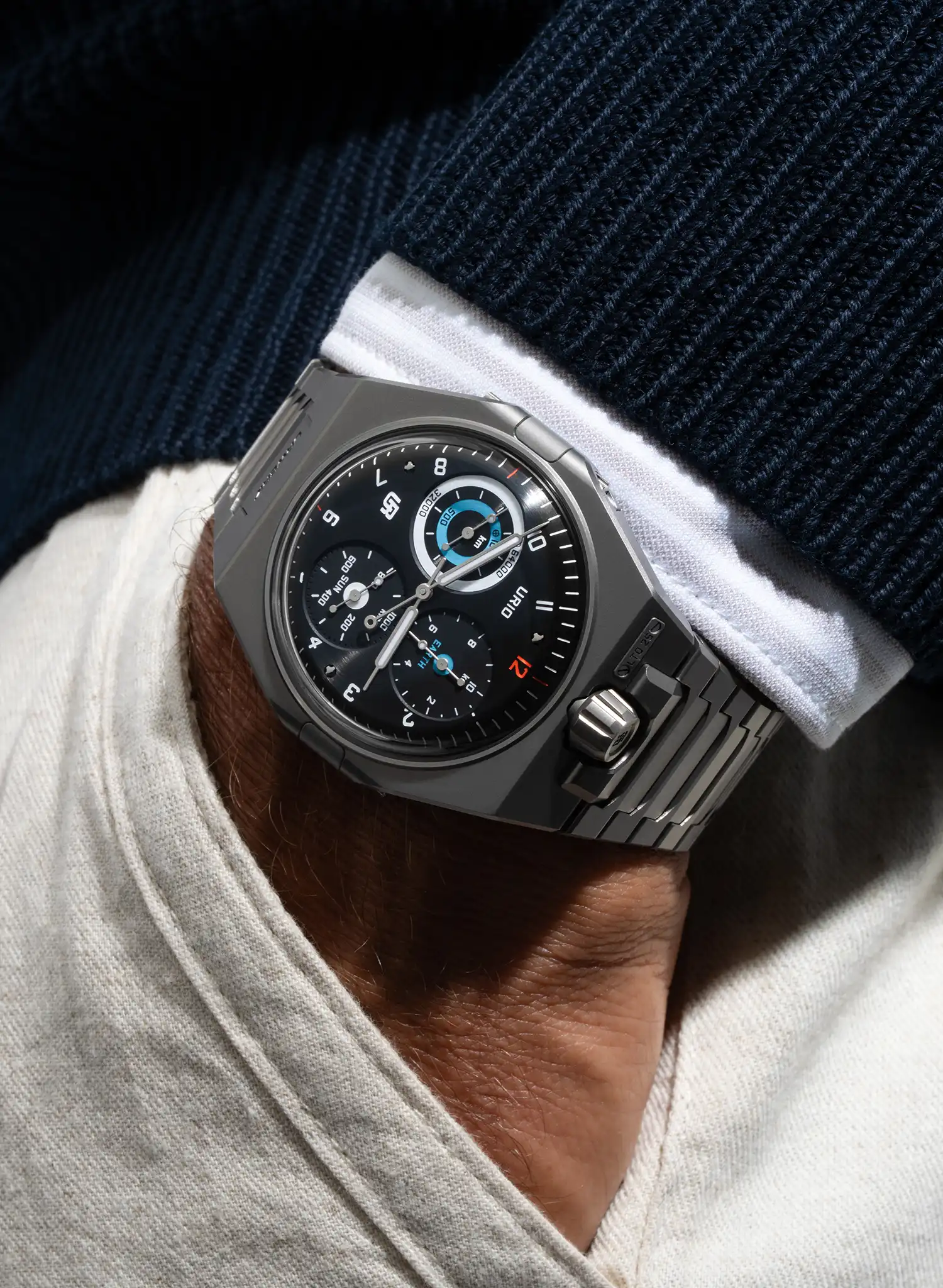
The UR-10 SpaceMeter initially presents a paradox: a round dial, hands in the center, and concentric counters, features that seem alien to URWERK’s DNA. However, this striking design is unequivocally a member of the ‘Special Projects’ family, the brand’s groundbreaking collection for bold experimentation and radical ideas. The UR-10 is not a regulator, a chronograph, or any form of calendar watch; its subsidiary indications do not measure the passing of time. Instead, it is dubbed a SpaceMeter because it measures the distances our planet travels across the time-space continuum—a world first.
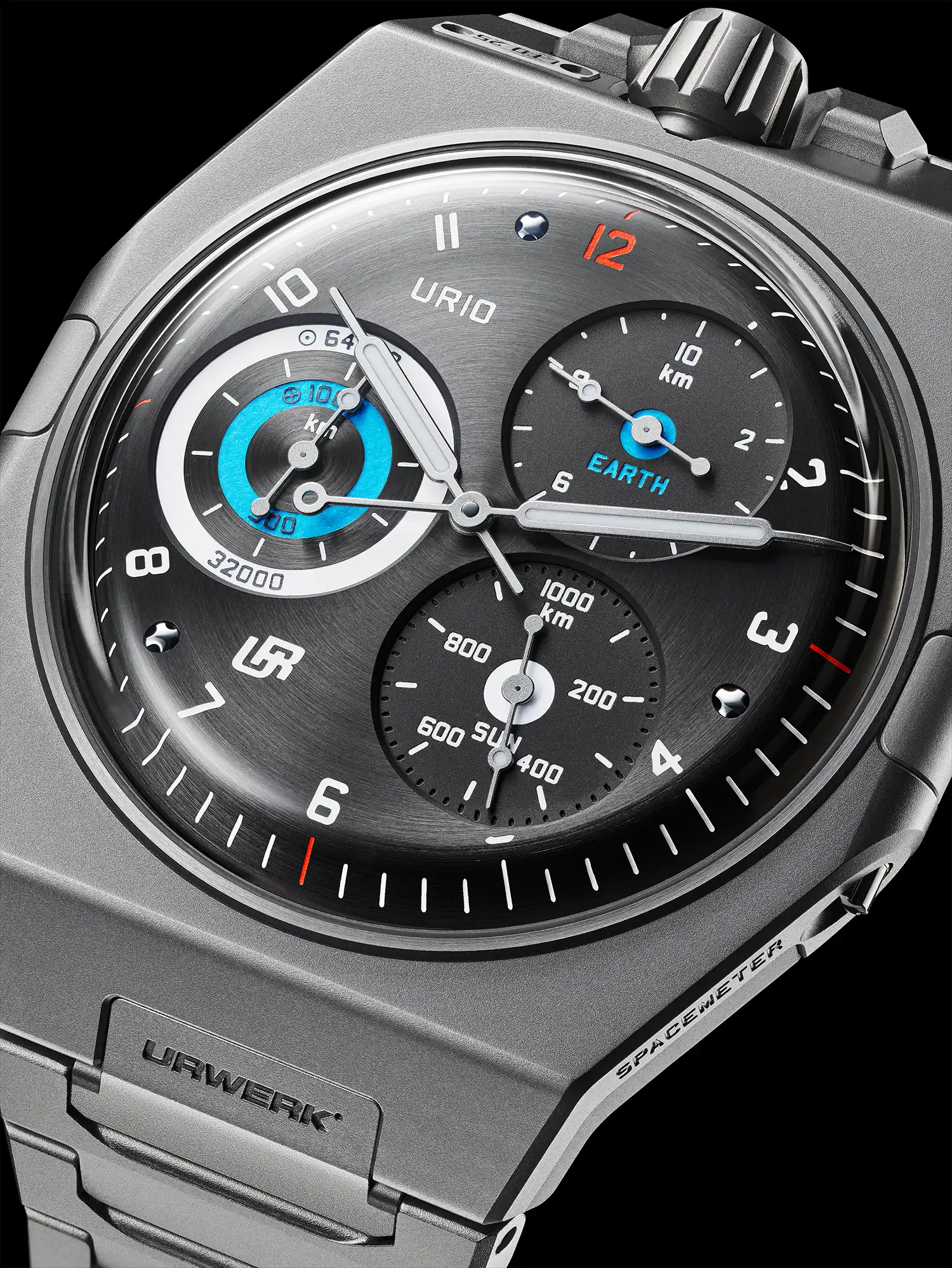
The watch features three sub-dials acting as astronomic instruments. The counter at 2 o’clock, marked EARTH, measures every ten kilometers the Earth travels in its daily rotation, advancing in increments of 500 meters. The 4 o’clock counter, marked SUN, registers every 1,000 km the Earth travels on its solar orbit, moving in 20 km steps. Finally, the 9 o’clock counter, marked ORBIT, combines both trajectories, inscribing every 1,000 kilometers of rotation and 64,000 kilometersof solar orbit on two synchronized scales. On the caseback, a peripheral hand traces the hours on a 24-hour scale, mirroring a full rotation of the Earth.
The concept’s inherent poetry is rooted in the Baumgartner family history, specifically an antique pendulum clock signed by Gustave Sandoz, a master of 19th-century chronometry. Felix’s father, Gérard, a restorer of ancient clocks, uncovered this timepiece with three sub-dials, which he eventually discovered to be a planetary trajectory tracker—a mechanical marvel designed to measure Earth’s rotation. This clock, conceived on the principle of a regulator, revealed the distance traveled by our planet across three distinct time scales. Gérard entrusted the restored clock to Felix, and this gift became the spark that ignited the UR-10.
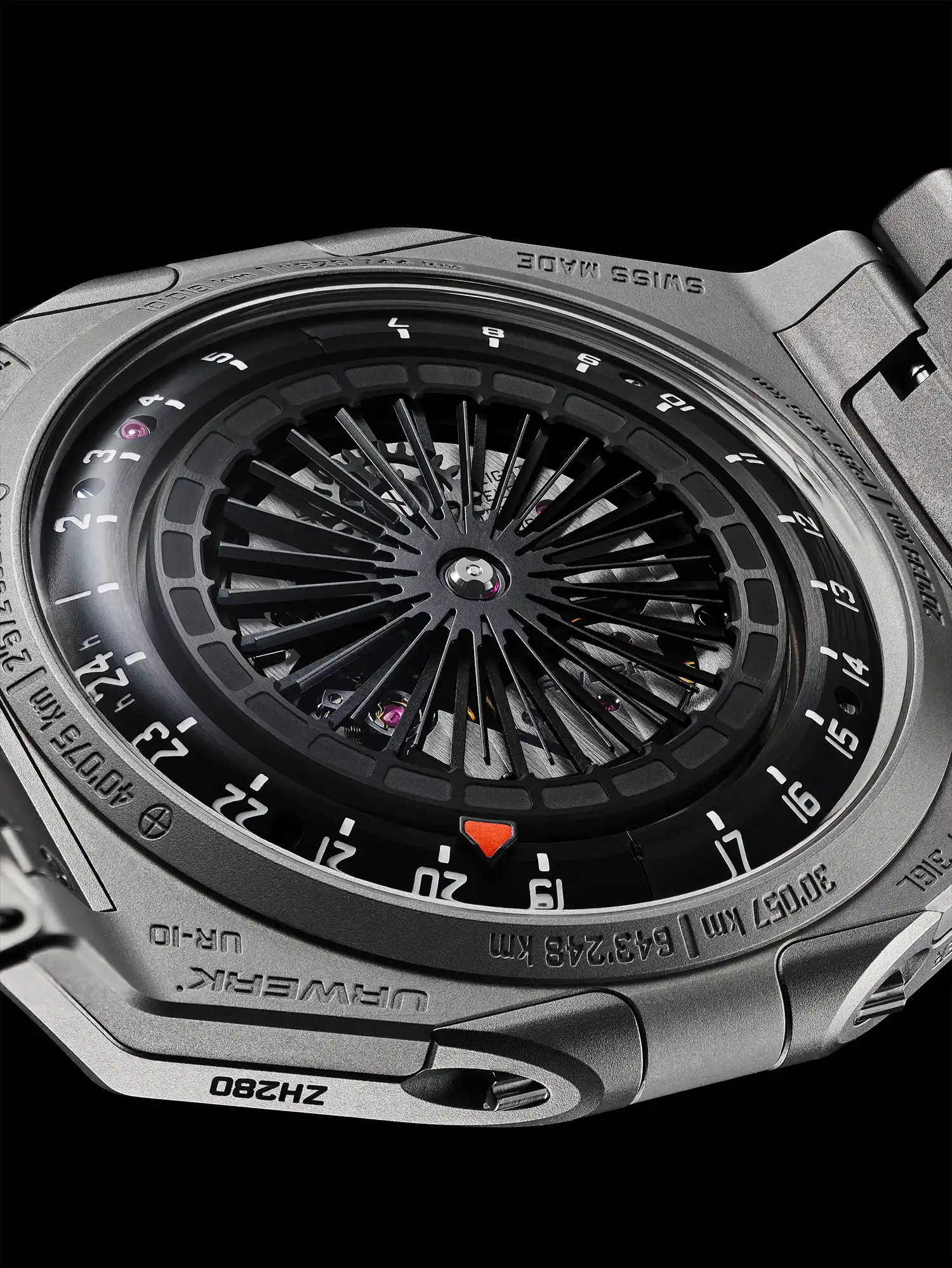
Technologically, the UR-10 incorporates the self-winding Caliber UR-10.01 developed by URWERK, which features a patented Dual Flow Turbine. This evolution of URWERK’s one-way self-winding system comprises two stacked propellers that rotate in opposite directions. This double turbine creates air flow between the two sets of blades, slowing them down and preserving the mechanism from the high constraints exerted by the rotor’s high speed when the winding direction isn’t engaged. The watchmakers also used skeletonized LIGA wheels, some weighing as little as 0.009 grams(the weight of an eyelash), to save energy and preserve the concept’s resistance and accuracy.
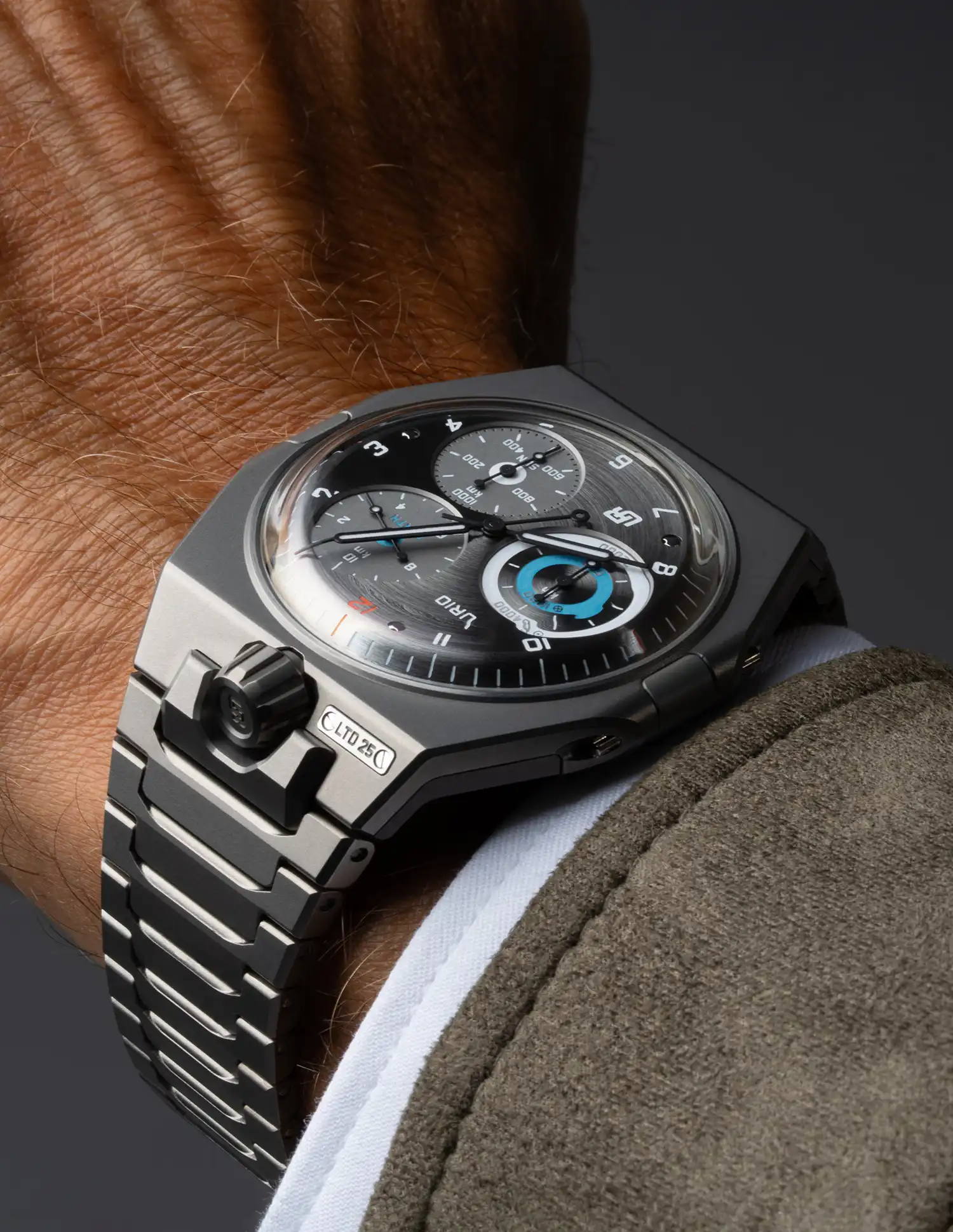
The case itself is an achievement in micro-engineering and contemporary design. The steel and titanium case is remarkably thin, with a thickness (excluding crystals) of just 7.13 mm. The construction is complex, featuring an uppercase in sandblasted titanium and a caseback in sandblasted steel fitted into one another and sealed shut with a longitudinal screw—a specific construction that is simple yet extremely complex. Available as a limited edition of 25 pieces in titanium and 25 pieces in black , the UR-10 SpaceMeter is an embodiment of URWERK’s quest for disruption, marrying a profound philosophical concept with avant-garde horological invention.