

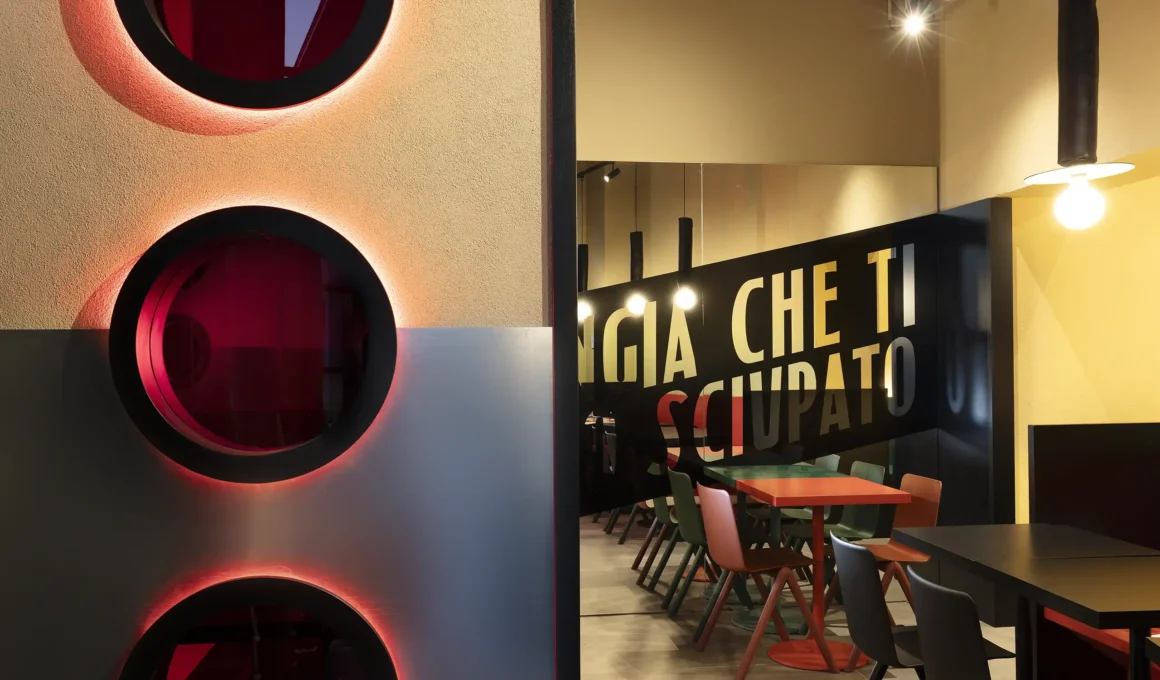
In the rapidly evolving landscape of Northern Milan, the Certosa District has emerged as a fertile testing ground for urban regeneration. It is here, within the rugged shell of a former industrial brush factory, that Velvet Studio has unveiled the Milanese outpost of WÉMA. Moving beyond the traditional tropes of the Italian pizzeria, the project represents a sophisticated dialogue between industrial heritage and a “post-traditional” gastronomic vision, avoiding stylistic clichés in favor of a site-specific narrative that feels both raw and intentionally curated.
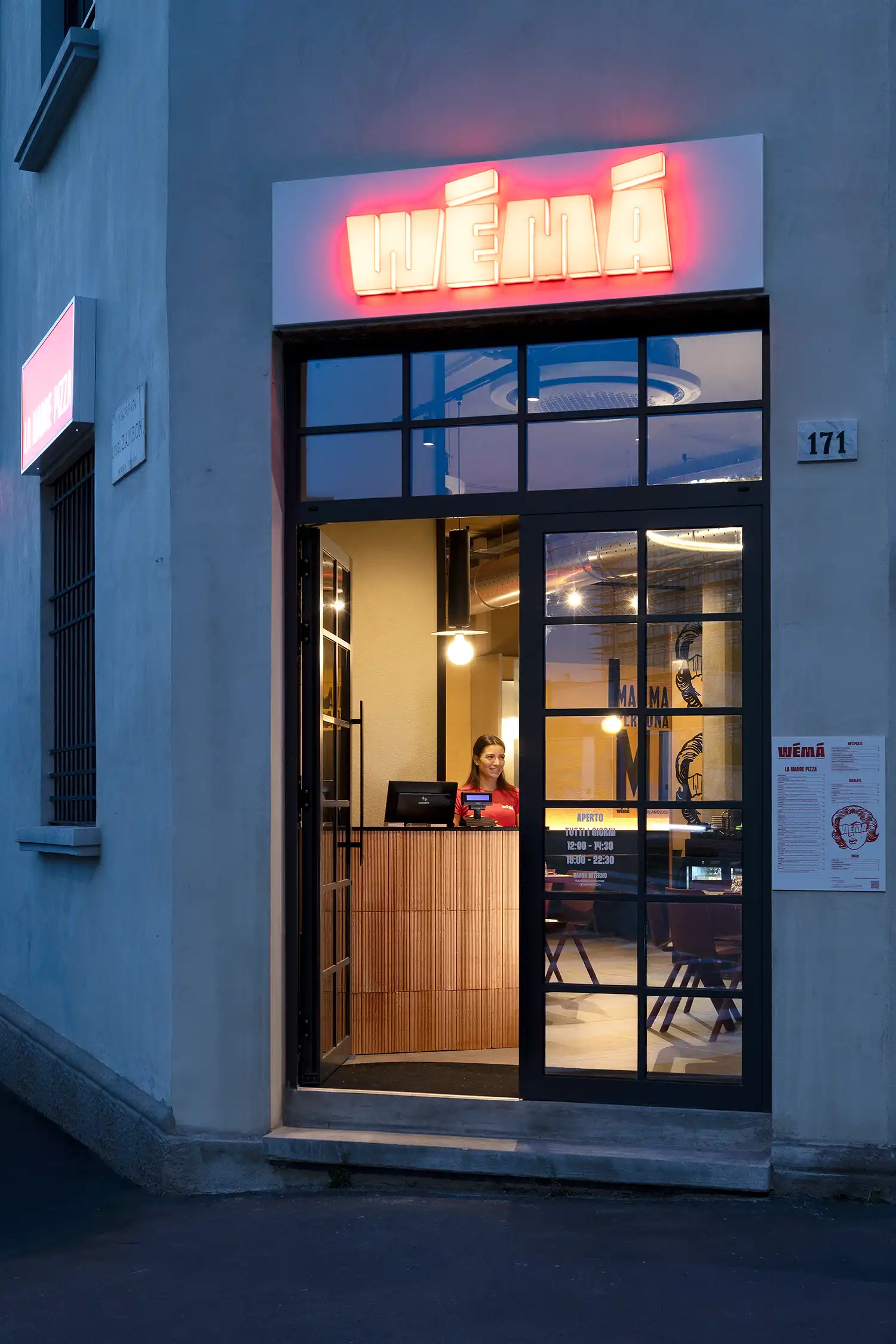
A design philosophy rooted in place rather than trends guided the creative process of Gianluca Bocchetta and his team. Instead of imposing a pre-packaged aesthetic, Velvet Studio performed an architectural “cleaning,” stripping back layers to reveal the factory’s original soul. The intervention celebrates the building’s past through exposed mechanical systems, raw concrete finishes, and a technical color palette. This approach mirrors the “retro-futurist” language previously explored in Wéma’s Turin location, but adapts it to the gritty, physical context of Milan, transforming a productive relic into a democratic space for modern sociality.\
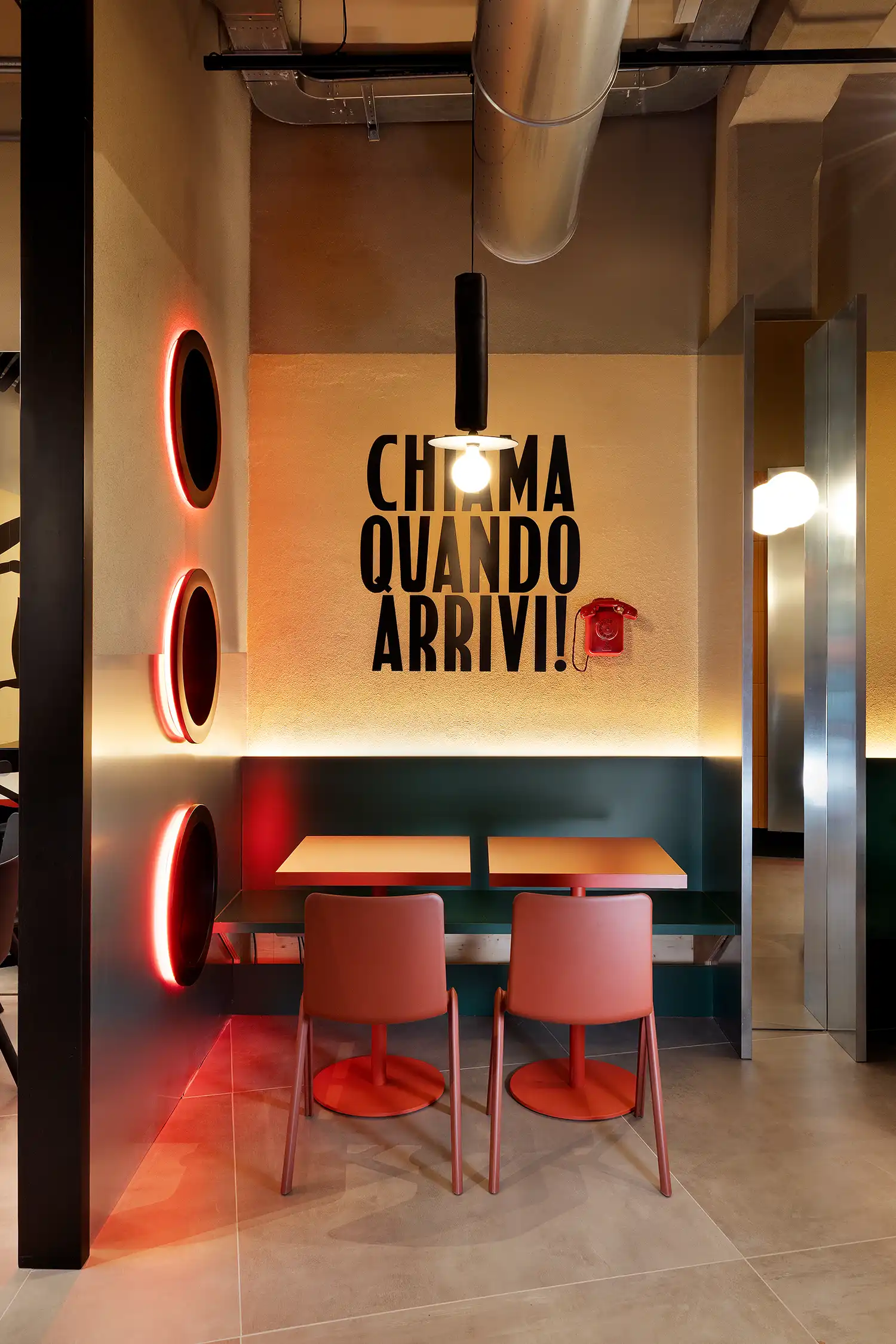
The sensory experience of the interior is defined by a deliberate tension between cold industrial materials and warm, pop-inspired accents. Upon entering, visitors are greeted by an atmosphere where low lighting catches the textures of “living” cement, creating an underground vibe that feels authentic to the neighborhood’s transition. The open volumes and visible infrastructure do not merely house the dining experience; they amplify the irreverent spirit of the brand. This balance of the “rough” and the “refined” recalls the nostalgic yet contemporary charm found in other notable Milanese interiors, such as the mid-century elegance of Trattoria del Ciumbia by Dimorestudio, where heritage is treated as a living canvas.
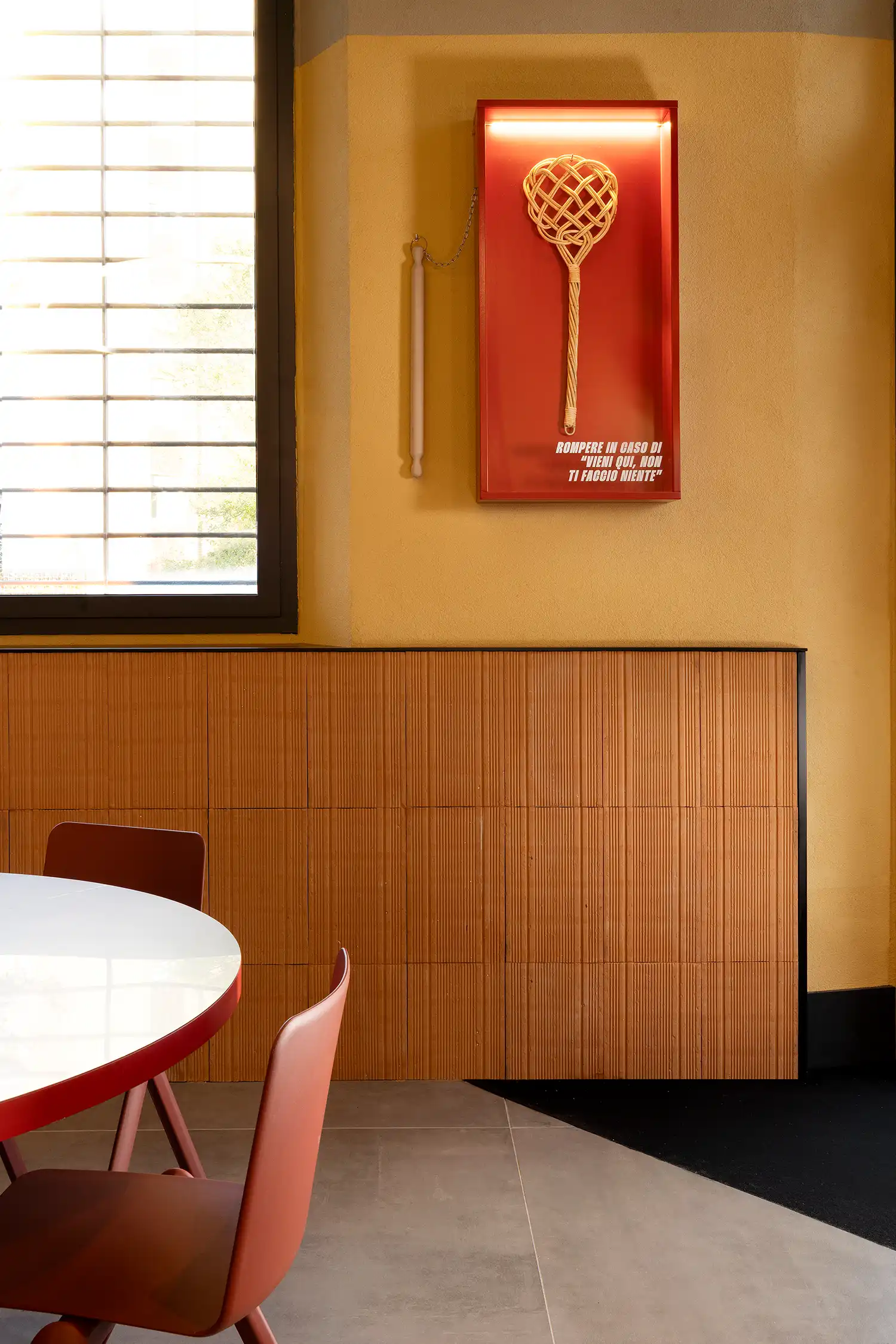
Translating the “post-traditional” pizza concept into spatial form required a departure from the typical Mediterranean vernacular. Velvet Studio integrated ironic installations inspired by the “mother yeast” and bold geometric volumes that reflect Wéma’s playful approach to Neapolitan pizza. The furniture and layout favor flexibility and aggregation, mirroring the brand’s mission to provide “comfort food” in a high-energy, pop-inflected environment. The result is a space that refuses easy categorization, oscillating between a gallery-like minimalism and the vibrant hum of a neighborhood canteen.
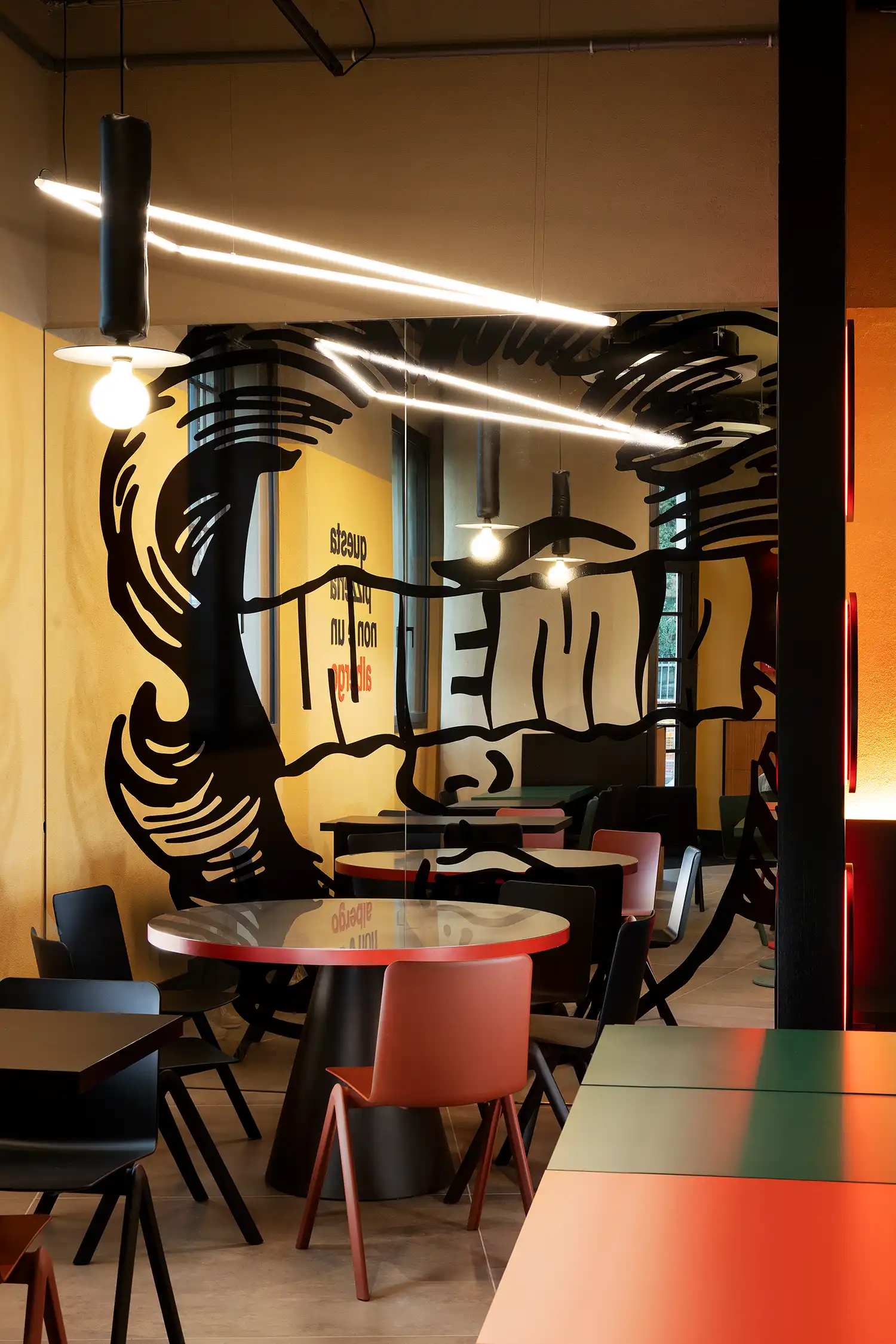
The architectural device as an urban catalyst is a recurring theme in Velvet Studio’s work, particularly in districts undergoing profound cultural transformation. In the Certosa District, Wéma acts as more than just a restaurant; it is a functional piece of the city that bridges the gap between the area’s manufacturing history and its future as a creative hub. This commitment to site-specific storytelling through a retro-inspired lens is a design strategy shared by other global hospitality projects, like the vibrant, color-blocked interiors of Reno’s Bistrot, which similarly use nostalgia to foster a sense of community.
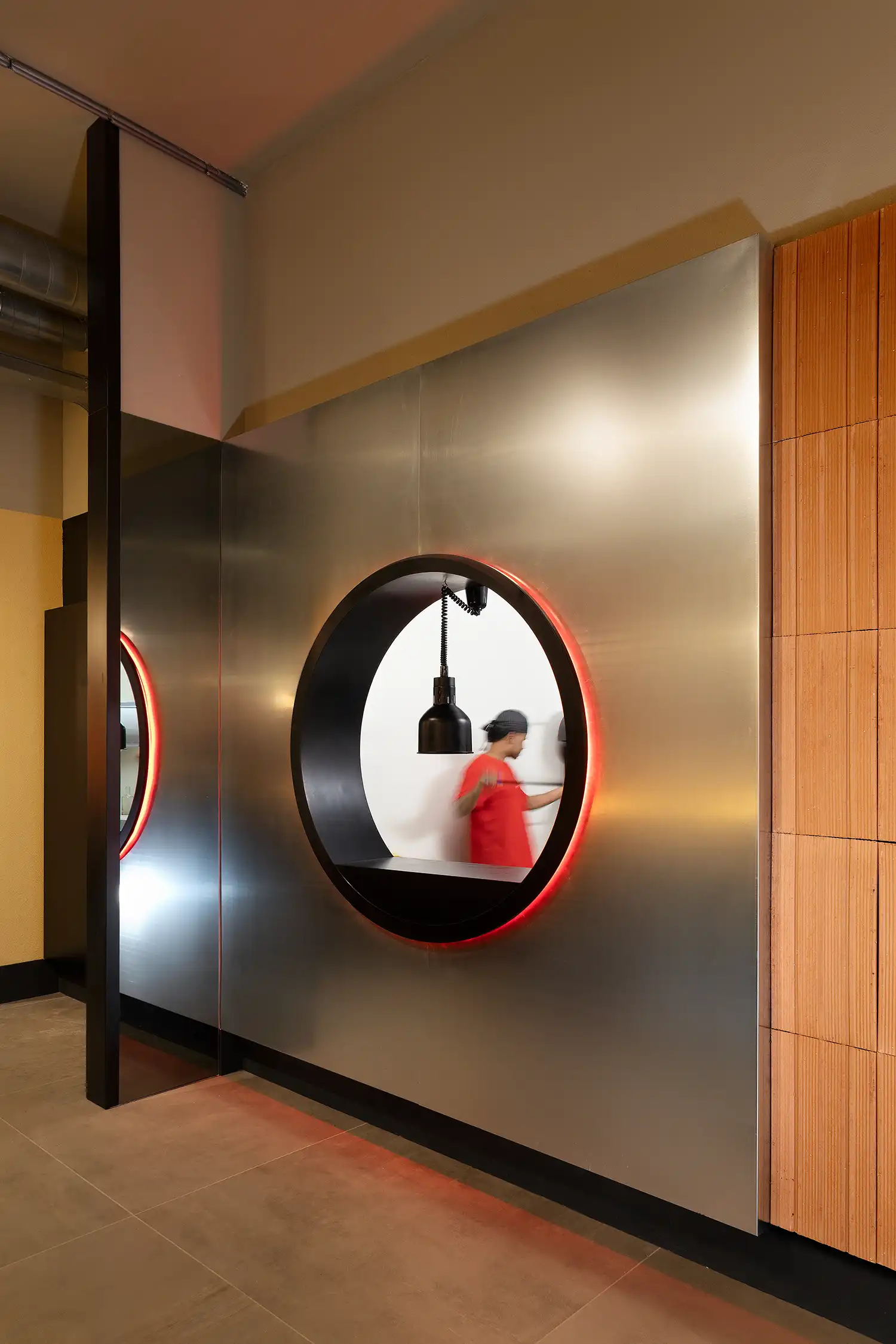
Longevity and contextual impact remain the project’s ultimate goals. By choosing to “rewrite” the space rather than distorting it, Velvet Studio has ensured that Wéma feels like an organic extension of Milan’s urban fabric. It is a discreet yet powerful architectural gesture that values substance over spectacle, offering the neighborhood a new landmark where the ritual of the meal is framed by the honesty of the architecture. In a city often obsessed with the “new,” this project stands as a testament to the power of looking back to move forward.