


As Nova Gorica, Slovenia, and Gorizia, Italy, jointly embrace their status as European Capital of Culture GO! 2025, a profound physical transformation embodies their shared future. The Nova Gorica Railway Station and its crowning achievement, the Vrtača Underpass, designed by Ljubljana-based practice Sadar+Vuga, stand as a powerful symbol of connection where division once prevailed. This ambitious architectural intervention reimagines railway infrastructure as vibrant public space, forging a vital pedestrian-cyclist link beneath the tracks and dissolving the historical barrier between the two nations.
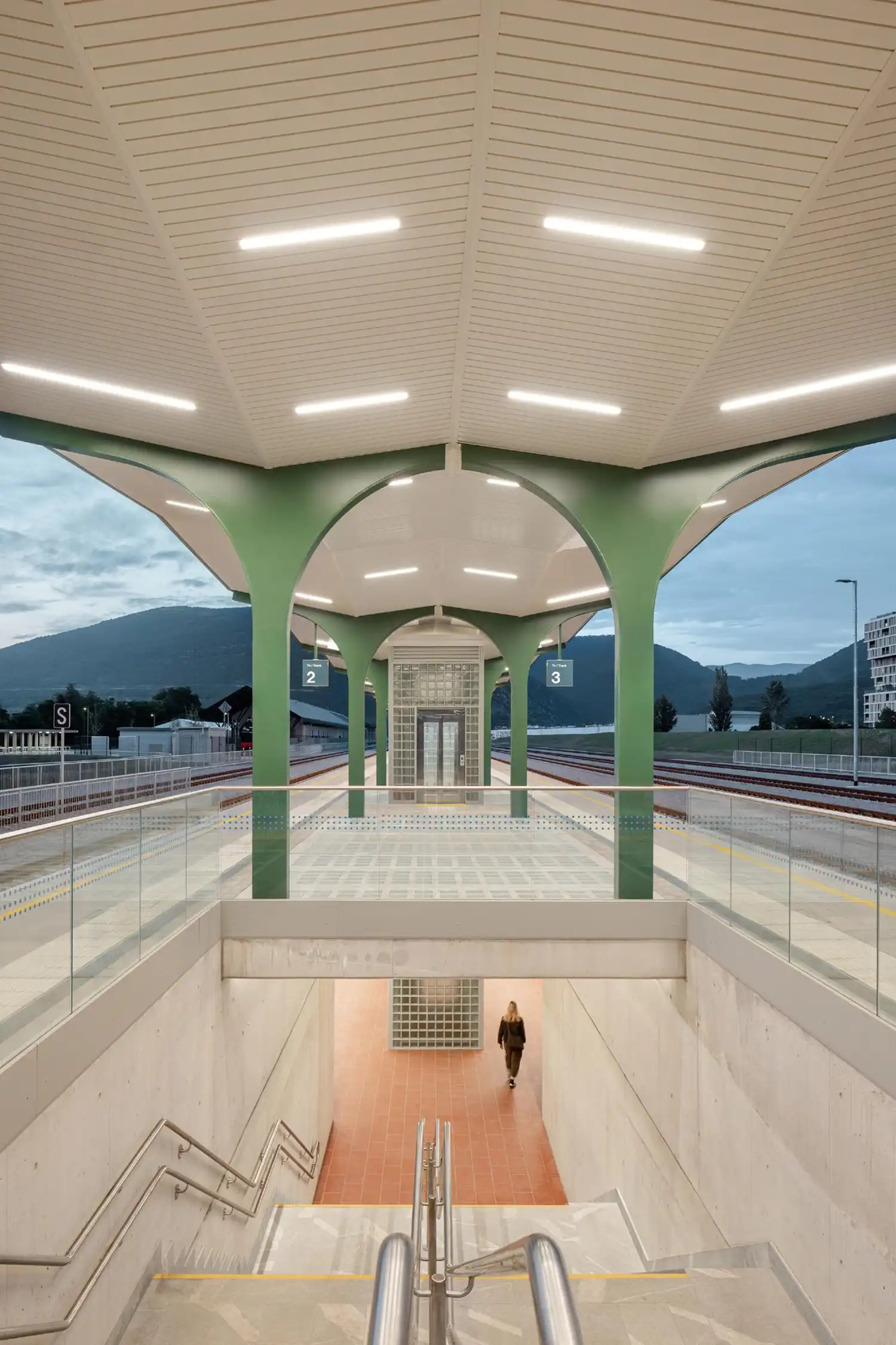
For decades, the Transalpina Station, mere meters from the Piazza Transalpina border, represented separation. Today, revitalized and reconnected, it signifies unity. The project’s core challenge was unlocking the station area’s potential. This began with a radical railway infrastructure reconfiguration, reducing tracks from 14 to 6 and introducing a new island platform. This strategic move liberated the crucial space for the Vrtača Underpass – a safe, direct, and welcoming passage linking Nova Gorica and Gorizia for the first time.
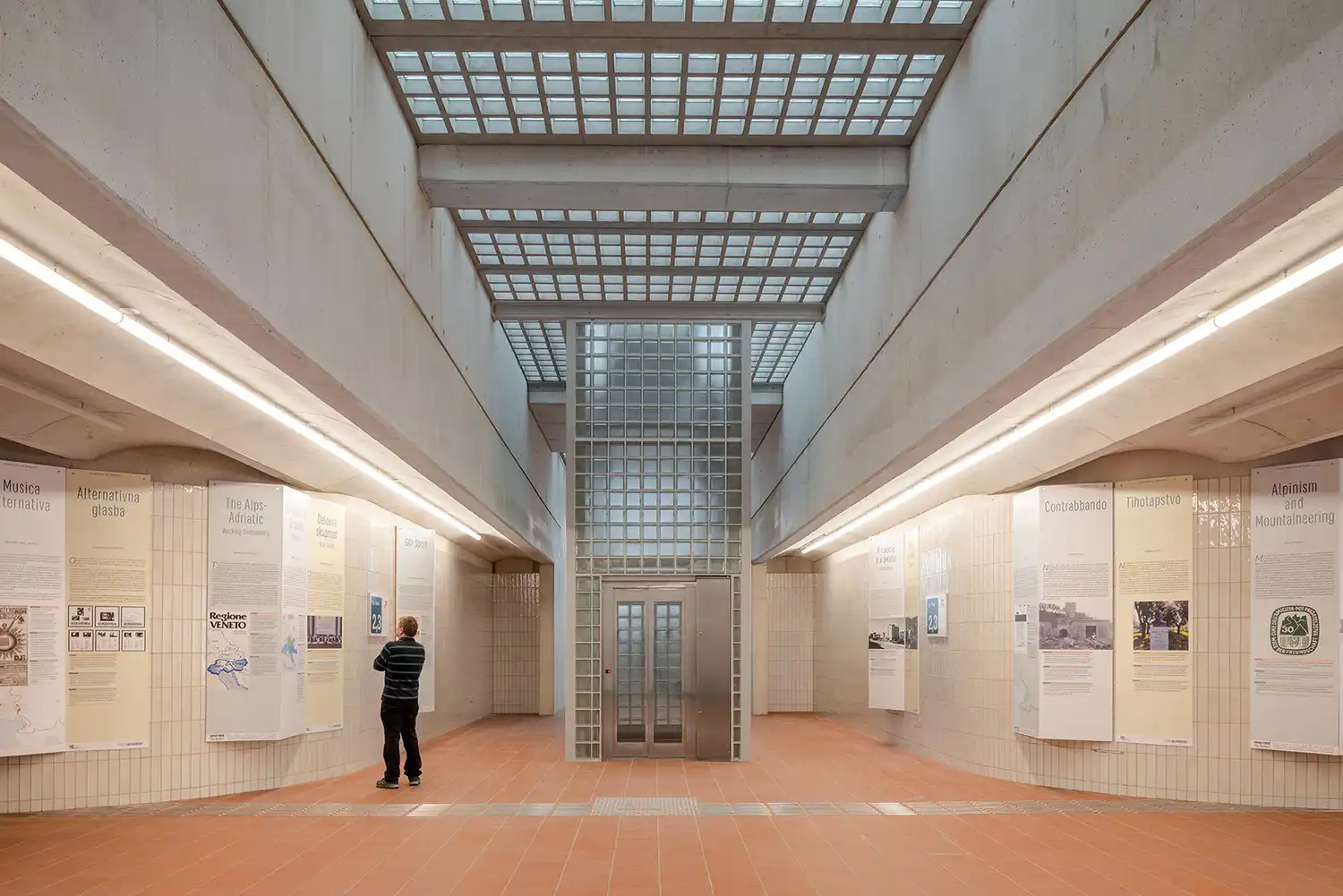
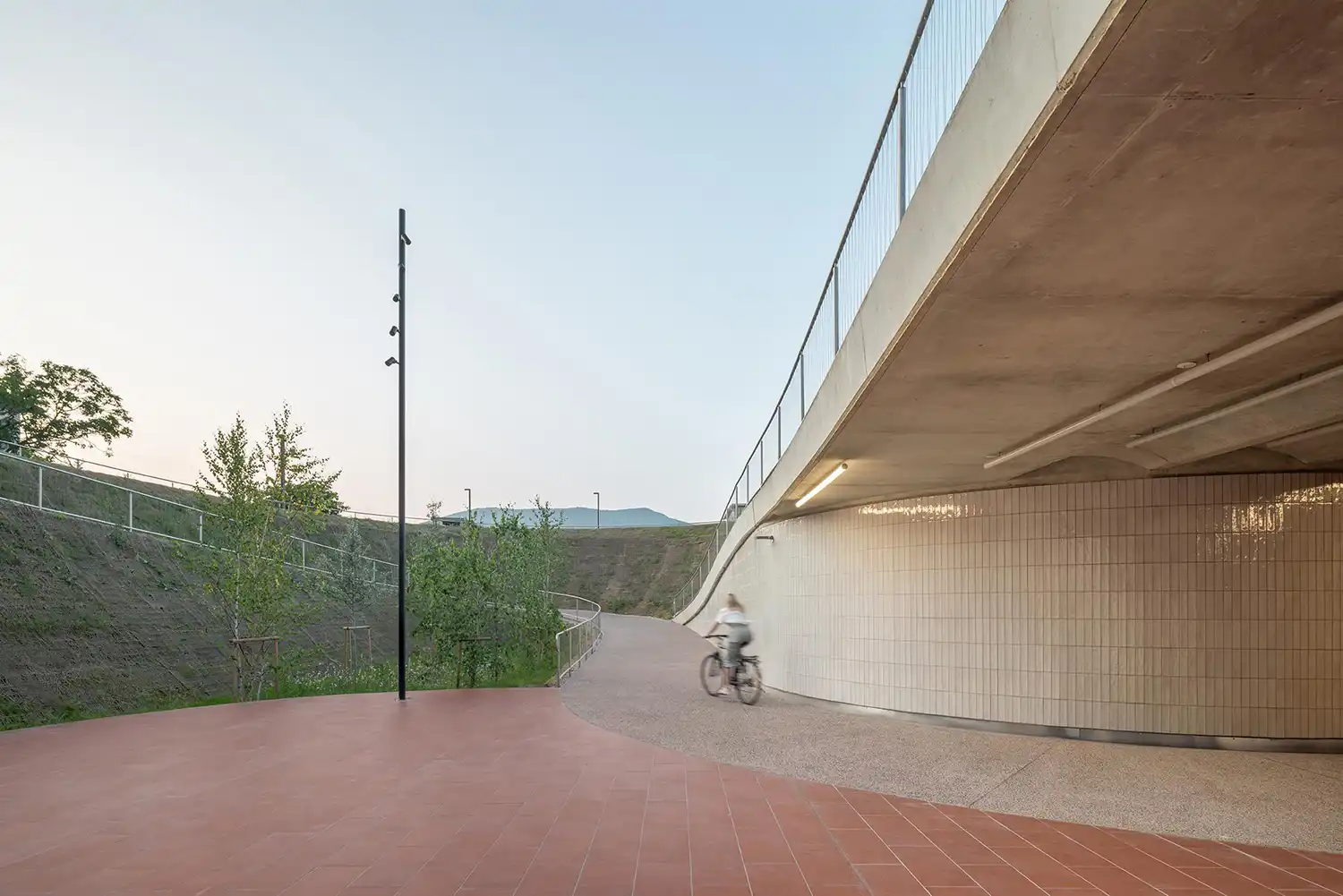
Far from a mere utilitarian tunnel, the underpass is conceived as a dynamic public space for gathering. Its off-level access integrates seamlessly with the surrounding urban fabric. Stretching 36.6 meters long and up to 8 meters wide (with dedicated zones for cyclists and pedestrians), the passage is bathed in natural light from its entries and a central skylight above the elevator to the island platform. At each terminus, the underpass opens dramatically into elliptical sunken plazas or “ditches.” Wide staircases and spiraling access ramps for cyclists wrap these plazas, guiding visitors gently back to ground level.
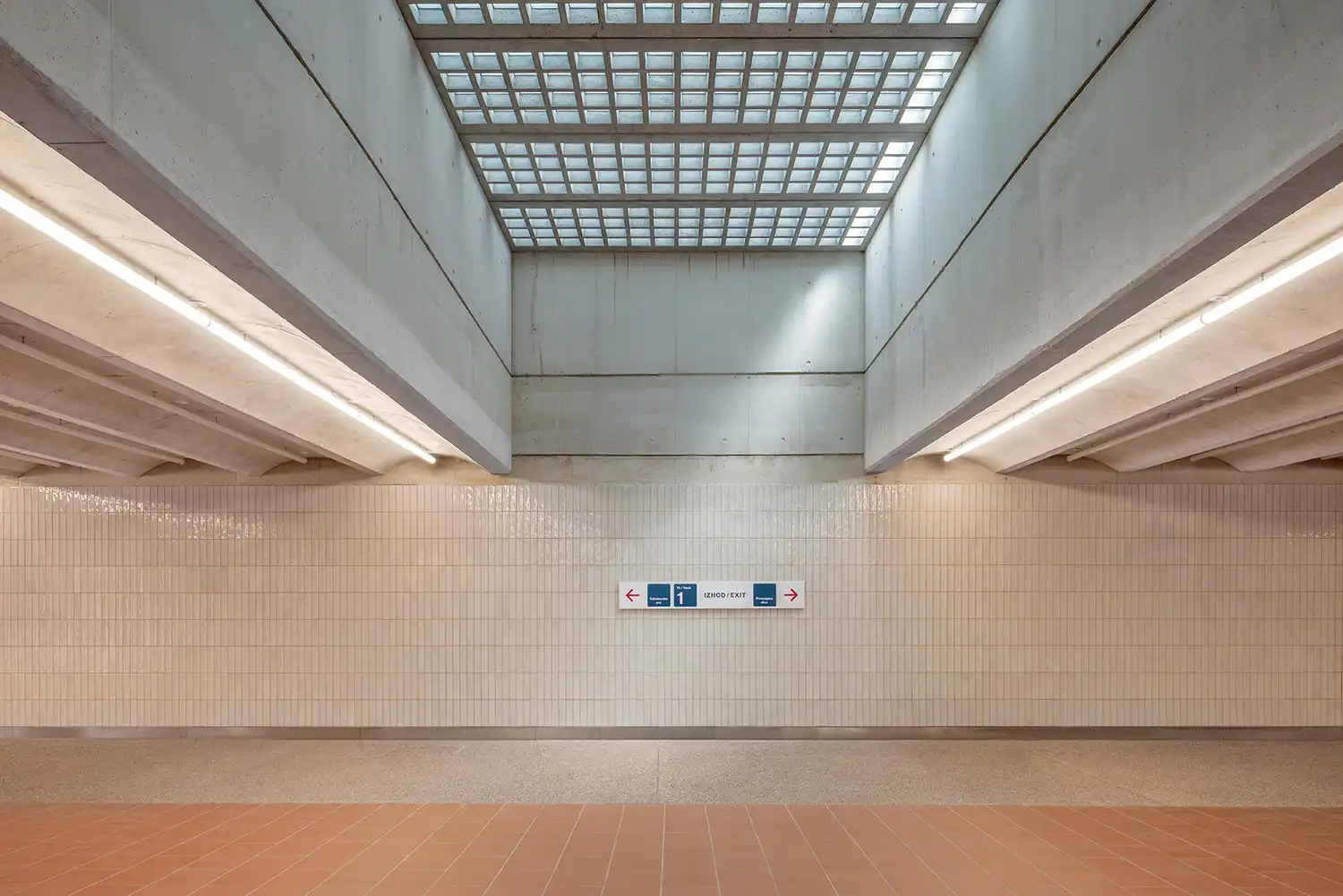
Materiality plays a key role in creating an inviting and secure atmosphere. Glossy white reflective wall tiles amplify the abundant natural daylight, while distinct colored paving clearly delineates pedestrian and cycling paths. The warm brick-colored ceramic flooring extends into the sunken plazas, where vibrant stairs and ramps ascend, creating a striking contrast with the green planted slopes that visually soften the scale and introduce nature.
Crucially, the project respected history through the careful renovation and restoration of part of the original 1906 Transalpina Station building. Working closely with the Institute for the Protection of Cultural Heritage (ZVKDS), the team redesigned the interior – focusing on the lobby, ticket offices, and a new waiting area – while meticulously restoring original features: paving, wooden panelling, columns, the side canopy, and even rediscovered frescoes.
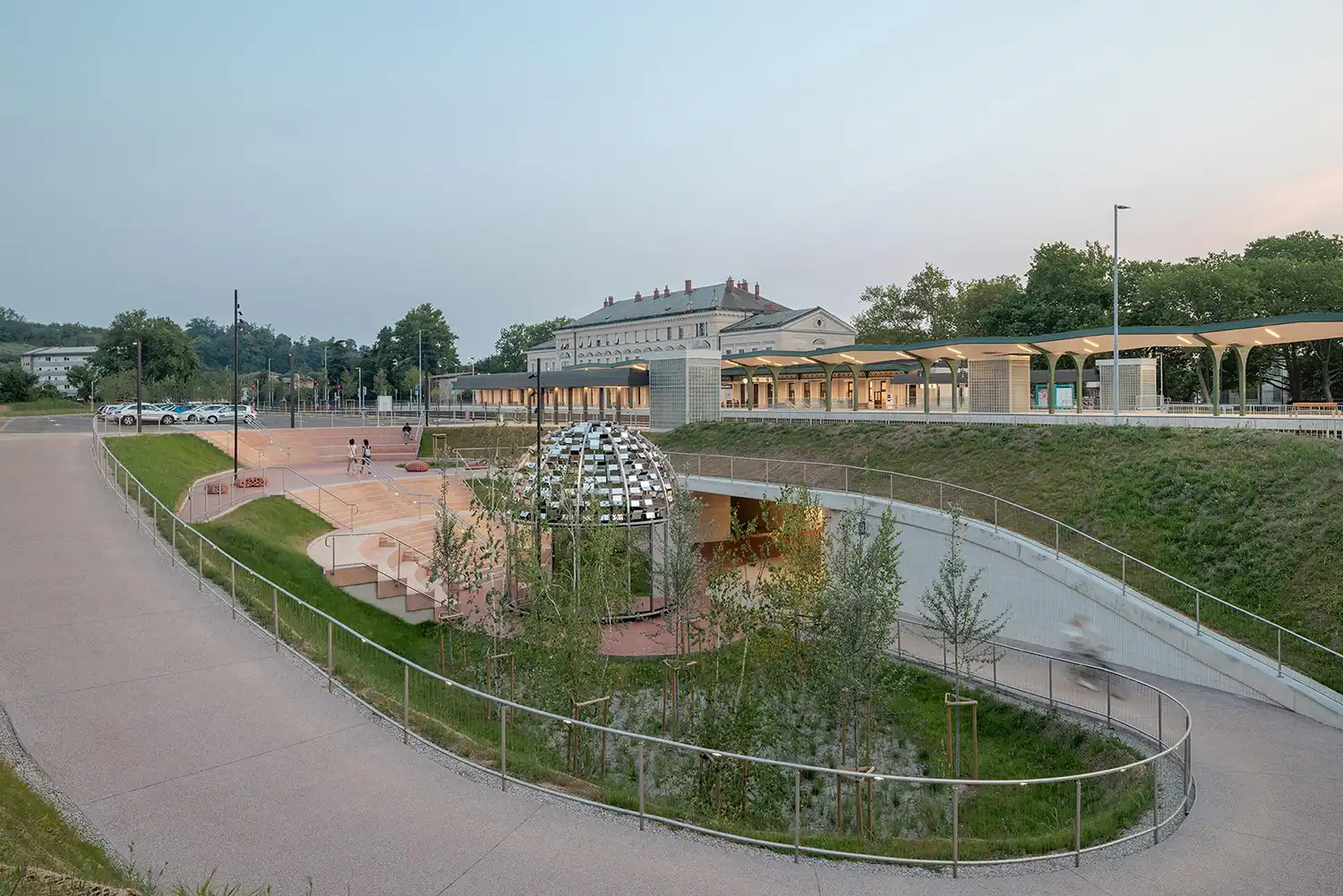
Months since opening, the impact is undeniable. The Vrtača Underpass has rapidly become an essential public link. The station area buzzes as an active urban hub – cyclists, commuters, and visitors flow effortlessly between cities, no longer divided by tracks or borders.
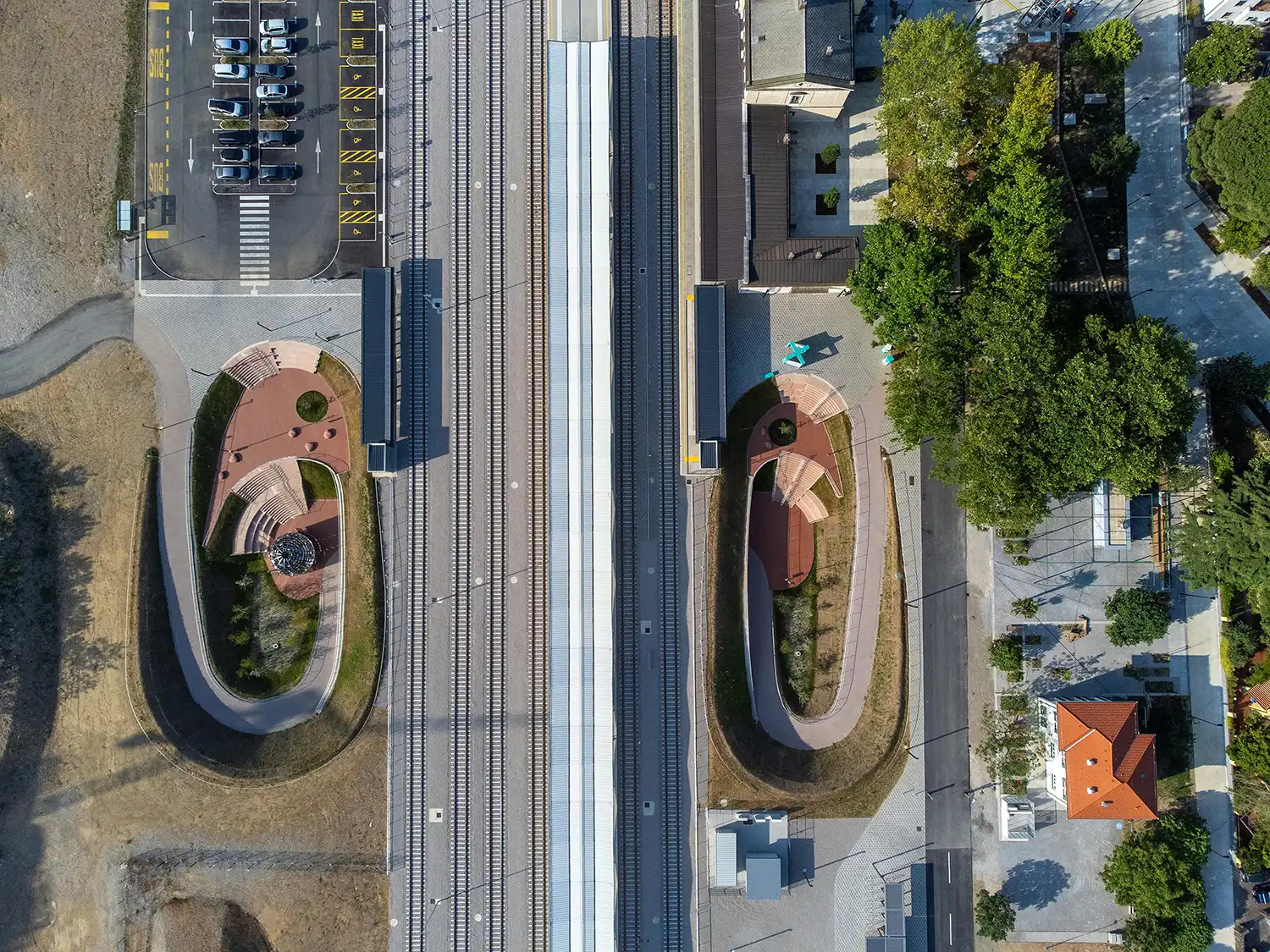
As part of GO! 2025, it transcends mere architecture: it’s a vibrant cultural connector. Hosting temporary photography exhibitions, featuring interactive installations like Ingeborg Dome in its eastern plaza, and providing direct access to events at Piazza Transalpina, the underpass is the physical and symbolic heart of a newly unified, borderless cultural landscape. Sadar+Vuga‘s design proves infrastructure can be both functional and poetic, a conduit for daily life and shared celebration.