


In the rugged landscape of Plain, Washington, where the Okanogan-Wenatchee National Forest meets the rushing currents of the Wenatchee River, a new architectural dialogue has emerged. The Wenatchee River Cabin, designed by Seattle-based firm Wittman Estes, represents a decade-long evolution from a temporary base camp into a permanent, resilient retreat. What began as a client’s 10-year ritual of camping on the half-acre lot has culminated in a 746-square-foot structure that prioritizes the sensory experience of the forest over the accumulation of possessions.
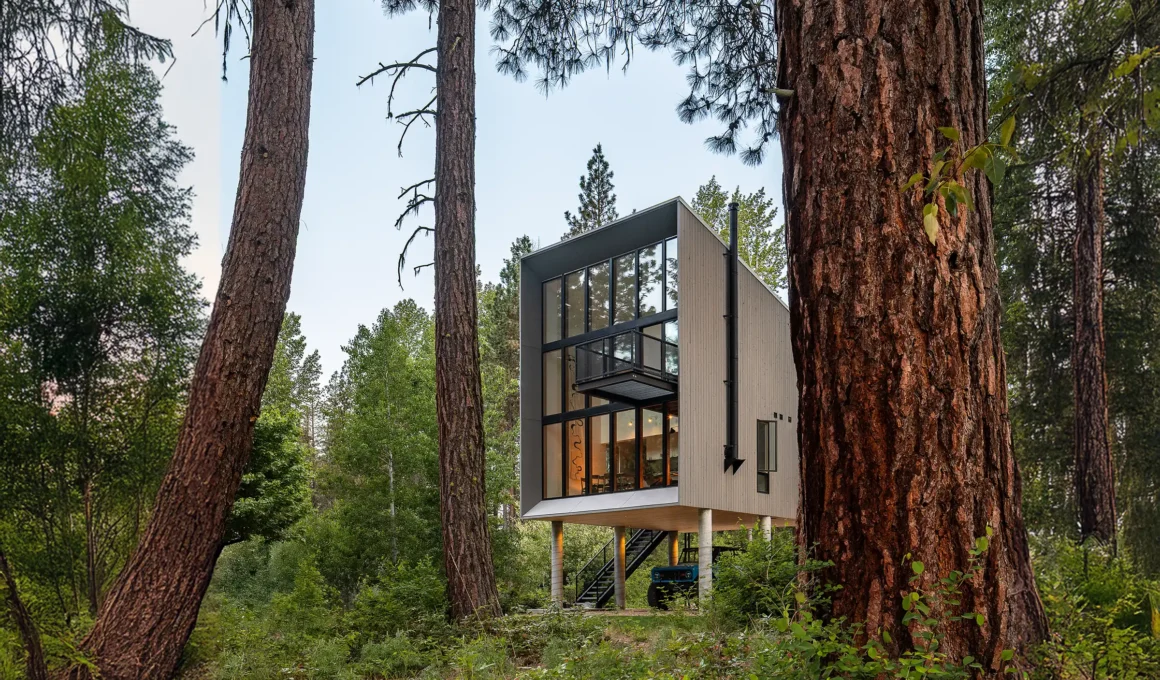
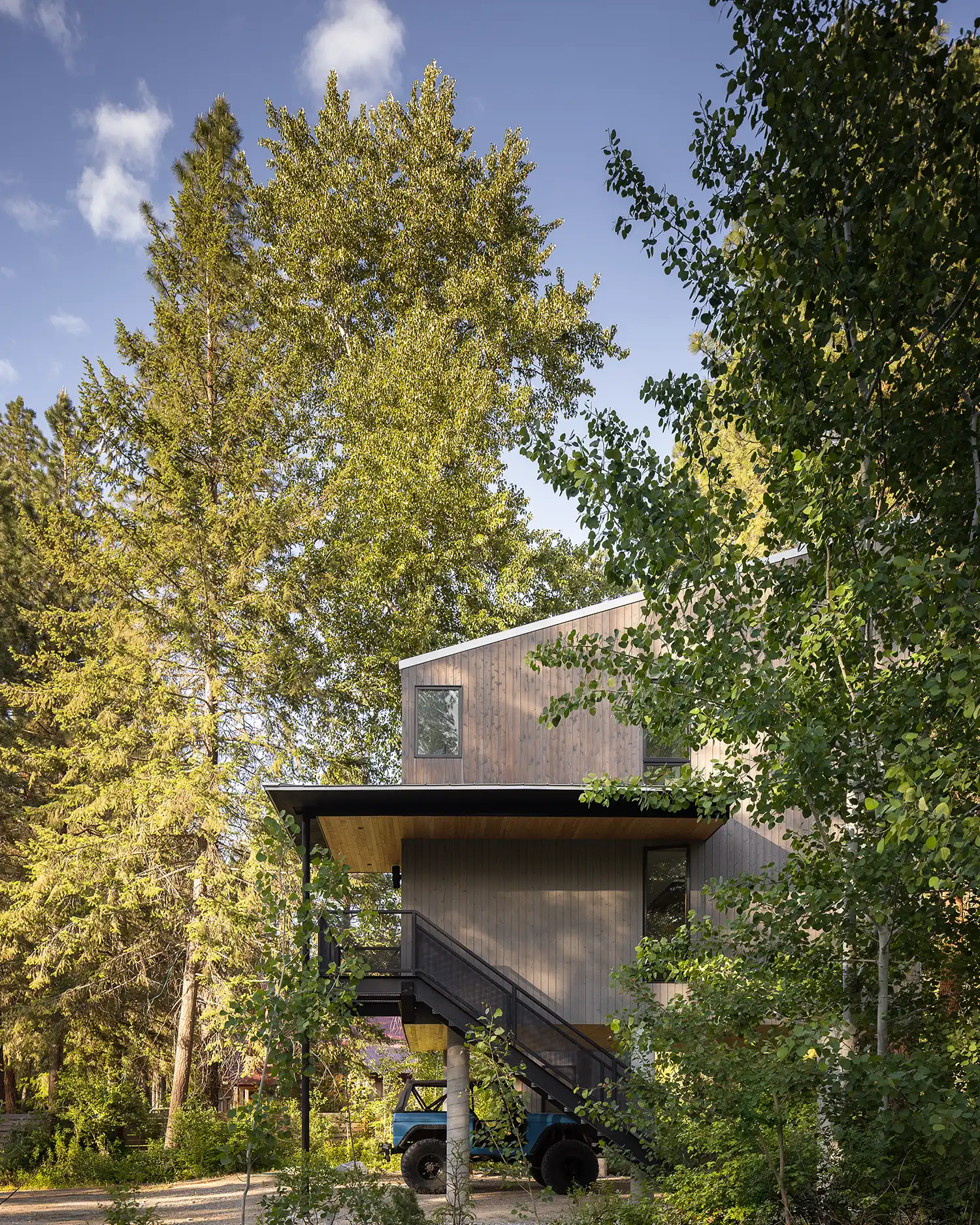
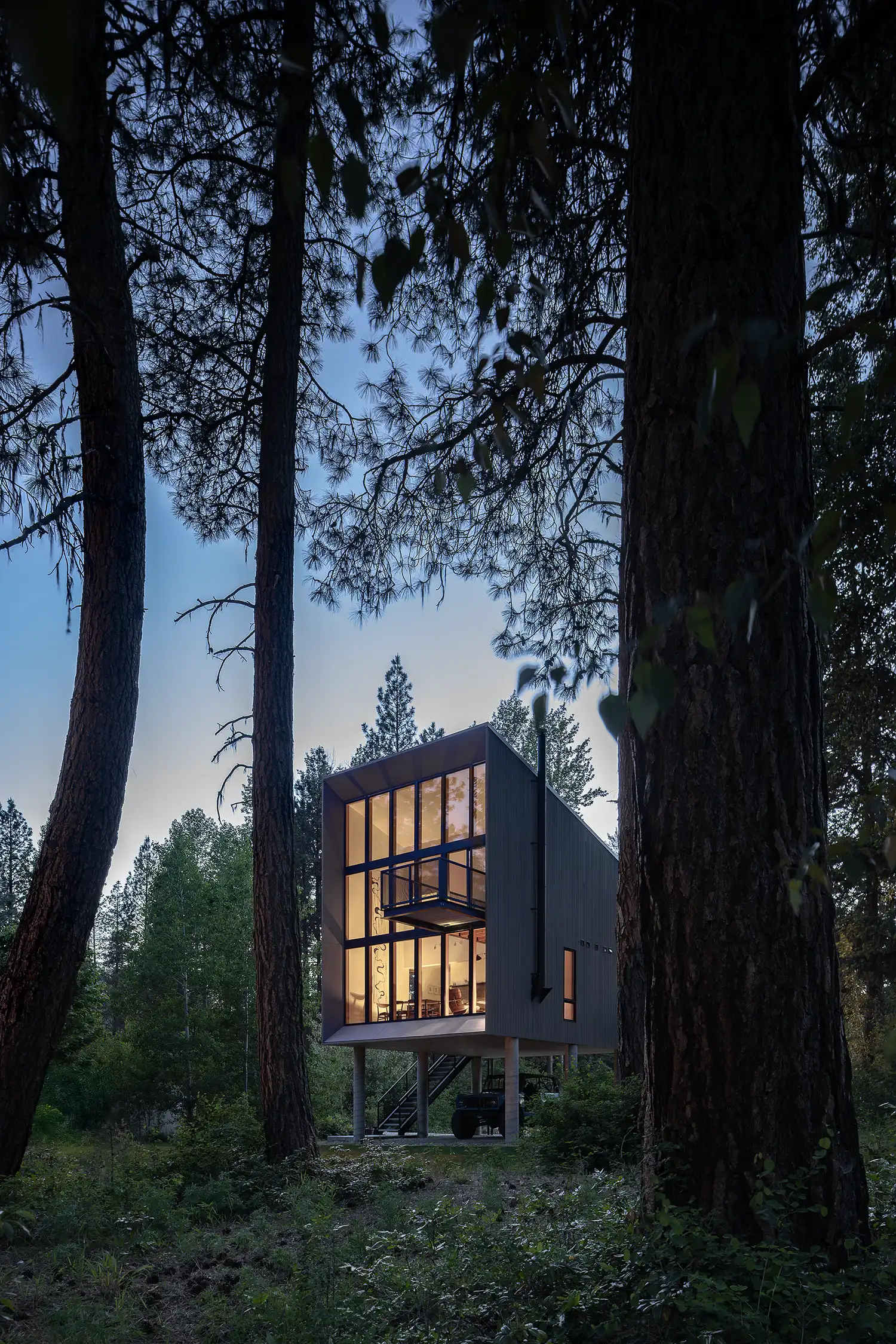
A vertical response to a horizontal landscape was necessitated by the site’s unique environmental constraints. Nestled within a delicate riparian buffer and a 100-year floodplain, the cabin’s footprint is strategically compact. To mitigate the risk of seasonal flooding, the architects elevated the main living volume ten feet above the forest floor on six slender concrete columns. This structural elevation does more than provide safety; it creates a dramatic “base camp” atmosphere, offering a covered ground-level workspace where the owner—a lifelong metalworker—restores vintage vehicles protected from the Pacific Northwest’s snow and rain.
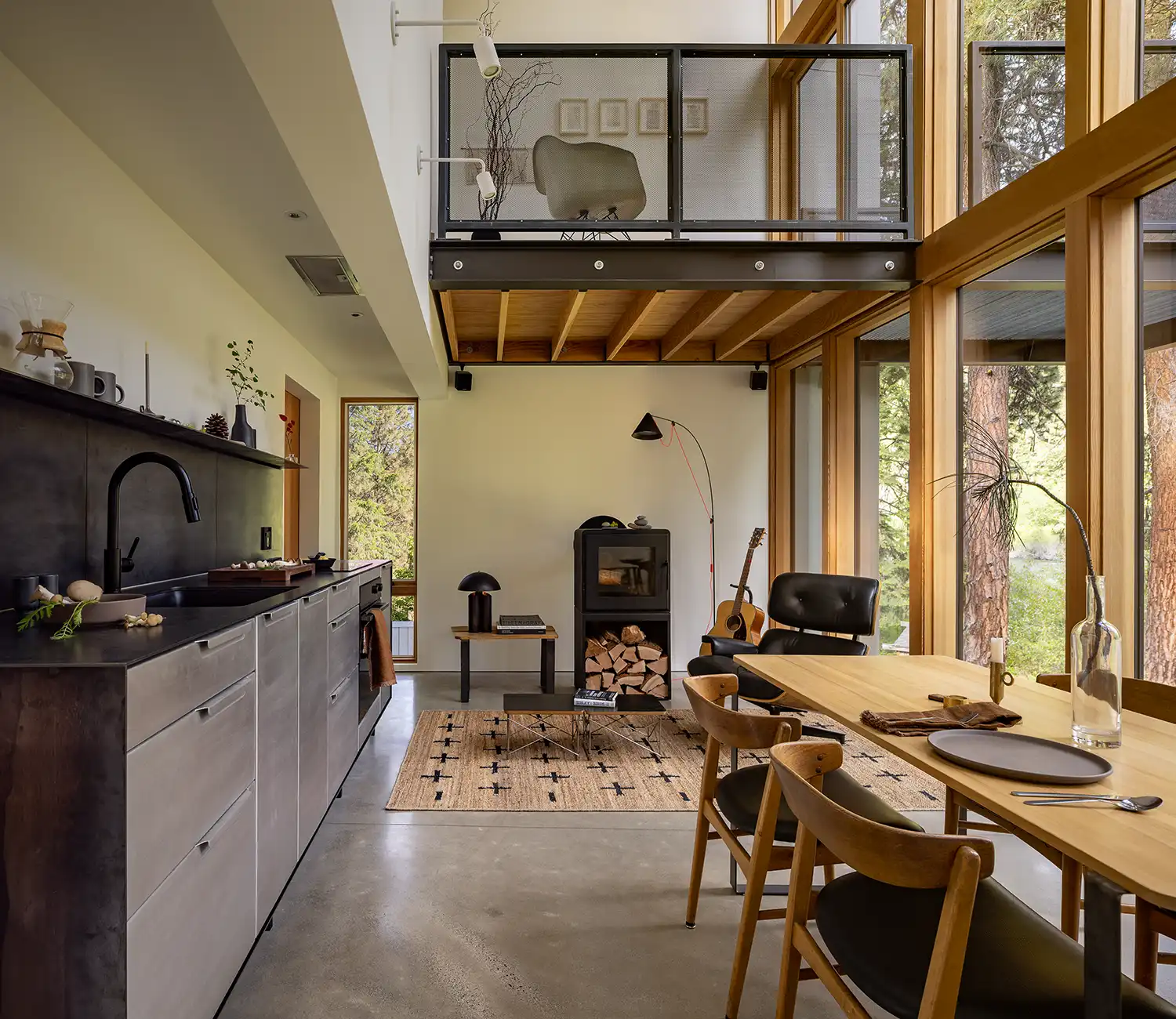
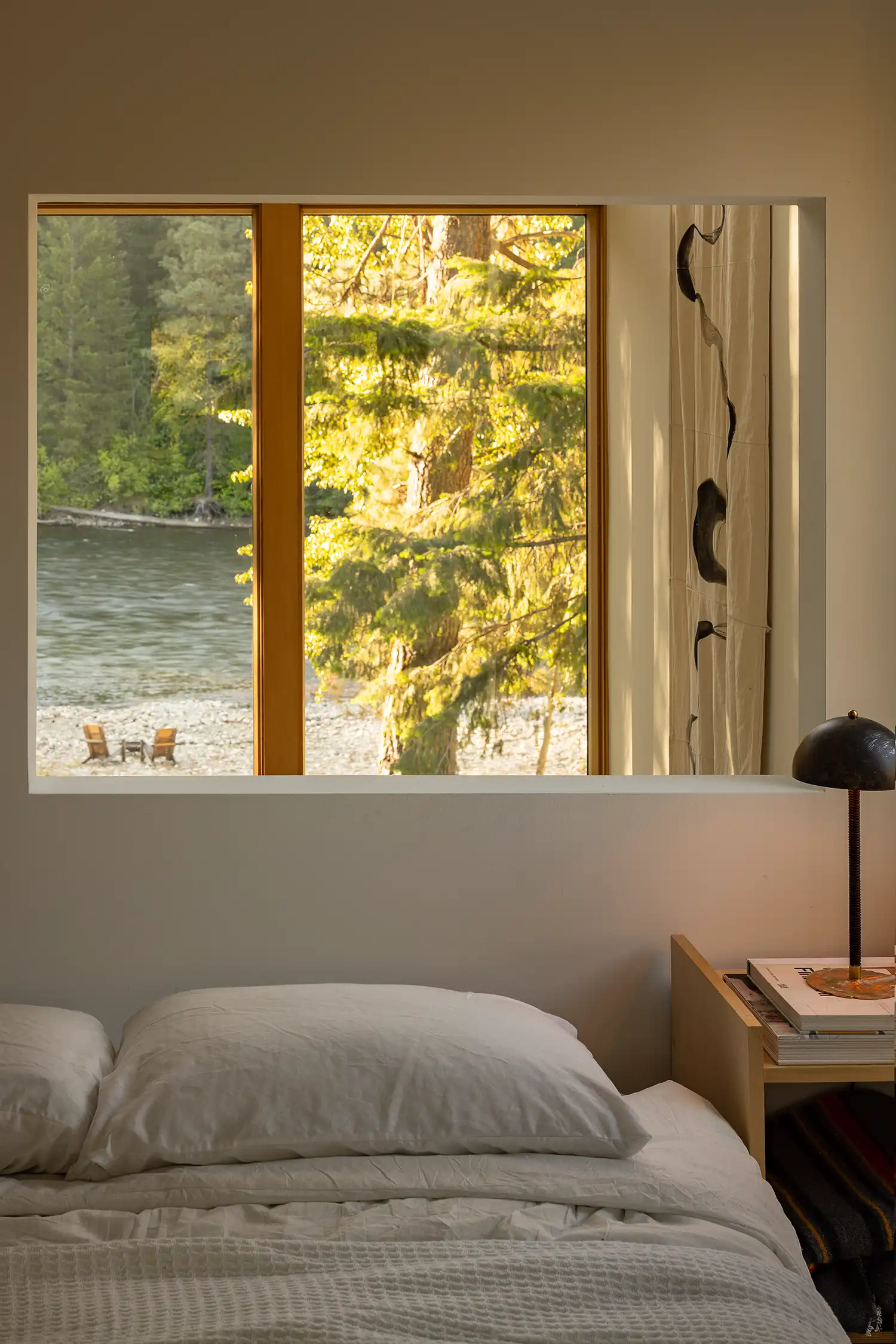
The interior volume is defined by a singular, cinematic gesture: a twenty-foot-wide by twenty-four-foot-high window wall that acts as a living lens. This expansive glazing focuses the gaze directly toward the river while effectively screening neighboring properties, fostering an intimate connection with the water’s edge. Inside, the layout is a study in vertical efficiency. The middle level houses a fluid kitchen, dining, and living area, while the upper mezzanine contains the primary bedroom and a dedicated office space. A view portal in the bedroom allows for visual continuity, looking down over the living area and out toward the river beyond.

Materiality and craftsmanship bridge the gap between professional design and personal labor. The palette is one of tactical durability, utilizing raw steel, concrete, and locally sourced cedar to withstand the region’s harsh freeze-thaw cycles. The project served as a canvas for the client’s own expertise; he fabricated the hot-rolled steel kitchen countertops, the backsplash, and the intricate metal mesh guardrails. This hands-on involvement reinforces the cabin’s “tough” aesthetic, ensuring the structure ages gracefully rather than decaying in the damp climate.
Sustainability is woven into the modest scale of the project rather than being treated as an additive feature. By “living small,” the home minimizes its environmental impact through a reduced physical footprint and the use of high-efficiency systems, including an air-source heat pump and a primary wood-burning stove. The choice of Port Orford cedar soffits and white oak flooring adds a tactile warmth to the minimal interior, creating a soft backdrop for the changing mountain light and the owner’s collection of artwork by Nikki Sugihara.
Ultimately, the Wenatchee River Cabin serves as a manifesto for a life lived in closer proximity to the elements. It is a structure that acknowledges its interdependence with the surrounding ecosystem, shifting from a weekend retreat to a full-time residence during a global transition toward remote work. Through the vision of Matt Wittman and his team, the cabin demonstrates that simplicity is not a lack of complexity, but a deliberate choice to favor experience and environment over the superfluous.