


When sound enters a room, you want it to be clear, crisp, and alive. What you don’t want is for echoes to fill the space and sound waves to reverberate back to the listener’s ears. A muffled room can also be bothersome, causing people to speak louder than necessary just so others can properly hear them.
Acoustic panels are a great option to help balance out sound within the venue; however, they aren’t a one-size-fits-all solution. Continuing to add more and more wall panels can make the problem worse, leaving you with space that loses all of its natural ambience and appears to be flat and “dead.” A comprehensive approach leveraging a whole-room acoustic system is a more strategic and cost-effective approach.
Taking the extra step to plan out the space from a holistic point of view is key. And the acoustic industry is taking note. There is a shift from installing one-off panel installations to more coordinated, full-room strategies. Here’s why the shift toward whole-room acoustic solutions makes sense.
From Reactive to Proactive Acoustic Planning
Not too long ago, a room’s acoustics would be fixed after the designers did their work. The room would be painted, new furniture would be purchased, and carpets or hardwood floors would be installed. But on move-in day, when everything was in its place, the unnatural sound or echo in a room would dampen the mood.
Today, more and more contractors and designers are looking at acoustic planning from a wider lens. They are considering their selections and how they will impact the acoustics of the space. Soft furnishings, for instance, can help absorb sound waves, while wooden interiors may need to be brightened up with panels and diffuser systems. This holistic approach is essential when designing a smart music room, where every element contributes to the overall clarity and sound quality.
A one-off approach can cause more problems. Panels would be added as Band-Aid fixes, but not truly solve the issue at hand. But with a comprehensive approach, there’s the opportunity to create a space with fewer reverberations and echoes and increased speech intelligibility. Aesthetics and comfort can also be considered as part of the design. This can help create more lively environments, which allow for immersive audio and better vocal clarity.
Key Aspects of Whole-Room Acoustic Planning
Every space has its own distinct needs. A concert hall in a high school will need different treatments than an open-floor workplace or even a small recording studio. Even still, there are similarities in terms of how to properly treat rooms from an acoustic perspective.
Ceilings, Corners, and Walls
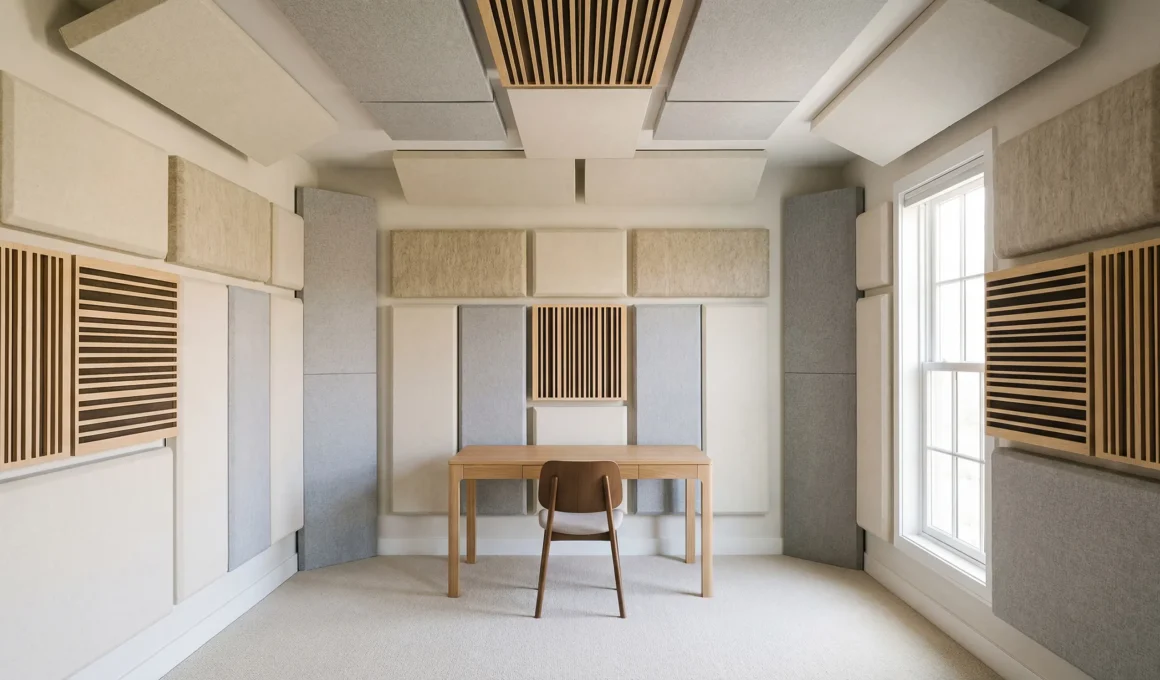
While traditional panels are used for walls, modern-day acoustic systems include treatments for walls in addition to ceilings and corners. Ceiling clouds and hanging baffles can manage overhead reflections. Ceiling clouds run horizontally, while hanging baffles run vertically. They are lightweight, versatile, and oftentimes fabric-wrapped to help reduce echoes from above while also dampening noise from high-ceilings. These treatments can be particularly helpful in open-plan spaces, such as offices, classrooms, hotels, or restaurants.
Bass traps can be added to corners to help control low-frequency energy. Bass waves often create standing waves at specific frequencies. The purpose of bass traps is to literally trap these waves, tackling low-frequency buildups that make bass sound muddy.
Wall panels shouldn’t be forgotten. They are necessary in improving sound quality within interiors by helping to absorb sound waves, reduce echoes, and minimize reverberations. Panels work by converting sound energy into heat energy, dampening sound reflections through their porous materials. Together with ceiling fixtures and bass traps, wall panelscan be an effective solution to just about any venue.
Thoughtful Placement
You could have all the right types of acoustic treatments, but if they aren’t placed or installed properly, then the space may sound just as bad or worse than when you started! That’s why it’s often highly recommended to work with a professional acoustic solutions team. They’ll know exactly where panels should be placed and how to best maximize sound clarity while reducing echoes.
In general, panels are most effective at ear level, which is roughly three to six feet from the ground. They should be placed evenly throughout the room, rather than put into clusters.
In terms of corners, thick foam or bass traps can be useful in controlling low-frequency buildup. Specifically, they can be placed in corners with wall-to-wall and wall-to-ceiling intersections where low-frequency tends to accumulate. Prioritize placing them in the front corners, followed by the rear corners, to reduce acoustic distortion.
Furniture Acoustics
Part of the whole-room shift is incorporating furniture decisions into the acoustic process. Furniture acousticsinvolves selecting pieces to manage sound by either absorbing, diffusing, or blocking sound waves to reduce noise and reverberations. Instead of picking items based solely on aesthetic purposes, designers can choose pieces that will fit with the room’s theme and purpose as well as help with the acoustics.
Soft, upholstered chairs and couches can absorb energy, as can large area rugs. These items can be added to an office to create collaborative, casual nooks or zones for employees. In a hospital or healthcare setting, plush chairs can be placed in a waiting lounge to make visitors as comfortable as possible before their appointments. Heavy curtains are another option to help manage sound.
Bookshelves filled with varied-sized books can act as effective diffusers to scatter sound and reduce harsh echoes. Specialized studio desks with angled designs or felt-backed panels can also help minimize reflections.
Final Takeaways
Creating an acoustically sound space is much more than adding a few panels to the walls. There is an art to finding what treatments — from the floors to the ceilings — are necessary and how best to design the venue with aesthetics and acoustics in mind.