




In the last decade, the concept of a “retail space” has undergone a radical transformation. We have moved from the era of massive inventory display to an era of curated experience. For years, the IKEA model—the famous “fixed path” or “forced flow” layout—was considered the gold standard for maximizing exposure. However, modern consumer psychology and the rise of digital integration have shifted the paradigm.
Today, the most successful retail environments, led by the strategic evolution of giants like Zara, prioritize a different set of values: agility, perceived scarcity, and sensory prestige.
1. From “Forced Flow” to “Organic Exploration”
While IKEA’s labyrinth is designed to trigger the “Gruen effect”—where a customer is intentionally disoriented to encourage impulse buys—modern high-end retail focuses on Free-Flow layouts.
In a Zara store, there is no single path. Instead, the space is organized into thematic islands. This design strategy accomplishes three critical goals:
-
Autonomy: It grants the shopper a sense of control, reducing “shopping fatigue.”
-
Dynamic Discovery: By rotating these islands weekly, the brand creates a sense of “newness.” If a customer doesn’t purchase an item today, the fear that it will be moved or sold by next Tuesday drives immediate conversion.
-
Micro-Environments: Each section acts as a standalone gallery, allowing for specific lighting and acoustic signatures tailored to the micro-collection on display.
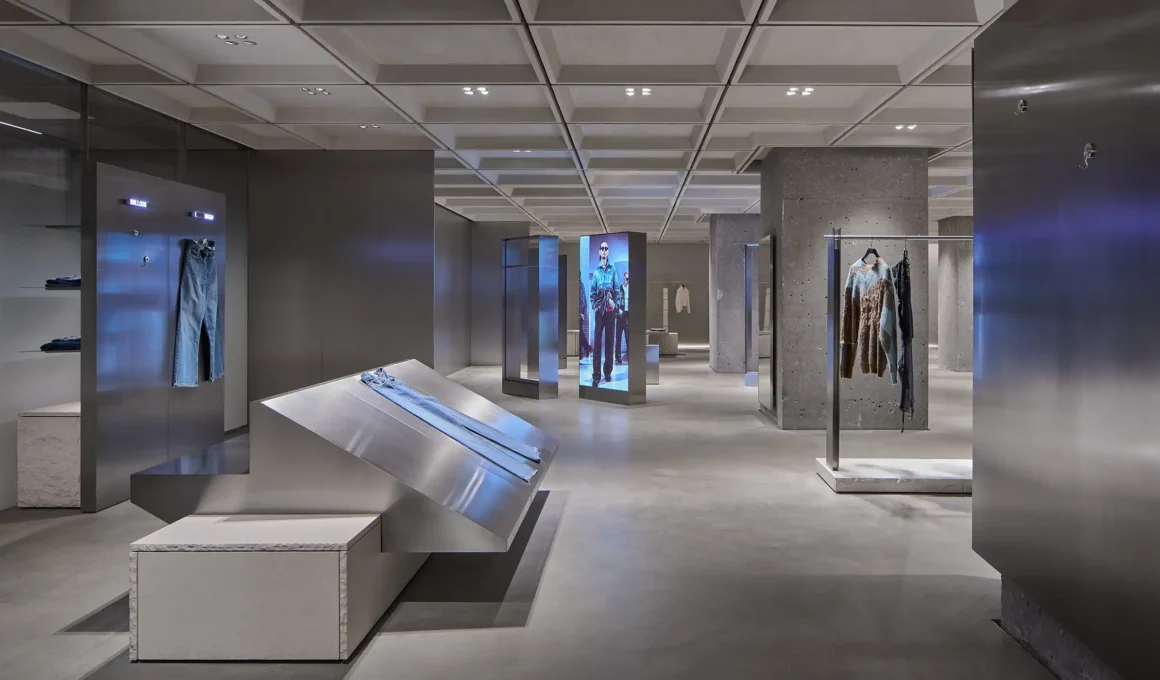
- Featured Project: The imagery accompanying this article showcases the Zara Nanjing Xinjiekou Flagship by AIM Architecture, a prime example of how industrial materiality and fluid spatial design can redefine the shopping journey.
2. The Decompression Zone and the “Luxury Threshold”
The first 5 to 15 feet of a retail space are the most critical. Known in retail science as the Decompression Zone, this is where shoppers transition from the outside world into the brand’s reality.
Zara excels here by utilizing a “High-End Mirroring” technique. Despite being a mass-market retailer, the entrance mimics a luxury boutique: wide open spaces, high ceilings, and minimal product density. By keeping the entrance uncluttered, the retailer increases the perceived value of every item further inside. The message is clear: you are not in a discount warehouse; you are in a curated fashion house.
3. Data-Driven Visual Merchandising: The RFID Revolution
The secret to optimizing a retail space in 2026 lies in what is invisible to the eye. Zara’s layout isn’t just an aesthetic choice; it is a physical manifestation of real-time data. Through the extensive use of RFID (Radio Frequency Identification), the store layout can be adjusted based on real-time feedback:
-
Fitting Room Analytics: If a jacket is taken to the fitting room 100 times but never purchased, the system flags a design or fit issue.
-
Heat Mapping: If a specific “island” isn’t receiving foot traffic, the modular furniture allows managers to reconfigure the floor plan within hours, not weeks.
-
Stock Fluidity: The retail space becomes a “phygital” hub where the distinction between a warehouse and a showroom disappears.
4. The Fitting Room as the “Bottom of the Funnel”
If the storefront is the “hook,” the fitting room is where the transaction is finalized. Most retailers treat this area as an afterthought, but in a conversion-optimized space, it is the most important square footage.
Zara has transformed fitting rooms into high-tech conversion centers. Integrated touchscreens allow customers to request different sizes or styles without leaving the stall, keeping the momentum of the purchase alive. Furthermore, the lighting is engineered to be flattering—utilizing warm, vertical light sources that eliminate harsh shadows, directly impacting the customer’s self-perception and, consequently, their willingness to buy.
5. Materiality and the “Silent” Brand Language
In modern retail, the choice of materials is no longer just an aesthetic decision but a strategic one. To optimize sales, the environment must reduce cognitive load.
Zara uses a specific palette: neutral tones, polished concrete or high-quality resin floors, and strategic use of mirrors. This “minimalist canvas” ensures that the product—the only source of color—remains the protagonist. Furthermore, the 2026 trend dictates a shift toward Circular Architecture. High-authority retail spaces are now integrating:
-
Recycled Aluminum: For modular shelving systems that are lightweight and infinitely recyclable.
-
Acoustic Paneling: Utilizing felt or bio-based materials to dampen the “mall noise,” creating a sanctuary-like atmosphere that increases the time spent in-store (Dwell Time).
6. The “Phygital” Bridge: Logistics as Design
One of the biggest mistakes in traditional retail is treating the “Online Pickup” area as a back-office function. In a conversion-optimized layout, the Click & Collect point is a strategic destination.
By placing these hubs deep within the store, Zara forces a “second journey.” The customer who came for a pre-paid package is re-exposed to the physical collection. This is where the Cross-Selling occurs. The design of these areas is now seamless: sleek kiosks that blend with the architecture, avoiding the “post-office look” that plagues lesser retailers.
7. Strategic Synthesis: Applying the Zara Model to Any Retail Scale
To optimize a retail space, designers and business owners must look past the specific aesthetic of fast fashion and embrace the underlying logic of flexible high-performance environments. The transition from a “static shop” to a “conversion engine” requires three fundamental shifts:
-
Prioritize Flow over Density: Every square meter must serve a purpose. If a display doesn’t encourage movement or interaction, it is a liability.
-
Invest in “Moments of Truth”: Redirect the budget from general floor decor to high-impact areas like the Decompression Zone and Fitting Rooms.
-
Embrace the Data Loop: Use technology (be it RFID or simple heat-mapping) to treat the store layout as a hypothesis that needs constant testing.
The future of the brick-and-mortar store depends on its ability to offer what the screen cannot: a tactile, immersive, and psychologically rewarding journey that justifies the trip.