


Nestled within the undulating vineyards above Pezinok, Slovakia, the Ženy Víno Funk Festival has carved a niche as a boutique summer festival celebrating wine, global and local music, and authentic community. For its 2025 edition, Jakub Kolarovič Architects were tasked not just with providing shelter, but with crafting the very essence of the event’s spatial identity. Their response? A masterclass in responsive, temporary festival architecture, weaving an intricate ensemble of structures into the Slovakian landscape that speaks the language of rhythm, reuse, and place.
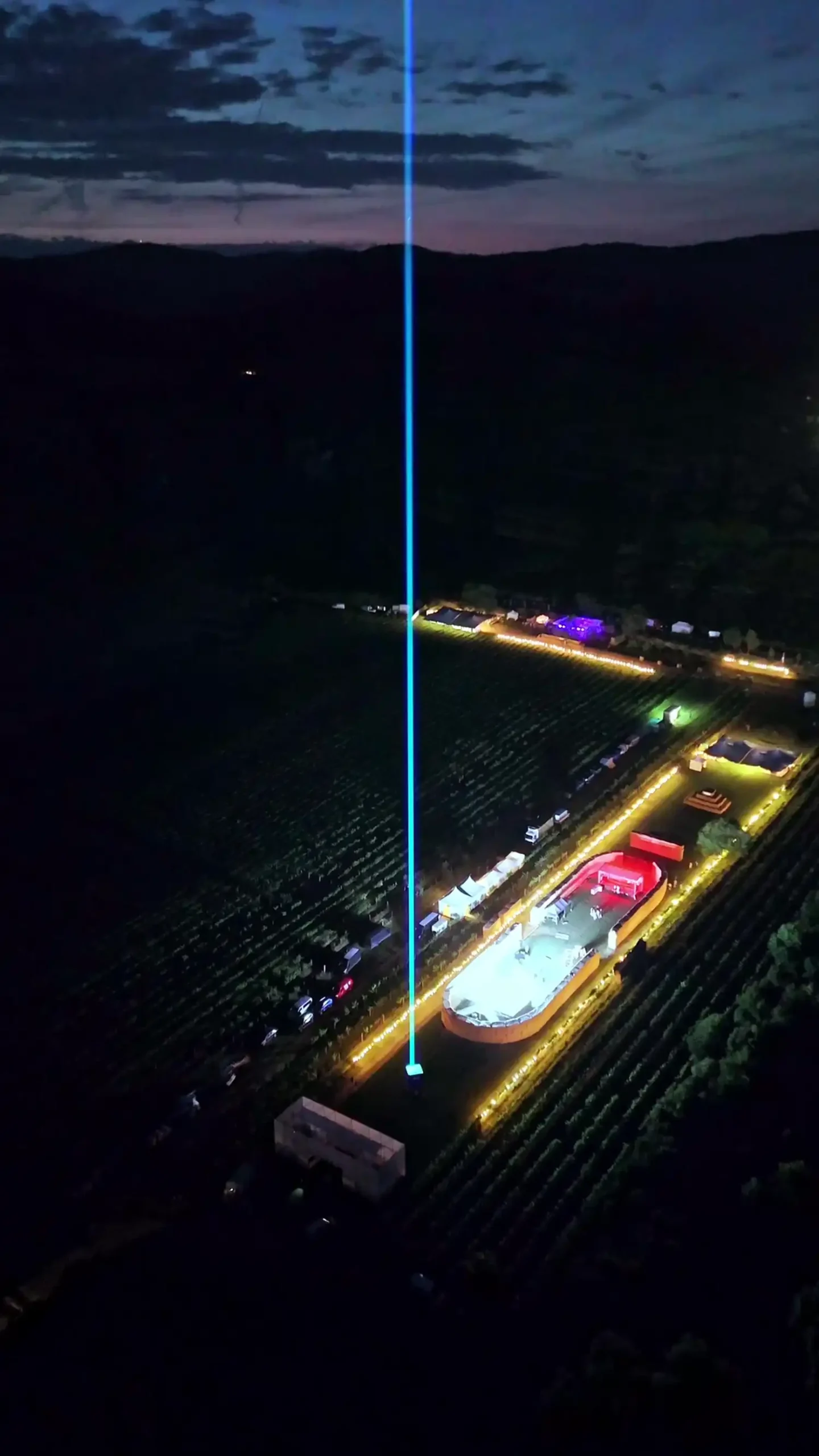
Moving beyond mere scenography, the architects conceived the festival grounds as a form of experimental urbanism. The design directly engages with the site’s defining features: the strict rhythmic geometry of vineyard rows and the sloping topography. The result is a logical, flowing layout divided into linear zones, all converging towards a central axis in the northern sector. This organization balances functional clarity with the creation of distinct atmospheric pockets, fostering both vibrant gathering and intimate discovery.
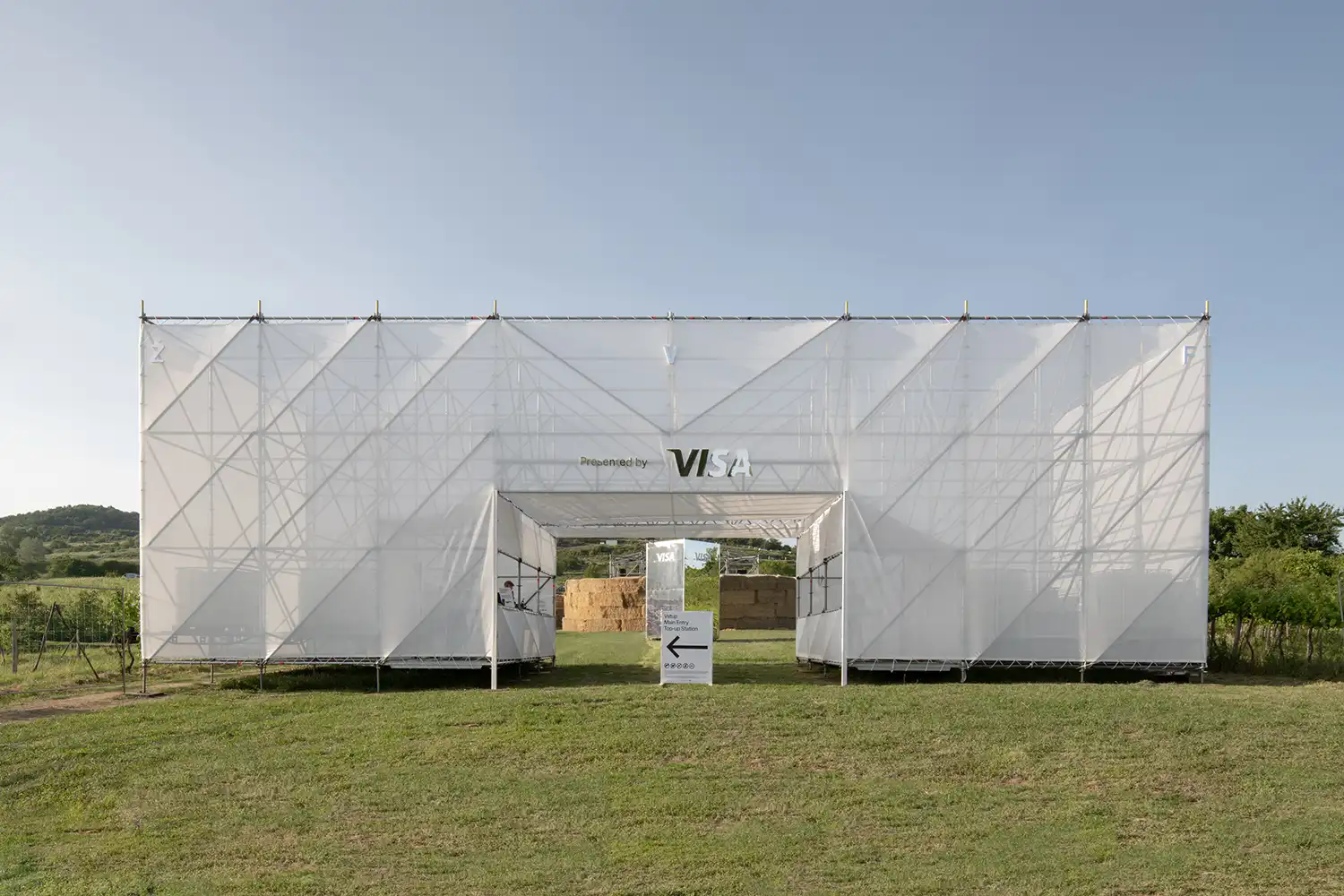
Materiality and form play crucial roles in shaping the festival experience. Employing a palette of polycarbonate, scaffolding, wood, straw, and repurposed materials, the architects created a multilayered landscape ranging from bold interventions to subtle insertions. The journey begins at the striking Entrance Gate. A temporary scaffolding construction forms its skeleton, clad in white mesh fabric with a central perforation for services. Dominating this gateway is a mirrored polycarbonate tower, acting as a luminous beacon for festival attendees day and night.
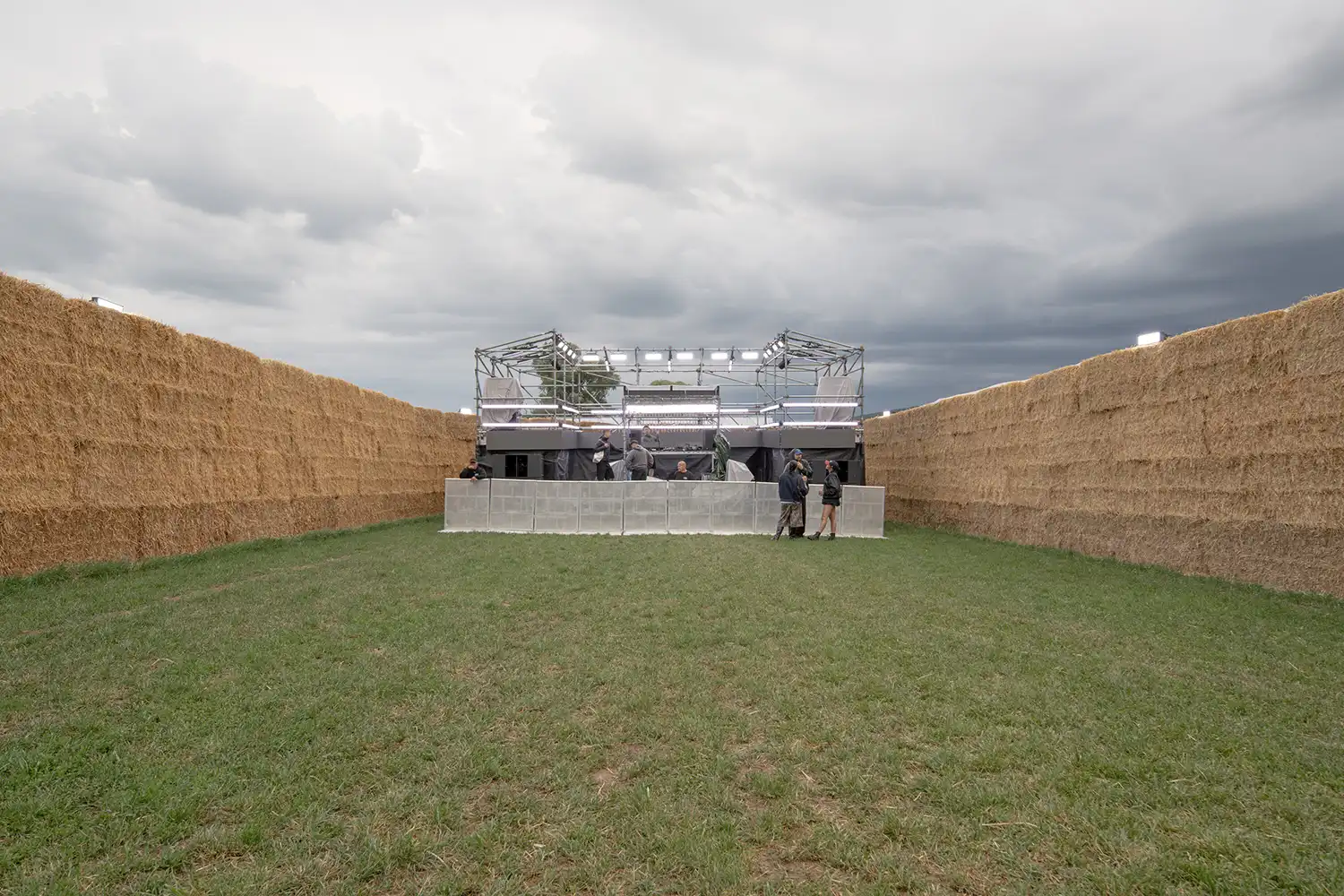
The heart of the musical experience, the Arena, showcases innovative sustainable materials. Constructed primarily from straw bales, this choice wasn’t merely aesthetic; it provides essential acoustic mitigation, protecting the surrounding vineyards from excessive sound. Its strategic, symmetrical positioning ensures smooth visitor circulation, comfortably accommodating up to 2,000 people within its surprisingly warm and textural embrace.
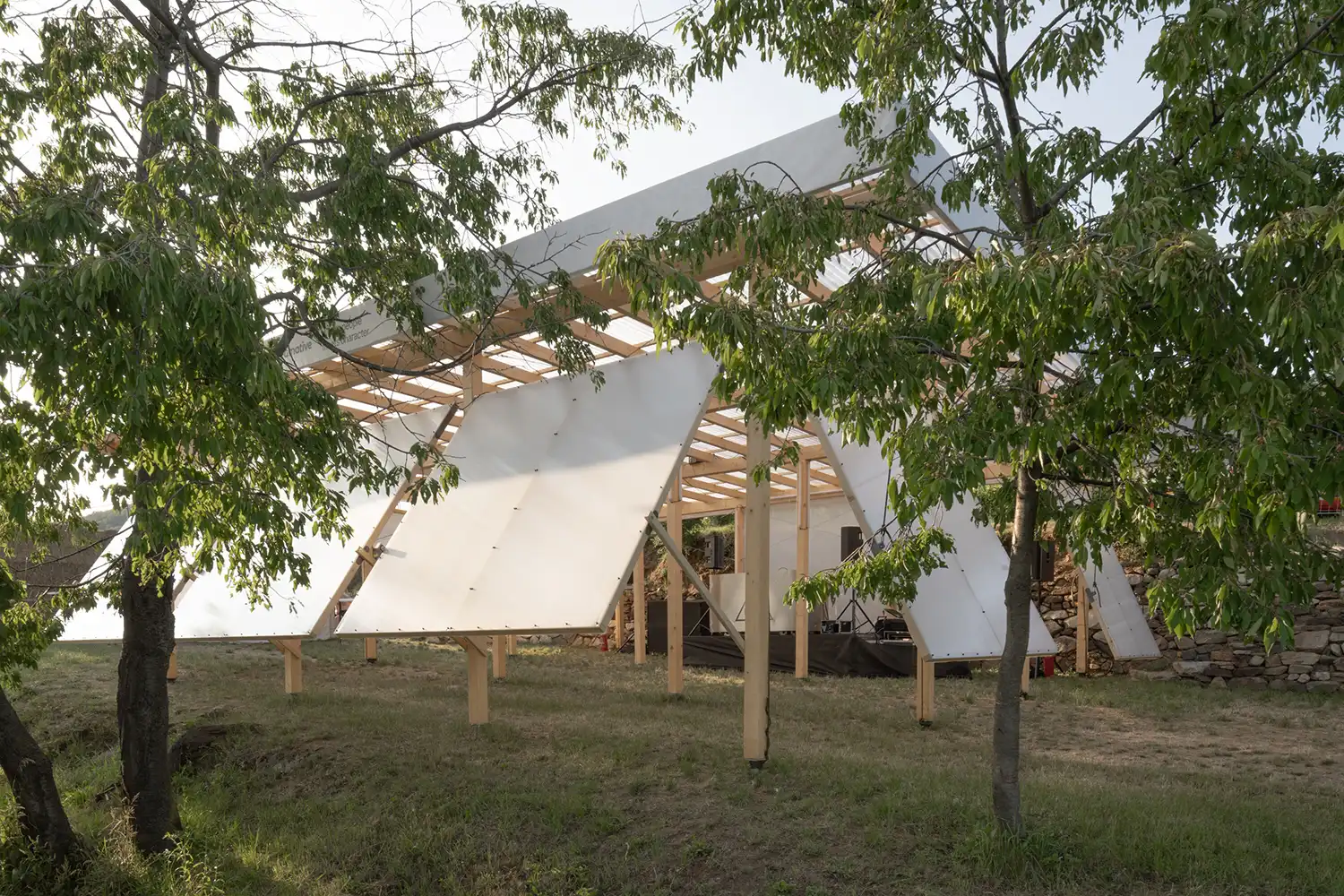
Contrasting the Arena’s earthy solidity is the Secret Stage pavilion. Designed as a variable acoustic-visual shell, this structure embodies adaptability. Its lightweight wooden construction features a façade of pivoting translucent opal polycarbonate panels. By day, panels open, inviting vineyard views and air flow; by night, they close, transforming the space into an intimate, softly glowing club venue. Notably, due to its success, this pavilion transitions from temporary architecture to a permanent fixture, retained by the city for tourism purposes.
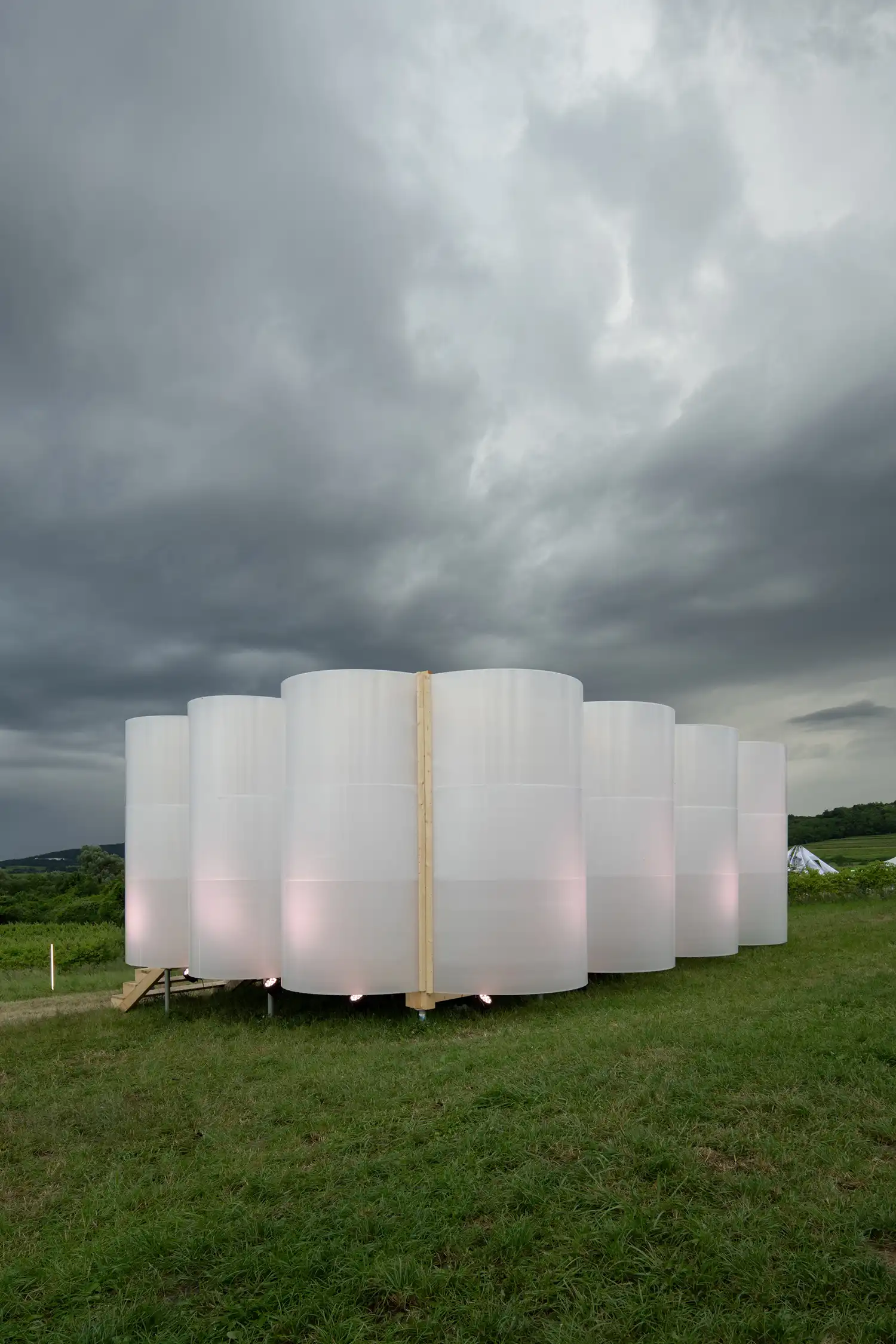
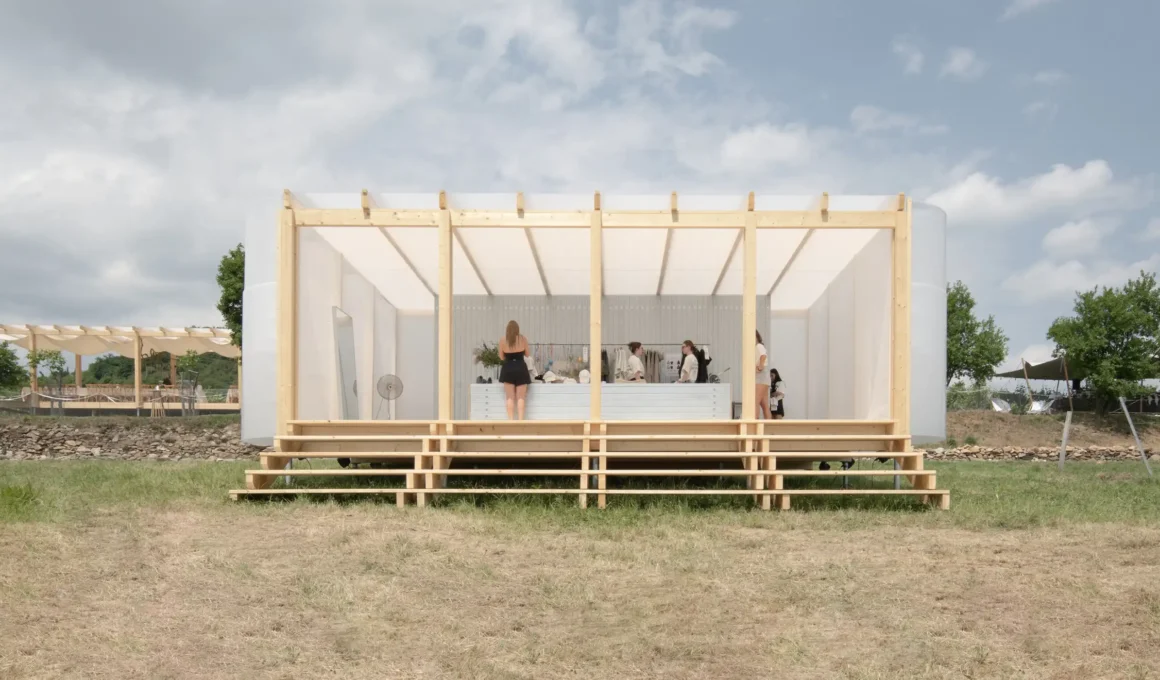
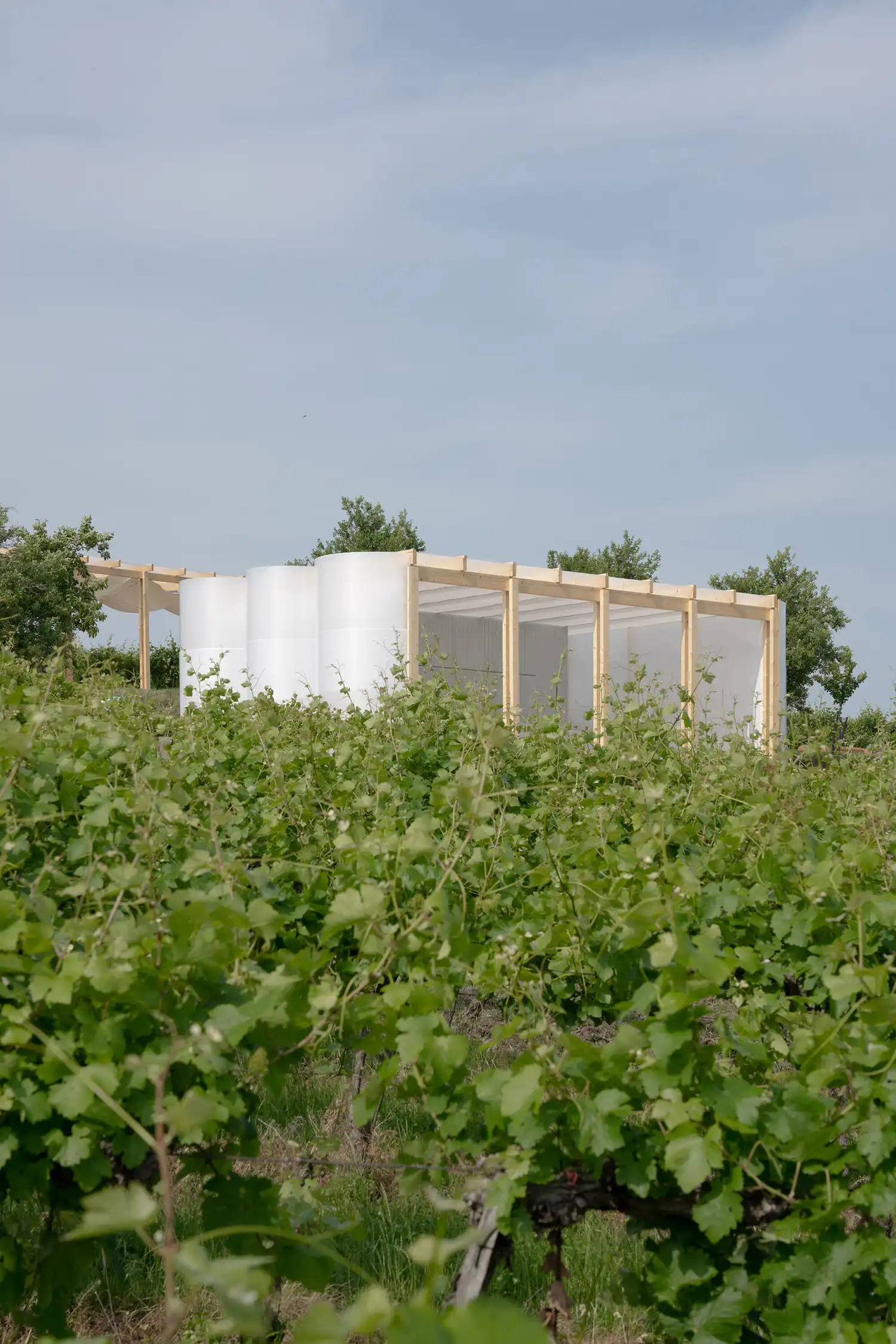
Serving as a multifunctional retail point, the Concept Store pavilion acts as a graceful transition between zones. Its design cleverly negotiates the slope with stepped seating on its open southern façade, directly engaging the vines. Clad in curved opal polycarbonate, it becomes a striking evening feature, its diffused light creating an inviting landmark. Inside, material reuse principles shine, combining steel elements with stainless steel furniture.
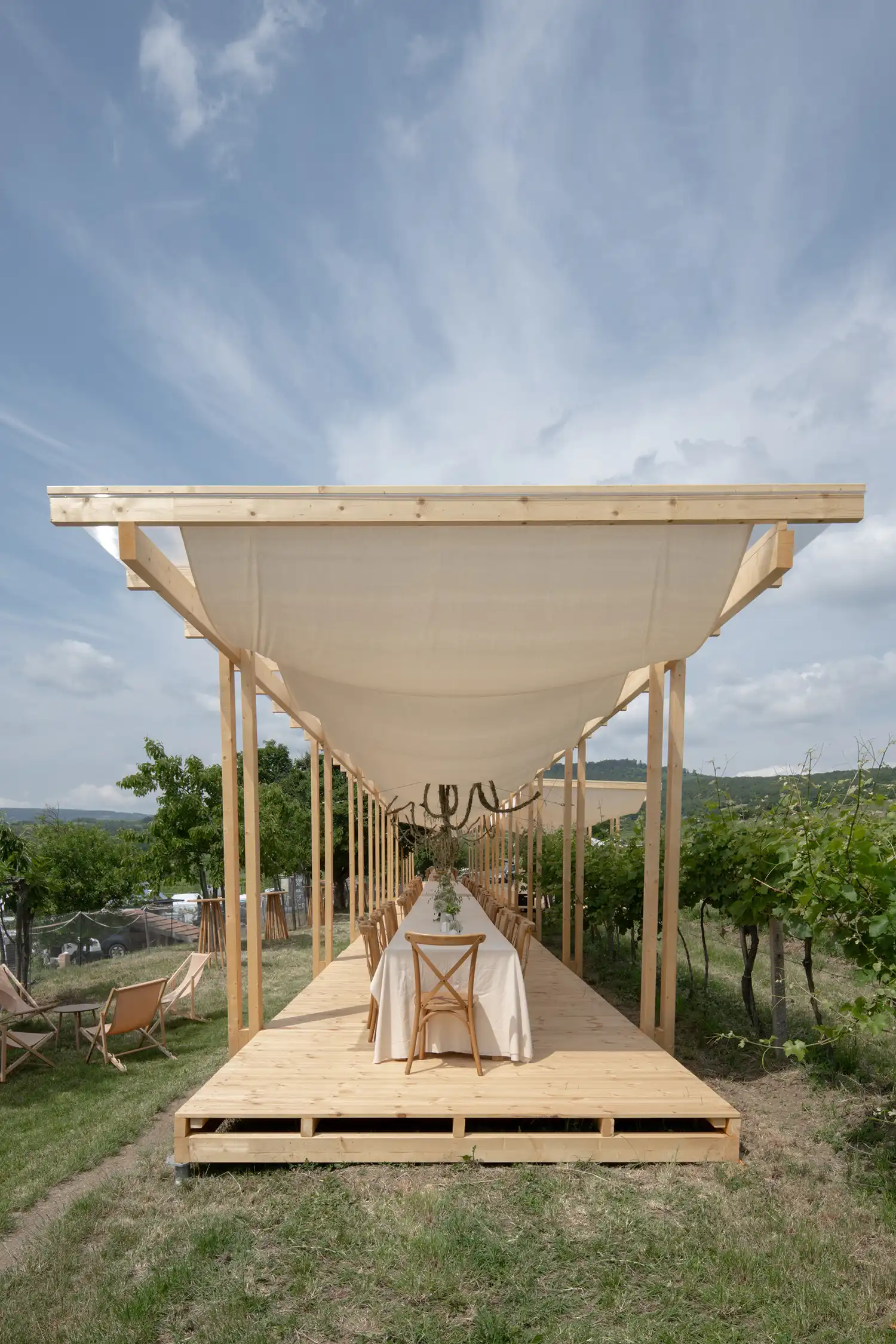
For respite and culinary enjoyment, the Experience Zone pavilion offers comfortable seating for 150 amidst the vines. Its longitudinal wooden modules deliberately echo the rhythm of the vineyard rows. Textile curtains and draped fabric ceilings, enhanced by strategic lighting design, imbue the space with a warm, rustic atmosphere, blurring the boundary between built structure and agricultural landscape.
Jakub Kolarovič Architects’ work for Ženy Víno Funk 2025 demonstrates the profound power of temporary architecture. It’s more than infrastructure; it’s an active participant in the festival narrative. Through sensitive site response, innovative use of sustainable materials, and a focus on creating diverse spatial experiences – from the energetic Arena to the contemplative Experience Zone – they have crafted a vibrant, multilayered landscape. This project reaffirms the festival as a vital platform for spatial experimentation and collective gathering, proving that temporary festival architecturecan be both deeply functional and poetically resonant, leaving a lasting impression long after the last note fades in the Small Carpathian vineyards.