


In the dense urban fabric of Sabadell, Spain, where history is measured in “palms”—the traditional Catalan unit of width—a new intervention by Vallribera Noray Arquitectes challenges the contemporary obsession with domestic excess. The project, titled 130AUS, occupies a plot just twenty palms wide (approximately four meters), replacing a dilapidated ruin with a residence that prioritizes thermal comfort and resource efficiency over sheer square footage. It is a study in “just enough,” where the constraints of a narrow, deep footprint are transformed into a sequence of light-filled volumes that breathe alongside the city’s historic rhythm.
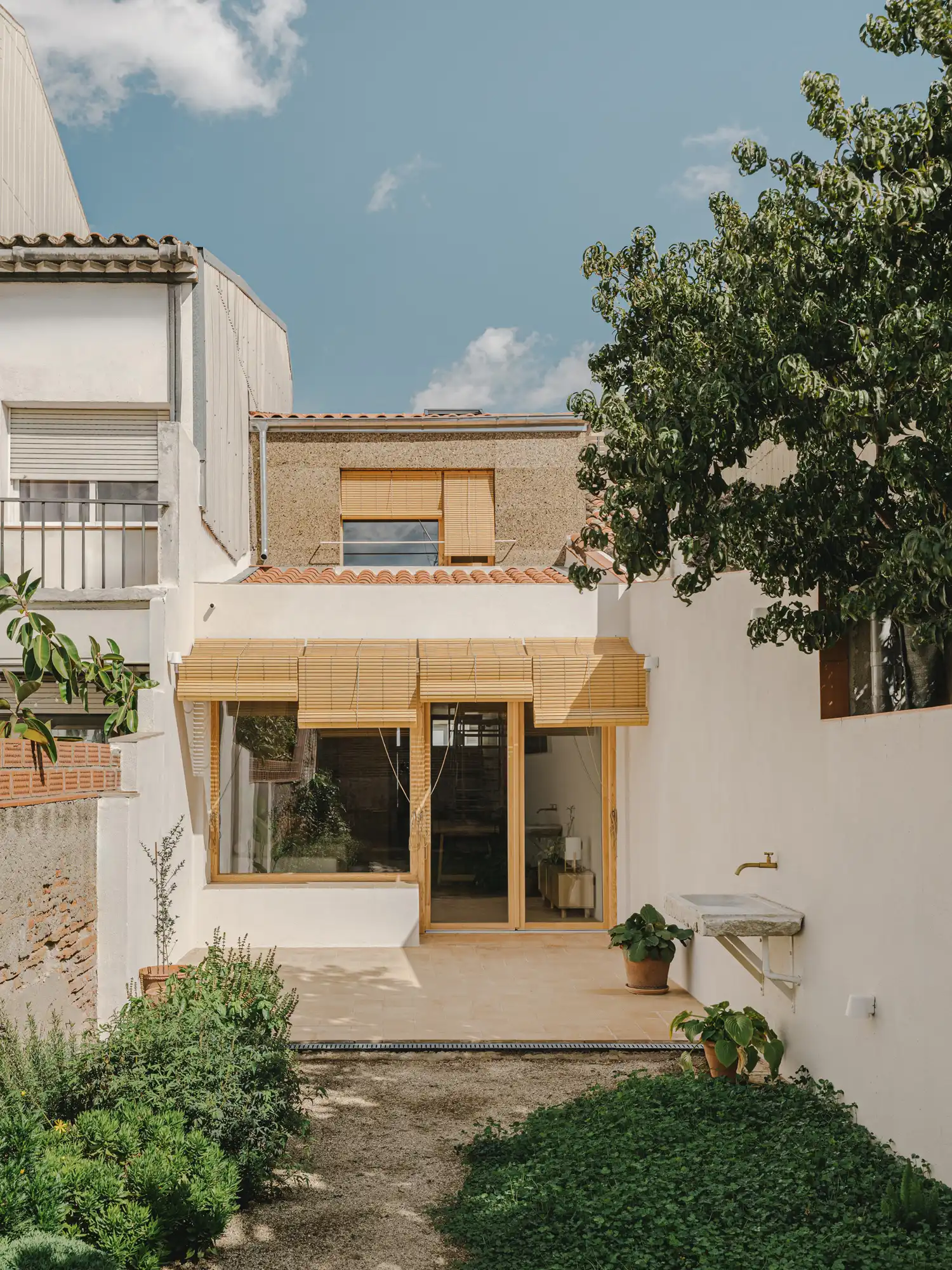
A philosophy of radical deconstruction guided the project’s inception, treating the existing ruin not as waste, but as a resource. By carefully dismantling the original structure and separating materials for a second life, the architects minimized the environmental footprint of the new build from day one. This circular approach establishes a narrative of continuity within the neighborhood; while the street-facing façade was meticulously restored to honor the local vernacular, the interior was hollowed out to create a modern sanctuary that rejects the burden of high energy bills and redundant rooms.
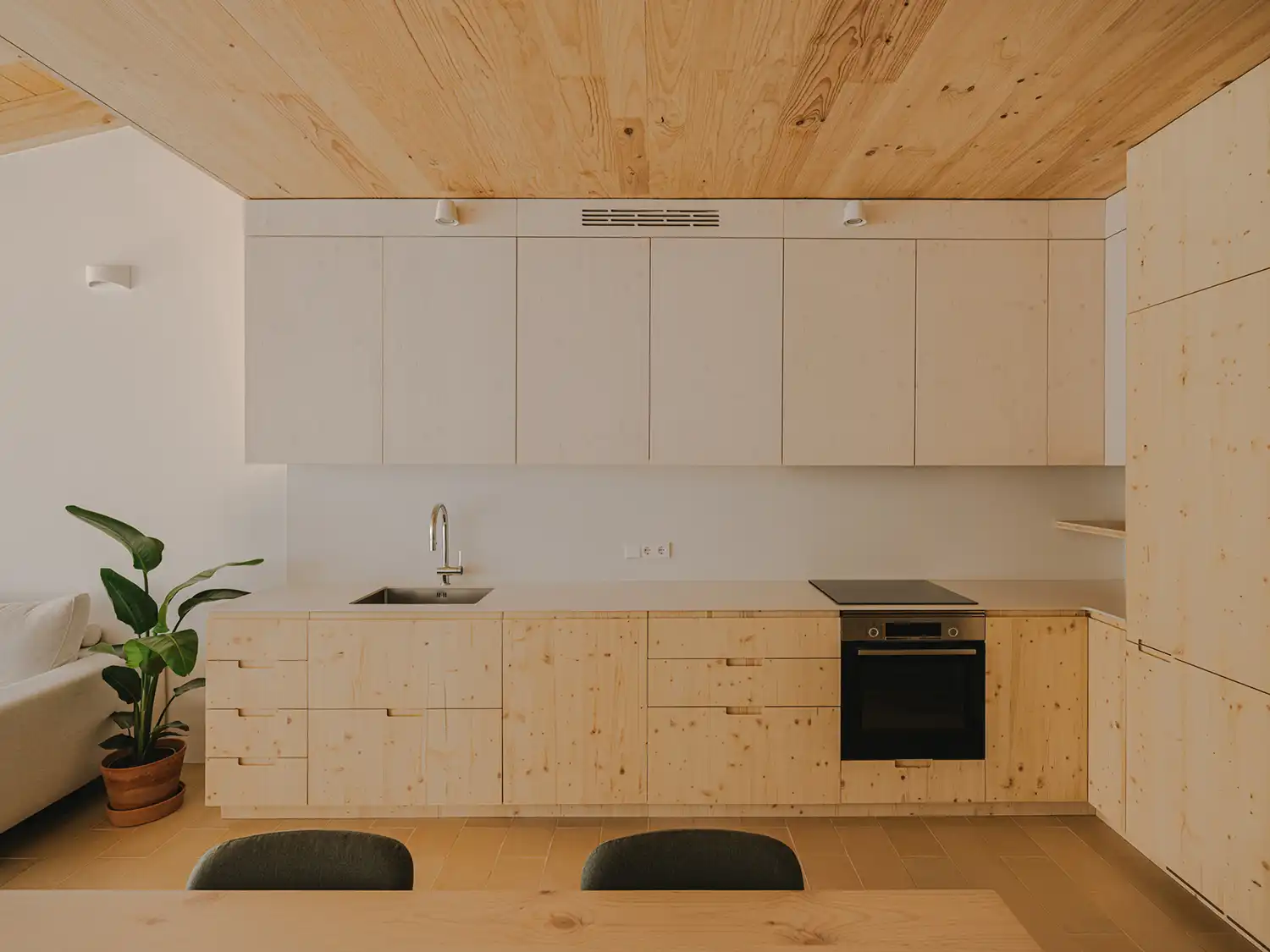
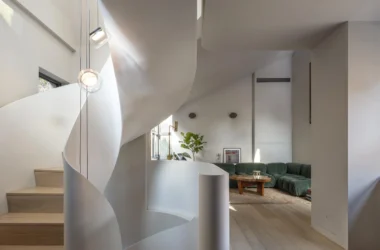
The spatial choreography of the ground floor reclaims the traditional “entrance hall” as a multifunctional hub. Bypassing the conventional garage, the architects dedicated the street-side space to bicycle parking, laundry, and storage—a nod to a more sustainable, post-car urban lifestyle. At the heart of the home, a sculptural, open staircase acts as a vertical light well, drawing Mediterranean sunshine deep into the kitchen and living areas. This central void creates a visual dialogue between the two levels, ensuring that even at its narrowest point, the house feels connected to the sky.

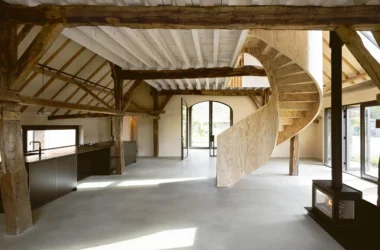
Technical innovation defines the upper volume, where the private quarters are housed within a “closed box” of cross-laminated timber (CLT). This lightweight structure rests gracefully upon the existing party walls, a solution that allowed for rapid assembly and a reduced structural load. By leaving the timber exposed, the architects eliminated the need for false ceilings and artificial finishes, allowing the material’s natural grain to dictate the interior atmosphere. This commitment to material honesty and low-energy design is a recurring theme in contemporary European residences, mirroring projects that reinterpret rural forms through a sophisticated, modern lens.
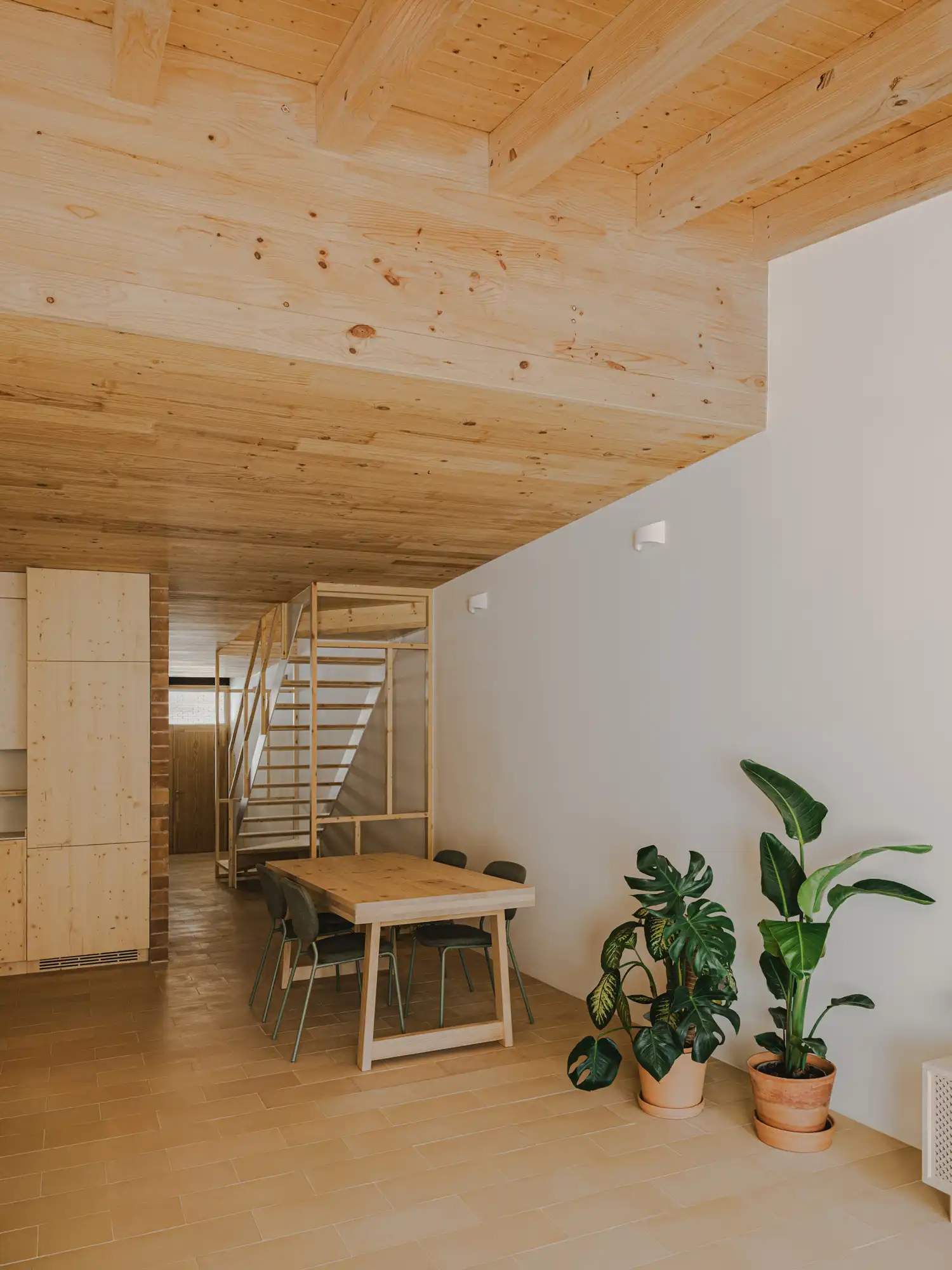
The sensory experience is anchored in a palette of local, earth-driven materials. On the ground floor, the coolness of ceramic tiles from El Bruc and the textured rhythm of brickwork from El Segrià provide a haptic contrast to the warm wood above. These choices are not merely aesthetic; the high thermal mass of the ceramics and the breathability of the cork-clad façades work in tandem to regulate humidity and temperature. There is a quiet luxury in the touch of a wooden shutter or the footfall on sun-warmed clay—a reminder that a home’s quality is found in the integrity of its surfaces rather than the complexity of its gadgets.
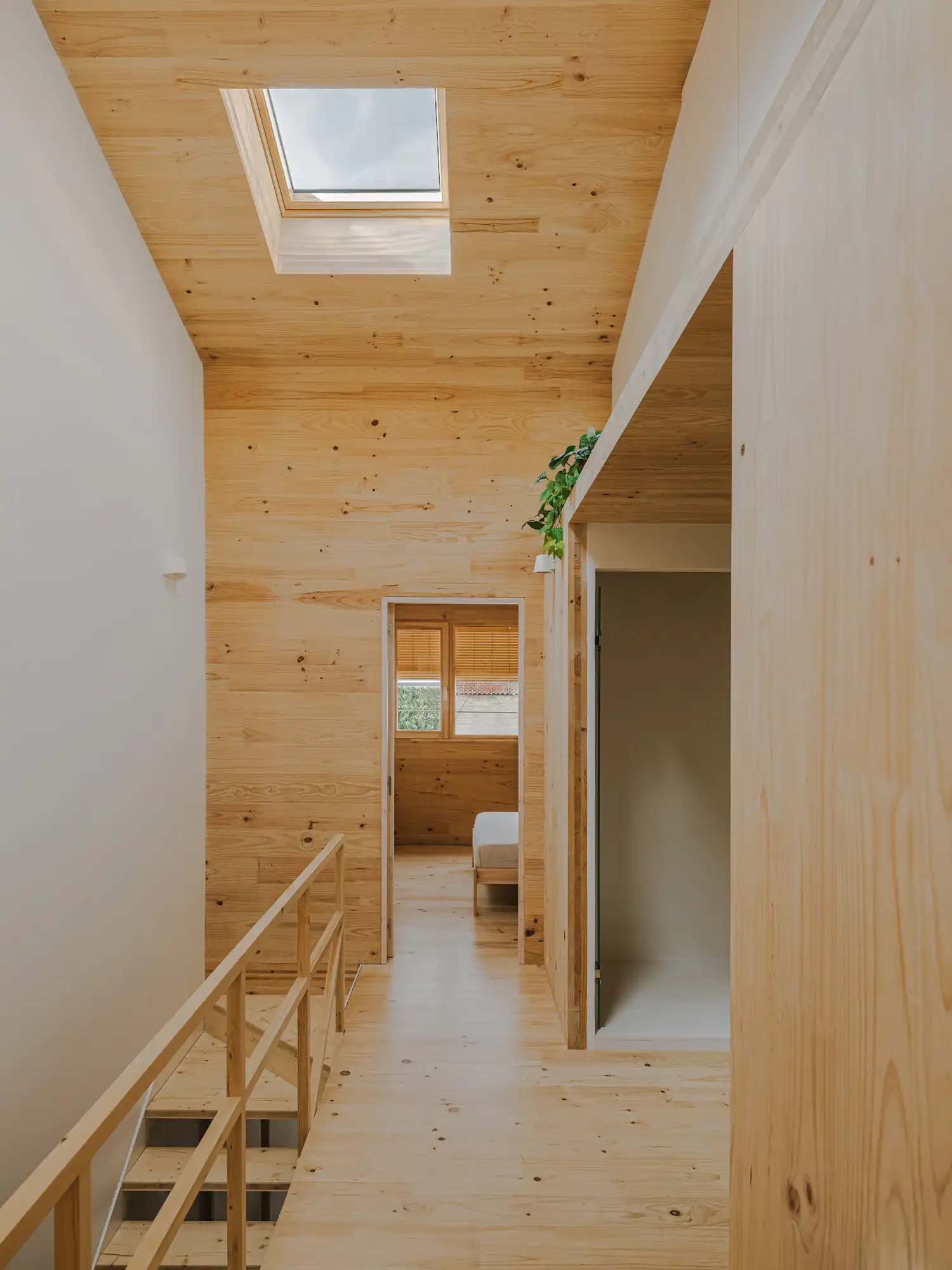
A sophisticated bioclimatic strategy renders mechanical heating and cooling entirely unnecessary. The house functions as a living organism, utilizing the “stack effect” where roof windows draw hot air upward and out, while traditional wooden shutters mitigate solar gain during the peak of summer. In the rear courtyard, a pergola draped in vegetation creates a microclimate that cools the incoming breeze. For the occupants, living in 130AUS means rediscovering a lost intimacy with the seasons, enjoying a home that doesn’t fight the climate of Catalonia, but rather harnesses it to provide a life of quiet, sustainable elegance.