



Dubbed Un Maison en Normandie, the latest residential project by exercice and Anna Le Régent is a study in refined contextualism, delivering a precise, contemporary translation of the region’s rural building heritage. Situated high within a picturesque village in the Perche preserved region of France, this new Normandie wooden house rejects mimicry in favour of strategic reinterpretation, adopting the long, simple massing of the area’s traditional agricultural structures. The collaboration has resulted in a dwelling that feels neither anachronistic nor alien, but rather a profoundly considered piece of vernacular architecture rebuilt for the demands of the twenty-first century.
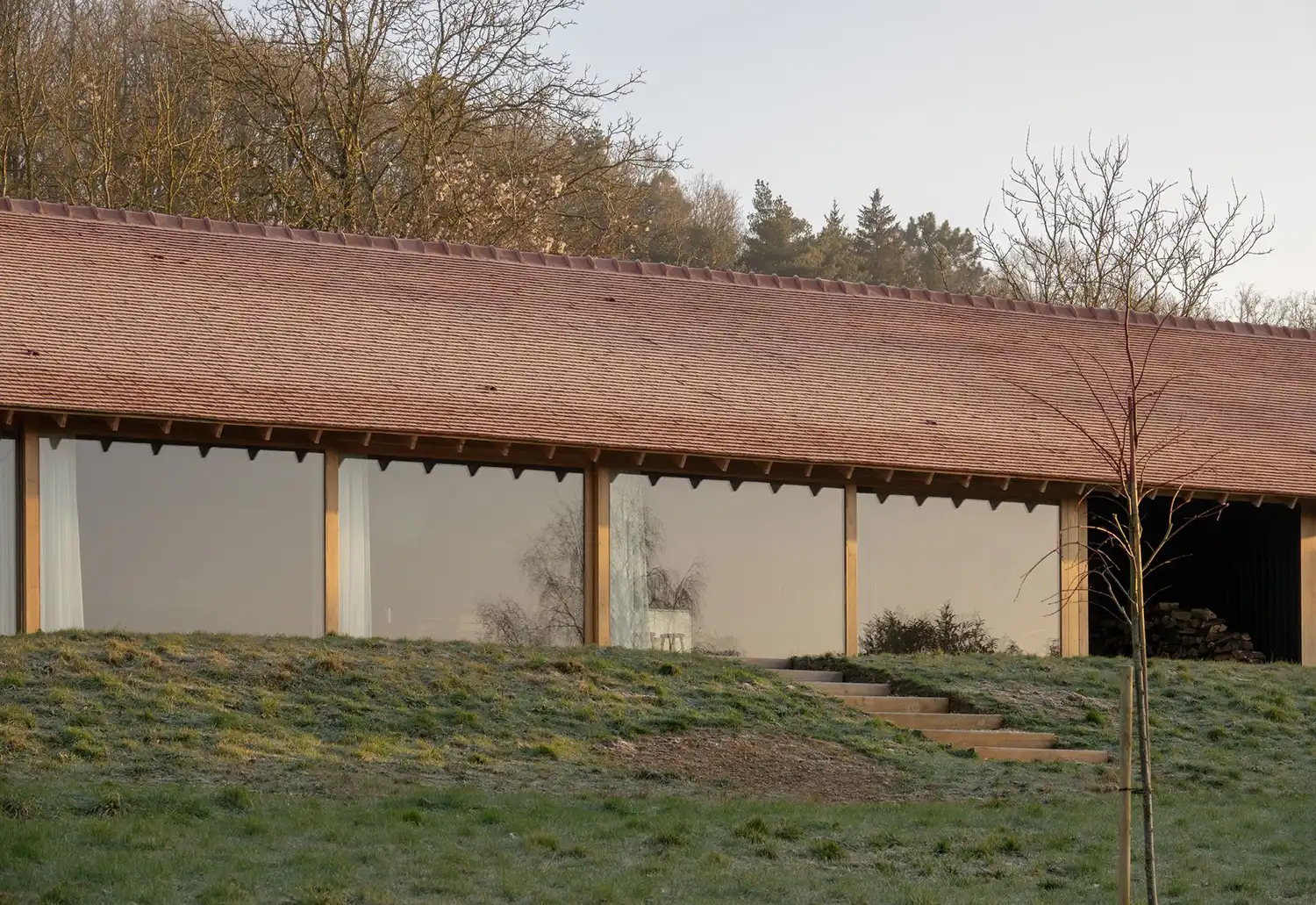
The conceptual rigour of the design hinges on its respectful yet assertive geometric strategy. The elongated, straightforward volume integrates seamlessly into the topography and the village’s established rhythm. This approach demonstrates a commitment to the contemporary farmhouse typology, maintaining the functional clarity of the original forms while achieving a level of architectural sophistication demanded by modern living. The execution is sharp, ensuring the architecture engages in a deep, responsive dialogue with its specific territorial context.
Material honesty is central to the home’s low-energy design credentials. The structure is formed around a robust structural timber frame, clad in local wood that is designed to weather naturally, lending the façade an evolving patina. Inside, traditional local terracotta floor tiles provide thermal mass and a grounding colour palette. The commitment to ecological performance is further underlined by the use of bio-sourced insulation and high-specification wooden window joinery, collectively reducing the dwelling’s carbon footprint to an absolute minimum.
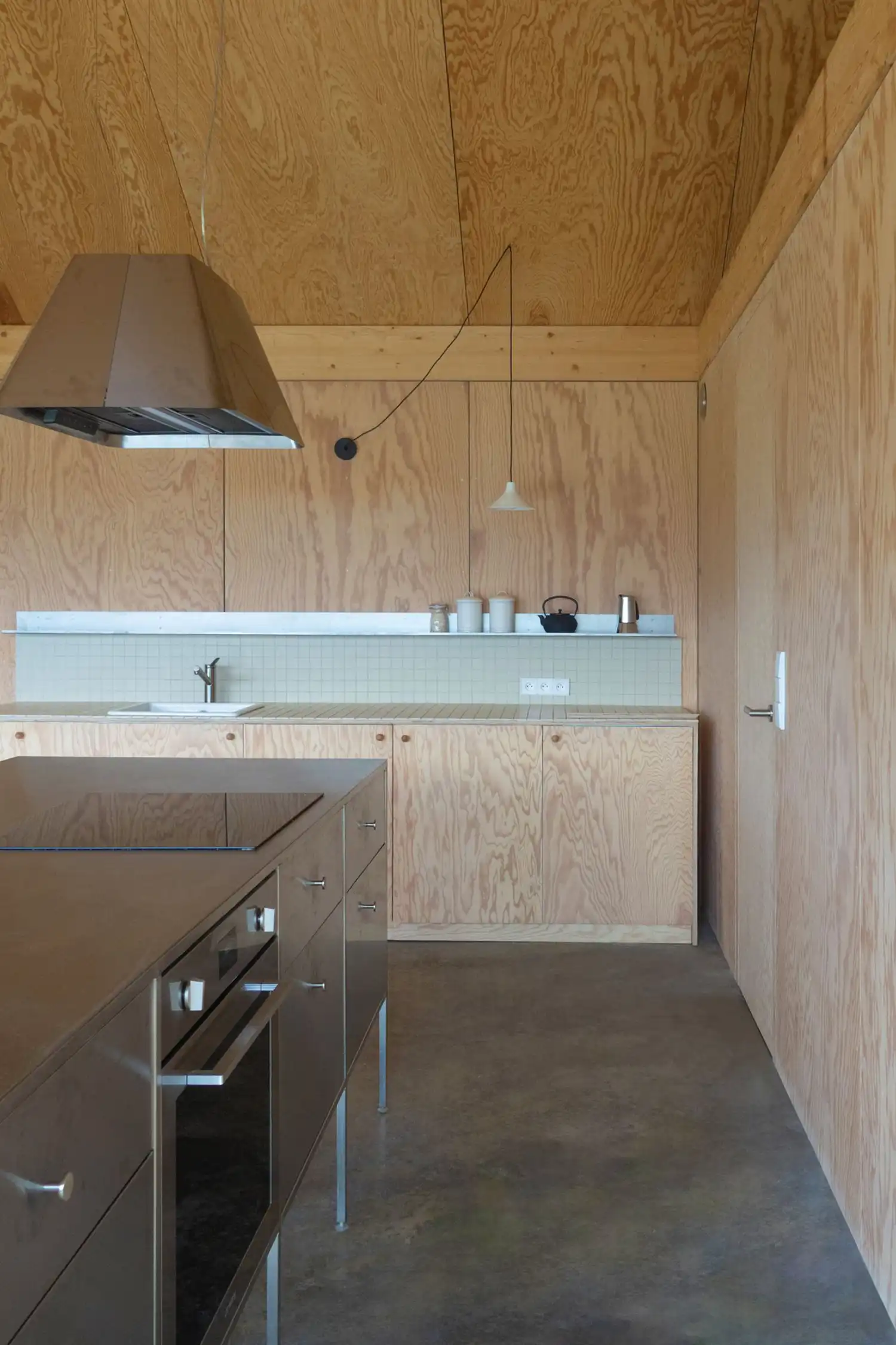
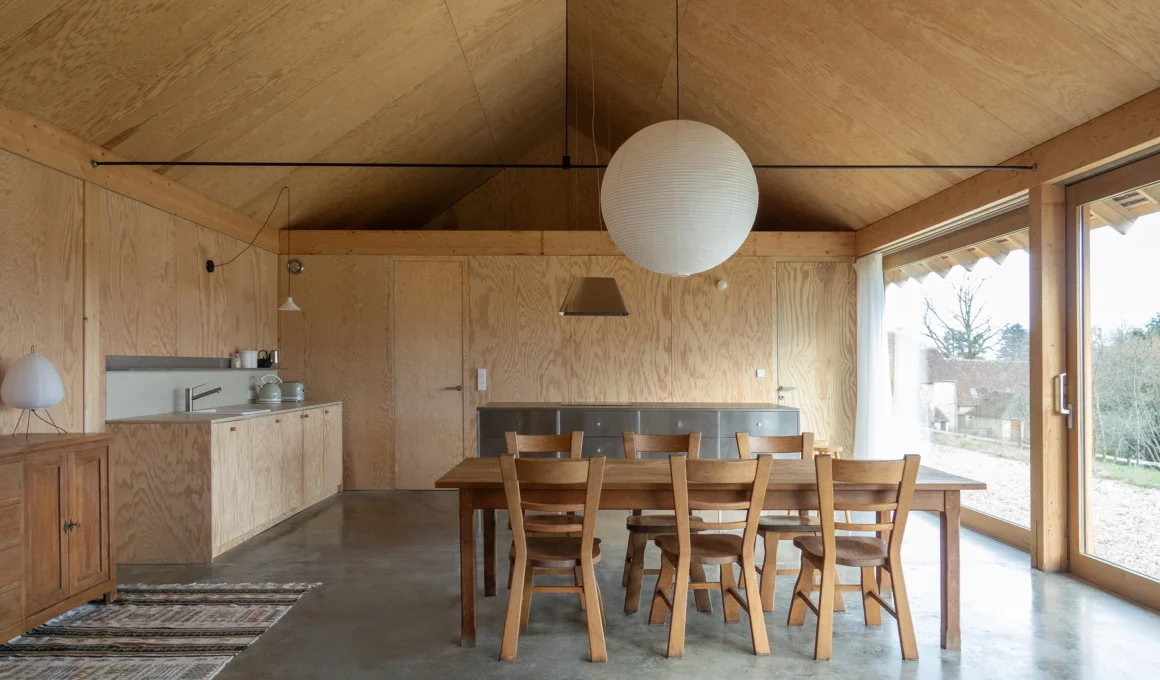
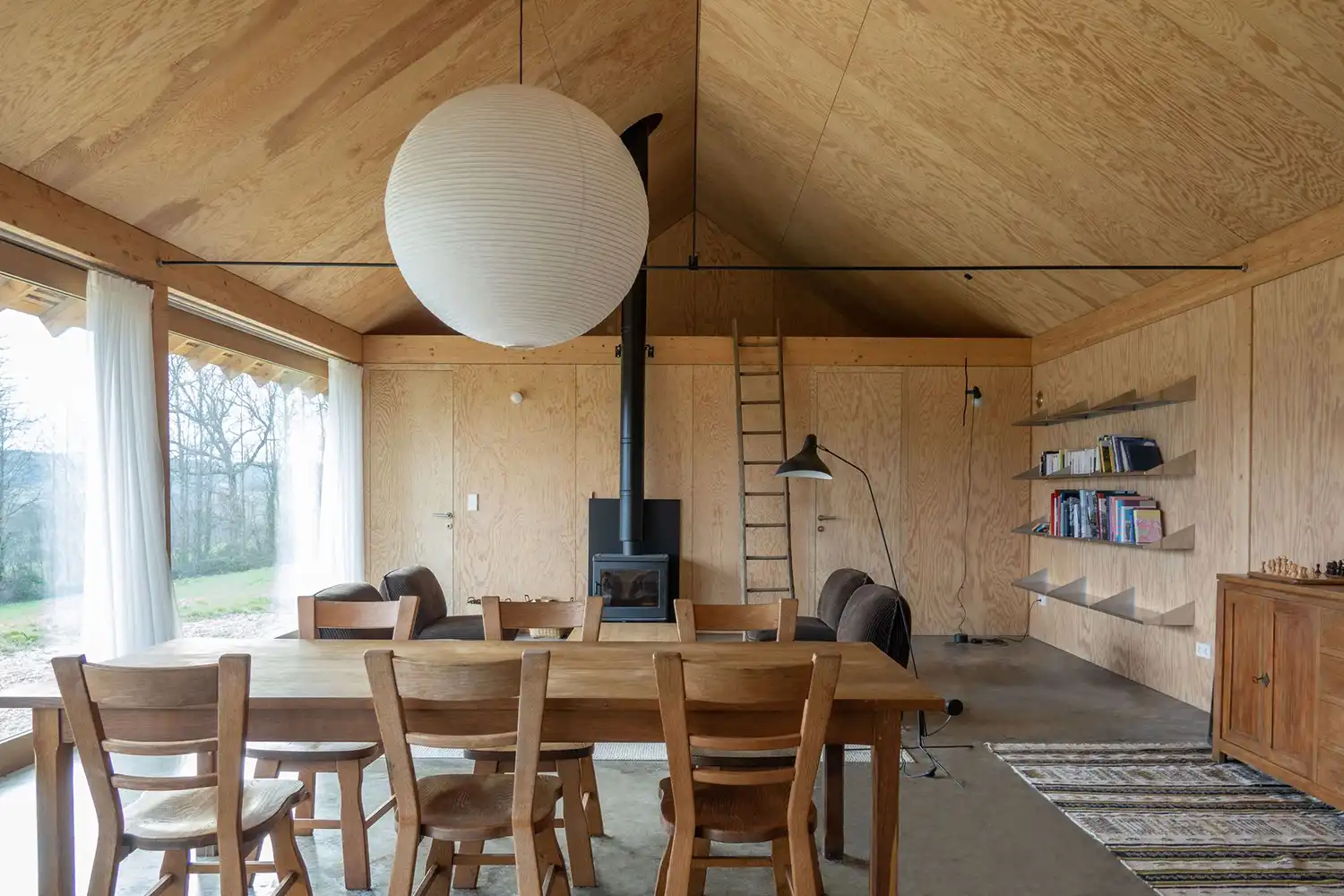
Spatially, the internal planning is defined by strict efficiency, ensuring zero redundant circulation. The domestic program orbits the primary living area—a magnificent, central double-height void. This commanding volume dictates the spatial hierarchy, offering dramatic verticality and light, while the more utilitarian spaces, including the bedrooms and service areas, are compressed beneath the secondary volume. The introduction of mezzanines above these private zones allows for flexible expansion without disrupting the powerful, volumetric quality of the core.
The architectural separation of the main residence and an independent workshop is resolved via a deliberately permeable intermediary space. This covered climate buffer porch acts as a crucial transitional node. It not only shelters the main entrance but also accommodates essential functions like bicycle storage and firewood stacking, making it a functional hub that mediates the environmental conditions between the protected interior and the exposed exterior. This smart, pragmatic insertion anchors the design firmly within the tradition of working farm structures.
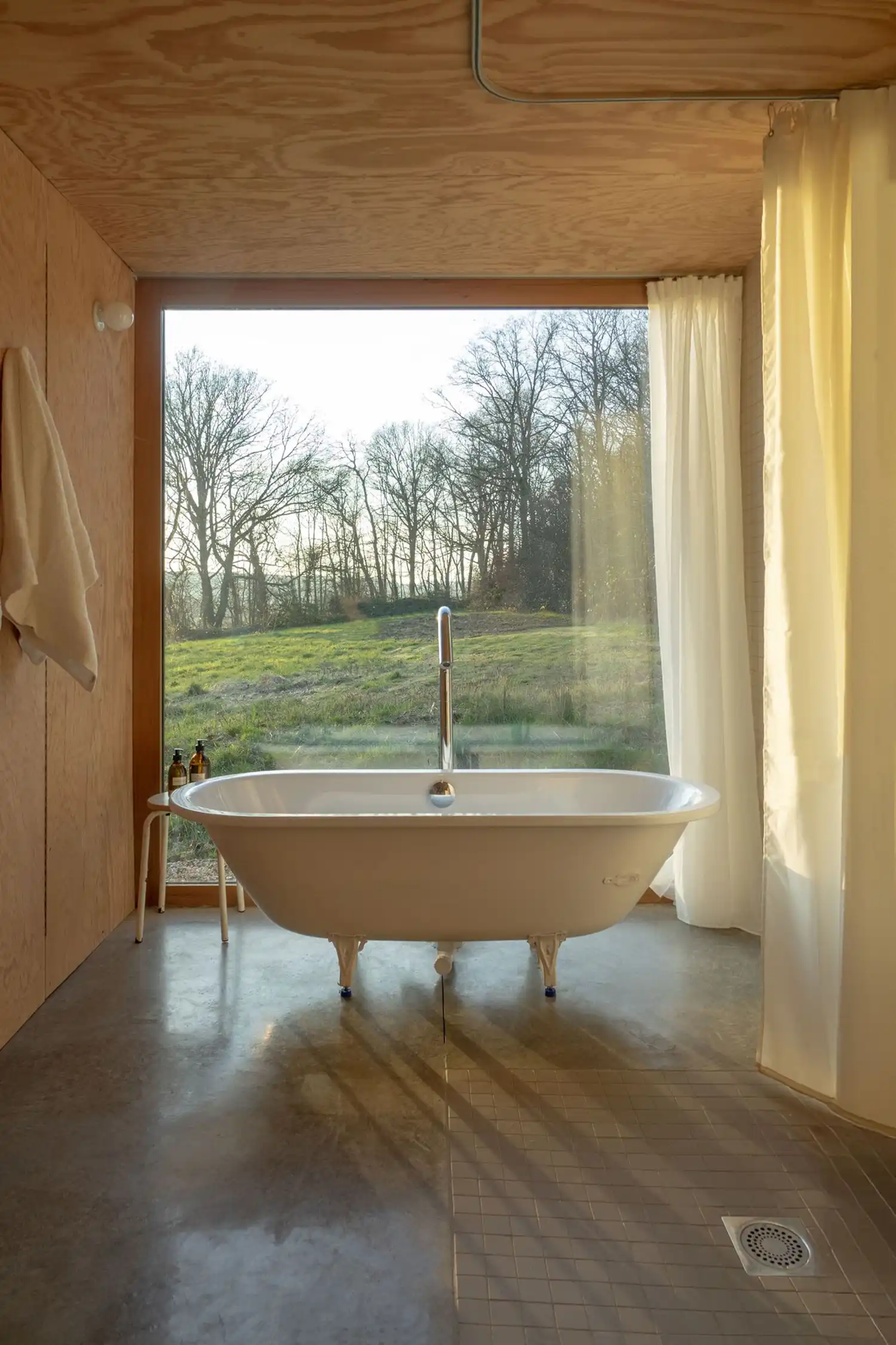
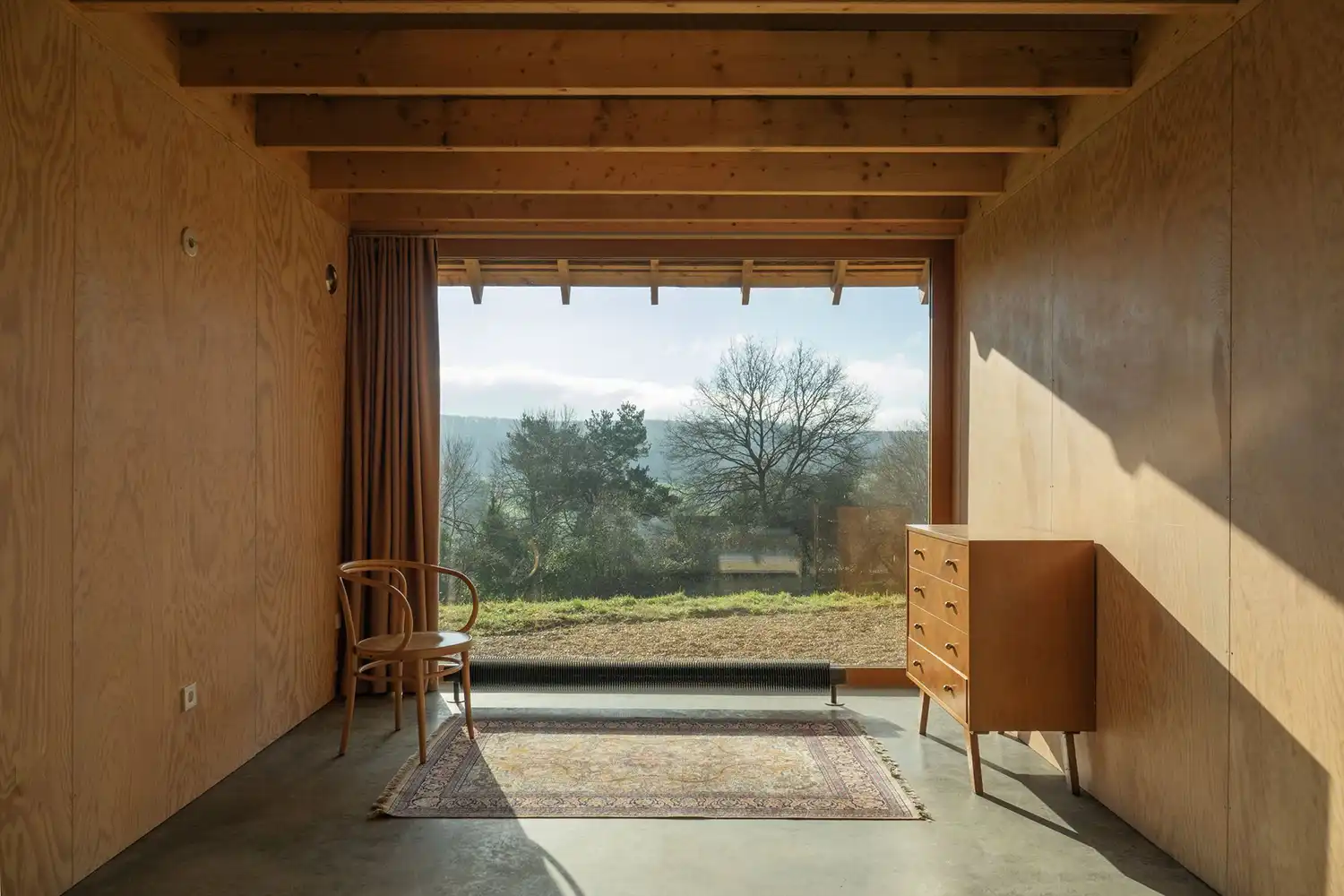
Finally, the dialogue between the interior and the Perche preserved region landscape is controlled by strategic fenestration. The south-facing elevation is articulated by large, precise glazing units set within a regular structural grid. While maximising daylight penetration, exercice and Anna Le Régent introduced a substantial roof overhang to act as dedicated passive solar shading. This calculated element prevents overheating during summer months, ensuring year-round thermal comfort and cementing the Un Maison en Normandie as a high-performing piece of low-energy design.