



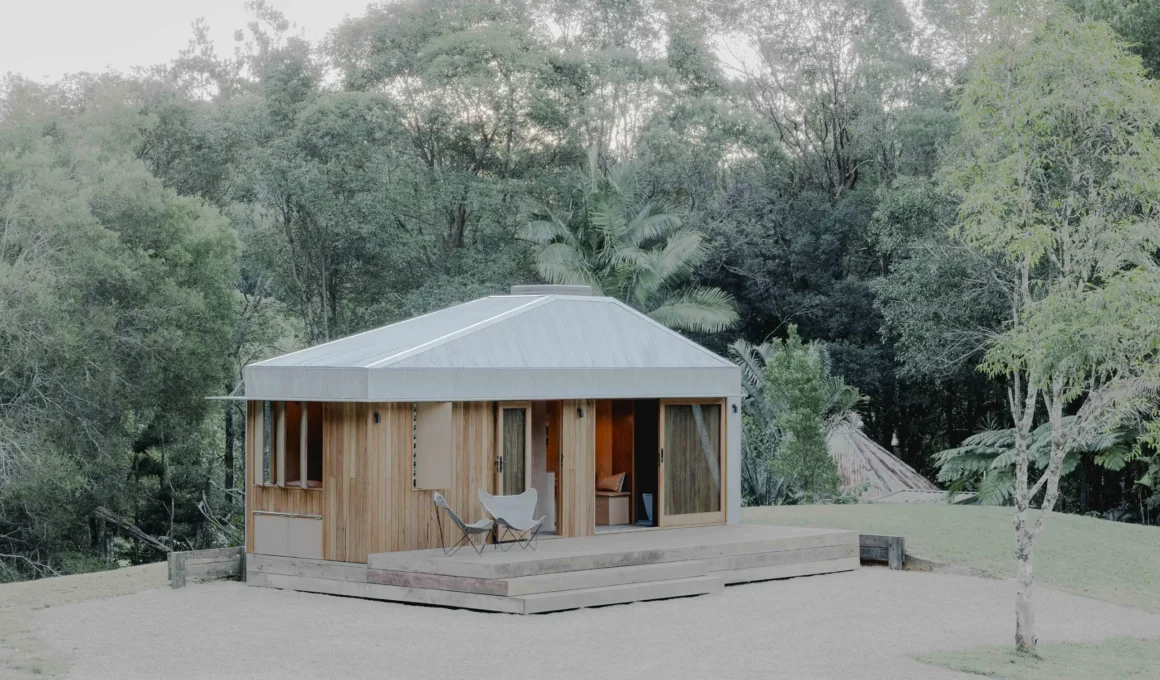
Deep within the hinterland of Byron Bay, Hayley Pryor Architect has realized Oculus, a compact timber retreat that reinterprets the traditional Australian shed through the lens of subtropical living and precise spatial economy.
A rhythmic dialogue with the sky defines the central experience of this tiny home. Rather than feeling confined by its restricted footprint, the interior feels expansive, anchored by the namesake circular skylight. This void does more than just frame the shifting clouds of the Northern Rivers; it serves as a functional engine for the home. By utilizing stack ventilation, the oculus draws warm air upward and out, ensuring the living environment remains cool despite the heavy humidity typical of the region.
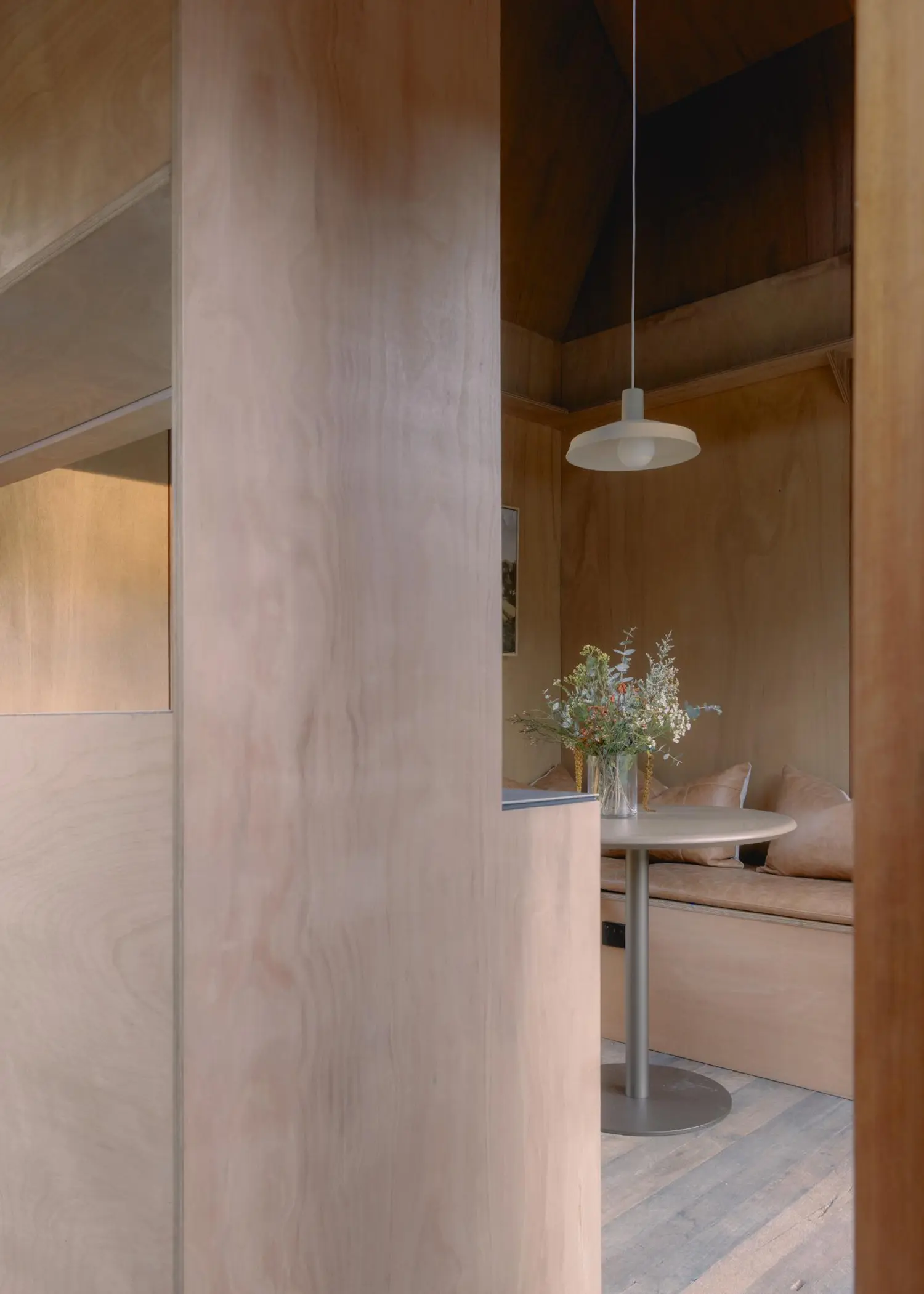
The internal layout is a study in choreographed rituals, where every square centimeter is asked to perform multiple roles. Movement through the space is dictated by integrated joinery that subtly carves out zones for sleeping, eating, and bathing without the need for traditional walls. There is a tactile logic to how the kitchenette serves as a threshold, partitioning the private sleeping quarters from the social core while maintaining a visual connection that prevents the volume from feeling fragmented.
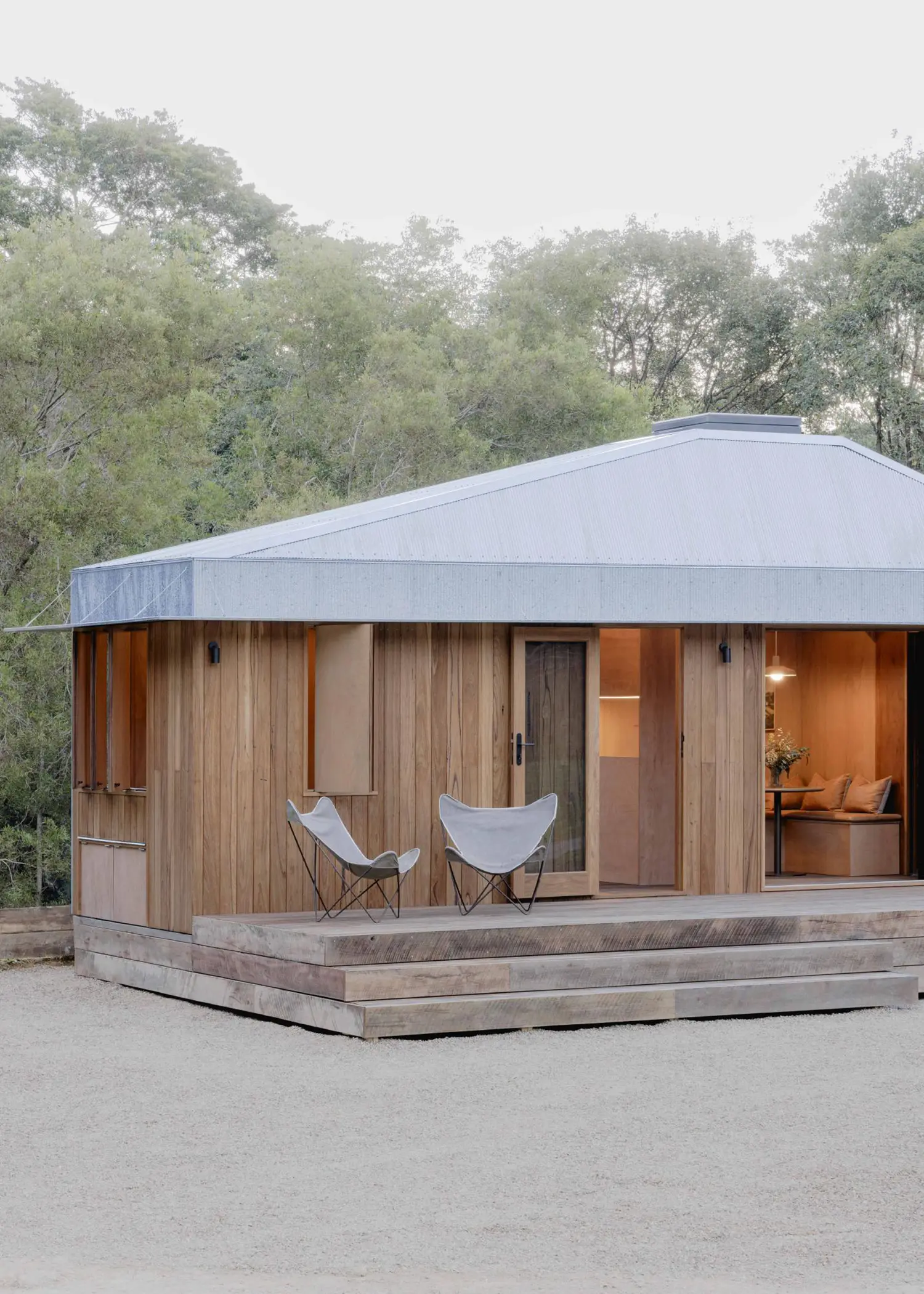
Elevated living takes on a literal meaning here, with the sleeping area perched upon a platform that merges seamlessly into the surrounding woodwork. This platform is far from static; it transitions fluidly from a window ledge to a daybed, inviting inhabitants to linger. Within these timber planes, the architect has concealed a network of hidden storage solutions and shelving, ensuring that the visual clutter of daily life is absorbed into the fabric of the building itself.
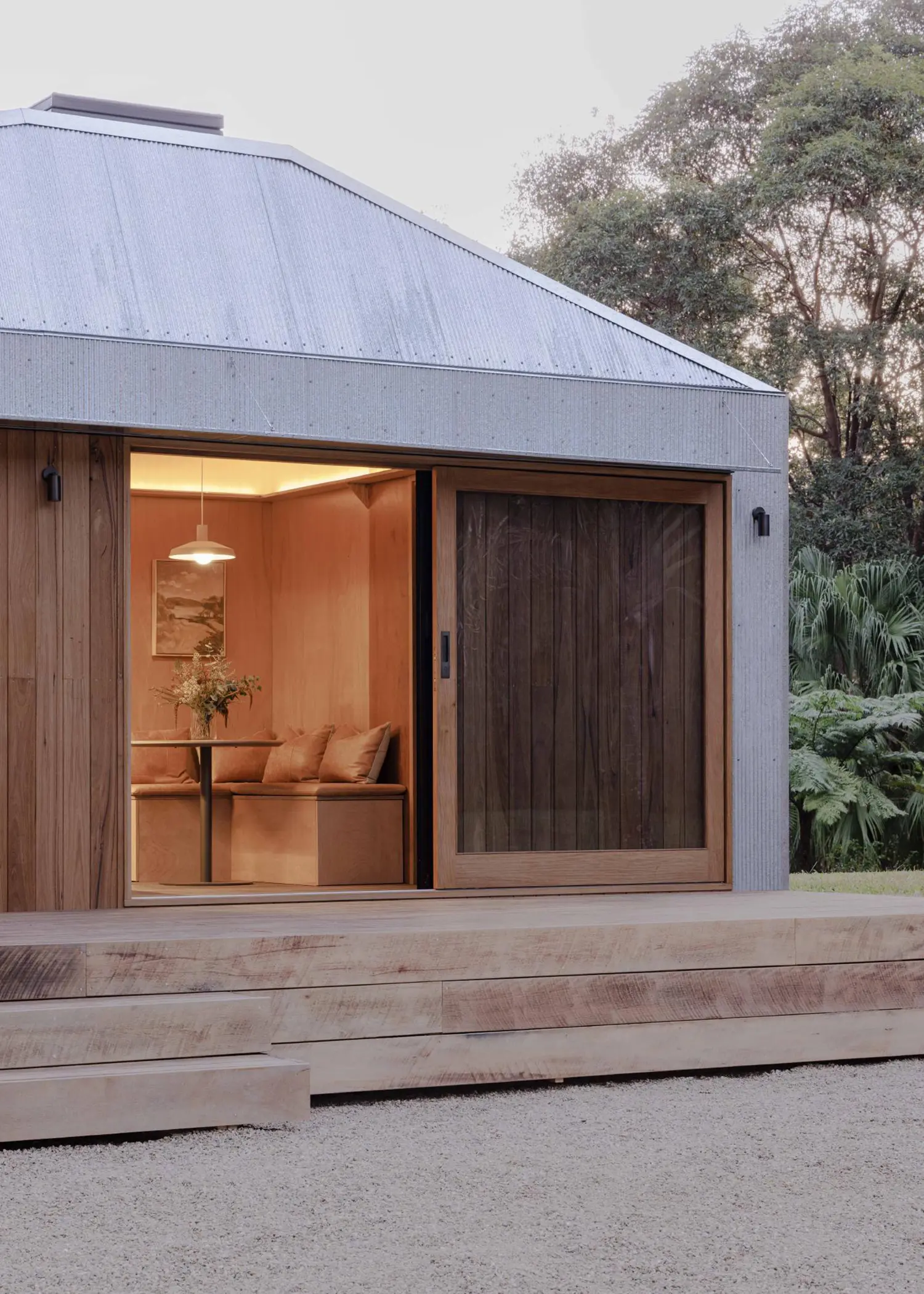
Thresholds between inside and out are intentionally blurred to expand the perceived limits of the dwelling. A built-in dining nook sits directly opposite an externally stacked sliding door, which, when fully retreated, erases the boundary between the plywood interior and the lush Byron Bay landscape. The wet area is tucked discreetly behind this central axis, maintaining privacy while allowing the main living volume to breathe and flow toward the outdoor deck.
Responding to the subtropical climate required a technical rigor hidden behind the home’s minimalist aesthetic. The Northern Rivers’ high rainfall and heat dictated a sophisticated building envelope. By utilizing a vapor-permeable wall wrap and a ventilated cavity system, the structure actively manages moisture. This prevents the trapped condensation that often plagues small-scale timber builds in the tropics, fostering a healthy indoor climate that feels crisp and dry even during the summer monsoons.
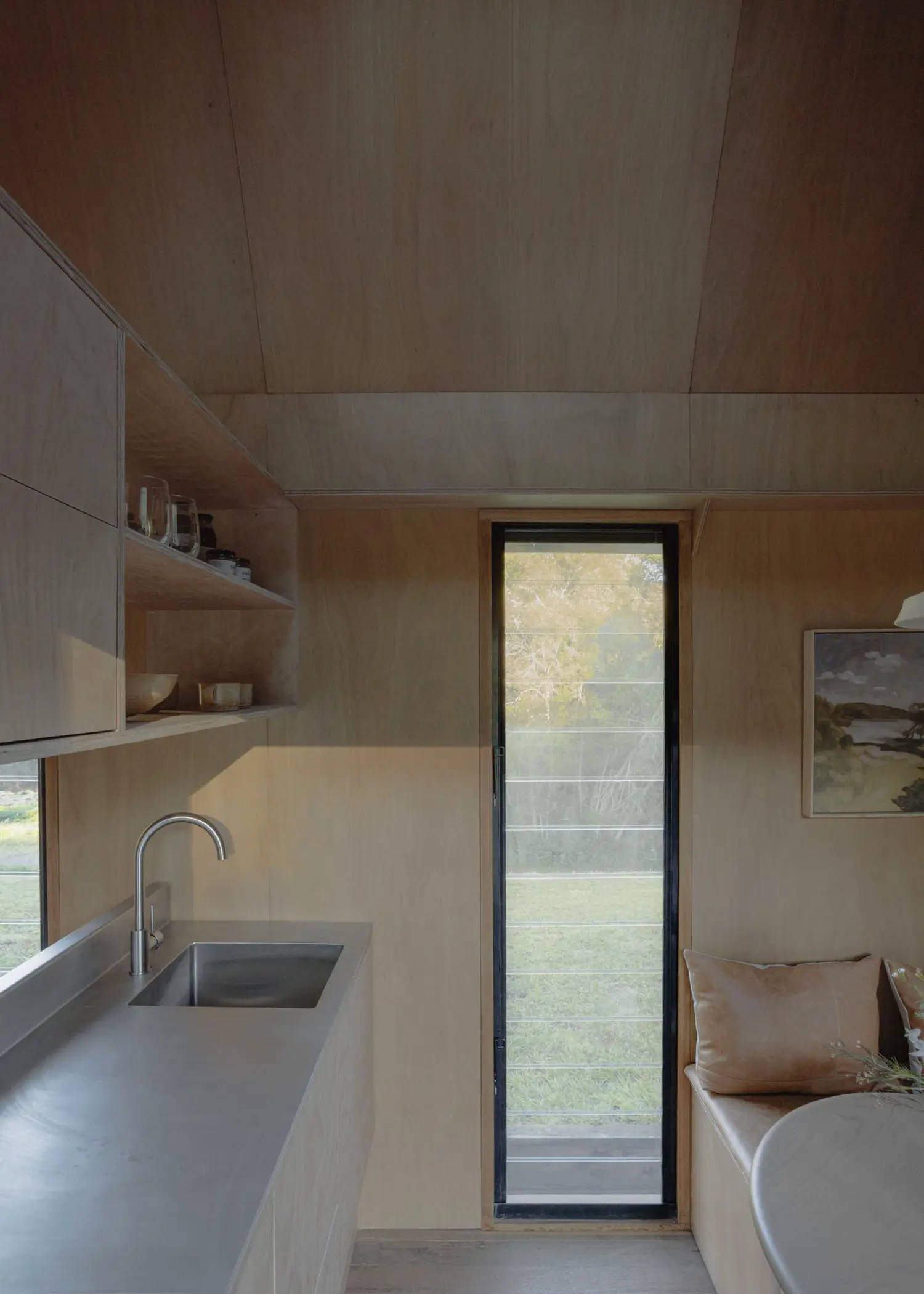
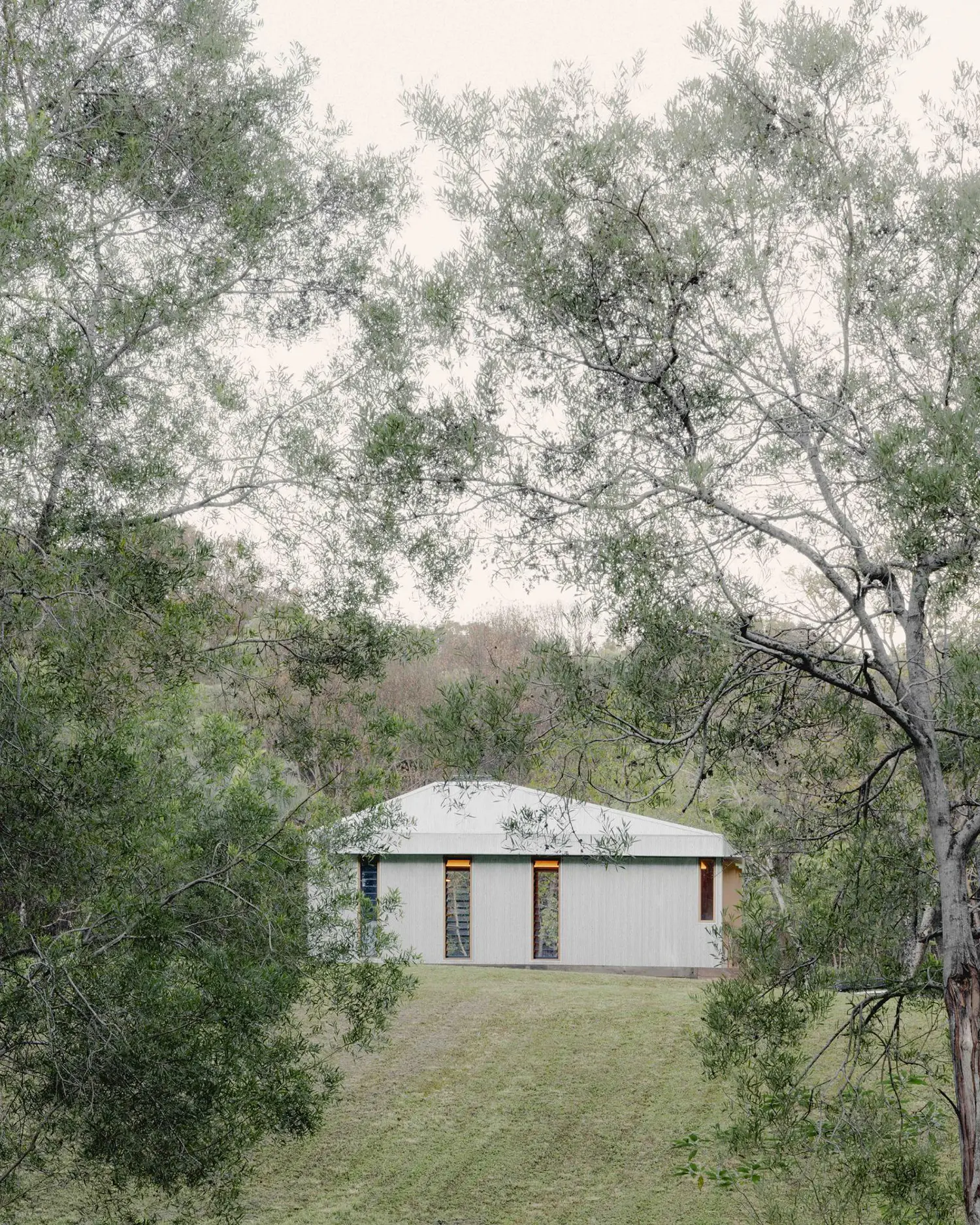
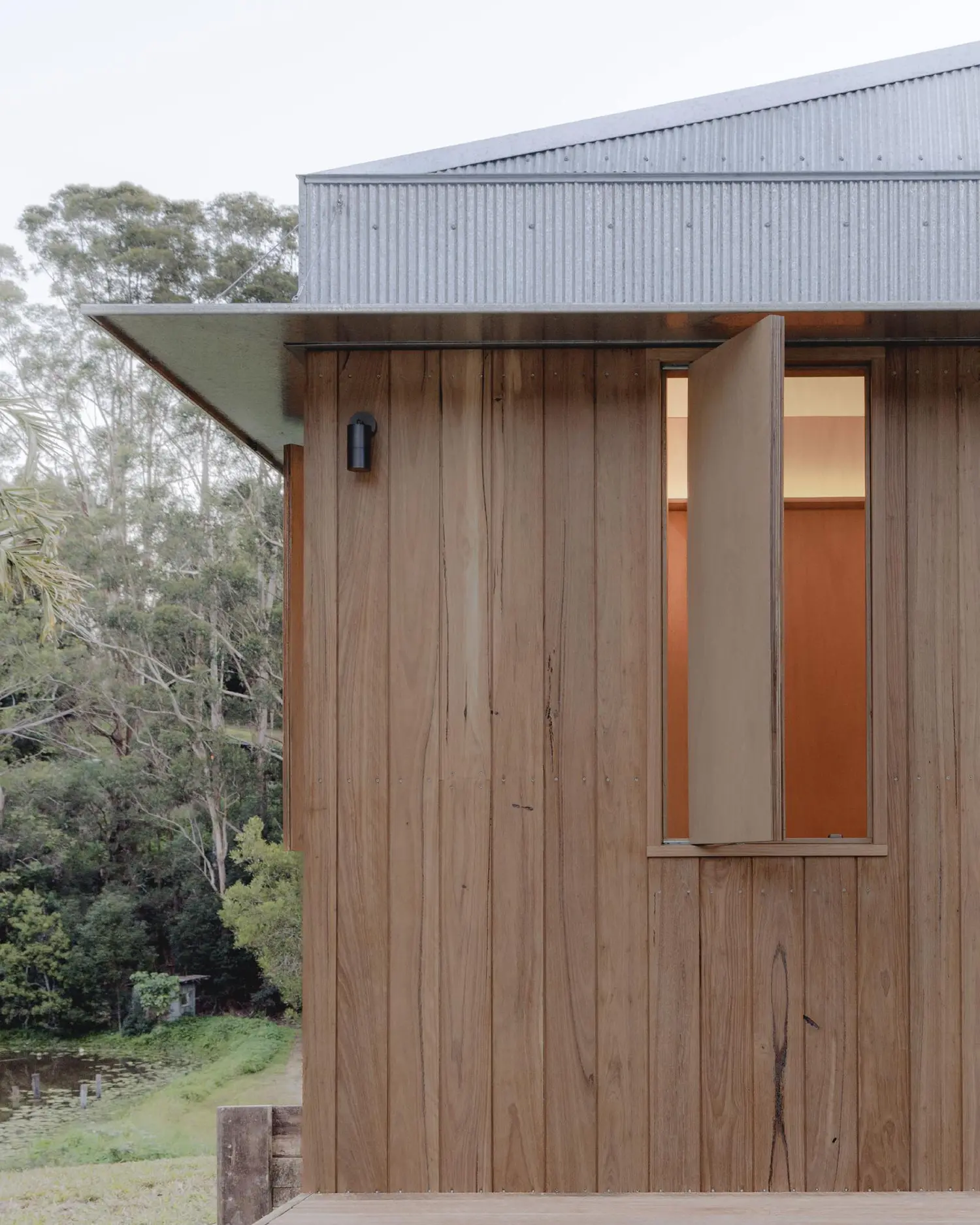
The materiality of the project pays homage to the local vernacular while elevating it through refined craftsmanship. The exterior is wrapped in mini orb sheeting and local hardwood, a nod to the utilitarian beauty of rural outbuildings. Inside, the atmosphere shifts to a warmer, more intimate register. Surfaces are lined with refined plywood, creating a cohesive, monolithic finish where walls and furniture become a single, sculptural entity.
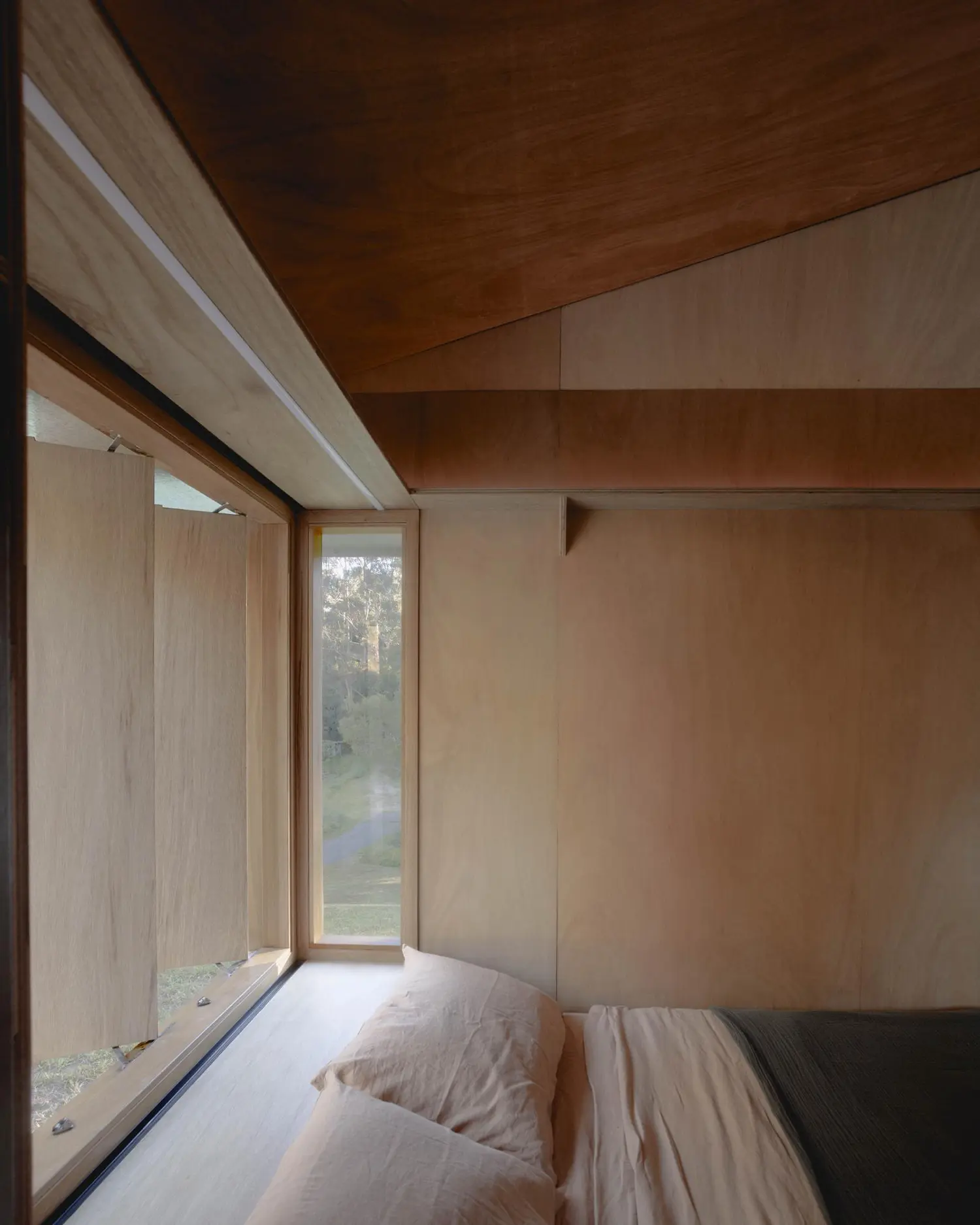
Adaptable performance was a key driver in the design’s evolution. Removable eaves were developed to provide a dual defense: they mitigate solar heat gain through the glazing during peak sun hours while offering essential protection from torrential rain. This flexibility allows the Oculus to function with equal efficiency as a hinterland retreat, a permanent compact residence, or a sophisticated backyard studio, adapting its thermal skin to the specific demands of its site.
This multifaceted chimera represents the peak of the modern garden room, a typology that has evolved far beyond its humble origins as a versatile backyard shed. It follows a lineage of structures that prioritize high-concept aesthetics within small footprints, much like the shingled garden room in Fairfax by Two-Fold Studio or the light-filled Kim-oflage studio in London by Delve Architects. In the quiet precision of Oculus, we are left to wonder if the future of living lies not in the expansion of our square footage, but in the deliberate reduction of our physical boundaries—challenging us to consider what we truly need to feel sheltered, and what we are finally ready to leave outside.