



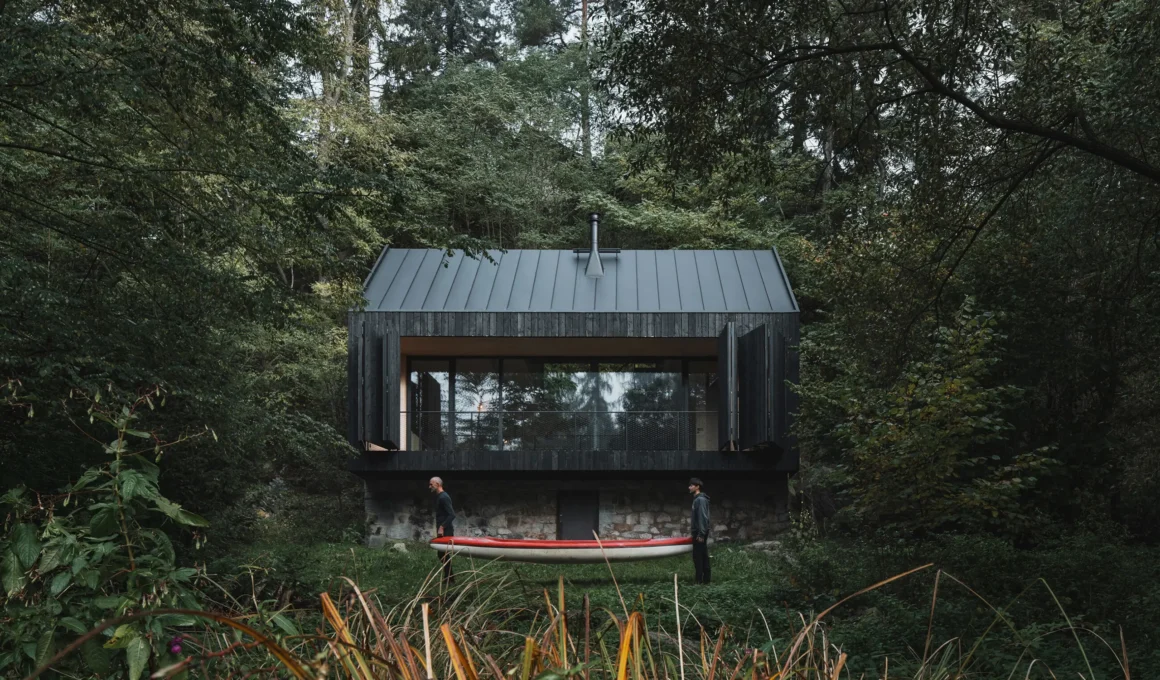
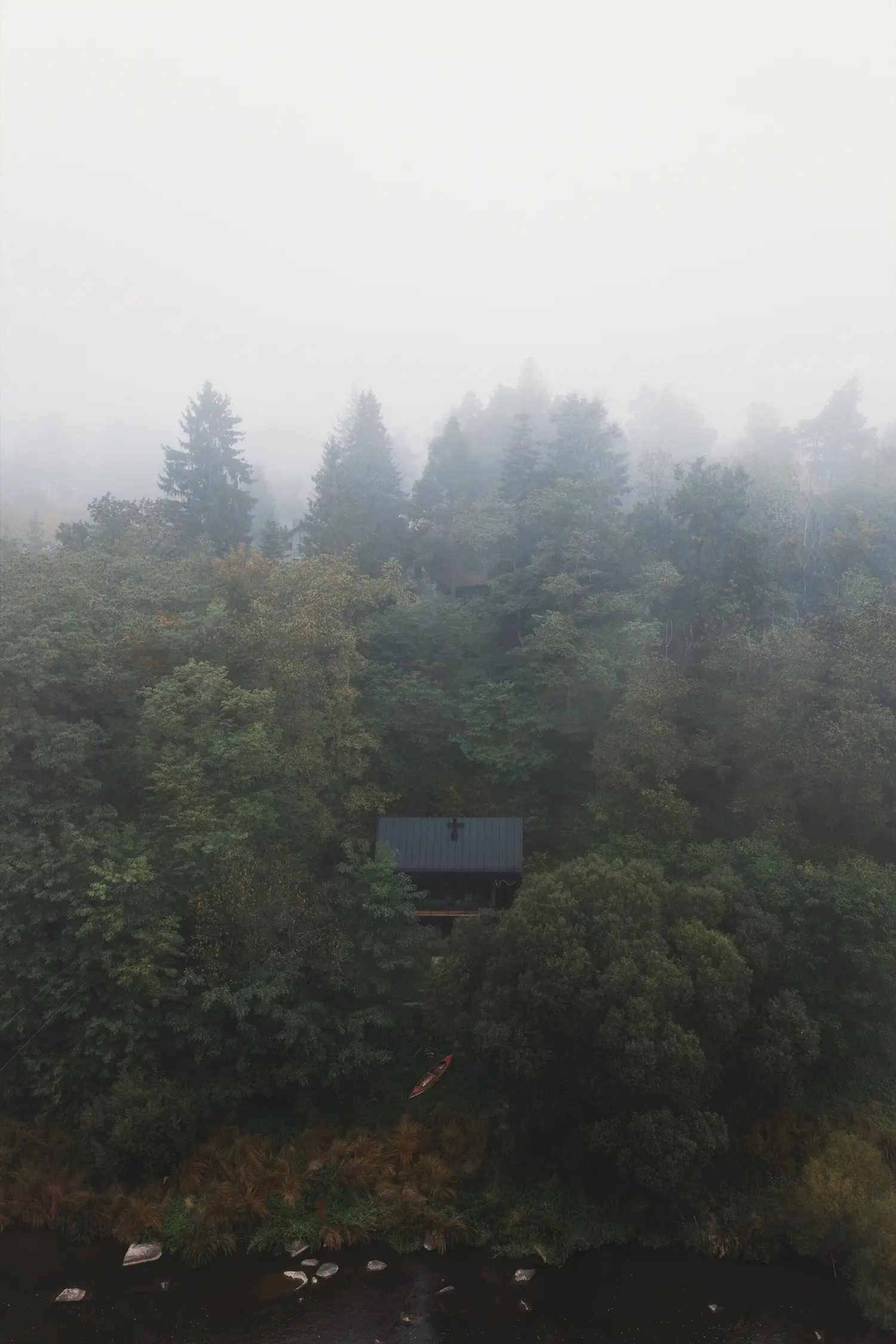
Perched upon a resilient stone foundation on the banks of the Sázava River, Mimosa Architects has realized a compact timber retreat in the Czech Republic that honors the site’s history of destruction while embracing the fluid beauty of its riparian landscape.
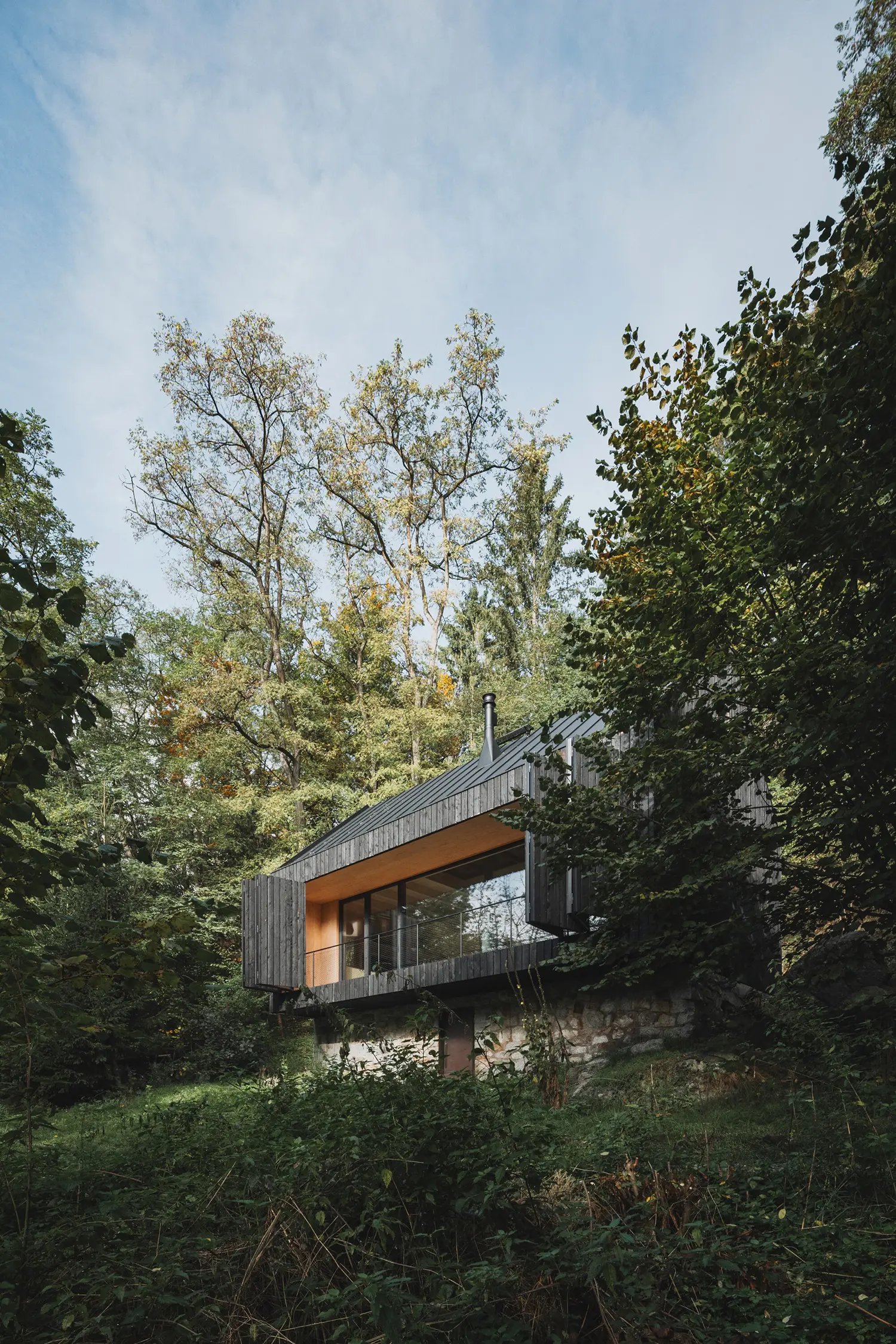
A dialogue with ruin defines the initial encounter with the structure. The cabin does not merely occupy its plot; it grows from the charred memory of its predecessor. After a fire claimed the original building, only the stone plinth remained—a rugged pedestal that now serves as both a literal and symbolic anchor. By building directly onto this trace of the past, the architects have created a vertical shift in perspective, elevating the primary living quarters to offer a vantage point that feels detached from the rush of daily life.
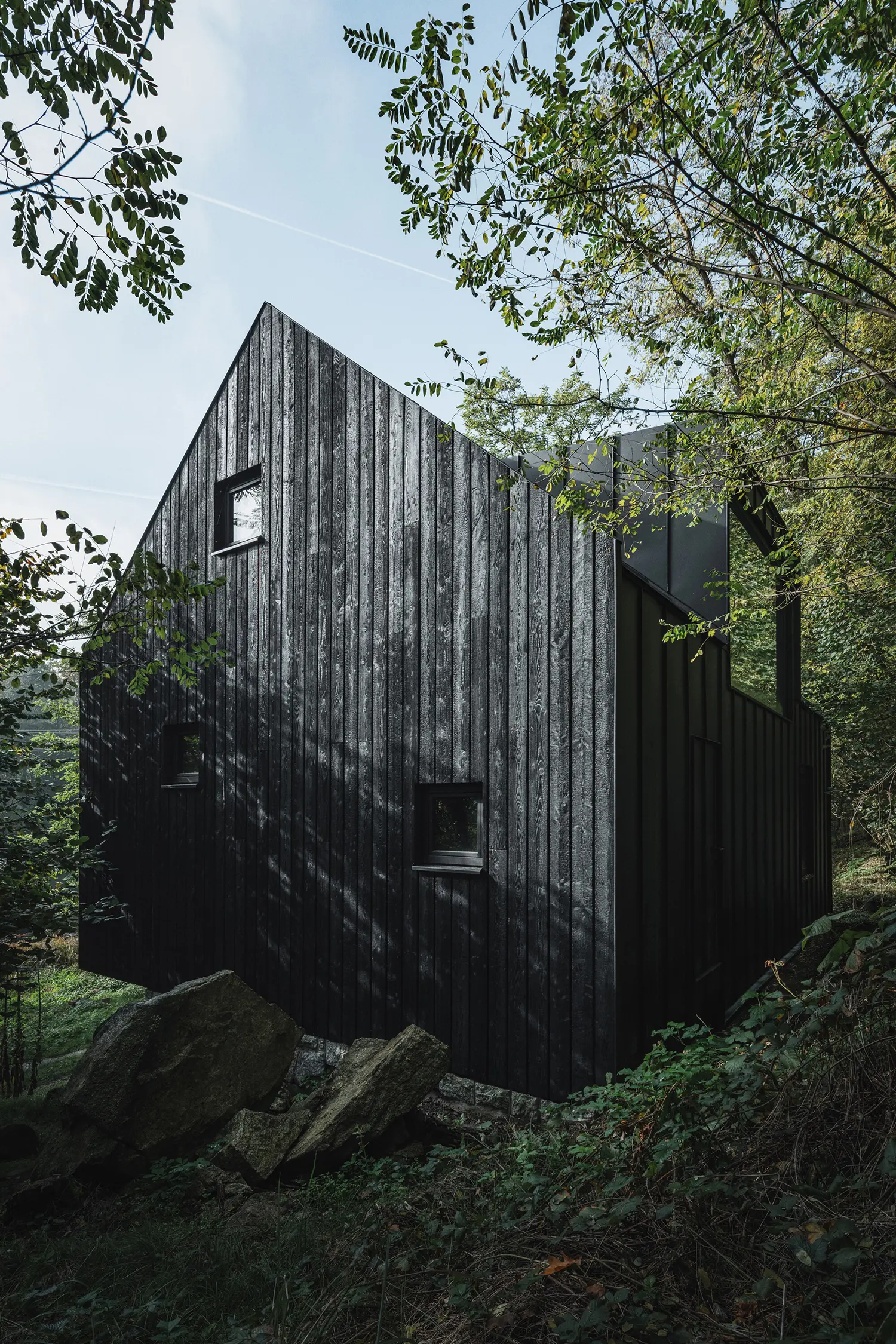
Material echoes of fire are etched into the building’s skin. The exterior is wrapped in charred larch cladding, a traditional Japanese technique that ensures durability and weather resistance. This blackened timber serves as a quiet nod to the site’s history, turning the concept of combustion into a form of preservation. Toward the rear slope, the palette shifts to protective sheet metal, a functional choice designed to withstand the water runoff from the steep cliffs that press against the cabin’s backside.
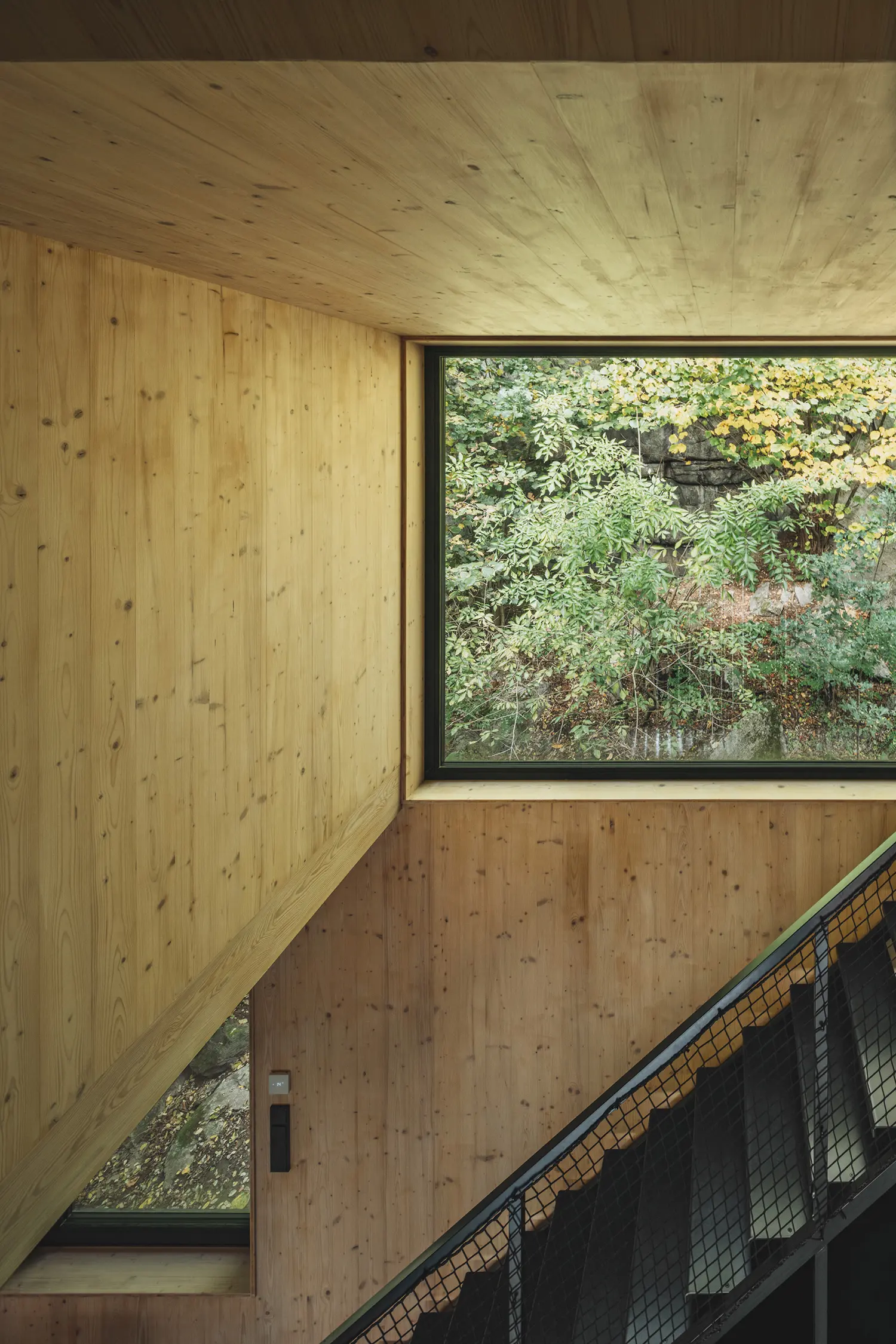
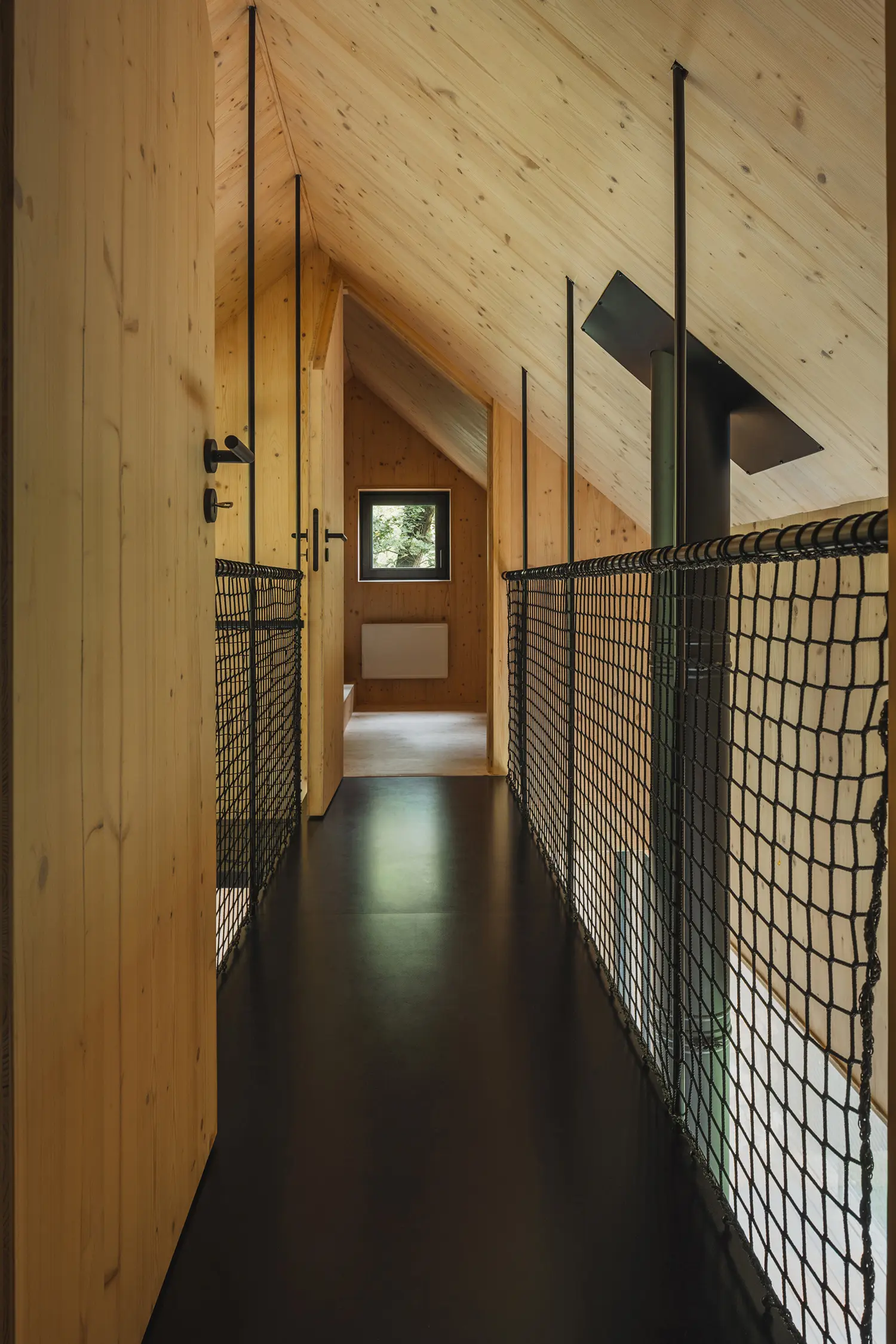
Interior as a sheltered cavity describes the spatial experience within. Rather than a traditional domestic setting cluttered with furniture, the interior feels like a singular, hollowed-out volume. The walls and ceilings are lined with spruce wood panels, casting a warm, natural glow that balances the dark exterior. This monochromatic use of wood creates a sense of seamlessness, where the architecture itself becomes the primary furnishing, inviting inhabitants to inhabit the “cave” rather than just the room.
A choreography of metal and flame continues the narrative through the home’s functional core. The black metal staircase, the wood-burning stove, and various fittings are finished in a dark, industrial aesthetic that mirrors the charred facade. These elements are strategically placed to reinforce the connection to fire—not as a destructive force this time, but as a source of warmth and a gathering point. The tactile contrast between the cool metal and the soft grain of the spruce heightens the sensory richness of the dwelling.
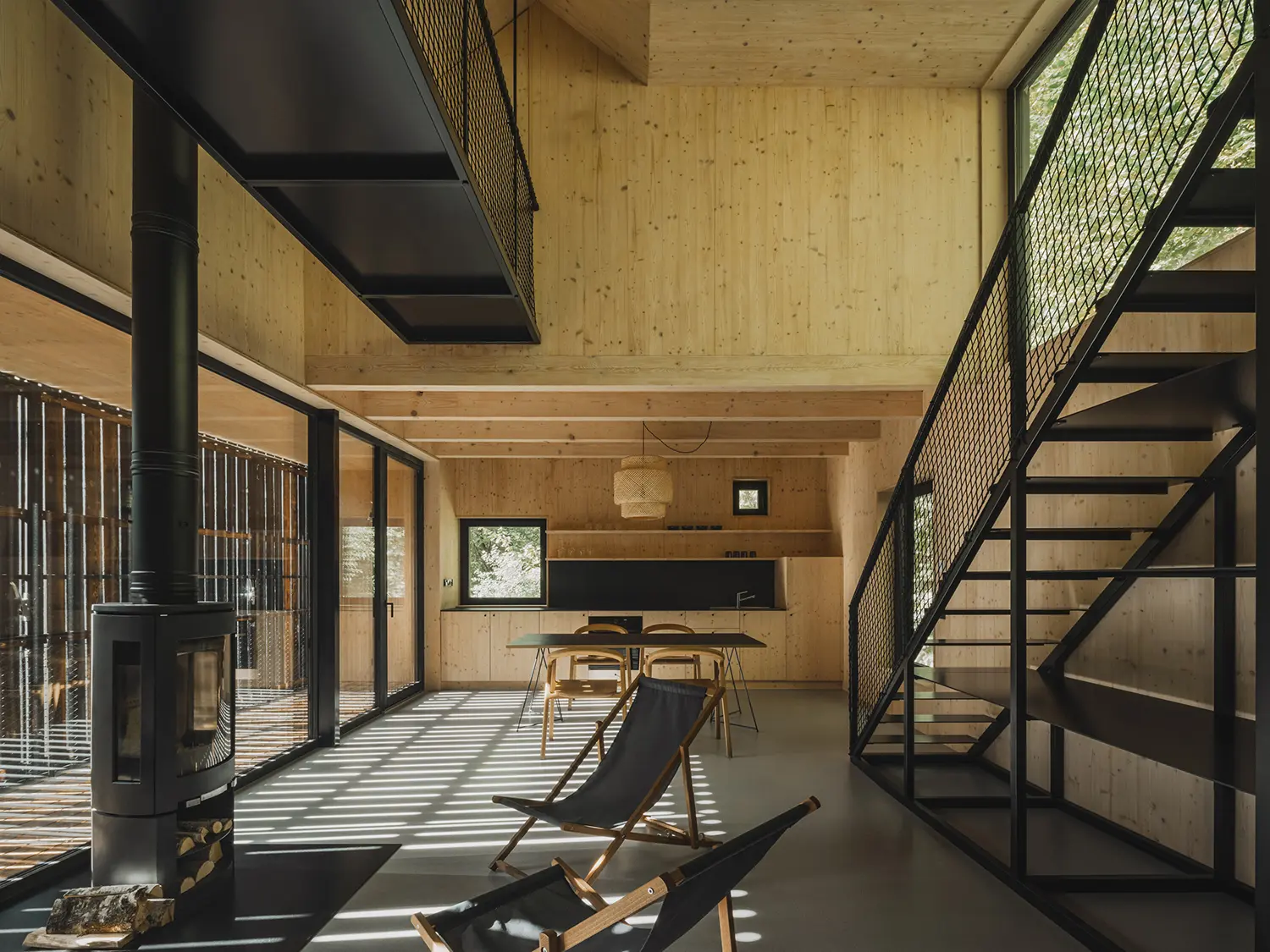
Dynamic transparency characterizes the main living area, which spans the full height of the cabin to connect two distinct ecological worlds. To the front, the space is entirely glazed, dissolving the boundary between the interior and the Sázava River. To the rear, the view shifts toward the verticality of the stone cliffs, reminding guests of the cabin’s narrow, dramatic placement within the valley. This dual orientation ensures that the changing light and the movement of the water are always present.
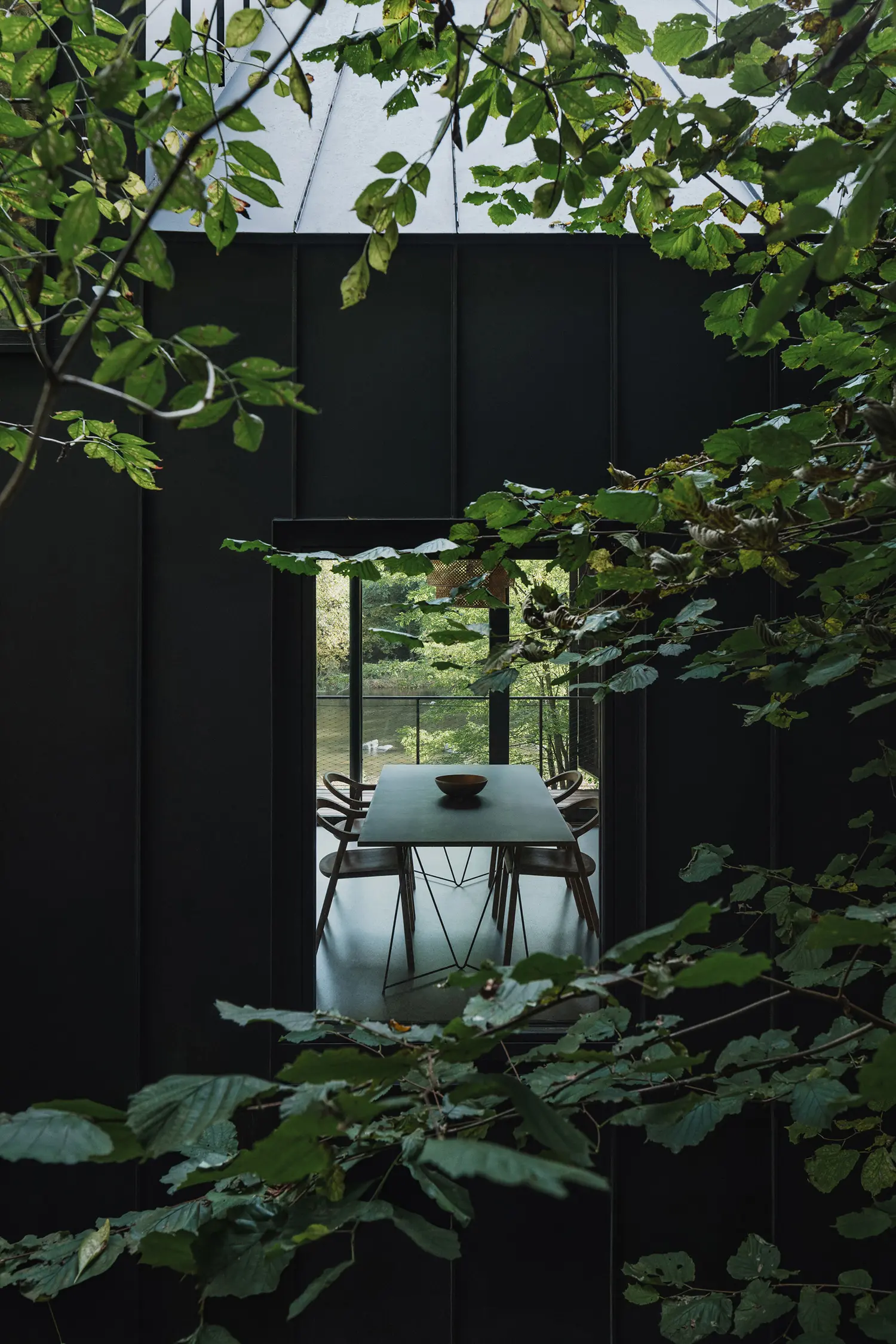
The threshold of the terrace functions as an elevated deck, replacing direct ground contact with a panoramic stage. From here, one can observe the kingfishers darting over the rapids or the wind moving through the pines. When the weekend concludes or the summer sun becomes too intense, a massive folding shutter can be drawn across the glass. This transformation turns the transparent pavilion into an “impregnable” wooden box, a silent monolith that waits securely for the owners’ return.
Sustainable autonomy is woven into the technical DNA of the project. Aside from an electrical connection, the cabin operates with a high degree of self-sufficiency. Water is drawn from a private well, and waste is managed via a tank concealed within the original stone plinth. The use of natural linoleum flooring allows for a rugged, low-maintenance transition between the muddy riverbanks and the refined interior, supporting a lifestyle that prioritizes the outdoors over delicate upkeep.
Refining the typology of the modern retreat, this project joins a growing movement of thoughtful, small-scale interventions that prioritize site-specific storytelling over mere utility. Much like the Swiss Alpine reconstruction by Guca Architektury, which finds new life in historical fragments, or the vernacular sensitivity of Nathalie Thibodeau’s La Maraude in Quebec, the Sázava cabin explores the tension between exposure and enclosure. Whether through the staggered volumes seen in the Mork-Ulnes Architects’ Lake Tahoe project or this charred Czech refuge, contemporary practitioners are increasingly proving that the most profound experiences are found in the intentional reduction of space to its most essential elements.