


Recovering an existing house in Coyoacán is an urban position, not a sentimental one. In a city where development pressure routinely resolves itself through demolition and replacement, AMASA Estudio‘s intervention on a 1940s residence in Colonia Del Carmen treats rehabilitation as the project’s central argument, not its constraint. The house had a solid structure and clear domestic proportions; what it had lost, through decades of piecemeal alteration, was spatial logic.
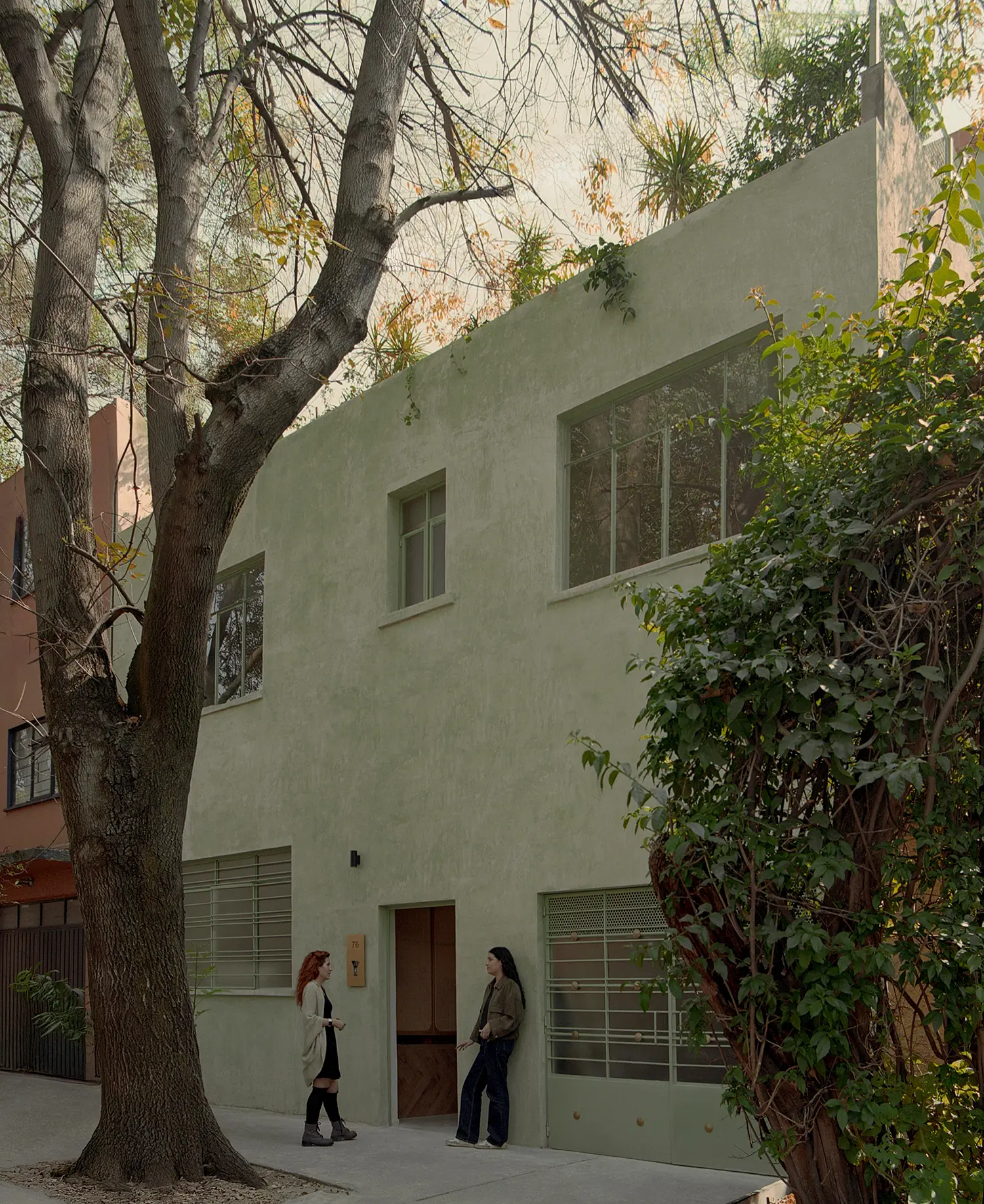
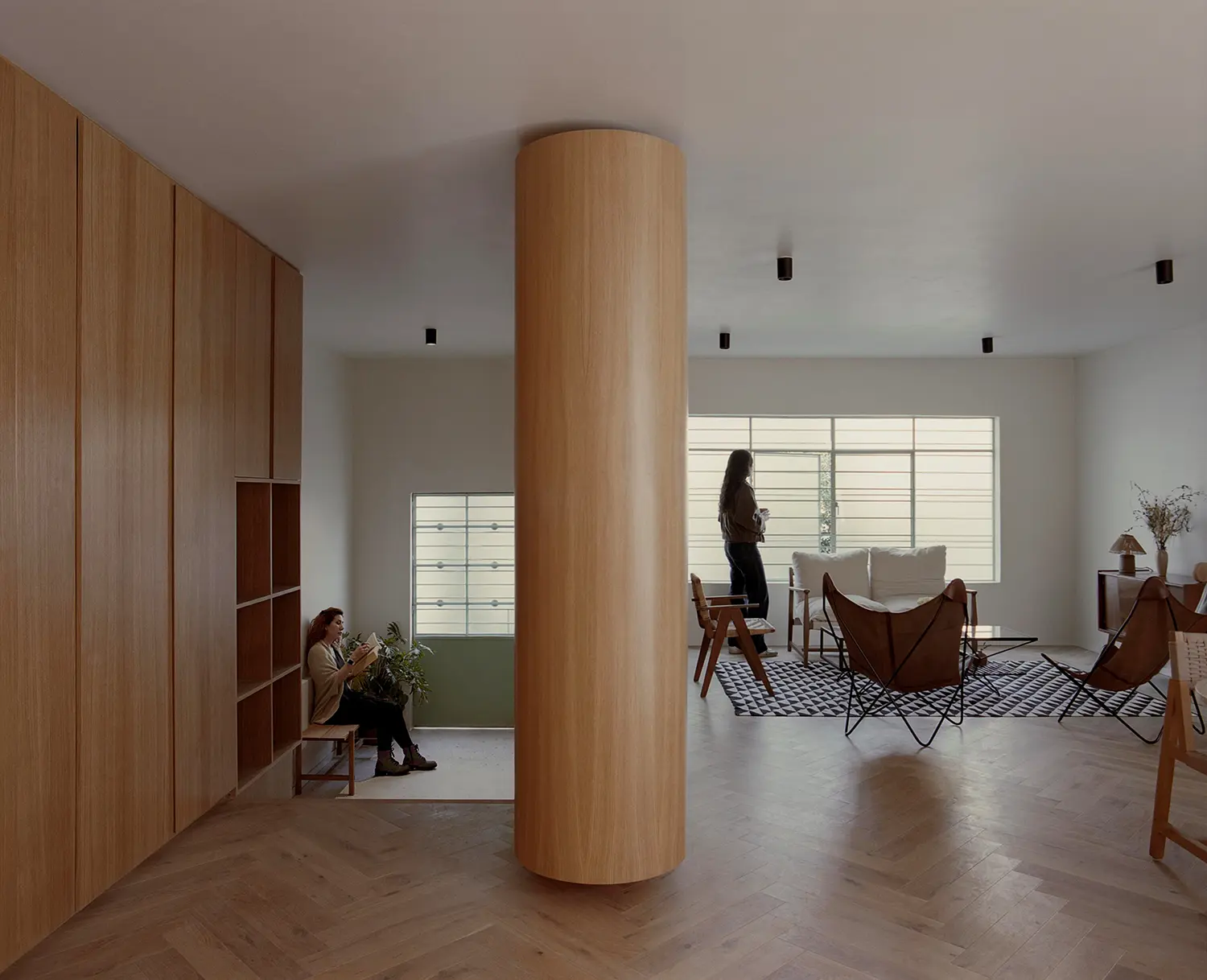
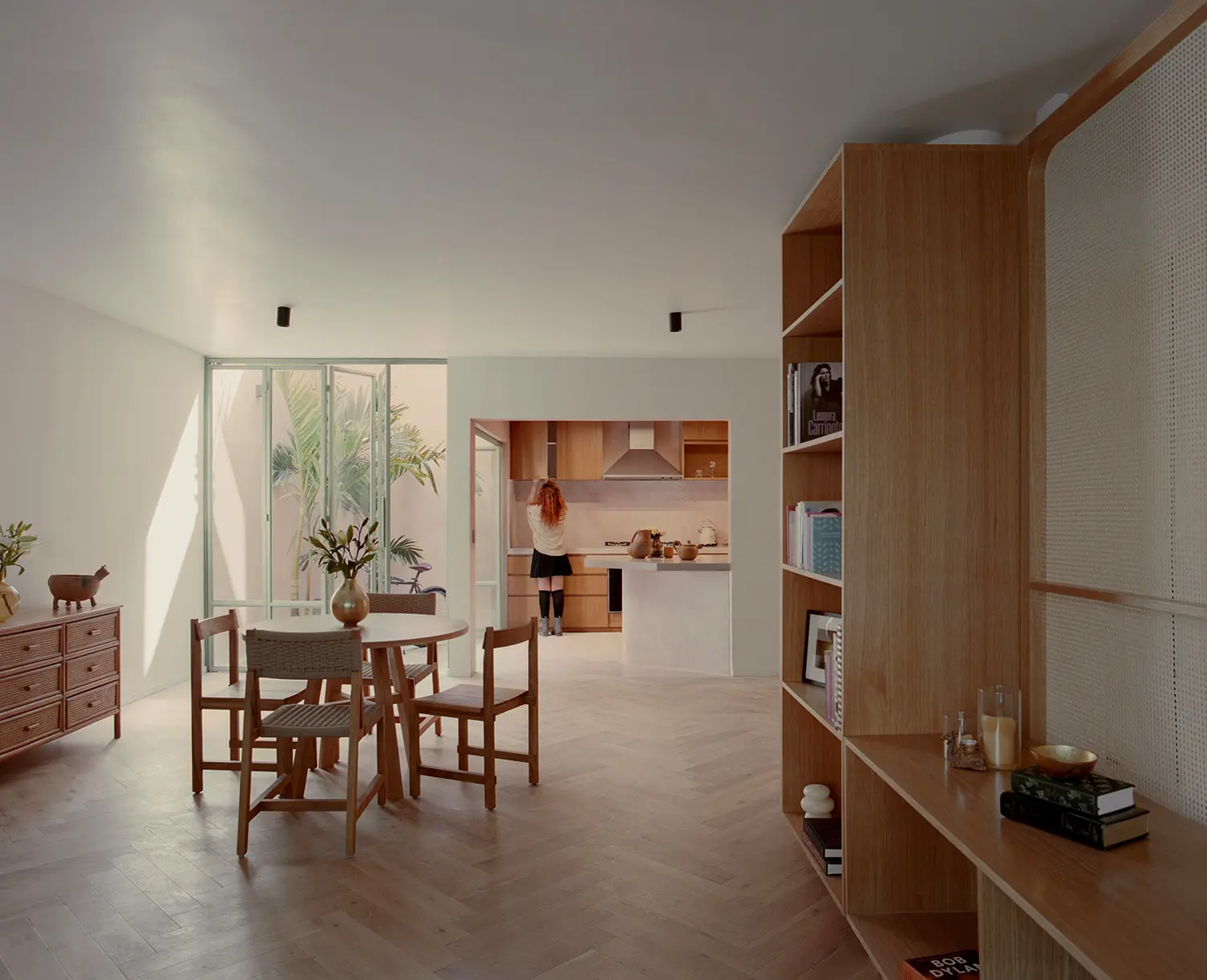
The entrance reconfiguration establishes the project’s methodology before the interior opens. A custom millwork system — a continuous wooden element running floor to ceiling — integrates storage, filters direct views from the street, and creates a genuine threshold between public and private. No additional walls were built. The piece does the work of architecture through furniture: it sequences arrival, contains the eye, and introduces the social areas with the kind of compression that makes subsequent openness legible. In two previous Coyoacán projects — Casa Sofia and a residence for painter Daniela Riquelme — the studio developed a comparable intelligence around thresholds and the domestic transition zone.
The kitchen as spatial core is a recurring AMASA decision, and here it carries particular weight. Finished in cast-in-place terrazzo, the kitchen sits at the center of the ground floor as a connector between interior and exterior, anchoring the open sequence of living room, dining area, and patios. Cross ventilation and visual depth run the full length of the level — the patios are not incidental but structural to the plan’s logic, and the terrazzo floor reads as the continuous surface that ties these spaces into a single thermal and visual system.
Vertical circulation was rebuilt from scratch, and the decision reveals the project’s structural intelligence. The main staircase handles the ground-to-first connection; a new cantilevered steel stair resolves access to the rooftop terracewithout touching the lower level — anchored by a single structural beam, it eliminates the intermediate columns that would otherwise fragment the patios. The result is a circulation system in which each level connects without interrupting the one below, and the terrace arrives as a natural consequence of the section rather than an afterthought bolted on top.
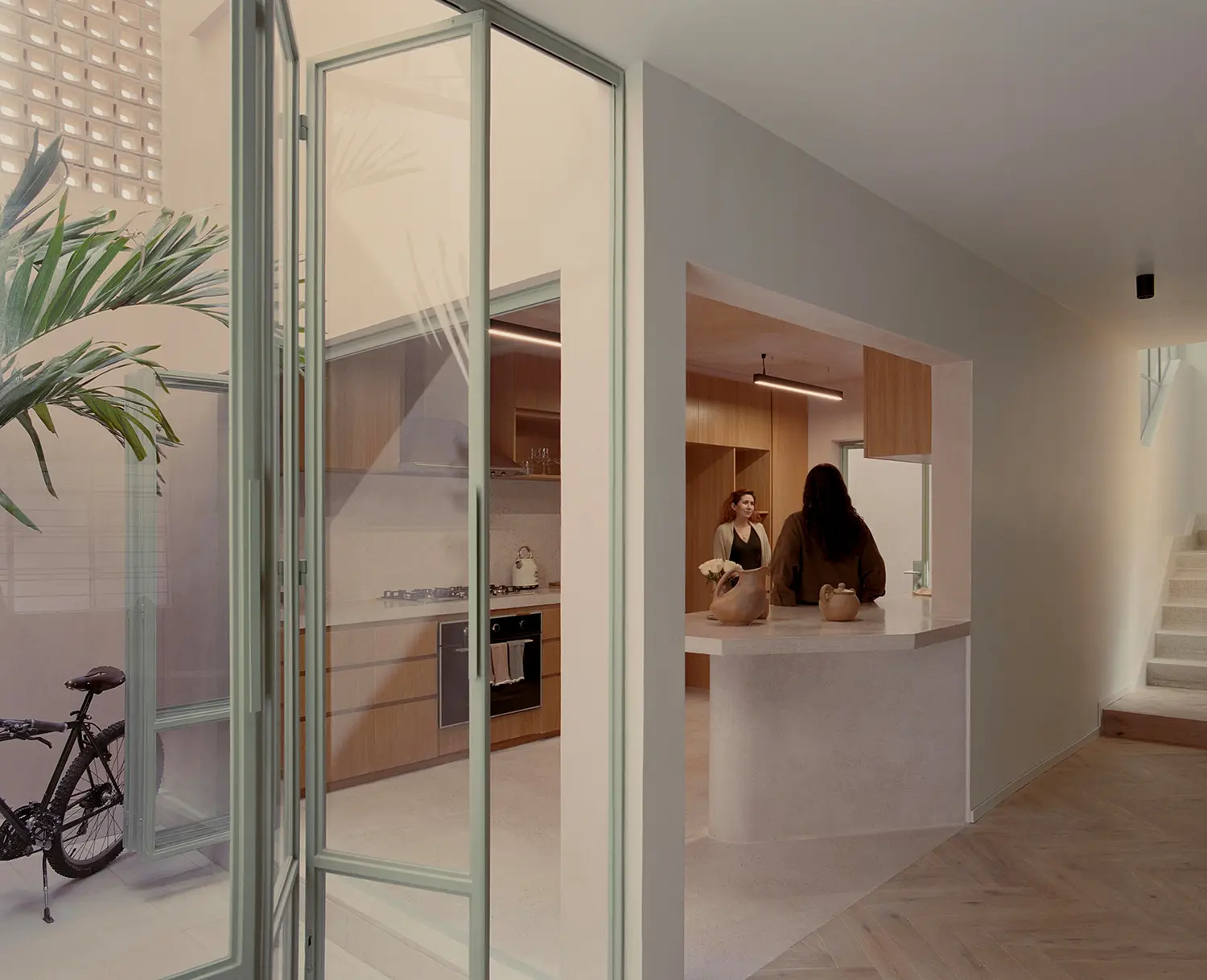
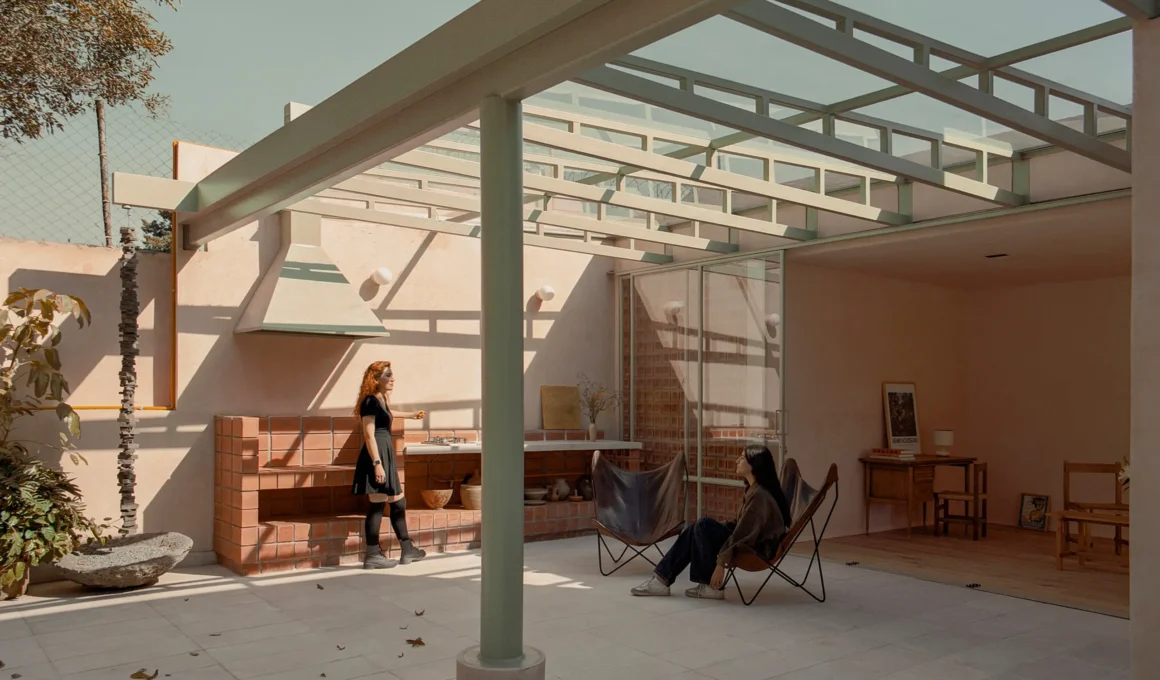
Light was the dominant constraint in the original north–south oriented plan. The architectural response introduced new openings, expanded visual connections between spaces, and deployed brick lattice screens to carry east–west light through the volume. The house shifts across the day — soft and diffuse in the mornings, laterally sharp at noon, warm and reflective in the afternoon. This is not ambient description but the functional output of the screen strategy: the lattice doesn’t just filter, it redistributes.
The material argument at Casa Xoltic is explicit and polemical. AMASA Estudio identifies a specific contemporary condition in Mexican residential architecture: the overuse of chukum and mineral plasters across domestic, cultural, and commercial spaces has produced a homogenization of surface — buildings that could be anywhere, expressing nothing particular about their location. The studio’s response was not to refuse the client’s request for chukum but to delimit it: the material appears only where its technical properties justify it — façades, patios, rooftop terrace, bathrooms, and kitchen.
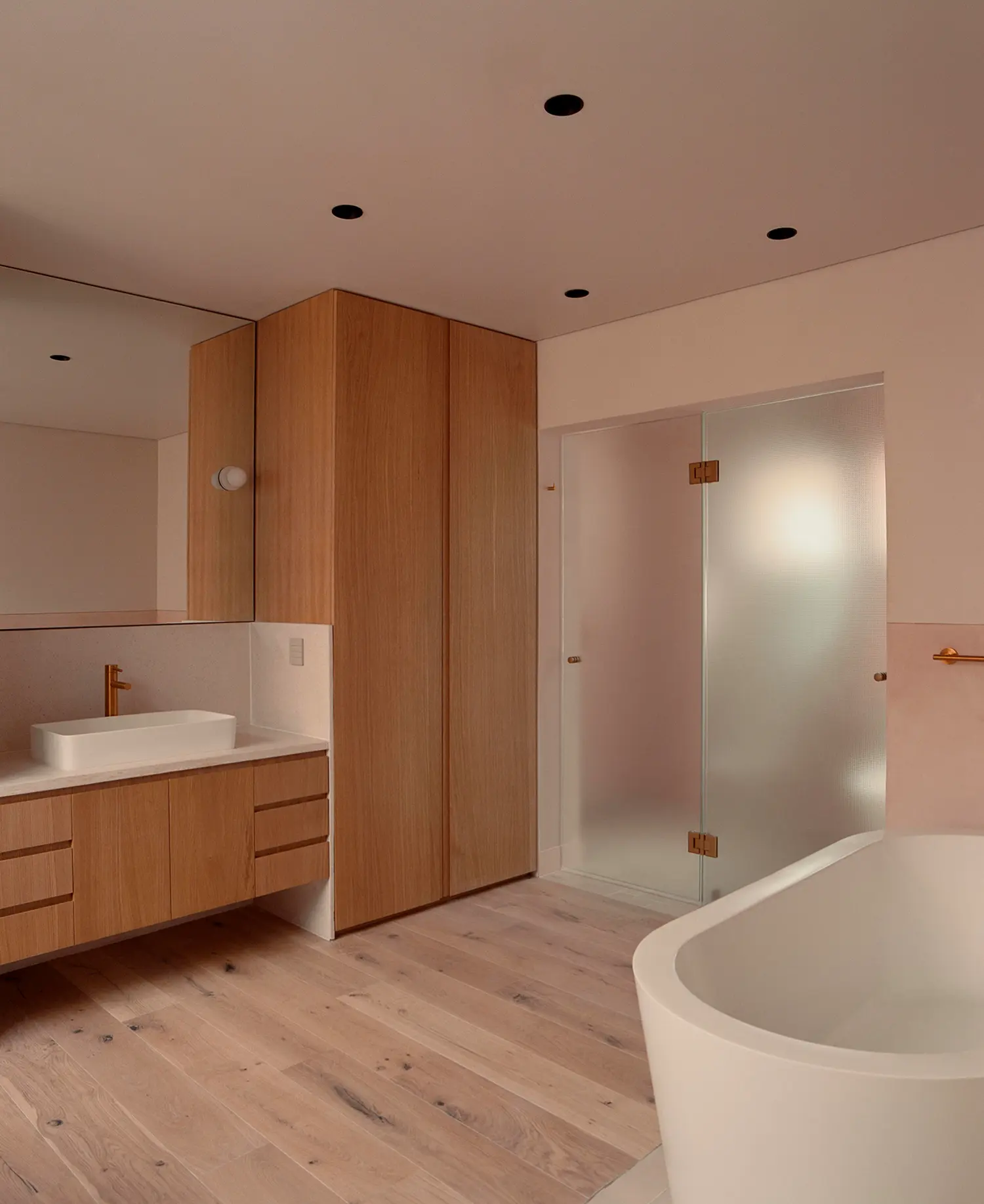
Delimiting chukum to weather-exposed surfaces was the move that unlocked the color decision. In dry interior spaces, smooth domestic plaster creates a quieter, more contained atmosphere. On the exterior, the studio selected a soft pink chukum finish for its luminous behavior in a temperate climate and its dialogue with Coyoacán’s vegetation. “Coyoacán, by contrast, has long been defined by color,” said the studio. “Iconic references such as the Casa Azul demonstrate how color operates as urban identity.” The choice is not illustrative of the district’s chromatic history — it is calibrated by it.
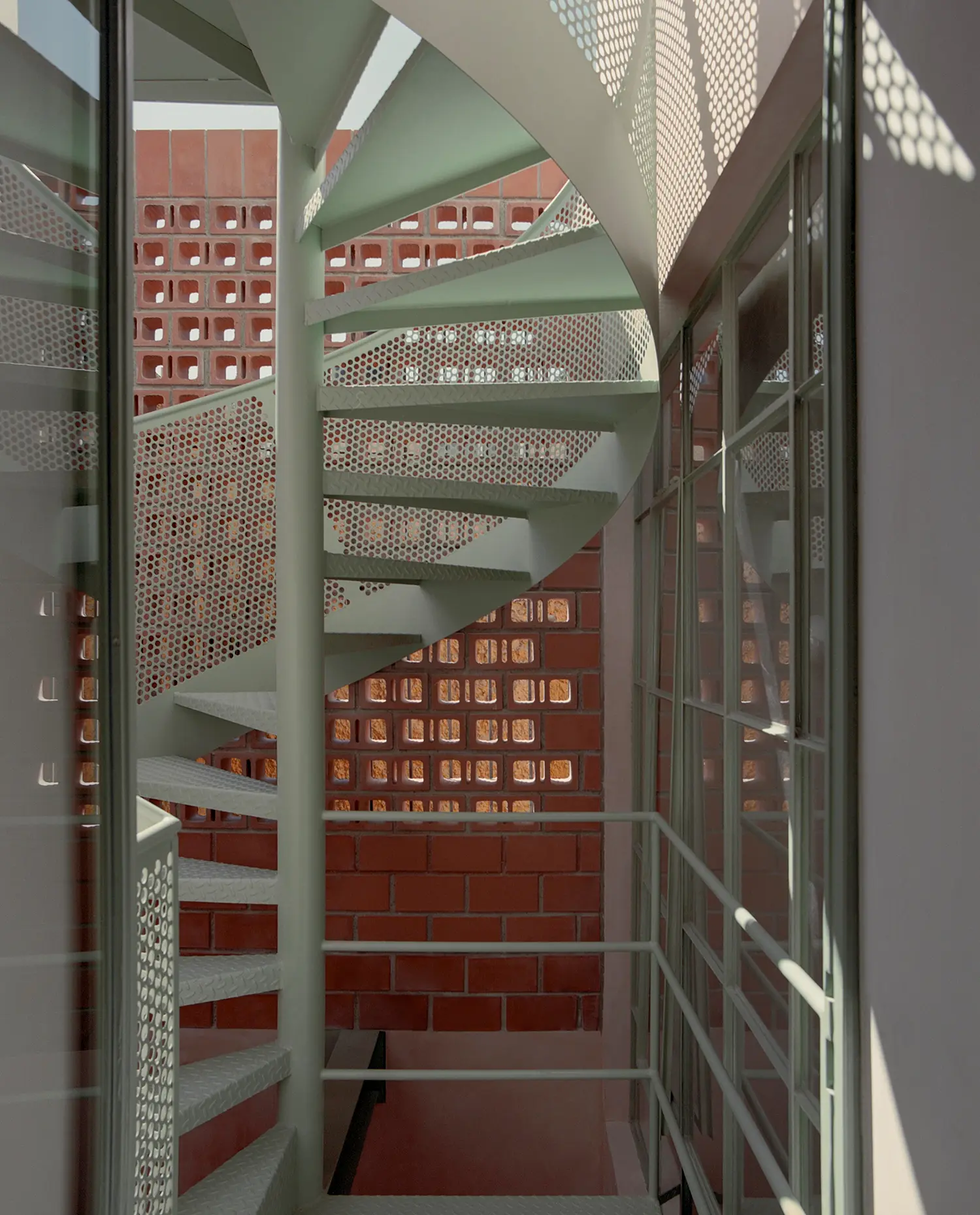
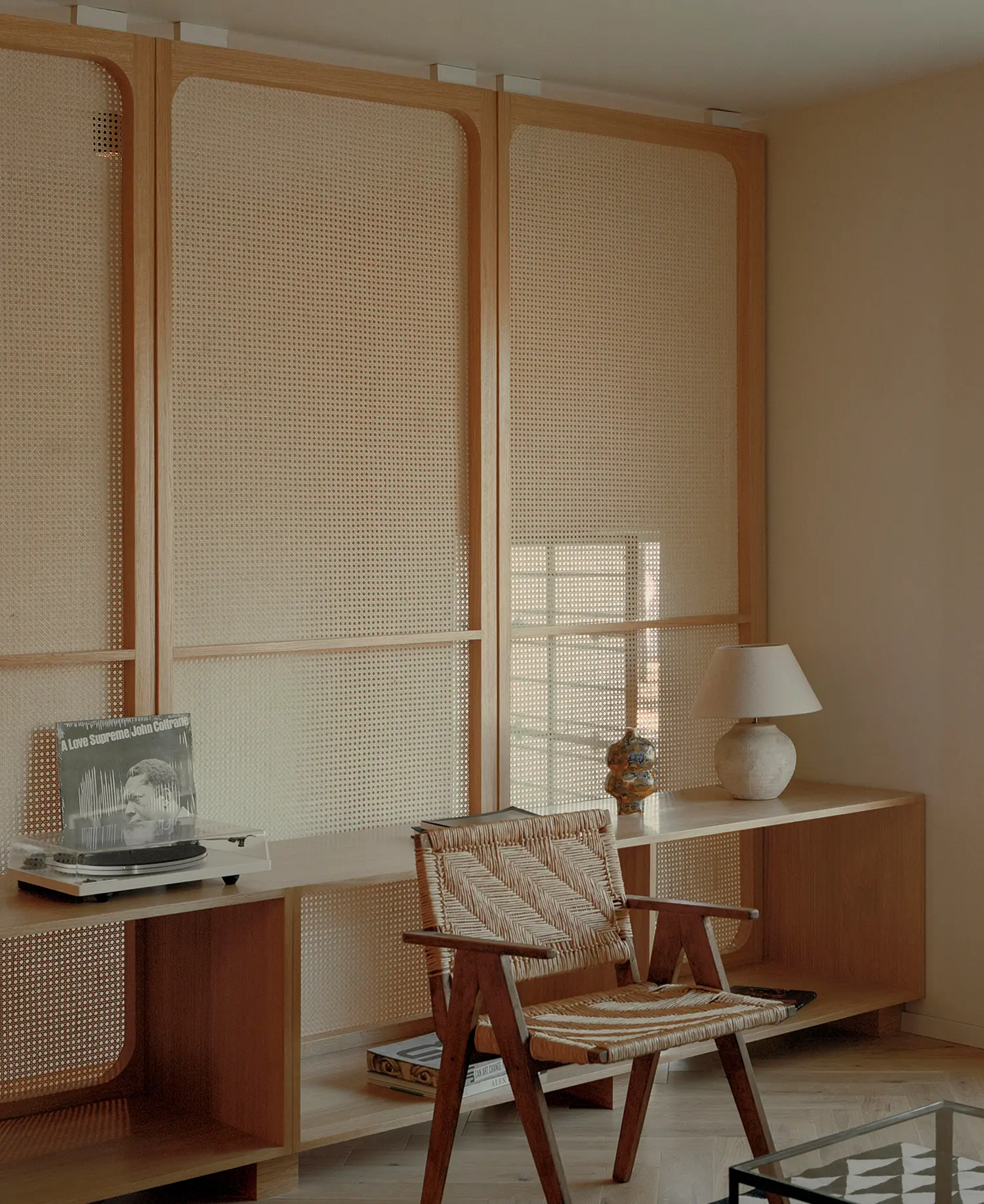
The restored ironwork in green produces the chromatic counterpoint that activates the pink. The combination shifts across the day — warming against afternoon sun, cooling in morning diffusion — and anchors the house to its specific environment. All elements — millwork, ironwork, cast terrazzo, brick screens, and applied finishes — were designed for the project and executed on site by Mexican artisans, using durable materials and manual processes that allow the house to be maintained, adapted, and repaired over time. “All elements were specifically designed for the project,” said the studio in a statement, framing craft as a constructive position rather than an aesthetic preference.
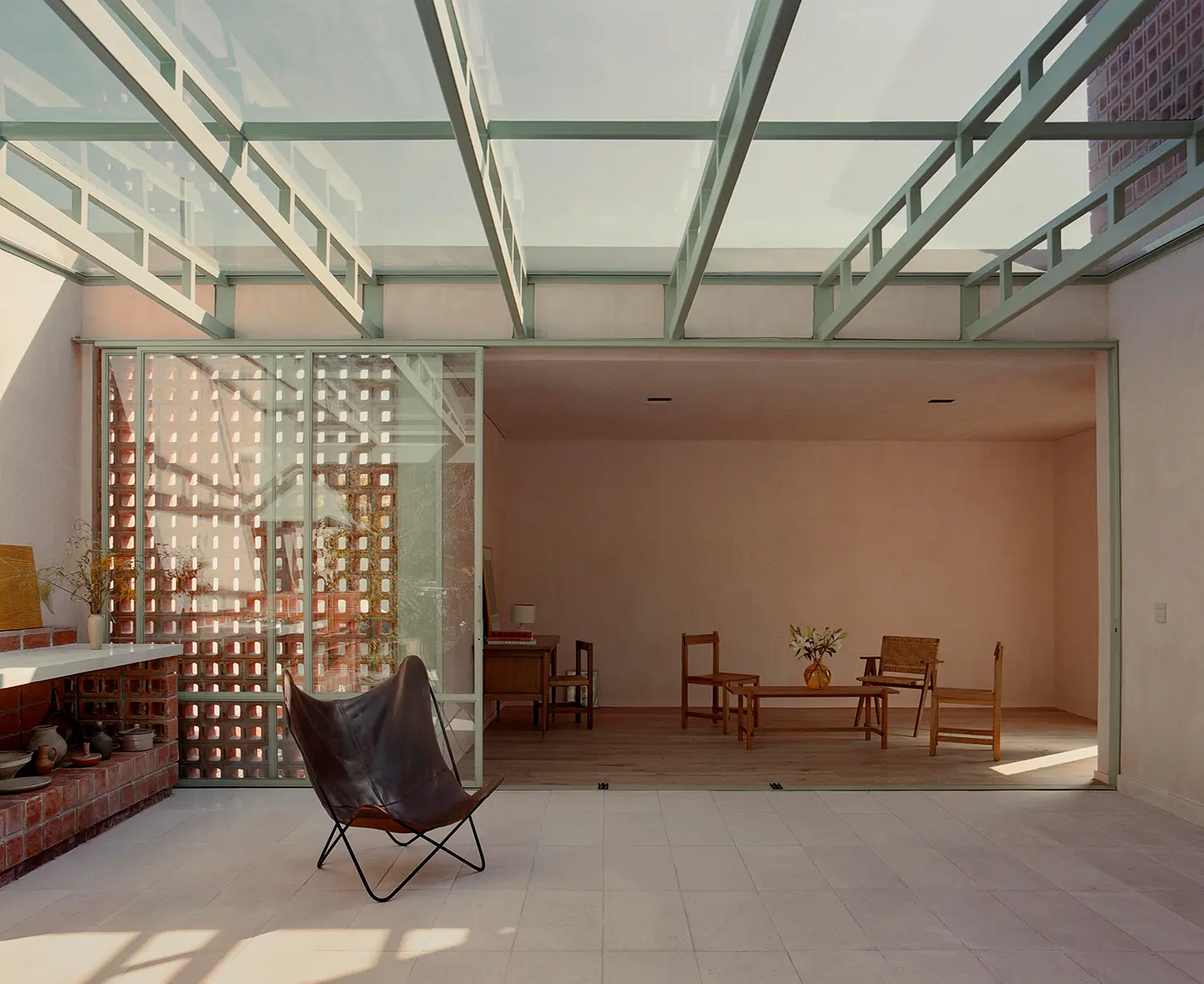
The cantilevered stair to the rooftop is the project’s most precise detail, but not for the structural reason usually cited. By refusing to touch the patios with a column, AMASA Estudio treats natural light as load-bearing — something to be protected with the same discipline applied to any structural element. That framing, extended consistently across residential renovation in dense urban contexts, would change what architects consider worthy of engineering attention.
Casa Xoltic by AMASA Estudio | Location: Colonia Del Carmen, Coyoacán, Mexico City, Mexico — Year: 2025 — Key materials: chukum plaster, cast-in-place terrazzo, brick lattice screens, steel, wood millwork