


The renovation of the Sarette apartment in Paris by Atelier Apara breathes new life into a 1970s residential shell, transforming a standard three-room layout into a versatile four-room family home centered around a bold, structural green core.
A reimagined interior geometry. The challenge of this Parisian renovation lay in the rigid constraints of a late 20th-century floor plan. By stripping back the original partitions, the studio moved away from a traditional fragmented layout to embrace a more fluid, circular logic. The intervention successfully integrates an additional bedroom without sacrificing the sense of openness, proving that urban density can be managed through clever spatial redistribution rather than mere square footage.
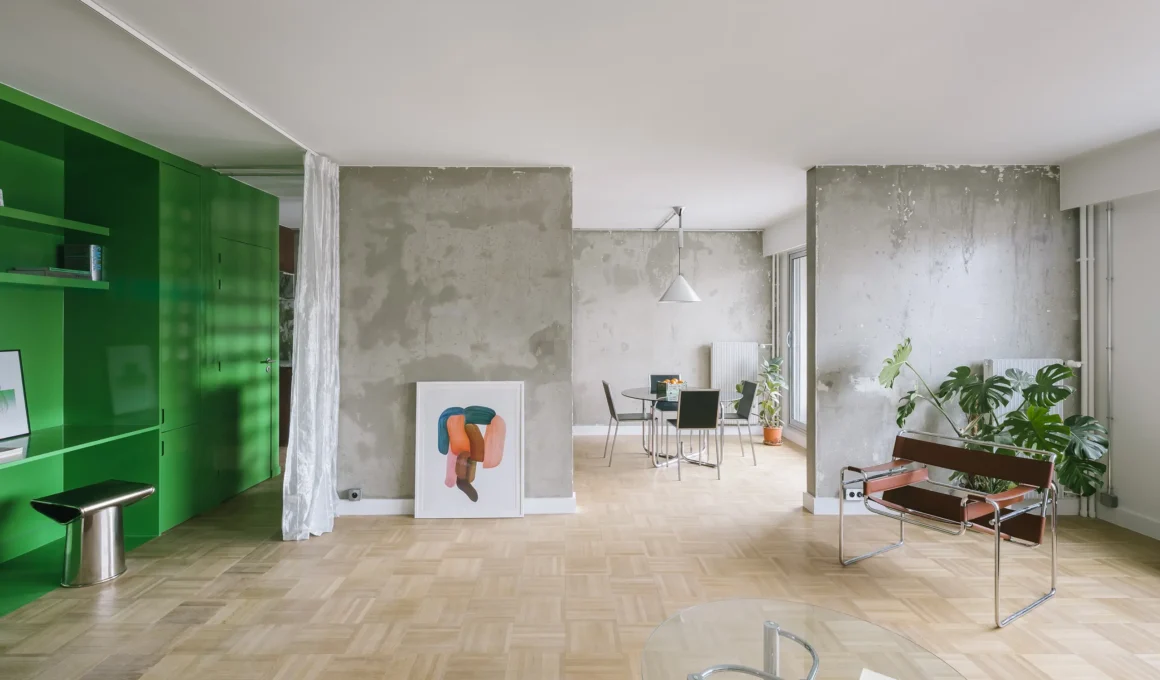
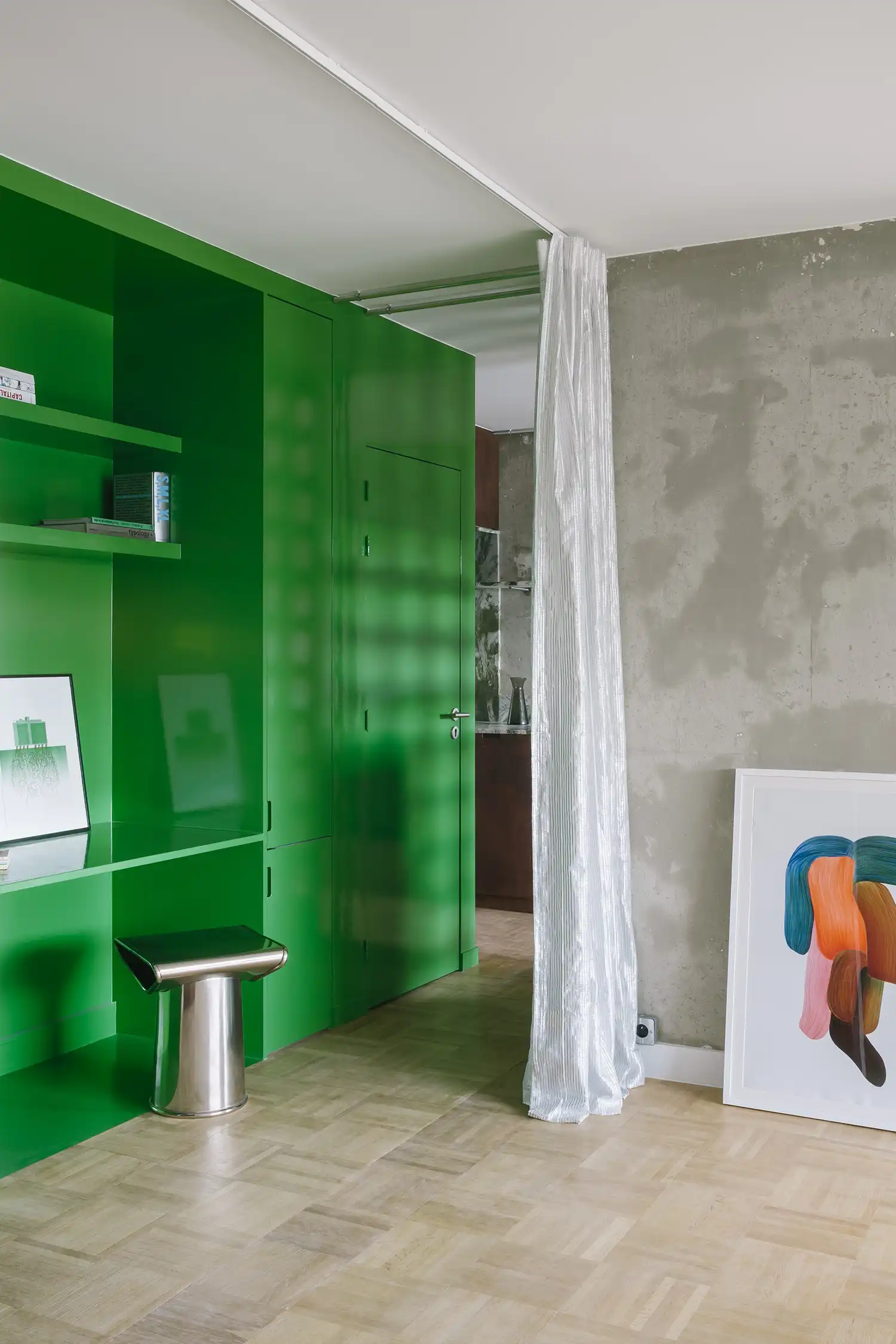
The magnetic green volume. At the heart of the residence sits a singular, monolithic cube finished in a high-gloss emerald lacquer. This element serves as the apartment’s functional engine, housing technical systems and storage while acting as a navigational anchor. Beyond its utility, the reflective surface functions as a light well, catching sunbeams from the large windows and bouncing a soft, verdant glow into the deeper, naturally darker recesses of the floor plan.
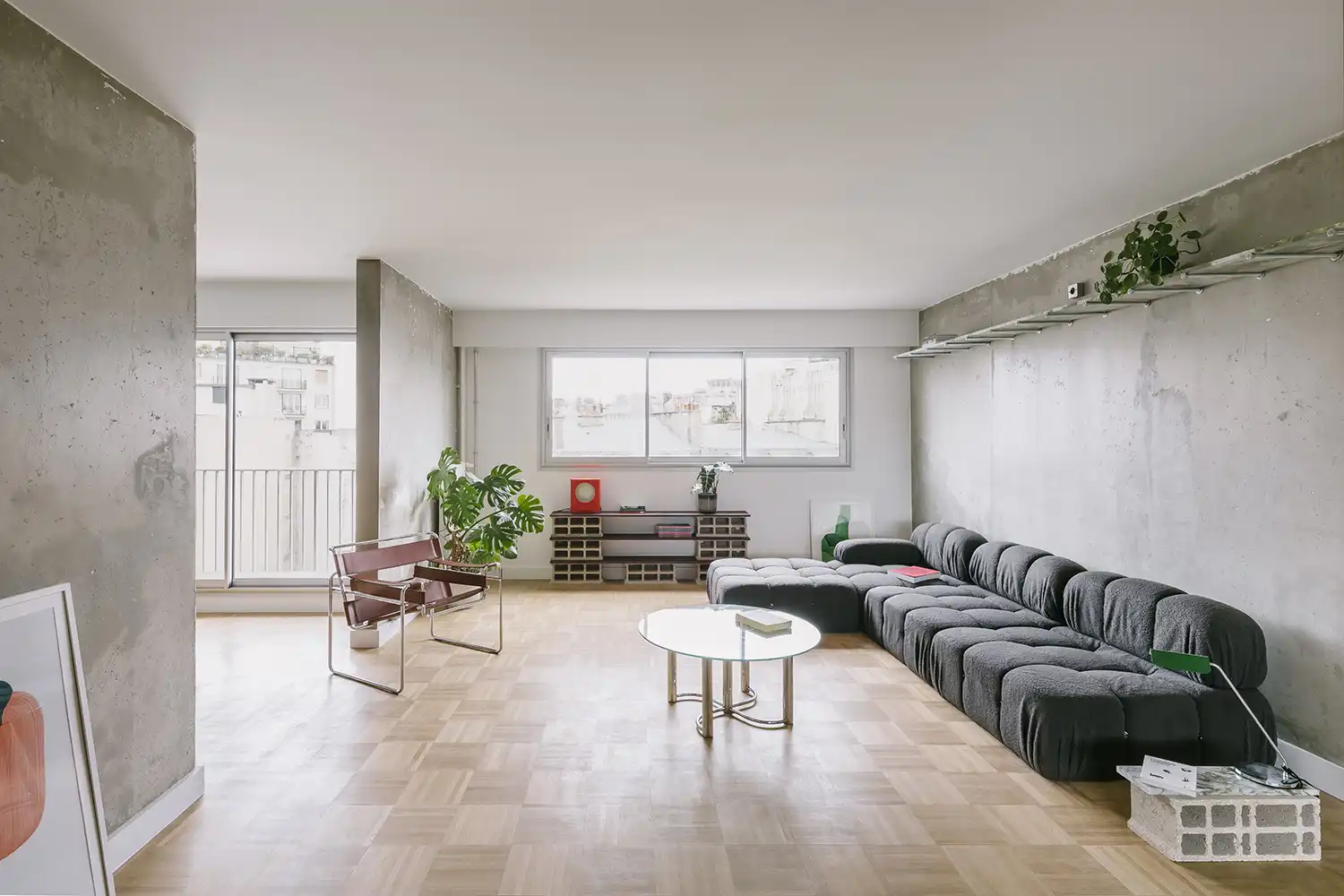
Honest materiality and mineral textures. In a move that balances aesthetic rigor with environmental consciousness, the studio opted to expose the building’s original concrete structure. This raw, mineral backdrop provides a tactile contrast to the warmth of the existing parquet flooring, which was meticulously preserved and extended into the new rooms. The decision to leave the concrete bare is not just a stylistic choice but a tribute to the building’s mid-century heritage, highlighting the honest beauty of industrial materials.
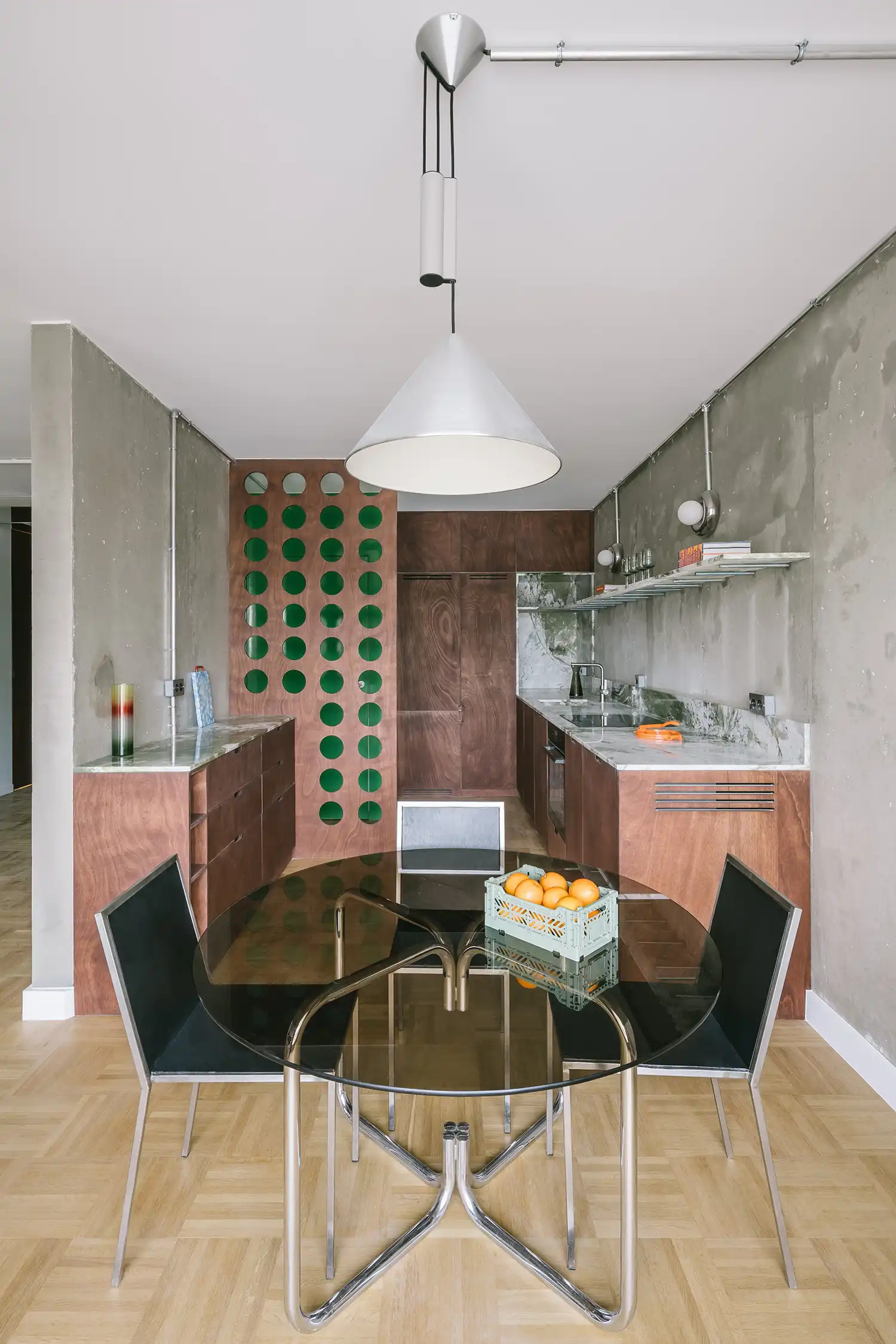
The intersection of raw and refined. The sensory experience of the Sarette apartment is defined by its unexpected material collisions. Slender threaded steel rods and industrial bolts support heavy marble shelves, creating a visual tension between the delicate and the massive. This bespoke shelving system exemplifies the project’s philosophy: using standard hardware to elevate noble materials, resulting in a home that feels both artisanal and unapologetically contemporary.
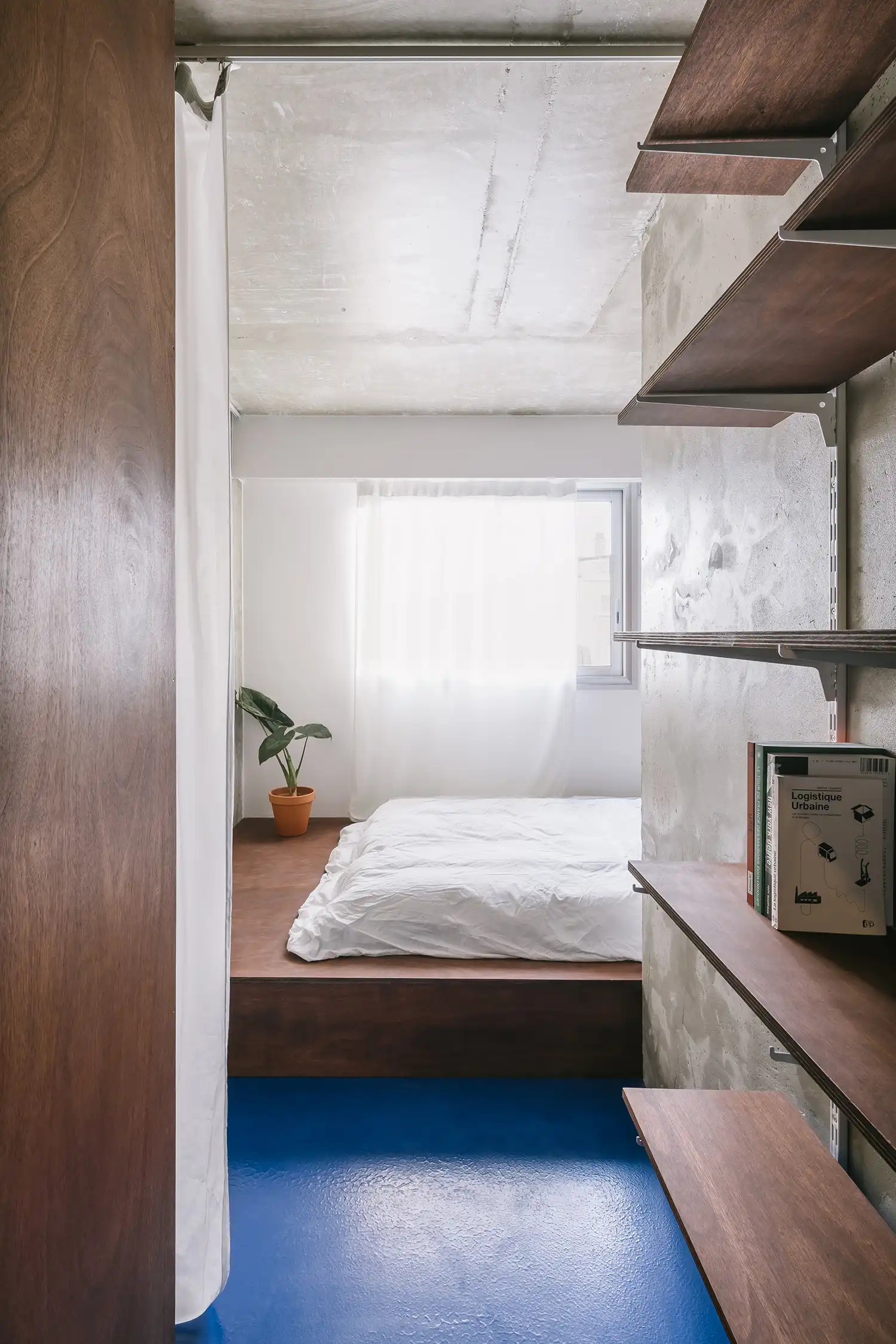
Fluidity and light. Circulation is no longer confined to hallways; instead, the living spaces wrap around the central core in a continuous loop. This transparency ensures that views are maintained across the entire depth of the apartment, enhancing the perception of volume. The interplay between the glossy textures of the central hub and the matte, porous nature of the concrete walls creates a sophisticated visual rhythm that shifts as one moves through the day.
The project demonstrates how a minimalist intervention can radically alter the DNA of a domestic space without erasing its history. It shares a certain kinship with other European projects that prioritize sustainable material choices and structural honesty, such as the hempcrete apartment in Brussels, where the focus remains on the tactile quality of the environment. In Paris, as in Brussels, the emphasis on a singular, character-defining material creates a home that feels grounded, intentional, and perfectly adapted to modern city living.