



When the owners of a 75-square-meter unit on the 23rd floor of a Brussels residential tower first acquired the space, its purpose was a void waiting to be filled. Located just a short walk from their traditional Belgian mansion, the apartment sat at a crossroads between investment and vanity project. However, ALTSTADT office for architecture saw an opportunity to transcend conventional domesticity. By reimagining the space as a “city refuge”—a contemporary crow’s nest perched above Belgium’s capital—the studio has crafted an experiment in minimal living that prioritizes the sensory experience of height and light over the rigid partitions of a standard home.
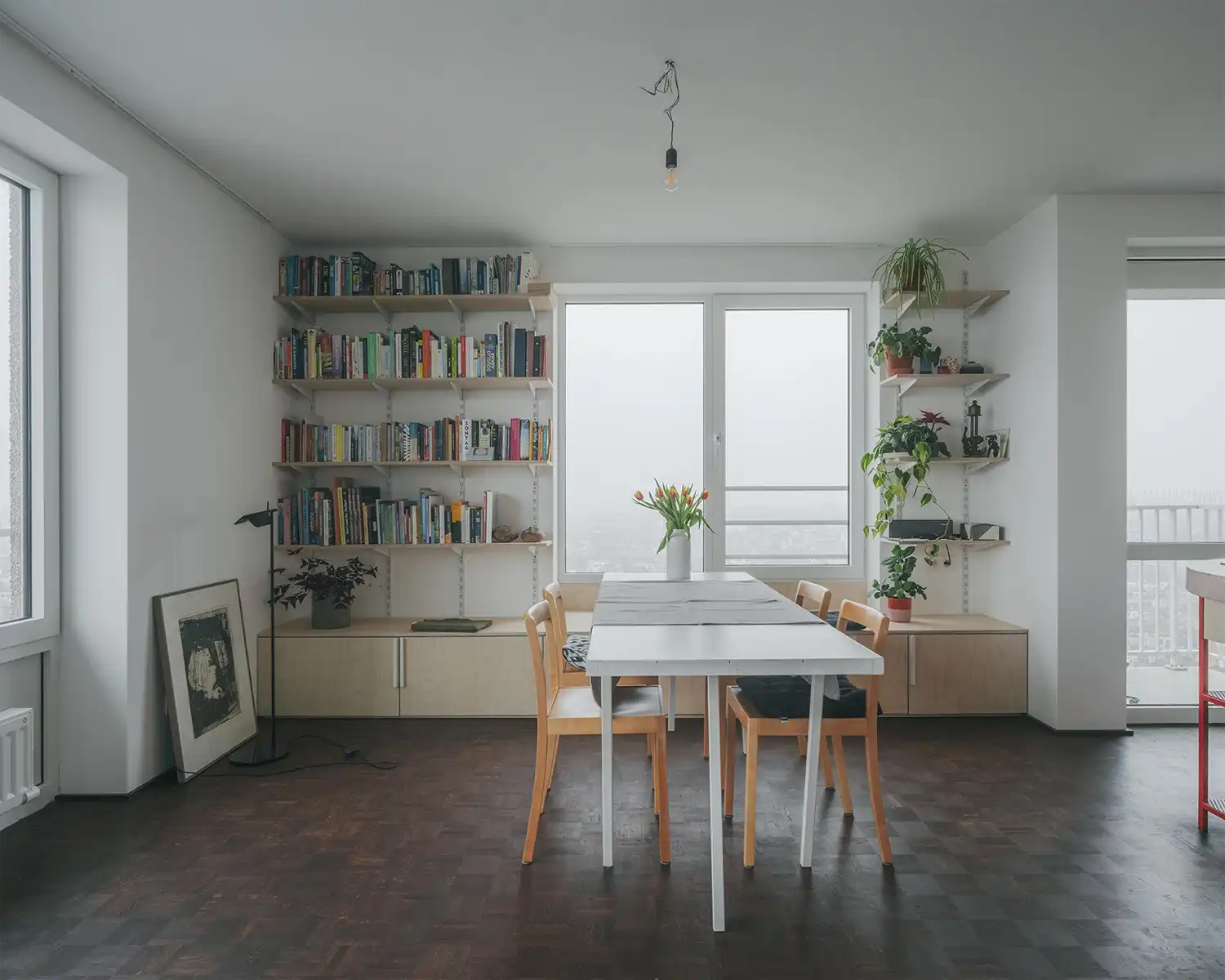
A liberated floor plan serves as the foundation for this atmospheric intervention. The architects made the radical choice to strip away all internal partitioning walls, effectively dissolving the boundaries between entrance, kitchen, and lounge. This approach echoes the philosophy of atmospheric architecture in Madrid, where the manipulation of light and volume takes precedence over traditional room layouts. In this Brussels interior, the result is a singular, fluid environment where the skyline is not merely a view through a window, but a presence that permeates every corner of the dwelling.
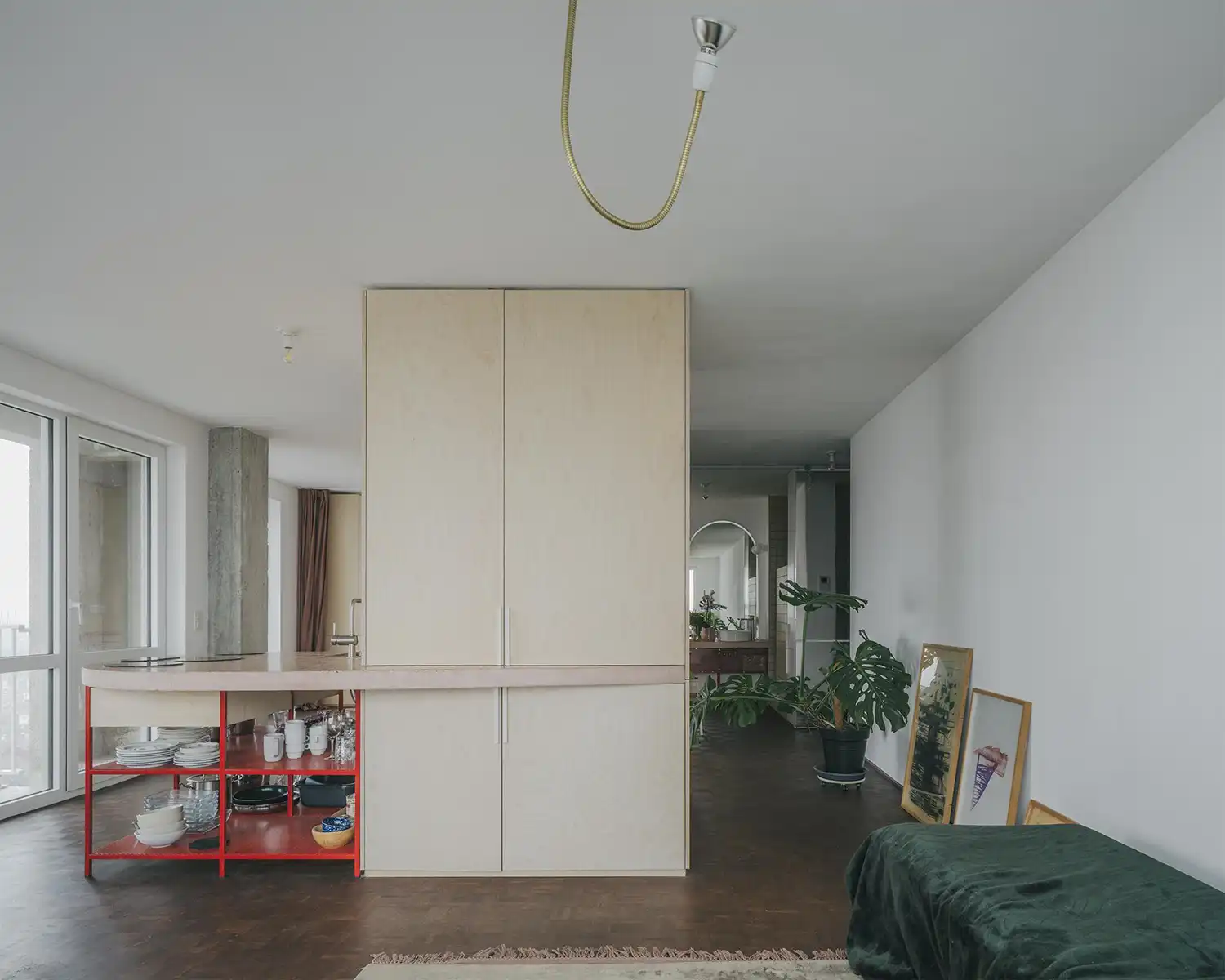
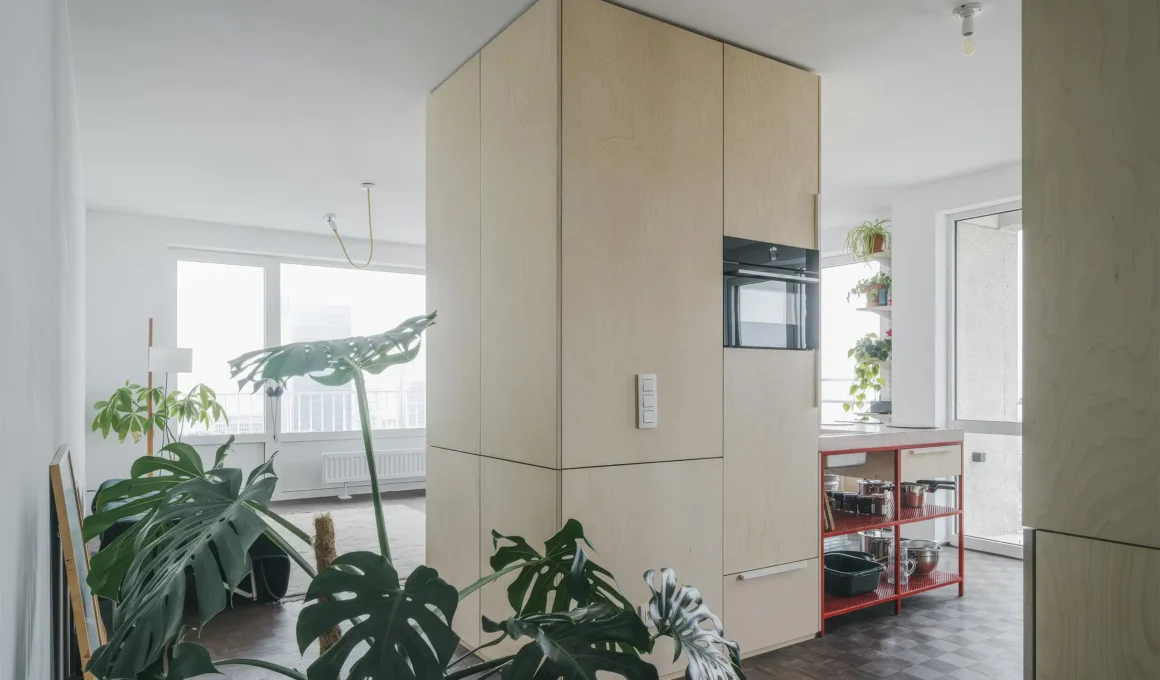
Sculptural volumes as anchors replace the need for traditional rooms, organizing the open plan with surgical precision. Two primary furniture blocks conceal the building’s technical shafts while defining the functional zones. The kitchen is anchored by a striking red steel frame and a tactile concrete countertop, providing a grounded, industrial weight to the otherwise airy space. This method of using custom furniture to structure small apartment renovations allows the perimeter of the unit to remain entirely unobstructed, ensuring that the 23rd-floor panorama remains the protagonist of the daily experience.
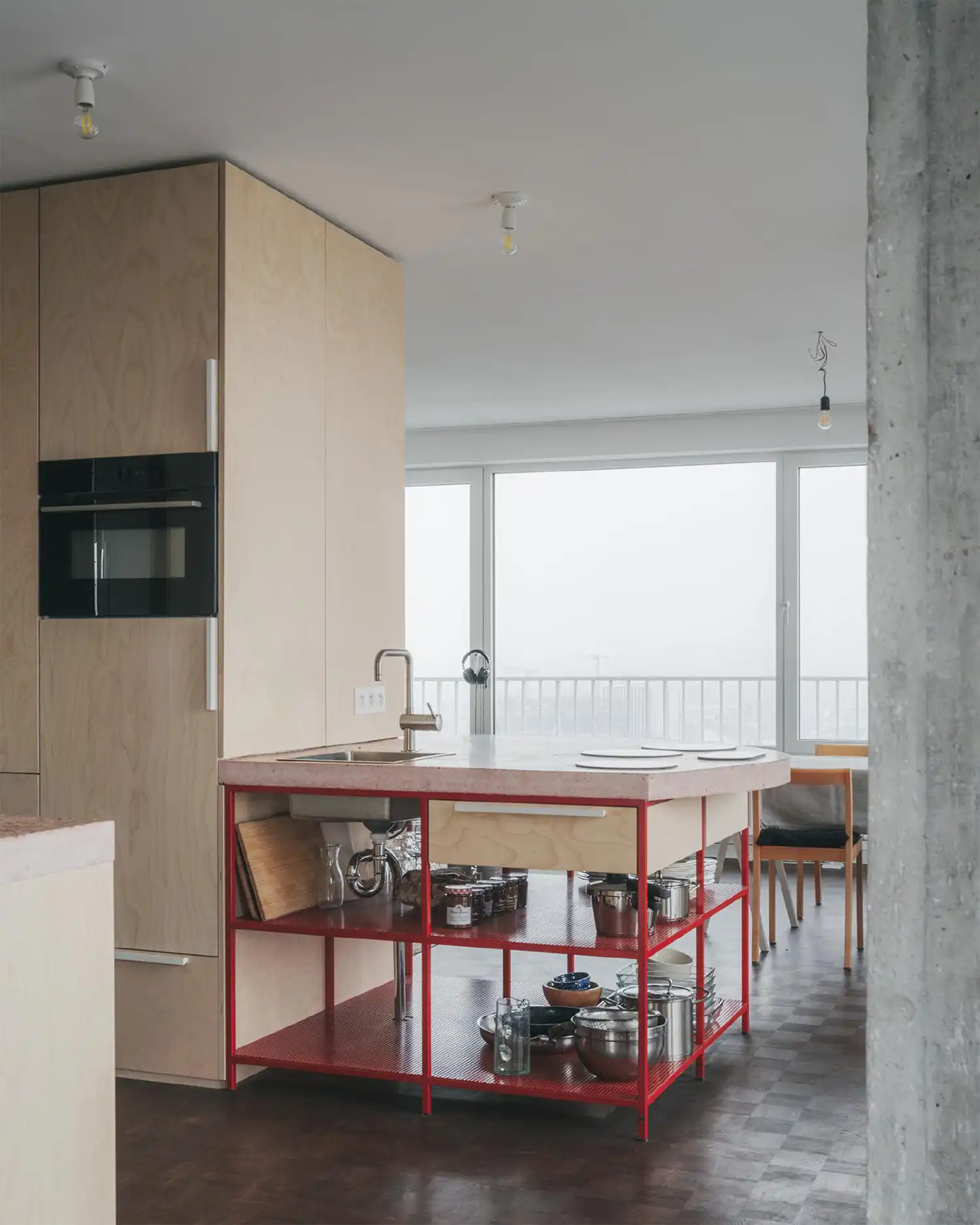
A dialogue of materials and logistics defined the technical execution of the City Refuge. Because every component had to be transported via the building’s existing elevators, ALTSTADT leaned into a low-tech, bio-sourced construction palette. An inner insulation layer of hempcrete and cork was utilized to create a breathable, moisture-regulating envelope. This commitment to “slow” materials provides a warm, organic contrast to the glass-and-steel vernacular of the skyscraper, resulting in a microclimate that requires almost no supplemental heating due to the ample solar gains from the expansive glazing.
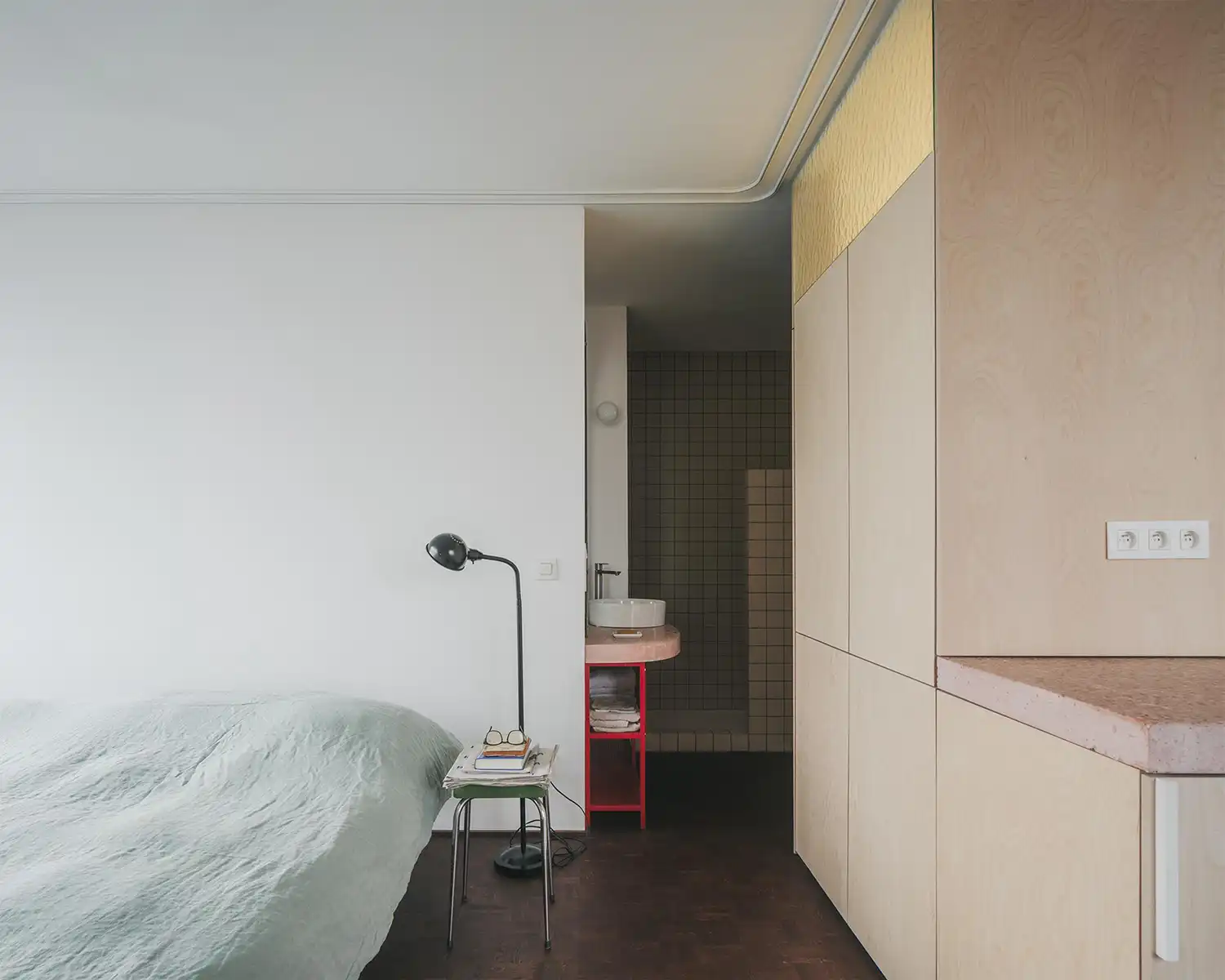
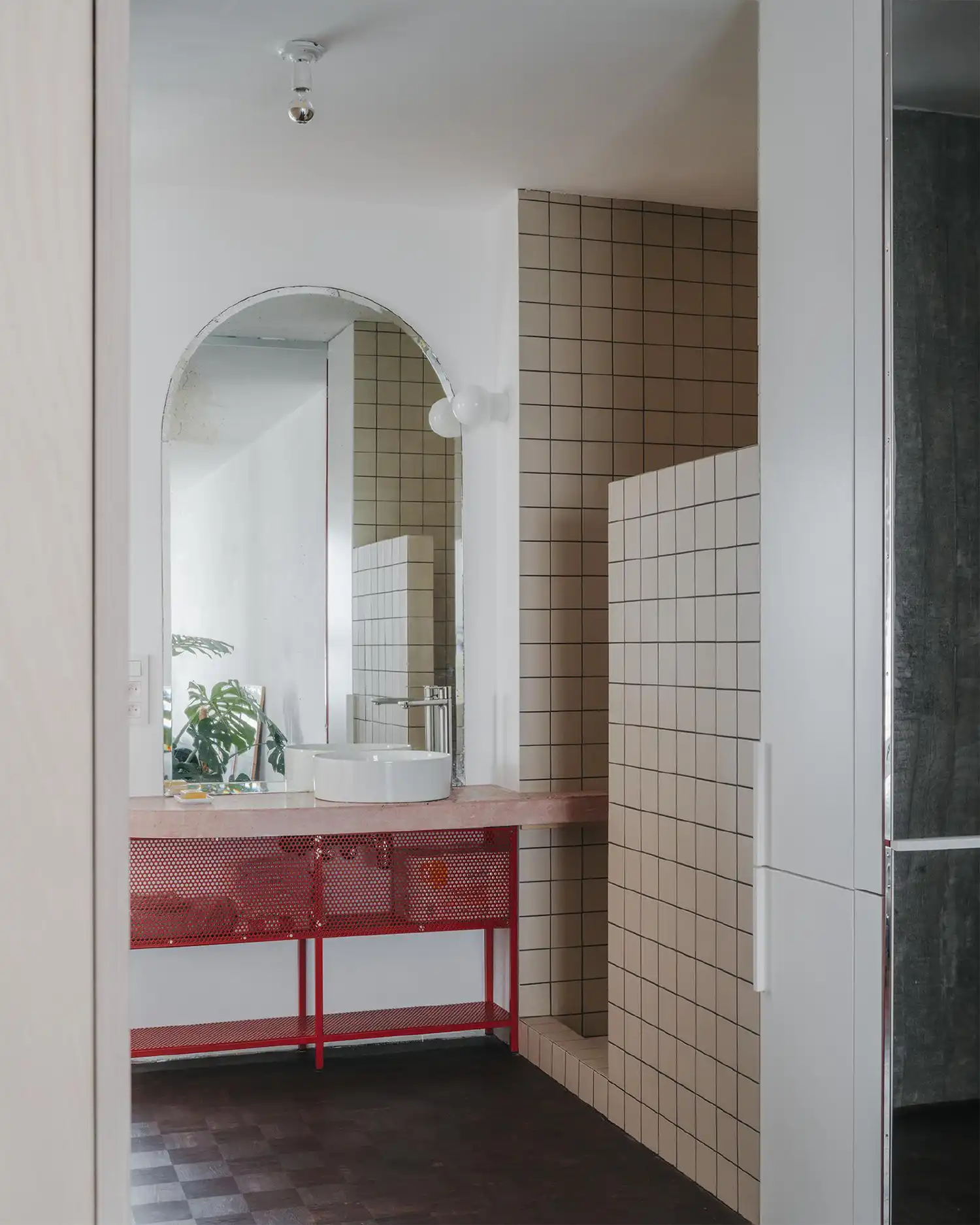
Reflective surfaces and private thresholds are handled with a clever minimalism. The bathroom—typically a closed-off utility—is treated here as an open corner, with only the toilet remaining fully enclosed. To manage privacy without sacrificing the sense of scale, a sliding mirrored wall was introduced. This element serves a dual purpose: it grants temporary seclusion when needed and reflects the city’s shifting light deep into the entrance hall. This sophisticated play of reflection and multi-functional zoning is reminiscent of how designers optimize light in apartment studio renovations, turning tight constraints into a series of expansive visual moments.
The contextual impact of the project lies in its refusal to behave like a standard residence. By treating the apartment as a sporadic retreat rather than a permanent home, ALTSTADT has created a space that feels inherently cinematic. It is a sanctuary that celebrates the “extra-ordinary”—a place where the passage of time is measured by the movement of clouds over Brussels rather than the ticking of a clock. It stands as a testament to the idea that true luxury in urban density is not found in square footage, but in the clarity of a single, uninterrupted horizon.