



OOIIO Architecture has completed a dazzling reinvention on the edge of central Madrid, Spain, transforming a humble, historic dwelling into the vibrant, light-filled House 64. This project is more than just a renovation; it is a profound 71 m² apartment renovation that tells a story of urban evolution and domestic transformation. Originally constructed in 1960 on what was then the city’s periphery, the modest space was once home to a bustling family of nine. Sixty-four years later, the architects have stripped away the restrictive divisions to create a modern, adaptable haven for just two, breathing a necessary second life into the structure.
The historical context of the building is crucial to understanding the scale of the design challenge. When the residential block was first erected in the 1960s, it provided essential, albeit modest, housing for thousands flocking to the capital in search of opportunity. The original Madrid apartment layout was a stark reflection of the era’s needs: a narrow central hallway feeding into tiny, restrictive bedrooms, designed for pure function and maximum occupancy. There was no true living room, and one single bathroom served the entire household. OOIIO Architecture faced the task of erasing this rigid past and ushering the space into the present reality of contemporary small-space living at the now central edge of Madrid.
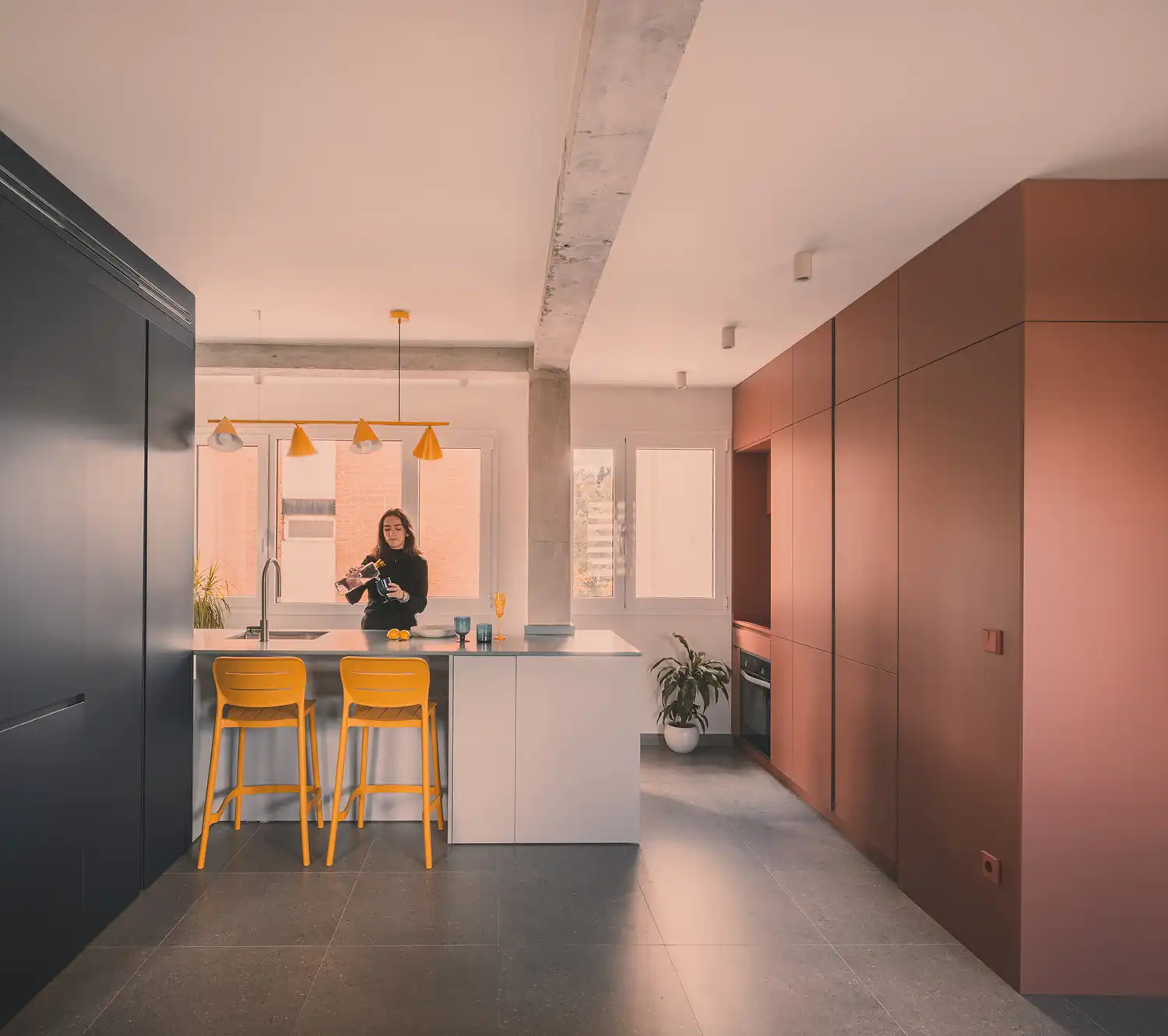
The studio’s approach was radical yet respectful: a complete demolition of the original interior structure. This cleared the way to harness the apartment’s defining feature—windows on two parallel facades—to achieve an open, airy environment flooded with natural light and excellent cross-ventilation. The resulting flexible open layout is a testament to modern Spanish architecture, designed to meet the fluid needs of today’s smaller households. The transition from a maze of tiny rooms to a continuous, functional space required a meticulous strategy for spatial definition, which the architects achieved not through walls, but through carefully choreographed surfaces.
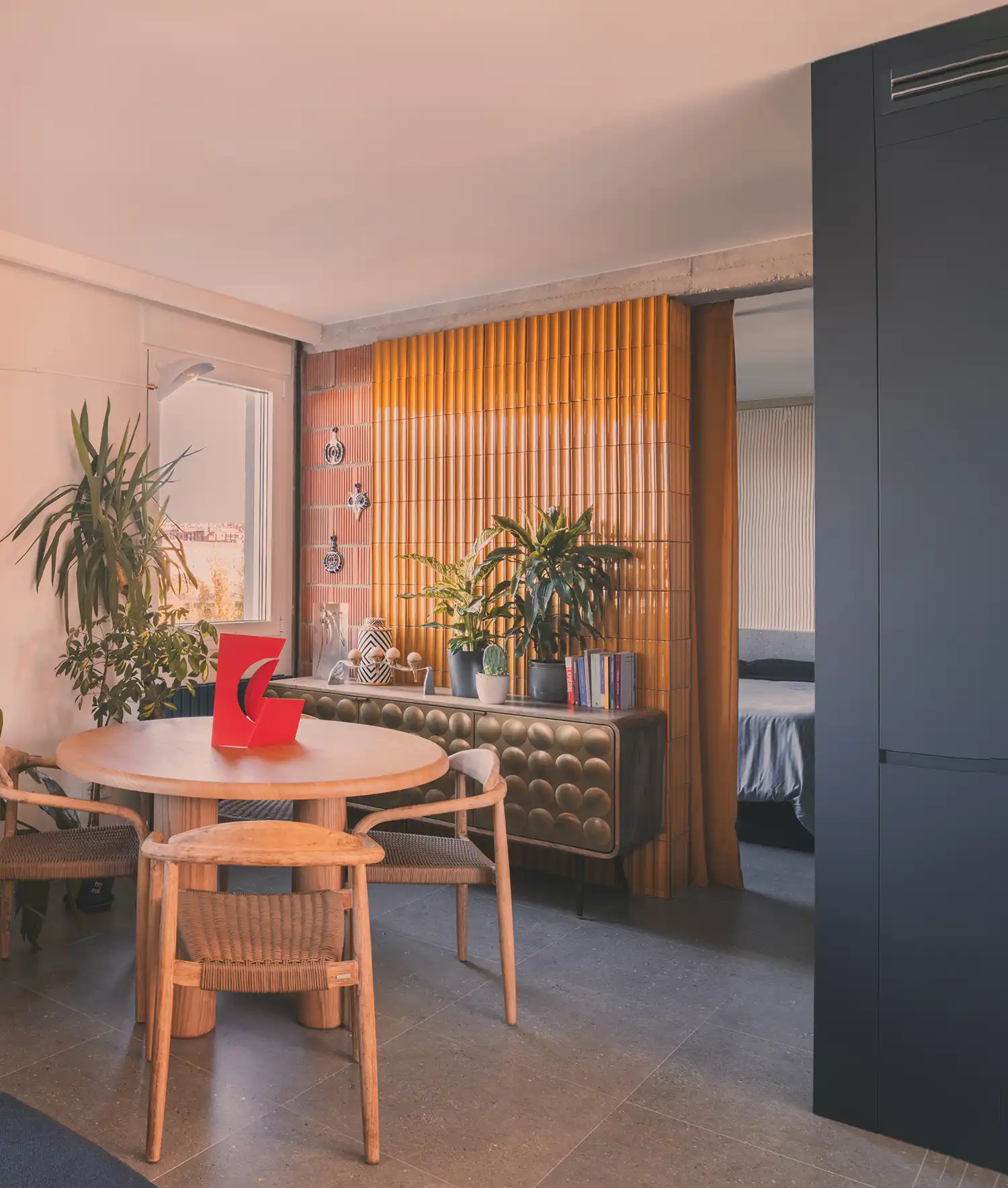
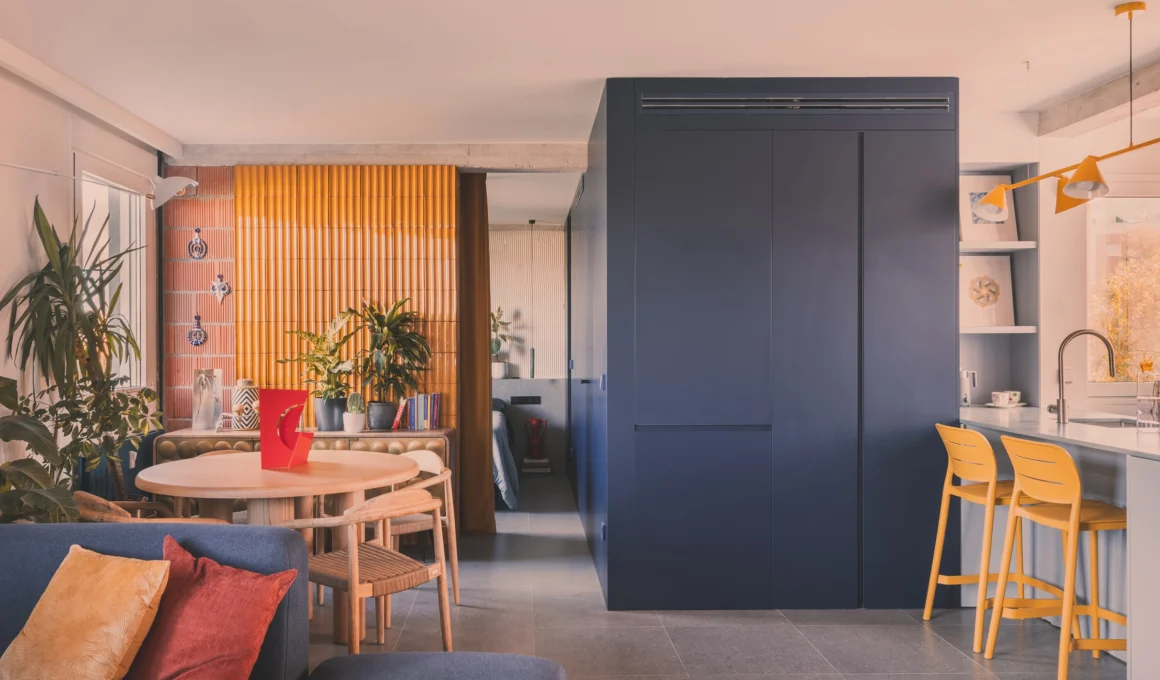
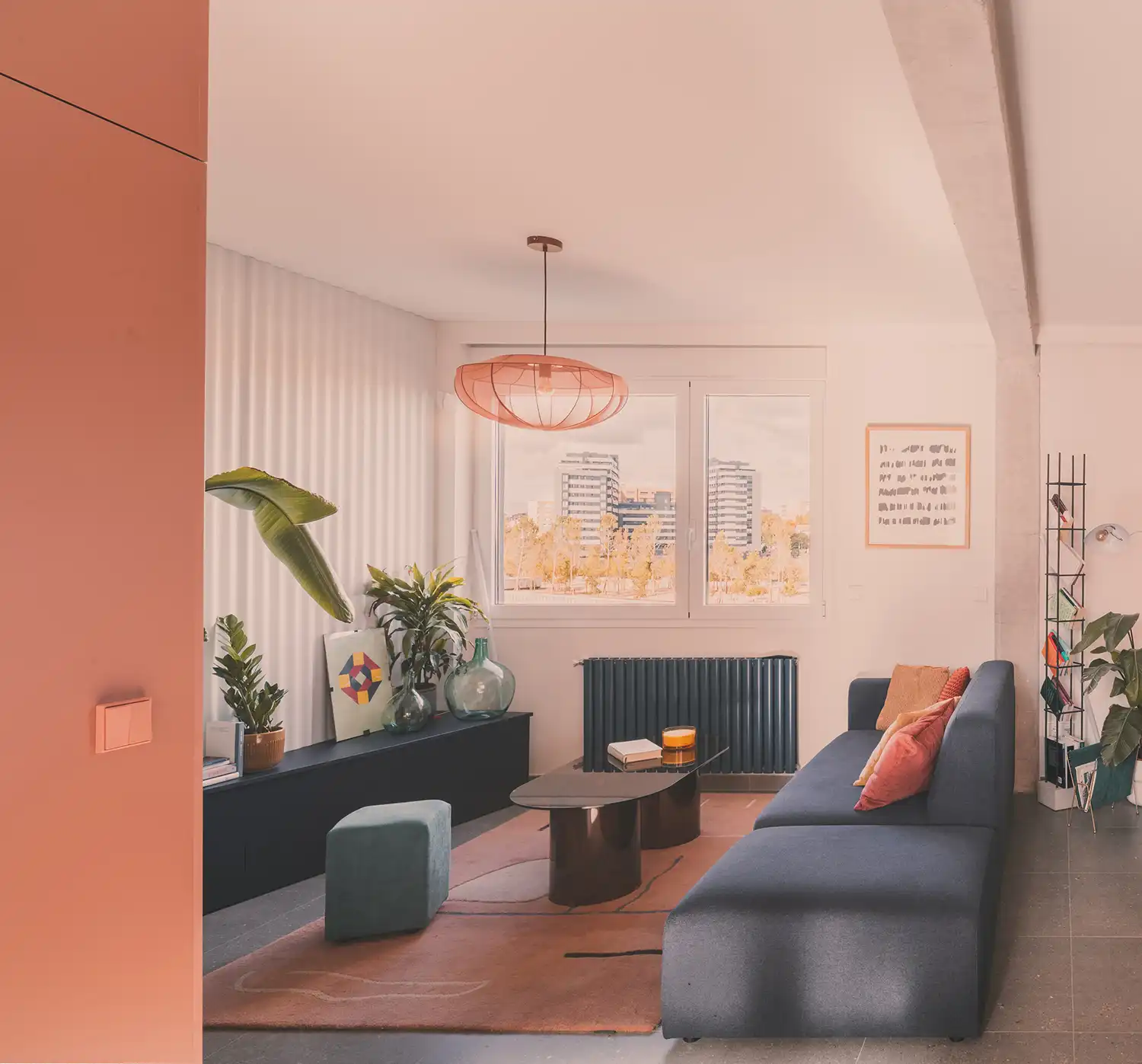
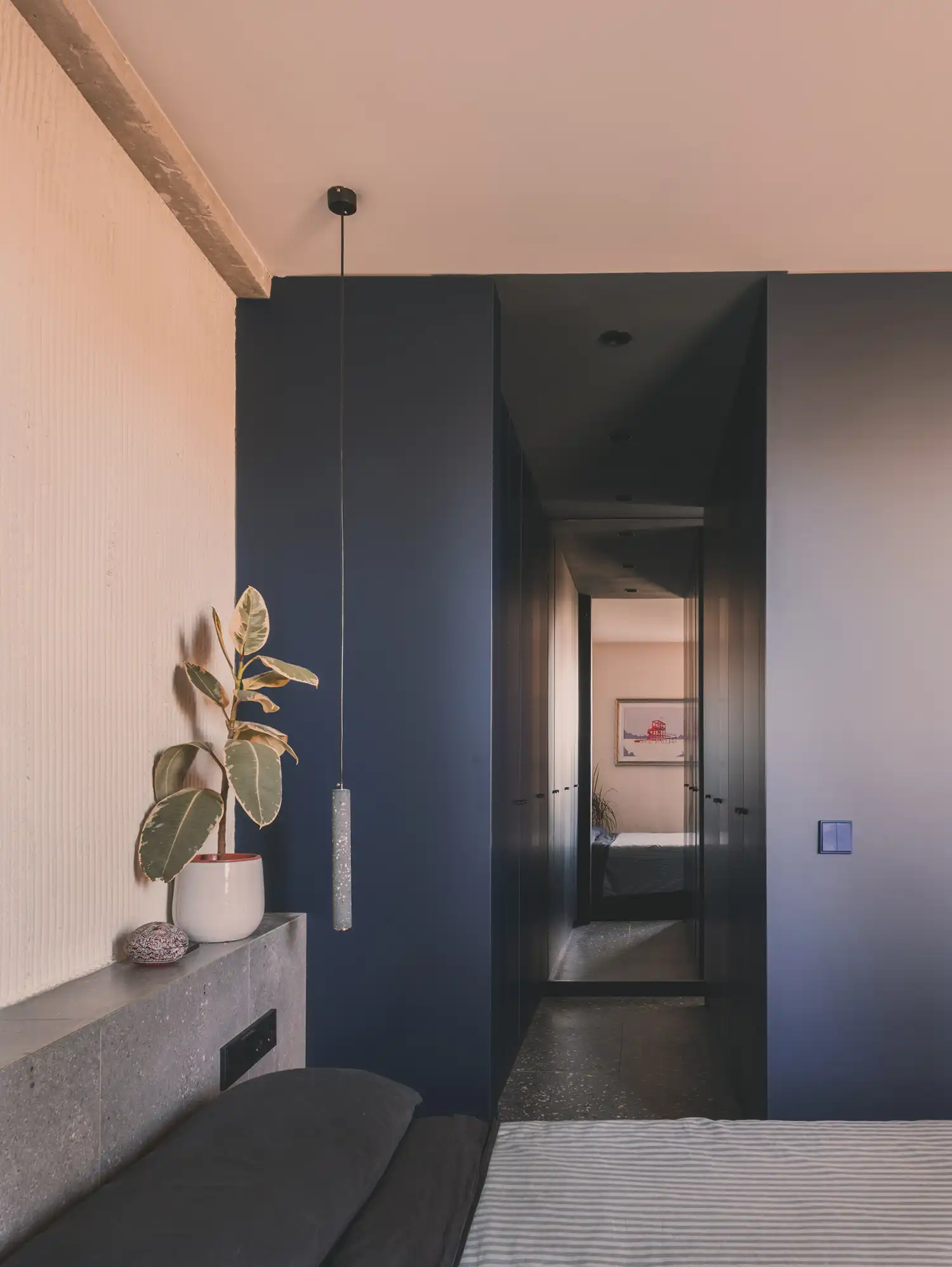
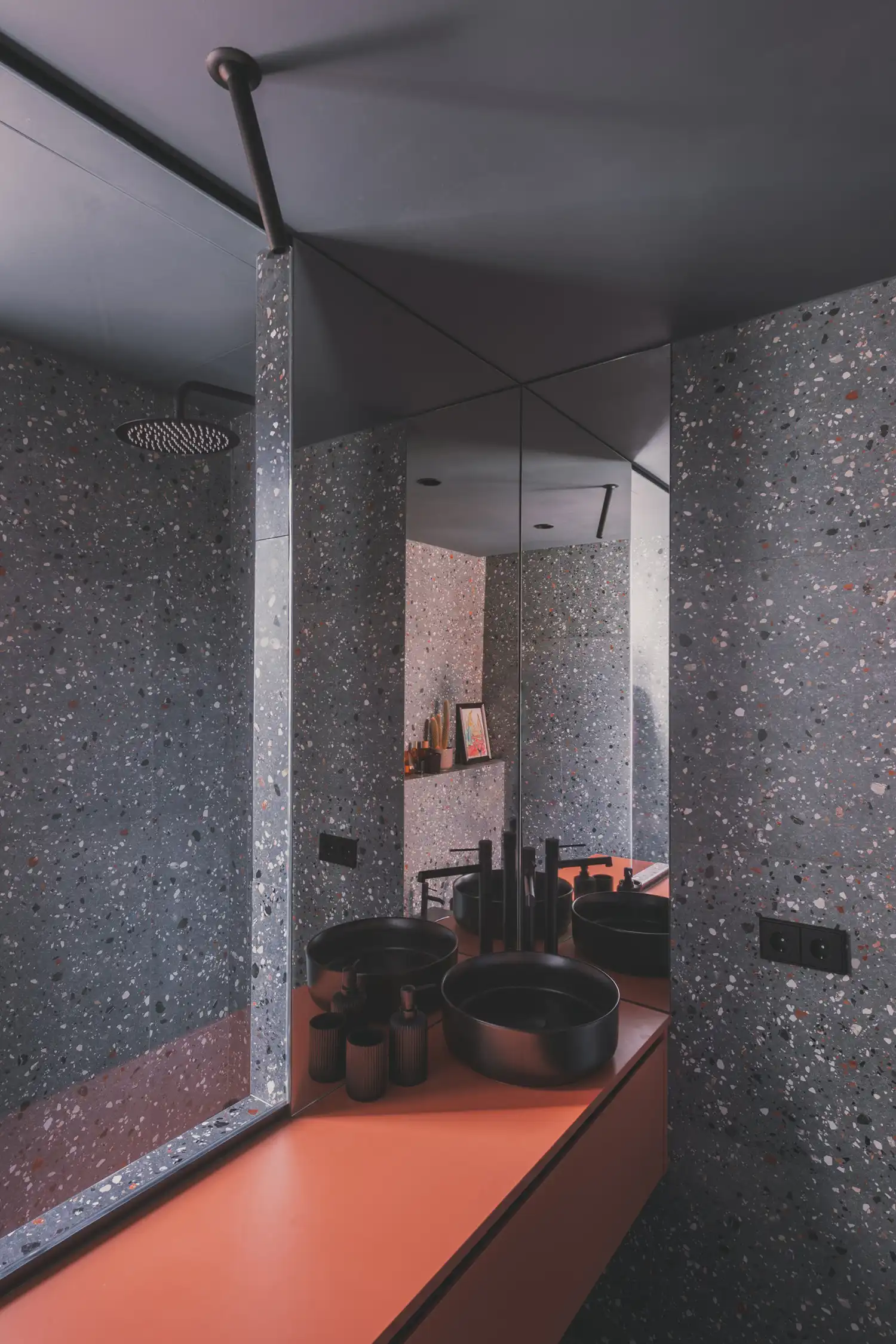
The genius of House 64 lies in its daring use of surface treatments and a sophisticated, yet vibrant color palette. The architects conceived the design as a three-dimensional tapestry, an architectural collage, where every wall acts as a blank canvas bearing a specific material, color, or texture. This meticulous orchestration of elements results in a highly functional yet playful spatial organization. Textures, reflections, and subtle details become the defining architectural language, ensuring the compact home feels expansive and visually stimulating, a true example of design innovation.
The material composition is rich and highly detailed, illustrating a sharp contemporary sensibility within a traditionally mid-century modern block. Furniture pieces are not merely placed but actively integrated into the design narrative. A striking example is the deep blue sofa upholstery, set against a tactile corrugated metallic wall, which itself sits atop a contrasting triangular blue cabinet. Furthermore, the division between the living area and the sleeping quarters is marked by a luxurious golden velvet curtain, its folds playfully echoed by the wavy yellow tiles on the adjacent surface.
The complete overhaul by OOIIO Architecture represents a thoughtful and dramatic evolution. Sixty-four years after its initial construction, this apartment has shed its utilitarian skin and adapted seamlessly to a changing world, a new family, and different ways of living. By employing a playful yet considered approach to texture and color, the firm has given House 64 a new and vibrant identity. It stands as a perfect example of how strategic interior design can transform challenging, small spaces into light-filled, adaptable homes, while embodying principles of sustainable design by giving an aging structure a vibrant new life.