



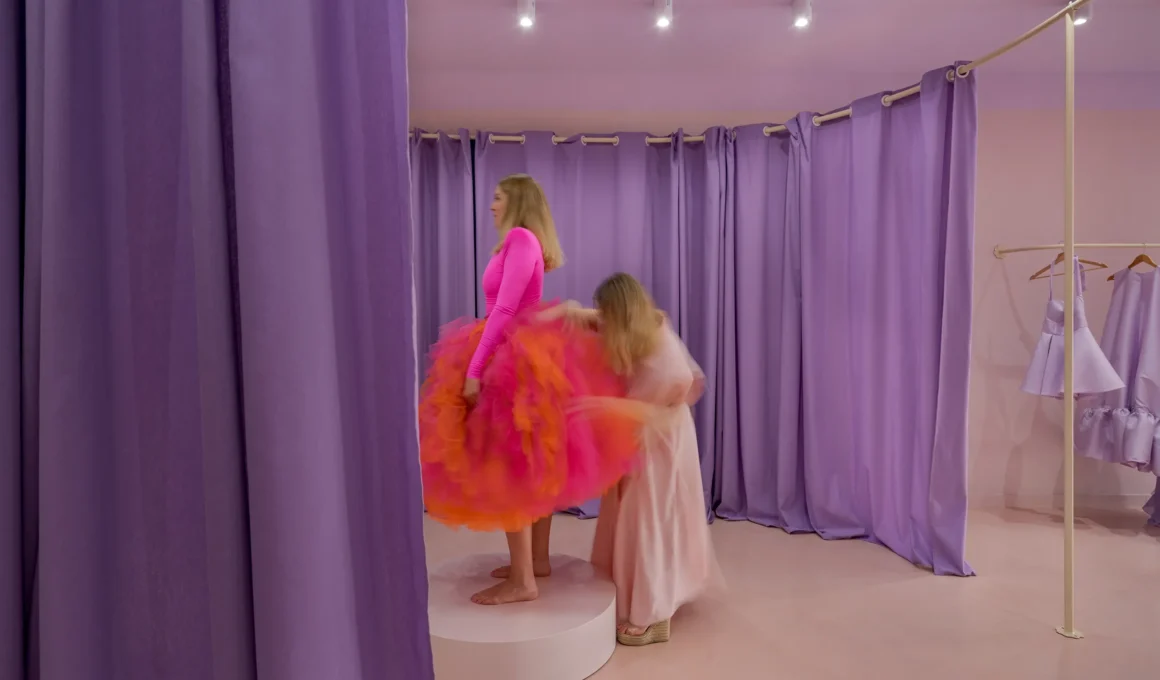
The new Cristina García Atelier in Seville, Spain, designed by local studio Cateto Cateto, is a 80-square-meter exercise in fluid minimalism where retro-futurism meets Andalusian folklore. Located in the heart of the city, the showroom synthesizes the high-fashion volumes of García’s garments with an avant-garde spatial language, creating a dialogue between the designer’s structural ruffles and a modular, monochromatic interior.
A visionary fusion of eras. To define the aesthetic of Cristina García is to navigate the delicate intersection of tradition and the year 2050. Her work—celebrated for its bold volumes and feminine silhouettes—finds a sympathetic container in Alejandro Cateto’s intervention. The studio has avoided the typical tropes of retail design, opting instead for a retro-futuristic atmosphere that honors the past while looking firmly toward a digital-age horizon. It is a space that feels both grounded in Sevillian culture and untethered from a specific timeline.
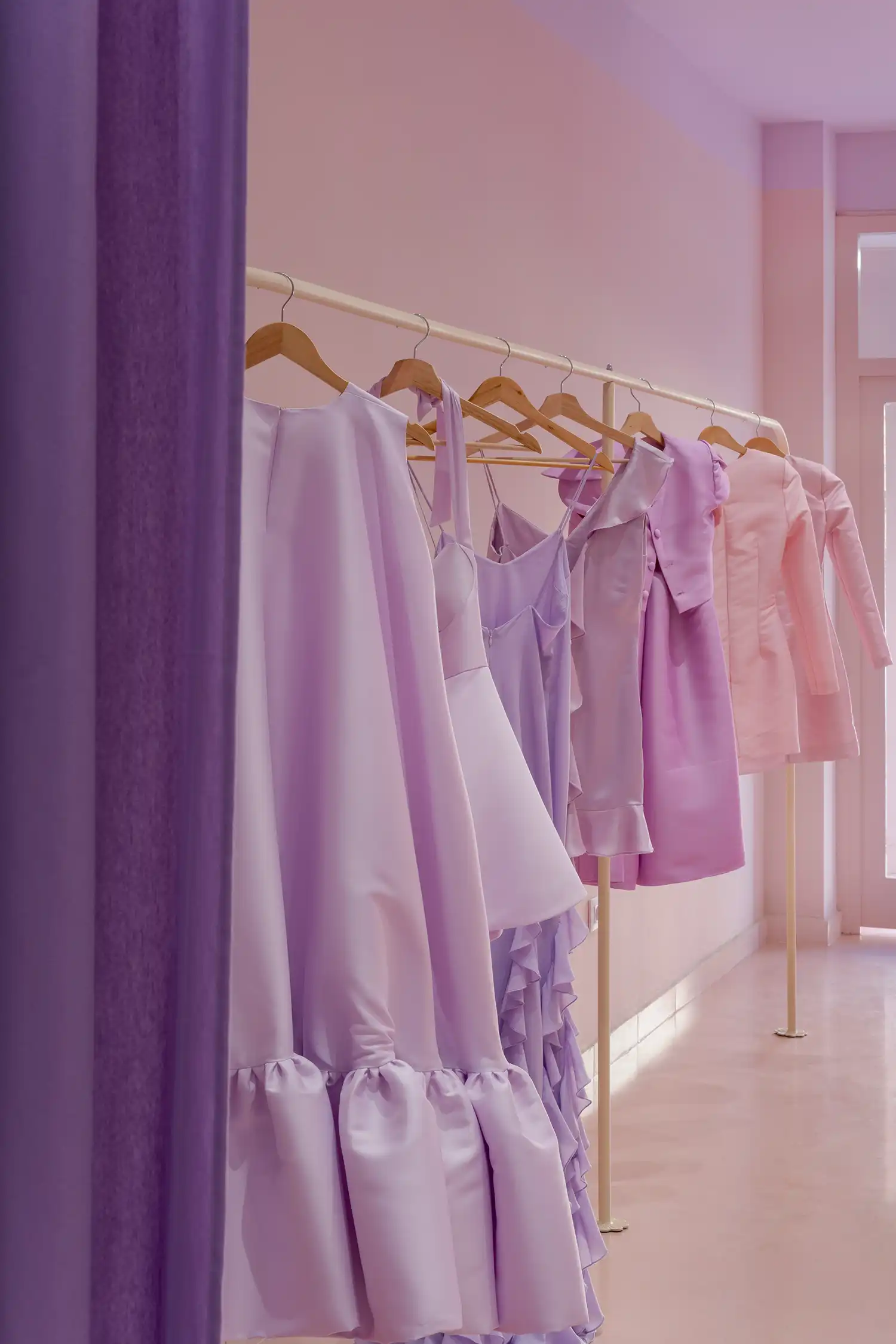
Spatial clarity through demolition. The project began with a radical simplification of the existing floor plan. By removing previous partitions, Cateto Cateto achieved a spatial amplitude that allows the boutique to breathe. This newfound openness ensures that the garments remain the undisputed protagonists of the narrative. The interior does not compete with the intricate textures of the fashion on display; rather, it provides a hushed, minimalist envelope that amplifies the chromatic intensity of the collections.

Curvilinear geometry and brand identity. While the floor plan is open, the details are undeniably maximalist in their execution. The studio integrated a series of curved shapes and soft transitions that mimic the organic flow of García’s signature ruffles. This undulating geometry is unified by a bichromatic palette of soft pinks and mauves—colors synonymous with the brand. The result is a tactile, sensory experience where the walls seem to fold and bend, echoing the movement of fabric.
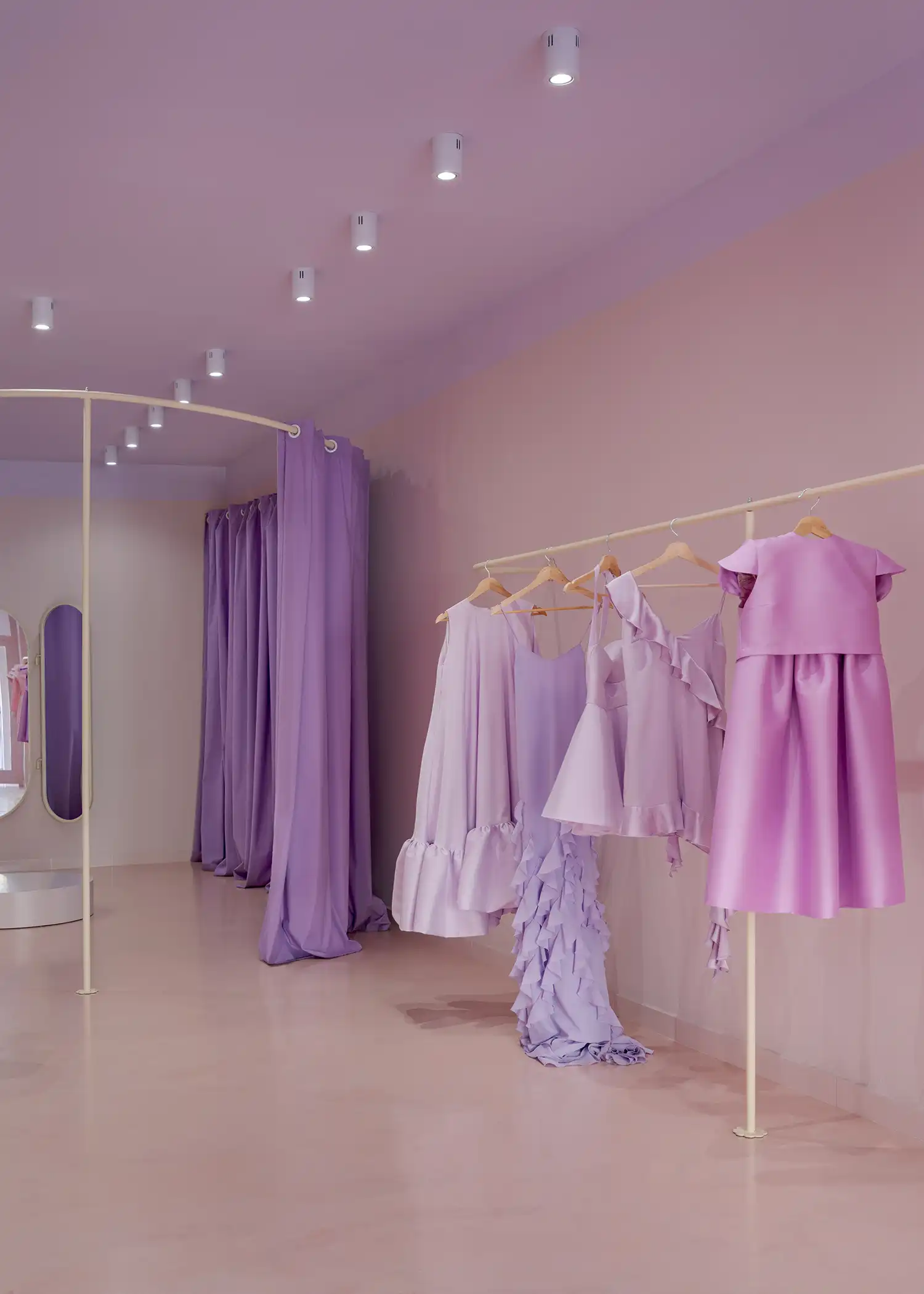
Modular fluidity and textile architecture. In place of rigid walls, the designers introduced a system of high-ceiling tracks and modular curtains. This choice allows the 80-square-meter footprint to remain entirely flexible, shifting between a private fitting room, a customer service lounge, and an open gallery. These textile boundaries create a sense of permeability, where the perception of the atelier changes based on the position of the drapes. It is a functional choreography that responds to the daily needs of a working fashion house.
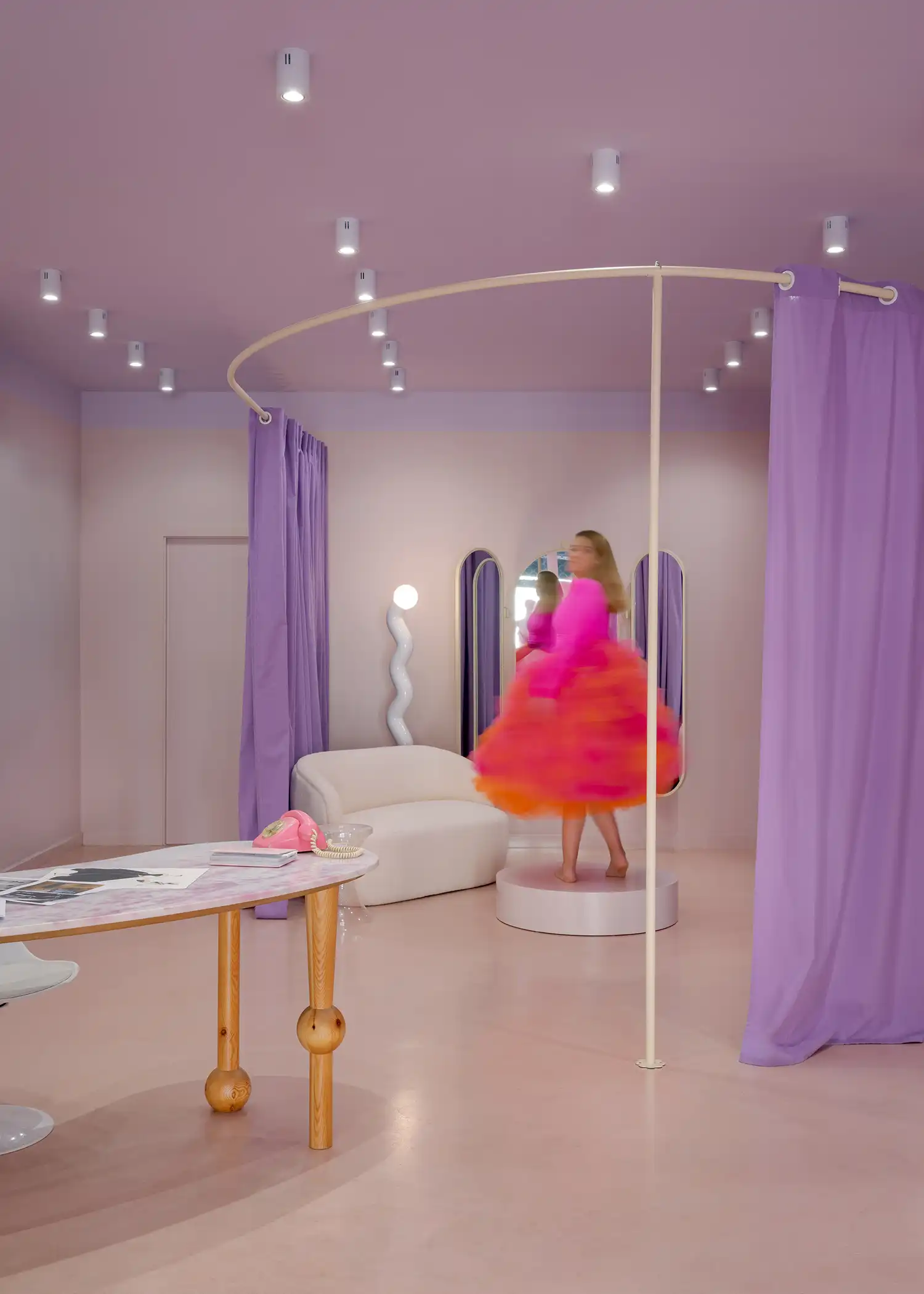
Atmospheric reflections. The strategic placement of mirrors alongside the shifting curtains creates a play of light and depth that makes the compact space feel boundless. These suggestive atmospheres are designed to highlight the human form, providing a theatrical backdrop for clients as they interact with the couture pieces. The mirrors do not just serve a functional purpose; they act as tools for fragmentation, breaking the monochromatic surfaces into a kaleidoscope of mauve and shadow.
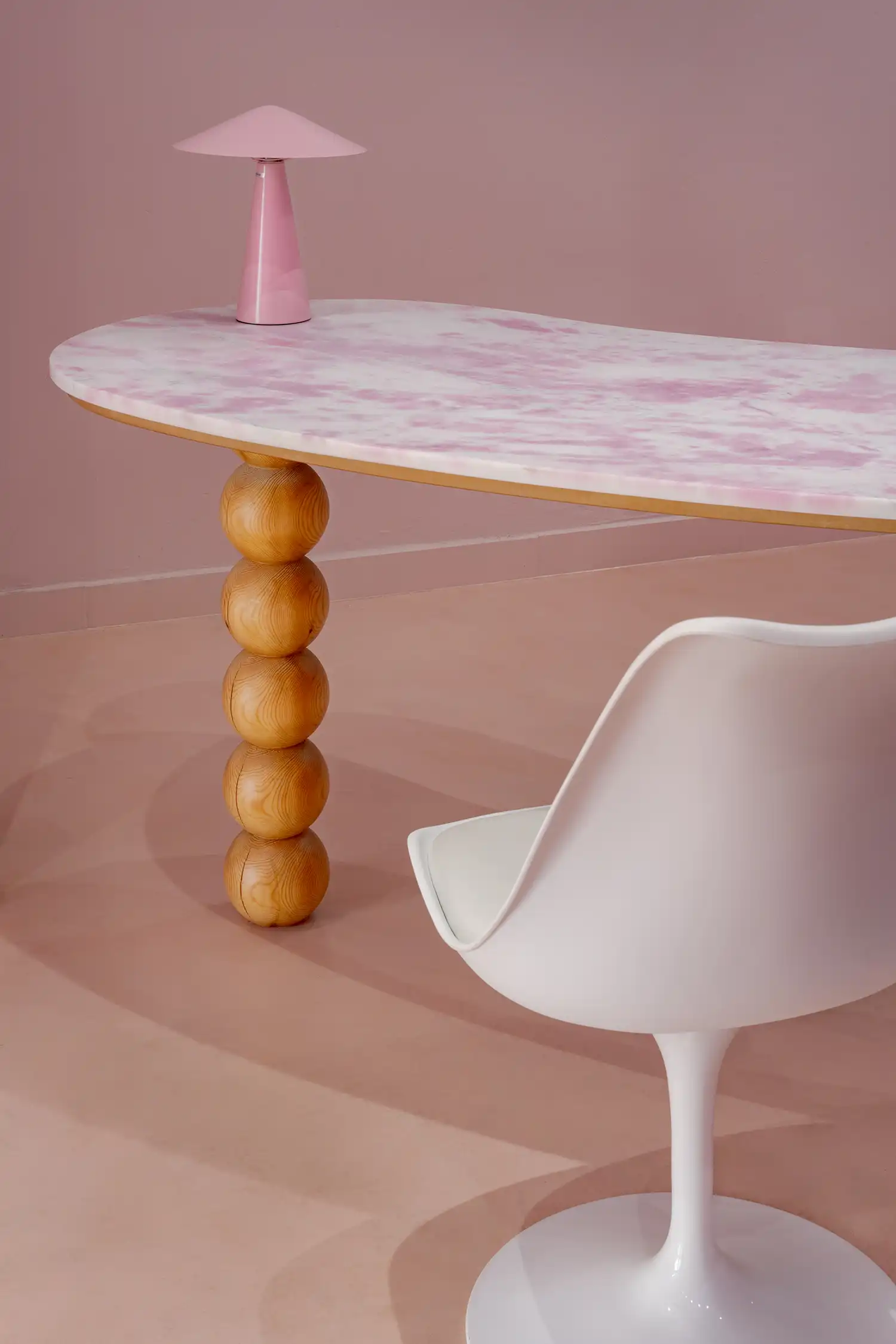
A functional back-of-house connection. Beyond the public-facing showroom, the layout seamlessly connects to the workshop in the rear. This multifunctional floor plan ensures that the creative process—from the first sketch to the final fitting—is physically integrated. The transition between the high-concept display area and the technical atelier is handled with the same fluid logic that defines the rest of the project, maintaining a cohesive aesthetic throughout the entire professional suite.
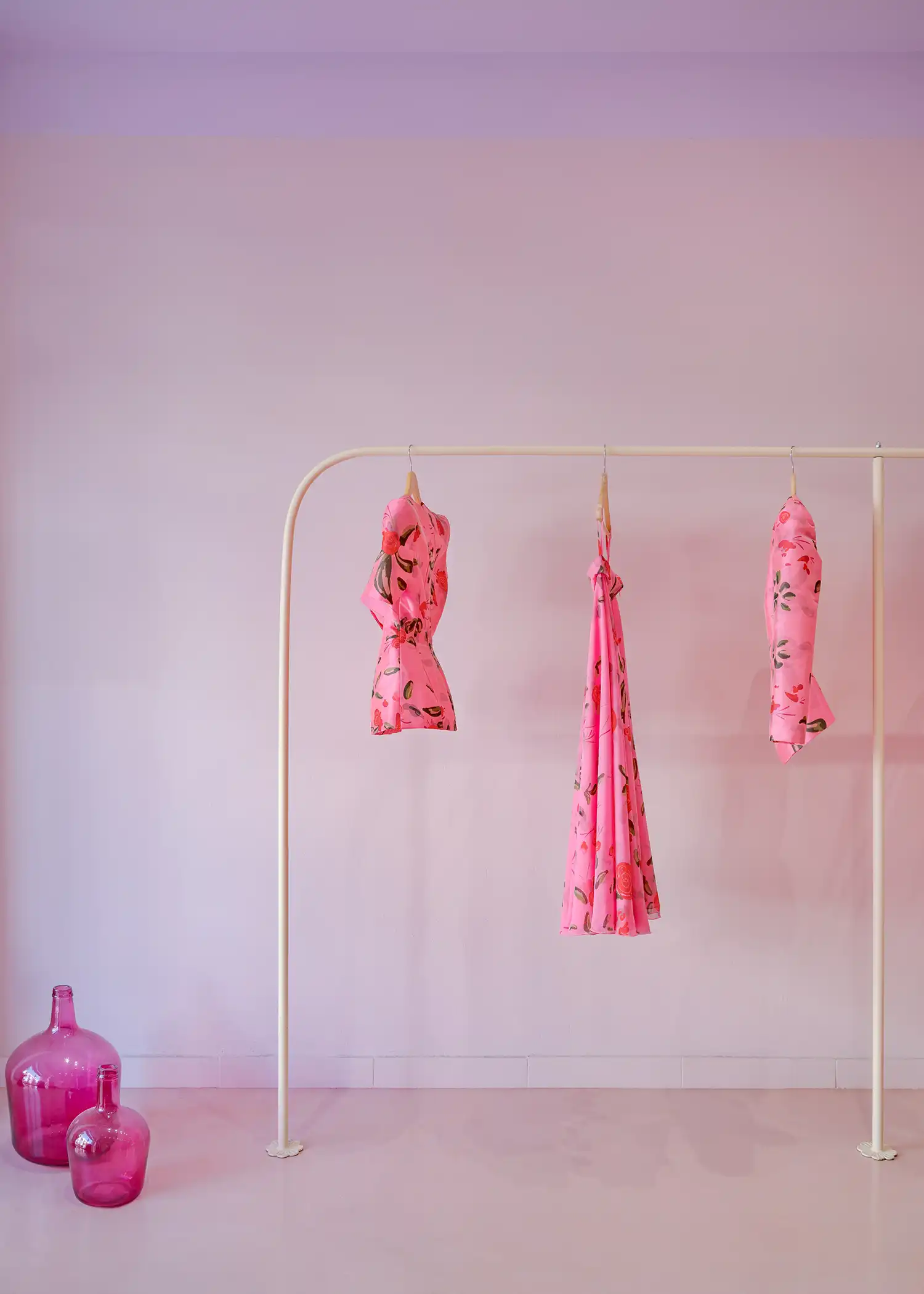
The evolution of Cateto Cateto. This intervention represents a continued refinement of the studio’s ability to blend local heritage with contemporary daring. Those familiar with their previous work might recognize a similar sensitivity to site-specific storytelling, such as their exploration of Triana’s ceramic traditions or their knack for creating evocative maritime atmospheres in hospitality settings. Even when working within the historic vernacular of Seville, the studio maintains a signature clarity that prioritizes the user experience above all else.