


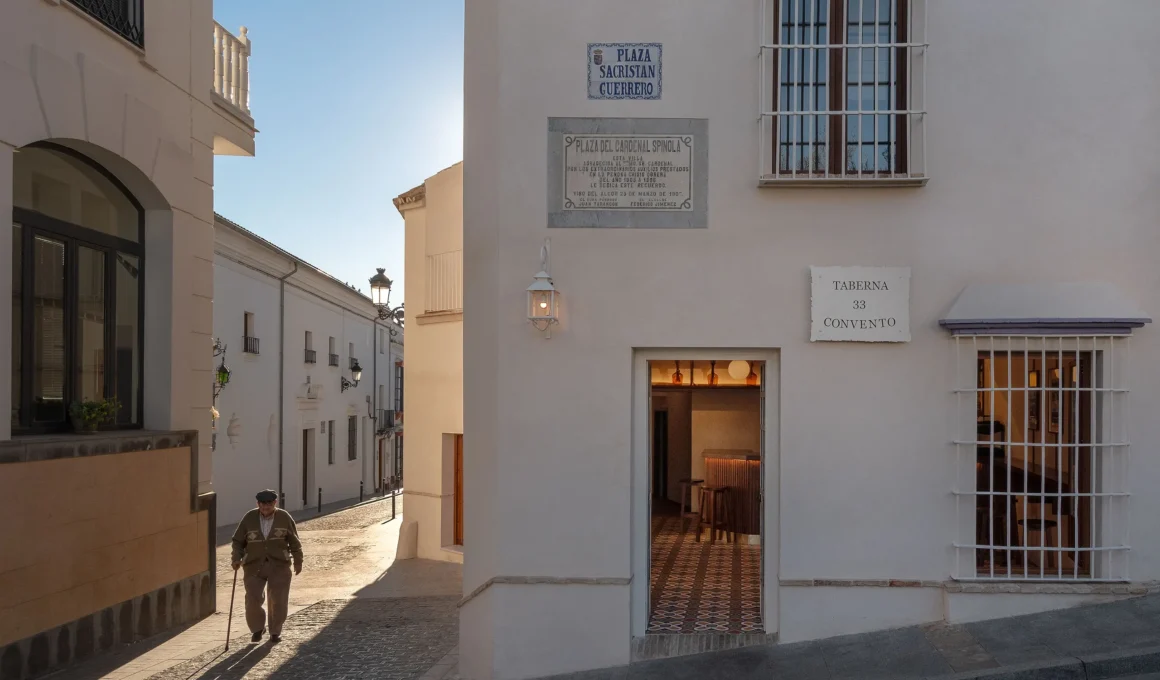
Located in the historic heart of El Viso del Alcor, Seville, the Taberna Convento by local studio Cateto Cateto reimagines the traditional Andalusian tavern as a refined crossroads of community life, blending the raw materiality of lime mortar and hydraulic tiles with the solemn, chromatic identity of the neighboring convent.
A pulse for the plaza. The tavern sits at a geographical and emotional intersection where the rhythms of village life remain remarkably intact. It is a place where the scent of orange blossoms meets the sound of children playing on their way home from school. In designing the space, Alejandro Cateto sought to preserve this “lifelong” character, ensuring the bar remained an accessible anchor for the town rather than a sterilized gallery. The result is an environment that feels both deeply rooted in its provincial identity and elevated by a contemporary aesthetic clarity.
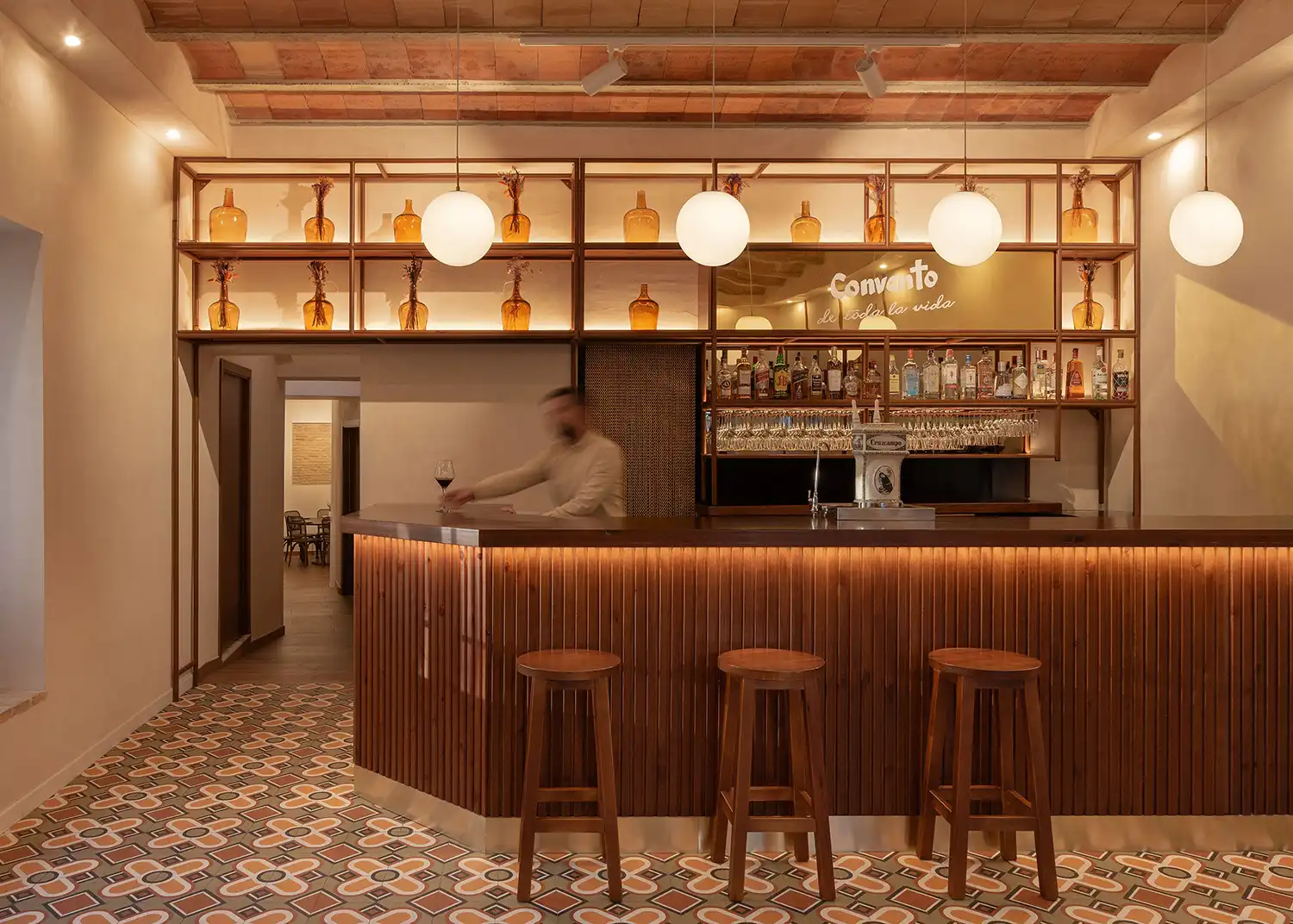
Material echoes of the past. To establish a physical connection to Sevillian heritage, the palette leans heavily on tactile, honest materials. A solid wooden bar serves as the protagonist of the main room, aged in appearance to suggest decades of service, while walls finished in natural lime mortar provide a soft, breathable backdrop. These elements are grounded by hydraulic floor tiles, a staple of regional construction that offers a geometric complexity without overwhelming the visual field.

The intersection of sacred and profane. The proximity to the local convent heavily influenced the interior’s tonal direction. Earthy ochres and terracottas—colors synonymous with the Sevillian landscape—are punctured by deep purple accents. This specific violet hue serves as a direct link to the brotherhoods of Holy Week and the religious processions that define the square’s history. It is a sophisticated use of color that transforms a commercial space into a cultural extension of its surroundings.

Order within tradition. One of the most distinctive features of classic southern taverns is the chaotic density of religious iconography. Cateto Cateto approached this tradition with a curatorial eye, replacing the haphazardly hung frames of the old tavern with a harmonious display system. By organizing Holy Week imagery into a more rhythmic, intentional gallery, the studio honors local devotion while adhering to a modern sense of visual proportion and negative space.

A sensory, paused atmosphere. Beyond the physical surfaces, the project focuses on the “intangible” qualities of the Mediterranean afternoon. The strategic placement of tall wax candles throughout the various rooms evokes the intimate, quiet interiors of sacred buildings. This lighting strategy slows the pace of the visitor, creating a serene environmentwhere the clink of glassware and the murmur of conversation feel cushioned by a sense of historical weight.

Crafting communal longevity. Every detail, from the classic glass demijohns to the warmth of the lighting, is designed to combat the loss of the “village bar” identity. It is a space that accommodates everything from a quick glass of water for a child to a romantic summer night stroll. The studio successfully navigates the fine line between nostalgia and innovation, proving that a heritage-driven interior can be both functional for the present and respectful of the collective memory of the town.

A narrative of spatial storytelling. This project continues the studio’s exploration of how regional archetypes can be distilled into compelling hospitality environments. While this tavern looks to the earth and the convent for inspiration, the studio has previously demonstrated a similar ability to translate environmental cues into physical forms, as seen in their maritime-inspired restaurant concept that evokes the textures of the coast. Whether working with the solemnity of inland Sevilla or the fluidity of the shoreline, the focus remains on creating spaces that resonate with their specific context.