



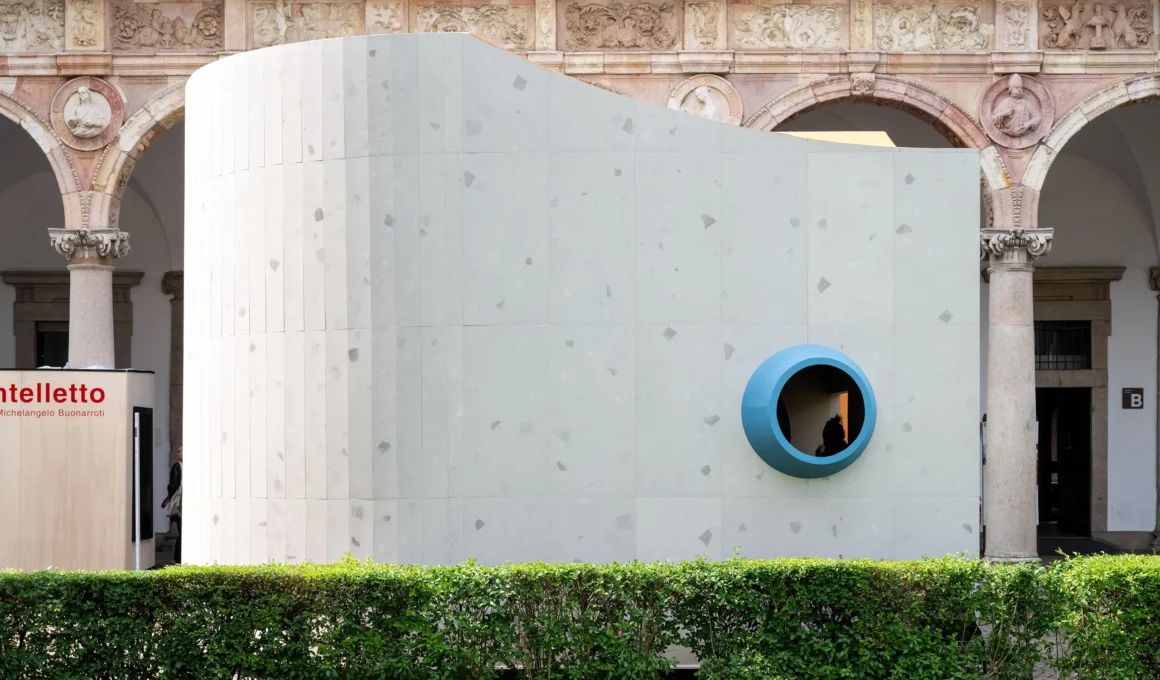
Snøhetta’s latest intervention for VitrA, “Ceramics Forged in Light,” transforms the historic courtyards of the University of Milan into a sensory exploration of elemental physics and circular production for FuoriSalone 2026.
The alchemy of the raw and the refined serves as the conceptual anchor for this installation. Rather than presenting ceramic as a static finished product, Snøhetta treats it as a living continuum—a material defined by its transition through water, earth, and fire. The pavilion operates as a meditative pause within the frenetic energy of Milan Design Week, inviting visitors to witness the “intelligence” of clay. By stripping away decorative excess, the studio focuses on the tactile honesty of the medium, highlighting a dialogue between ancient craftsmanship and the precision of advanced fabrication.
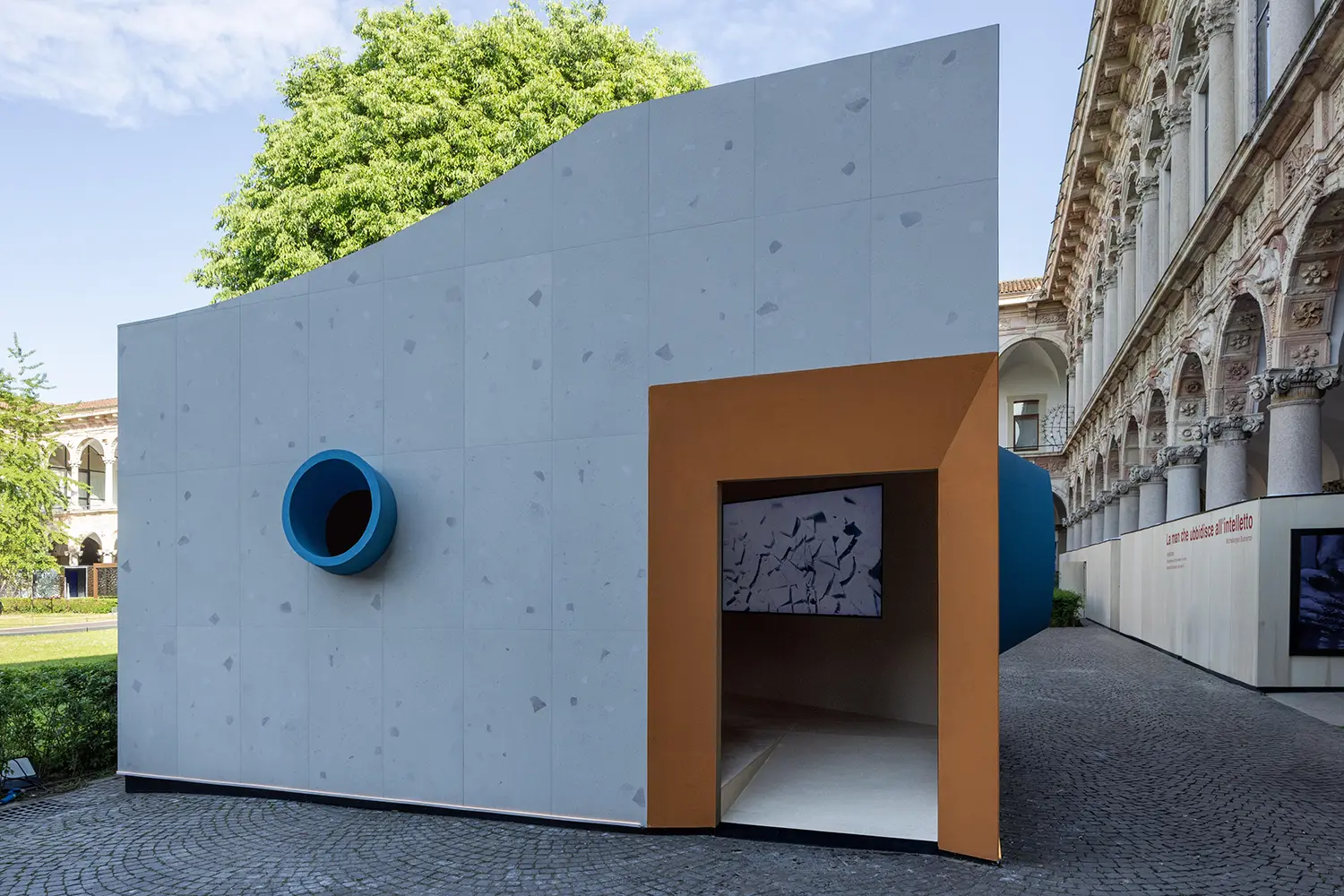
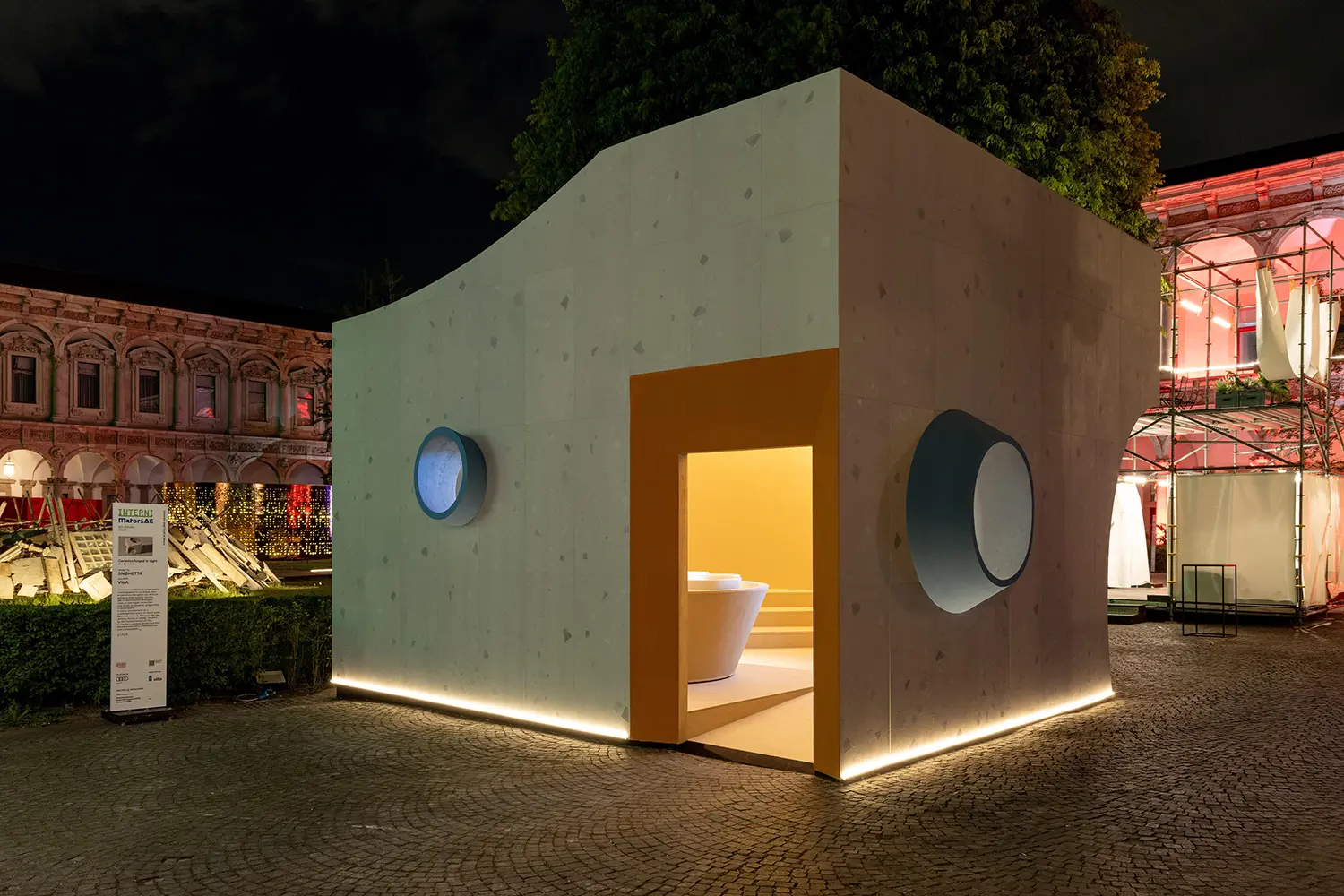
Light as a transformative catalyst replaces the literal heat of the kiln in this narrative. Drawing inspiration from the atmospheric qualities of ancient bathhouses, the structure features strategic oculi that funnel natural light downward, illuminating the ceramic surfaces with a rhythmic intensity. This symbolic fire provides a heightened presence to the basins and vessels staged within, where the play of shadow emphasizes the subtle curvatures and textures of the recycled ceramic components. It is a space designed for slowing down, where the passage of the sun across the sky dictates the visual temperature of the interior.
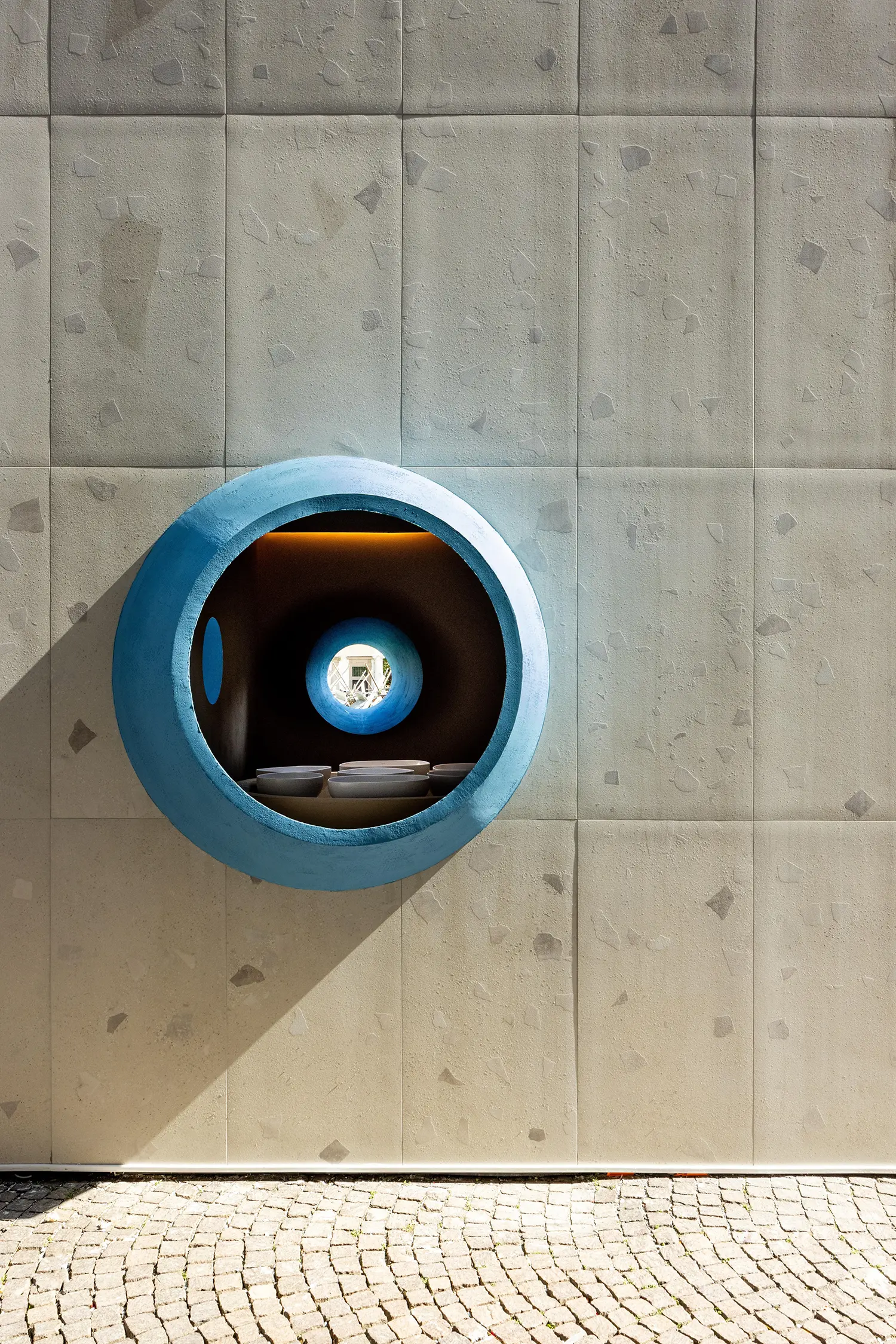
A central reflective threshold anchors the spatial experience, featuring a shallow, water-filled bowl that acts as a visual amplifier. This pool does more than just mirror the surrounding forms; it connects the finished ceramic back to its hydrated, primal state. The sensory experience is further layered with bespoke scent and soundscapes, creating a cohesive environment where the boundaries between product and landscape dissolve. As visitors move through the space, the shifting reflections on the water’s surface challenge their perception of volume and weight, making the dense clay feel ethereal.
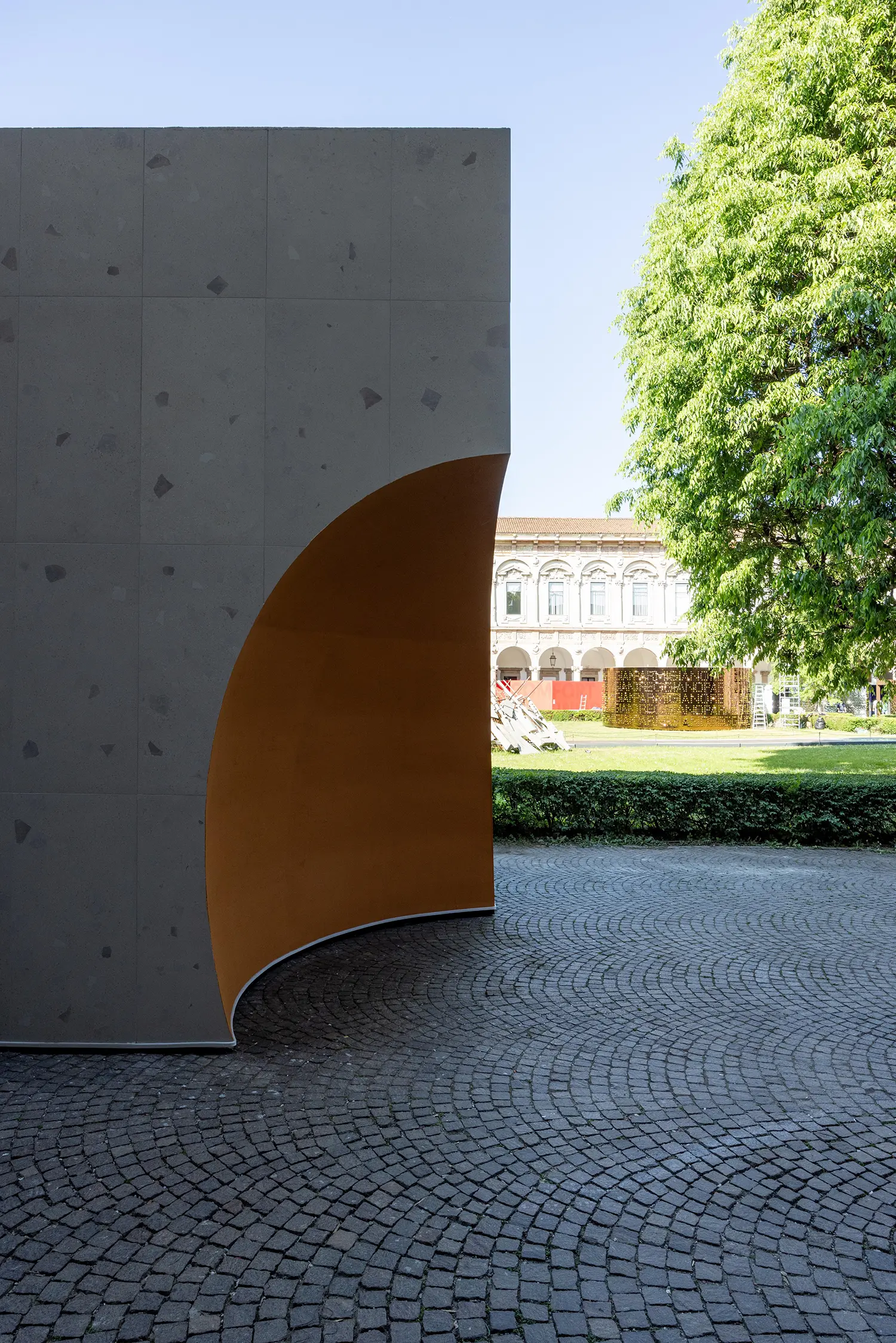
Technological innovation and circularity are woven into the very fabric of the pavilion. VitrA uses this platform to showcase its commitment to responsible production, demonstrating how ceramic waste can be reintroduced into the manufacturing loop without losing structural integrity or aesthetic value. The installation serves as a physical proof of concept for circular design, where the end of a product’s life cycle is merely the preparation for its rebirth. This stewardship is presented not as a technical constraint, but as a primary driver of the creative process.
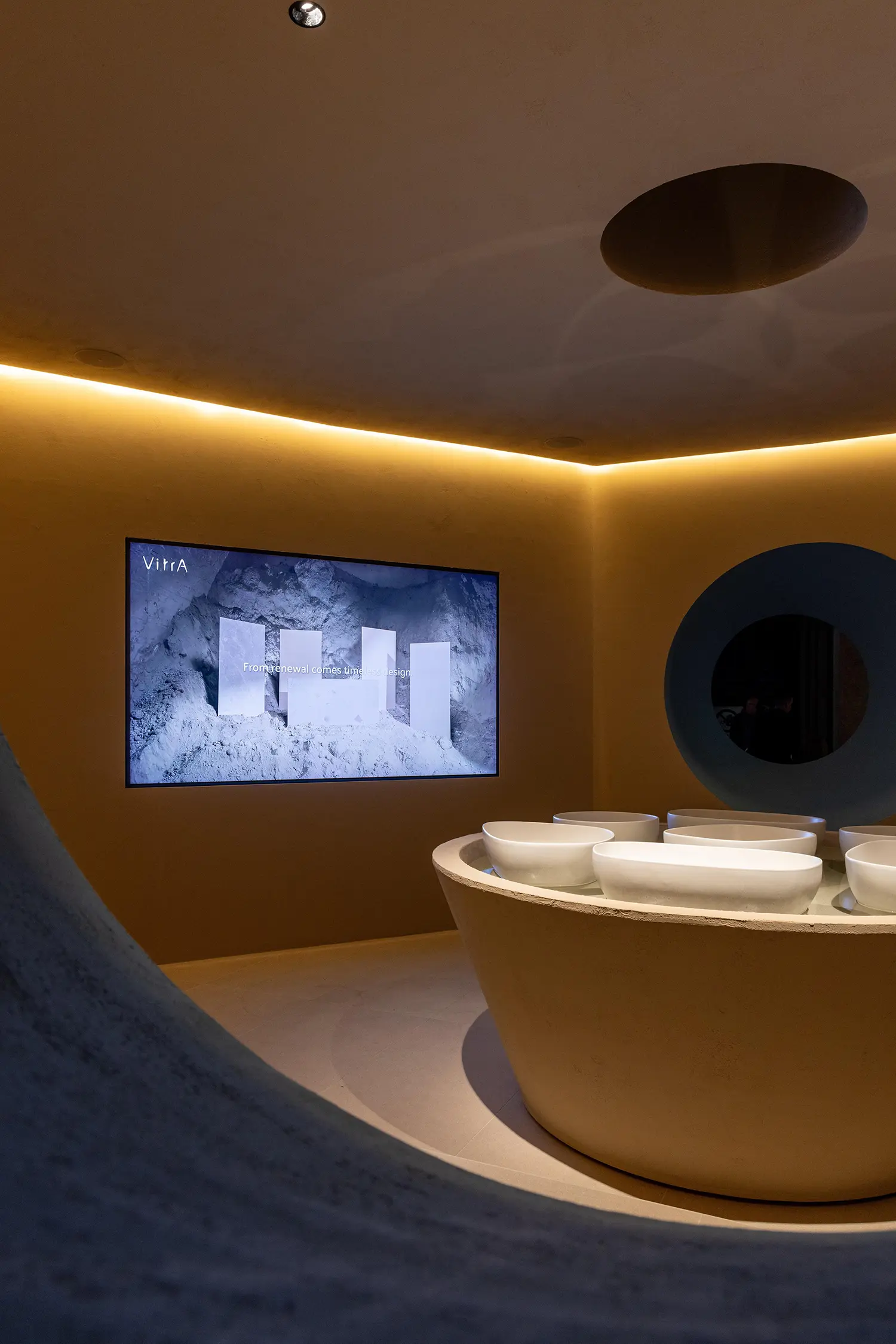
The fluidity of form achieved by the Snøhetta team reflects a holistic approach that ignores traditional silos. By integrating elements of interior volume with the precision of industrial objects, the installation feels like a singular, carved entity. The structural clay elements are arranged to guide movement in a quiet arc, tracing the material’s journey from the earth to the kiln and back into the production cycle. This narrative flow ensures that the technical details of the material transformation are felt emotionally before they are understood intellectually.
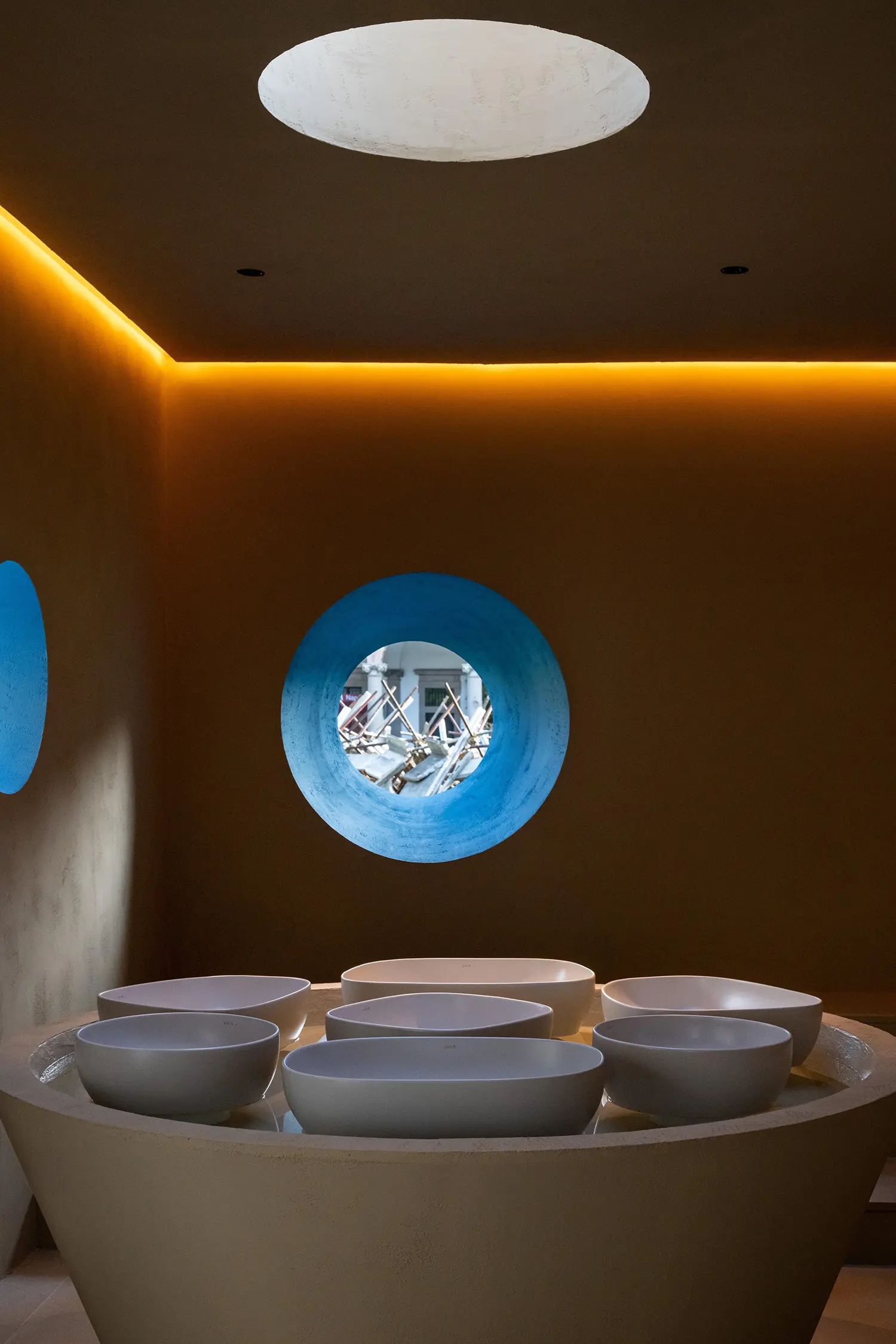
Material intelligence is a theme that resonates deeply with the broader “MateriAE” exhibition hosted by Interni. By placing the pavilion within this context, the work joins a larger conversation about the technical and experimental potential of what we build with. It highlights a shift in the industry where the “life” of a material—its origin, its durability, and its eventual afterlife—becomes the most critical component of its value. The pavilion successfully frames sustainability not as an additive feature, but as the fundamental soul of the object.
A wider dialogue on materiality emerges when viewing this work alongside other significant interventions at the University of Milan. The “INTERNI MateriAE” exhibition creates a powerful synergy between disparate visions, such as Lissoni & Partners’ exploration of industrial resilience for Sanlorenzo and the intricate, mathematical luminosity of BIG’s Light Knot Progression for Artemide. This discourse on material rebirth is further amplified by Snøhetta’s dual presence in Milan this year; the studio also presents Renaissance of the Real for USM, confirming a design philosophy that consistently seeks to redefine our relationship with the physical world through human ingenuity and planetary responsibility.
Ceramics Forged in Light by Snøhetta | Where: University of Milan, Via Festa del Perdono 7, Milan – When: April 20 – April 30, 2026