

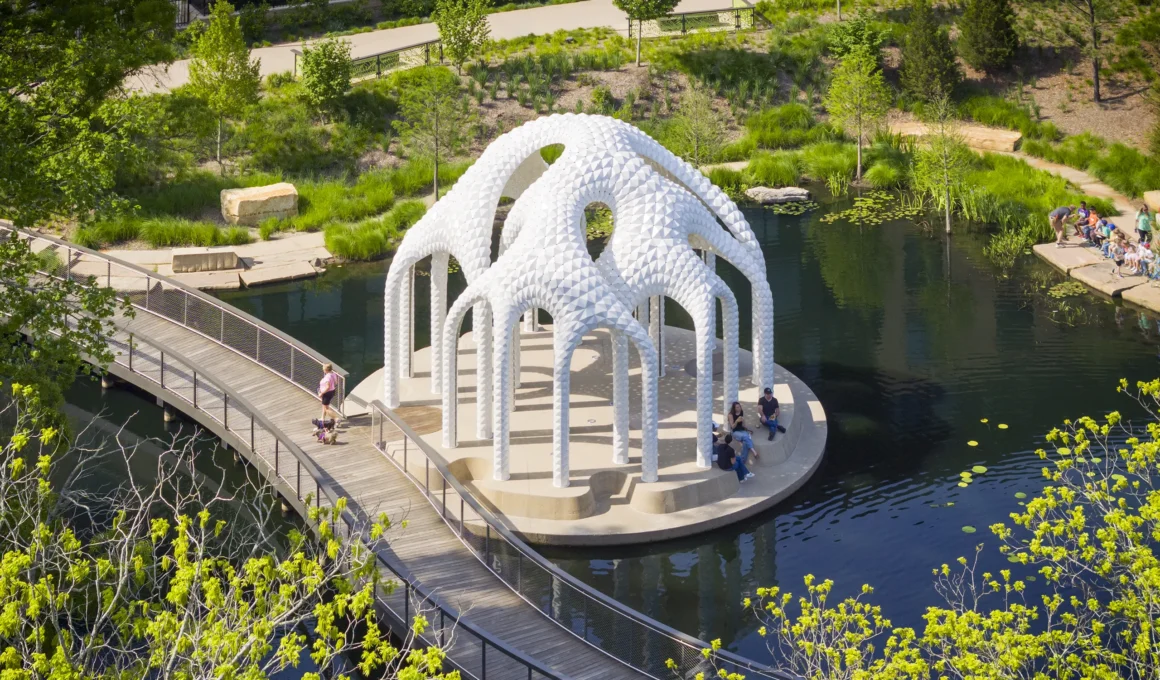
Rising from the water in the heart of Downtown Cary Park, L’île Folie is a digitally fabricated pavilion designed by Marc Fornes / THEVERYMANY that reimagines the 19th-century French folly as a contemporary civic landmark for Cary, North Carolina. This ultra-thin aluminum structure serves as a sculptural centerpiece for the town’s new urban landscape, blending computational precision with a playful, immersive atmosphere that invites public interaction and performance.
A reimagined historical archetype. The concept of the “folie” dates back to the romanticism of European garden history, where structures were placed specifically to evoke surprise, mystery, and a sense of theatrical discovery. In Cary, Marc Fornes translates this heritage into a nonlinear canopy that functions as a joyful departure from the predictable. Rather than a static monument, the pavilion acts as a dynamic “interruption” in the park’s geography, drawing visitors across the water to explore a space that feels simultaneously like a protective shell and an open-air stage.
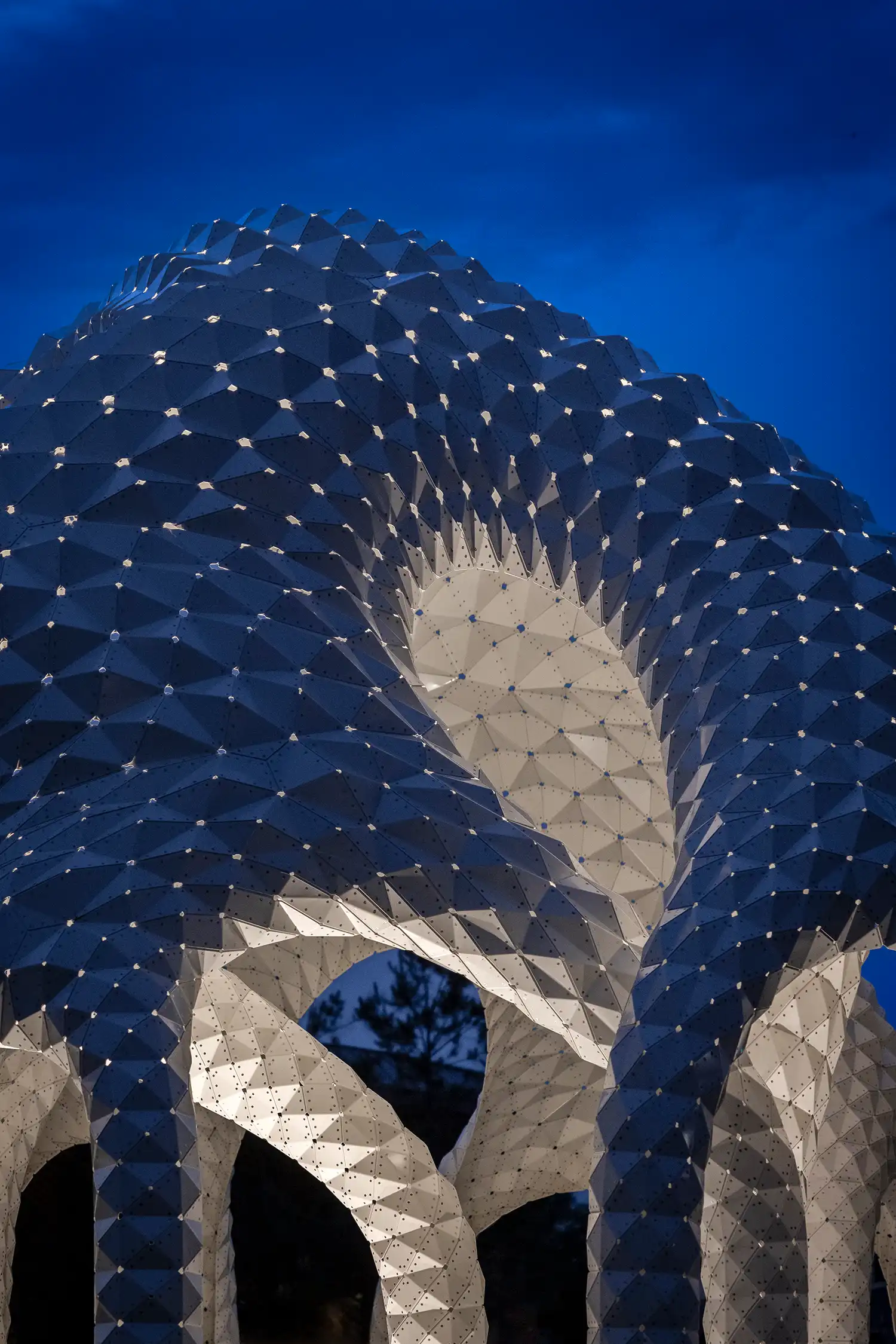
The skin as the structure. Technically, the project is a rigorous exercise in computational engineering and material efficiency. Eschewing the traditional logic of a hidden internal frame, the pavilion utilizes ultra-thin folded aluminum panels where the surface itself provides the necessary structural integrity. This “stressed-skin” approach allows the pavilion to maintain a delicate, lightweight appearance while standing as a robust permanent installation. Thousands of individual parts were digitally fabricated and manually riveted, creating a complex, branching geometry that gathers overhead like a digital cocoon.
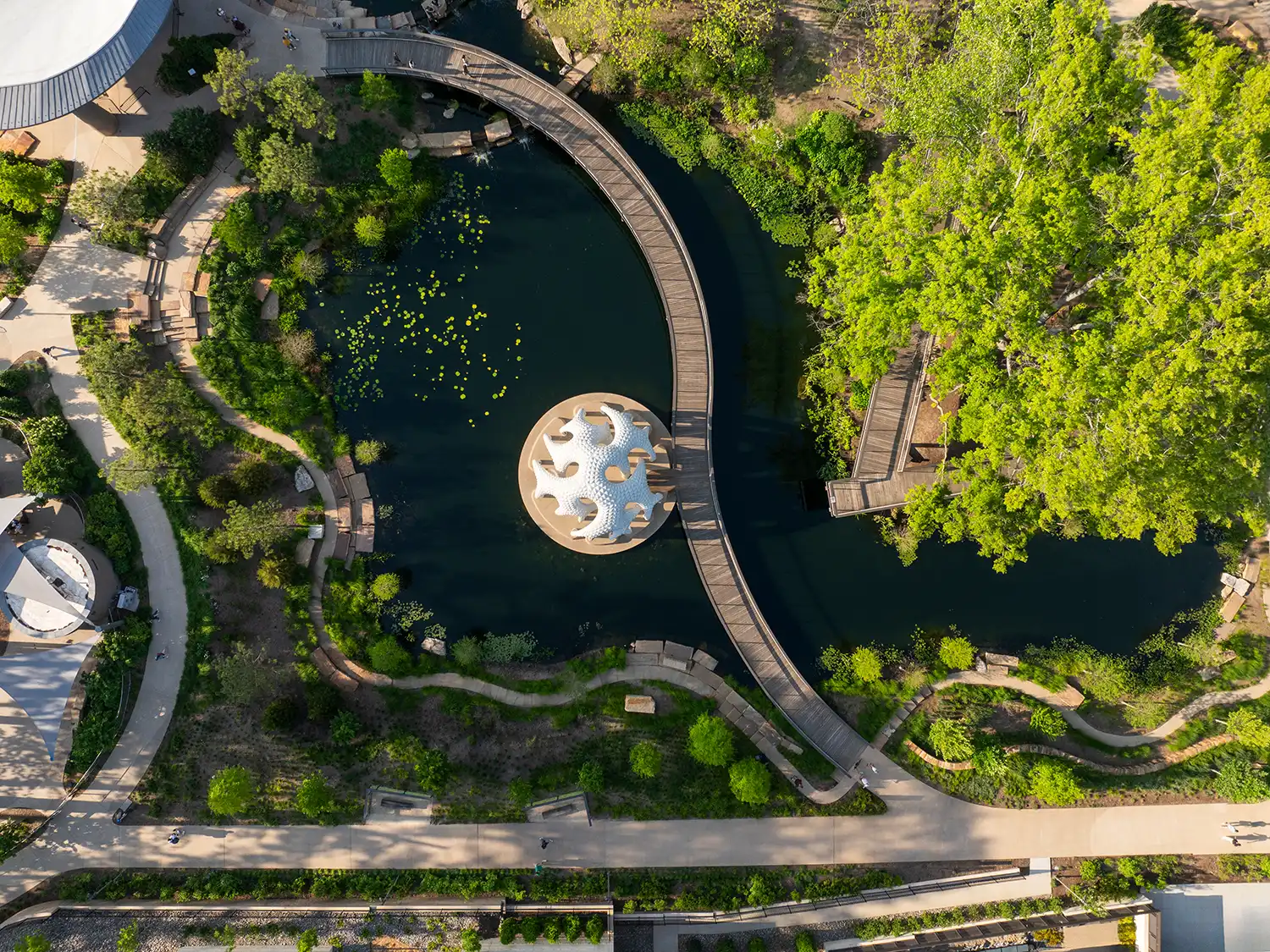
A sensory play of light. The experience of standing beneath the canopy is defined by its perforated skin, which filters the North Carolina sun into a shifting tapestry of shadow and shimmer. During the day, these apertures create a “dappled light” effect reminiscent of a forest canopy, grounding the metallic structure in its natural surroundings. As the sun sets, the internal logic of the pavilion shifts; the structure becomes a luminous lantern on the pond, reflecting off the water’s surface and providing a glowing focal point for the nighttime park experience.
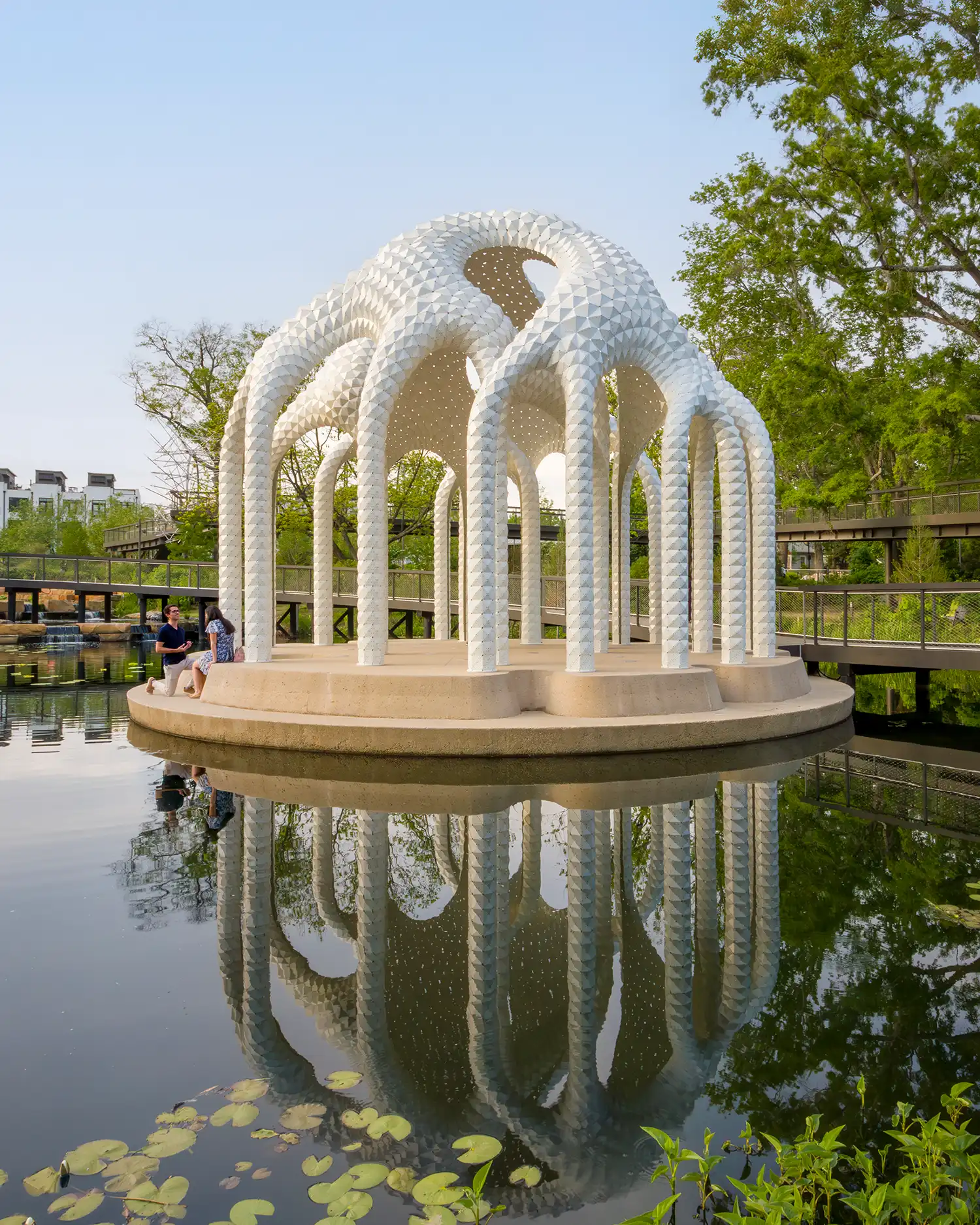
Civic catalyst and cultural stage. Beyond its aesthetic contribution, L’île Folie is designed for high-density public use. The Town of Cary has evolved into a vibrant hub for younger communities and tech-driven industries, requiring a park system that mirrors this forward-thinking energy. The pavilion facilitates a diverse range of social scripts, from intimate wedding ceremonies and impromptu musical performances to quiet moments of reflection for morning strollers. It is a functional piece of public art that validates the park as a vital cultural venue rather than just a green space.
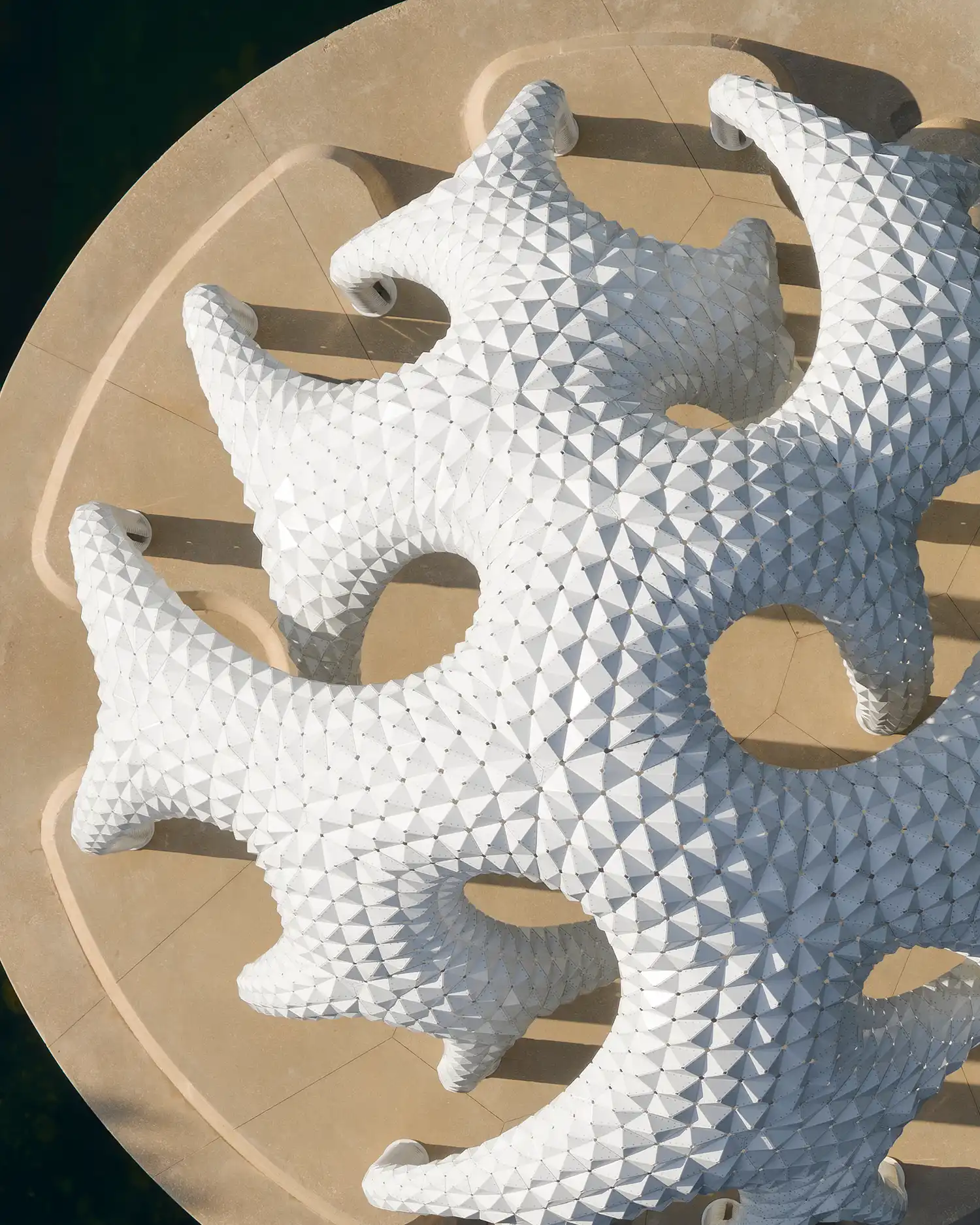
Organic geometry in the digital age. There is an inherent fluidness to the way the pavilion’s “legs” meet the ground, branching upward to form a continuous, undulating roofline. This biomorphic form creates a sense of enclosure without the claustrophobia of solid walls. The transparency of the structure ensures that the connection to the surrounding water and flora is never lost, maintaining a constant visual dialogue between the artificial and the organic. It is a space designed for wandering, where the lack of a prescribed path encourages a sense of individual discovery.
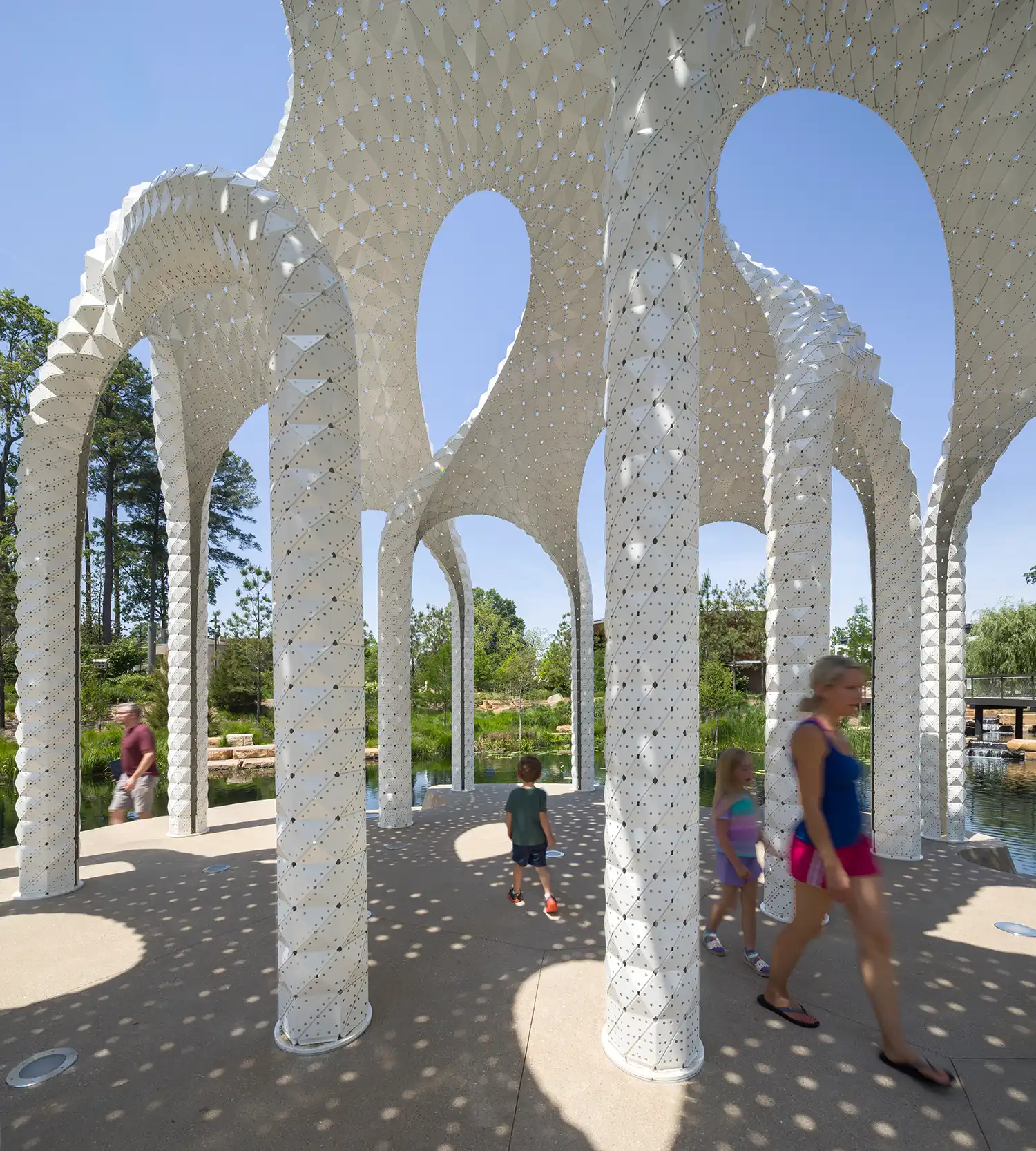
Materiality and precision. The choice of aluminum is both a functional and a conceptual decision. Its durability ensures the pavilion can withstand the elements, while its reflective quality allows it to change character based on the weather and the time of year. The digital fabrication process ensures that every fold and every rivet serves a purpose, eliminating waste and emphasizing a future where complexity in construction is achieved through intelligence rather than mass. The result is a structure that feels both handcrafted and mathematically perfect.
A legacy of structural innovation. The completion of L’île Folie adds another significant chapter to the portfolio of THEVERYMANY, a studio known for pushing the boundaries of self-supporting surfaces. This project follows the same trajectory of experimental research seen in their previous works, such as the rhythmic, perforated Pier 865 Knoxville public art installation and the sweeping, iridescent Marc Fornes Louis Vuitton Heathrow fuselage. In each instance, Marc Fornes demonstrates how the marriage of high-level computation and delicate materiality can transform public infrastructure into a profound sensory experience.