



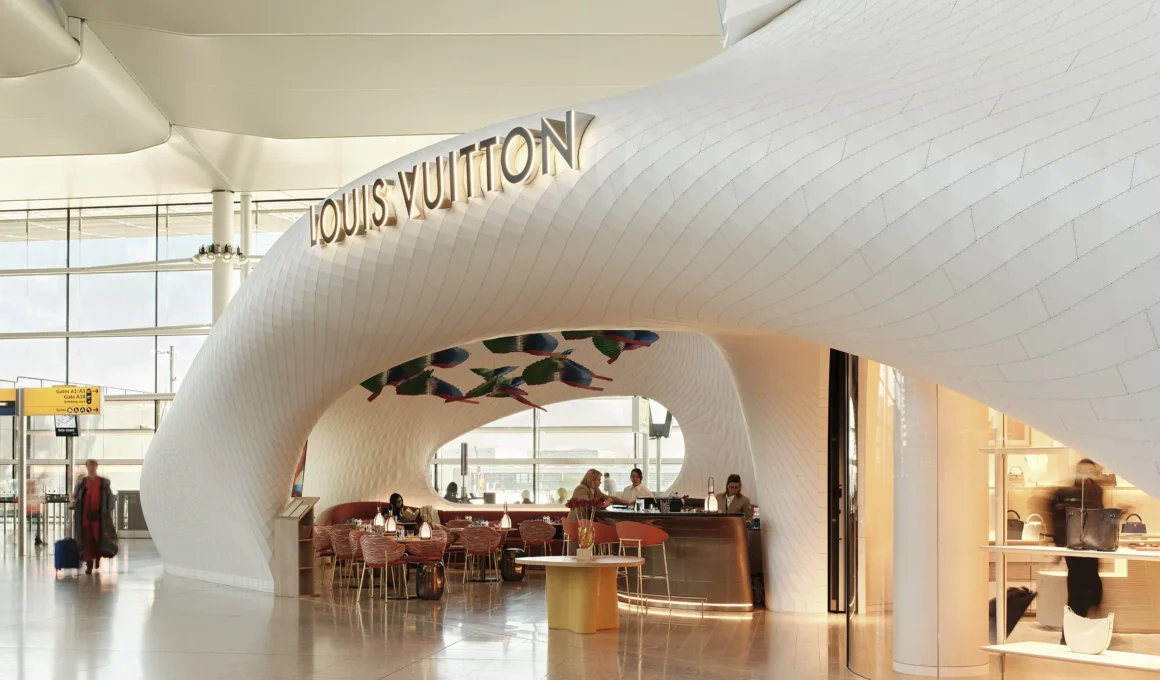
The intersection of luxury retail and transit infrastructure has found a new, aerodynamic expression at London Heathrow Airport. Within the bustling environment of Terminal 2, Louis Vuitton has unveiled a collaborative project that transcends the traditional “pop-up” or storefront. Designed by Marc Fornes / THEVERYMANY in partnership with Louis Vuitton Architecture, the structure is a singular, fuselage-like volume that appears to have momentarily touched down amidst the constant flow of international travelers. This installation is not merely a facade but a comprehensive environmental intervention, housing both the Le Café by Cyril Lignac and a dedicated retail space within a continuous, engineered envelope.
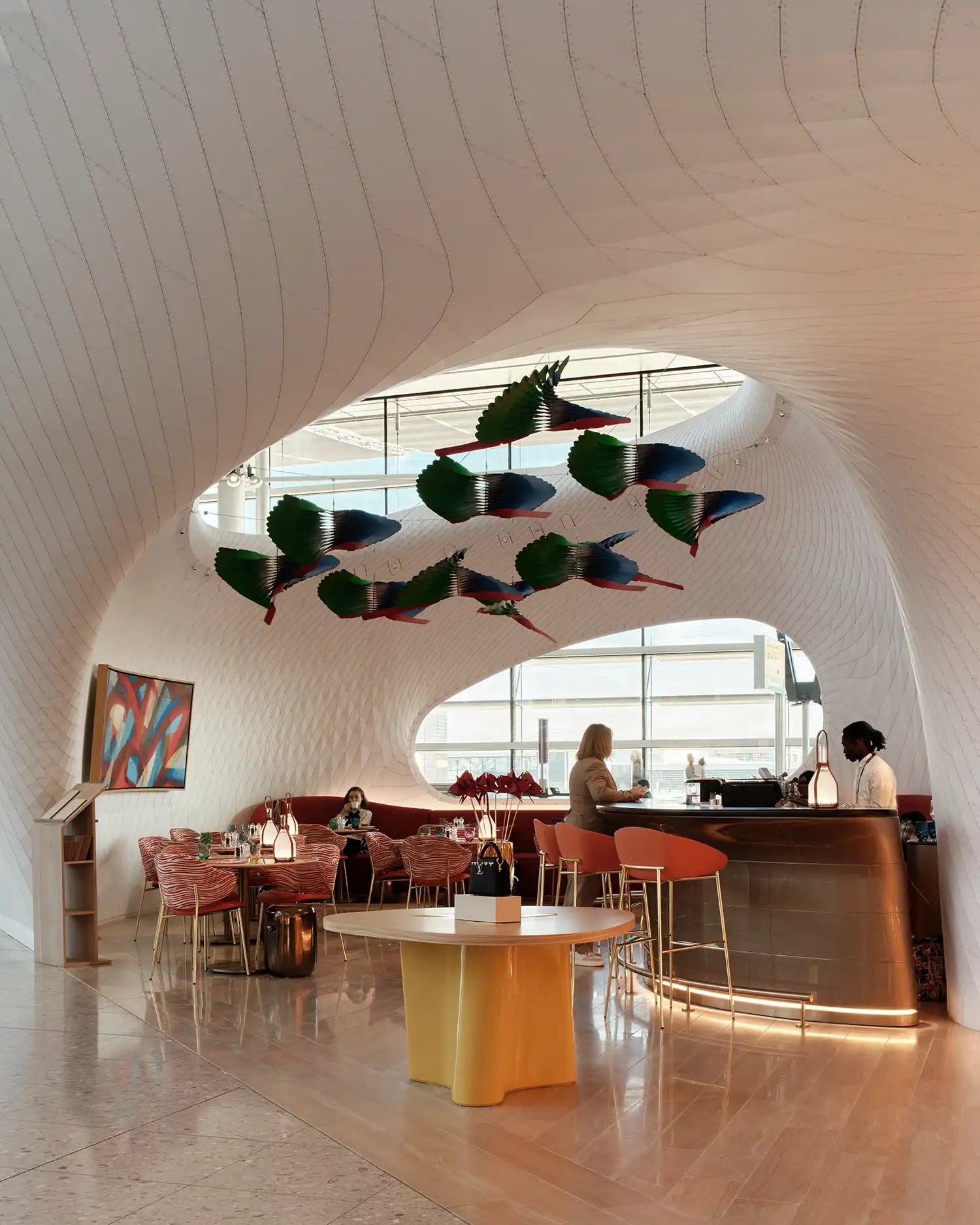
The conceptual vision for this project centers on the idea of the “inhabitable volume.” Fornes, known for his signature organic language and computational rigor, has crafted a form that mediates between the precision of aerospace engineering and the soft curves of high fashion. Unlike static retail interiors, this structure functions as an expressive skin that defines the café’s perimeter while simultaneously extending outward to shape the store’s storefront. It is an exercise in spatial continuity, where the boundaries between dining, shopping, and the surrounding London terminal are blurred through a unified architectural gesture.
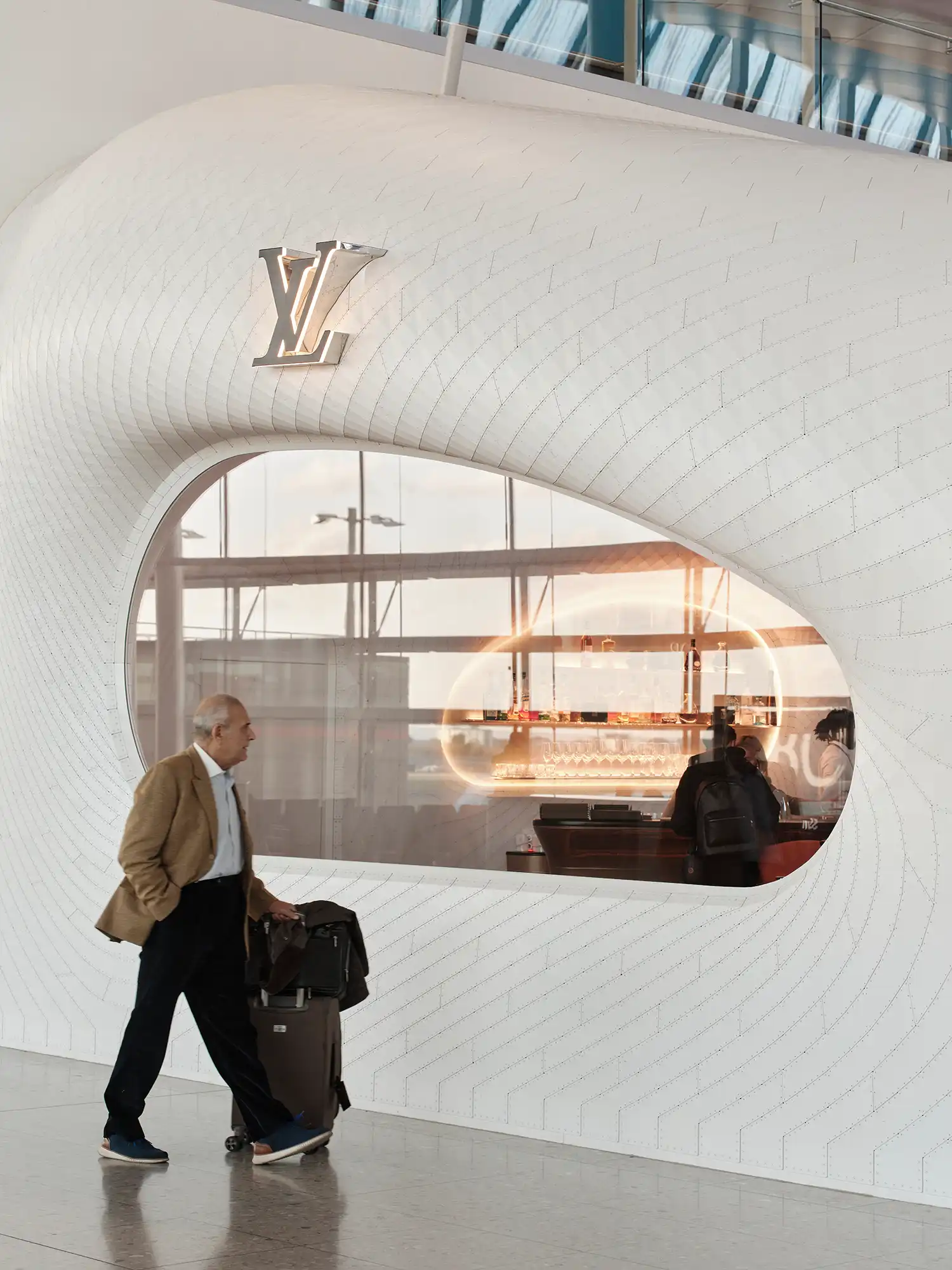
Integrating distinct programs into a single form requires a high degree of technical orchestration. The structure organizes entrances and circulation with the meticulousness of an engineered object, ensuring that the movement of travelers is directed rather than obstructed. This approach aligns with a broader industry shift where airports have become laboratories for future living, merging high-end hospitality with infrastructure. While other immersive environments, like the Louis Vuitton Visionary Journeys exhibition in Seoul, focused on a narrative of heritage, the Heathrow installation prioritizes the immediacy of the present—a functional, breathable space for the modern nomad.
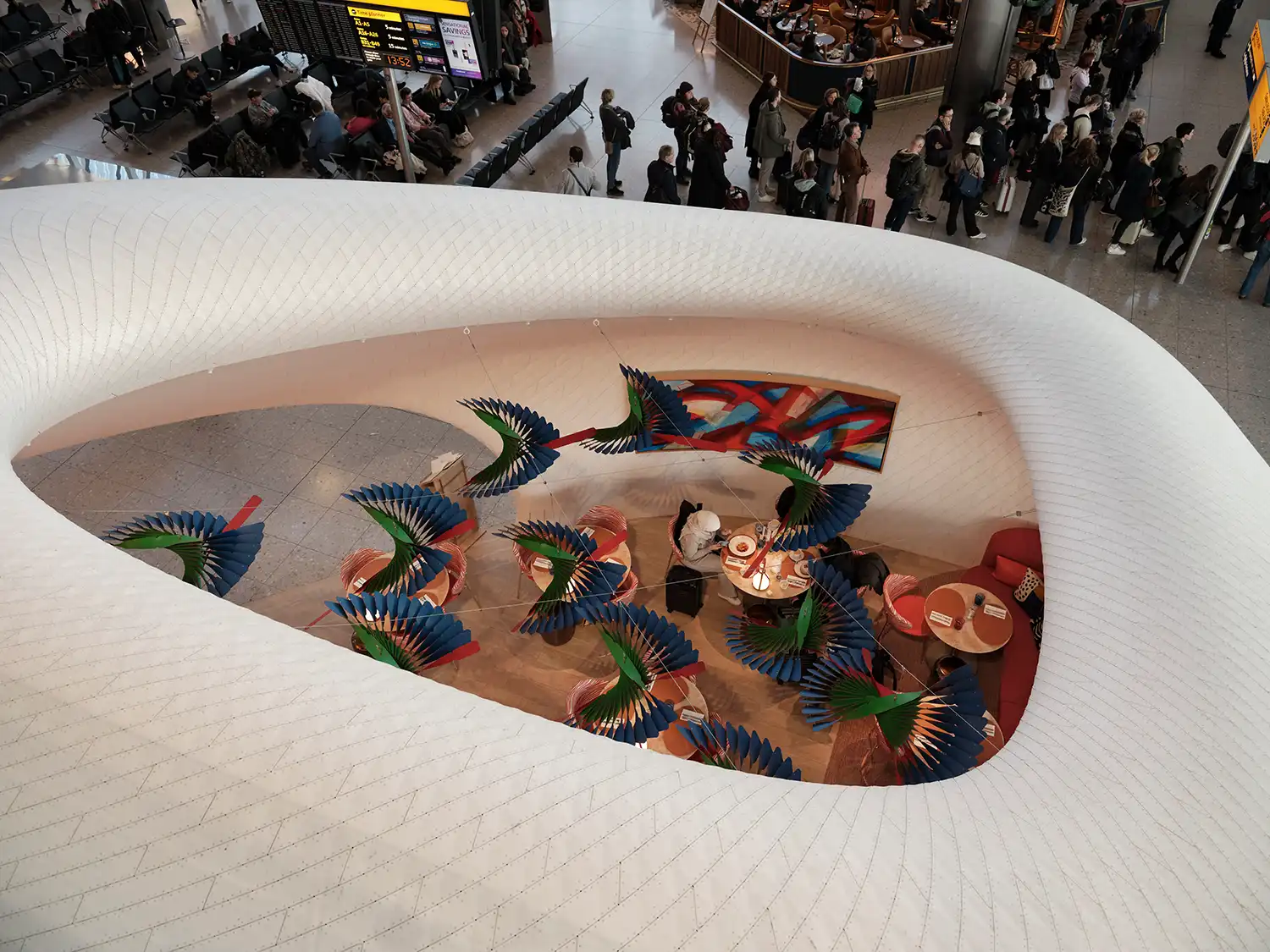
Technical performance and breathability are embedded into the very fiber of the envelope. The structure is conceived as a layered system where a calibrated inner volume is separated from the outer skin. This intermediate zone serves as a large air plenum, facilitating a non-conventional airflow strategy that services both the café and the terminal concourse. This is not “decoration” in the traditional sense; it is a high-performance skin where the perforated aluminum panels are calculated to reach nearly fifty percent porosity. Achieving this level of openness while maintaining a self-supporting structural integrity represents a significant feat of computational design.
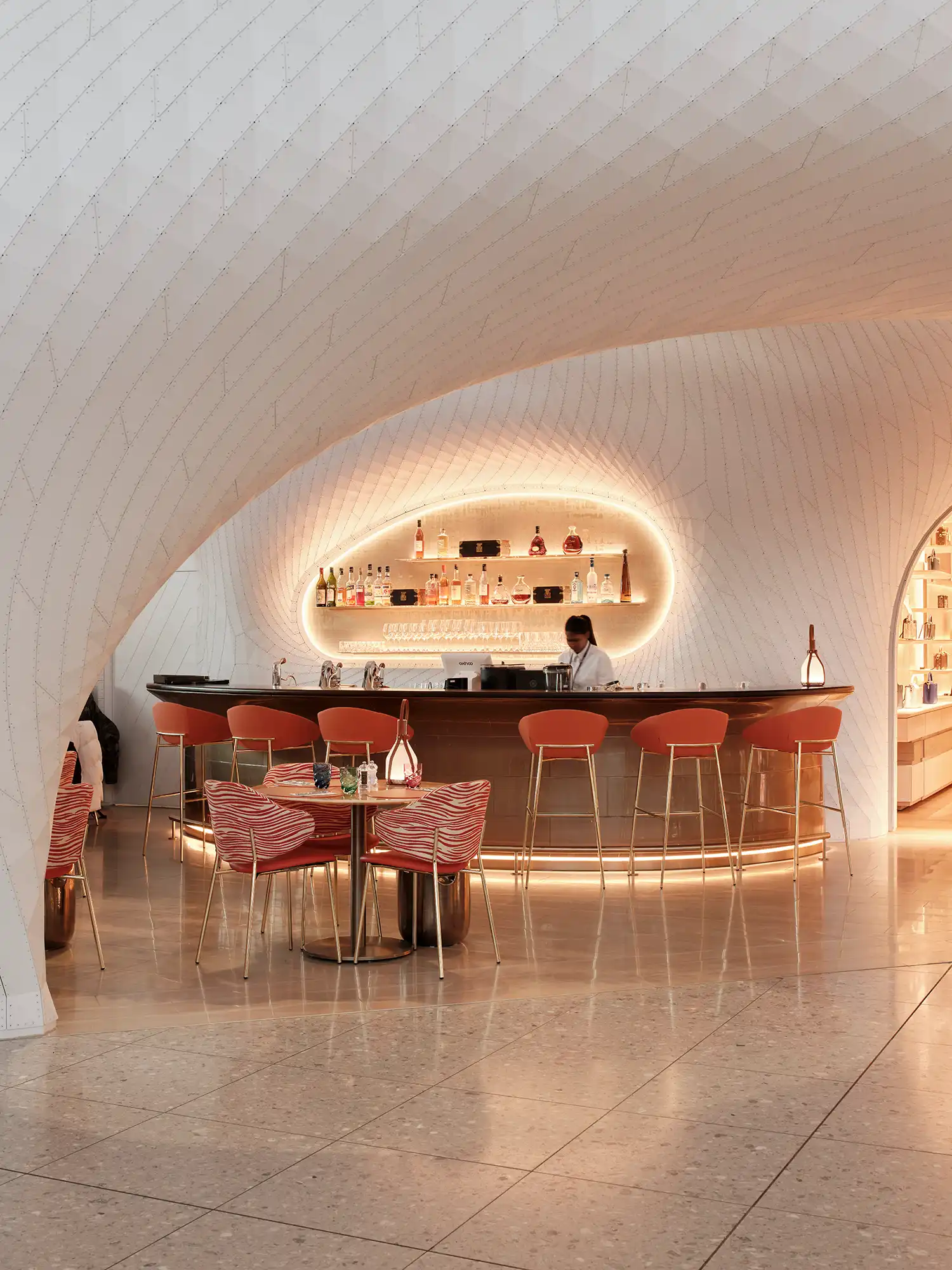
The sensory experience of the space is defined by its lightness and transparency. From a distance, the volume reads as a dynamic, aerodynamic body—a nod to the logic of an aircraft fuselage. As one approaches, the rising vertical planes bend and unfold, creating an enveloping atmosphere that feels both protective and expansive. Glass openings are strategically positioned to maintain visual links between the Cyril Lignac culinary experience and the retail display, reinforcing the sensation of being inside a constructed, mobile object that has paused its journey within the UK‘s busiest aviation hub.
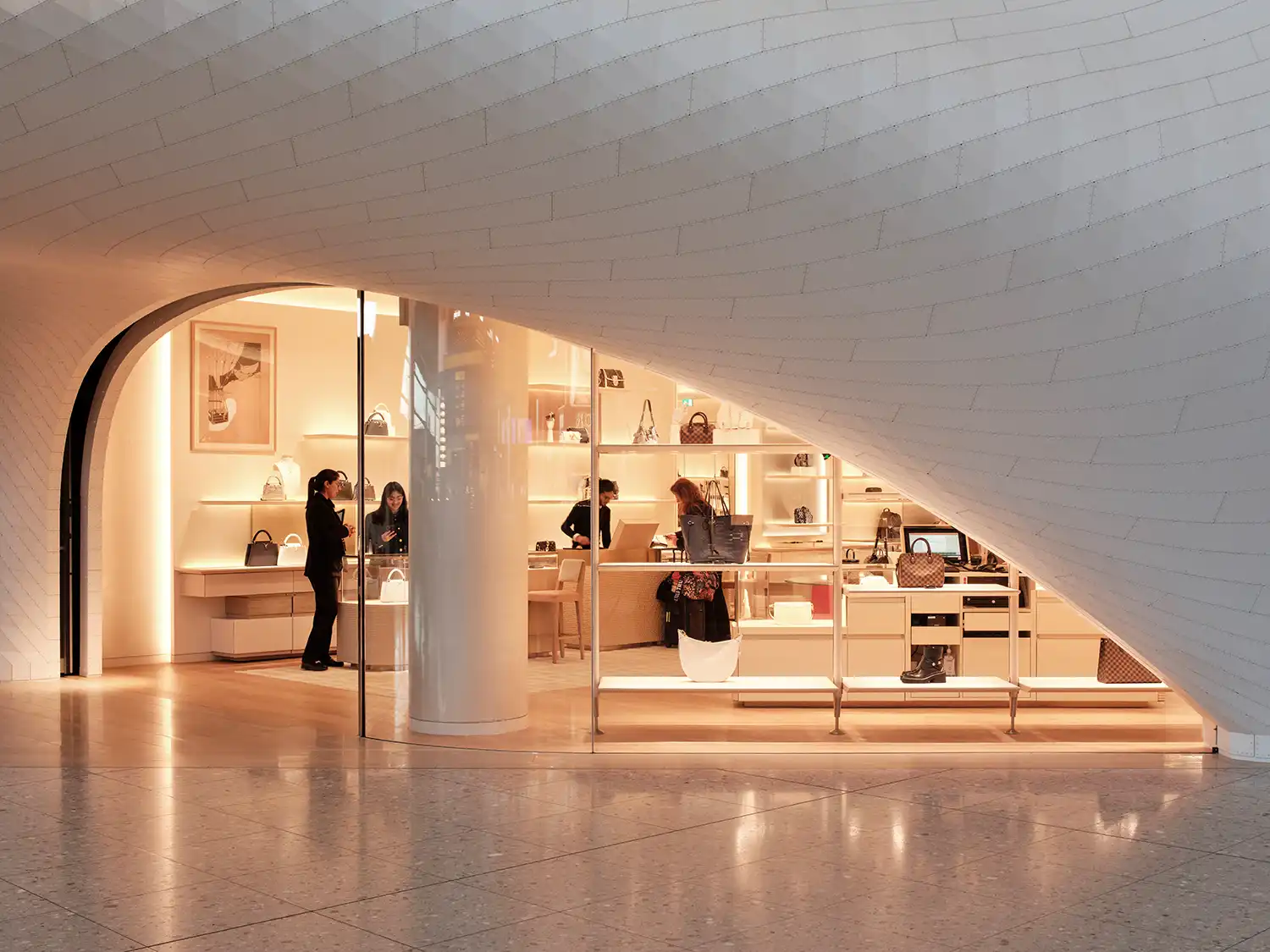
Structural ingenuity reaches its peak at the crown of the volume, where a circular oculus serves as a compression ring. This element consolidates fire safety strategies, lighting, and security systems into a single architectural feature. By embedding technical infrastructure directly into the structural body, Fornes avoids the visual clutter often found in airport retail. This level of integration—where art, engineering, and utility become indistinguishable—is a hallmark of the studio’s work, much like the vibrant, scale-defying installations seen in Marc Fornes’ public art in Knoxville.
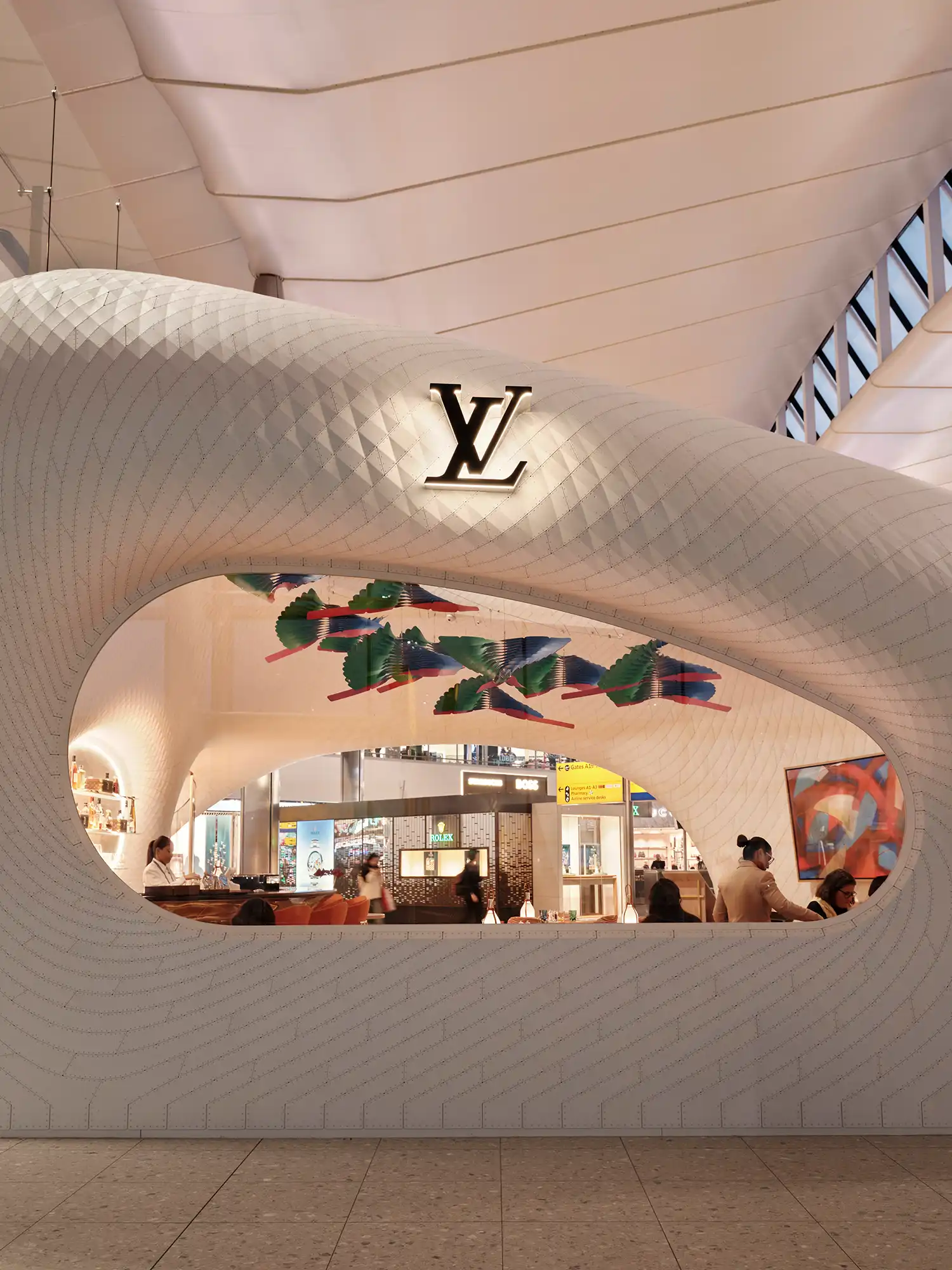
Material logic and assembly provide the final layer of sophistication. Up close, the “fuselage” metaphor is reinforced by visible rivets and ultra-thin panels. These details evoke the hand-crafted precision of a Louis Vuitton trunk, translated into the language of 21st-century manufacturing. The tactile quality of the perforated skin, combined with the soft lighting of the interior, creates a sophisticated contrast against the sterile, industrial backdrop of the airport terminal. It is a dialogue between the artisanal and the automated.
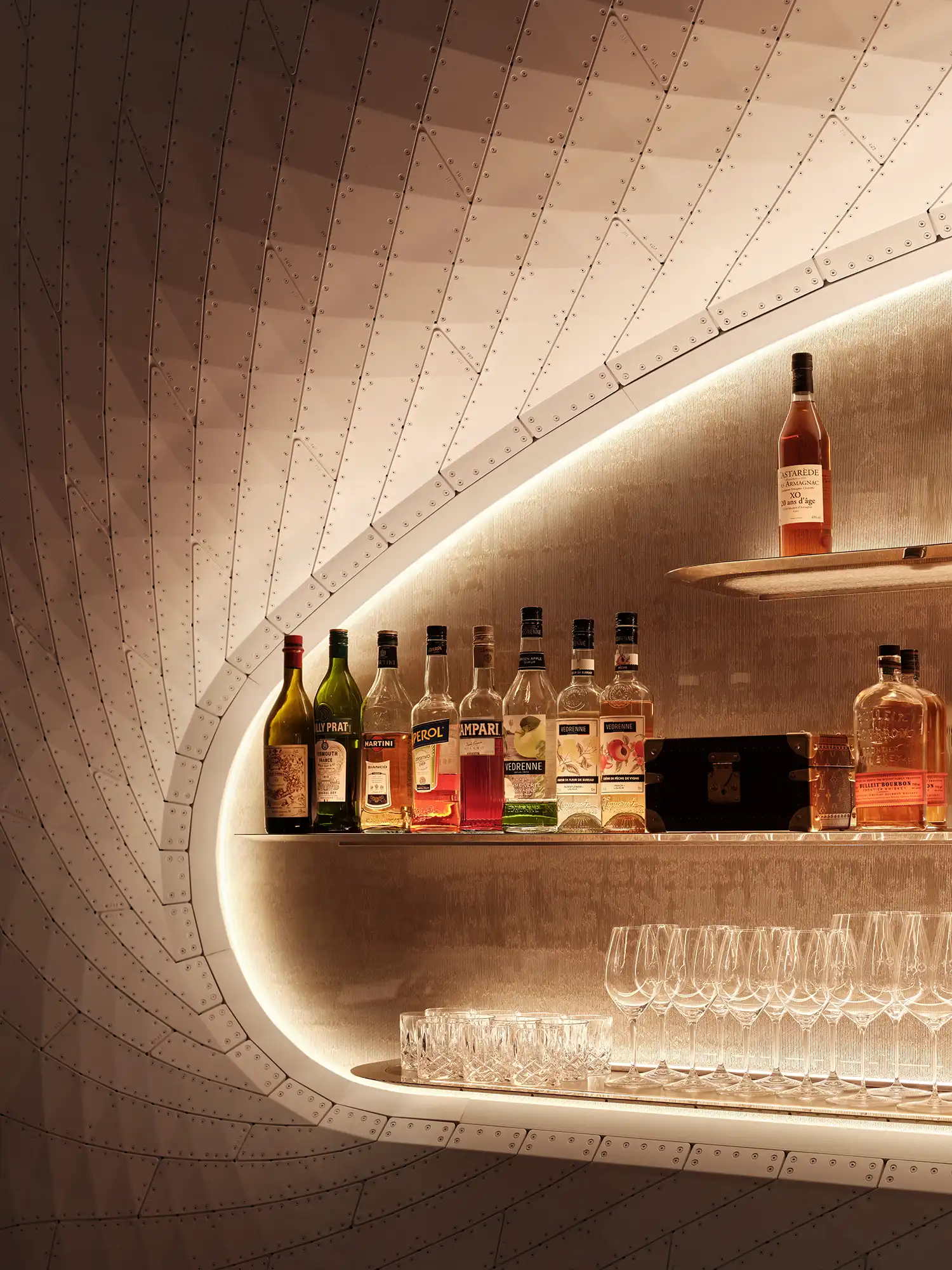
A moment of pause is the final gift of the design. Le Café by Cyril Lignac offers travelers a reprieve from the frenetic pace of Heathrow Terminal 2, enclosed within a form that shapes the air as much as it shapes the light. By uniting the culinary world with luxury retail through a singular, high-performance architectural envelope, Louis Vuitton has created more than a destination; they have landed a new typology of transit hospitality. The result is a space where creative worlds meet, defined by an architecture that remains open, legible, and profoundly connected to its context.