


The Echo of the Ruins Sound Museum by 1Y Architects transforms the industrial silence of Zhuzhou’s Qingshuitang district into a tactile, open-air repository of collective memory.
A structural dialogue with decay defines the essence of the project. Rather than clearing the remnants of the district’s manufacturing past, the design team opted to treat the site’s debris as a primary resource. This approach moves away from the sterile “white cube” of traditional exhibition spaces, choosing instead to let the museum grow directly from the soil. The resulting form is an honest reflection of history, where the physical weight of the past provides the foundation for a new public life.
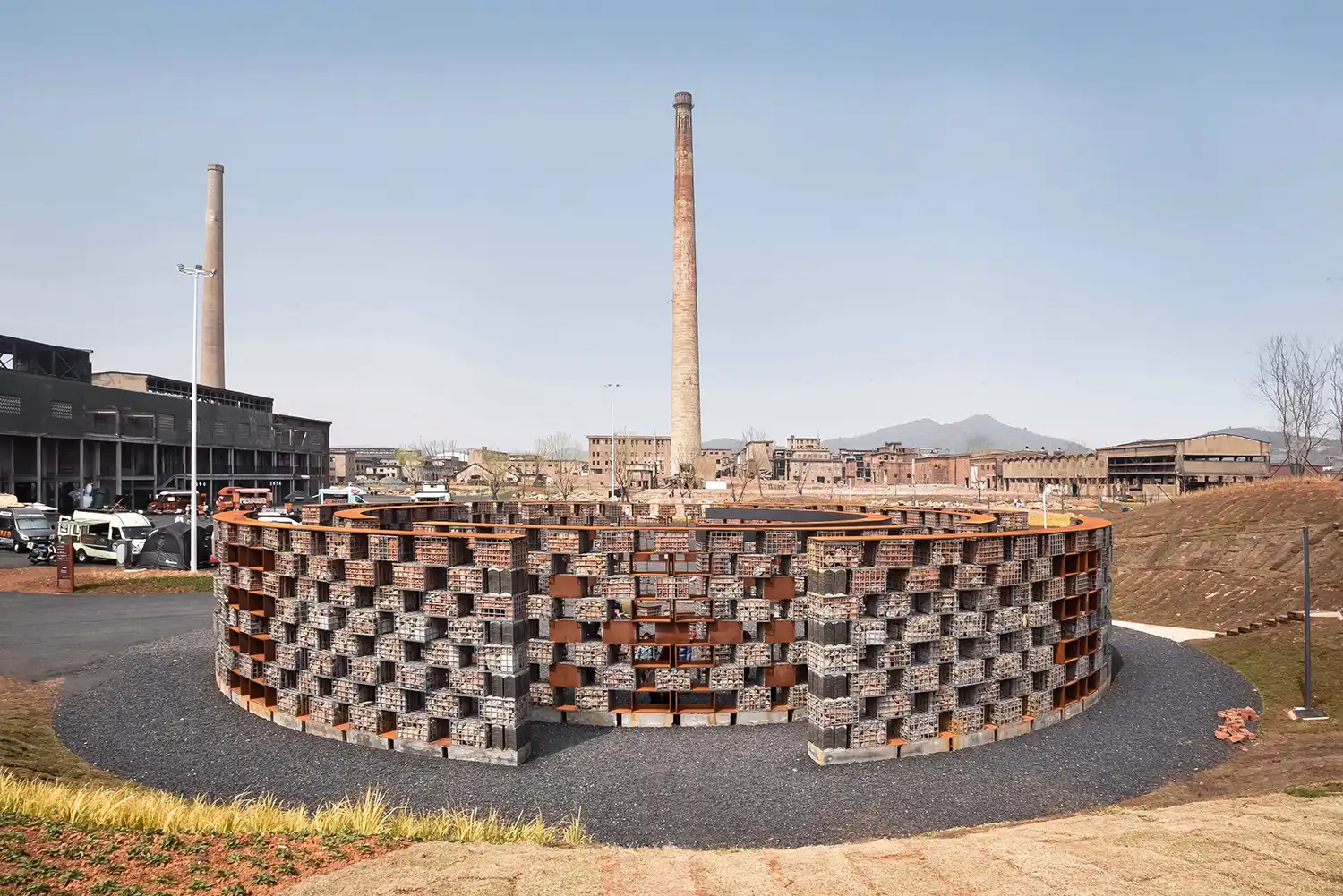
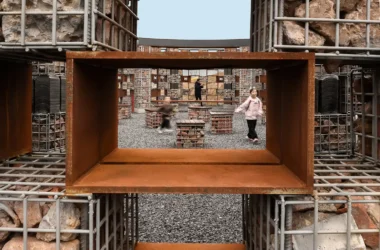
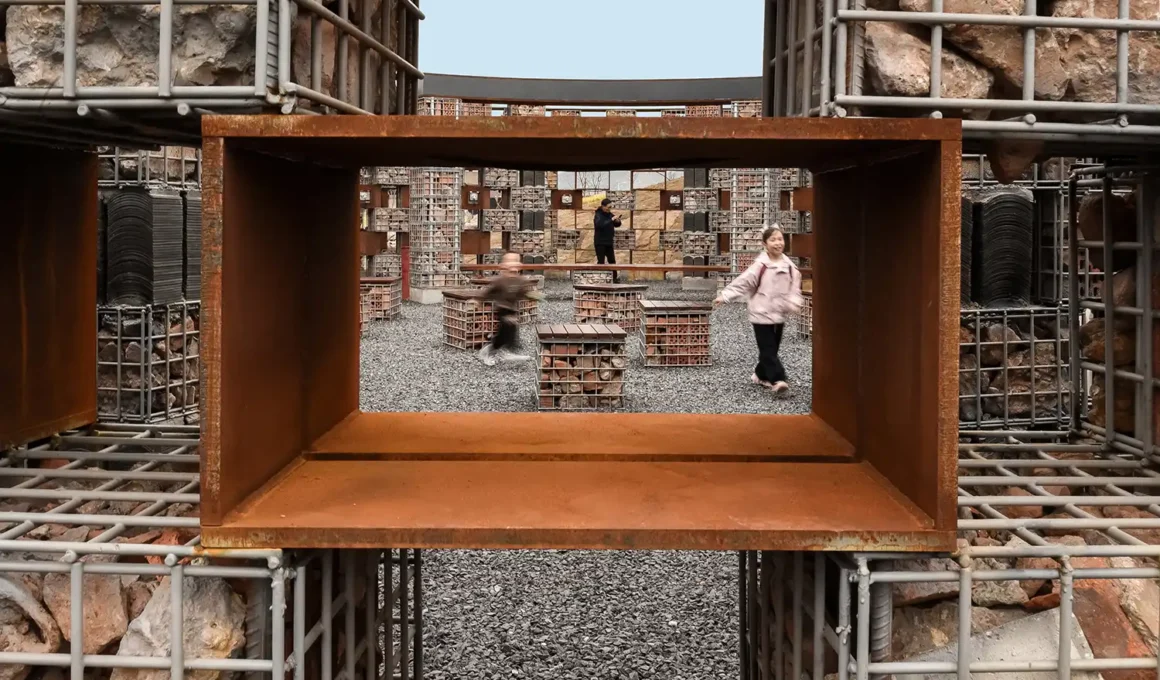
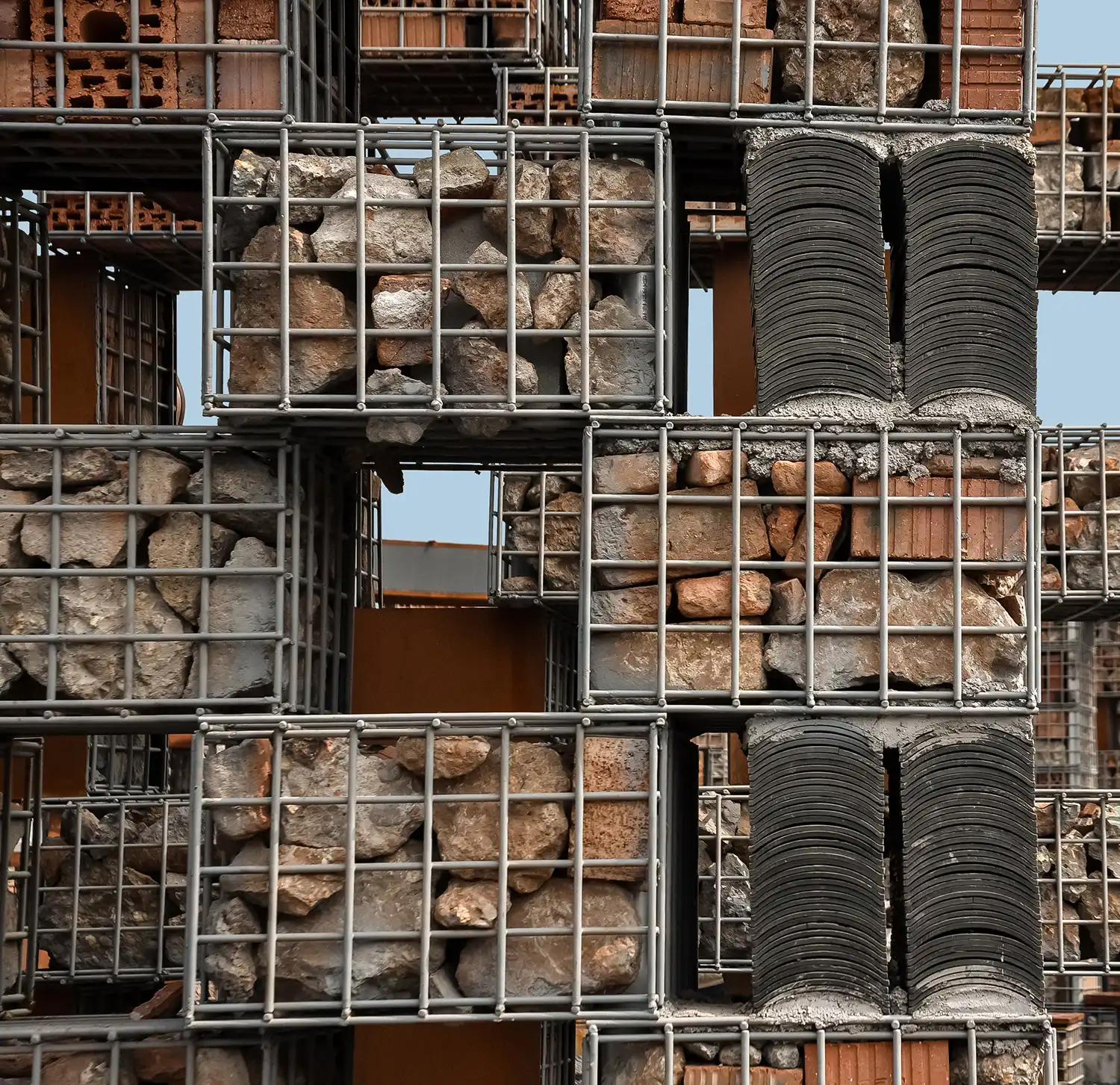
Materiality and the modular unit serve as the bridge between eras. The architects utilized gabion mesh cages filled with discarded bricks and fragments of rubble collected from the surrounding factory ruins. These units are stacked in concentric layers, creating porous, textured walls that change appearance with the shifting light. By repurposing these materials, the structure avoids the artifice of new construction, allowing the passage of time to remain visible in every irregular edge and weathered surface of the masonry.
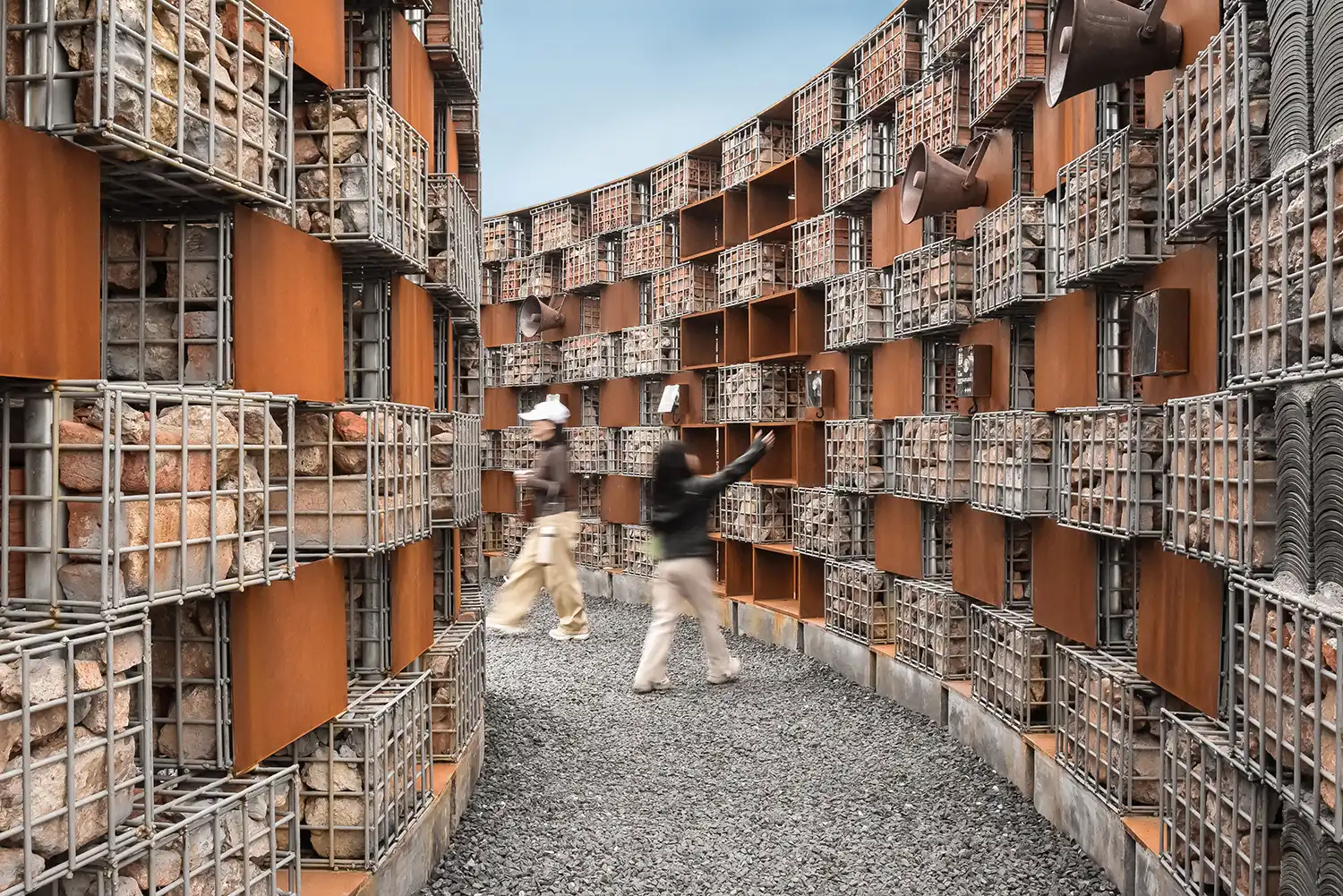
Sound as a living medium replaces physical artifacts within the circular passages. In this environment, the history of Qingshuitang is not something to be viewed behind glass, but something to be heard. Twenty groups of speakers are embedded within the walls, broadcasting oral histories and field recordings that resonate through the gaps in the stones. For a more intimate experience, visitors can engage with forty sets of magnetic headphones, creating a private connection to the voices of the workers and families who once defined this industrial hub.
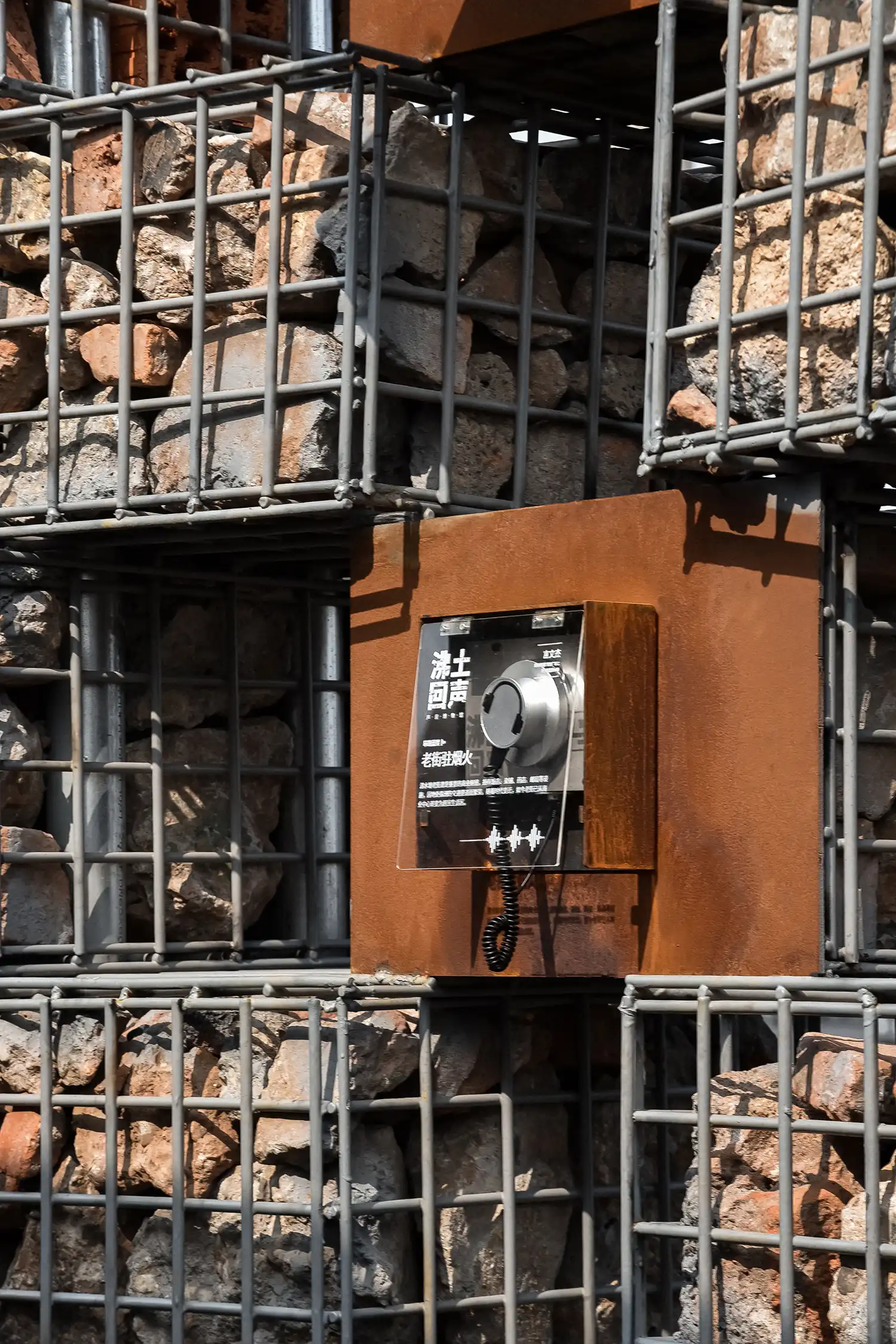
The architecture of interaction is designed as a two-way street. At the terminal nodes of the pathways, recording stations invite visitors to contribute their own narratives to the archive. This intentional design choice ensures the museum is not a static monument, but a growing, breathing entity. The present-day experiences of the community are processed and integrated into the soundscape, allowing the collective memory of Zhuzhou to evolve in real-time.
Centripetal energy guides movement toward the heart of the site, where the concentric walls give way to the Echo Plaza. This 16-meter-wide amphitheater serves as a spontaneous stage for storytelling, readings, or acoustic performances. It is a space designed for resonance—both literal and social. Here, the heavy silence of the industrial ruins is replaced by the vibrations of human speech and music, fostering a sense of community among those who gather within its stone embrace.
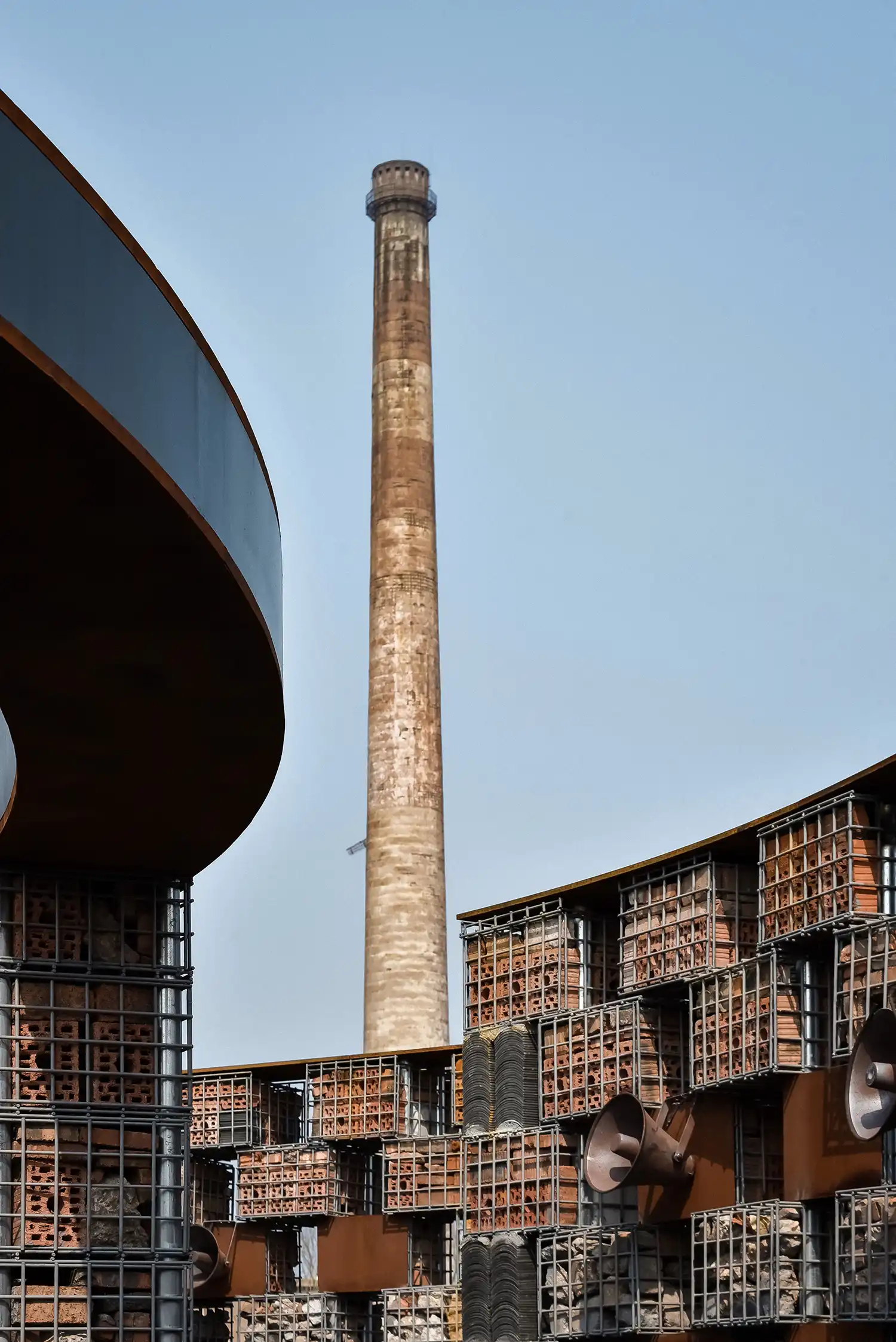
An intergenerational labyrinth has emerged from these circular geometries, offering different meanings to different users. For the older generation, the museum is a site of recognition and nostalgia. For younger residents, it serves as a portal into the city’s identity. Children, meanwhile, perceive the structure as a playful maze, running through the corridors and engaging with the history of the land through the simple, tactile joy of exploration.
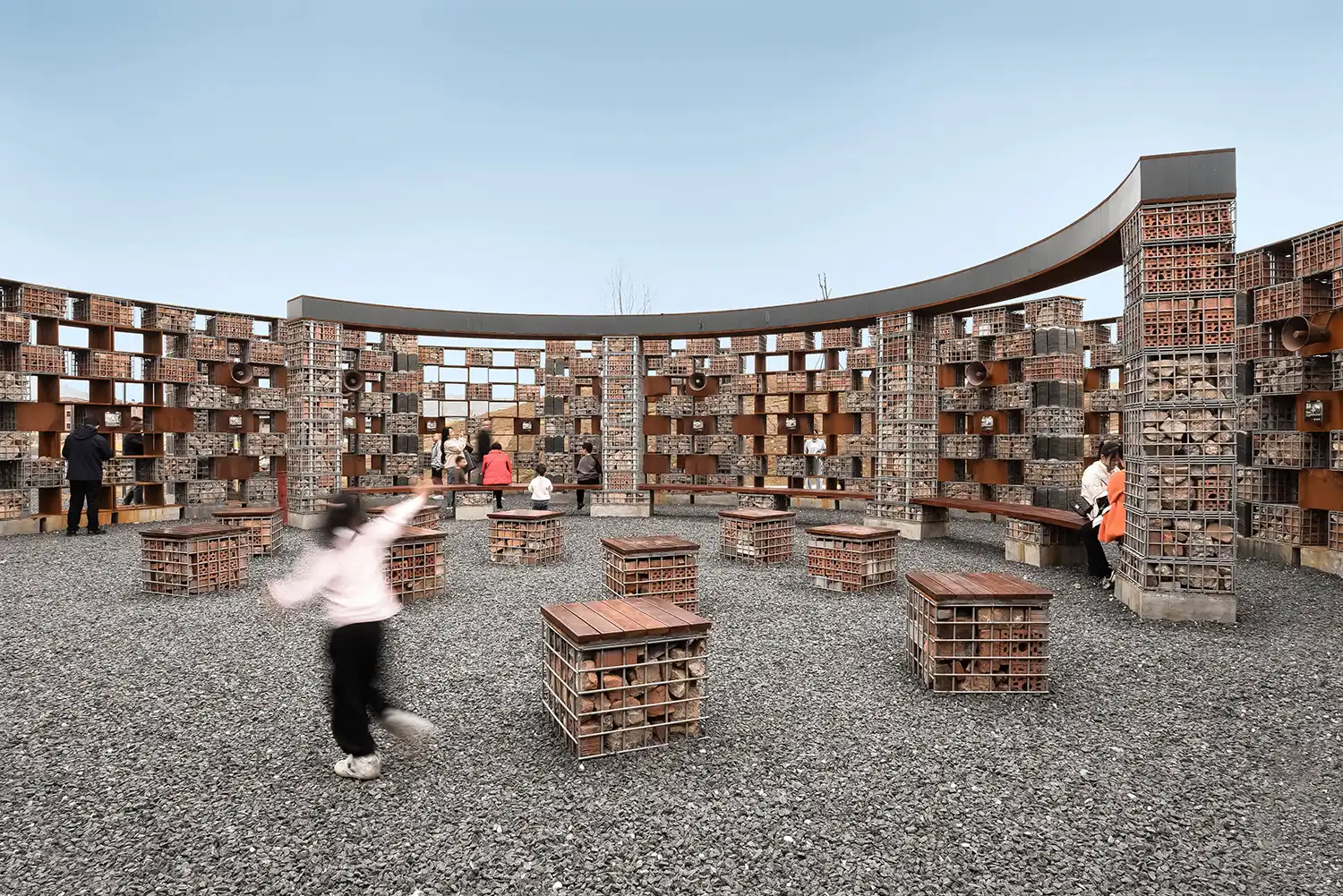
A sensory experience of history is achieved through the raw, open-air nature of the site. Without the climate control or artificial lighting of a typical gallery, the museum is subject to the elements. Rain darkens the bricks, and the wind carries the sounds of the modern city into the gaps of the ancient rubble. This permeability ensures that the project remains grounded in its urban context, acting as a porous filter between the memory of what was and the reality of what is.
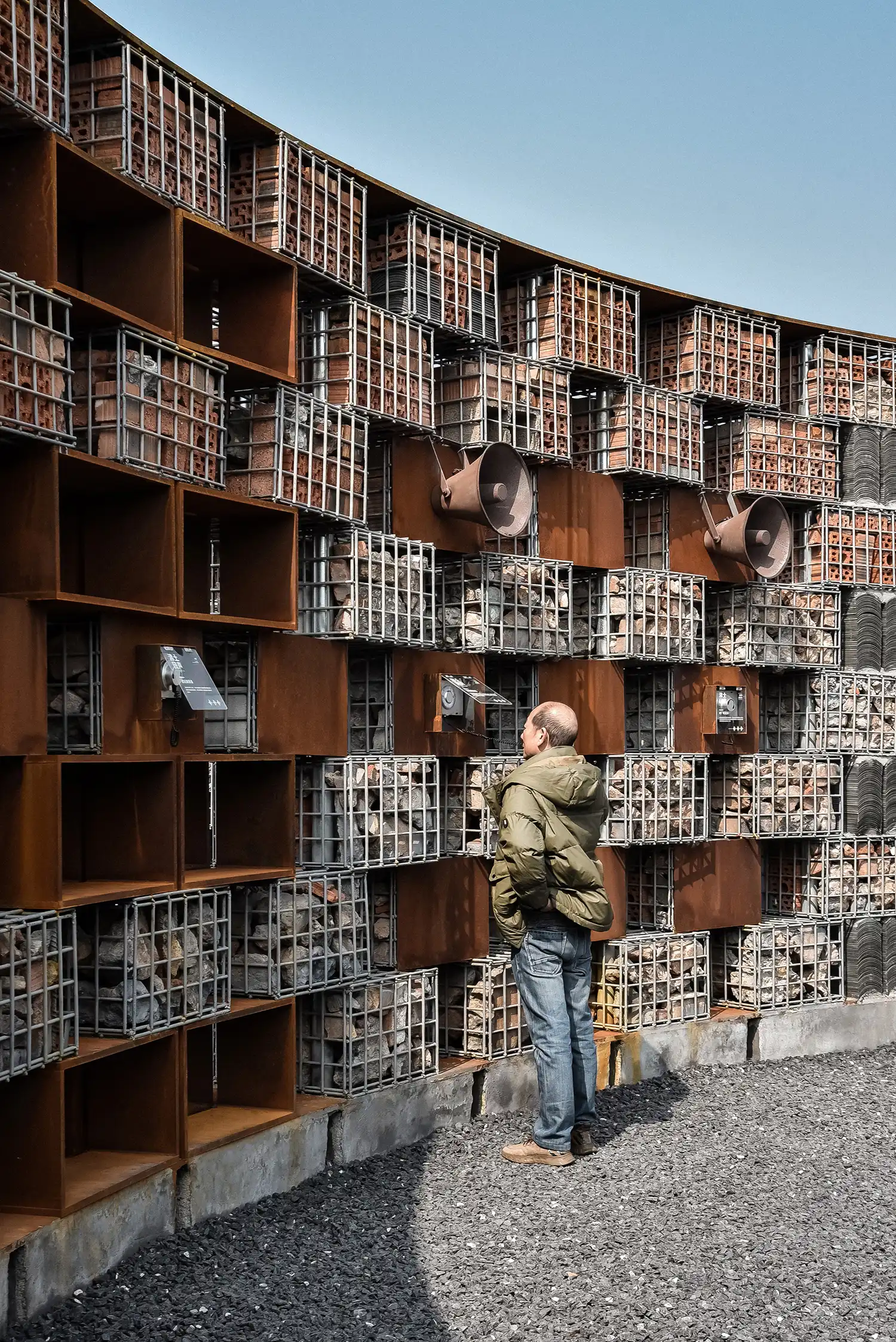
The continuity of heritage suggests that the preservation of the past is most effective when it is woven into the fabric of the present. Much like the sensitive restoration of historical landmarks seen in the Colosseum’s southern ambulatory, the Echo of the Ruins emphasizes that our relationship with history is a living, evolving dialogue. By exploring the broader spectrum of immersive installations, it becomes clear that the most poignant spaces are those that allow us to hear the echoes of the past while standing firmly in the light of today.